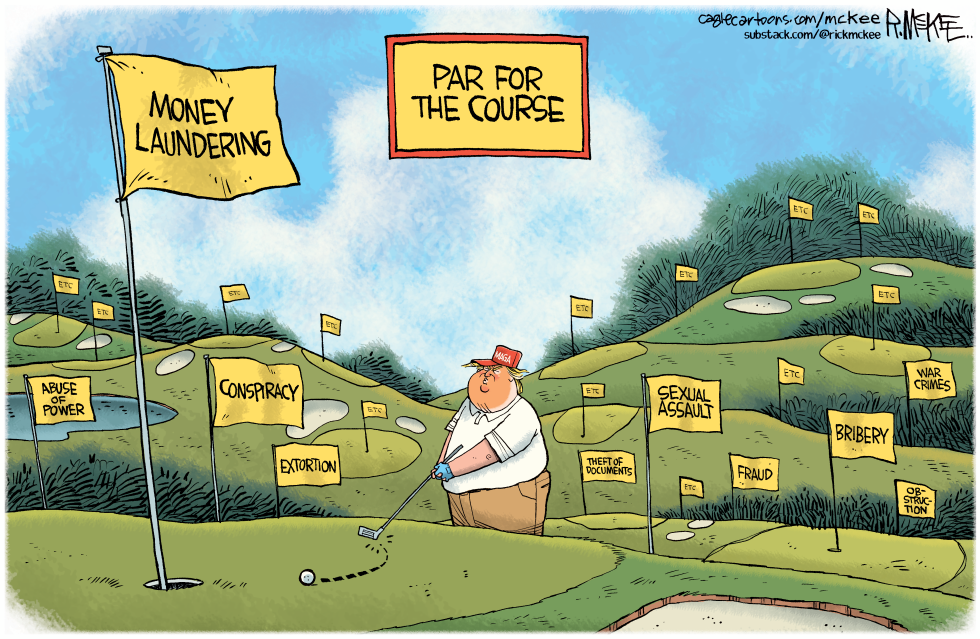
Donald Trump appears on a golf course in an editorial cartoon dated August 6 2026. Multiple yellow flags label alleged offenses including money laundering, conspiracy, extortion, sexual assault, bribery, fraud and obstruction. The piece responds to ongoing legal and political scrutiny of the former president. It frames these issues as routine for Trump through the visual metaphor of a golf course. The editorial position presents the allegations as expected elements of his record.
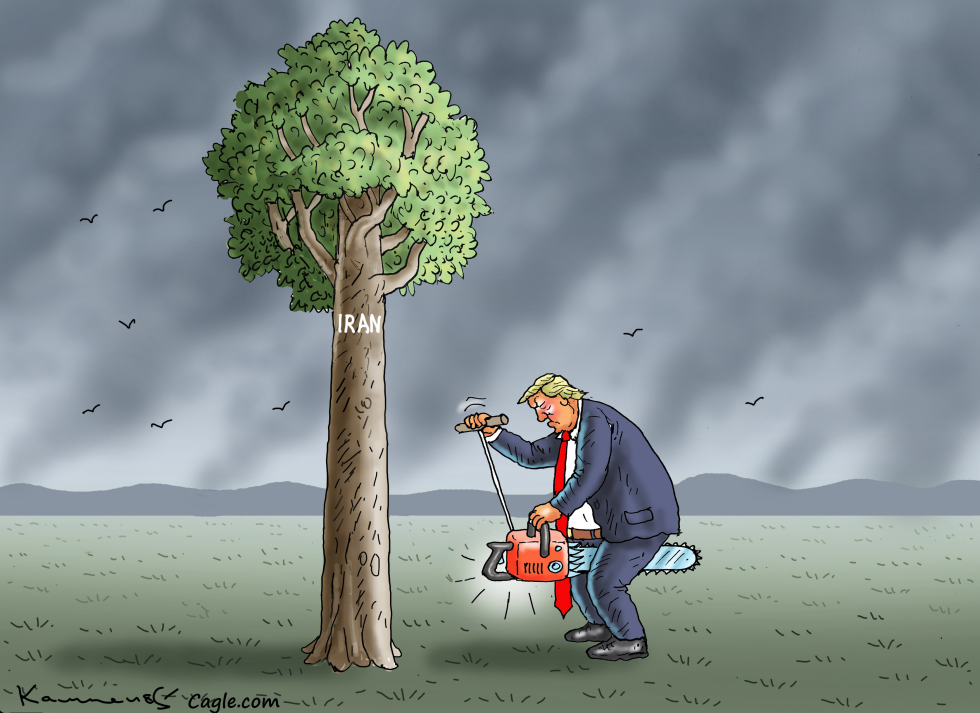
Donald Trump is shown actively cutting down a tree labeled Iran with a chainsaw on August 6, 2026. The image responds to ongoing tensions in US-Iran relations and debates over forceful policy measures. The editorial position criticizes the aggressive stance as reckless and destabilizing.
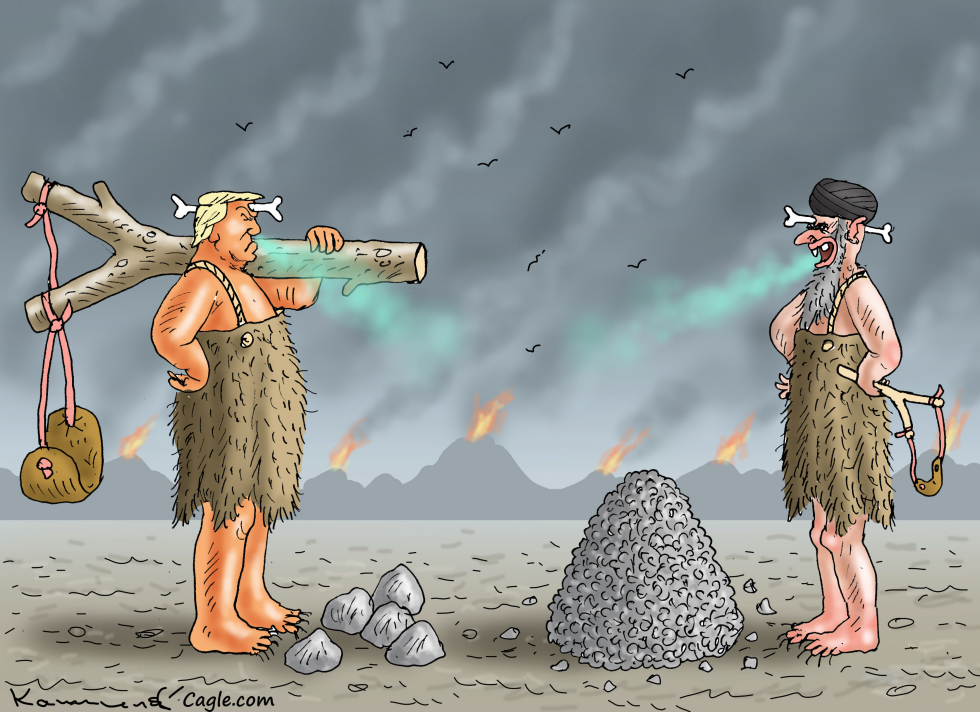
Donald Trump faces a political rival in a heated contest marked by aggressive posturing and primitive tactics. The confrontation underscores deep divisions in leadership style and approach to conflict. The piece portrays these dynamics as regressive and destructive.
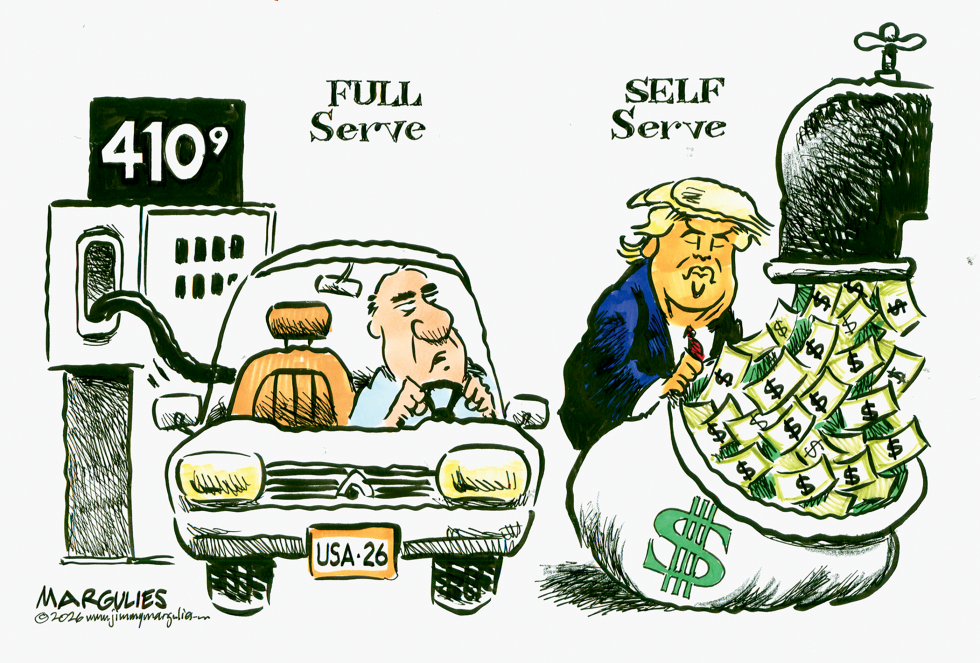
High gas prices remain a flashpoint in 2026 with pumps displaying figures above four dollars. Trump is shown collecting direct profits from the self-serve lane while a driver idles at full serve. The piece argues that the former president benefits personally from elevated energy costs rather than working to lower them for consumers.
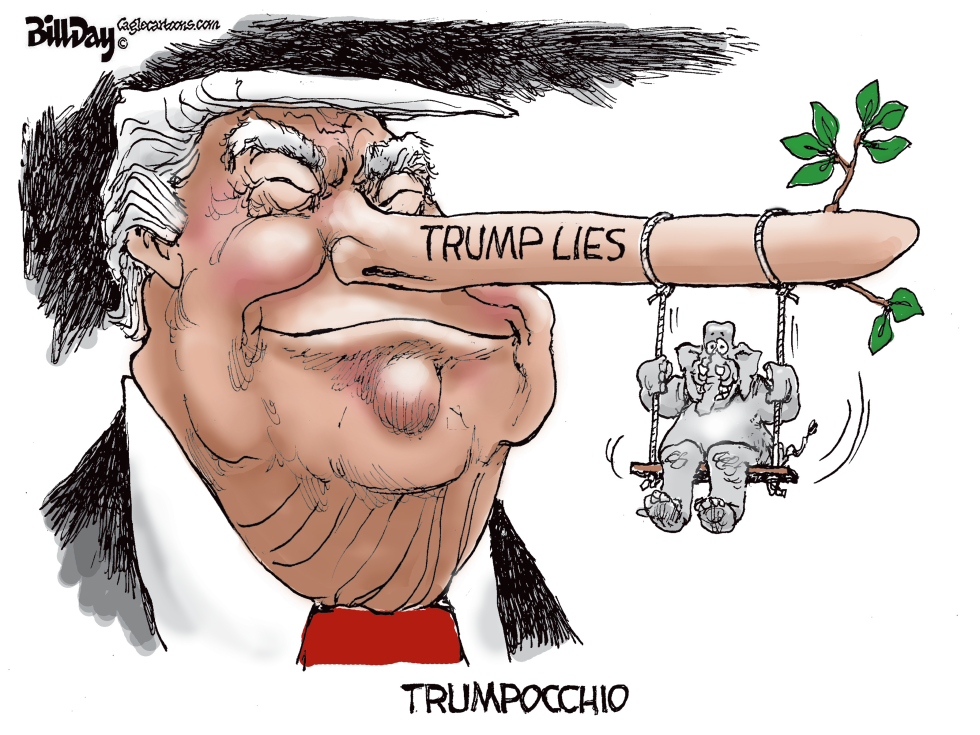
Donald Trump continues a pattern of public statements widely described as misleading. The Republican Party remains closely tied to those statements. This dynamic affects voter trust and party cohesion ahead of future elections. The editorial takes the position that Trump's falsehoods have become the central support structure for the GOP.
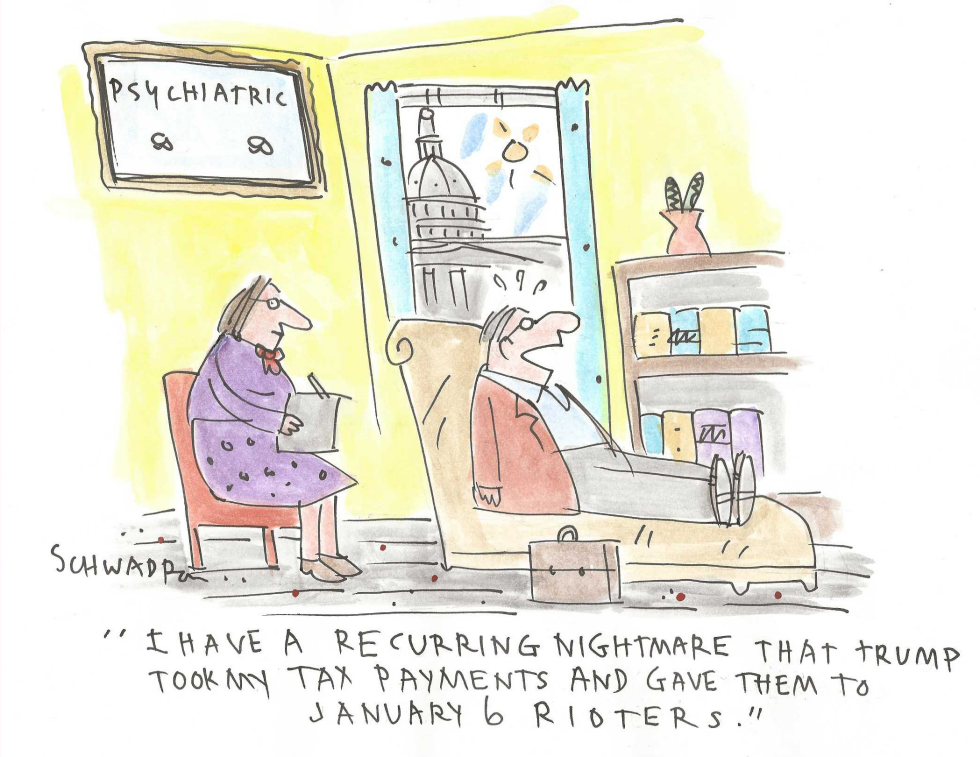
A patient describes a recurring nightmare in which former President Trump diverts tax payments to January 6 rioters. The session reflects persistent public concerns over accountability for the Capitol events and use of public funds. The piece portrays these fears as a continuing source of political unease.
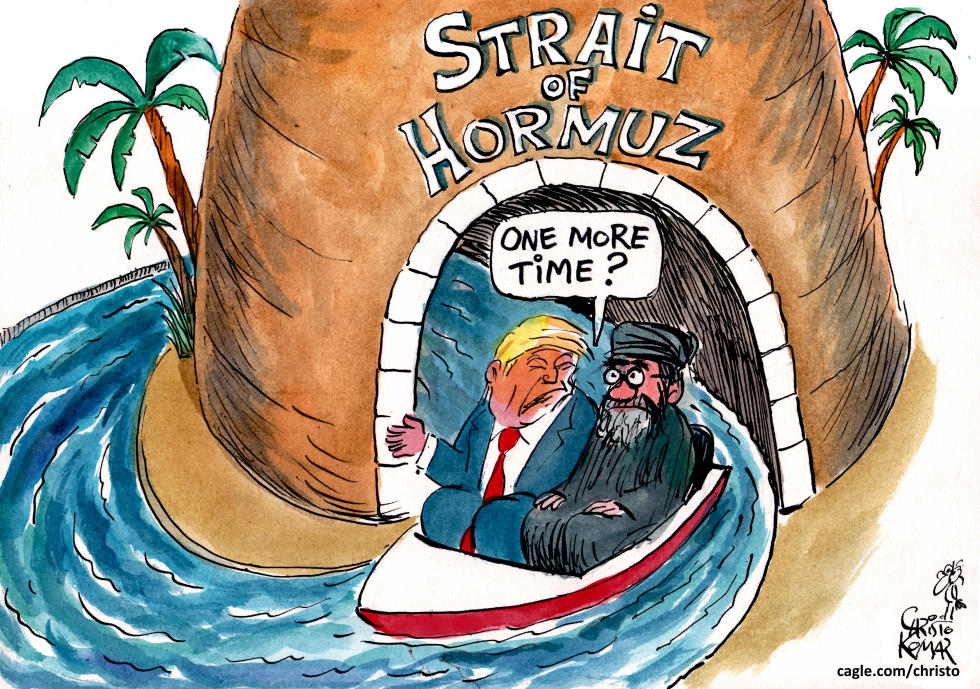
On August 5 2026 renewed friction over shipping lanes in the Strait of Hormuz draws attention as former President Donald Trump appears alongside Iran's Supreme Leader in a symbolic return to the chokepoint. The episode underscores ongoing US-Iran friction over energy exports and naval presence. The piece portrays the pair repeating a risky transit that highlights persistent strategic vulnerabilities in the Persian Gulf.
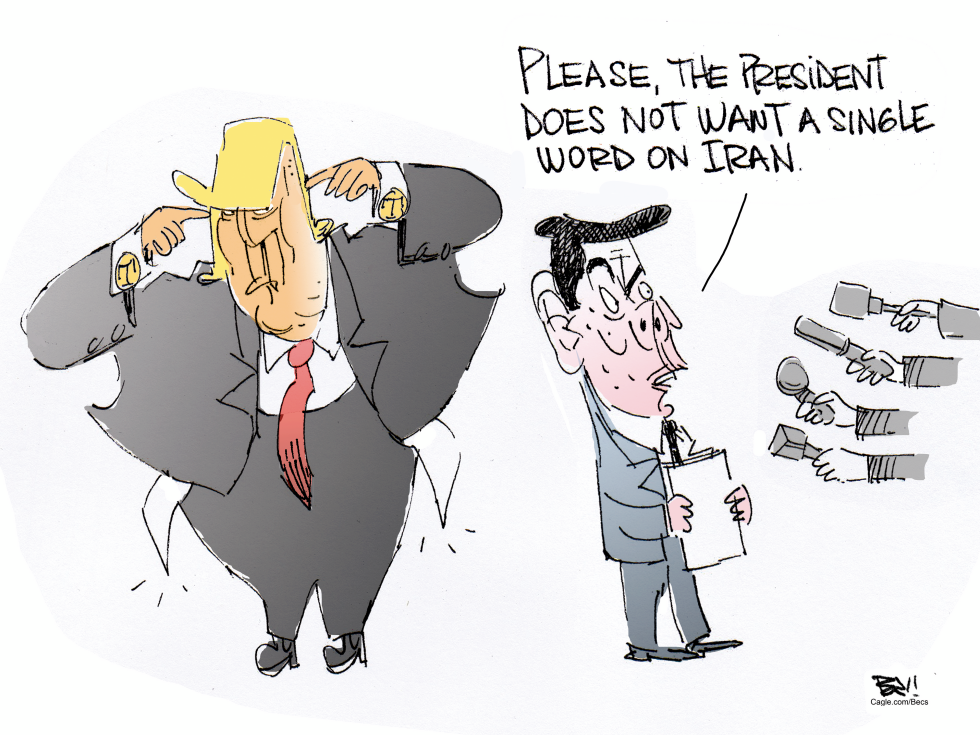
President Trump directed staff to avoid any public discussion of Iran policy. The move drew immediate pushback from reporters seeking clarification on administration plans. The editorial takes the position that the order reflects an effort to avoid accountability on a key foreign policy issue.
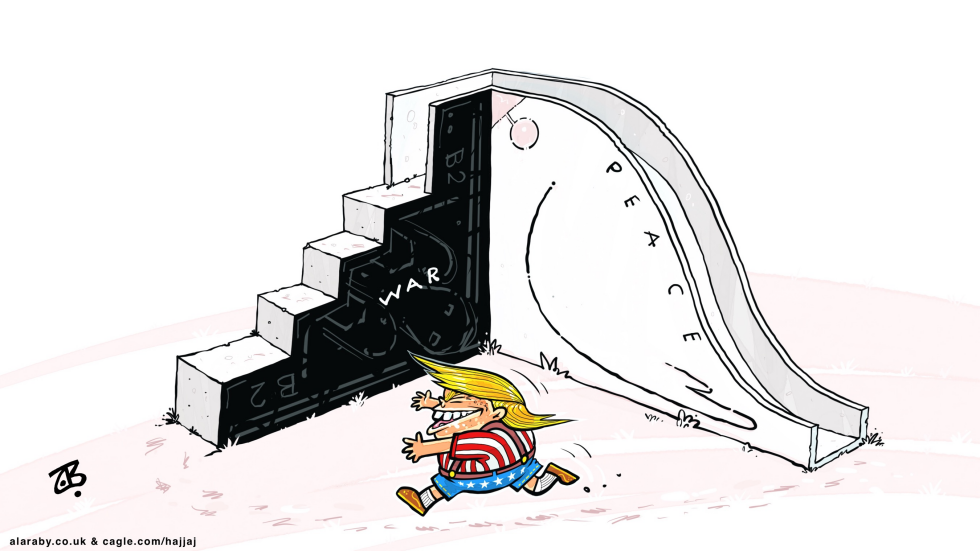
Donald Trump, holding the presidency on the August 2026 publication date, faces renewed questions over military commitments abroad. Recent developments in defense policy have highlighted tensions between continued operations and diplomatic overtures. The piece responds to this dynamic by depicting the president moving away from a war-associated structure toward a peace option. It frames the shift as an abrupt retreat from prior positions rather than a deliberate policy choice. The editorial stance criticizes the move as inconsistent and driven by political expediency instead of strategic consistency.
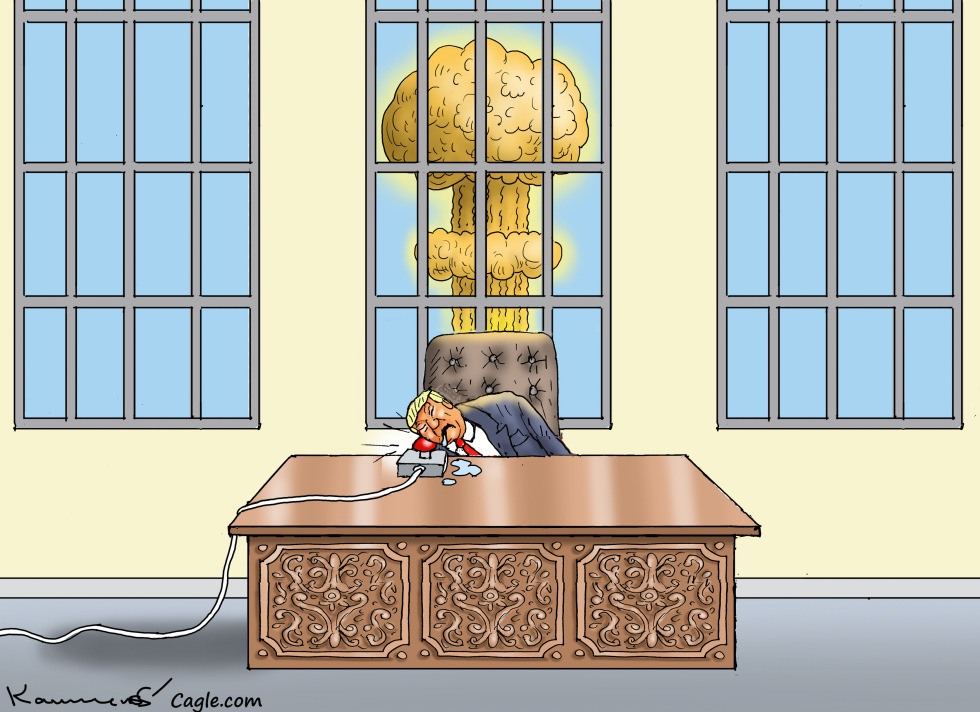
Donald Trump is shown slumped over the nuclear button in the Oval Office as a mushroom cloud rises outside the window. The image captures a moment of apparent inaction or collapse at the desk. The editorial position highlights risks associated with presidential control over nuclear launch authority during a period of heightened global tensions.
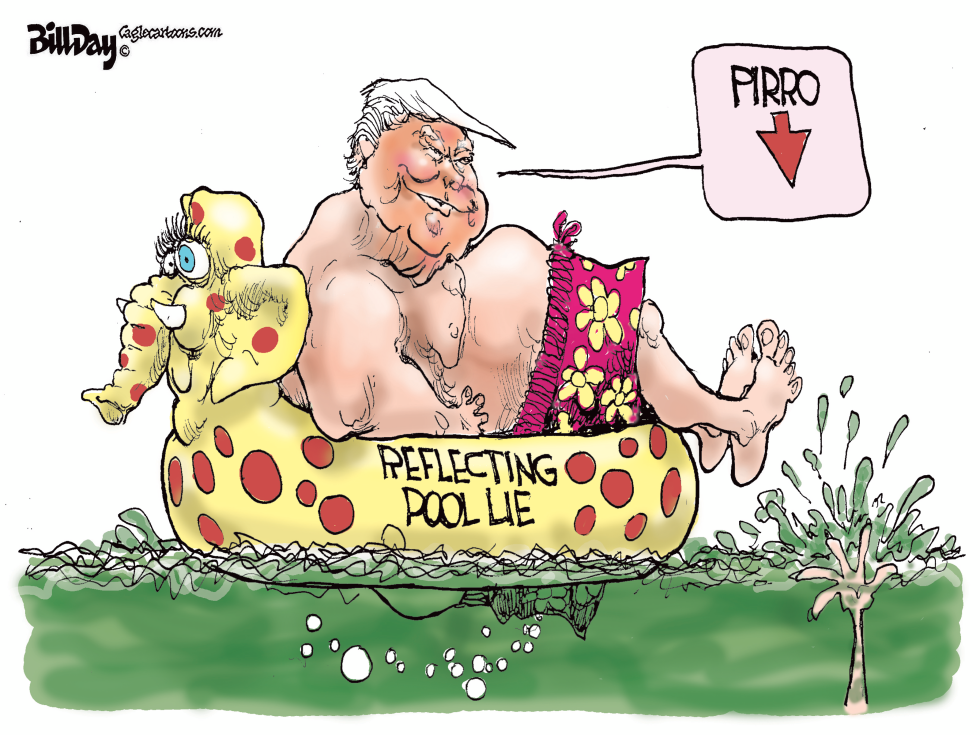
Donald Trump appears in a summer setting reclining on an inflatable labeled Reflecting Pool Lie. The image ties to ongoing questions about statements from the former president and associate Jeanine Pirro. Public attention remains on consistency of public remarks from political figures. The piece frames the scene as an illustration of evasion or distortion in political discourse.
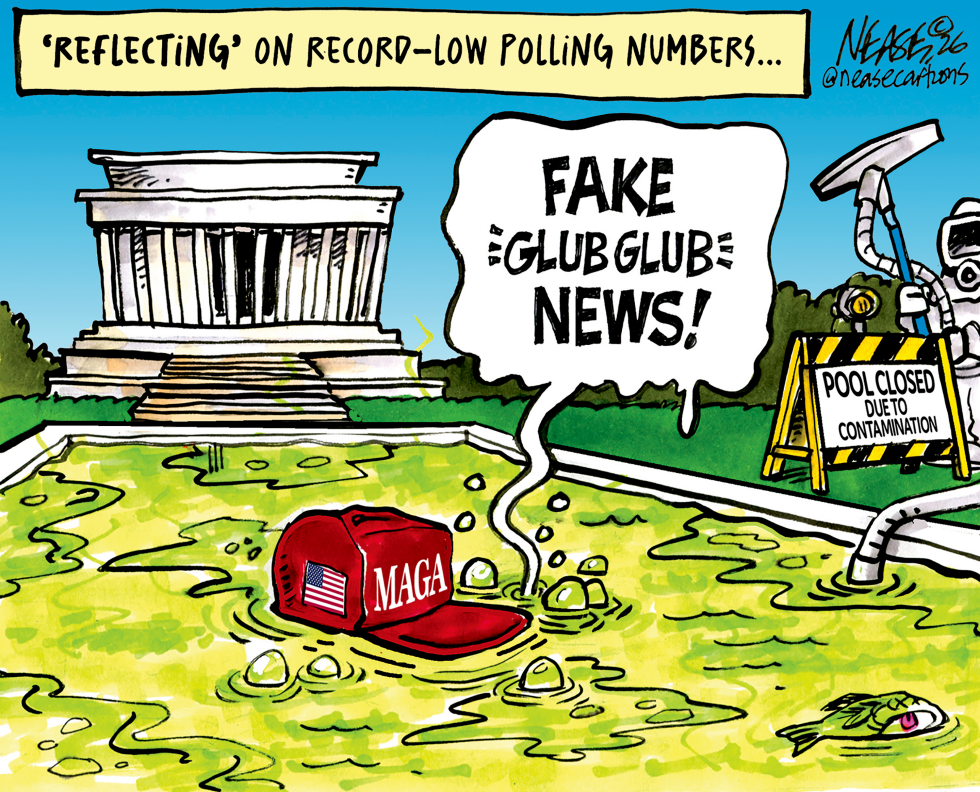
Donald Trump-aligned polling numbers reached record lows in early August 2026. Supporters responded with claims of fake news rather than addressing the data. The piece portrays this denial as occurring in a toxic environment.
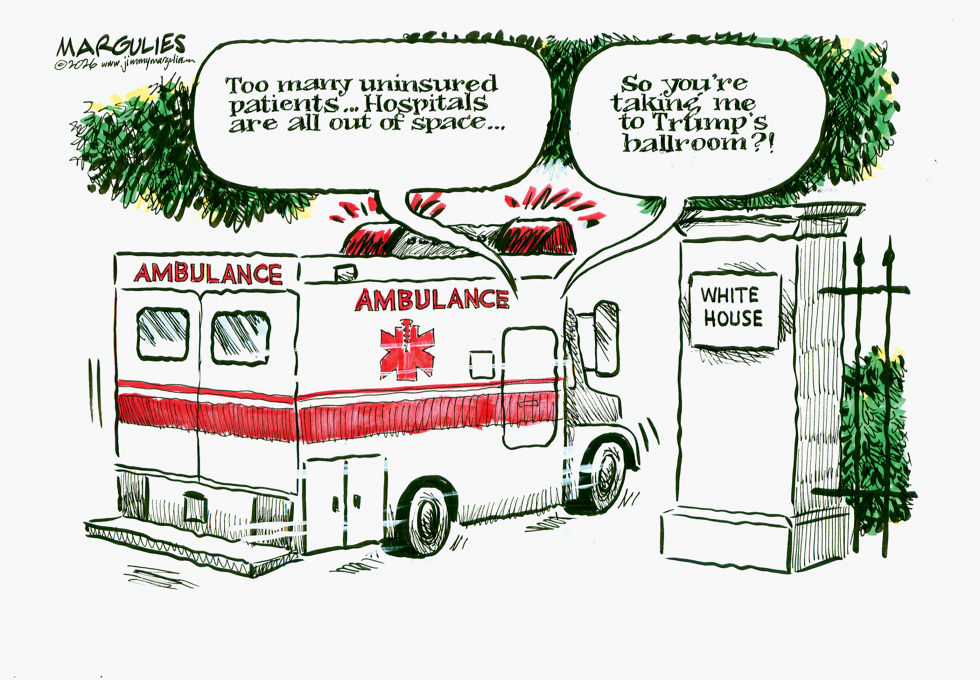
Hospitals across the country report severe overcrowding driven by rising numbers of uninsured patients seeking emergency care. The situation has prompted unusual measures, including the diversion of ambulances. In this context the cartoon depicts an ambulance being directed toward the White House ballroom associated with President Trump. The piece criticizes the administration's handling of the healthcare access problem by highlighting the contrast between medical need and the use of presidential property.