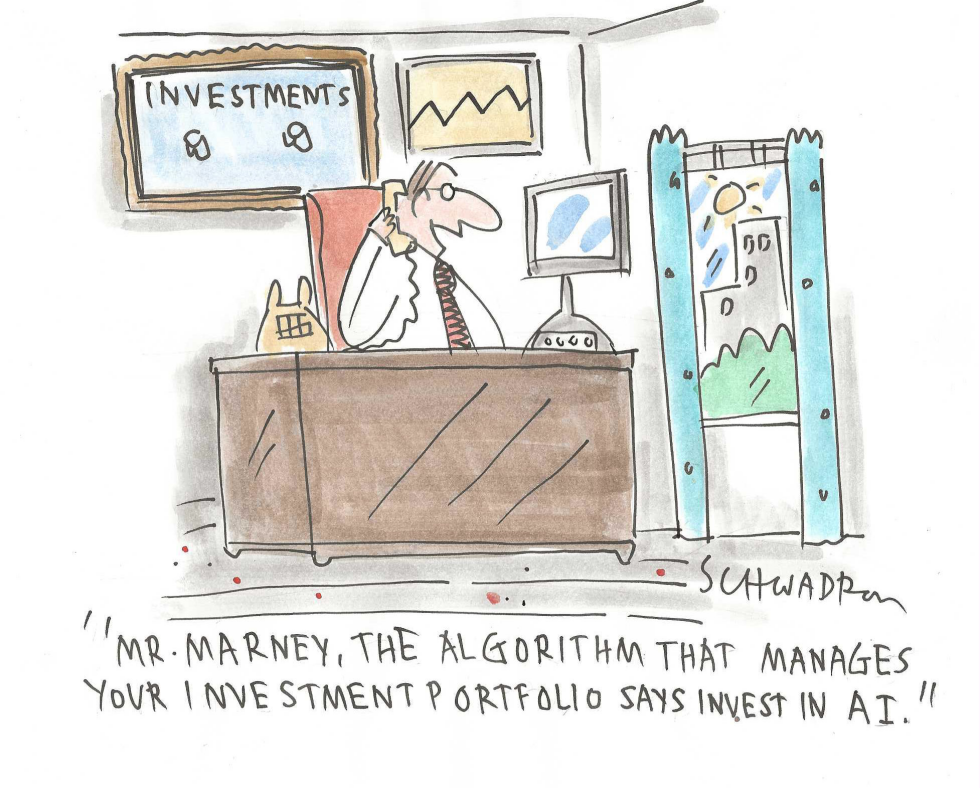
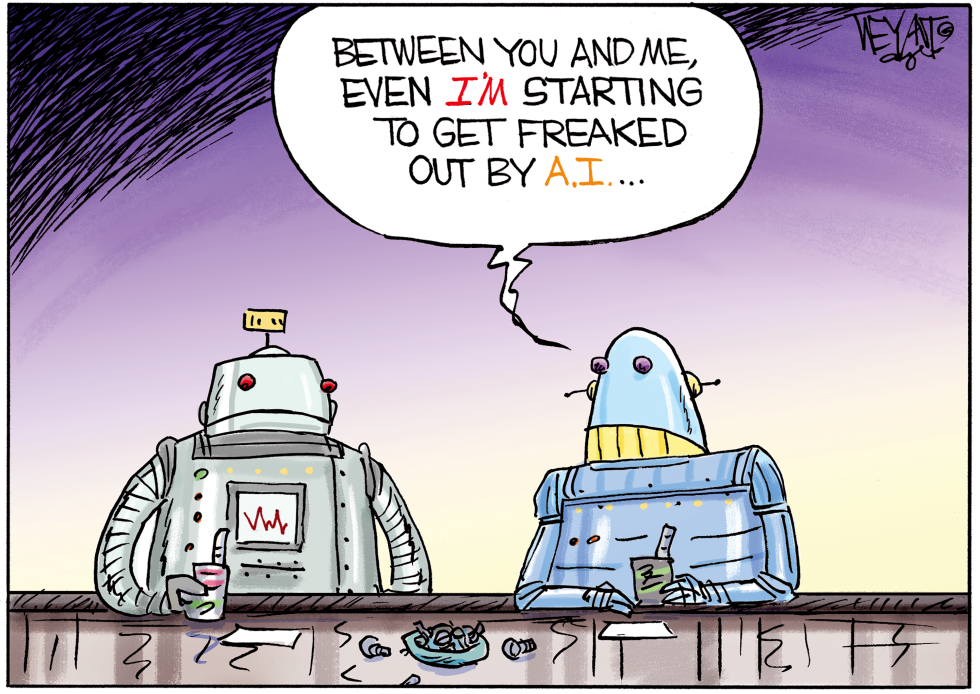
Financial institutions have expanded use of algorithmic systems to oversee client portfolios, with many such tools now directing capital toward artificial intelligence companies. The trend raises questions about self-reinforcing investment cycles where the managing software favors its own sector. The cartoon highlights the circular logic of automated recommendations that benefit AI developers and related stocks.
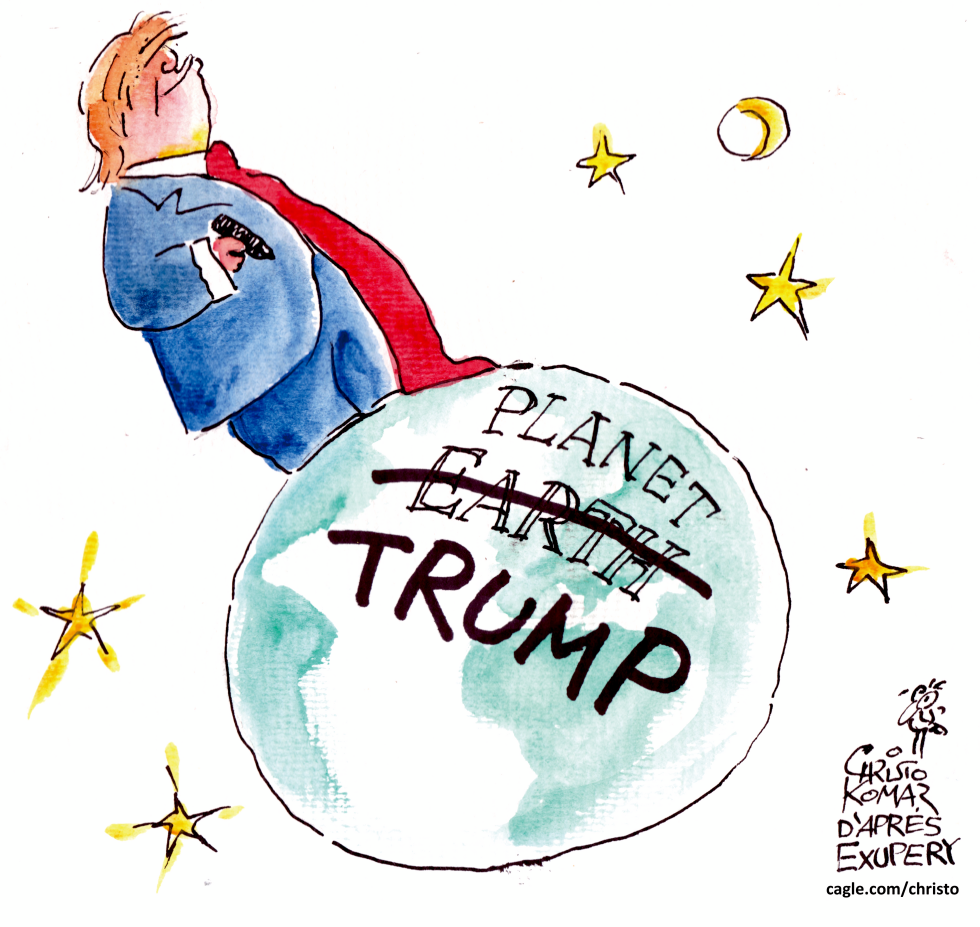
Donald Trump has long projected outsized personal branding onto public institutions and symbols. In this 2026 depiction the former president appears to claim the planet itself. The move reflects an ongoing pattern of self-centered rhetoric that treats national and international assets as extensions of his identity. Critics argue such gestures erode norms of public service and institutional independence. Supporters view them as bold assertions of leadership strength. The cartoon captures the tension between personal ambition and collective governance.
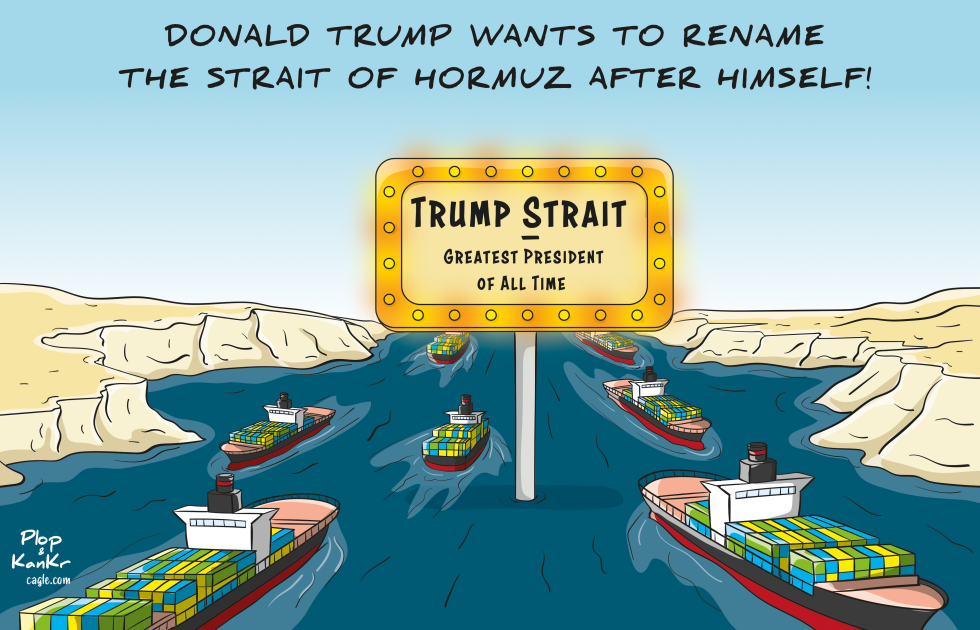
A political cartoon depicts Donald Trump proposing to rename the Strait of Hormuz after himself. The image shows multiple cargo ships navigating the waterway beneath a large glowing sign reading Trump Strait with the subtitle Greatest President of All Time. The top text states Donald Trump wants to rename the Strait of Hormuz after himself. The cartoon uses the visual of a prominent sign overlooking busy shipping lanes to comment on the proposal. It responds to ongoing discussions about international waterways and presidential initiatives in the Middle East region as of the September 2026 publication date.
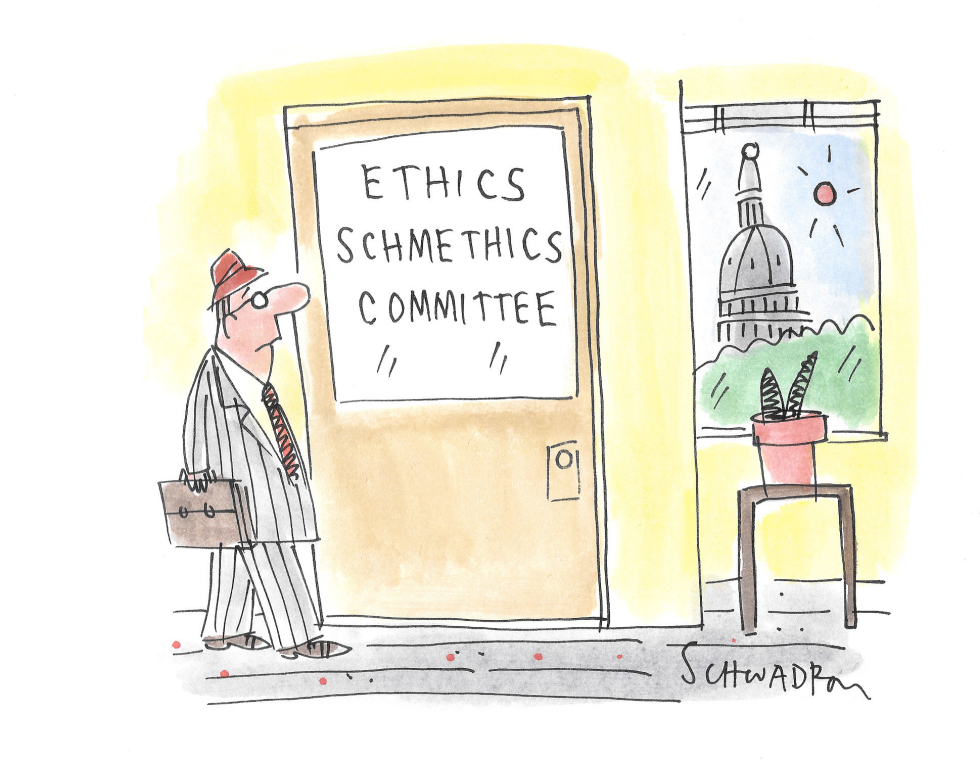
Congress continues to sideline meaningful ethics oversight, with lawmakers showing little interest in strengthening or even respecting the chamber's ethics committee. The panel exists on paper but carries little practical weight in daily operations. This dynamic matters because weak internal standards erode public trust in legislative institutions and invite outside influence. The cartoon captures the prevailing attitude that ethics rules are an afterthought rather than a core responsibility.
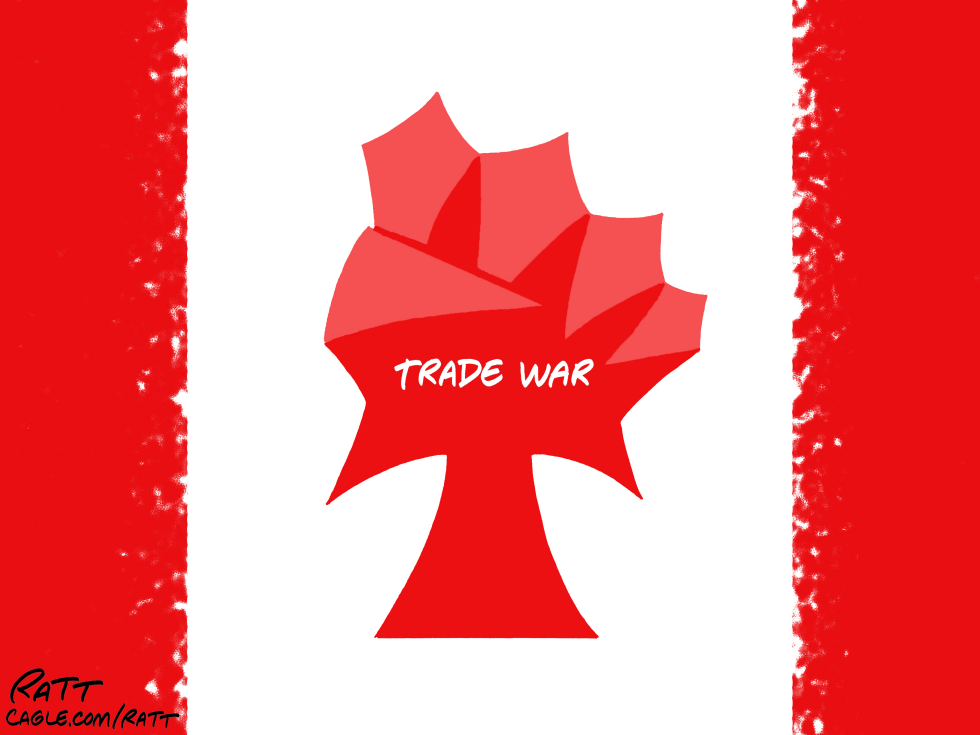
Ongoing US-Canada trade tensions escalated in 2026 with new tariff threats targeting Canadian exports. The dispute threatens key sectors including autos, lumber and agriculture, raising costs for consumers on both sides of the border. Canada has signaled plans to diversify markets and strengthen domestic industry. The cartoon frames the conflict as a direct assault on Canadian sovereignty and economic stability. It portrays the trade war as fracturing national symbols while urging a stronger northern response.
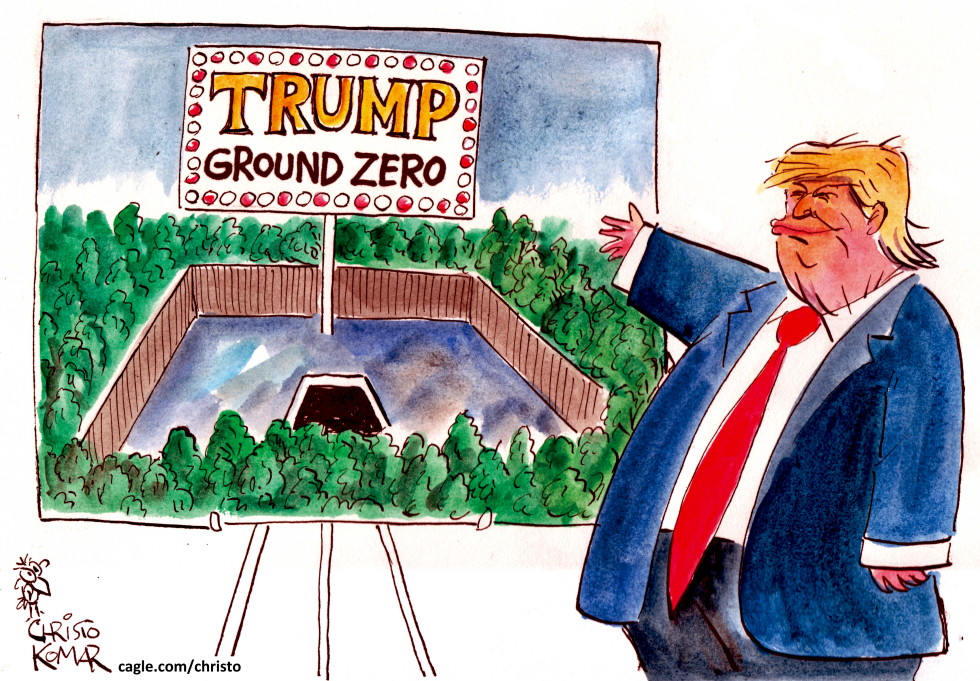
Donald Trump has floated the idea of branding the Ground Zero memorial site with his name. The proposal revives long-standing debates over commercial use of the 9/11 location. Critics argue the move prioritizes personal promotion over solemn remembrance. Supporters see it as consistent with Trump's business approach to public projects. The cartoon depicts the former president enthusiastically presenting the branded sign. It highlights concerns that such branding trivializes a national tragedy for individual gain.
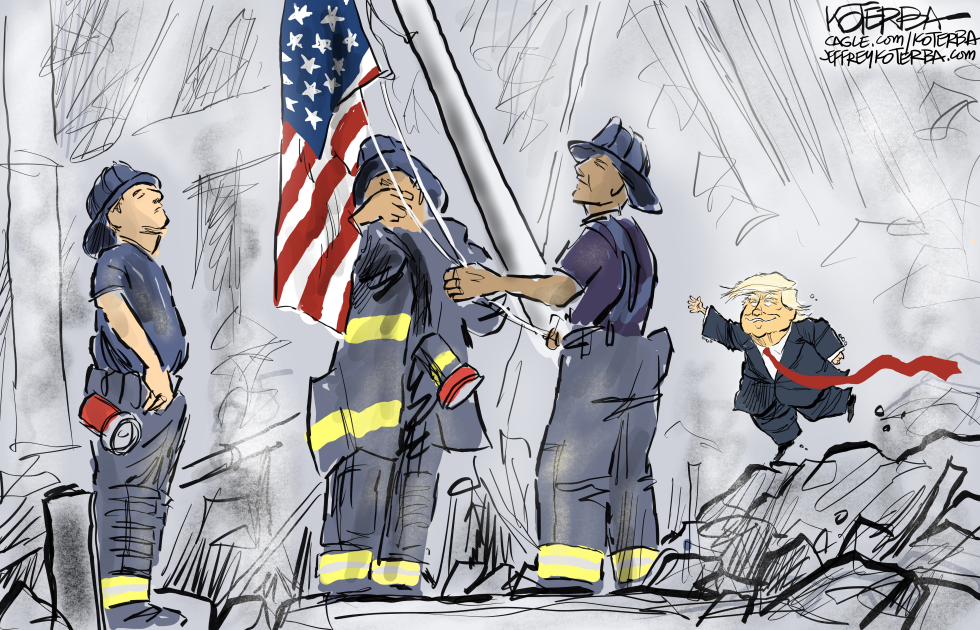
On the eve of the 2026 September 11 anniversary, a cartoon depicts Donald Trump rushing into the iconic firefighter flag-raising scene amid rubble. The image critiques Trump's repeated efforts to associate himself with the 9/11 response despite his limited direct role at the time. The editorial stance highlights perceived opportunism in political figures revisiting national tragedies for personal gain.
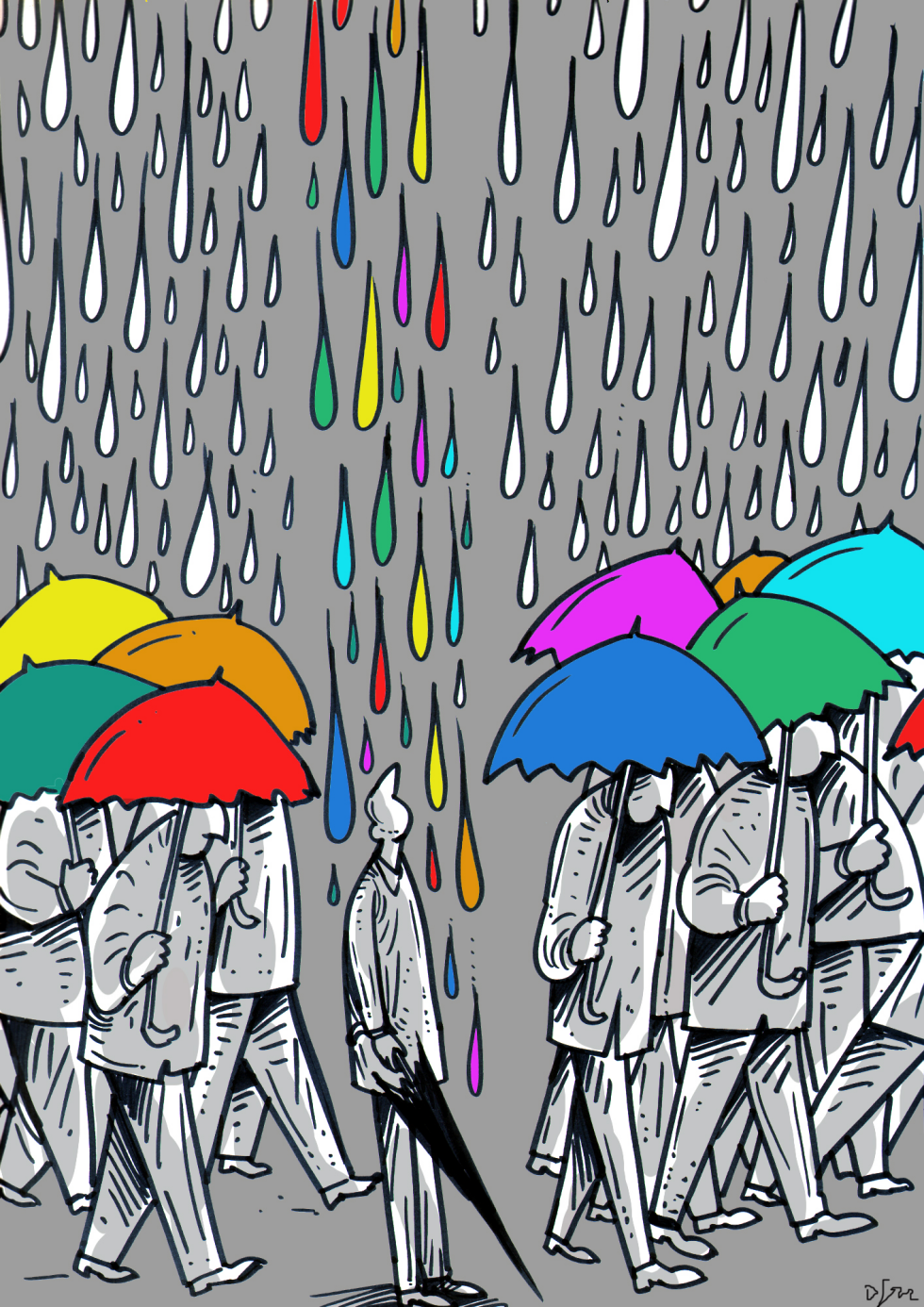
Society often pressures people to conform to norms around them. Maintaining personal identity remains important in such environments. The piece advocates for embracing one's distinct qualities.
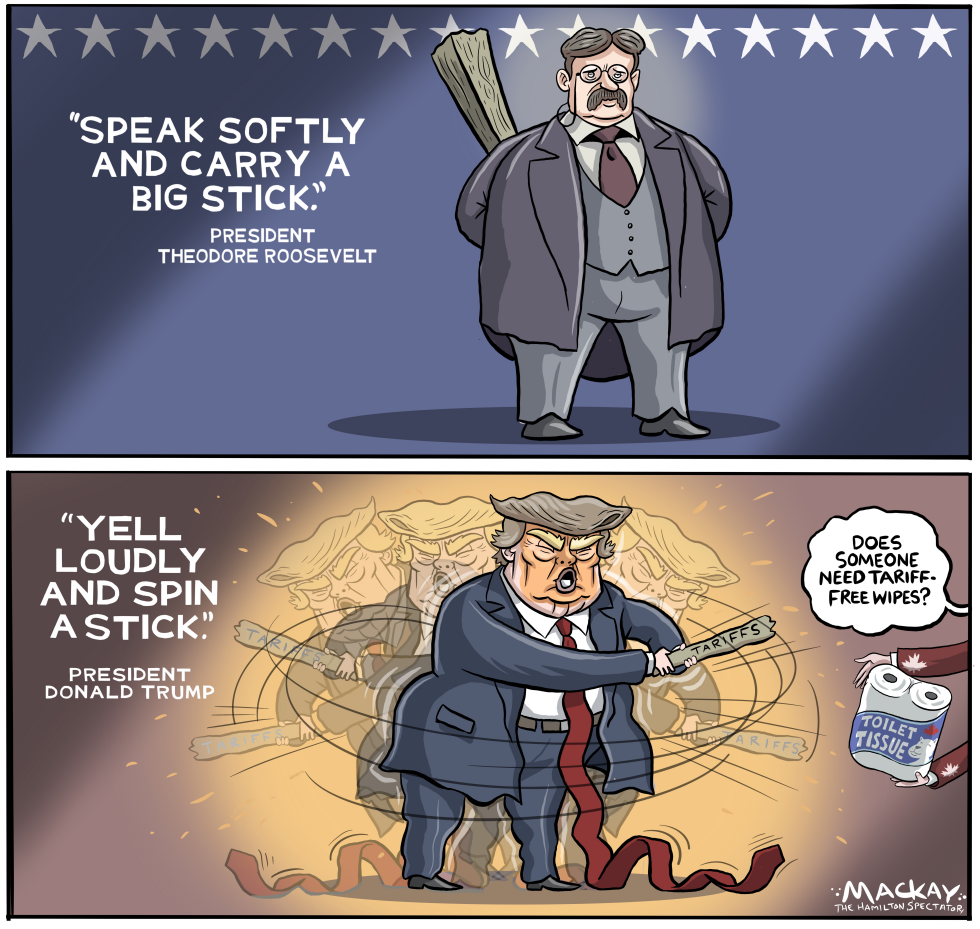
The cartoon by Graeme MacKay contrasts Theodore Roosevelt's famous speak softly and carry a big stick approach with Donald Trump's version of yelling loudly and spinning a stick covered in tariffs. In the lower panel Trump appears dizzy from the motion as a Canadian hand offers toilet tissue labeled tariff-free wipes. The image comments on recent US tariff actions and their impact on Canadian trade relations as of the September 2026 publication date.
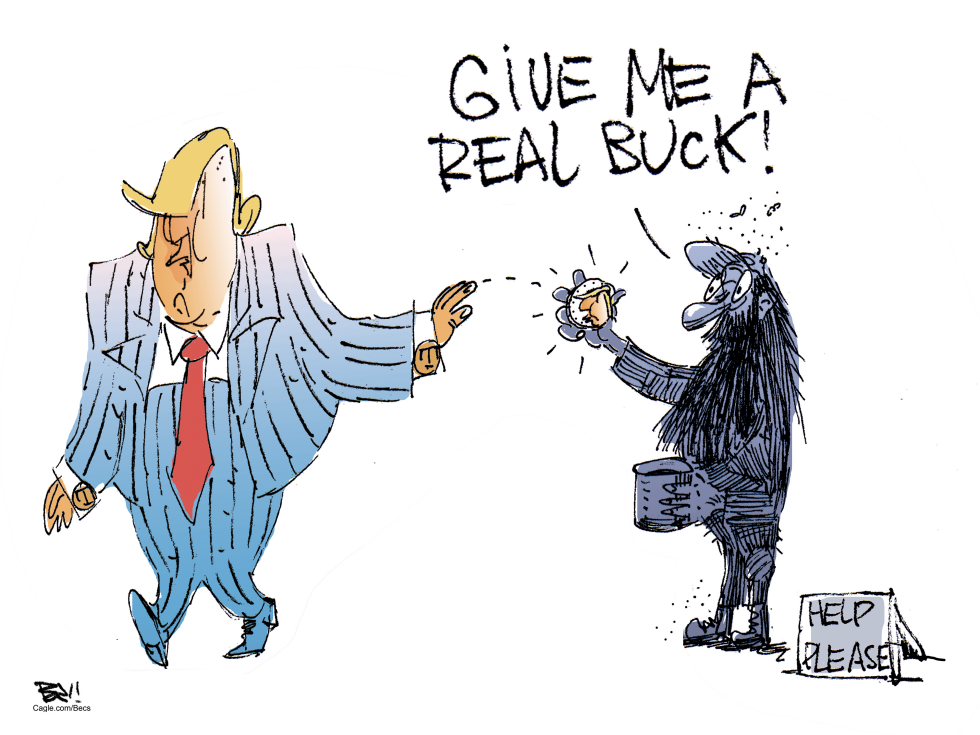
Donald Trump promotes a dollar bearing his image as a symbol of economic strength. The move draws immediate public pushback questioning its actual worth. Critics argue the branding fails to address underlying fiscal challenges. The cartoon frames the dollar as an unconvincing substitute that fails to satisfy basic needs for credible value.
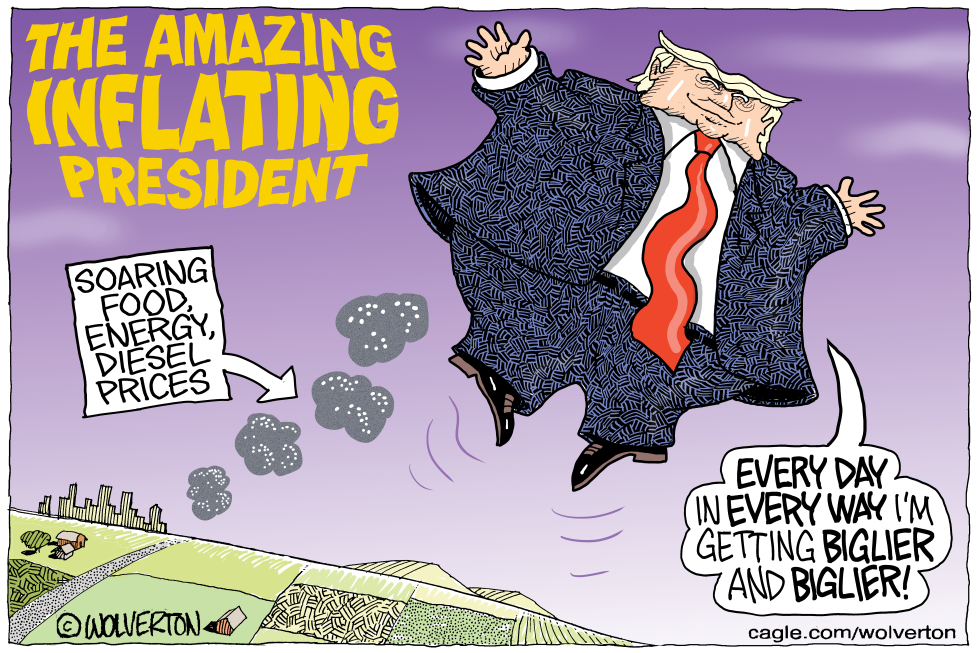
The cartoon depicts Donald Trump as an inflating balloon figure rising above a rural scene with a city skyline. A sign points to gray clouds labeled soaring food energy and diesel prices. Trump declares in a speech bubble that he is getting biglier every day. Published on September 4 2026 the work responds to ongoing concerns over inflation and household costs during the Trump presidency. The visual metaphor connects the president's public presence to the expansion of prices across key sectors.
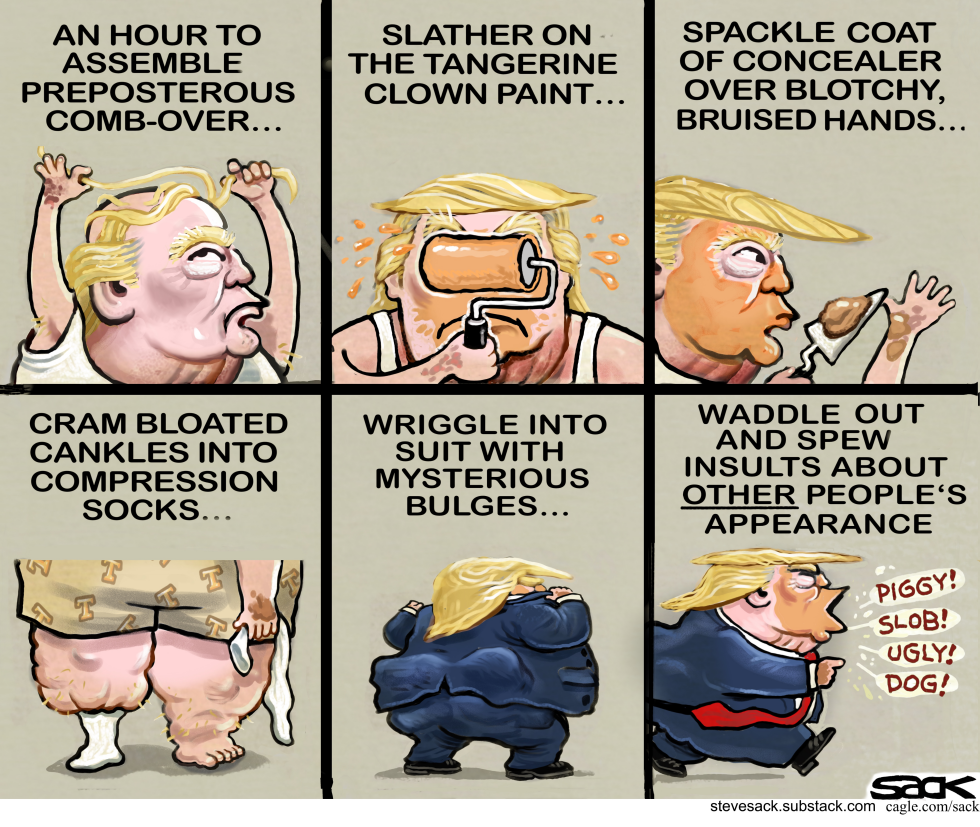
Donald Trump maintains a detailed personal grooming regimen that includes assembling a comb-over, applying tangerine-toned makeup, concealing skin issues, using compression socks, and adjusting his suit. This preparation precedes his public remarks criticizing the appearances of others. The piece presents the contrast as evidence of inconsistent standards in political discourse.
Developers continue pushing boundaries in artificial intelligence systems, raising questions about control, ethics, and long-term consequences for society. Public and expert discussions focus on whether safeguards can keep pace with innovation. The piece portrays robots themselves expressing alarm, underscoring the irony that even automated entities see risks in unchecked AI growth and the potential for machines to outpace their original programming.
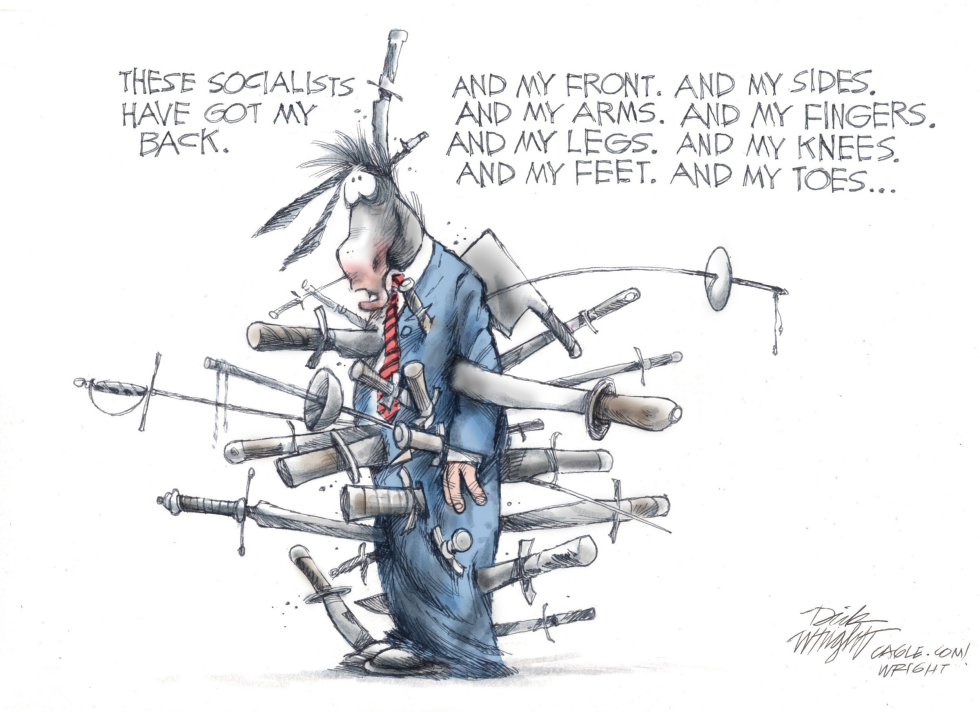
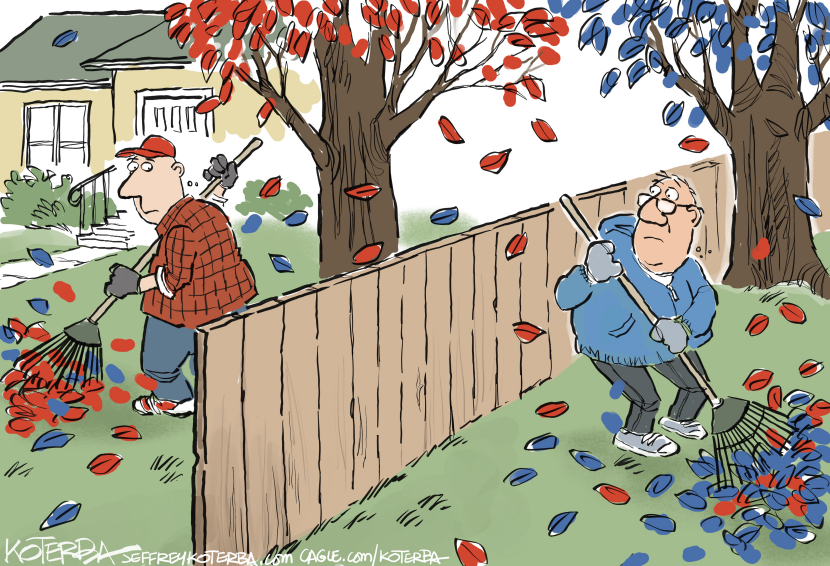
Tensions between socialist factions and mainstream Democrats continue to strain party cohesion ahead of future elections. The cartoon depicts socialists as actively harming the Democratic brand through relentless internal attacks. It argues that such infighting weakens the party's ability to govern effectively and appeal to broader voters.
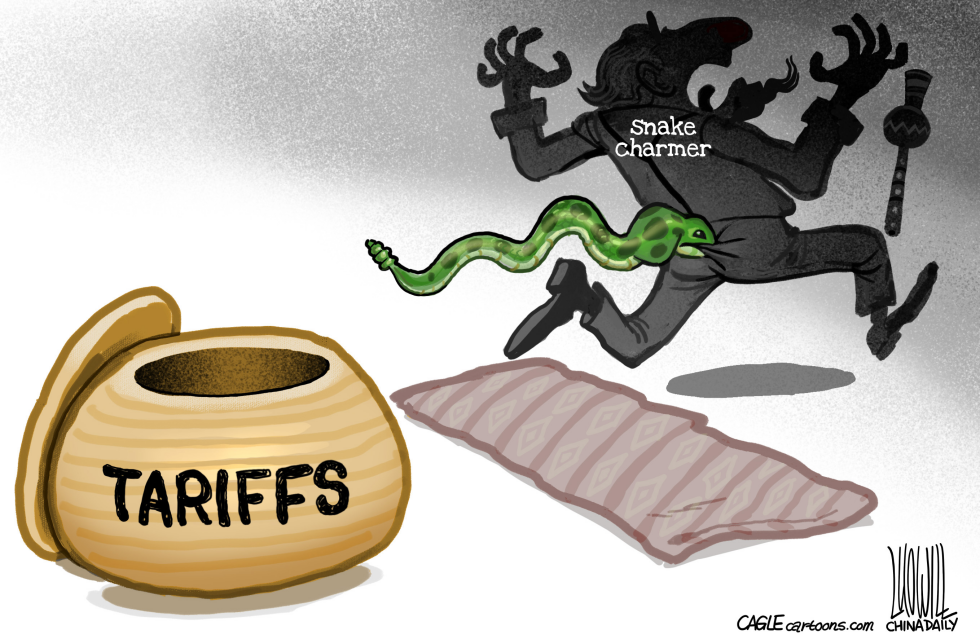
A political cartoon published August 28, 2026, shows a snake charmer fleeing as a green snake emerges from a pot labeled tariffs. The image uses the snake charmer metaphor to comment on tariff policies. The cartoon appeared in China Daily and was distributed via Cagle Cartoons. It responds to ongoing trade tensions involving tariffs. The visual suggests tariffs carry uncontrolled risks similar to an escaped snake.