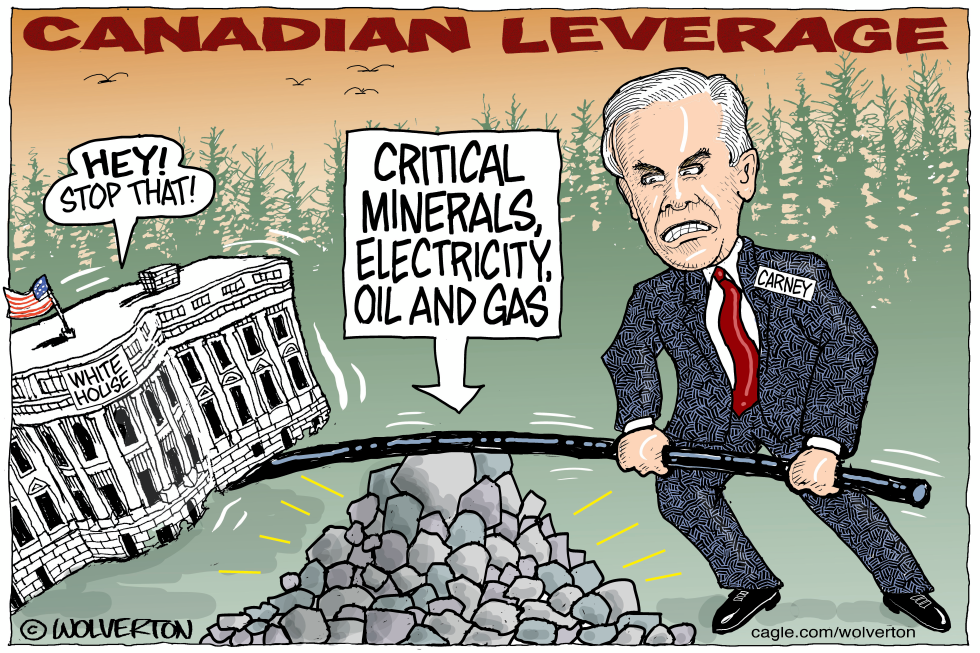
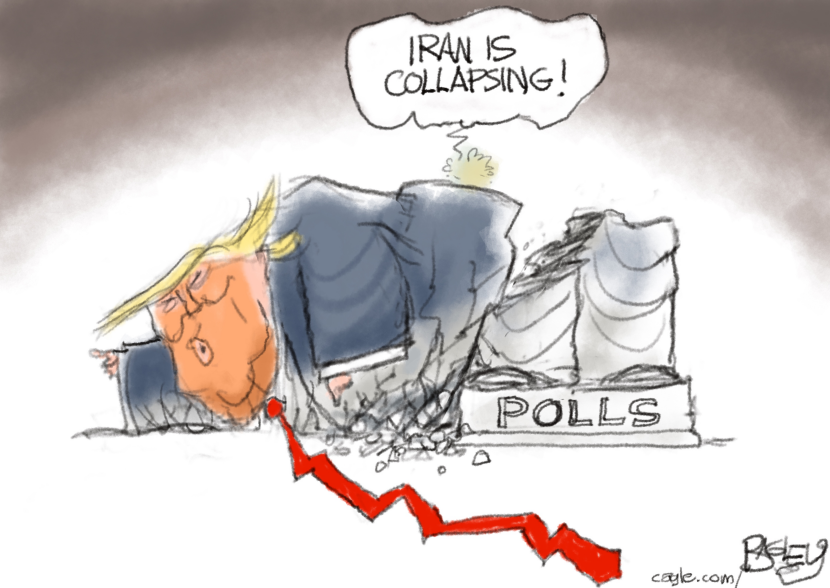
The cartoon depicts former Bank of Canada governor Mark Carney using a pipe labeled critical minerals, electricity, oil and gas as a lever to damage the White House. A speech bubble from the building protests the action. Published on September 12, 2026, the image comments on ongoing Canada-US tensions over resource exports and trade policy. Carney is shown in a suit with a determined expression, standing on rubble. The visual underscores Canada's potential to restrict supplies vital to the American economy. It reflects real-world discussions about critical minerals and energy interdependence between the two nations.
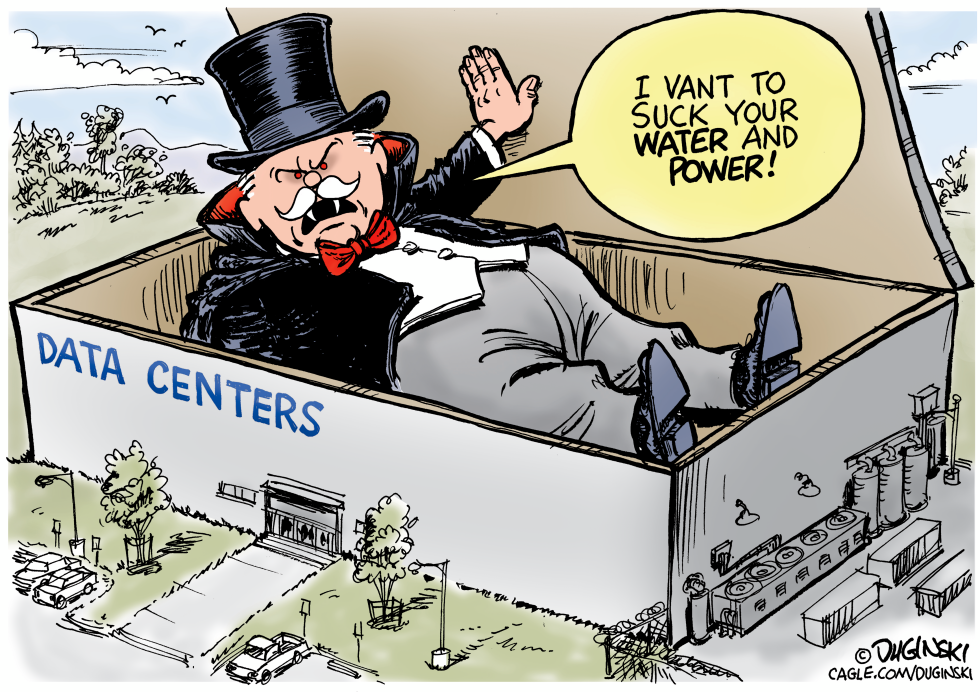
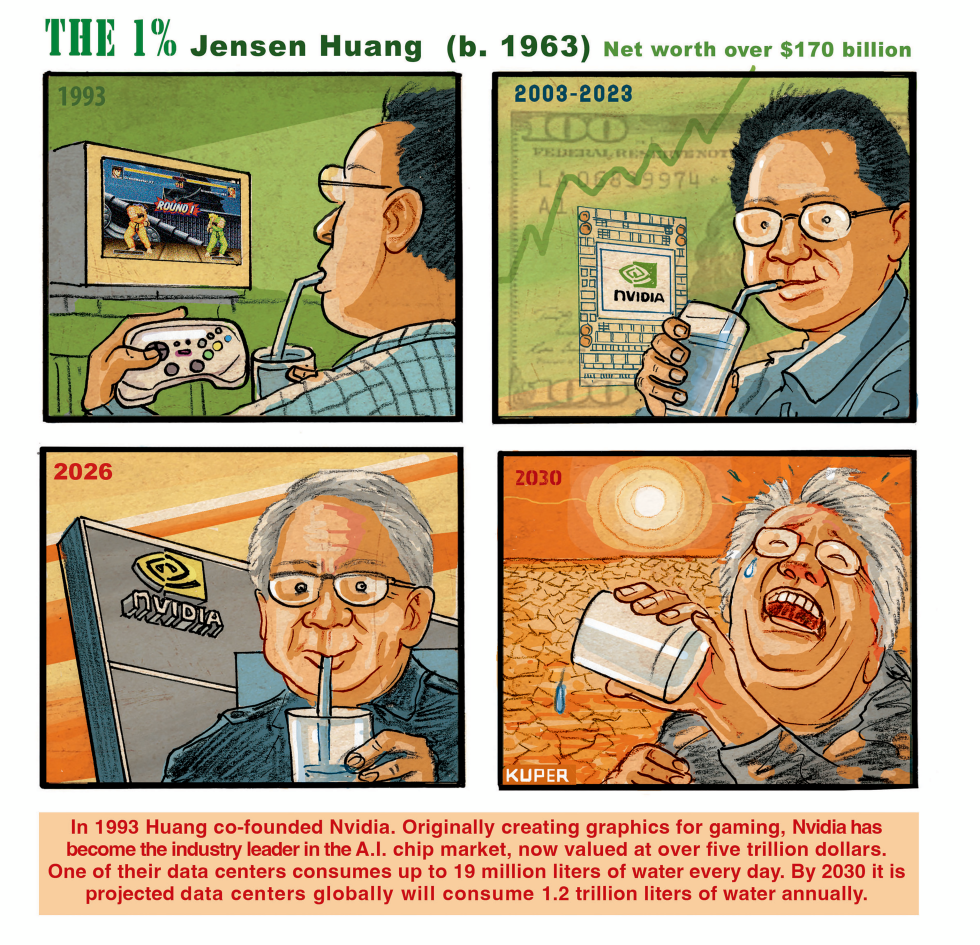
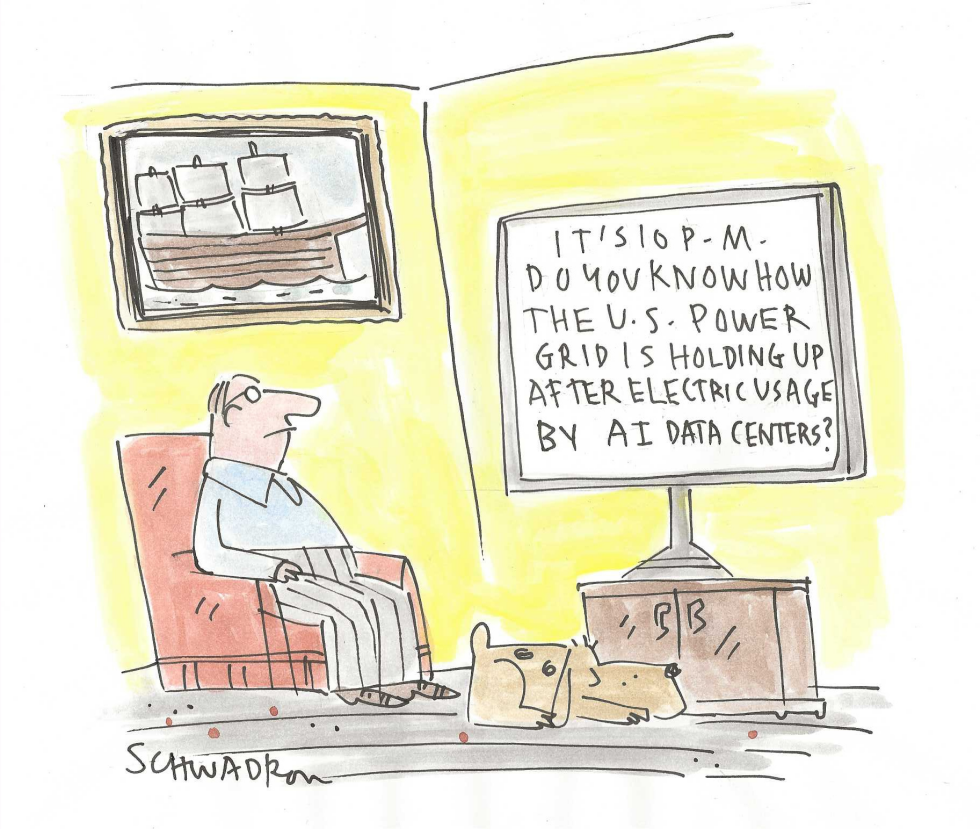
Data center operators continue rapid expansion to support cloud computing and artificial intelligence workloads, driving sharp increases in electricity and water consumption across multiple states. Local utilities report strain on grids and aquifers as facilities require constant cooling and backup power. The editorial takes the position that unchecked growth treats public resources as unlimited, urging stronger oversight before shortages worsen.
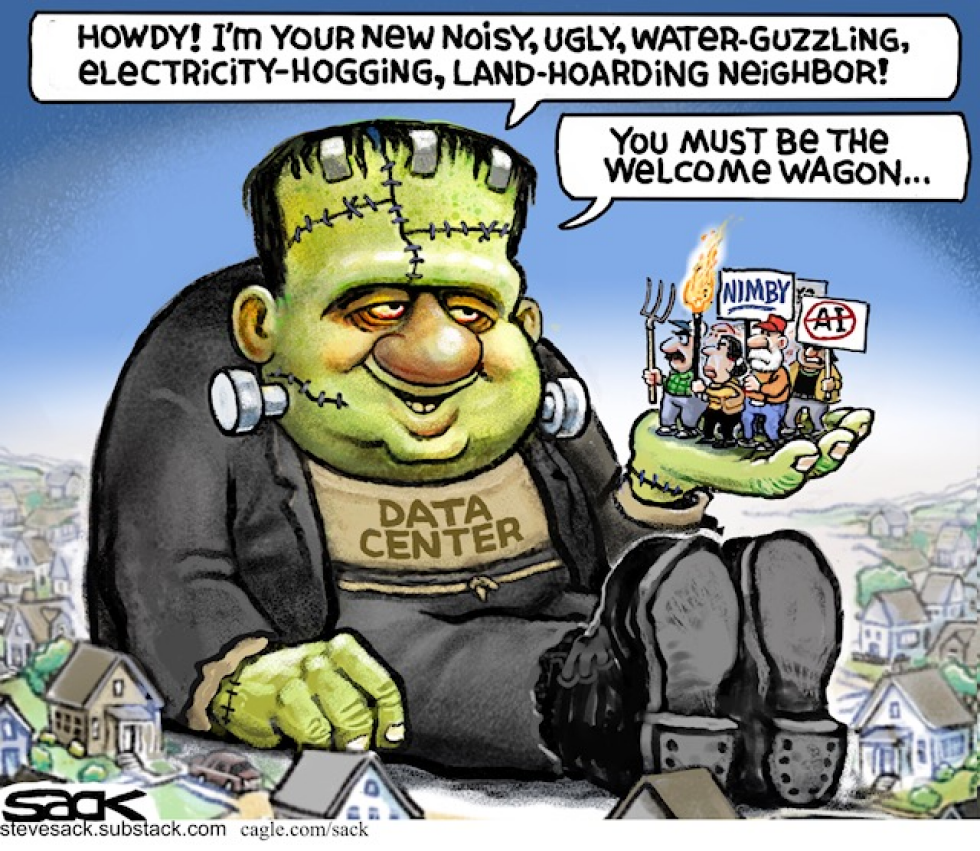
Rapid growth in AI data centers has triggered protests in suburban areas over high electricity and water consumption plus land use. Residents organized under NIMBY banners to block projects they say strain local infrastructure. The cartoon frames the facilities as intrusive newcomers disrupting neighborhoods.
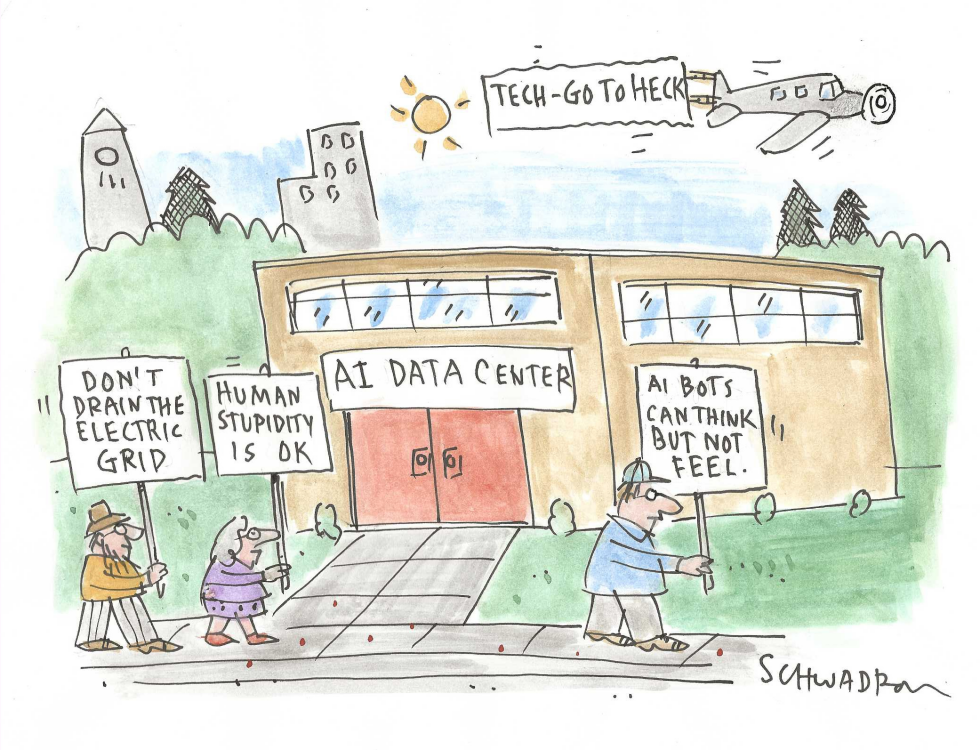
Protesters gather outside an AI data center building holding signs that read 'DON'T DRAIN THE ELECTRIC GRID,' 'HUMAN STUPIDITY IS OK,' and 'AI BOTS CAN THINK BUT NOT FEEL.' An airplane tows a banner reading 'TECH-GO TO HECK' overhead. The cartoon by Harley Schwadron, published July 31, 2026, depicts public opposition to the energy demands of AI facilities amid ongoing debates about data center impacts on electricity grids and technology development.
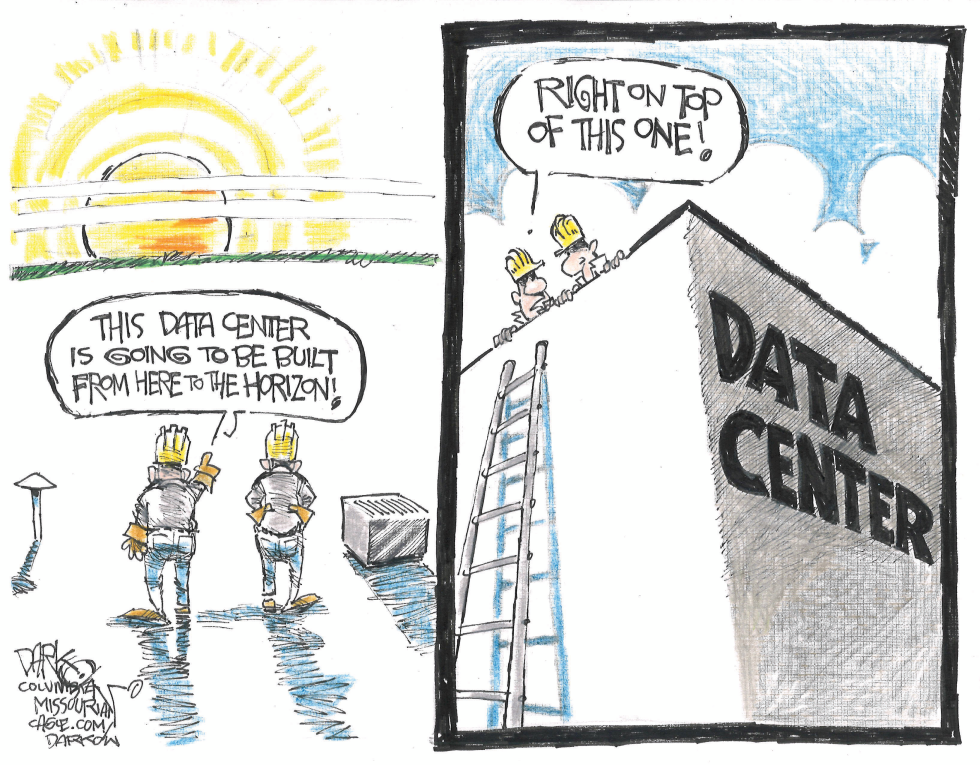
The cartoon by John Darkow depicts construction workers surveying expansive sites for new data centers, with one declaring plans to build from the current location to the horizon. In the adjacent panel, workers on a ladder atop a massive data center building announce plans to place another facility directly on top. The image responds to the ongoing surge in data center development fueled by artificial intelligence demands. As of mid-2026, tech companies continue rapid expansion of facilities that require significant land, electricity and water resources. Local governments face increasing pressure to manage zoning, infrastructure strain and environmental impacts from these projects.
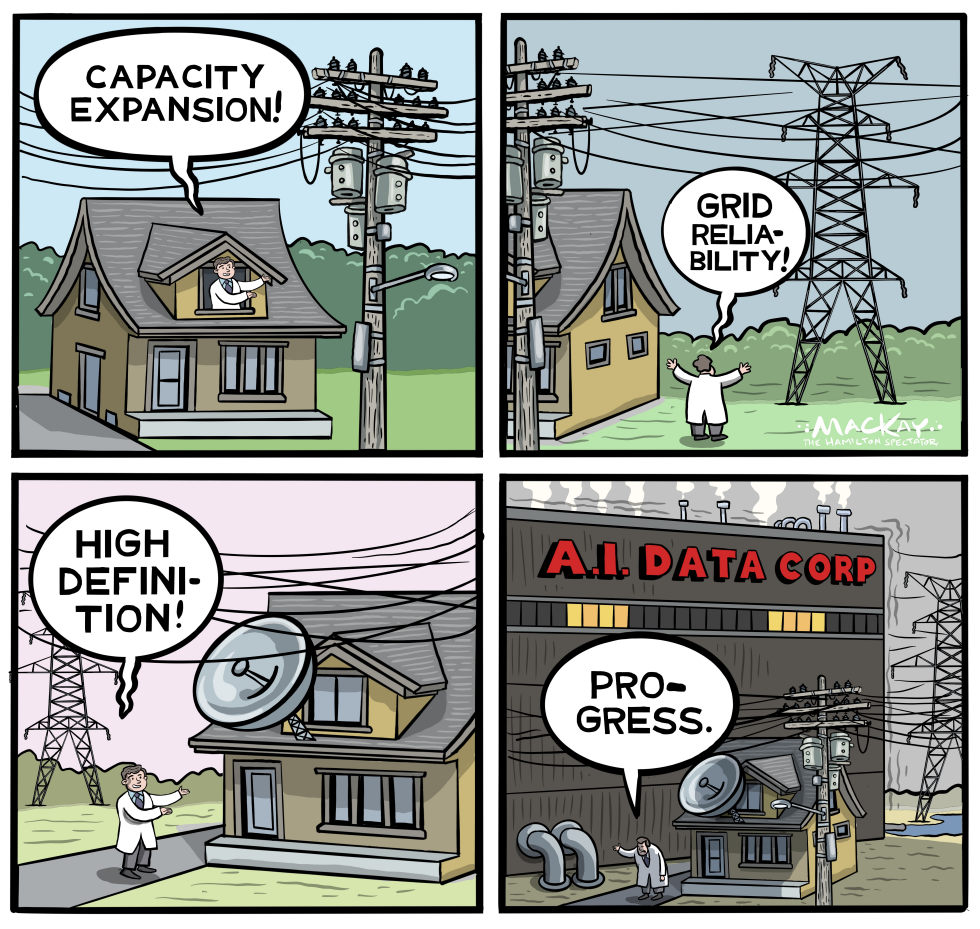
A four-panel comic depicts a man in a lab coat outside a suburban house promoting successive infrastructure upgrades. Early panels show utility poles and power lines added for capacity expansion and grid reliability. Later scenes introduce satellite dishes for high definition service. The final panel reveals an industrial A.I. DATA CORP building releasing smoke amid pipes and additional towers. The sequence highlights how artificial intelligence facilities intensify energy use and visible environmental effects on residential areas.
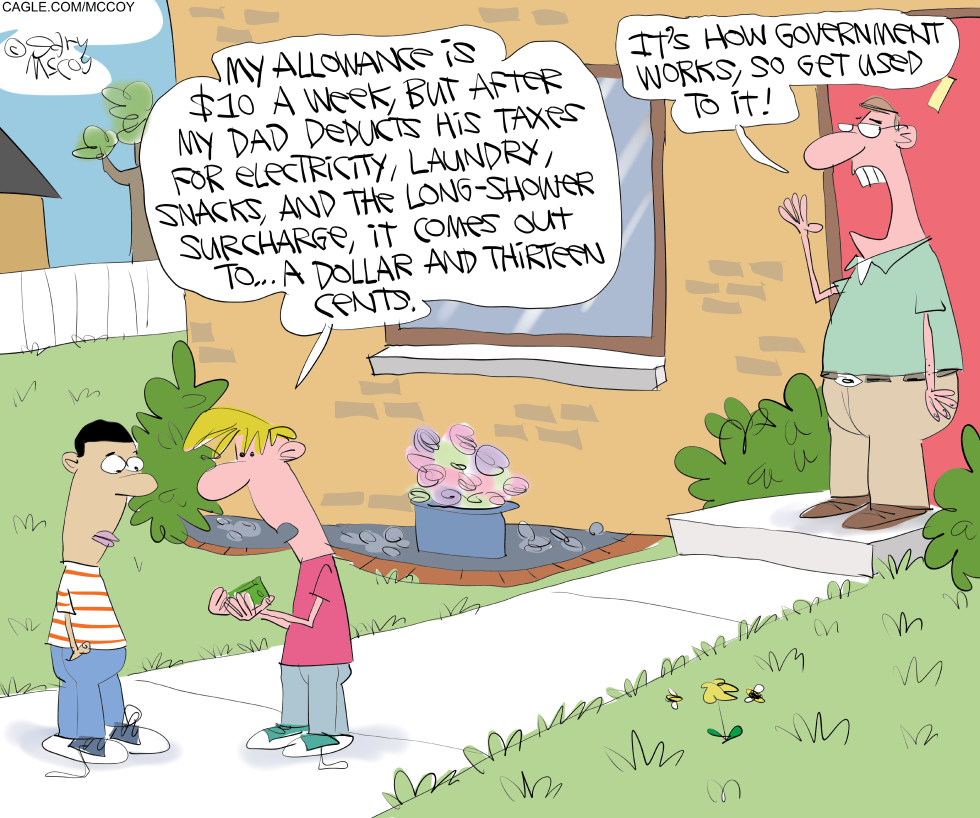
In the cartoon a blond boy in a pink shirt tells a friend in a striped shirt that his ten dollar allowance drops to a dollar thirteen after his dad deducts taxes for electricity laundry snacks and a long shower surcharge. The father stands on the porch in a green shirt and khakis waving one hand while stating that is how government works so get used to it. The scene includes a flower pot a sidewalk and green lawn with the artist signature visible.