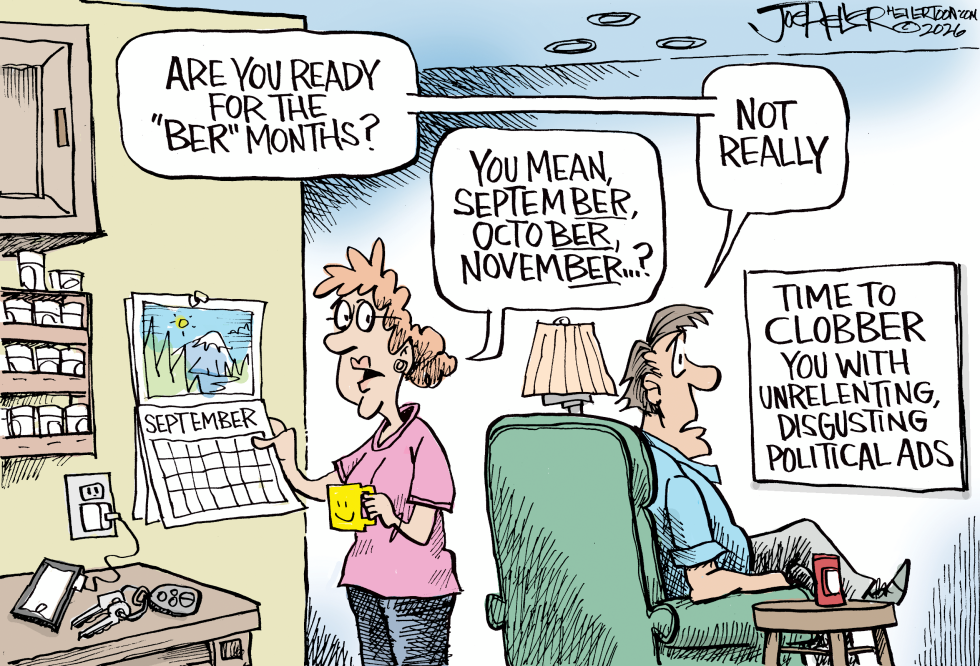
As September begins, the annual cycle of fall political advertising intensifies ahead of November elections. Candidates and outside groups ramp up spending on television, digital and mail campaigns to reach voters. The volume of messages creates widespread fatigue among the public. The cartoon highlights the predictable dread that accompanies the shift from summer to the final stretch of the campaign calendar.
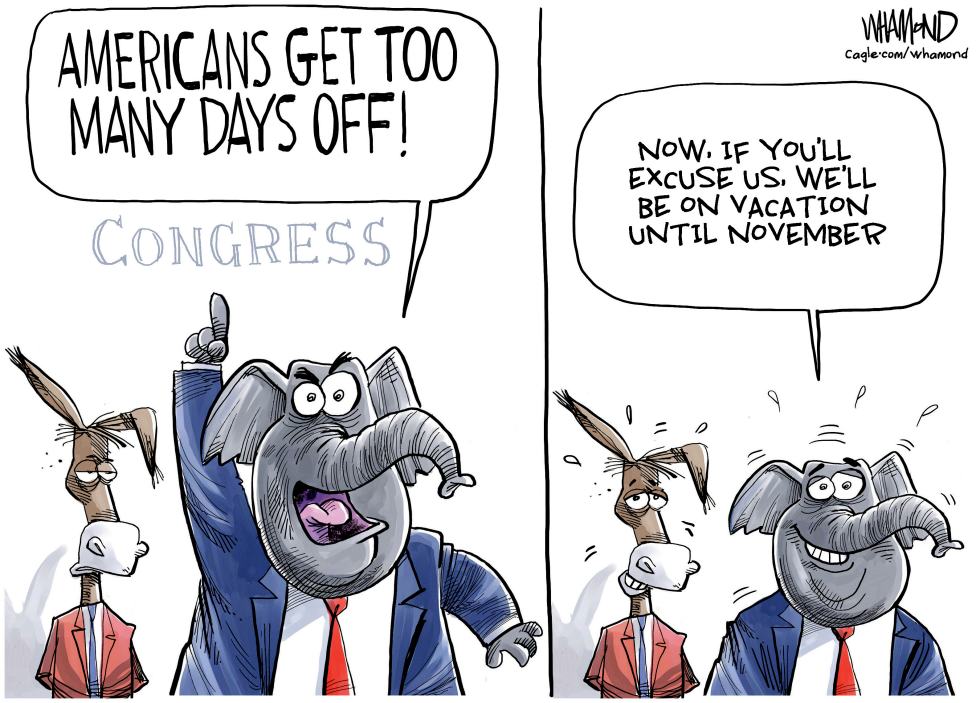
Congressional leaders from both parties have drawn criticism for lecturing American workers about taking too many days off while preparing to recess until November. The move comes as lawmakers face questions over productivity and priorities in an election year. The cartoon highlights the perceived double standard between public statements on labor and the actual schedule of elected officials.
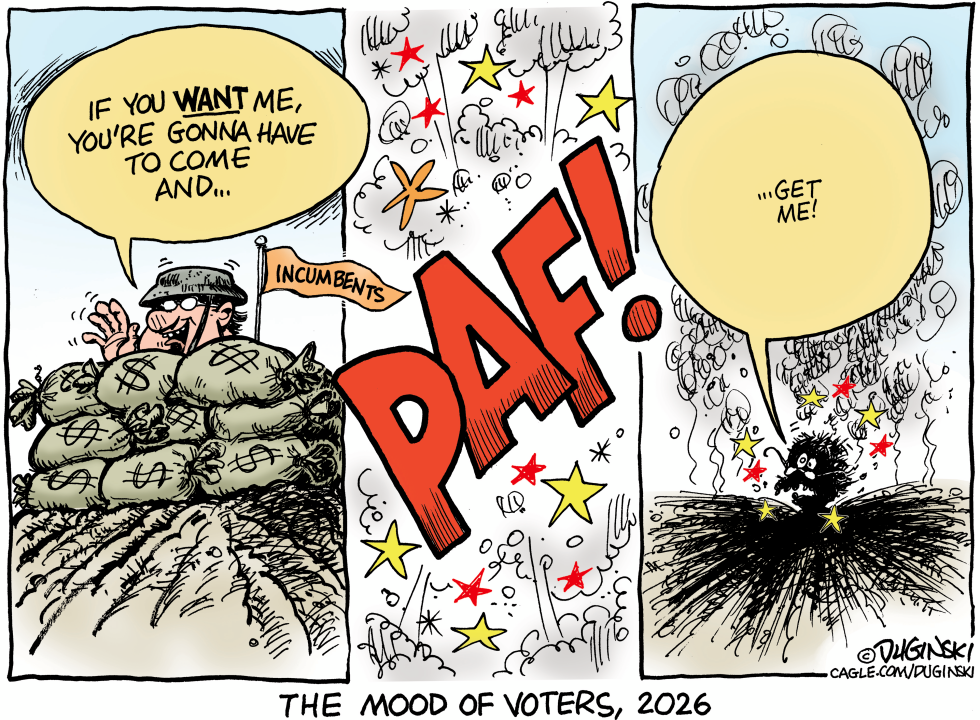
Voters are showing clear signs of turning against sitting officeholders as the 2026 election cycle advances. Incumbents face mounting pressure from constituents frustrated with long-term entrenchment and perceived insulation from accountability. This shift reflects broader discontent with the status quo in Congress and state legislatures. The cartoon argues that the protective barriers incumbents have built around themselves are proving ineffective against rising voter anger.
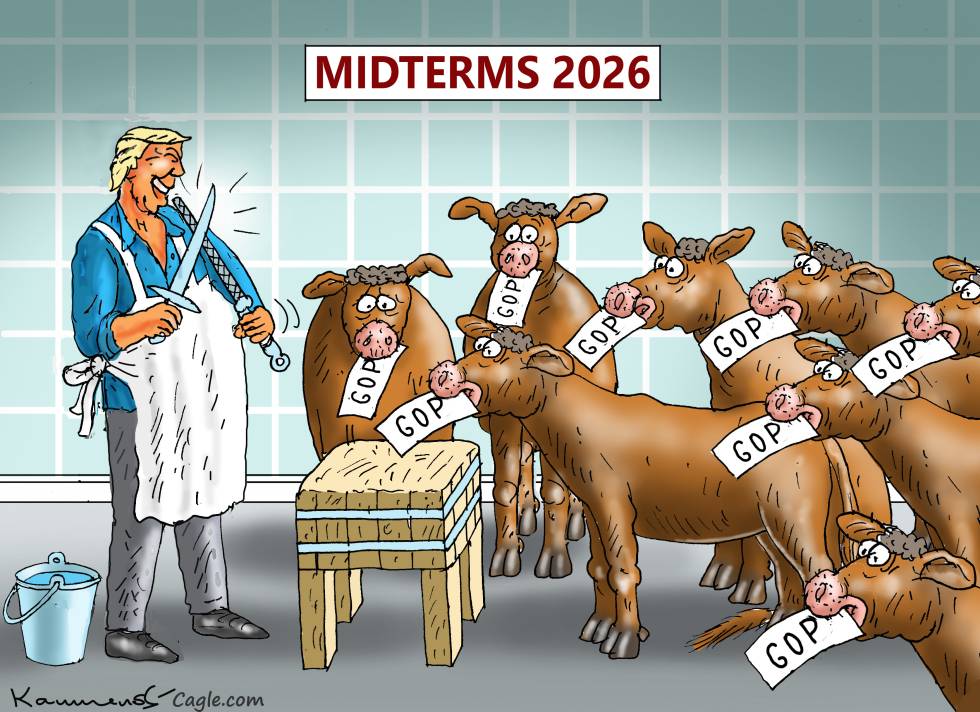
With the 2026 midterm elections approaching, former President Donald Trump has intensified efforts to shape Republican candidate slates through endorsements and public pressure. Party primaries have become battlegrounds where loyalty tests determine survival. The cartoon portrays this dynamic as a deliberate culling of the herd, with Trump positioned as the decisive figure deciding which GOP members advance. Critics argue the approach risks alienating voters and weakening the party's broader appeal in November contests.
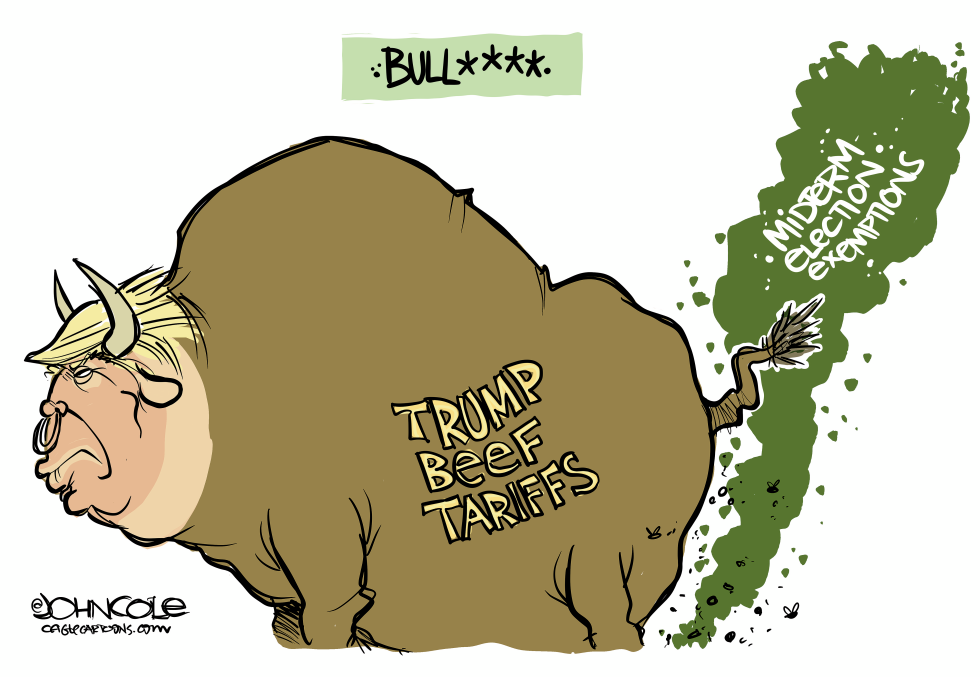
Tariff policy under the Trump administration faces scrutiny as midterm elections near. Exemptions tied to political timing draw criticism for undermining consistent trade enforcement. The piece portrays the approach as inconsistent and driven by electoral concerns rather than economic principle.
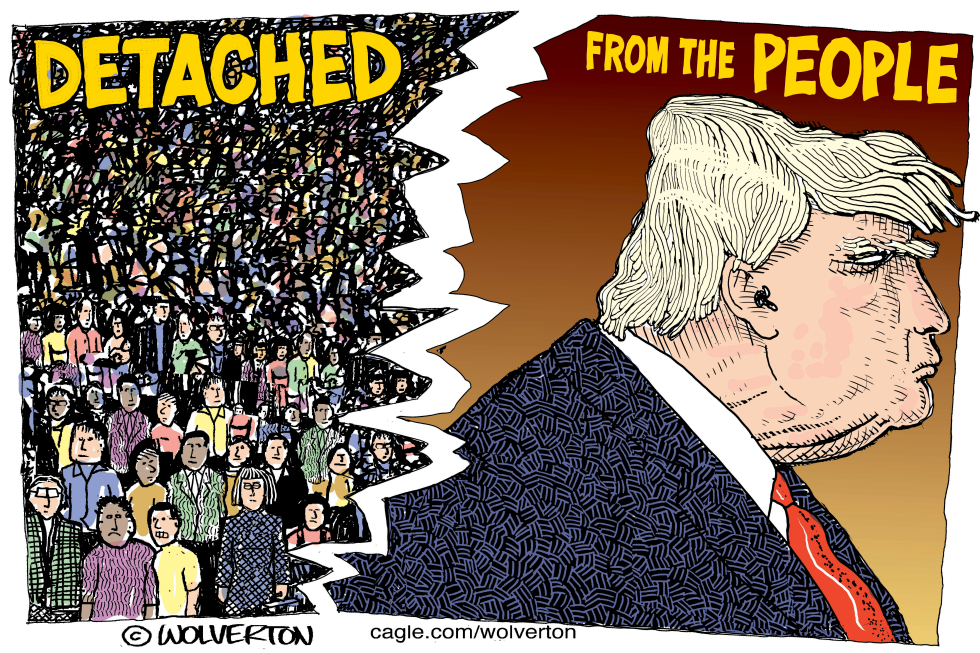
The illustration presents Donald Trump in right profile wearing a dark suit and red tie with an earpiece visible. A jagged white line divides the frame. On the left a dense multicolored crowd fills the space beneath the word DETACHED. On the right the phrase FROM THE PEOPLE appears above the figure. The work responds to ongoing discussions about political figures and public connection during the 2026 period.
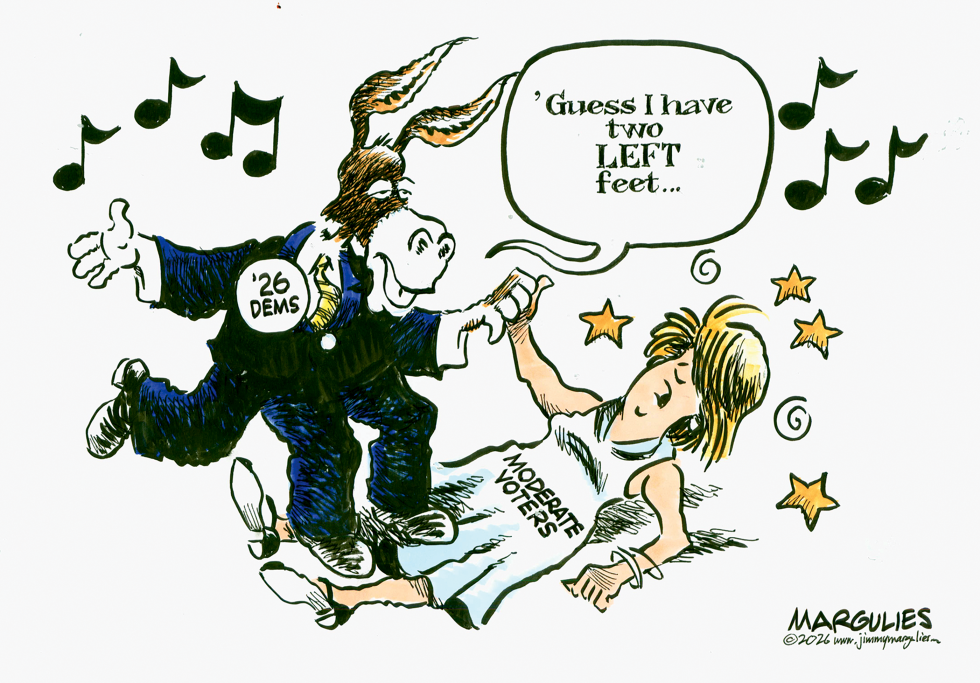
Democrats heading into the 2026 midterms face internal pressure to energize their base with progressive policies, yet this risks further distancing moderate voters essential for broader electoral success. The party has advanced left-leaning positions on issues like spending and social policy in recent cycles. Critics argue this approach prioritizes ideological purity over coalition building. The piece portrays the Democratic donkey as stepping on moderates while acknowledging its own missteps, highlighting the tension between base mobilization and centrist appeal.
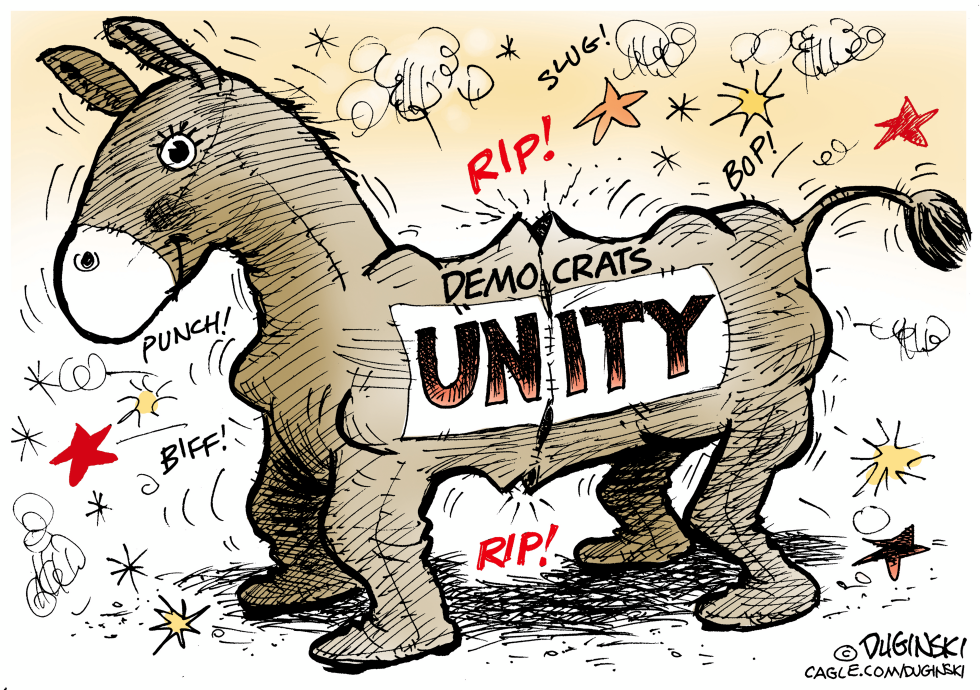
Democrats continue to display public divisions over strategy and messaging in the run-up to midterm and presidential contests. Party leaders struggle to project cohesion on issues ranging from economic policy to social priorities. The resulting perception of disarray weakens their ability to counter Republican narratives and mobilize voters. The cartoon highlights how these internal conflicts undermine the party's core message of unity.
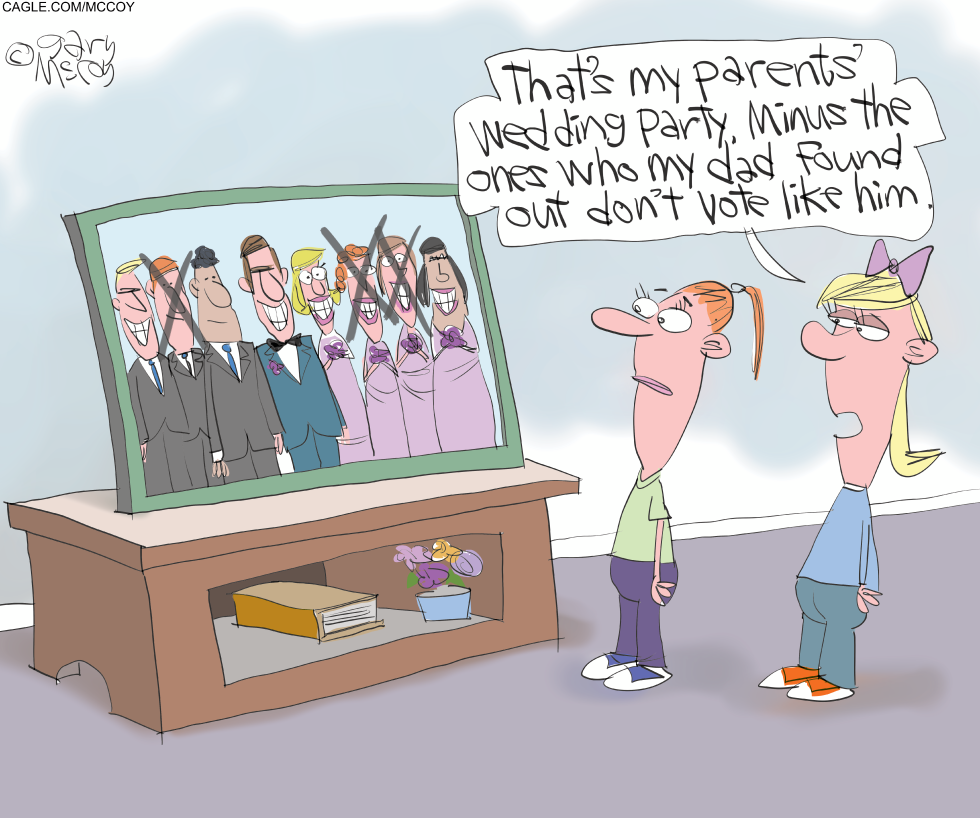
A television displays a wedding party photo with multiple guests marked out by large X's. Two children stand in front of the screen. The girl with the ponytail explains that her father removed family members from the wedding party after discovering they do not vote the same way he does. The scene highlights how political disagreements can fracture family events and relationships.
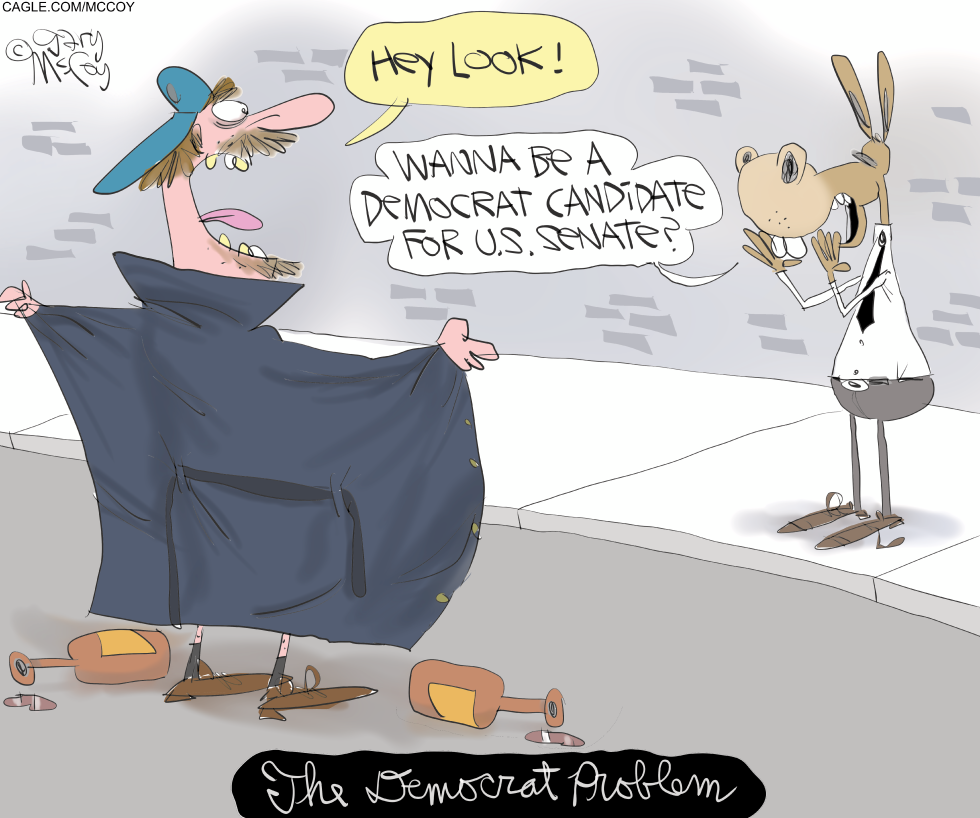
A trench-coated figure flashes on a sidewalk as a donkey in business attire extends a Senate candidacy offer. The July 2026 image from Gary McCoy labels the exchange as the Democrat problem. Scattered bottles and shoes lie at the flasher feet. The donkey speech bubble directly invites the figure to run for U.S. Senate. A separate bubble from the flasher draws attention to the moment.
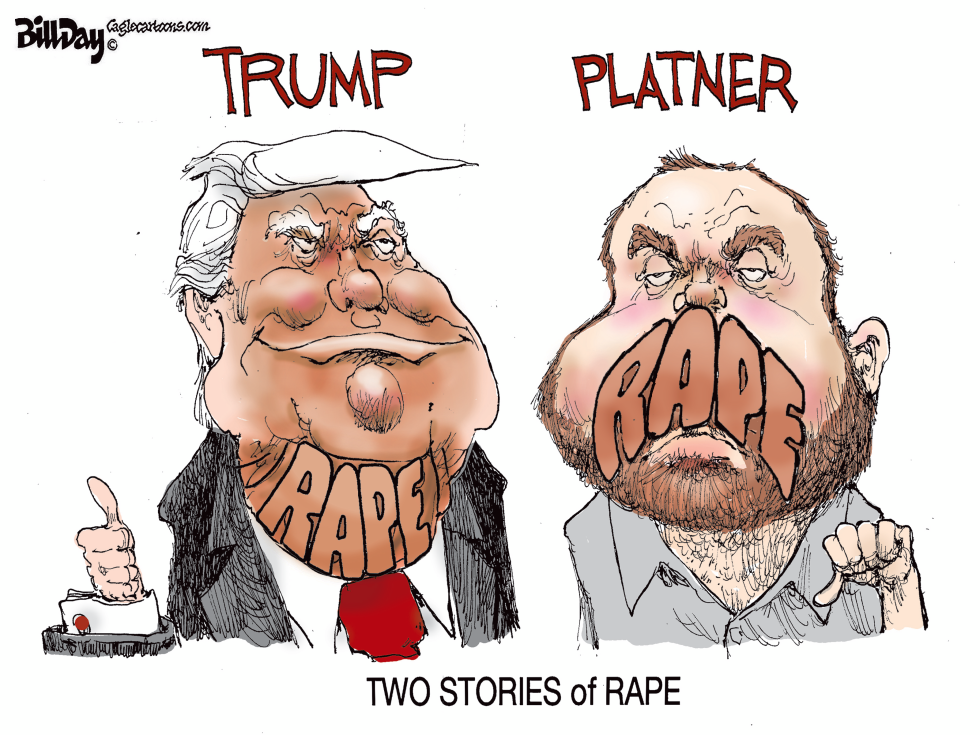
The image presents side by side depictions of Donald Trump and an individual named Platner. Each has the word rape overlaid on the lower face area. Trump extends a thumbs up gesture near papers while Platner extends a thumbs down gesture. Large red text at the bottom reads two stories of rape. The date of July 2026 places this in a period of ongoing public discussion around accusations involving prominent figures.
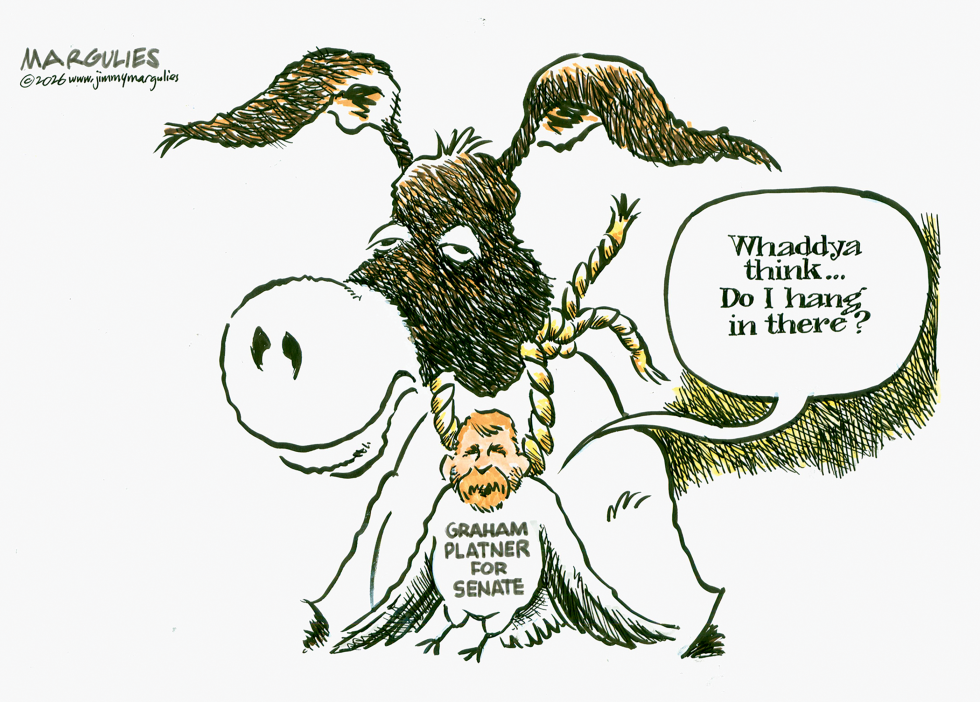
The image shows Graham Platner suspended by a noose from the neck of a Democratic donkey. The donkey has a speech bubble asking Whaddya think... Do I hang in there? Platner wears a shirt reading GRAHAM PLATNER FOR SENATE. The scene uses the party symbol and a hanging pun tied to the 2026 Senate race.
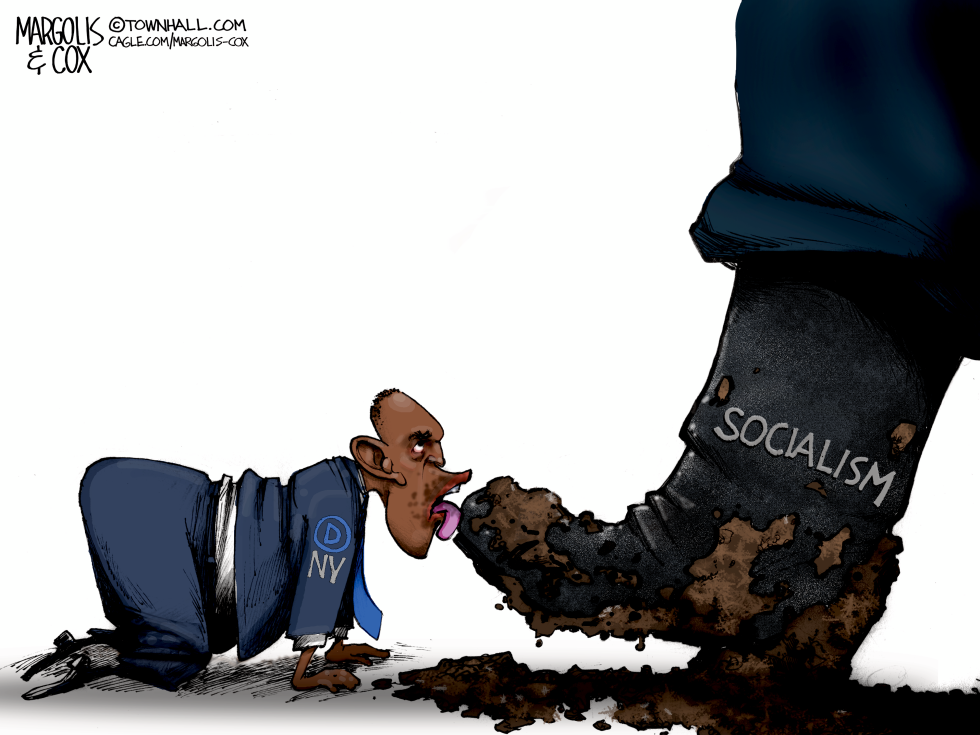
A political cartoon dated July 1, 2026, shows a diminutive figure wearing a jacket marked D and NY on hands and knees licking a massive boot labeled SOCIALISM. The boot is coated in thick mud that drips onto the ground. The artist Margolis & Cox places the scene against a plain white background with the figure looking upward. The image directly illustrates the title NY Democrat Licks Socialism Boot. No other text or figures appear.
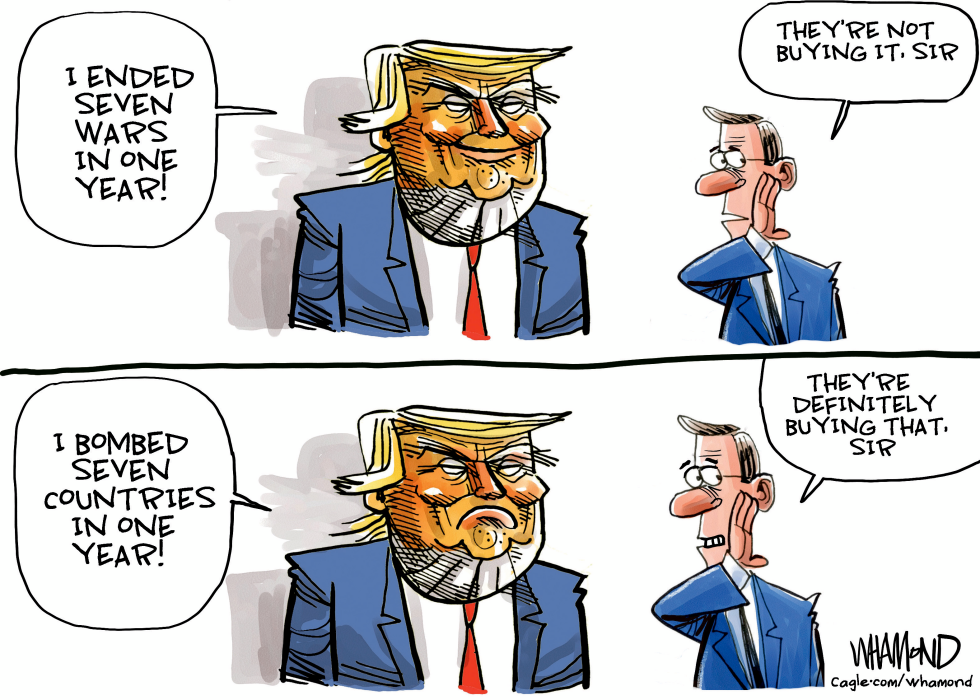
This Donald Trump cartoon masterfully captures the essence of satirical Trump presidency through political bombing humor. Trump boasts about ending seven wars, but his advisor notes the public's skepticism, leading to a pivot where he claims bombing seven countries instead, which the advisor says is 'definitely buying that.' The Trump wars satire underscores inconsistencies in Trump foreign policy cartoon style, poking fun at boastful claims versus reality. Created by Whamond, this political cartoon Whamond piece exemplifies humorous political analysis on US military satire, blending irreverent wit with insightful commentary on leadership and perception.