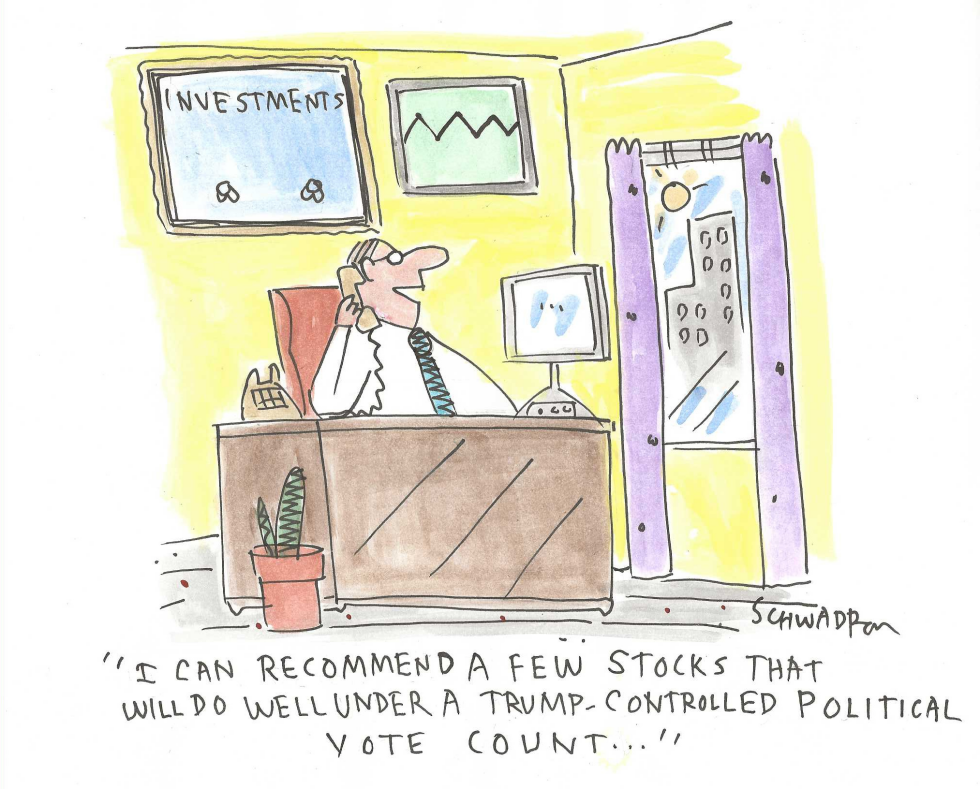
A stockbroker on the phone recommends investments expected to perform under a Trump-controlled political vote count. The scene occurs amid visible symbols of restraint including handcuffs on an investments sign and a barred door resembling a prison cell. The piece responds to ongoing concerns about election integrity and potential political interference in vote tabulation processes. It takes the position that such influence creates opportunities for financial gain tied directly to control over electoral outcomes.
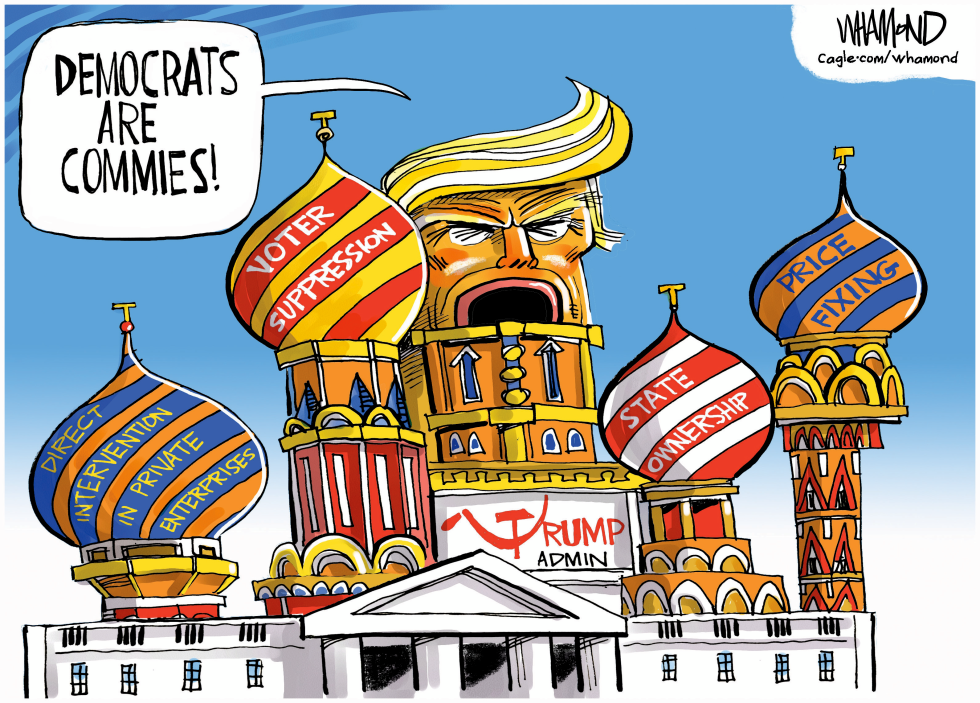
Donald Trump has renewed attacks labeling Democrats as communists amid ongoing debates over election rules and economic interventions. The accusation revives Cold War-era rhetoric in current political discourse. The piece portrays the Trump administration itself as adopting the very state-control measures it condemns.
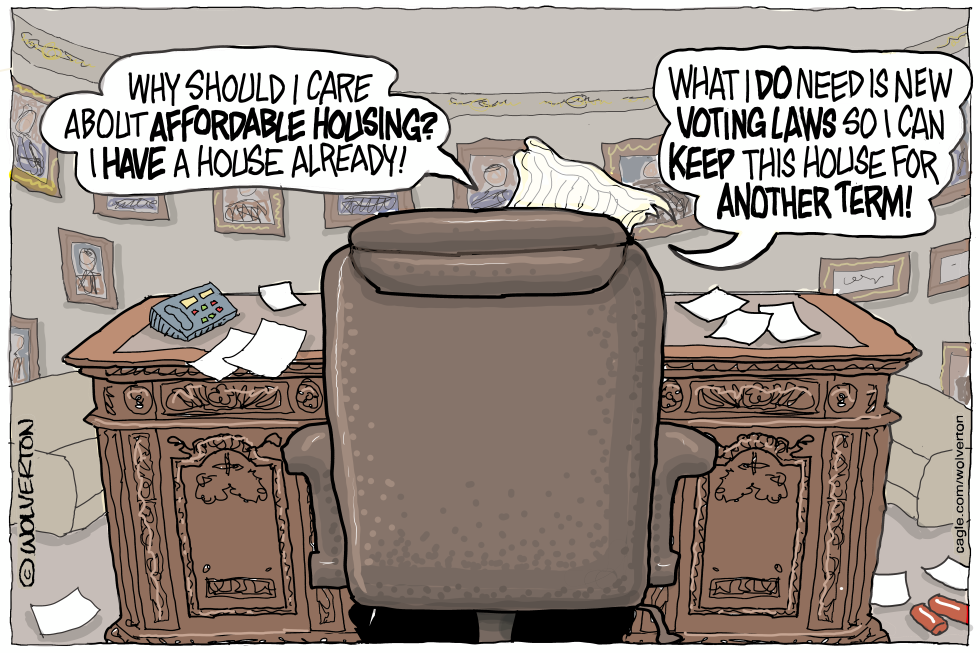
The cartoon depicts a politician viewed from behind at a large desk, declaring indifference to affordable housing because of personal ownership while demanding new voting laws to secure another term. The scene is set in a wood-paneled office with framed portraits and scattered papers. This visual responds to ongoing debates about election integrity measures and housing affordability challenges. The argument highlights how some incumbents may favor self-preservation through legislation over constituent needs like housing access. Broader context includes repeated legislative efforts to adjust voting rules in various states amid concerns over electoral outcomes.
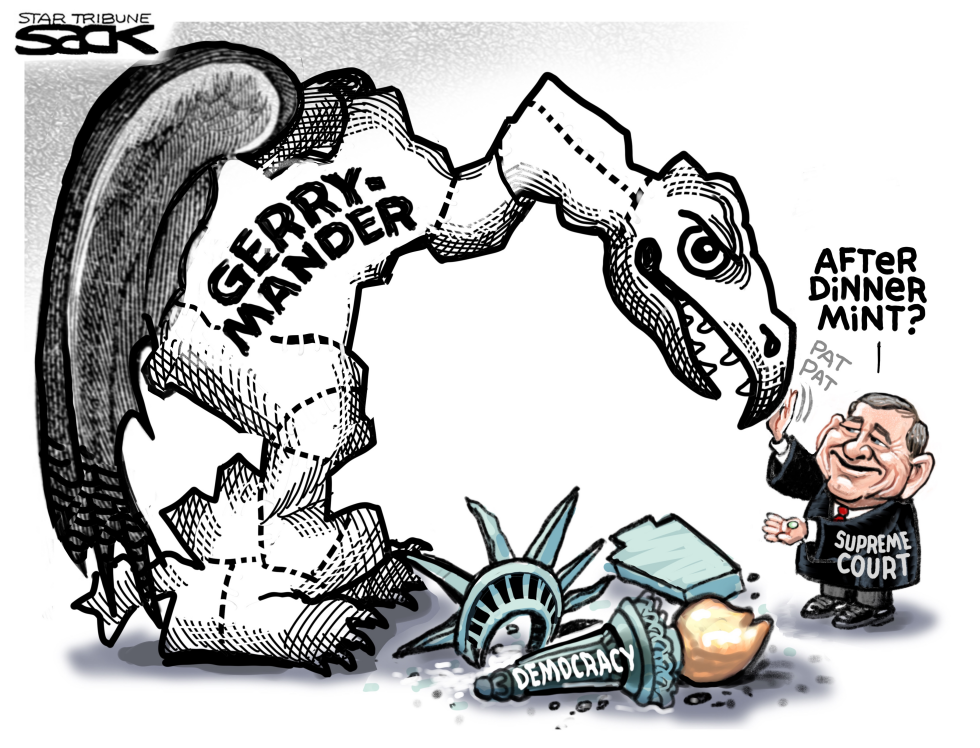
The cartoon shows a Supreme Court justice patting a gerrymander creature after it has consumed a broken Statue of Liberty labeled democracy. Published days after the June 2019 Rucho v. Common Cause ruling, the image criticizes the decision that removed federal courts from reviewing partisan gerrymandering claims. The monster formed from a U.S. map highlights how distorted districts undermine fair elections.