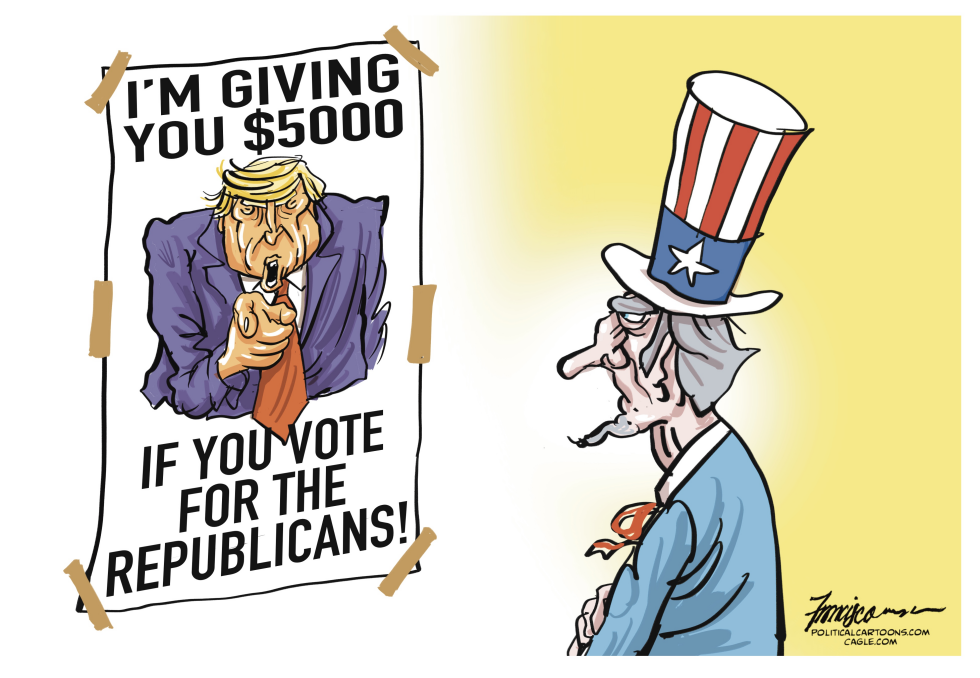
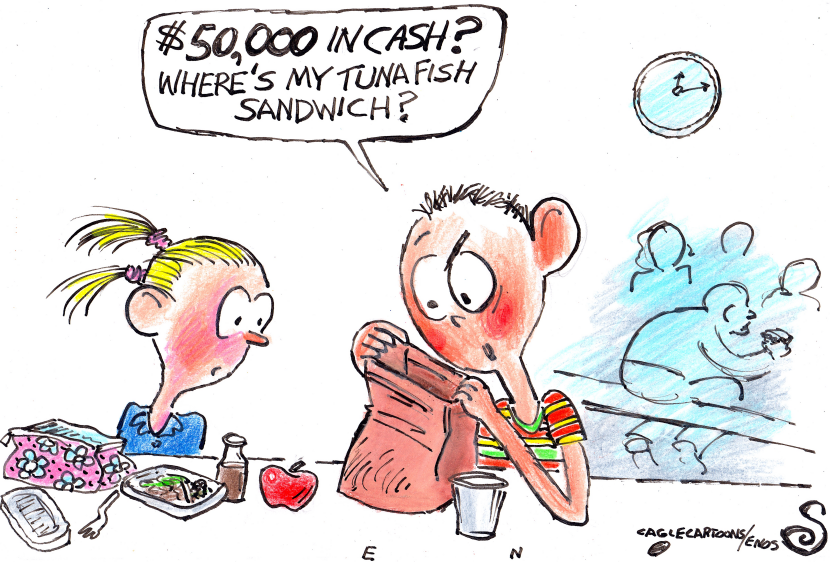
Donald Trump has floated direct cash payments to voters who support Republican candidates. The proposal surfaces weeks before the 2026 midterms and draws immediate scrutiny over its legality and intent. Critics argue the move risks turning elections into auctions. Supporters frame it as economic relief. The cartoon depicts the offer as a blunt transaction that leaves traditional symbols of American integrity uneasy.
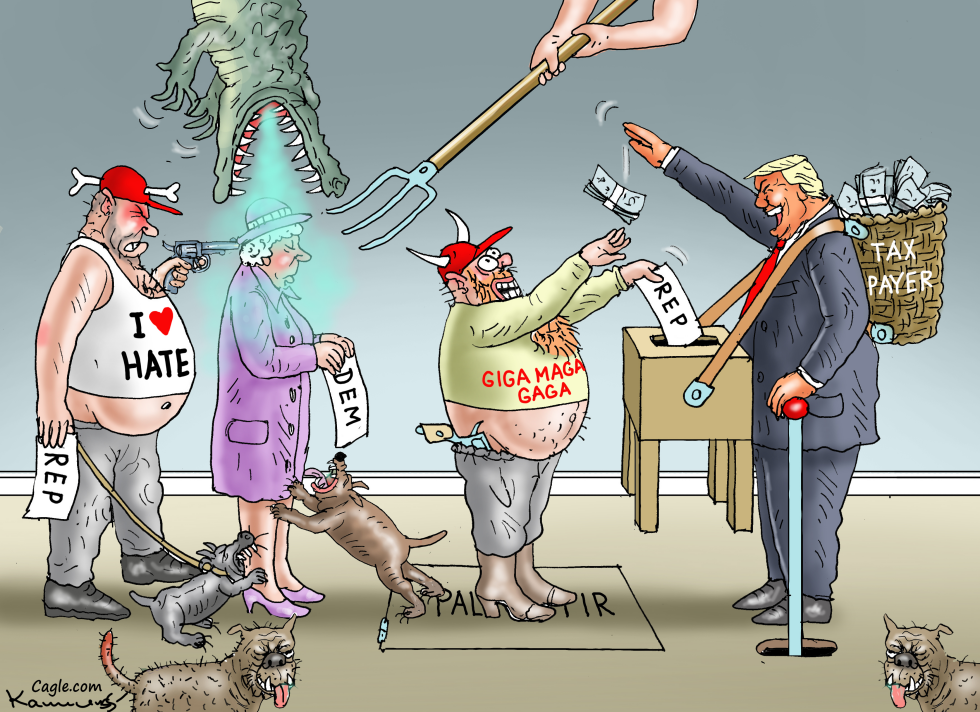
As the 2026 midterm elections approach, former President Trump has positioned himself as a central force in Republican campaigns, directing resources and mobilizing supporters. The cartoon highlights the use of taxpayer money in these efforts and the intense partisan divide, with Democrats portrayed as under attack. It takes the position that such involvement risks undermining fair electoral processes.
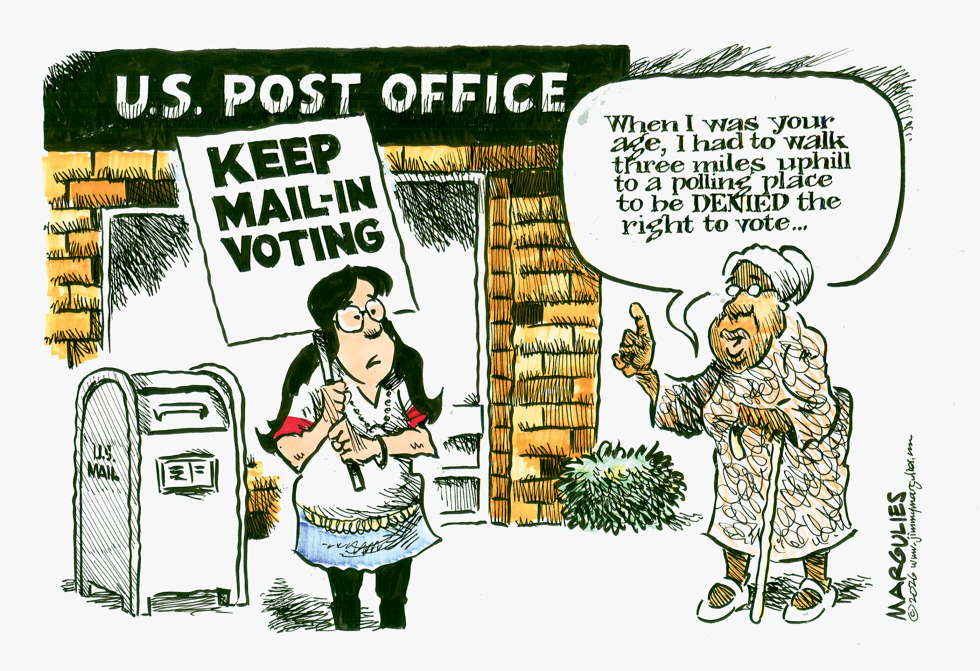
A protest sign at a U.S. Post Office calls for an end to mail-in voting. The cartoon responds to ongoing state-level efforts to restrict mail ballots after expanded use in recent elections. Such limits disproportionately affect older voters and those with mobility issues who previously faced physical barriers at polling places. The piece argues that rolling back mail-in options revives the very obstacles elderly citizens once endured, undermining broader access to the ballot.
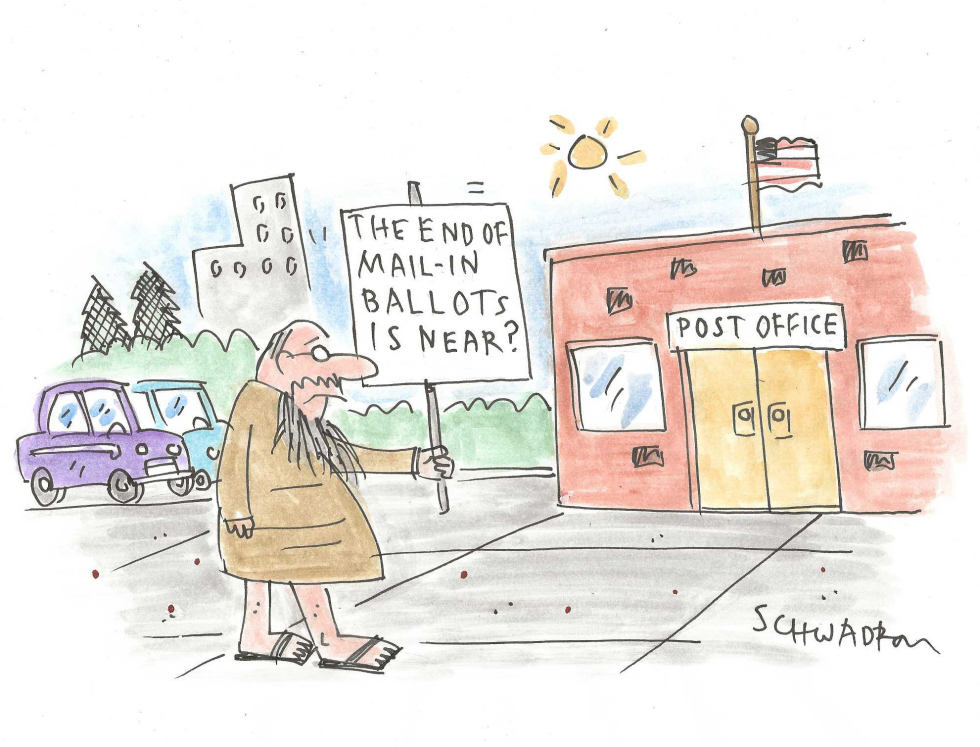
Proposals to restrict or end mail-in ballots have gained traction in several states ahead of upcoming elections, prompting concerns from voting rights advocates about reduced access for elderly, rural, and disabled voters. The post office has long served as a key conduit for absentee ballots. Critics argue the changes prioritize unproven fraud concerns over convenience and turnout. Supporters say tighter rules restore confidence in results. The cartoon frames the debate as an abrupt shift that could sideline a proven voting method.
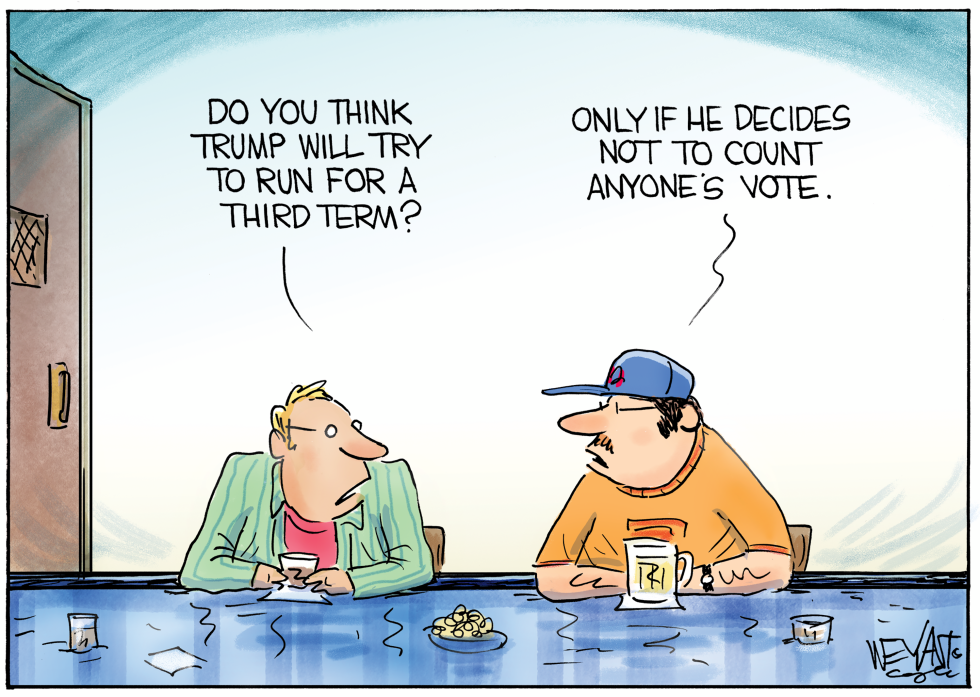
Discussions about a potential third term for Donald Trump continue in 2026 amid ongoing questions about electoral processes and term limits. The cartoon captures public skepticism regarding whether votes would be respected in any such effort. It takes the position that any attempt would hinge on disregarding voter input rather than following constitutional norms.
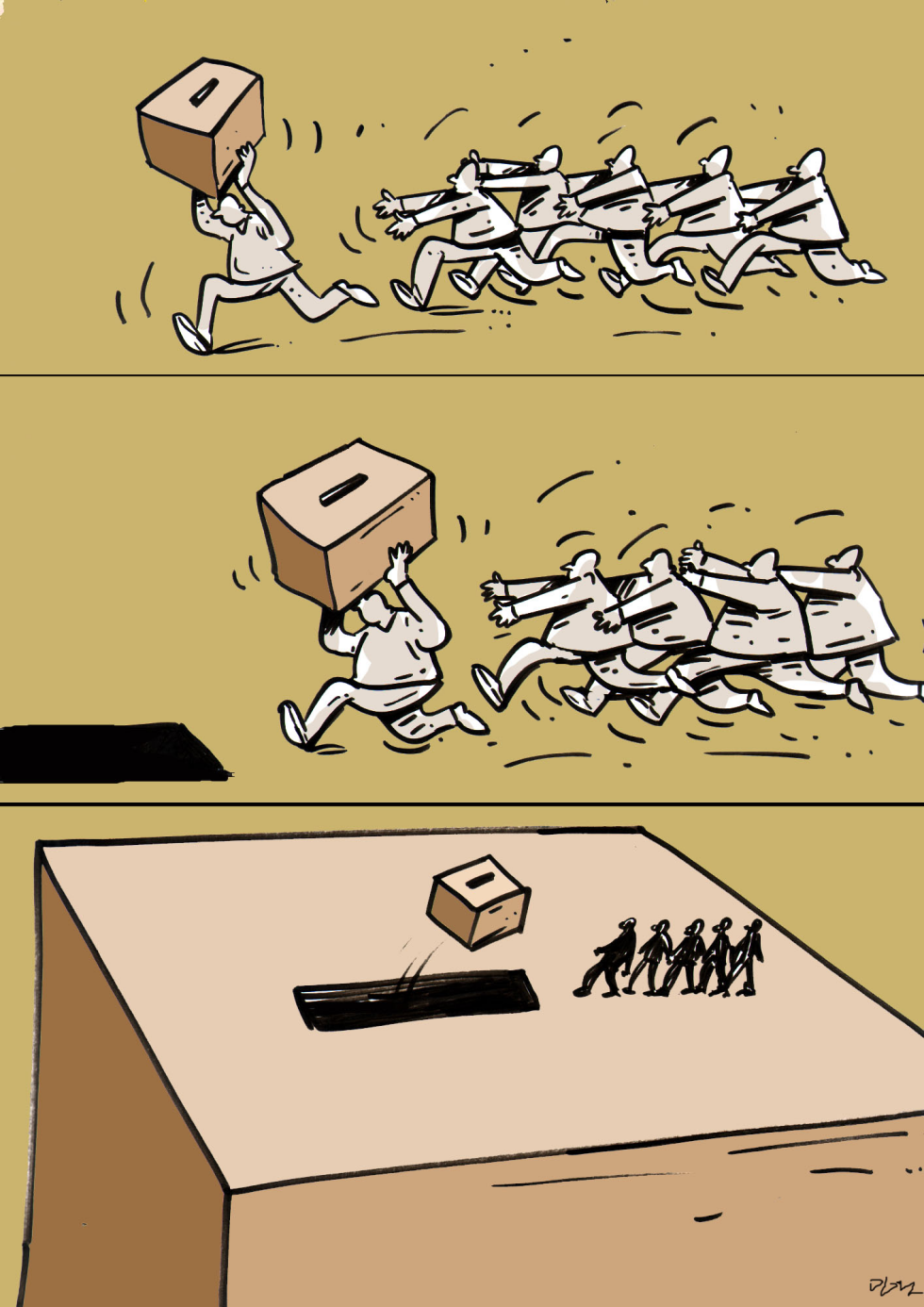
An election official carries a ballot box while pursued by a chain of figures in successive panels. The sequence ends with the box on a voting table beside its slot and the group nearing. The piece highlights concerns over ballot security and potential interference in vote counting during an election cycle.
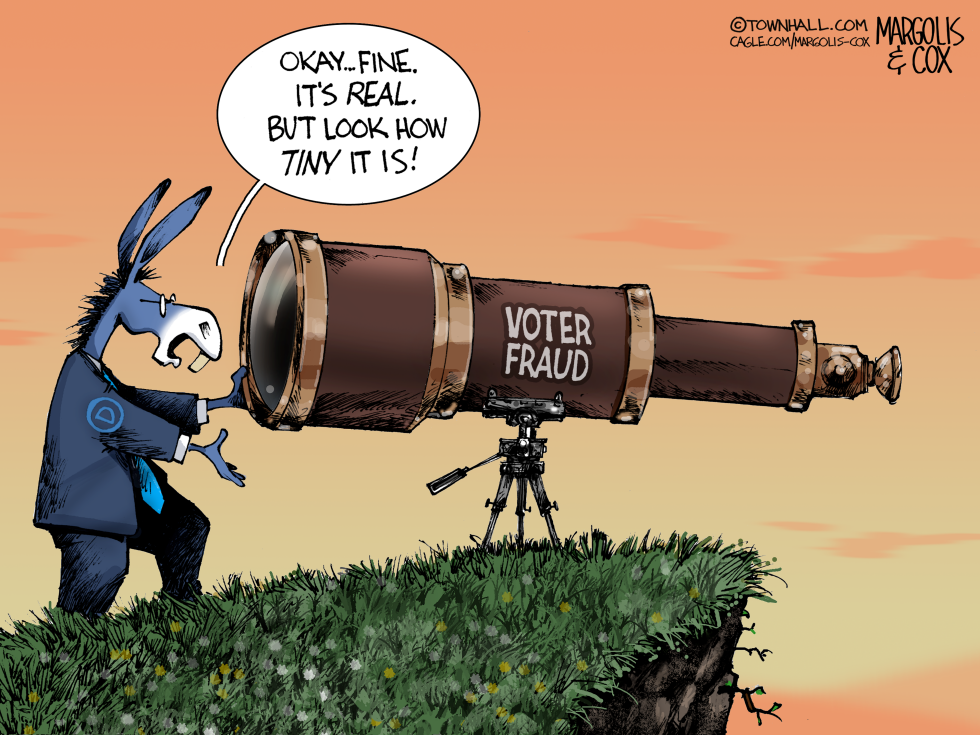
The cartoon depicts a Democratic donkey peering through a telescope labeled voter fraud and declaring the issue real but tiny. It responds to ongoing debates over election integrity and claims of fraud in recent voting cycles. The visual uses the telescope to illustrate perceived minimization of the problem's scope by party figures.
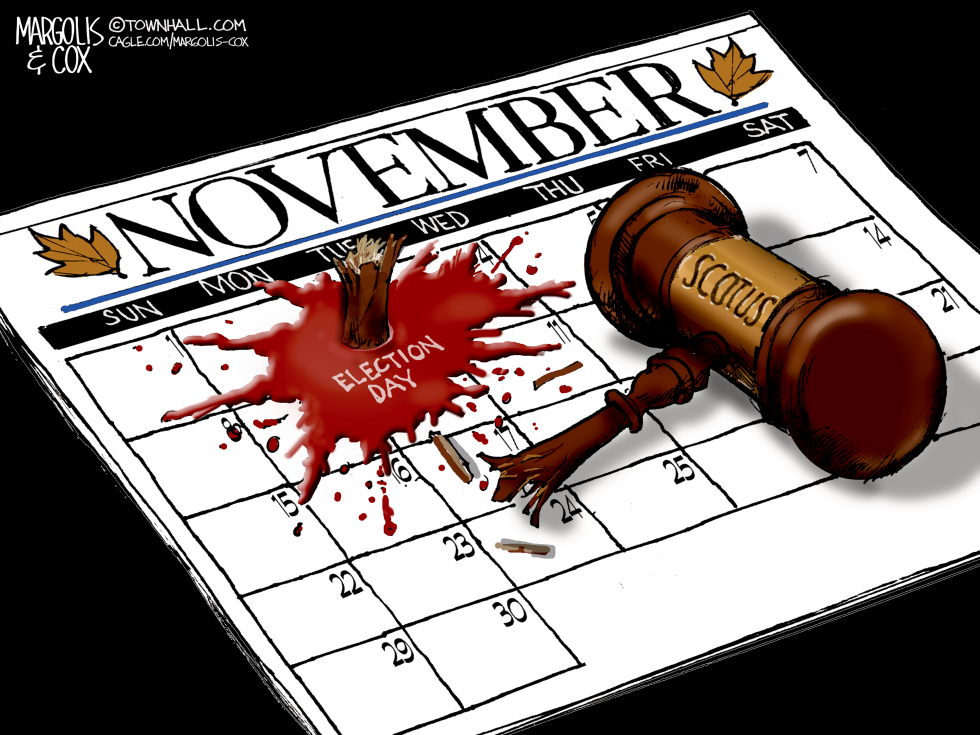
A large wooden gavel labeled SCOTUS rests on a November calendar page, its head crushing the words Election Day in a red splatter resembling blood. The calendar shows days of the week and dates with scattered debris and broken pieces around the impact site. The image appears on July 1, 2026, amid ongoing debates over Supreme Court rulings affecting electoral processes.
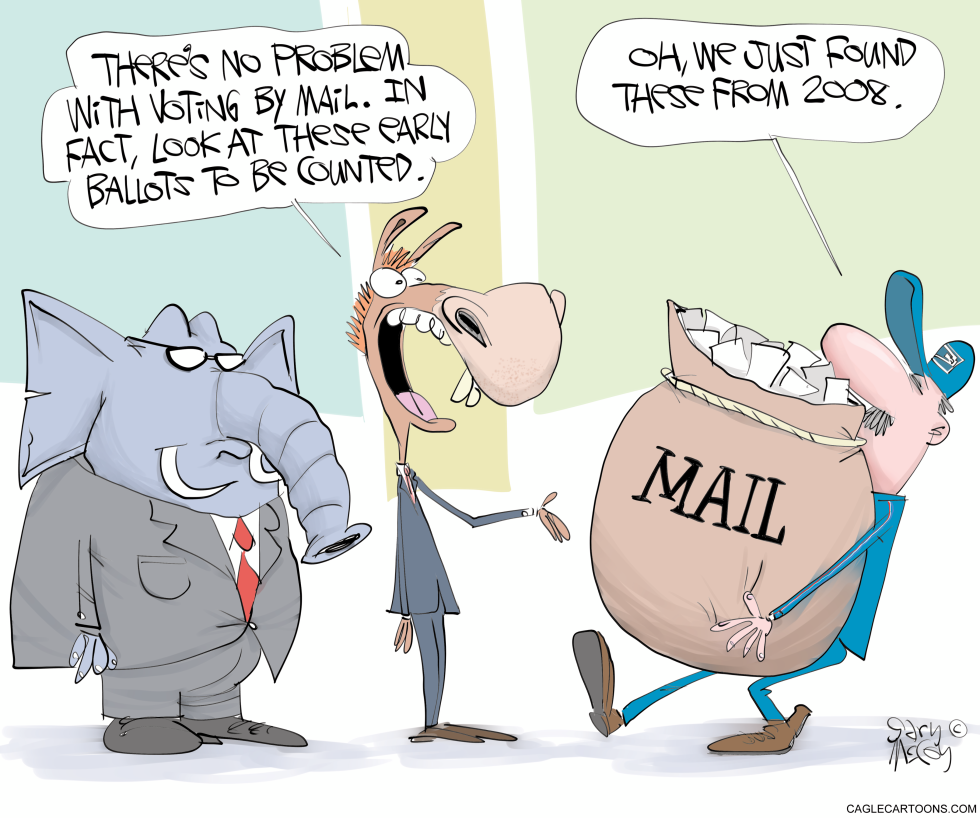
The cartoon shows a Republican elephant figure confronting a mail carrier who admits to discovering ballots from 2008. This visual responds to 2020 debates over expanded mail-in voting and potential fraud during the presidential election. Concerns centered on postal service reliability and delayed or mishandled ballots.
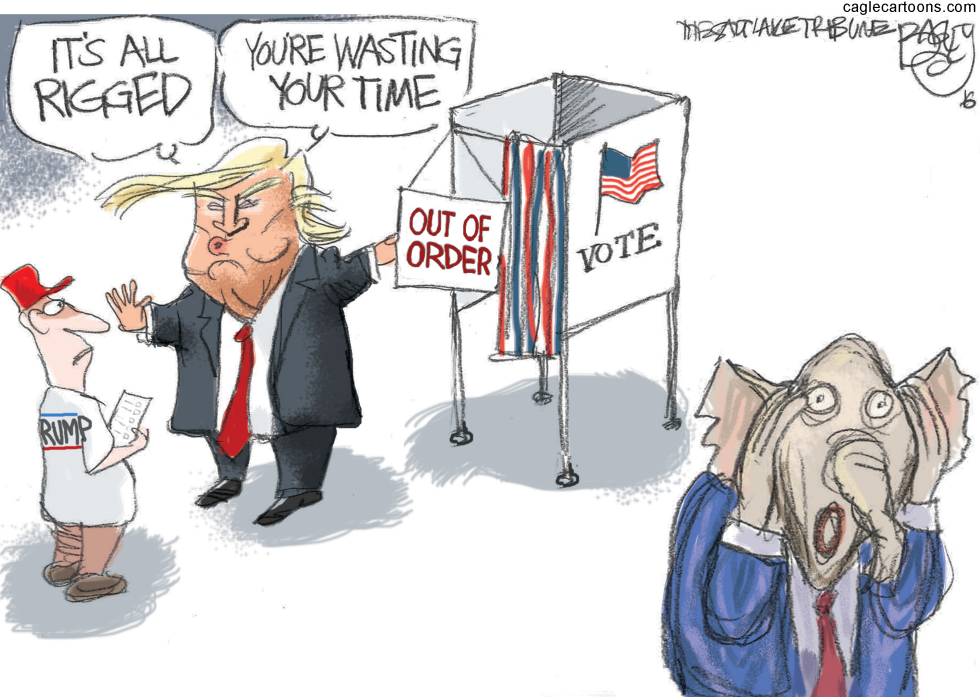
The cartoon shows Donald Trump declaring the election rigged and urging a supporter to abandon voting efforts. He places an out of order sign on a voting booth marked vote. A small figure in a Trump shirt holds a paper nearby. The Republican elephant mascot reacts with visible shock and covers its face. The scene captures tensions around election access and integrity claims during the final weeks of the 2016 presidential race.