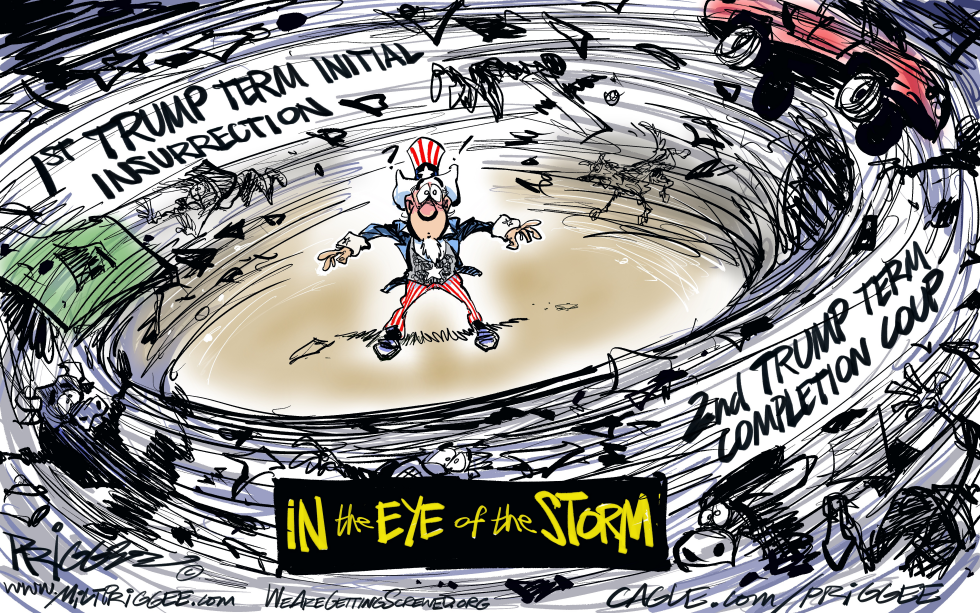
The image shows Uncle Sam positioned in a calm central area surrounded by swirling debris labeled as the first Trump term initial insurrection and the second Trump term completion coup. Text on the left and right frames the scene with those phrases. A banner at the bottom reads in the eye of the storm. The composition places the national symbol between references to past and future political events tied to Donald Trump.
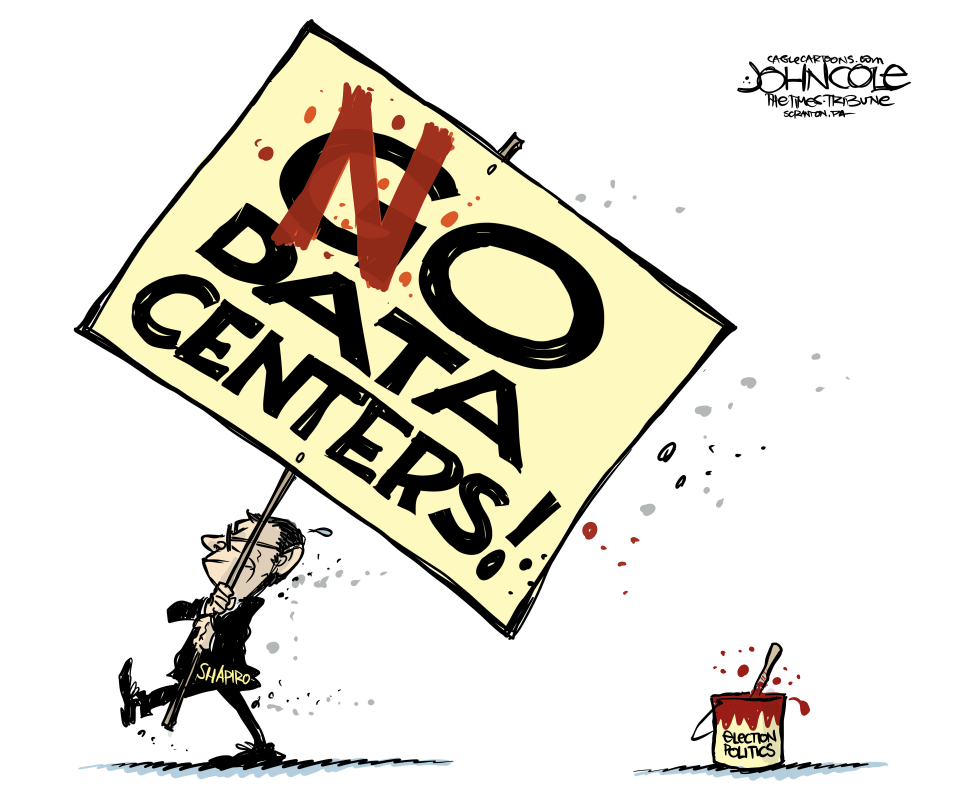
Pennsylvania Governor Josh Shapiro has adjusted his public position on data centers during the 2026 election cycle. The move comes as local communities raise concerns over energy use and land development tied to new facilities. Shapiro now appears to soften earlier opposition. The editorial takes the view that the shift reflects standard campaign maneuvering rather than a substantive policy evolution.
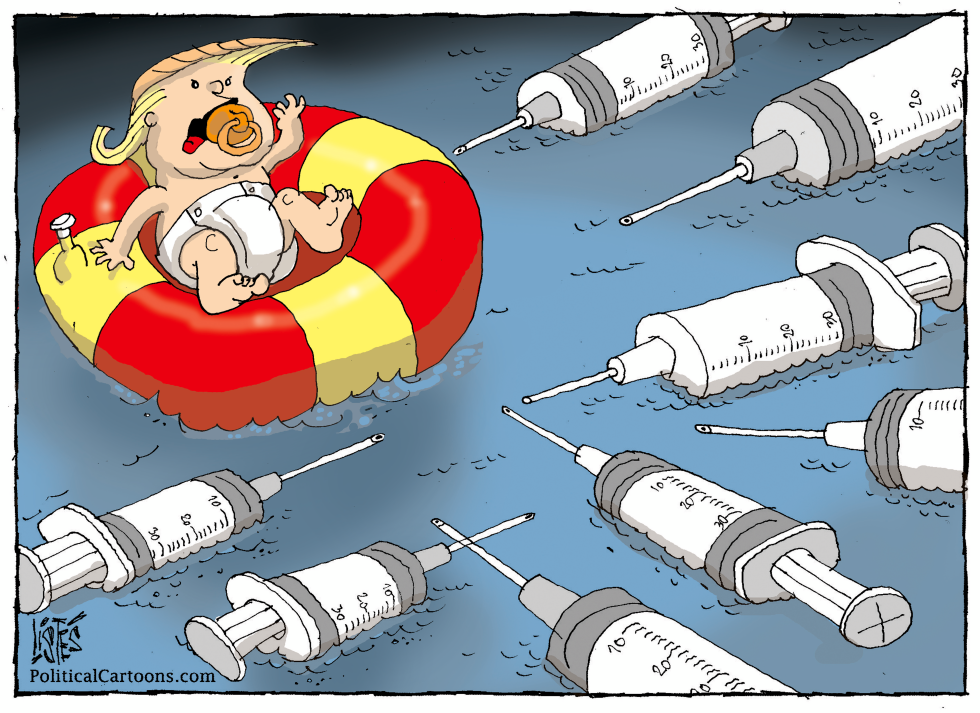
Donald Trump has maintained vocal opposition to certain vaccine mandates and public health measures in recent political discourse. The piece frames this stance through an infant metaphor to underscore perceived vulnerability and fear. It critiques the position as immature amid ongoing public health debates.
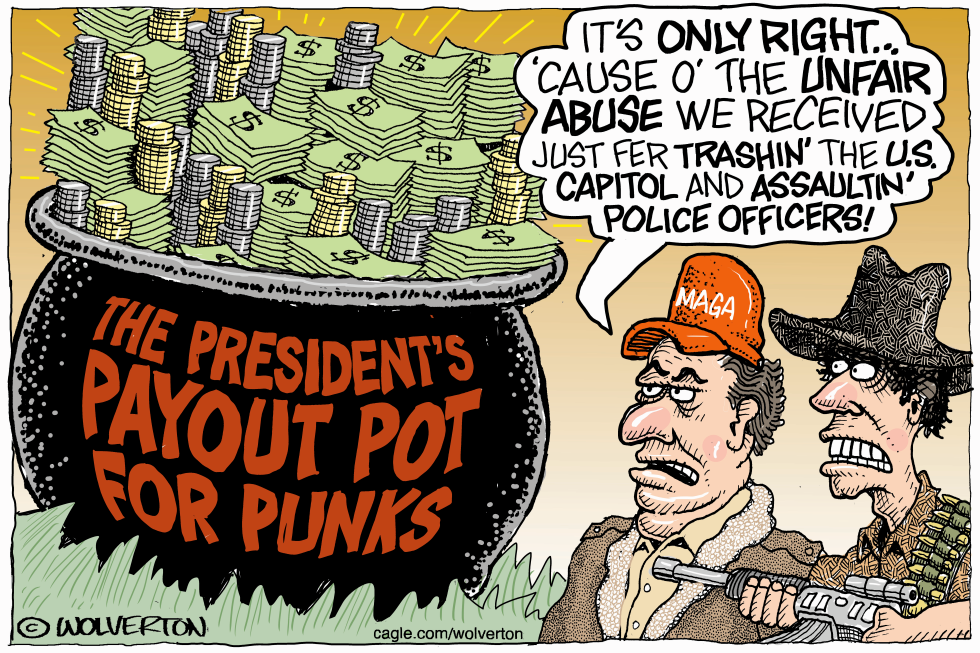
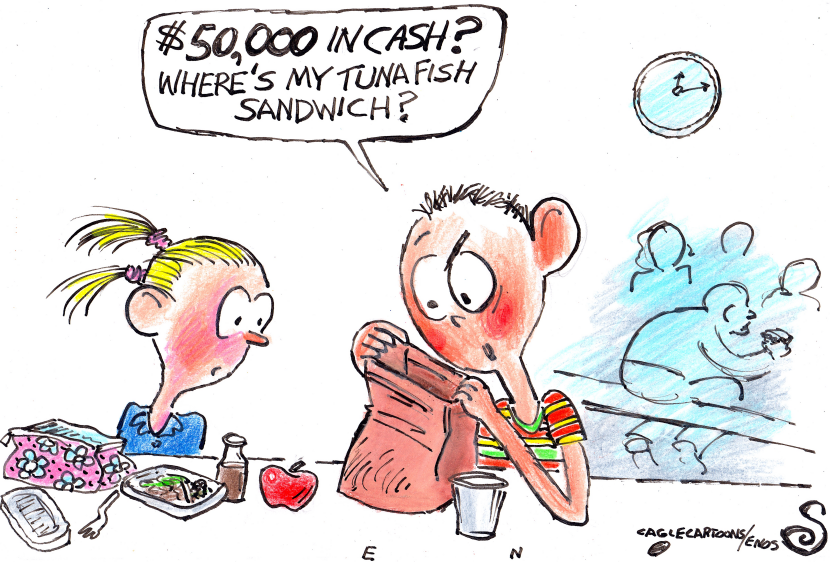
A proposal for compensation to January 6 defendants has drawn sharp criticism from opponents who view it as rewarding those convicted of attacking the Capitol and police. The editorial cartoon portrays the idea as a presidential slush fund for rioters, highlighting the perceived absurdity of compensating participants in the 2021 events.
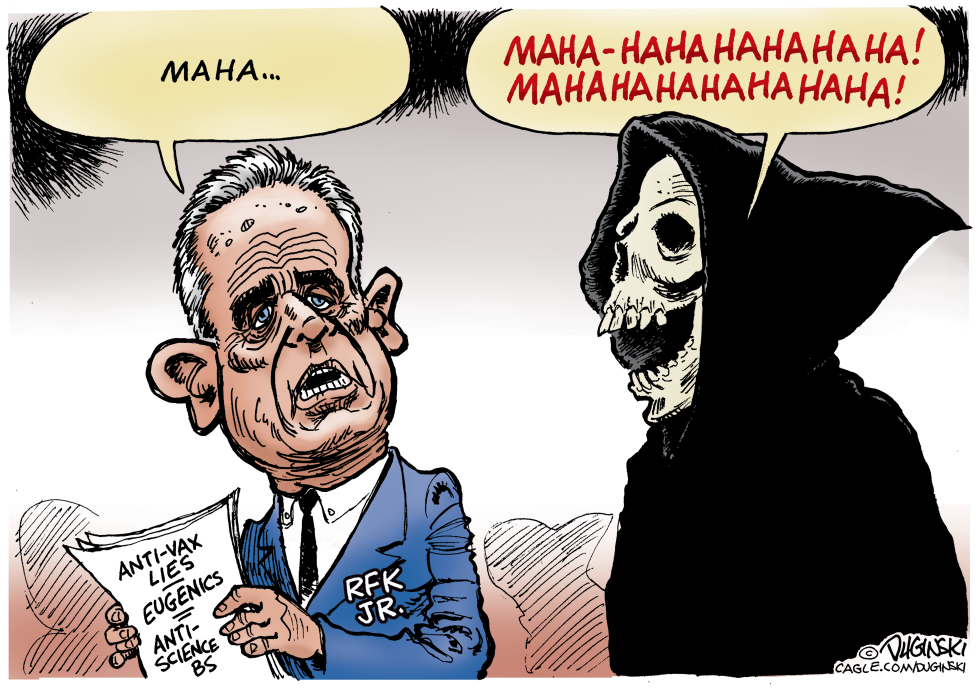
Robert F. Kennedy Jr. continues promoting Make America Healthy Again initiatives tied to his anti-vaccine positions in mid-2026. The approach draws criticism for linking public health measures to eugenics concerns and undermining scientific consensus. The editorial takes the position that such rhetoric risks real harm by eroding trust in established medical guidance.
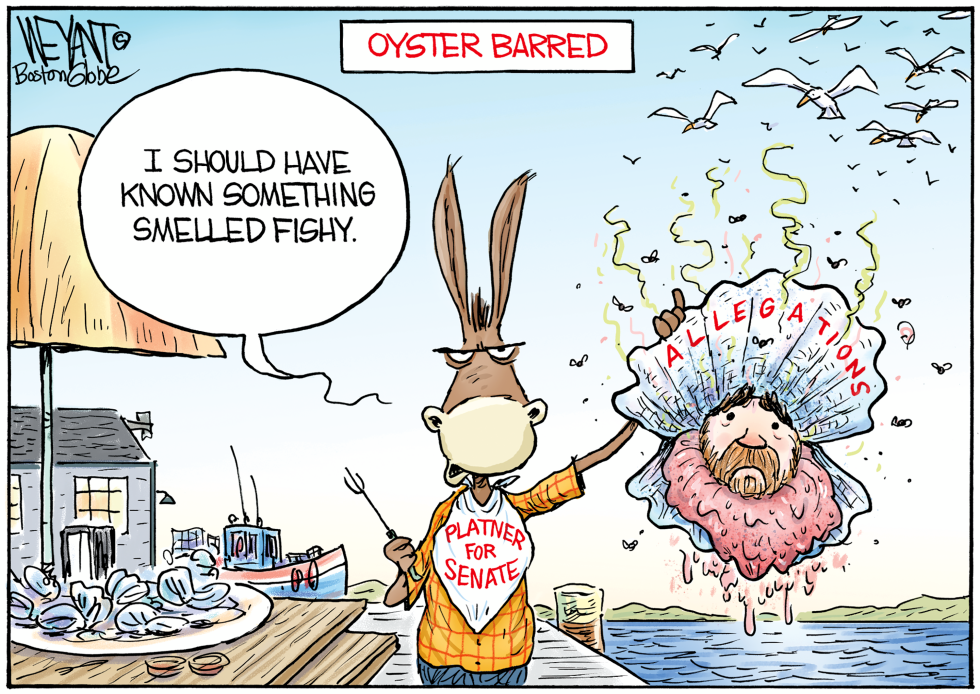
A Democratic donkey on a Boston pier holds a fork beside a massive oyster shell labeled allegations that has engulfed a bearded man wearing a Platner for Senate shirt. The scene references the candidate's Senate bid being blocked by recent allegations, with the donkey remarking that something smelled fishy all along. The cartoon uses the oyster bar pun and pier setting to highlight the scandal's impact on the 2026 race.
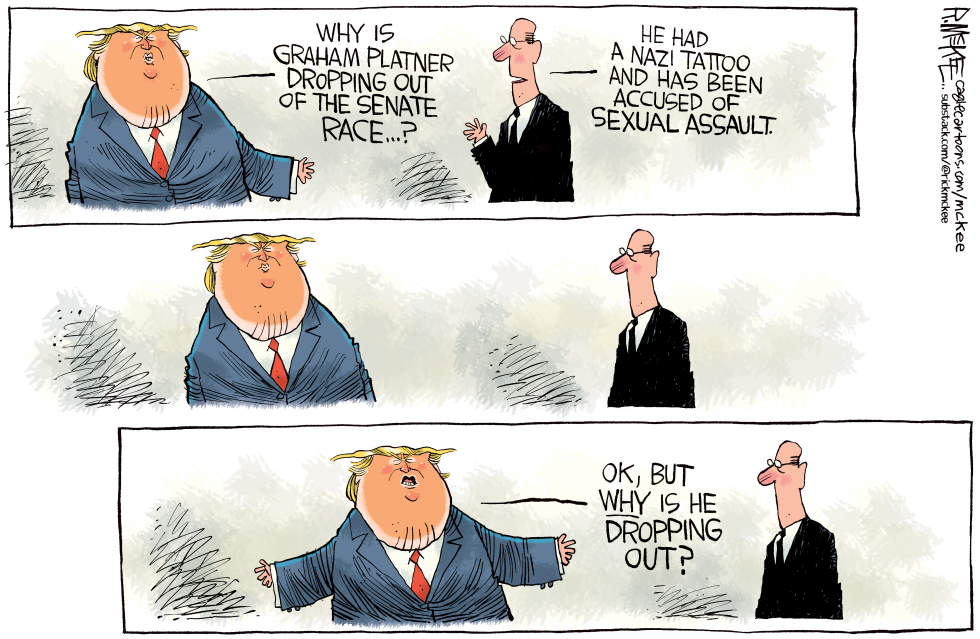
On July 10 2026 Rick McKee depicts Donald Trump questioning an aide about Graham Platner dropping out of a Senate race. The aide cites a Nazi tattoo and sexual assault accusation as reasons. Trump responds by asking again why the candidate is leaving the race. The exchange highlights the former president's focus on the withdrawal itself rather than the underlying controversies. Publication occurs during the 2026 election cycle when candidate viability and scandal impacts remain central topics in Senate contests.
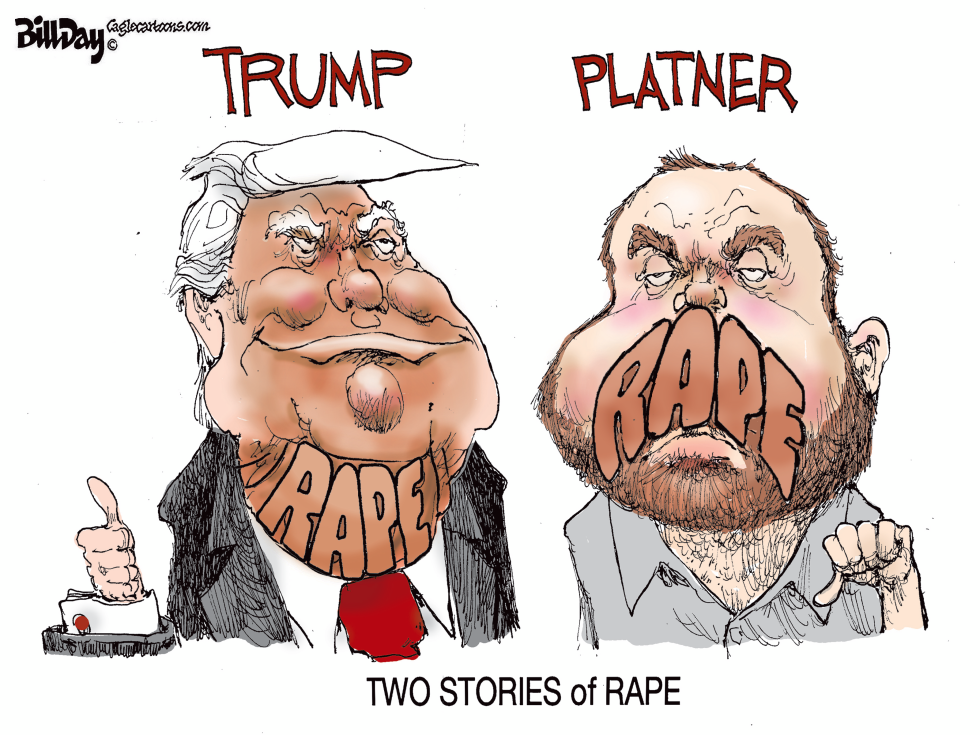
The image presents side by side depictions of Donald Trump and an individual named Platner. Each has the word rape overlaid on the lower face area. Trump extends a thumbs up gesture near papers while Platner extends a thumbs down gesture. Large red text at the bottom reads two stories of rape. The date of July 2026 places this in a period of ongoing public discussion around accusations involving prominent figures.
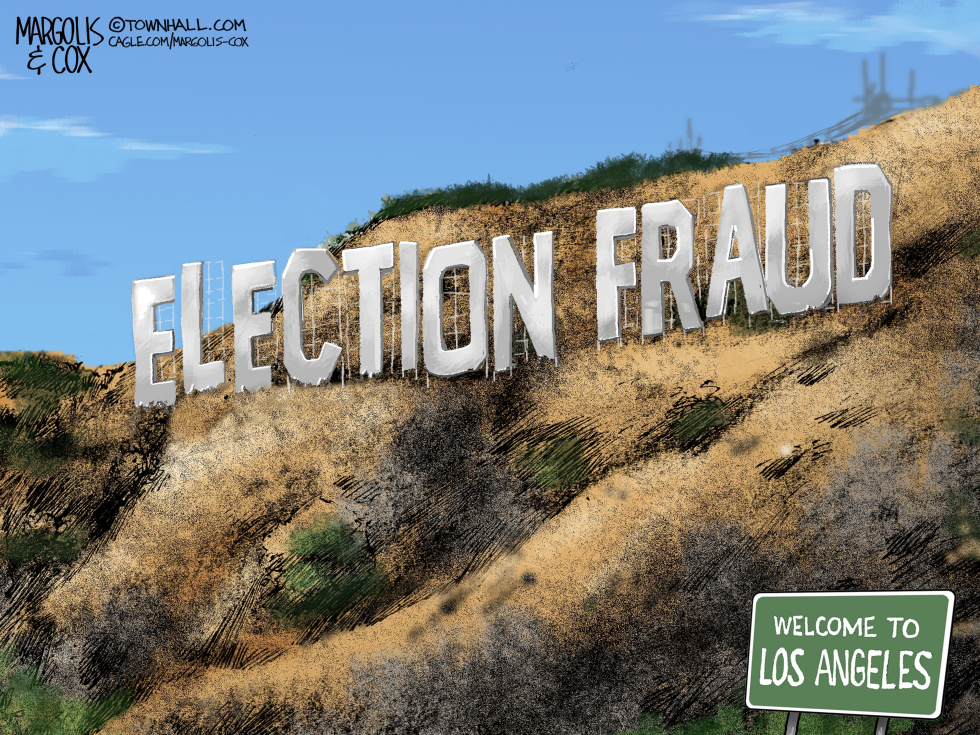
Los Angeles faces ongoing scrutiny over election procedures including mail-in ballots and local oversight. City officials including Mayor Karen Bass and Councilmember Nithya Raman have addressed related concerns amid public debate. The editorial argues that these issues undermine trust in the electoral system and require immediate attention from state and local leaders.
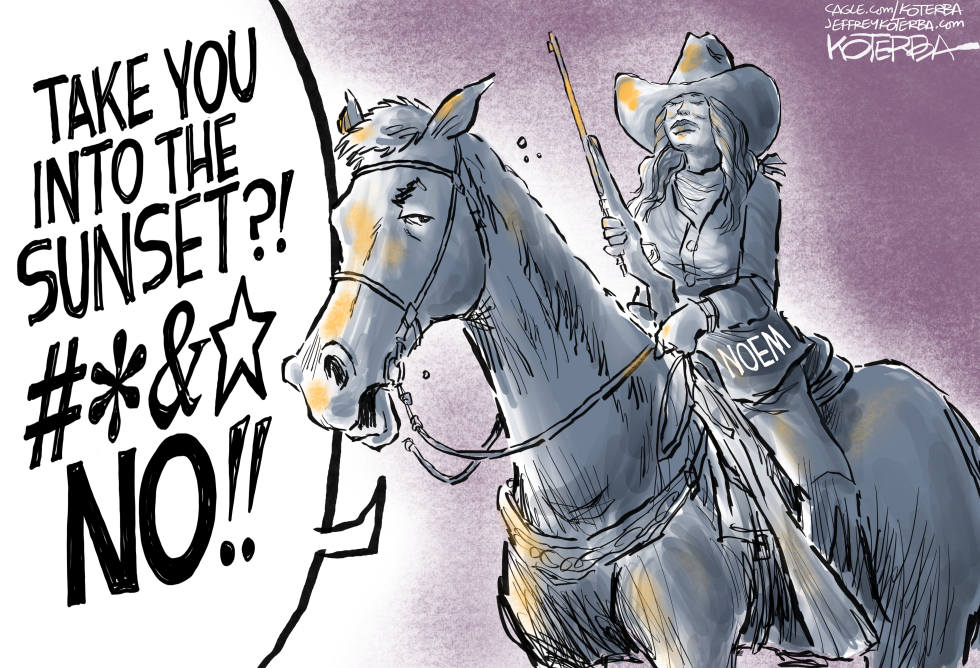
This Jeff Koterba political cartoon skewers Kristi Noem, the South Dakota governor embroiled in GOP scandal over her infamous dog-killing anecdote. Depicted as a cowgirl on a horse labeled 'NOEM,' the steed profanely refuses to 'take you into the sunset,' symbolizing the abrupt halt to her rising star in conservative politics, particularly her dashed hopes as a Trump VP pick. The humorous rejection underscores the backlash from animal cruelty revelations, blending satire with sharp commentary on Republican controversy and election humor. Viral potential lies in its irreverent take on political downfall, making it a shareable gem in American politics discourse.
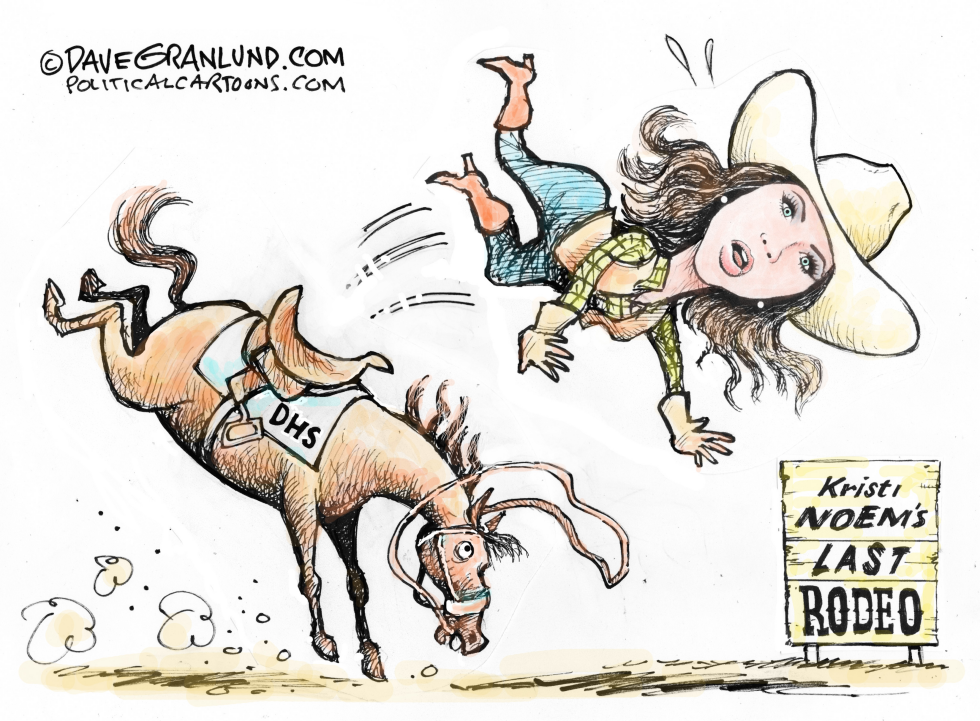
Dave Granlund's political cartoon hilariously portrays South Dakota Governor Kristi Noem in a rodeo metaphor, being violently thrown from a bucking horse labeled 'DHS' under a sign reading 'Kristi Noem's Last Rodeo.' This satire illustration captures her career downfall amid the infamous dog killing scandal, where she admitted to shooting her unruly pup Cricket, sparking widespread outrage. The humorous cartoon underscores how her VP ambitions for the Republican politics ticket were derailed, turning her book promotion into a PR nightmare. With elements of cowboy politics and political humor, it highlights the irreverent side of GOP satire, suggesting this could be Noem's final political stunt.
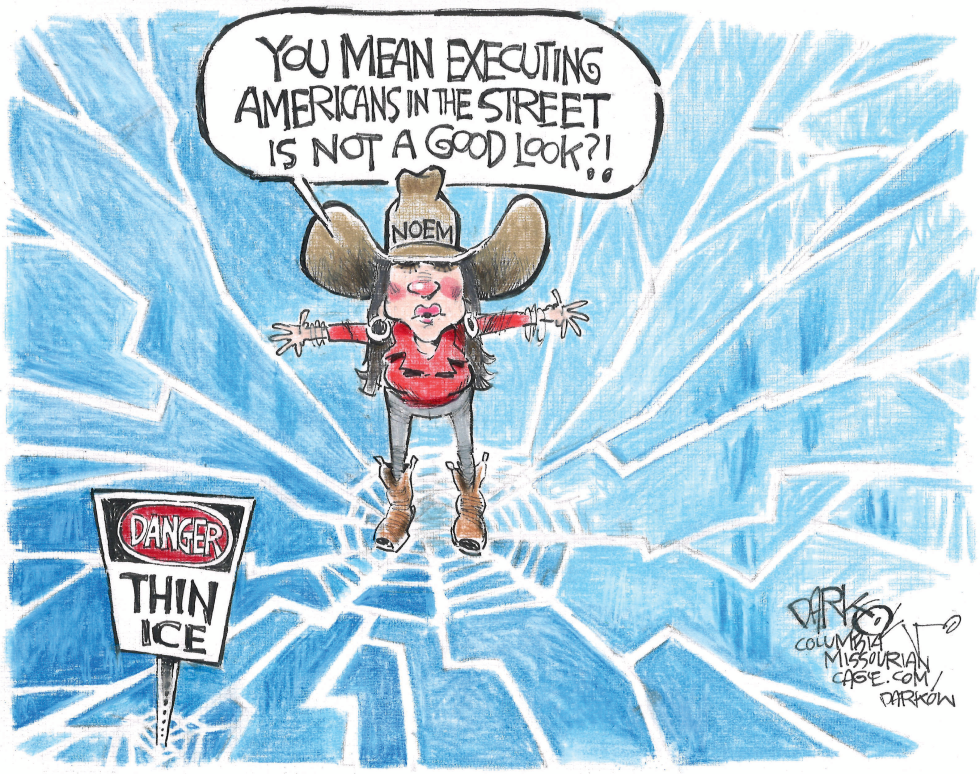
This Kristi Noem cartoon captures the South Dakota governor in a precarious position on thin ice, her hat emblazoned with 'NOEM' as she incredulously asks if executing Americans in the street isn't a good look. The image, a sharp political satire, alludes to the ongoing presidential immunity debates surrounding Donald Trump, where his allies like Noem find themselves on shaky ground. With the 'DANGER THIN ICE' sign prominently featured, the artwork highlights the risks of endorsing extreme views on executive power. Amid Noem's own memoir backlash involving her dog-killing anecdote, this thin ice metaphor amplifies the GOP backlash she's facing. The humorous political art style underscores the absurdity, making it a viral cartoon potential hit. Overall, it's a biting commentary on conservative politics satire in American discourse.