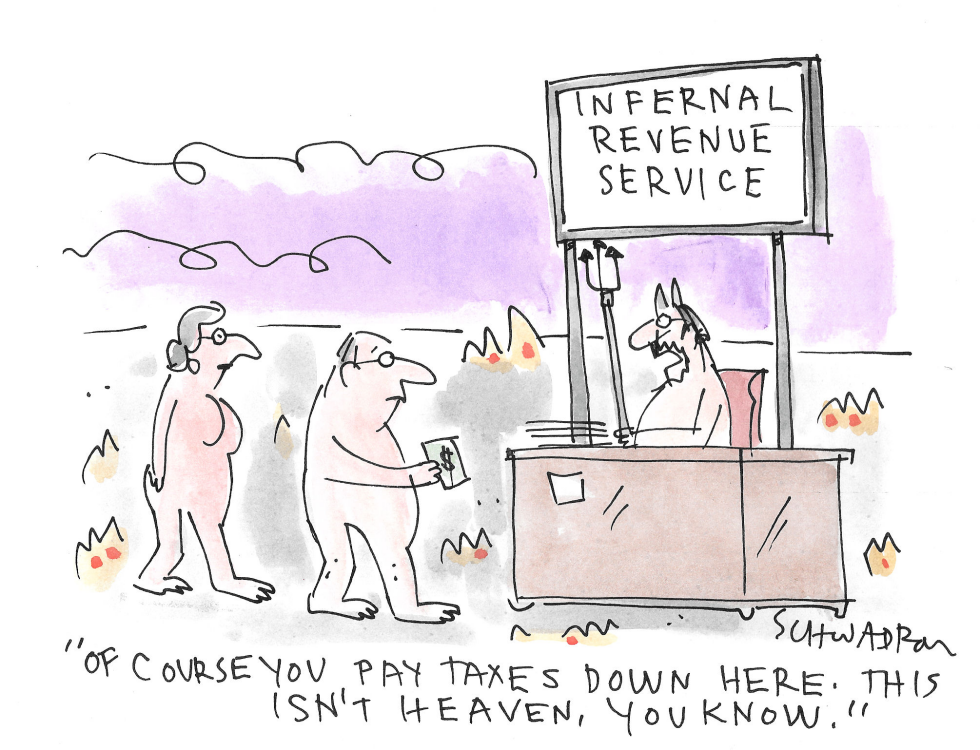
The long-standing adage that only death and taxes are certain receives fresh treatment in a cartoon depicting an IRS outpost operating in hell. No specific policy change or ruling prompted the piece, which instead plays on the enduring public frustration with tax collection as an inescapable force. The editorial stance pokes at bureaucratic persistence, suggesting the tax man follows citizens beyond the grave with the same relentless efficiency seen in life.
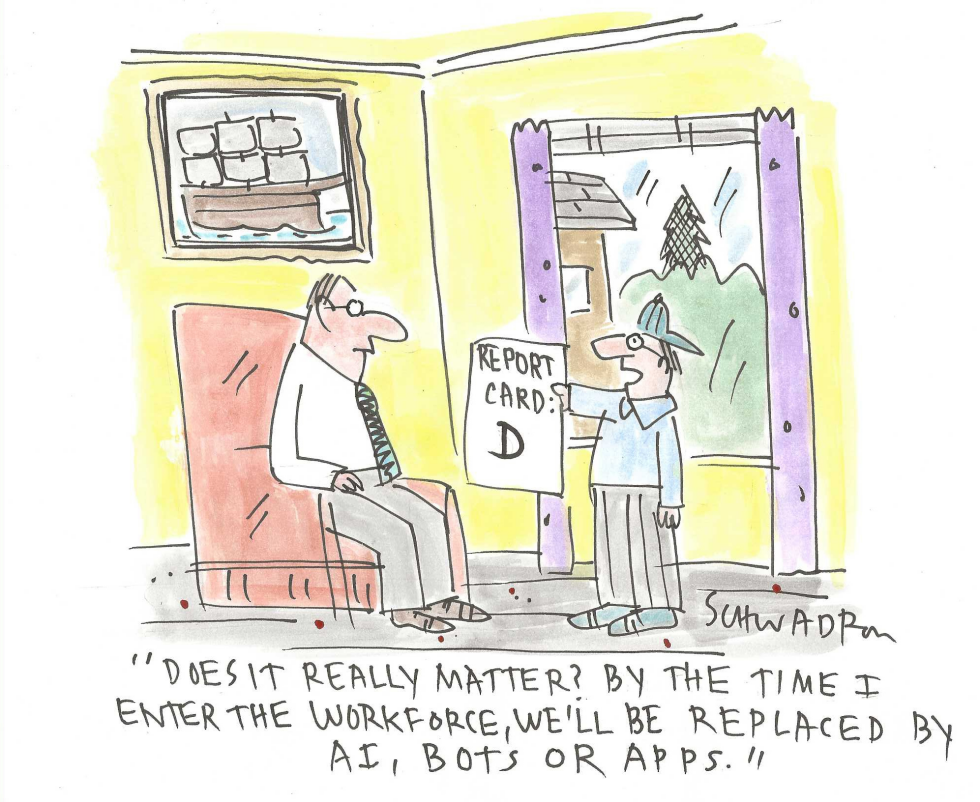
Rising student skepticism about academic effort stems from widespread predictions that AI and automation will eliminate many jobs before today's students graduate. The cartoon responds to this dynamic by showing a student using those forecasts to shrug off a poor grade. It highlights how fears of technological displacement may undermine motivation in schools. The piece suggests such excuses reflect a broader cultural shift where traditional education credentials appear less relevant. The editorial stance questions whether this mindset accelerates the very problems it cites.
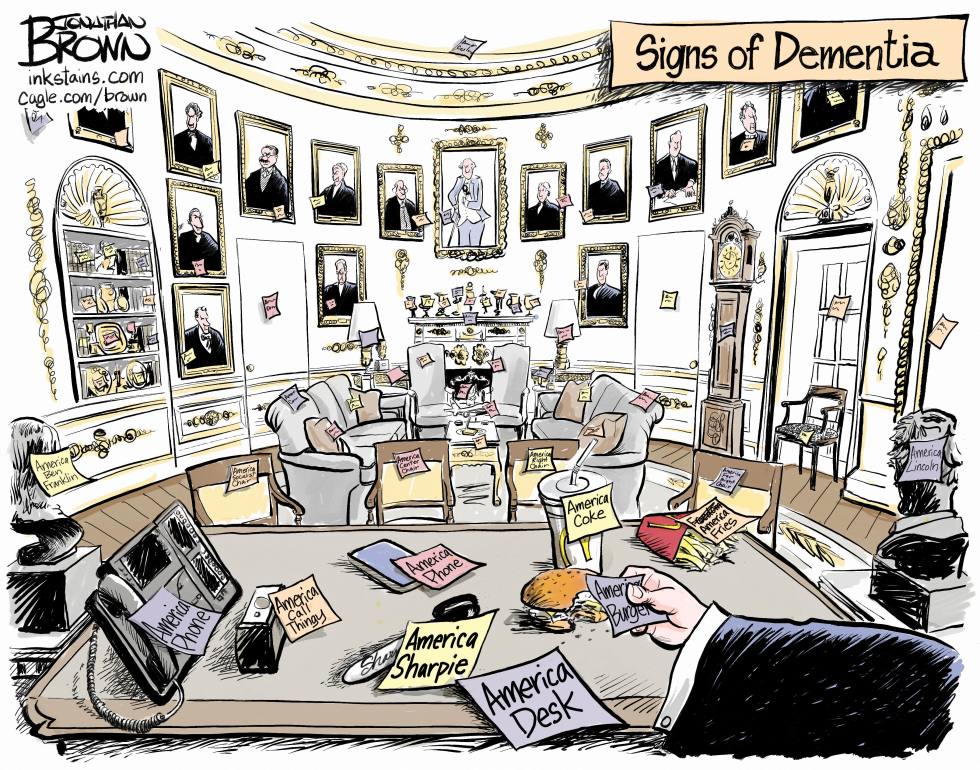
A new editorial cartoon depicts the Oval Office overrun with sticky notes labeling everyday items as America. The scene highlights signs of dementia through repeated branding on phones, desks, food and furniture. Published on September 9, 2026, the work comments on ongoing concerns about cognitive fitness in the presidency. The visual uses the familiar setting of the White House to underscore confusion and memory issues. Observers note the cartoon captures public debate over leadership capacity without naming specific individuals.
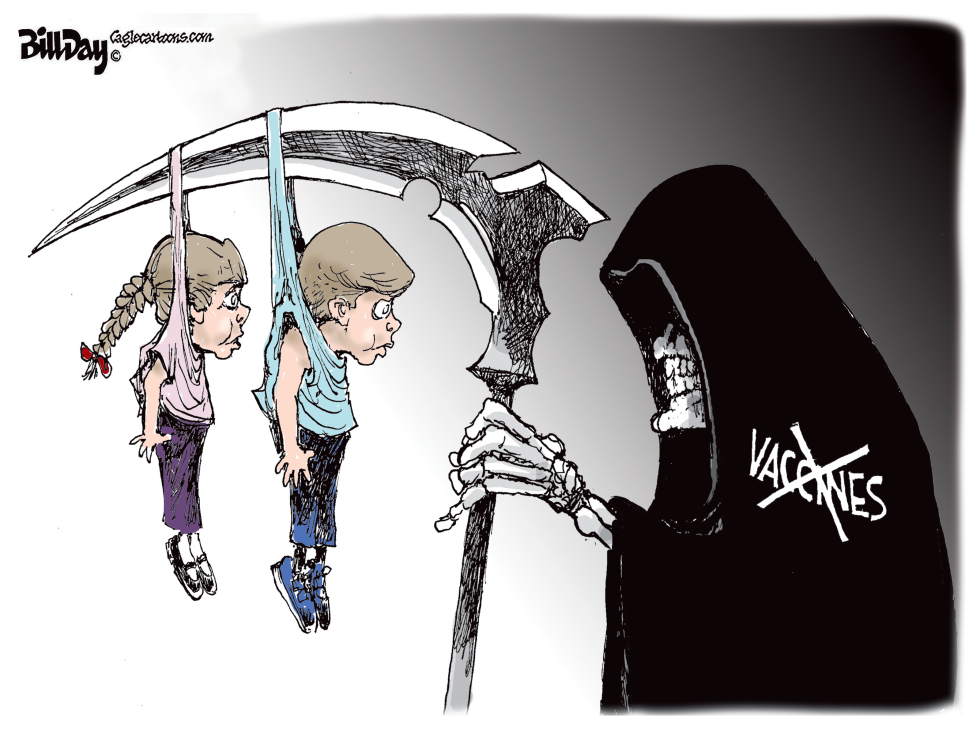
Opposition to routine childhood vaccines continues to surface in public discourse as health officials promote immunization schedules. The debate centers on parental choice versus community protection from preventable diseases. The editorial takes the position that rejecting vaccines endangers children and aligns such views with mortality risks.
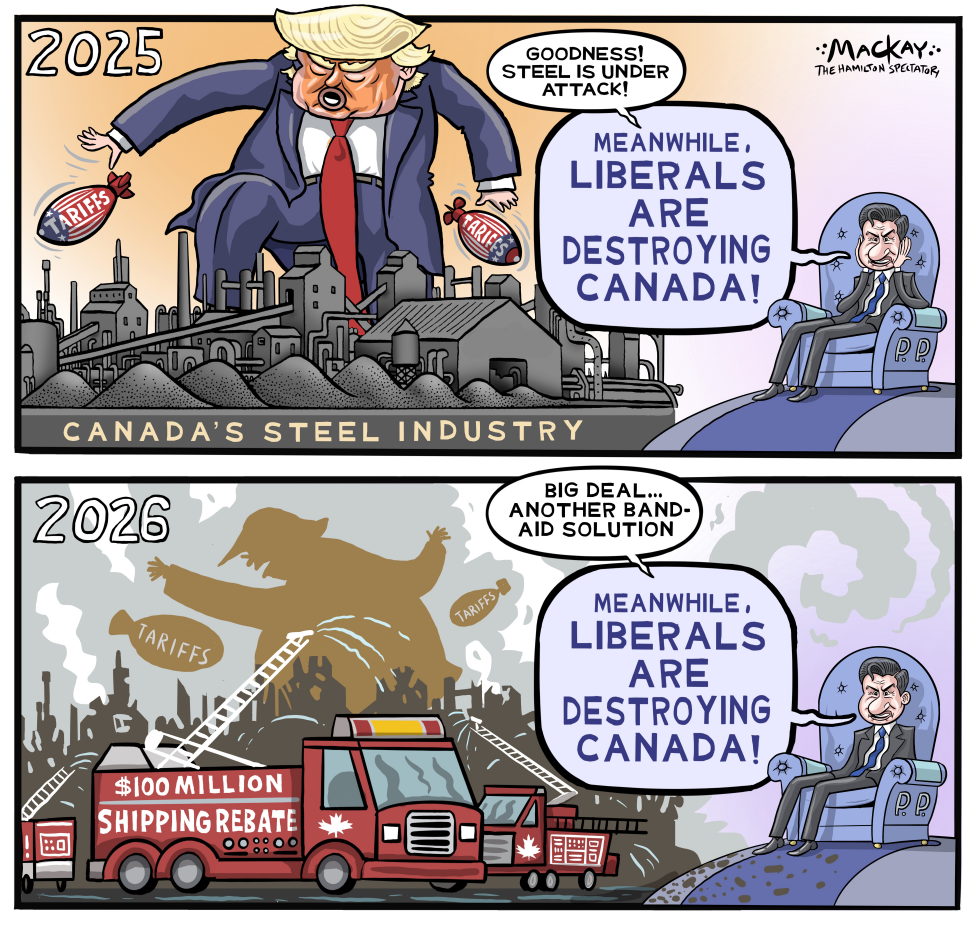
U.S. tariffs imposed on Canadian steel in 2025 triggered sharp declines in the domestic industry by 2026. The federal government responded with a $100 million shipping rebate. Conservative Leader Pierre Poilievre continued to focus attacks on the Liberal government rather than the trade shock. The cartoon argues this stance amounts to a repeated distraction from the core economic damage.
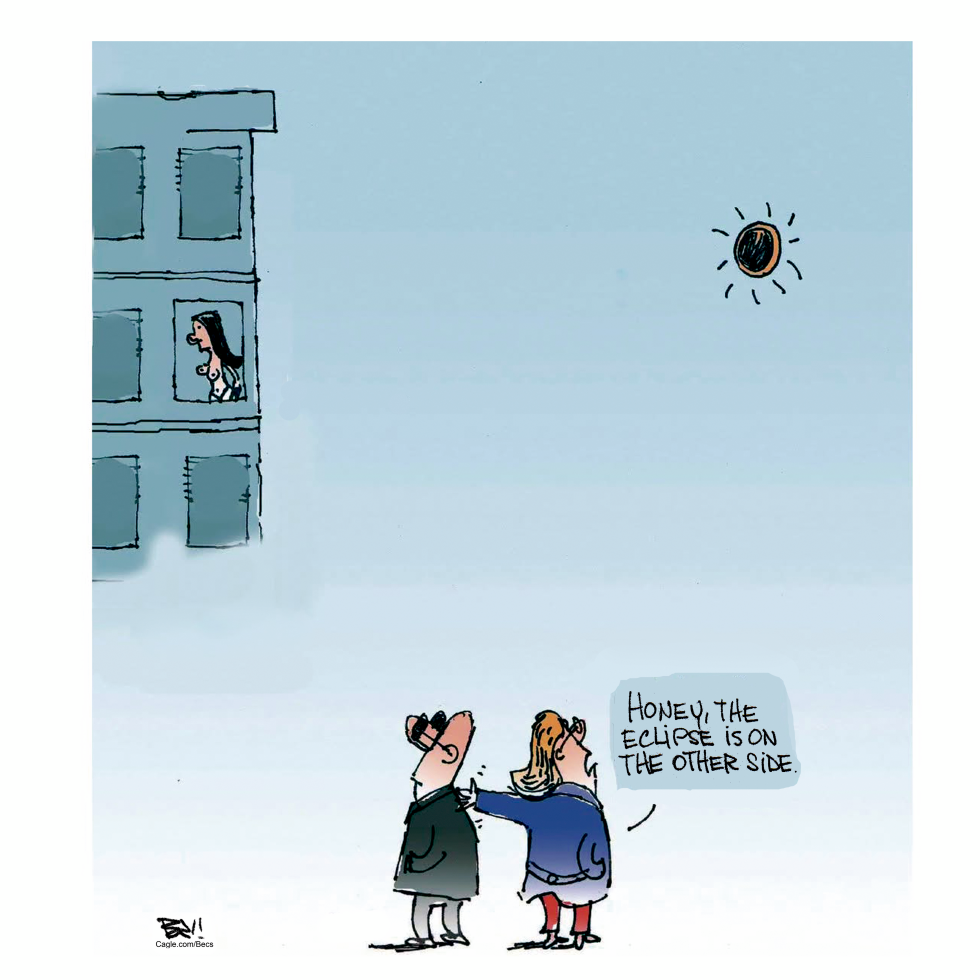
A domestic scene plays out around a simple pun on eclipses and visible marks. The exchange highlights everyday relationship dynamics where one party redirects attention from an apparent injury. The piece presents the interaction without broader political framing.
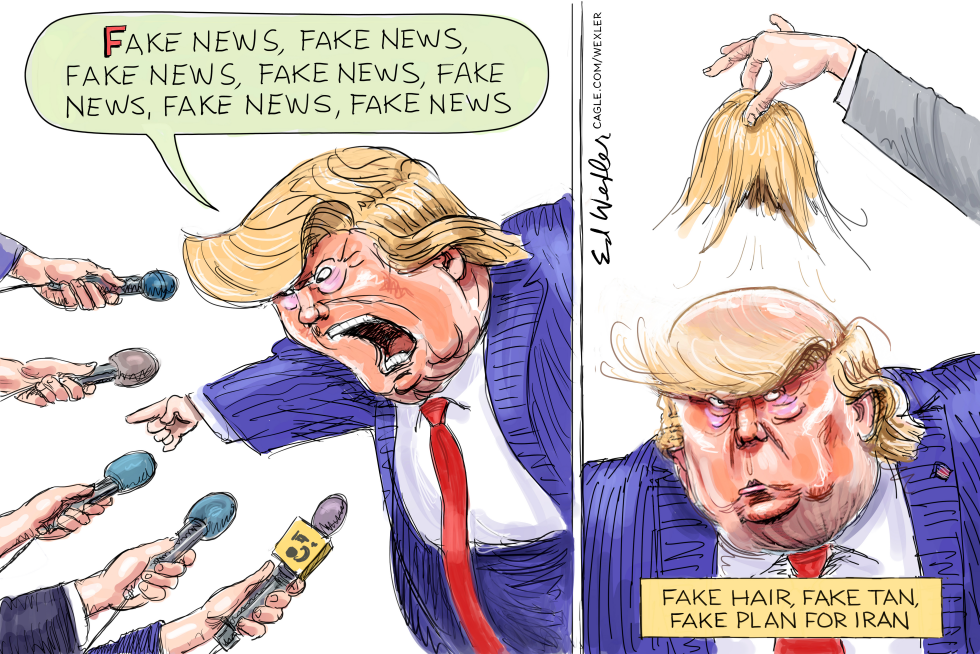
Donald Trump repeatedly labels media coverage as fake news during press encounters. The cartoon responds by questioning the authenticity of his appearance and his approach to Iran policy. It portrays the disconnect between his public statements and underlying realities.
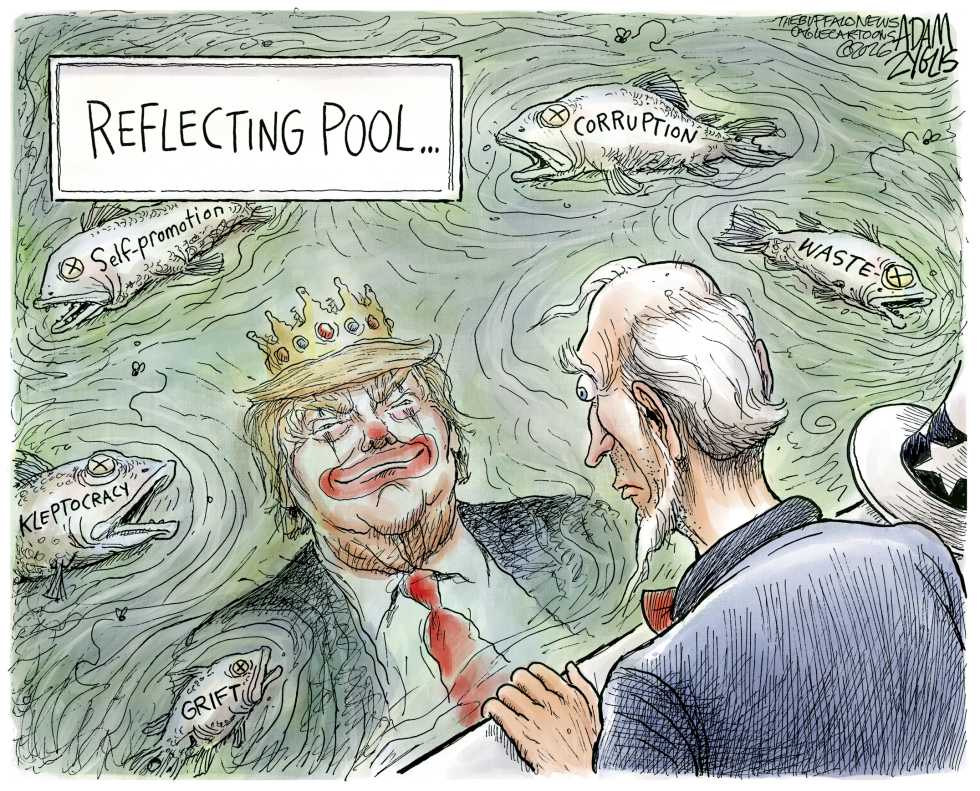
Accusations of kleptocracy and self-dealing have followed Donald Trump through multiple phases of his political career. Critics point to patterns of self-promotion and waste in government dealings. The cartoon frames these issues as dead fish surfacing in a reflecting pool, with Trump depicted wearing a crown and clown makeup while an older observer looks on. The editorial position criticizes Trump as emblematic of corruption and grift.
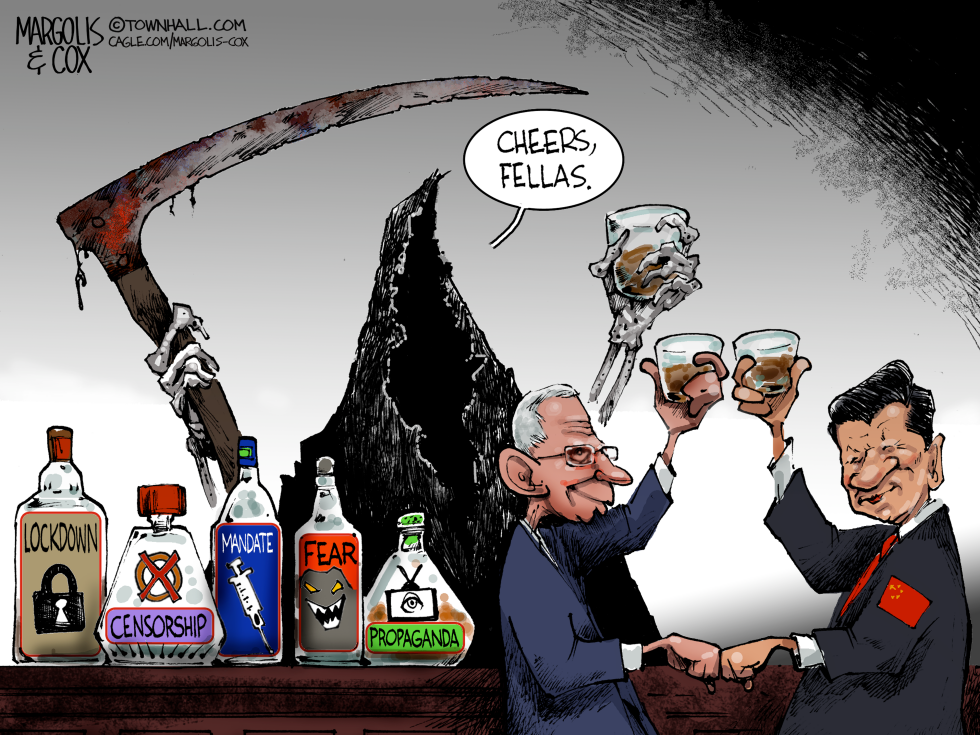
On August 6, 2026, the cartoon responds to lingering debates over COVID-19 policies by depicting former NIAID director Anthony Fauci and Chinese leader Xi Jinping toasting with the Grim Reaper. The image frames pandemic tools as shared instruments of control. The editorial position criticizes both figures for embracing fear-driven measures and information suppression.
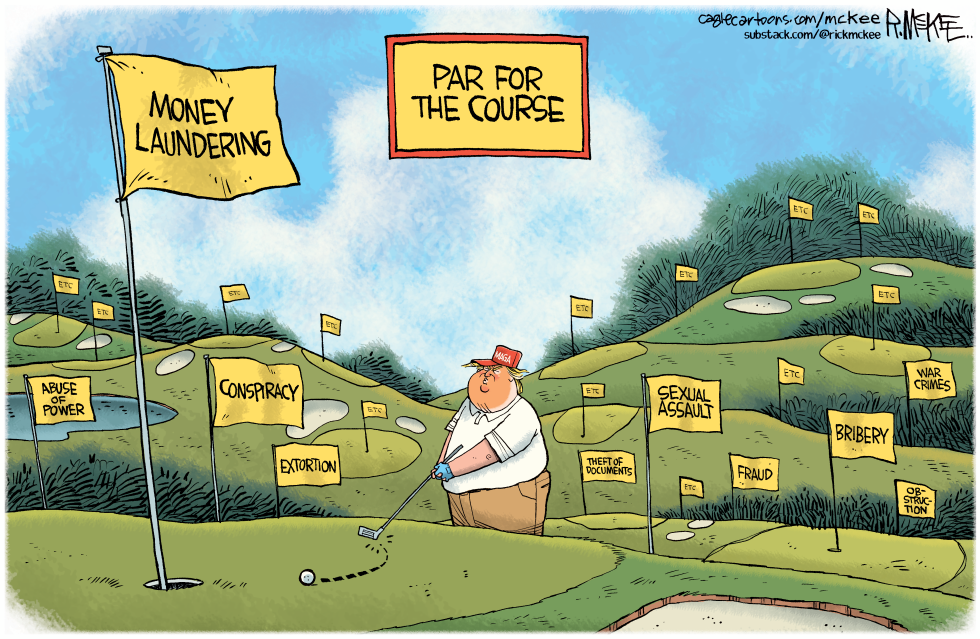
Donald Trump appears on a golf course in an editorial cartoon dated August 6 2026. Multiple yellow flags label alleged offenses including money laundering, conspiracy, extortion, sexual assault, bribery, fraud and obstruction. The piece responds to ongoing legal and political scrutiny of the former president. It frames these issues as routine for Trump through the visual metaphor of a golf course. The editorial position presents the allegations as expected elements of his record.
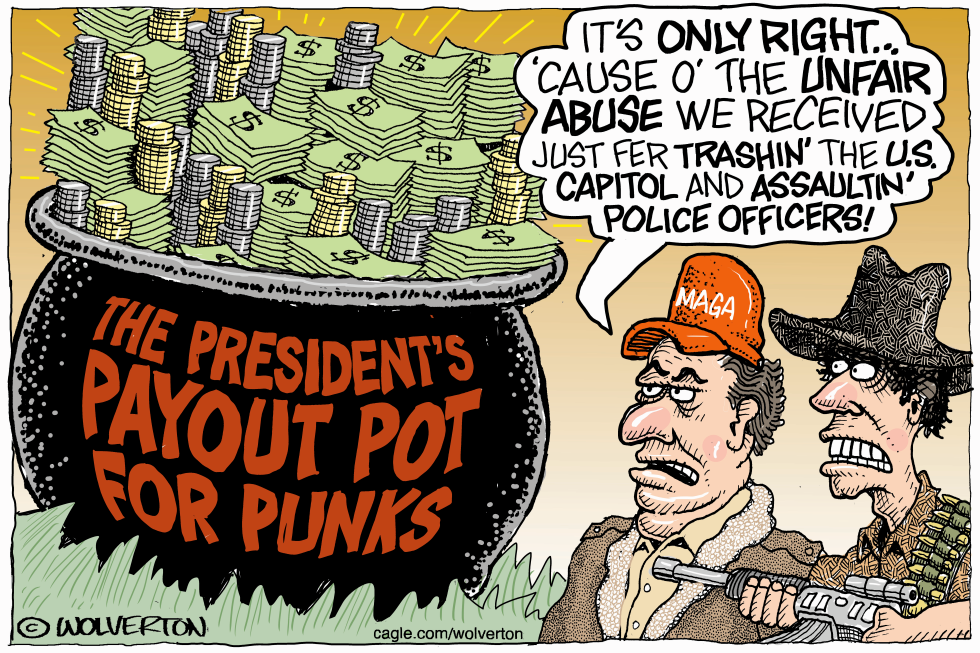
A proposal for compensation to January 6 defendants has drawn sharp criticism from opponents who view it as rewarding those convicted of attacking the Capitol and police. The editorial cartoon portrays the idea as a presidential slush fund for rioters, highlighting the perceived absurdity of compensating participants in the 2021 events.
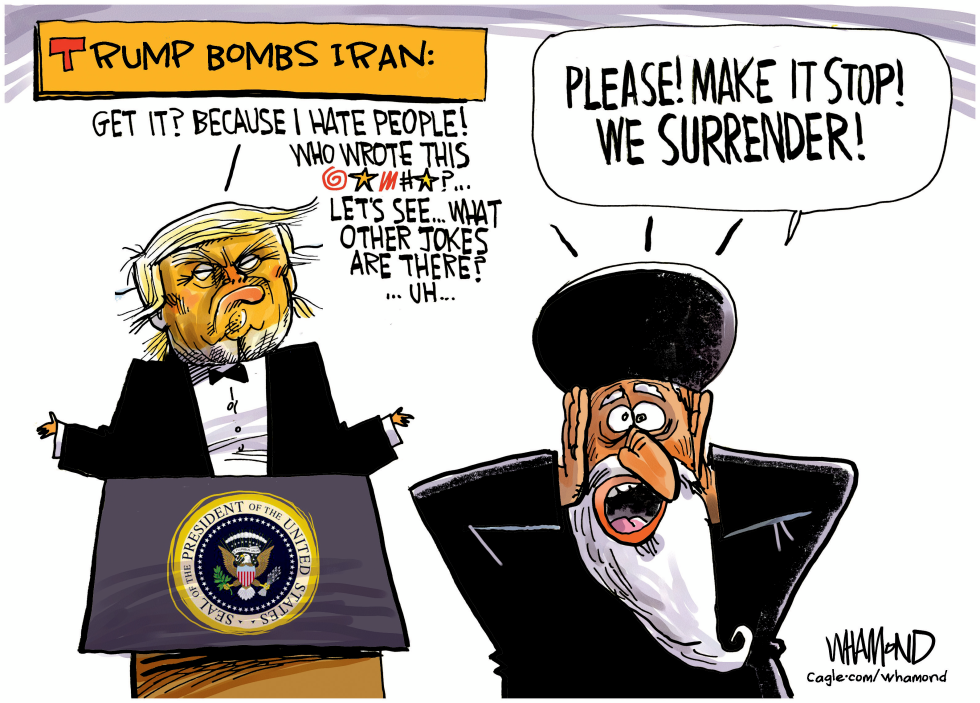
President Trump ordered strikes on Iran in late July 2026, prompting an immediate public plea for surrender from Iranian leadership. The action escalates tensions in the Middle East and raises questions about U.S. military objectives. The editorial takes the position that the strikes reflect personal animus rather than strategic necessity and mocks the president's framing of the operation.
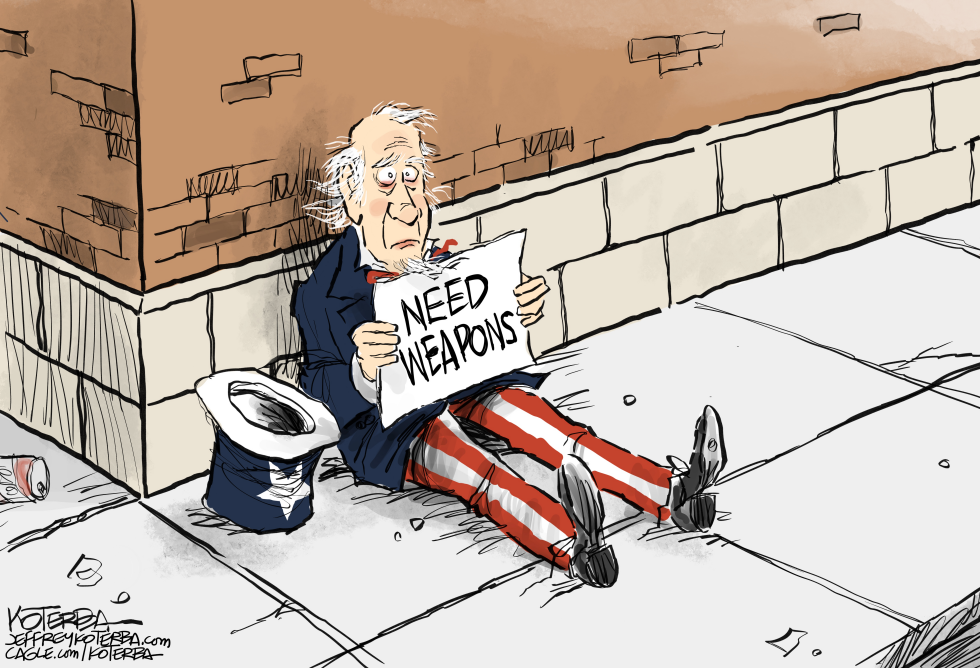
Uncle Sam appears as a disheveled figure on a sidewalk holding a sign requesting weapons. The image captures an ongoing national debate over military resources and international commitments. The editorial stance highlights perceived weakness in current arms policy and funding priorities.
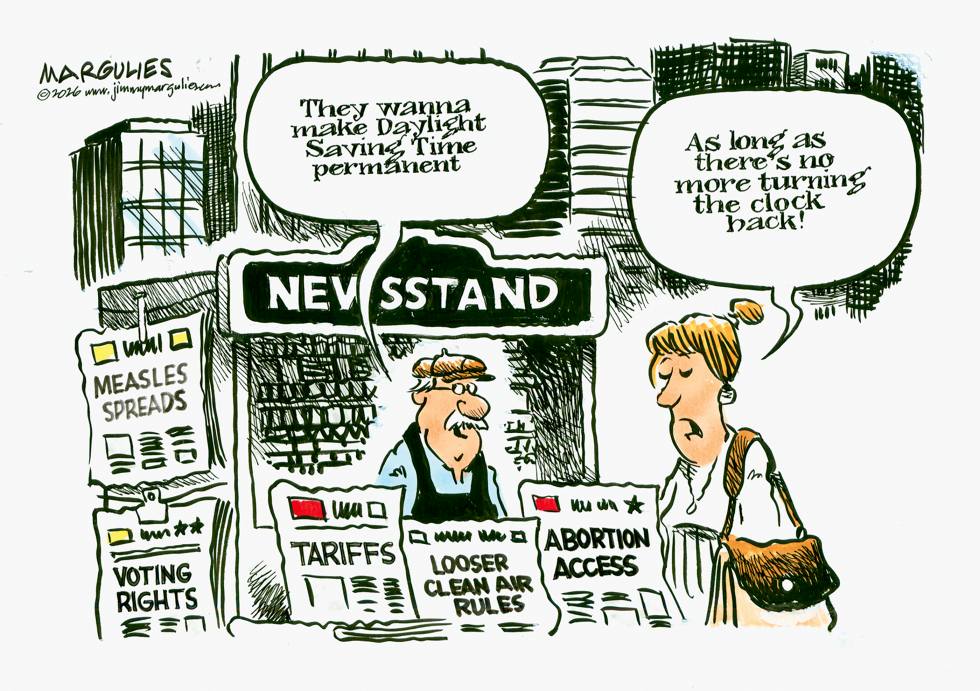
Proposals to make daylight saving time permanent coincide with debates over tariffs, abortion access, voting rights and environmental rules. The cartoon frames these as part of a broader pattern of policy shifts that some view as steps backward.
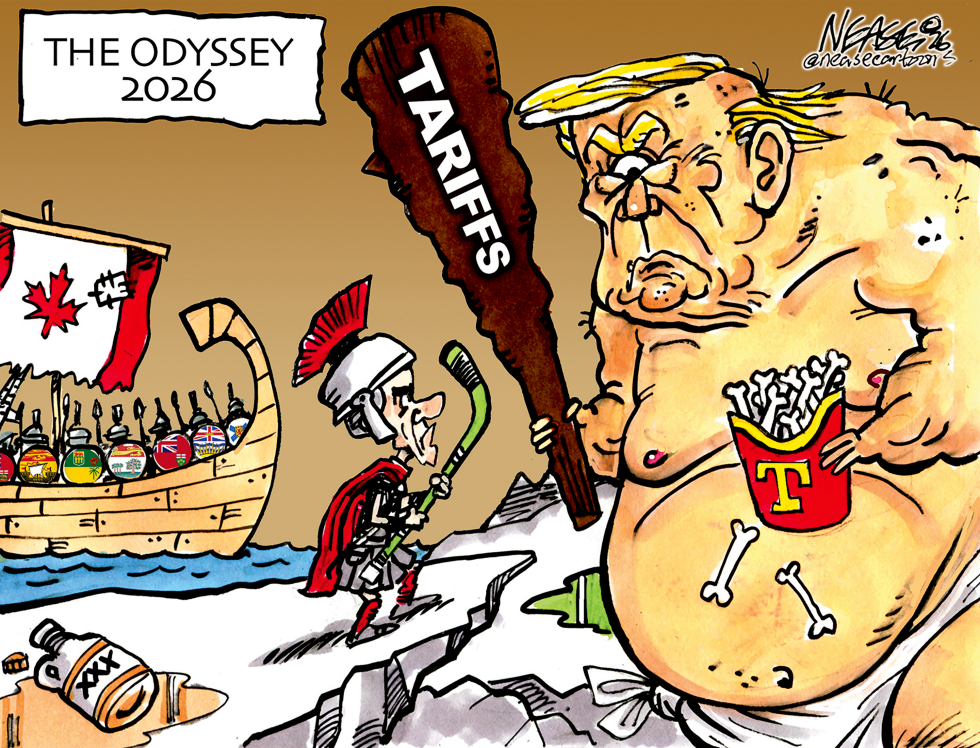
President Trump escalates tariffs on trading partners including Canada in mid-2026. The move targets imports amid ongoing disputes over trade balances and supply chains. Allies respond with coordinated pushback through diplomatic and economic channels. The cartoon casts the confrontation as a one-sided power play by the oversized tariff wielder against smaller coordinated opponents.