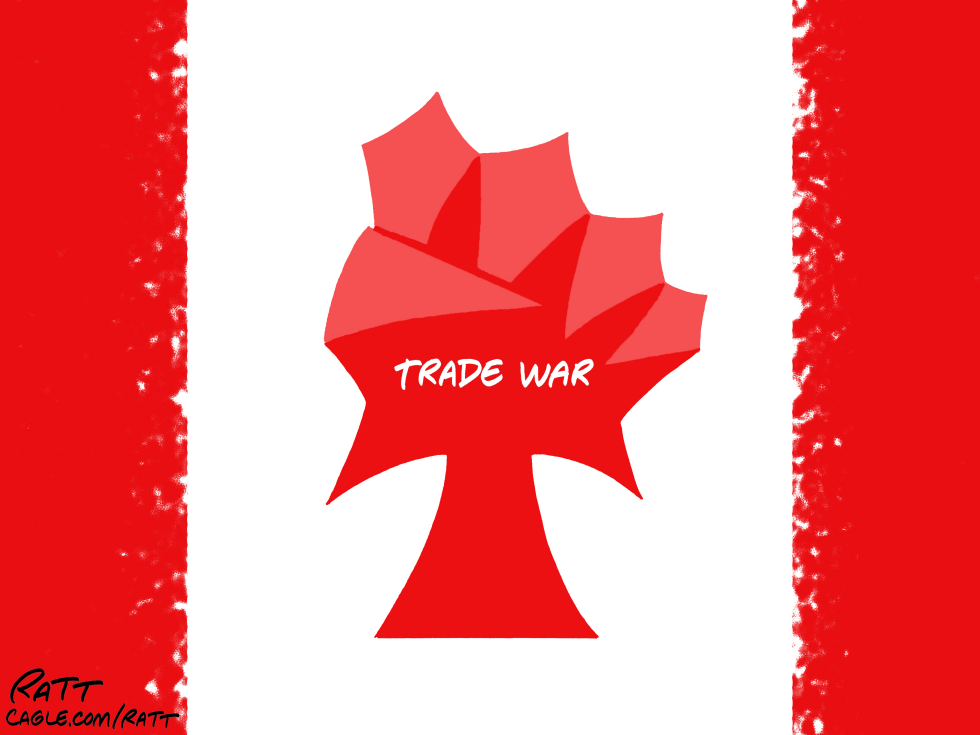
Ongoing US-Canada trade tensions escalated in 2026 with new tariff threats targeting Canadian exports. The dispute threatens key sectors including autos, lumber and agriculture, raising costs for consumers on both sides of the border. Canada has signaled plans to diversify markets and strengthen domestic industry. The cartoon frames the conflict as a direct assault on Canadian sovereignty and economic stability. It portrays the trade war as fracturing national symbols while urging a stronger northern response.
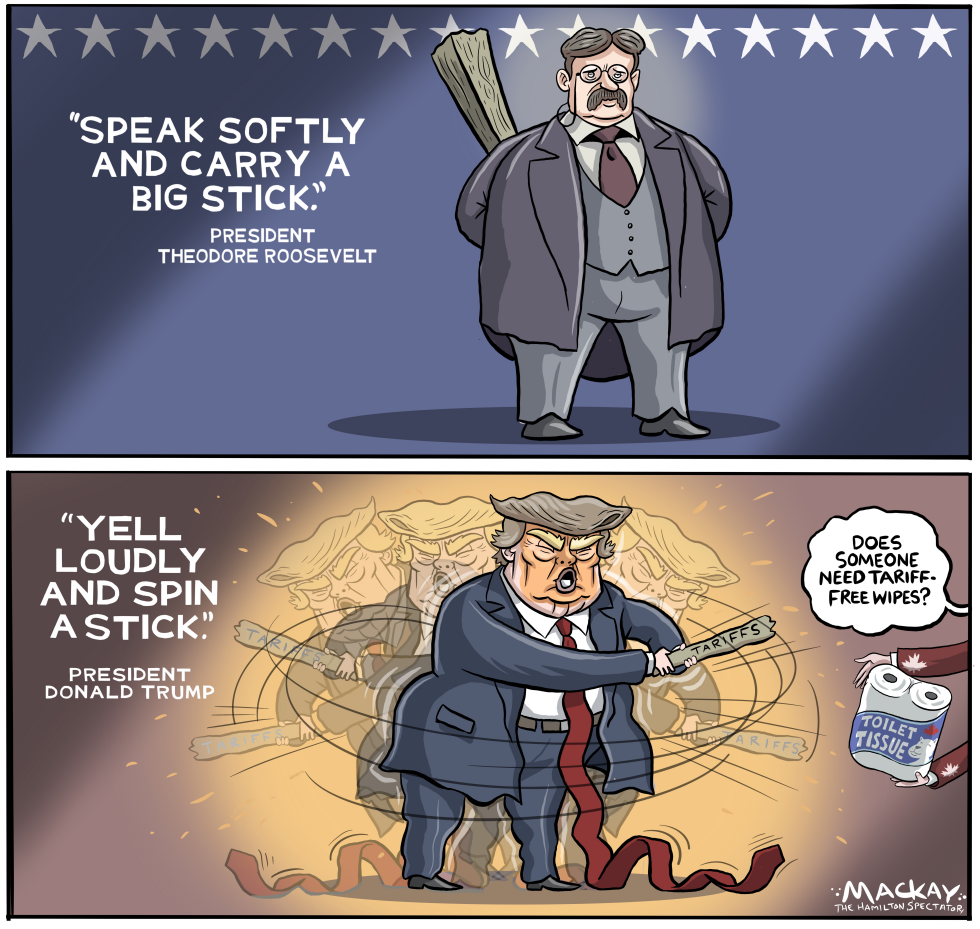
The cartoon by Graeme MacKay contrasts Theodore Roosevelt's famous speak softly and carry a big stick approach with Donald Trump's version of yelling loudly and spinning a stick covered in tariffs. In the lower panel Trump appears dizzy from the motion as a Canadian hand offers toilet tissue labeled tariff-free wipes. The image comments on recent US tariff actions and their impact on Canadian trade relations as of the September 2026 publication date.
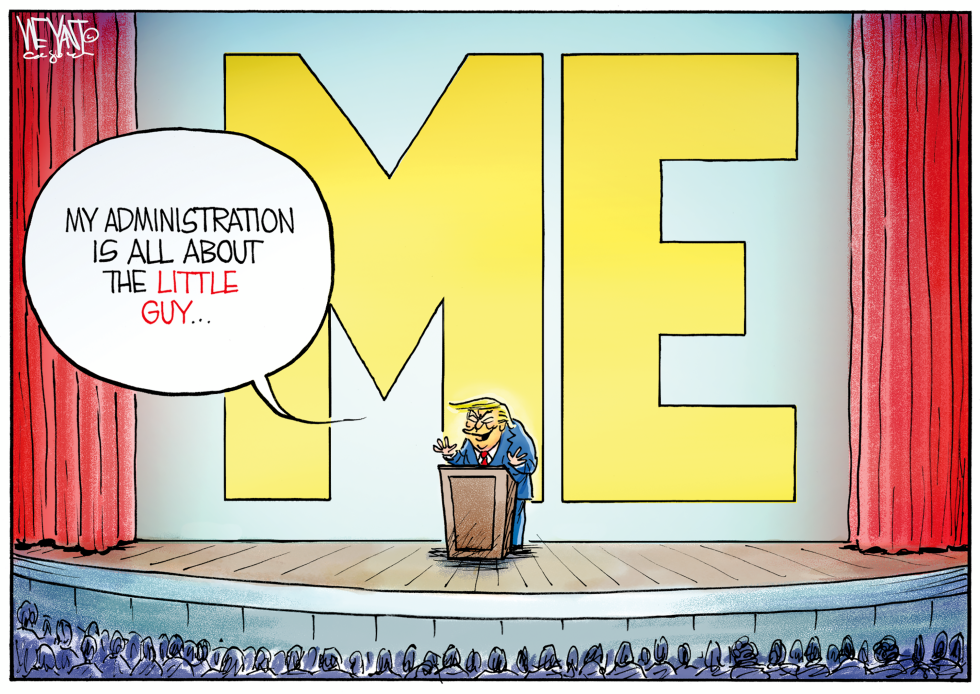
Donald Trump has repeatedly positioned his administration as champion of ordinary Americans during public addresses. The claim comes amid ongoing debates over policy priorities and personal branding in the White House. The piece portrays the rhetoric as centered on the speaker rather than the public.
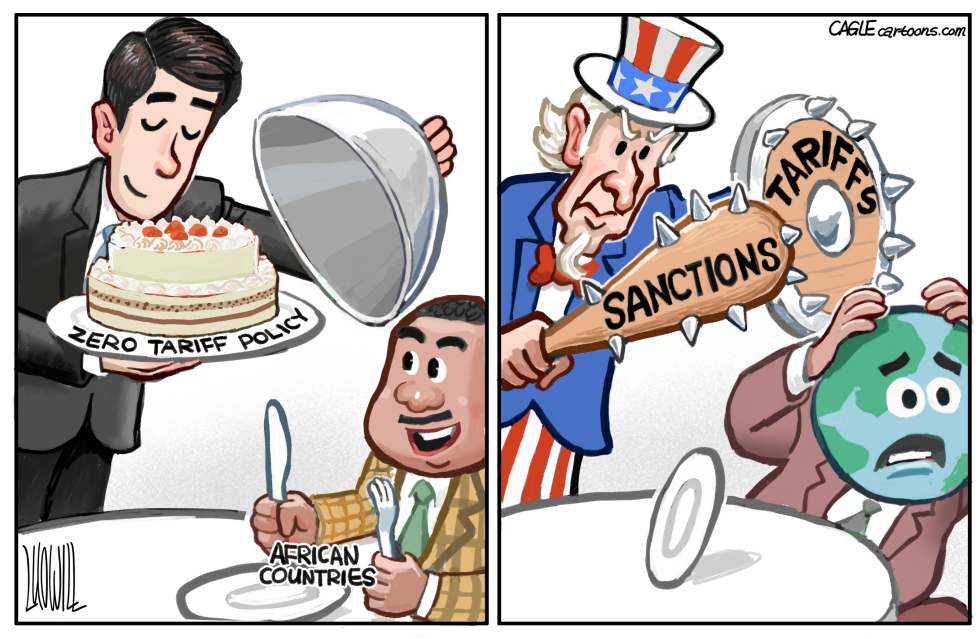
The United States has extended a zero-tariff policy offer to African nations amid ongoing global trade tensions. This move stands in contrast to simultaneous use of tariffs and sanctions against other trading partners. The policy highlights selective economic engagement by Washington. The editorial position criticizes the inconsistency between the overture to Africa and the punitive approach applied more broadly.
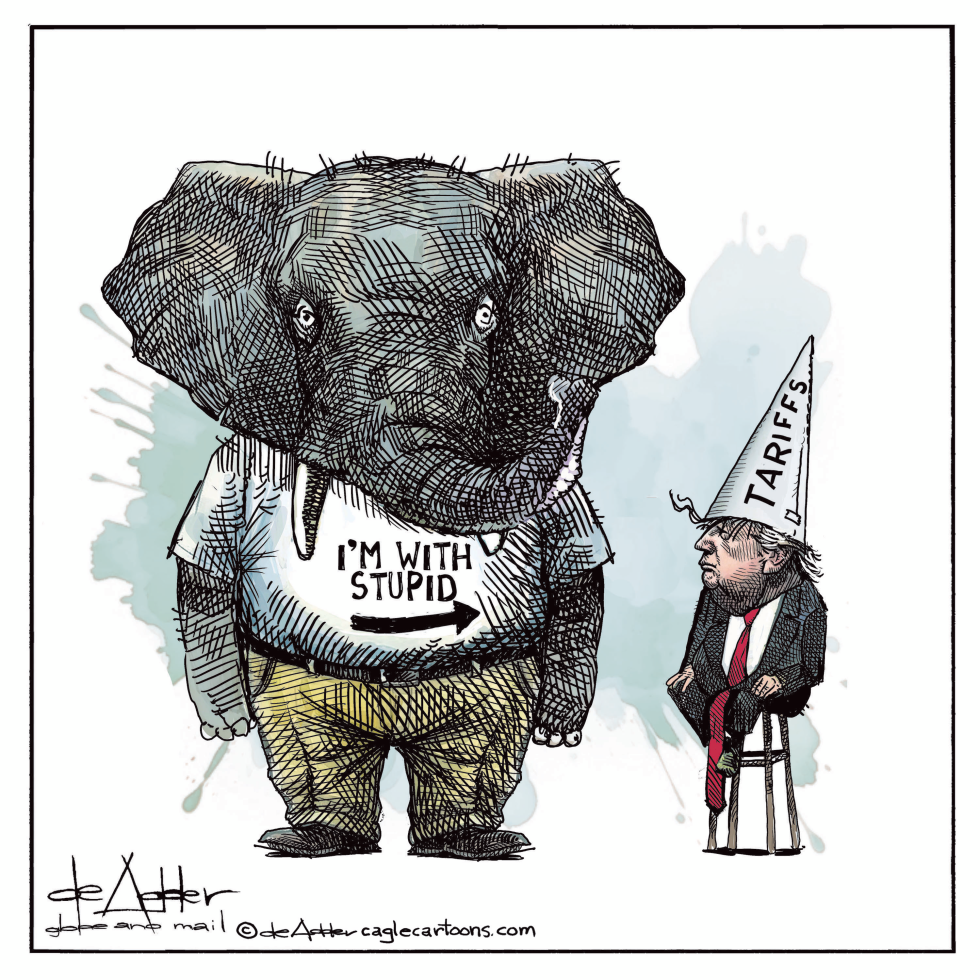
Donald Trump faces renewed scrutiny over his tariffs approach as the Republican Party grapples with the economic fallout. The policy has drawn internal party tension amid broader trade debates. The piece portrays the GOP as aligned with a flawed leader on the issue.
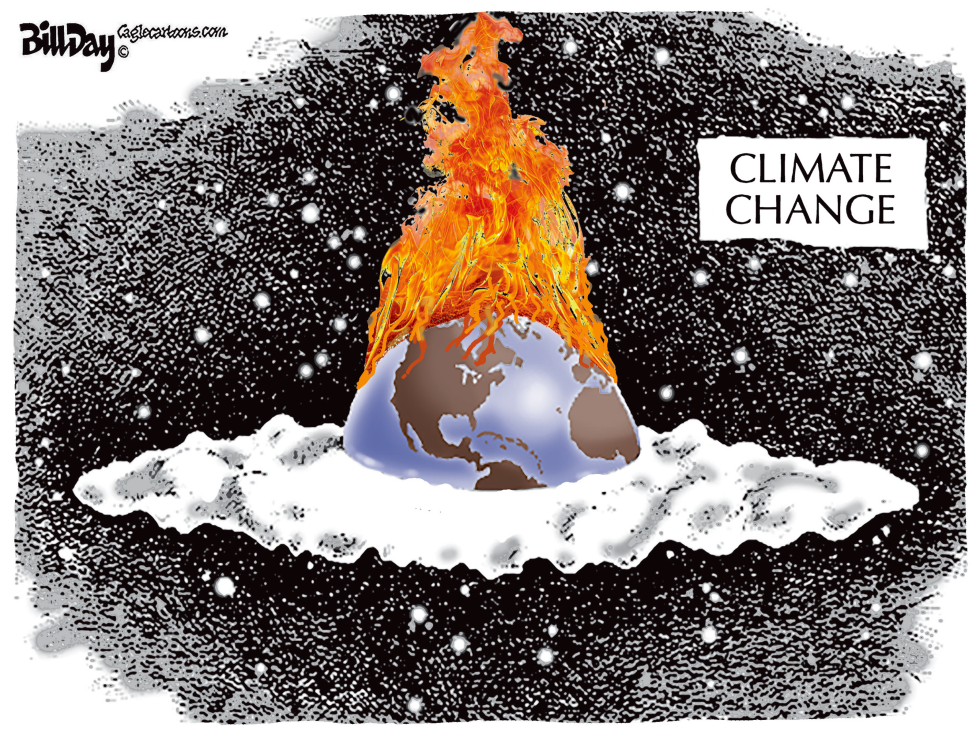
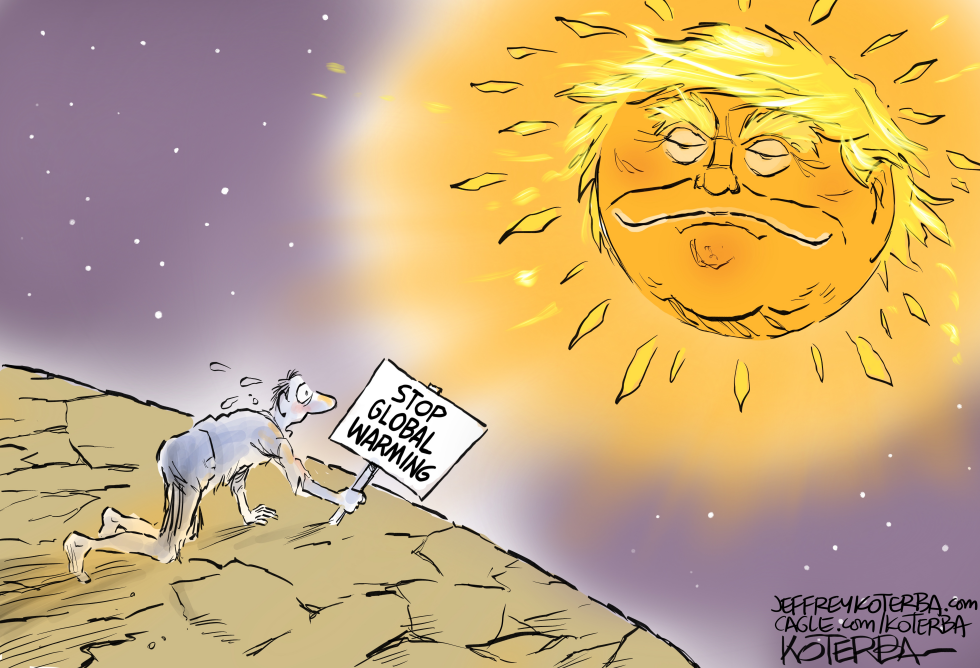
Ongoing global temperature records continue to climb in mid-2026 amid extreme weather events worldwide. Scientists and governments track accelerating impacts from greenhouse gas emissions. The cartoon underscores the direct link between human-driven climate change and planetary distress, presenting the crisis as an immediate and visible threat rather than a distant concern.
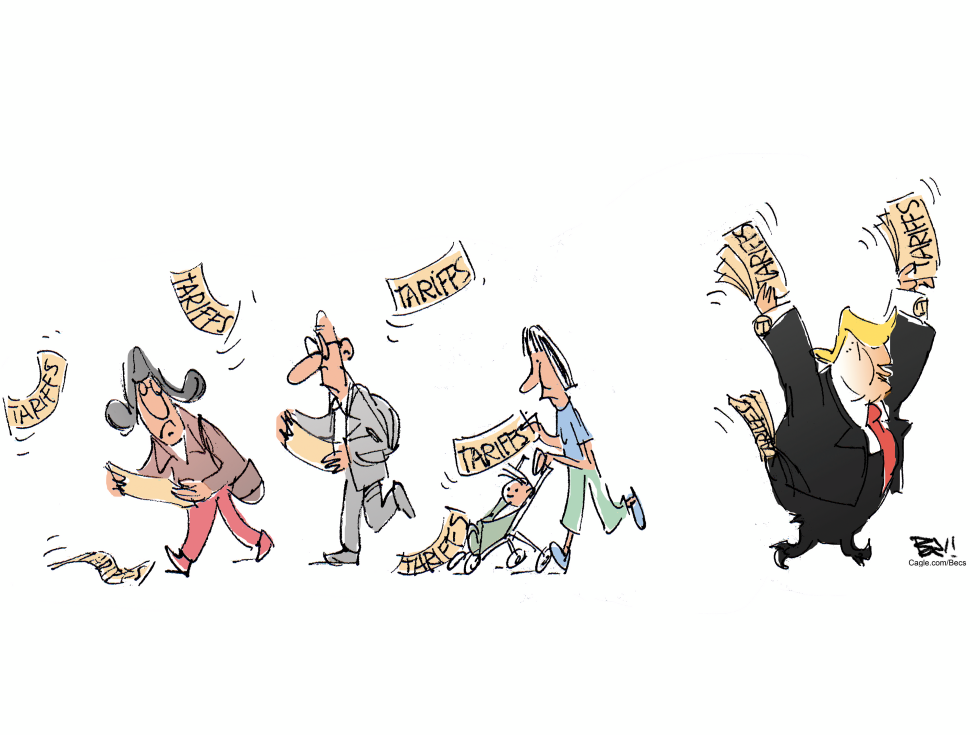
Donald Trump expanded tariffs across trading partners in mid-2026, triggering immediate market volatility and diplomatic pushback. The move raised costs for consumers and businesses reliant on imports. The piece portrays the policy as an indiscriminate barrage that disrupts daily life and global commerce.
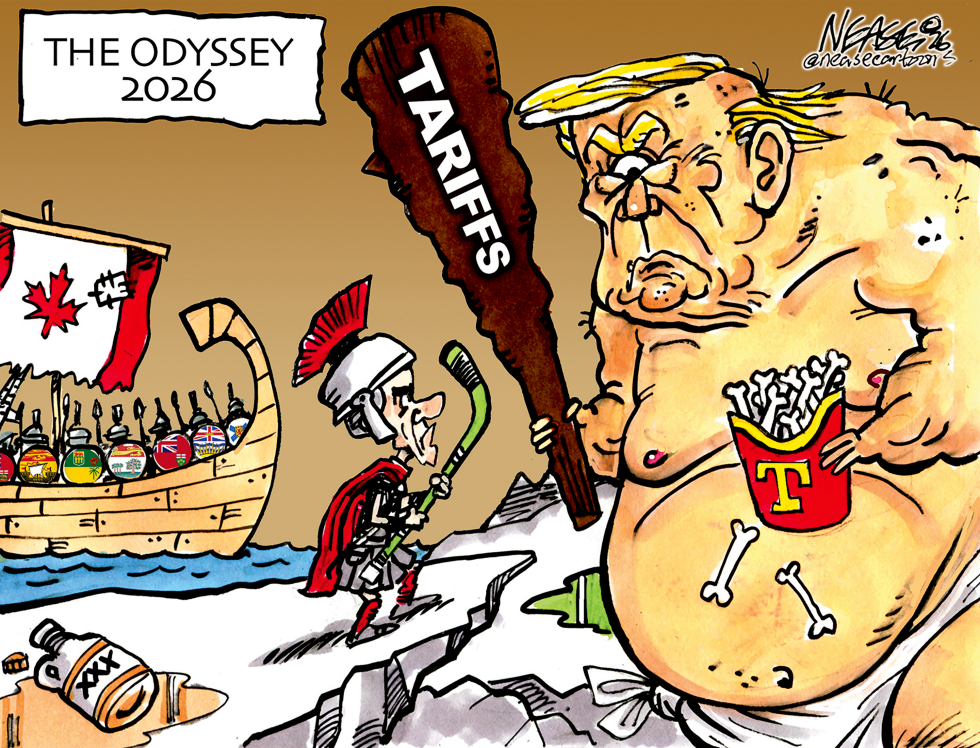
President Trump escalates tariffs on trading partners including Canada in mid-2026. The move targets imports amid ongoing disputes over trade balances and supply chains. Allies respond with coordinated pushback through diplomatic and economic channels. The cartoon casts the confrontation as a one-sided power play by the oversized tariff wielder against smaller coordinated opponents.
Donald Trump remains a central figure in U.S. politics on June 26, 2026. Ongoing debates over climate policy continue amid his influence. The piece portrays the sun as Trump to highlight resistance to warming efforts.
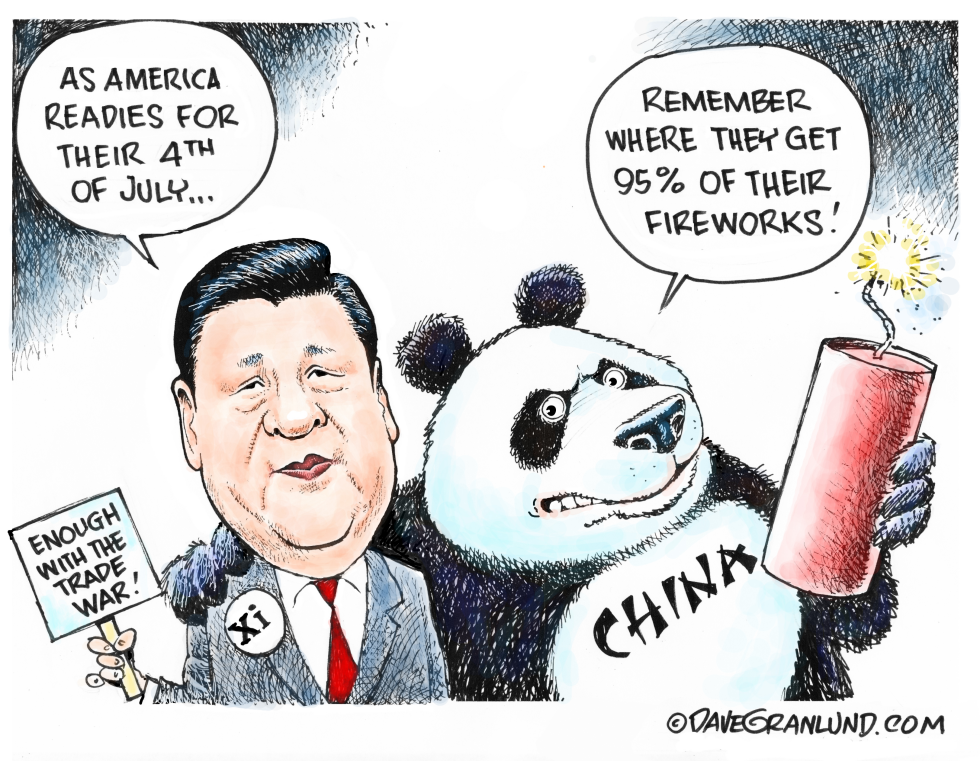
On June 19, 2026, a cartoon by Dave Granlund depicts Chinese leader Xi Jinping alongside a panda representing China. Xi holds a protest sign against the trade war while the panda reminds viewers that China supplies most American fireworks. The image addresses rising costs for July 4th celebrations tied to tariffs and supply issues with the largest provider.
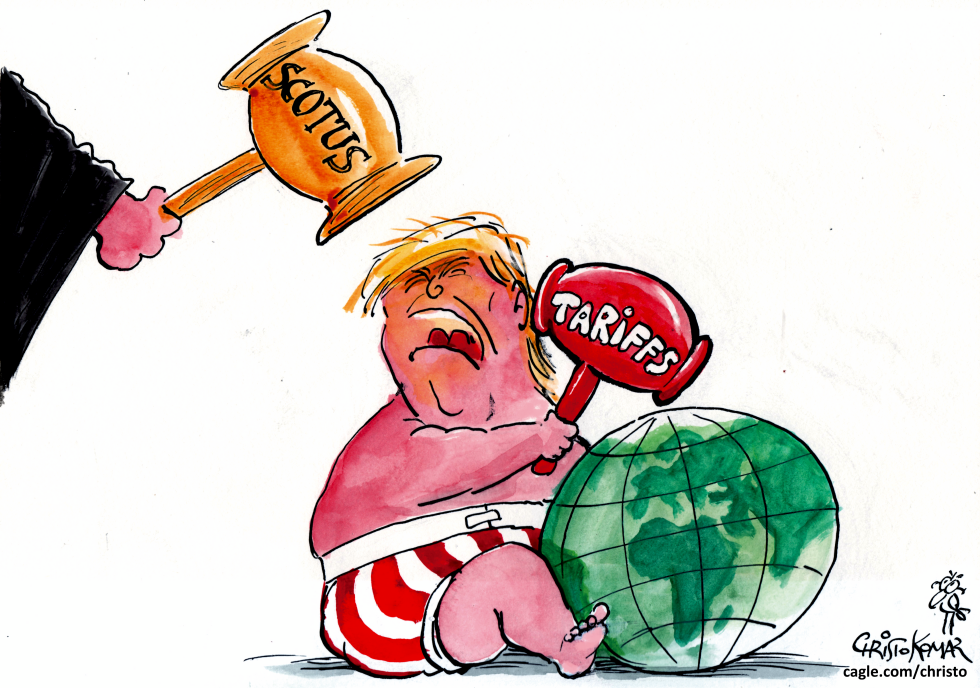
The cartoon shows a Supreme Court gavel descending toward Donald Trump, who holds a tariffs mallet while seated beside a globe. It responds to a 2026 court ruling on presidential tariff authority. The image underscores tension between judicial oversight and executive trade actions.
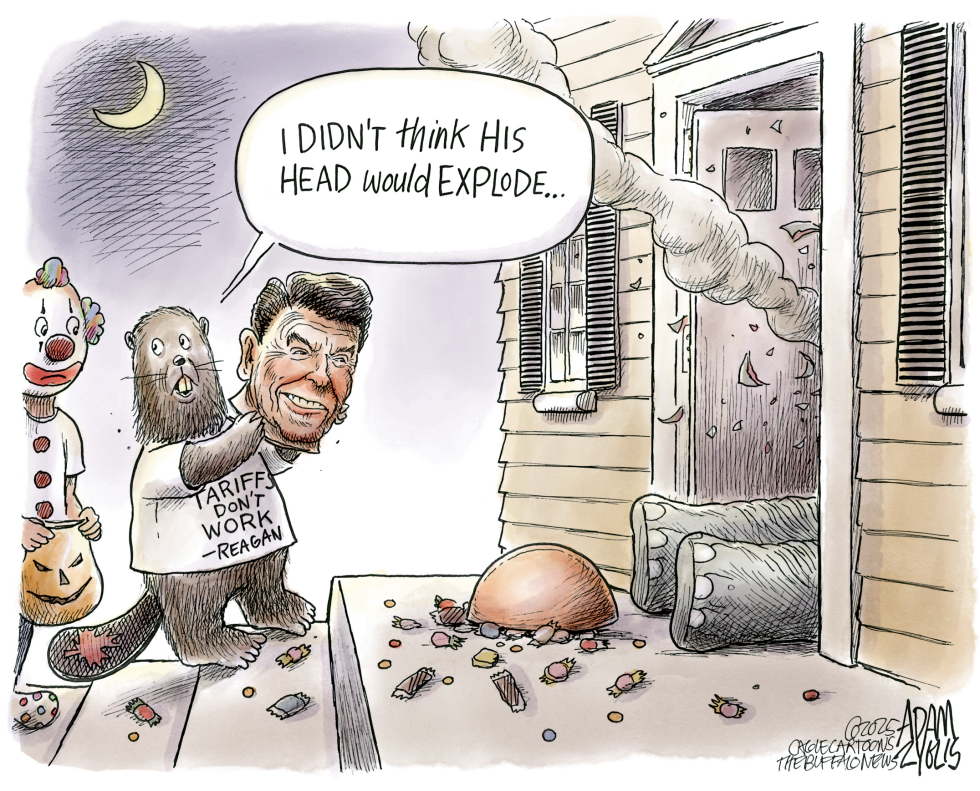
The cartoon depicts a beaver costumed as Ronald Reagan holding a prop head on a damaged porch while a clown stands nearby with a pumpkin bucket. Debris litters the steps after an apparent explosion inside the house. The beaver's shirt quotes Reagan against tariffs. The scene responds to recent Ontario ads criticizing proposed tariffs and their economic effects on Canada-US trade relations around late October 2025.
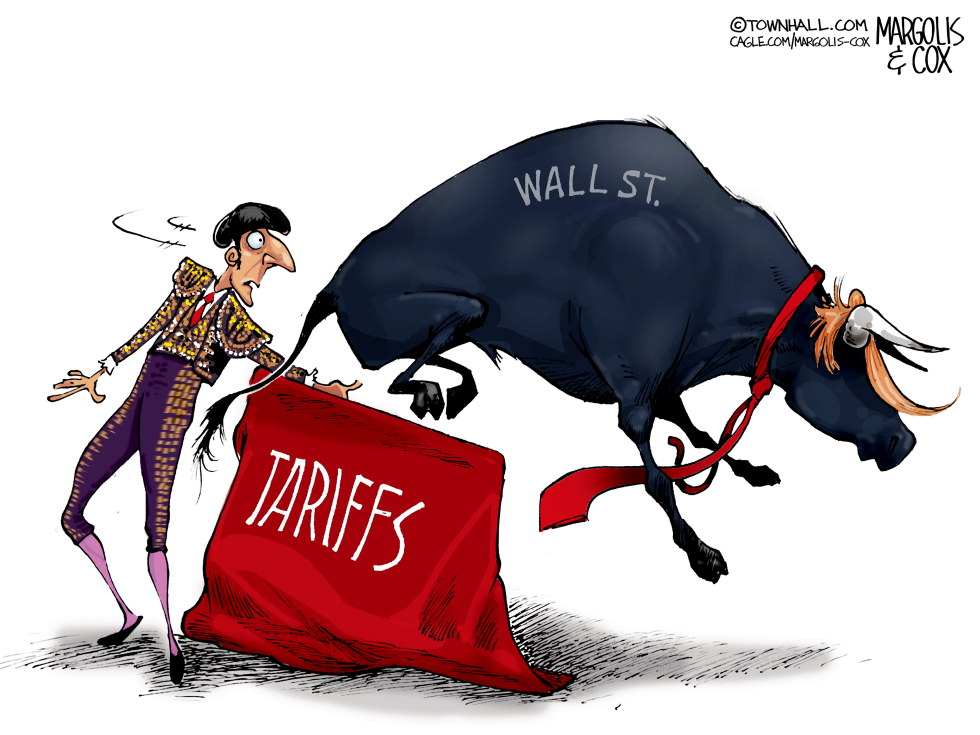
A matador resembling Donald Trump stands with a red cape labeled tariffs as a large bull marked Wall St. charges past him. The image from October 23, 2025, depicts the bull breaking away despite the attempted distraction. It responds to ongoing debates over tariff policies and their limited influence on stock market performance during the period.
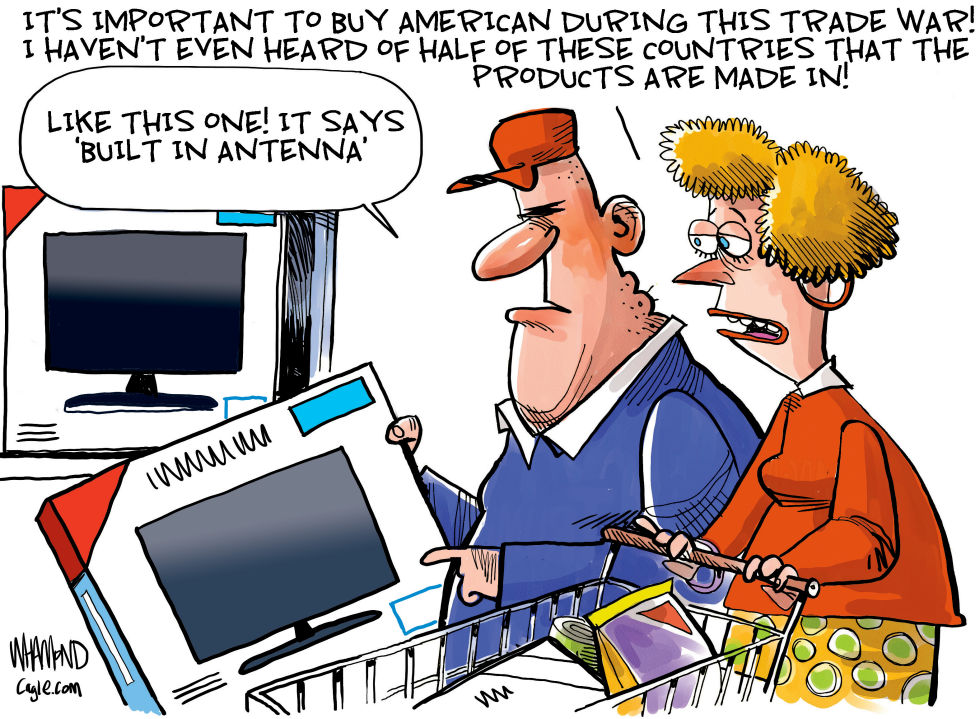
A couple shops for electronics in a store as the man points to a television box labeled built in antenna while declaring support for American goods during an ongoing trade war. The woman reacts with surprise at the label. Large text overhead stresses the importance of domestic purchases because many product origins remain unfamiliar. The scene reflects consumer reactions to tariffs and protectionist policies active in late 2025.
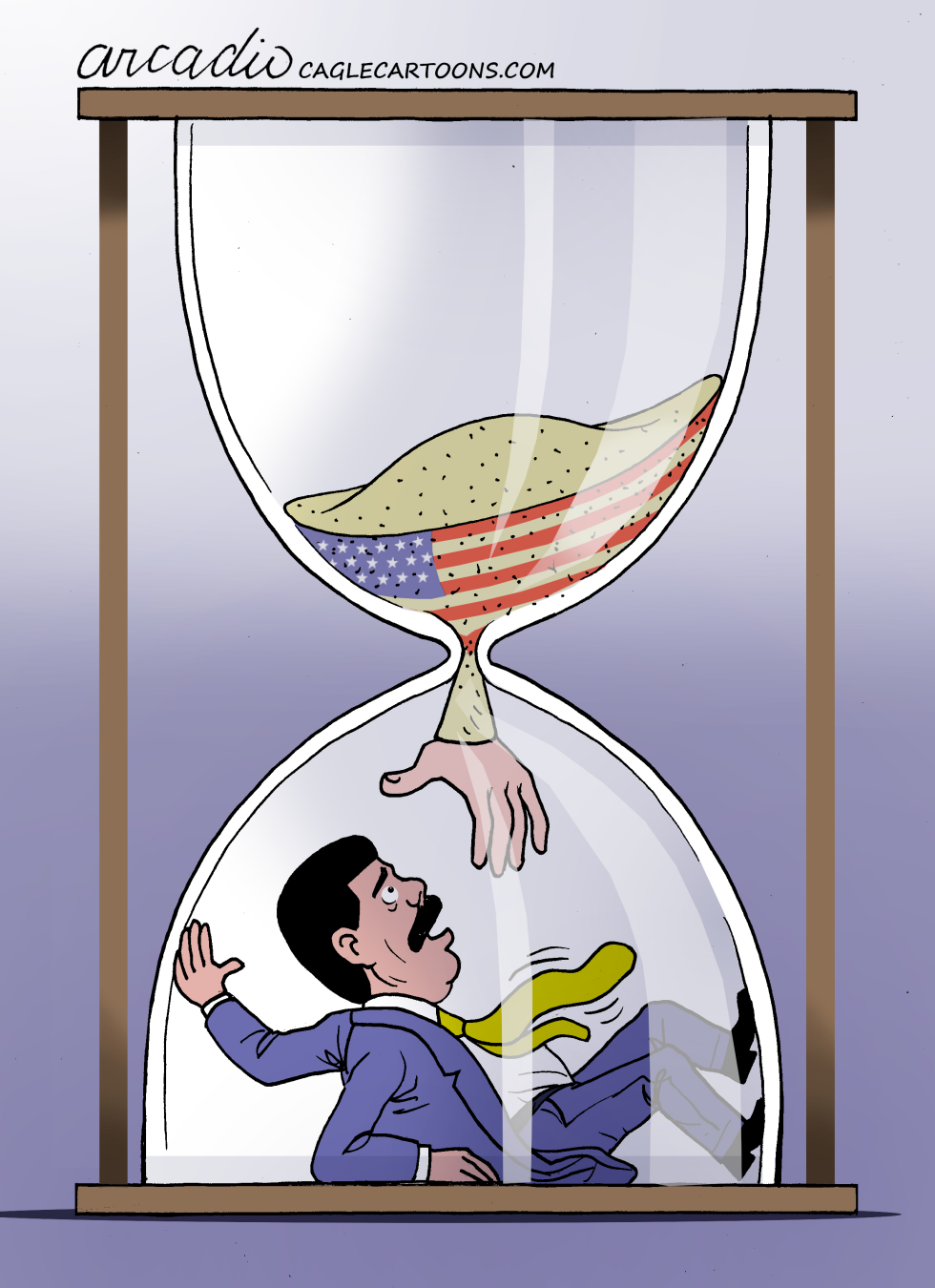
The cartoon depicts Nicolás Maduro trapped in the lower chamber of an hourglass as sand patterned with the American flag flows downward. His desperate reach toward the narrowing neck illustrates mounting external pressure on the Venezuelan leader. The October 2025 image aligns with ongoing US sanctions and diplomatic isolation efforts targeting Maduro's regime over drug trafficking and authoritarian control.