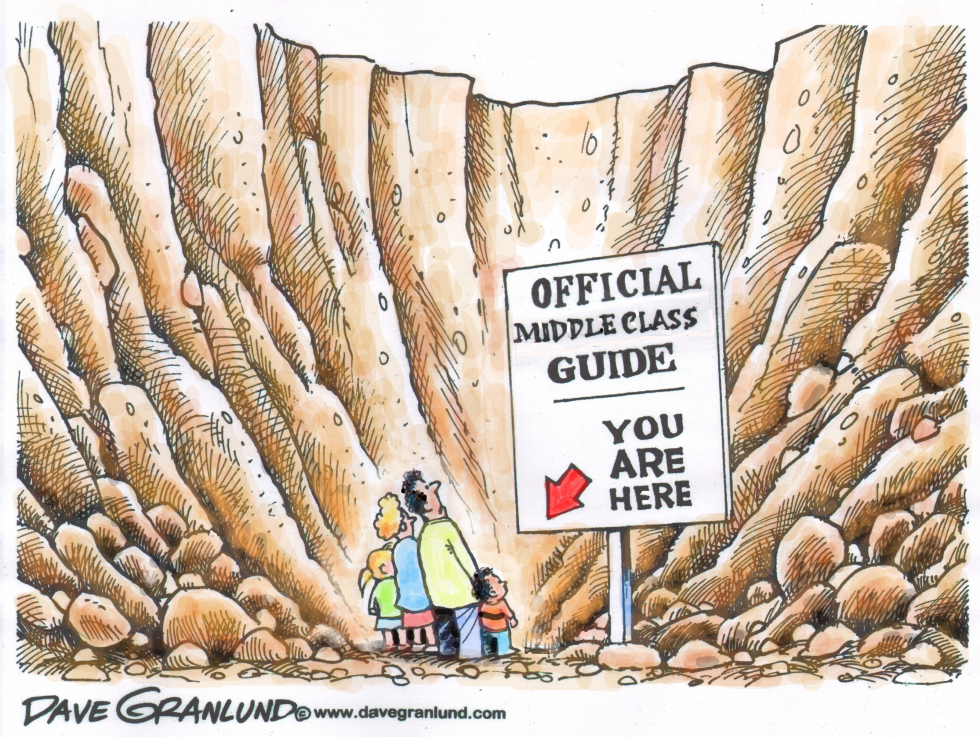
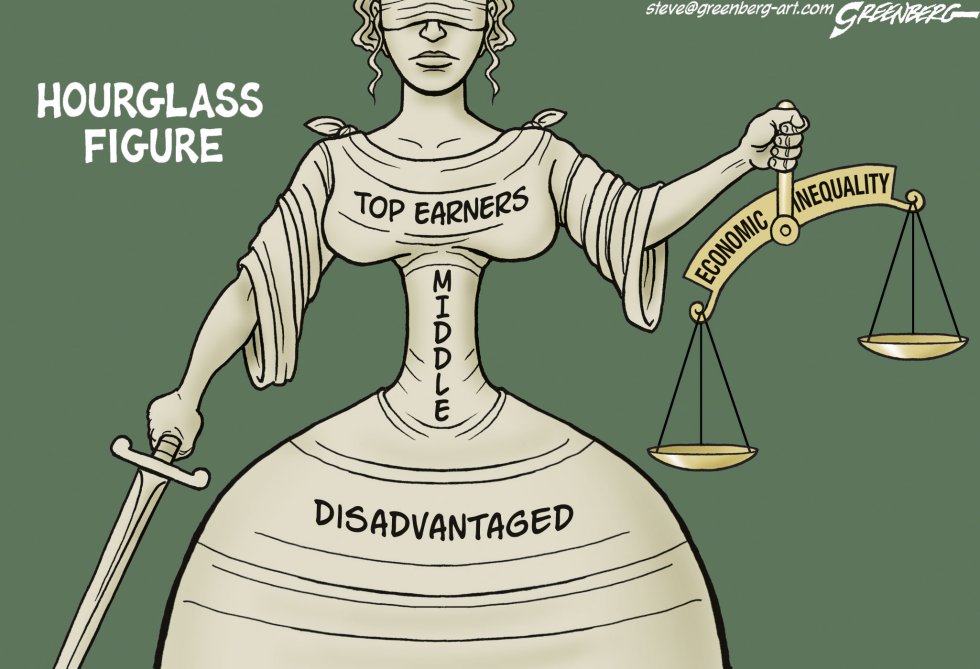
The cartoon shows a family of four standing at the base of a steep rocky canyon while viewing a large sign labeled Official Middle Class Guide with an arrow stating You Are Here. The image captures the sense of being trapped or positioned within a deep economic divide. Published on September 13 2026 the work addresses the ongoing pressures on middle class households including stagnant wages rising costs and limited upward mobility. The visual metaphor of the canyon emphasizes how many families feel stuck between higher and lower economic strata without clear paths forward. The artist's signature appears at the bottom left confirming the creator as Dave Granlund.
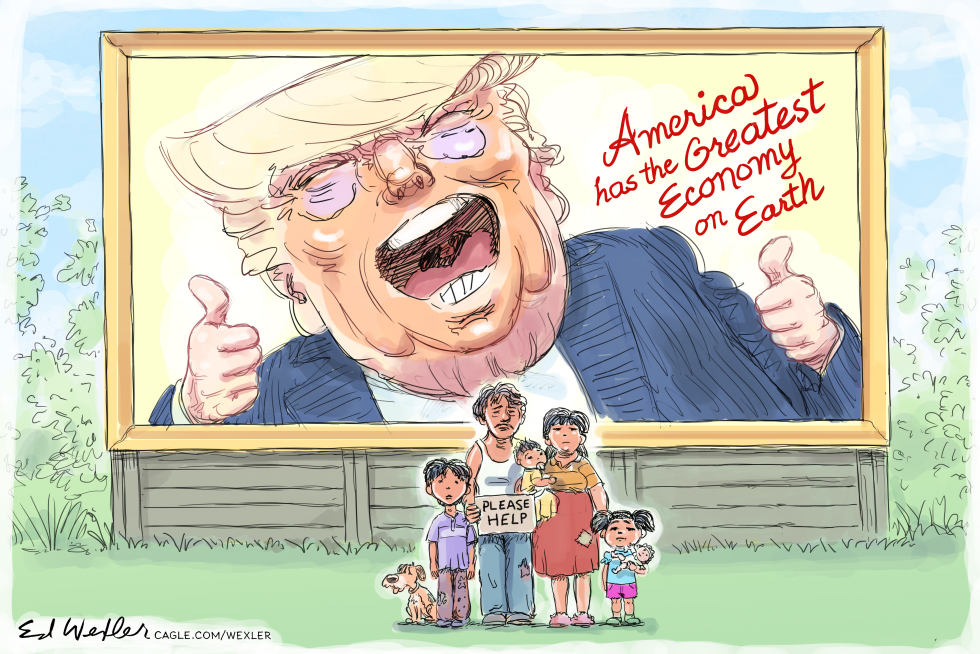
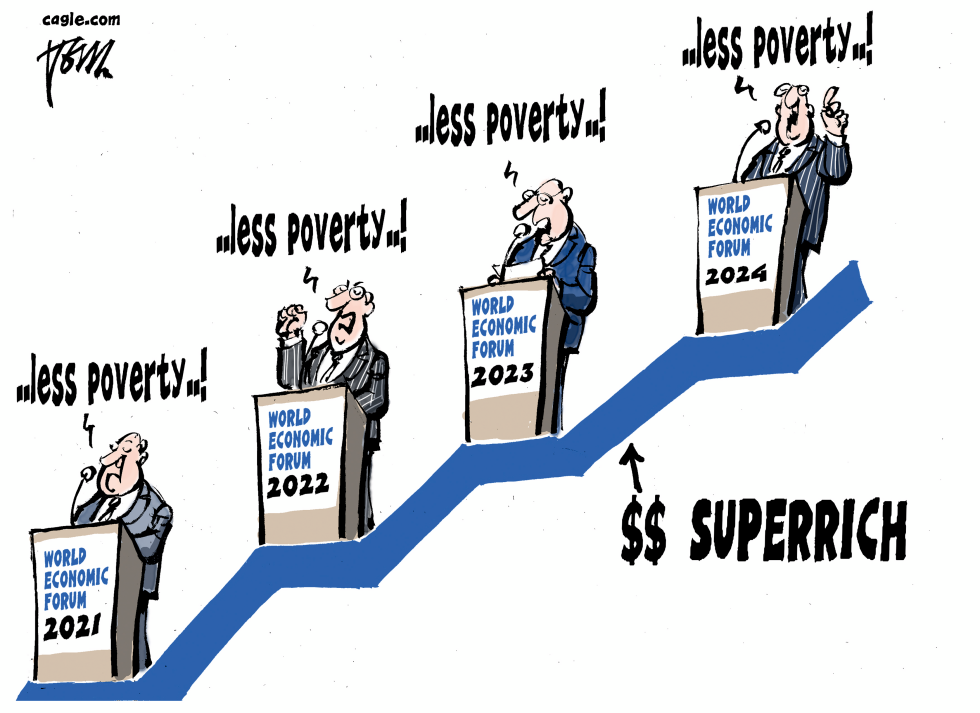
On August 29 2026 President Donald Trump continued promoting claims of an unmatched U.S. economy amid ongoing reports of persistent poverty and wage stagnation for many households. The billboard message highlights administration assertions of national prosperity. The accompanying image underscores the disconnect between official rhetoric and daily struggles for families facing unemployment and insufficient support. The piece argues that such promotional messaging ignores the lived experience of economic hardship.
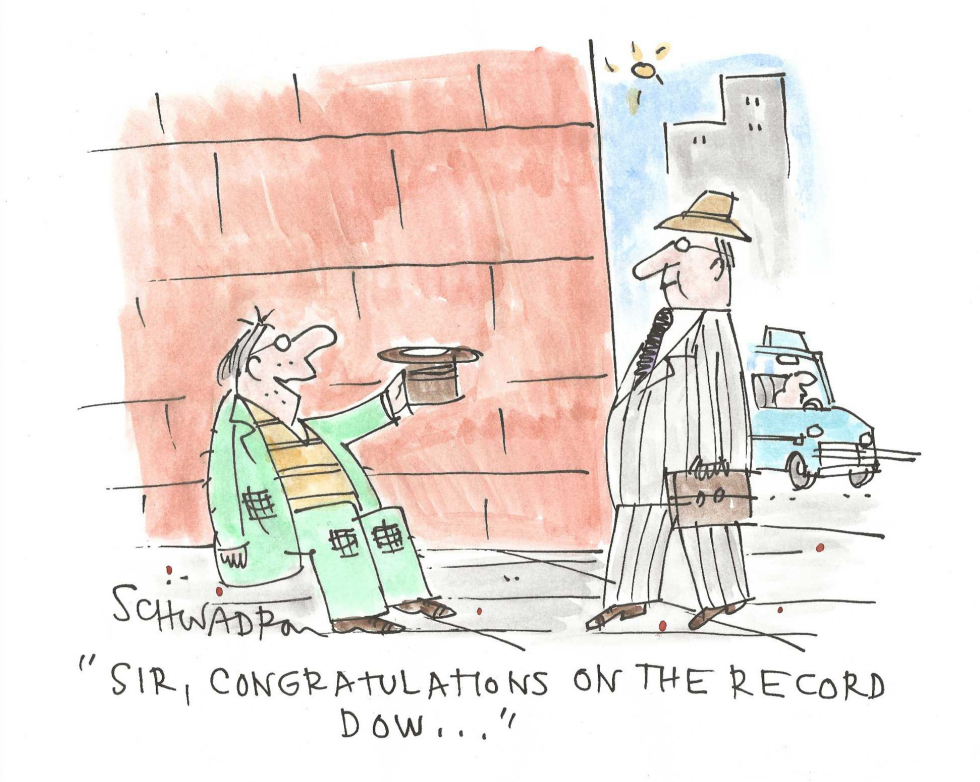
The Dow Jones Industrial Average reached a new record high in late August 2026, reflecting strong corporate earnings and investor confidence. Business leaders celebrated the milestone while many Americans continued to face stagnant wages and rising living costs. The cartoon depicts a beggar offering congratulations to a passing executive, underscoring the disconnect between Wall Street performance and everyday economic reality. This visual argument critiques how market success often benefits a narrow segment of society while leaving others behind.
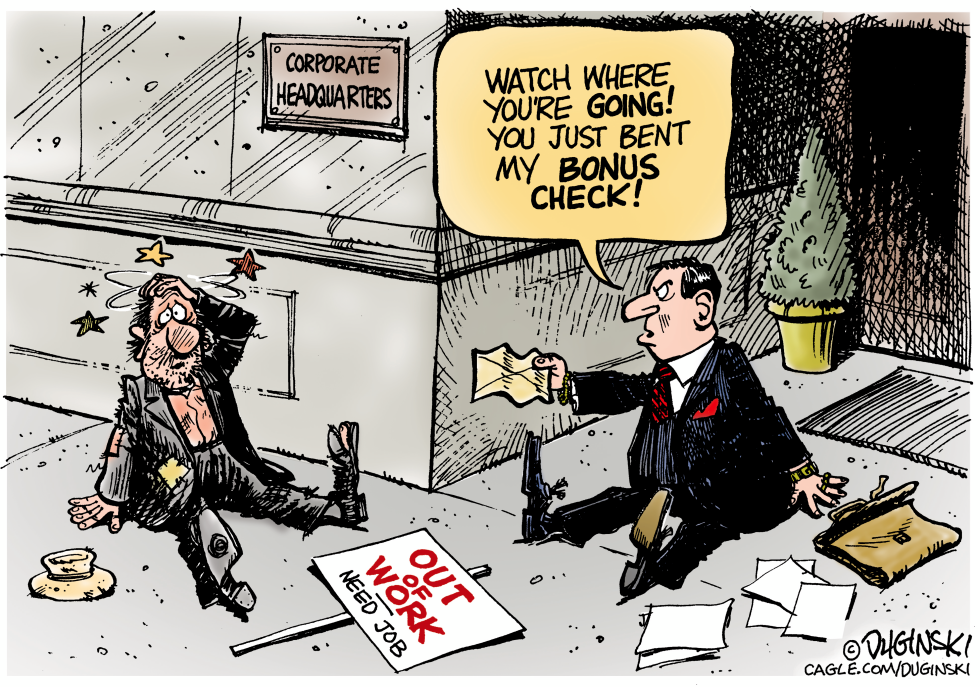
Corporate executives continue to receive large bonuses even as layoffs persist across sectors. The piece responds to ongoing debates over executive compensation packages during periods of workforce reduction. It takes the position that such bonuses appear disconnected from the realities facing displaced employees.
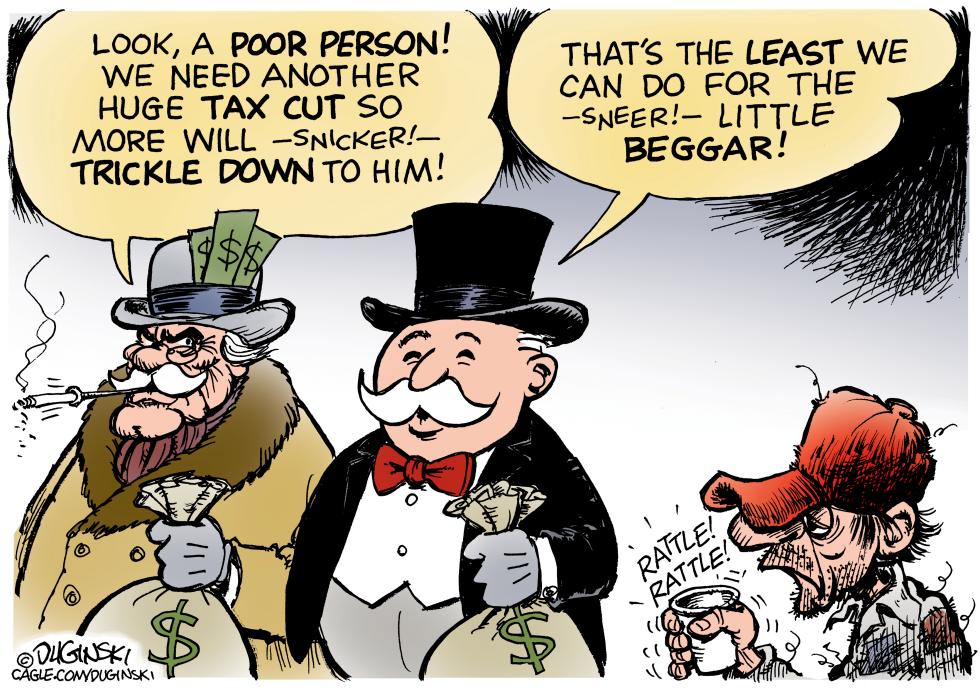
Wealthy interests continue to advocate additional tax reductions framed as broad-based relief. Critics note that such measures primarily benefit high earners while leaving lower-income households with minimal gains. The piece highlights the disconnect between policy promises and visible outcomes for those at the bottom.
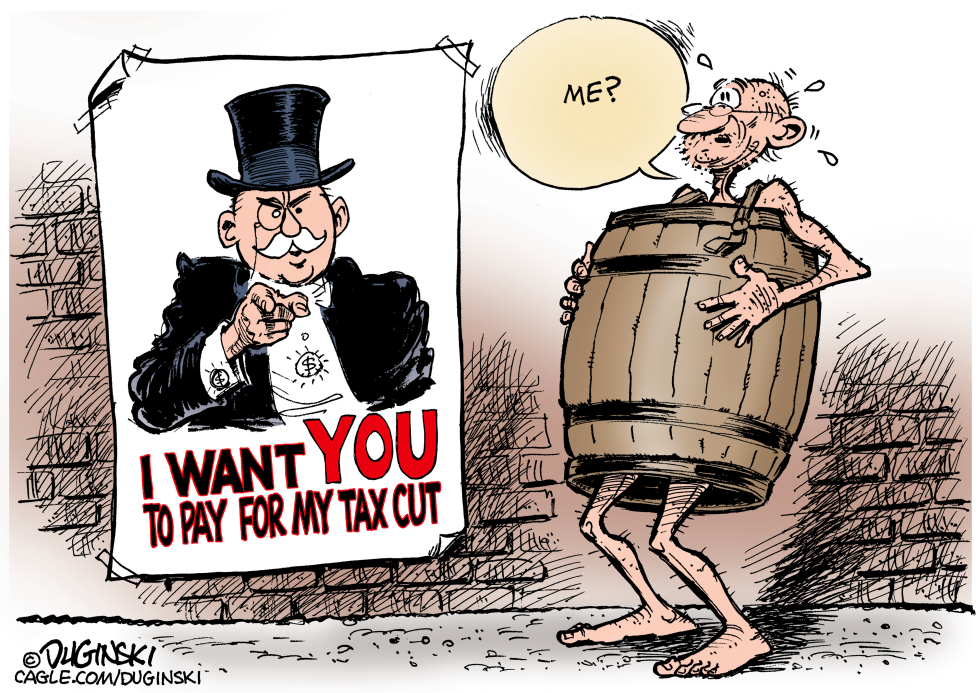
A poster of Uncle Sam points directly at a thin man trapped in a barrel, with bold text demanding that the man pay for the tax cut. The barefoot figure reacts with surprise in a speech bubble. The scene unfolds against brick walls, highlighting tension between authority and the economically disadvantaged.
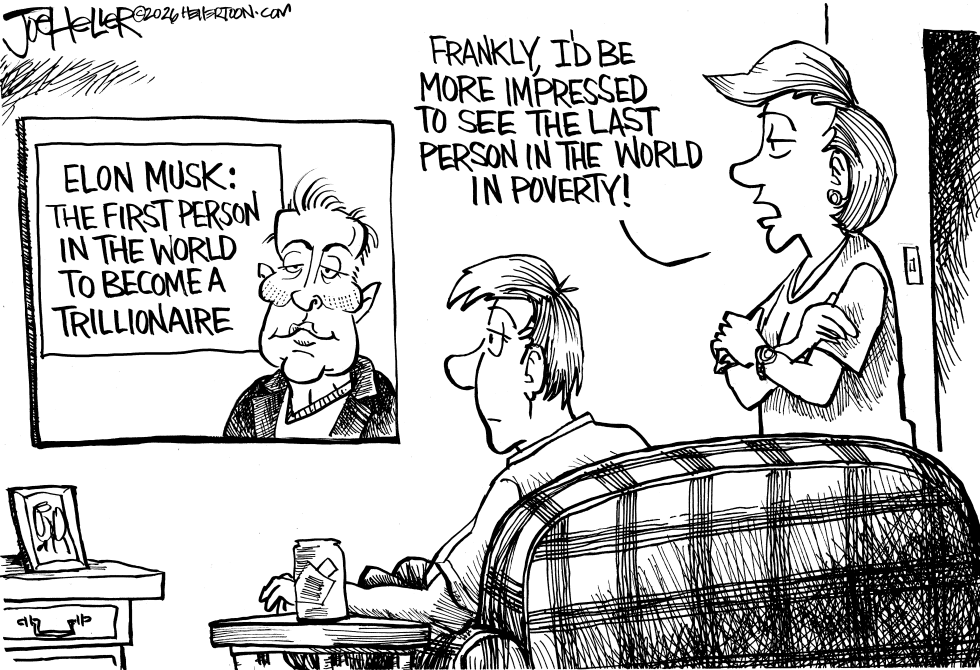
A couple watches a television broadcast announcing Elon Musk as the first person to become a trillionaire. The woman viewer responds that she would be more impressed by the last person in poverty being lifted out of it. The scene captures a living room exchange over the news report.
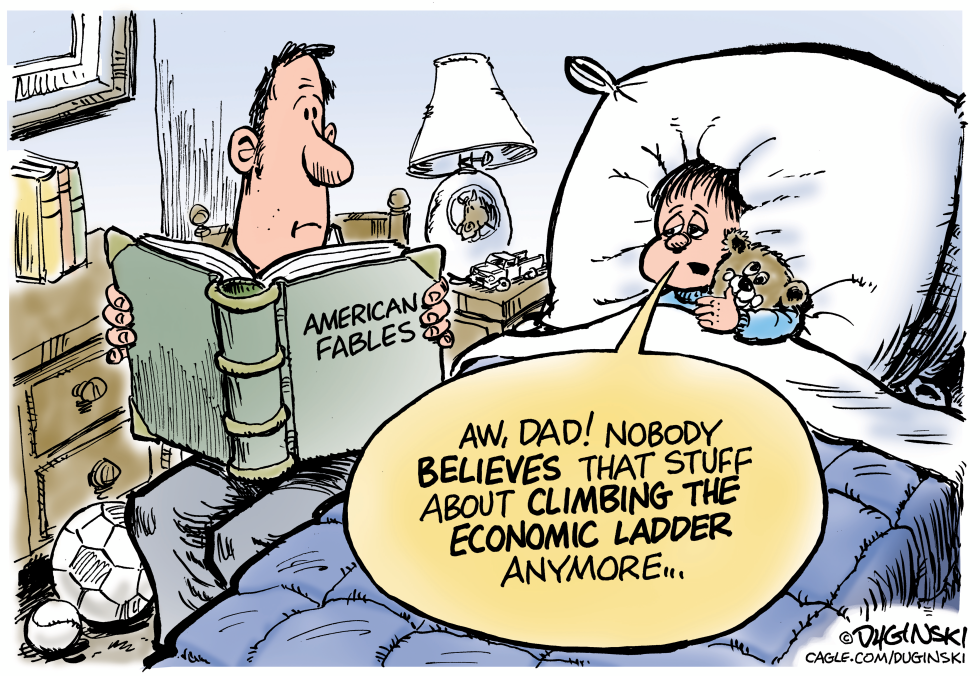
The image shows a father holding an open book titled American Fables beside a child tucked in bed with a teddy bear. The boy speaks from a large speech bubble rejecting the notion of climbing the economic ladder. A soccer ball rests on the floor near stacked books and a nightstand with a lamp and toy train. Tags include American Dream, climbing the economic ladder, upward mobility, cost of living, affordability, and inflation. The scene stays limited to these visible elements without added context.
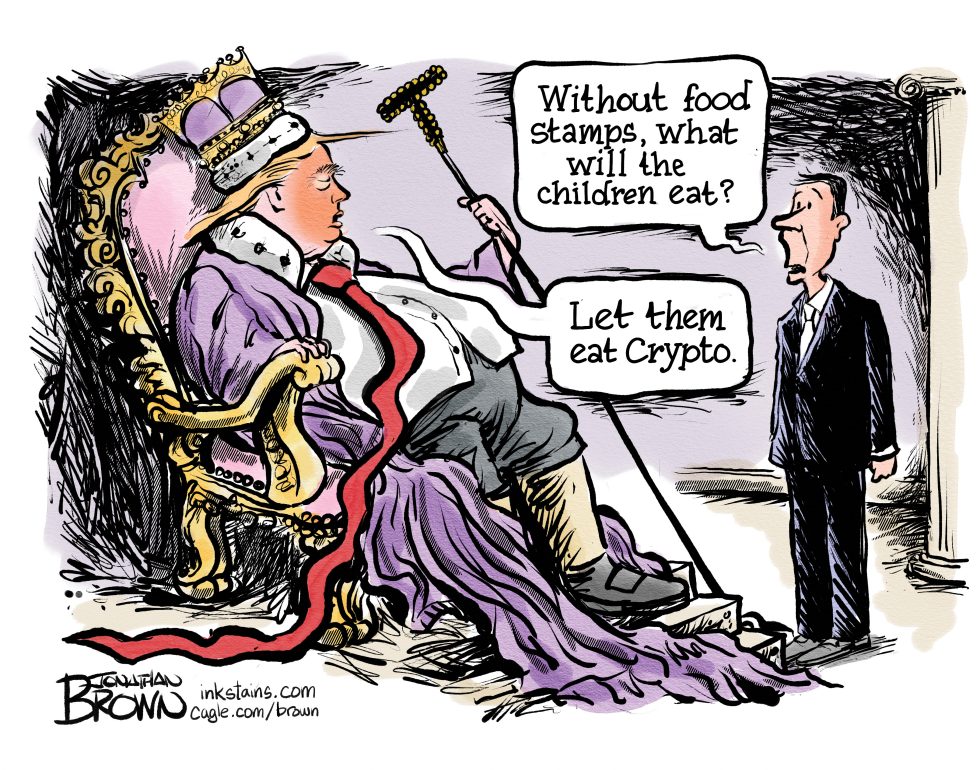
The image depicts Donald Trump dressed in royal attire on a throne responding to a question about food stamps during a government assistance halt. The suited figure asks what children will eat without SNAP benefits. Trump replies by suggesting crypto as the solution. This draws on the publication date of October 27 2025 when SNAP program disruptions were under discussion. The visual frames the response as detached from everyday economic pressures faced by recipients.
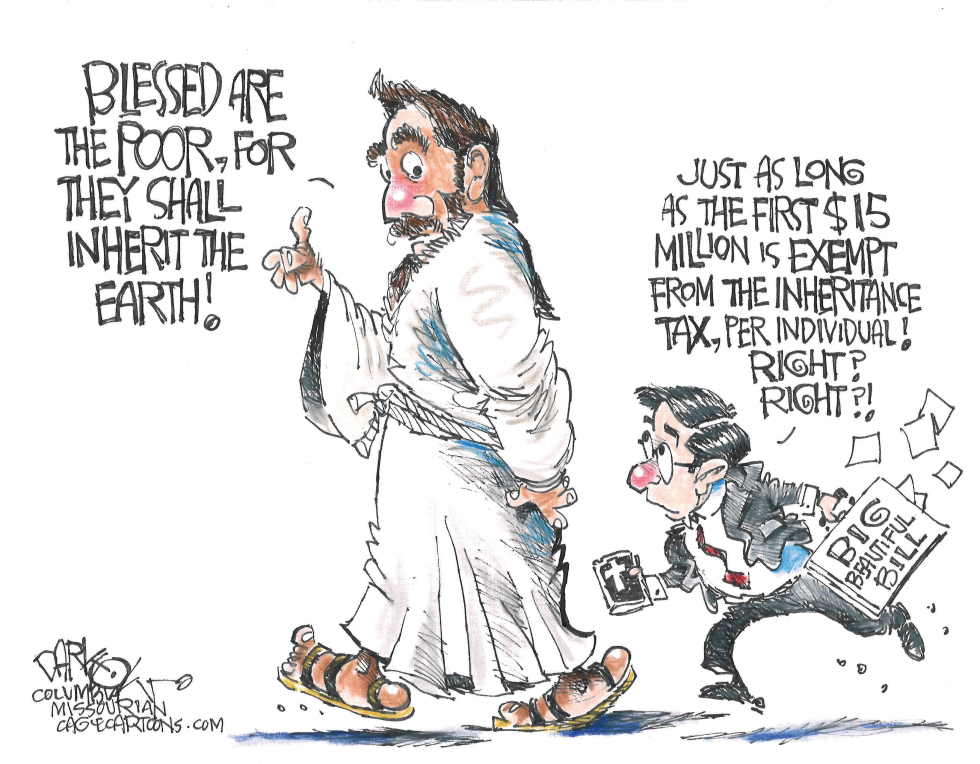
John Darkow's cartoon features a Jesus-like figure proclaiming, 'Blessed are the poor, for they shall inherit the earth,' only to be chased by a suited man holding a 'Big Beautiful Bill' and demanding the first $15 million be exempt from inheritance tax. The image twists biblical teachings to critique tax policies favoring the wealthy, with the misspelled 'Inhert' adding a layer of irony. Tags like political cartoon inheritance tax exemption and estate tax policy humor capture the essence. The dry humor targets economic inequality, showing the businessman clutching a small book, perhaps a Bible, while papers fly. This setup parodies how religious ideals clash with modern fiscal privileges, making it a sharp commentary on wealth distribution.