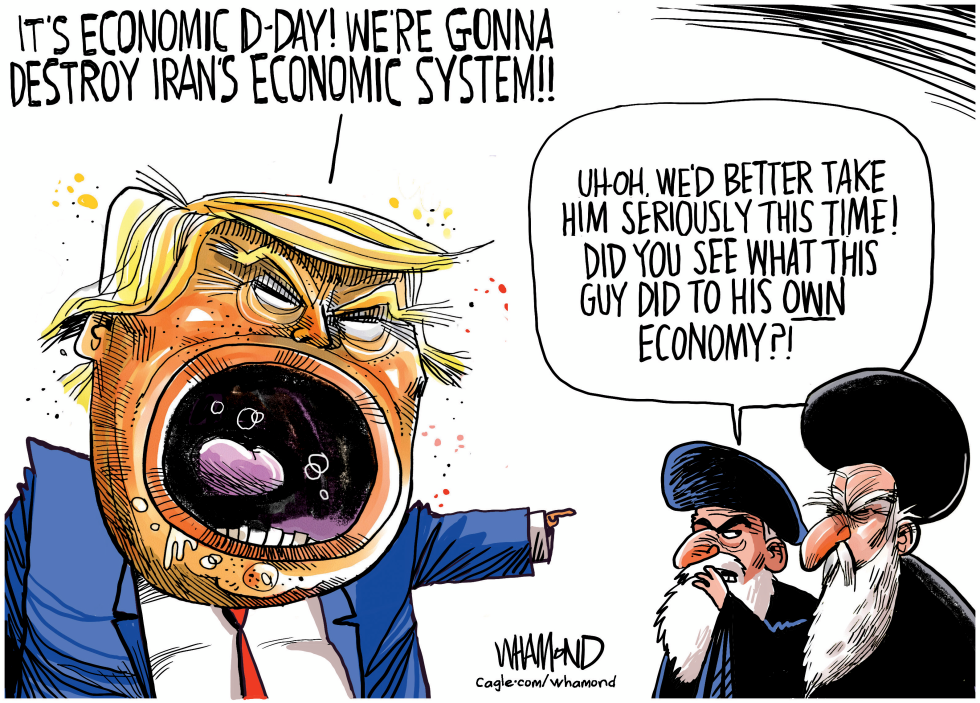
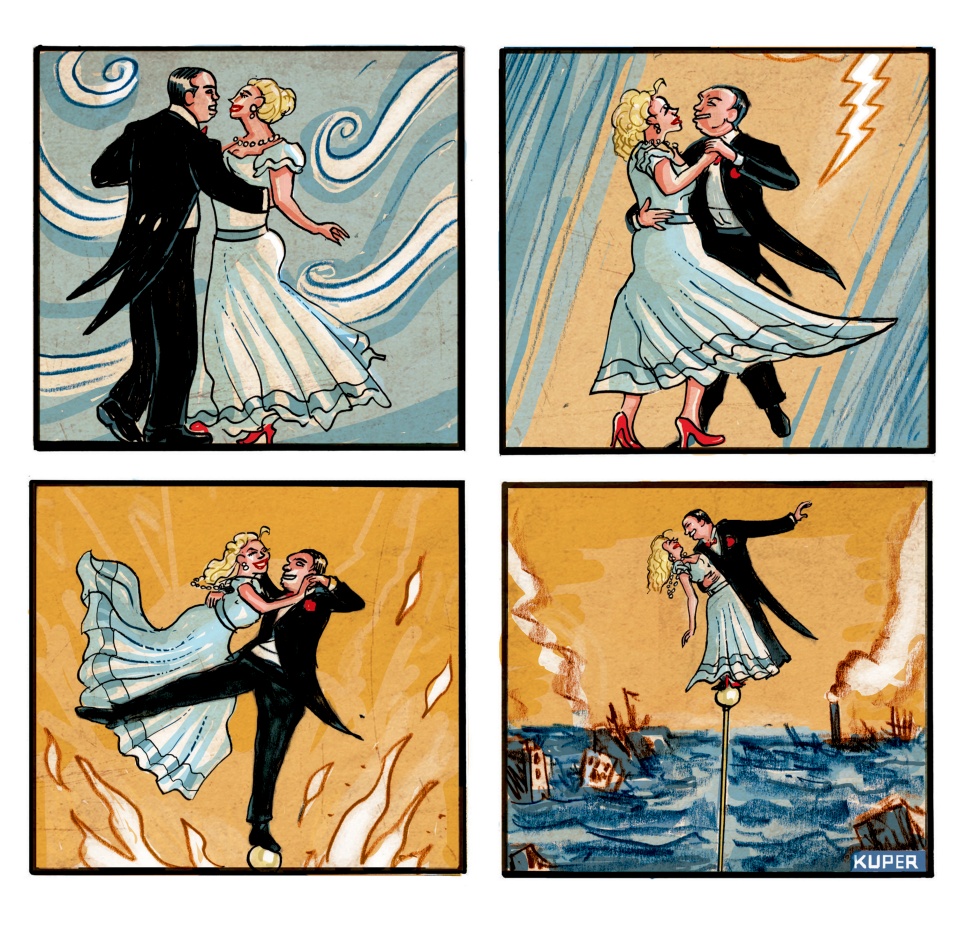
Donald Trump has warned of an economic D-Day targeting Iran's economic system. The statement comes as part of ongoing pressure on Tehran. Iranian leaders in the scene respond by urging seriousness, citing the impact Trump had on the US economy during his term. The development highlights continued tensions in US-Iran relations and the use of economic measures as leverage. The piece portrays the threat as potentially undermined by Trump's own economic legacy.
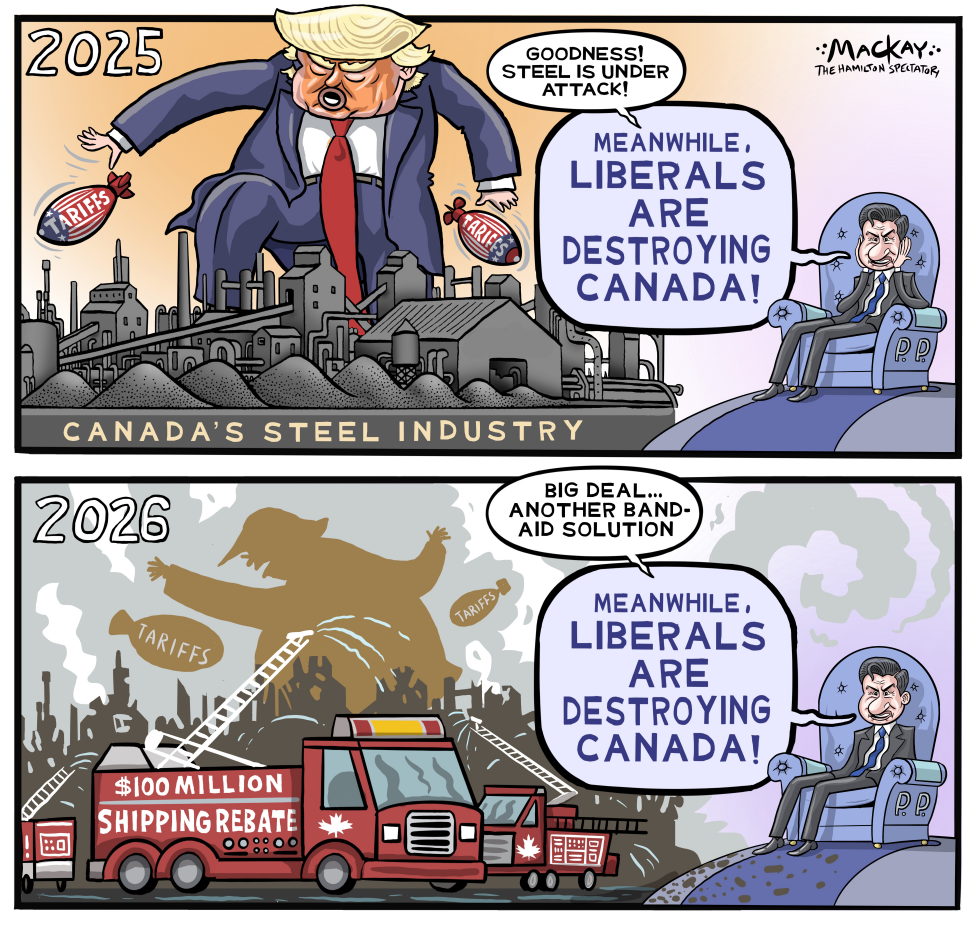
U.S. tariffs imposed on Canadian steel in 2025 triggered sharp declines in the domestic industry by 2026. The federal government responded with a $100 million shipping rebate. Conservative Leader Pierre Poilievre continued to focus attacks on the Liberal government rather than the trade shock. The cartoon argues this stance amounts to a repeated distraction from the core economic damage.
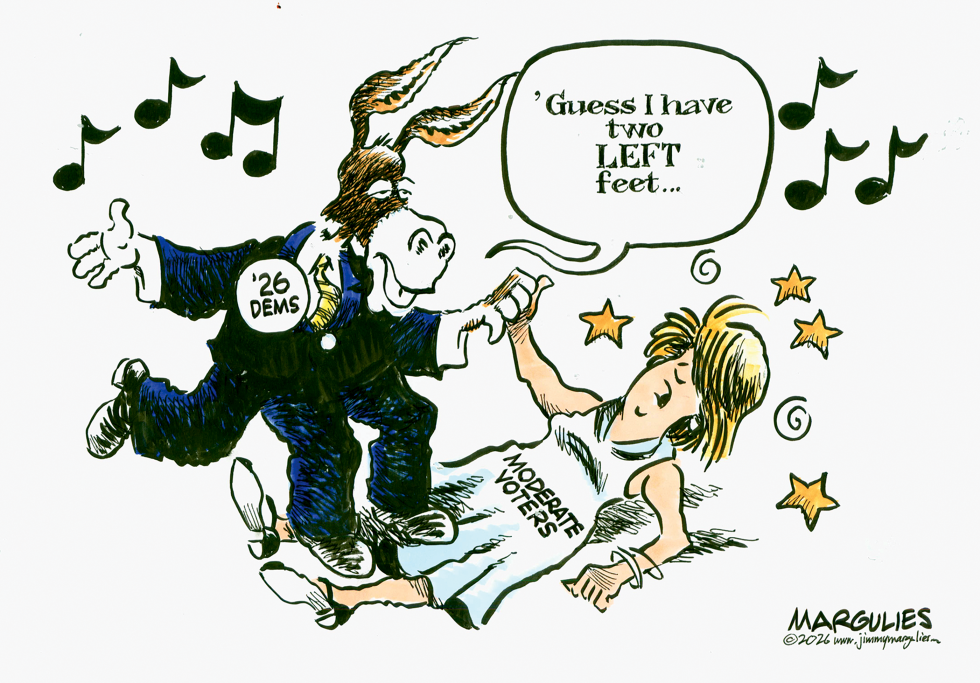
Democrats heading into the 2026 midterms face internal pressure to energize their base with progressive policies, yet this risks further distancing moderate voters essential for broader electoral success. The party has advanced left-leaning positions on issues like spending and social policy in recent cycles. Critics argue this approach prioritizes ideological purity over coalition building. The piece portrays the Democratic donkey as stepping on moderates while acknowledging its own missteps, highlighting the tension between base mobilization and centrist appeal.
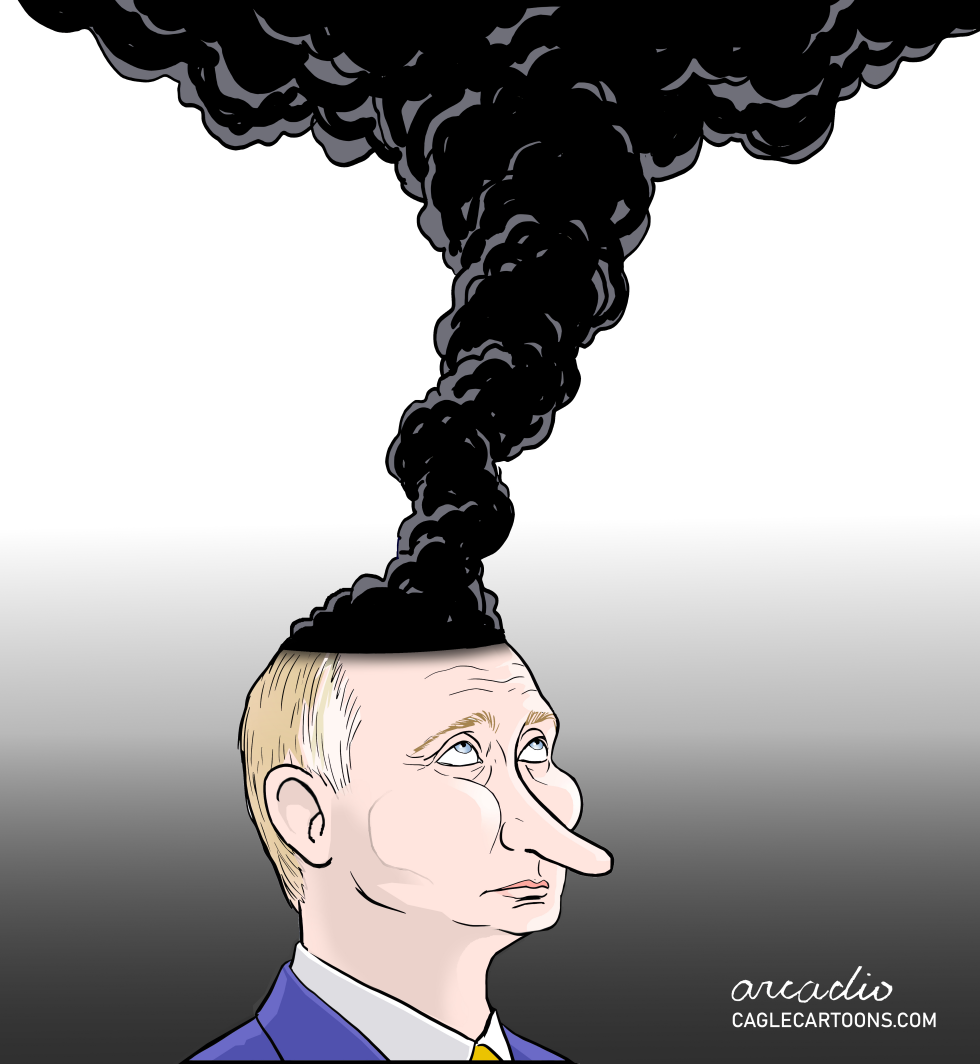
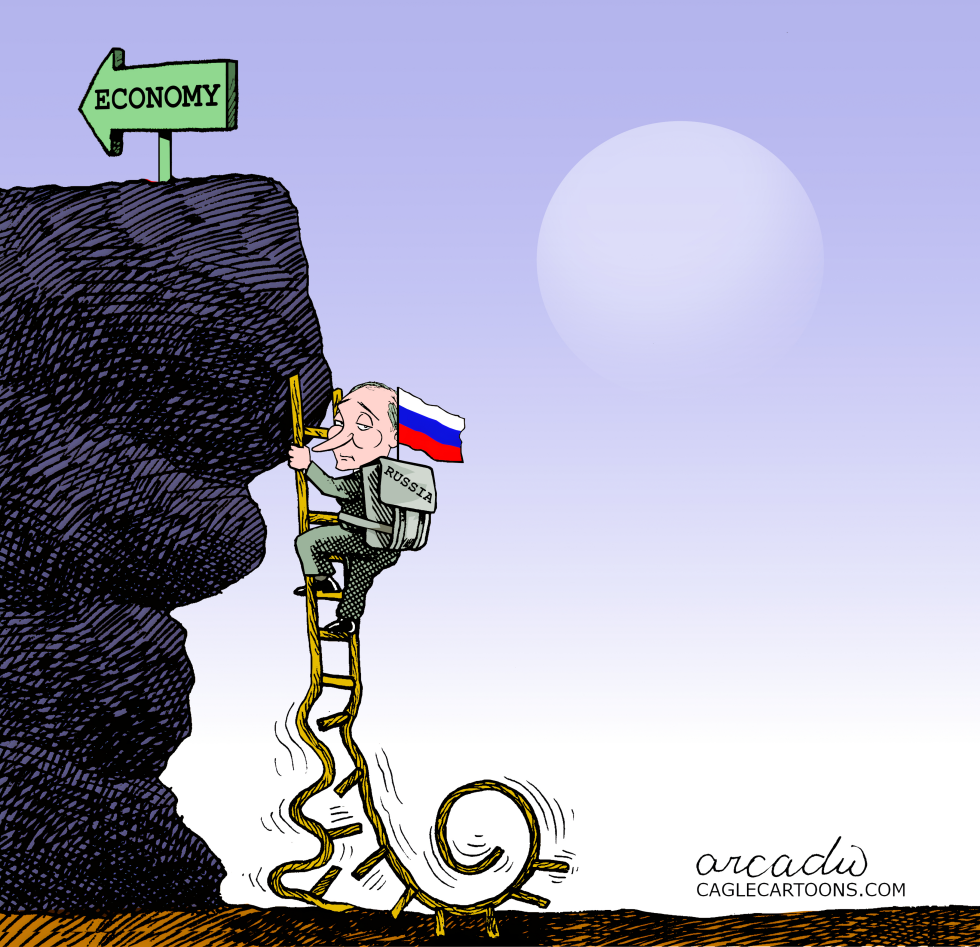
Ukraine has intensified strikes on Russian energy and industrial targets, aiming to disrupt Moscow's war funding. The moves come as Western sanctions already limit Russia's export revenues and force budget reallocations. The editorial position holds that sustained Ukrainian pressure can force Russia toward negotiations by eroding its financial base.
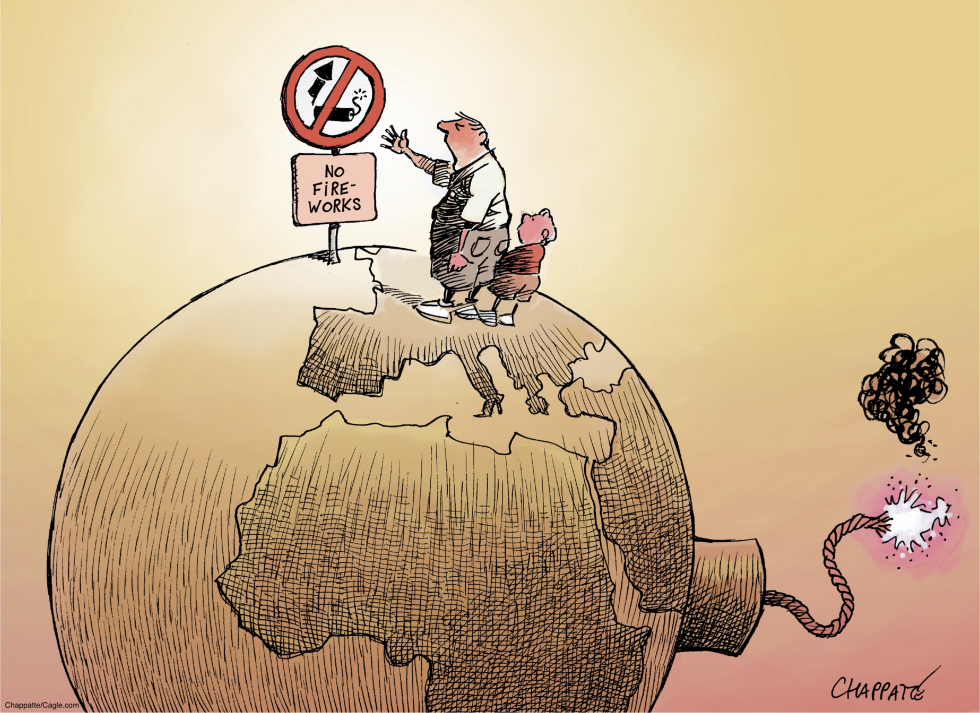
Global leaders continue to dismiss repeated scientific warnings about accelerating climate impacts even as extreme weather events intensify worldwide. The ongoing failure to curb emissions and adopt binding reductions leaves future generations exposed to rising temperatures, sea levels, and resource conflicts. The editorial argues that such willful disregard of clear danger signs amounts to reckless endangerment of the planet itself.
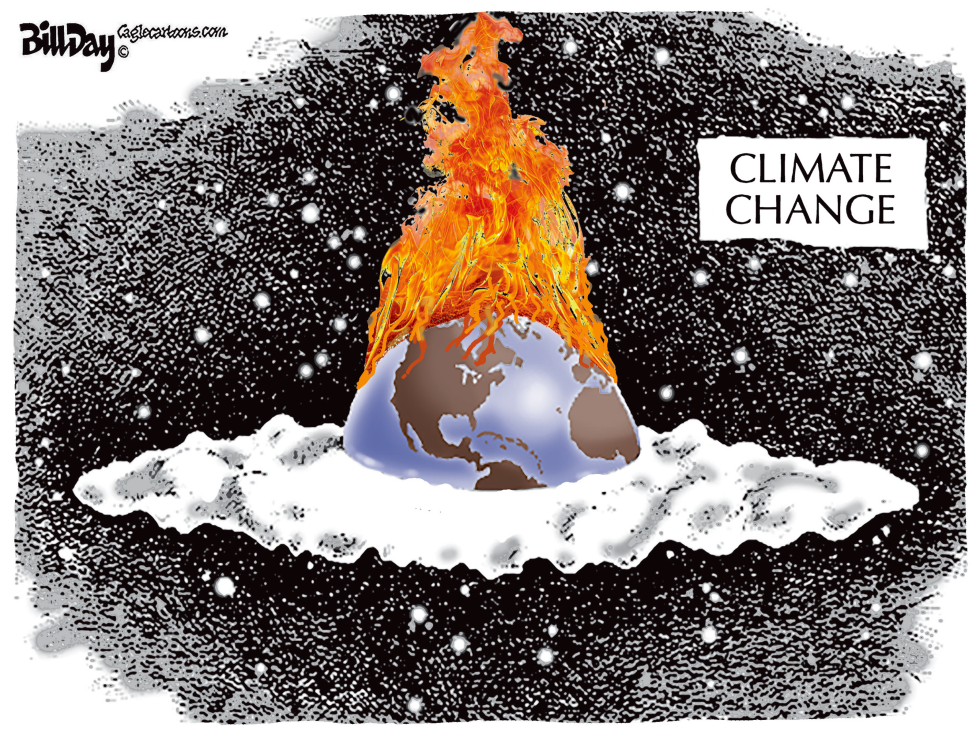
Ongoing global temperature records continue to climb in mid-2026 amid extreme weather events worldwide. Scientists and governments track accelerating impacts from greenhouse gas emissions. The cartoon underscores the direct link between human-driven climate change and planetary distress, presenting the crisis as an immediate and visible threat rather than a distant concern.
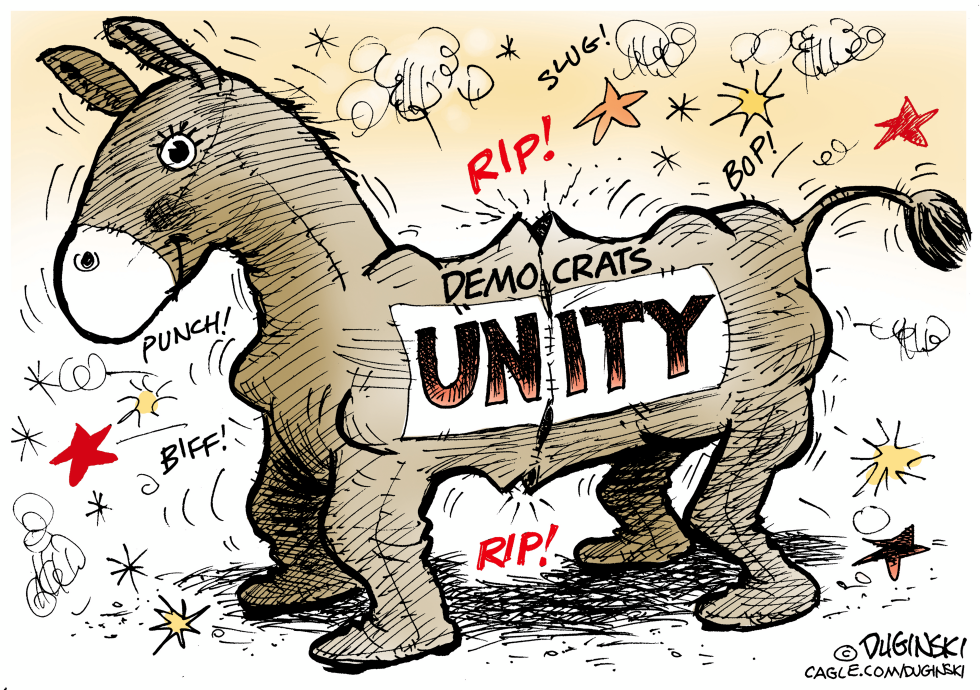
Democrats continue to display public divisions over strategy and messaging in the run-up to midterm and presidential contests. Party leaders struggle to project cohesion on issues ranging from economic policy to social priorities. The resulting perception of disarray weakens their ability to counter Republican narratives and mobilize voters. The cartoon highlights how these internal conflicts undermine the party's core message of unity.
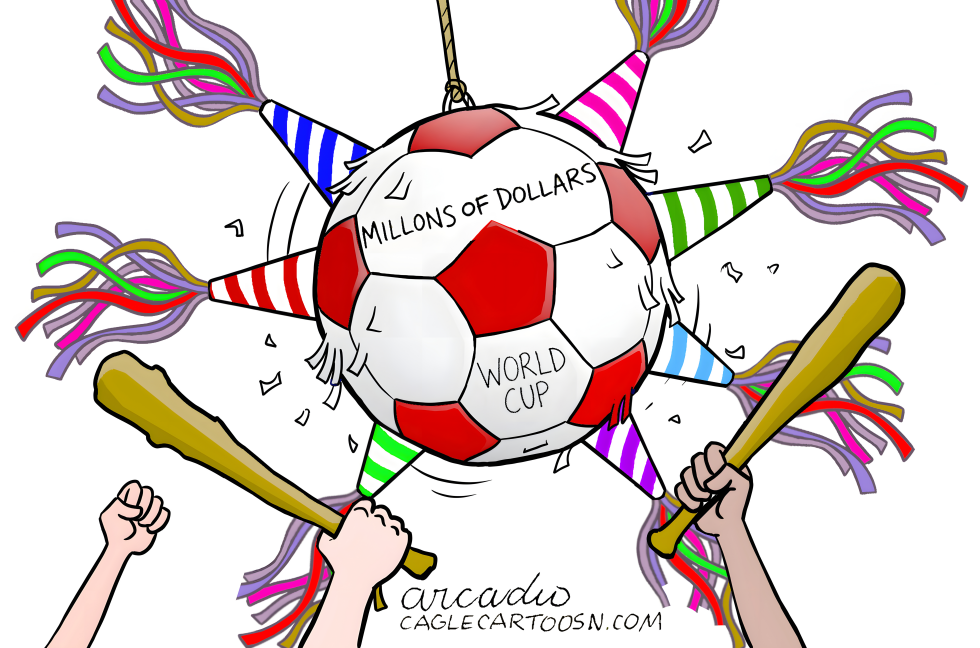
A soccer ball piñata labeled World Cup and Millions of Dollars hangs from a rope while multiple hands swing wooden bats at it. Colorful streamers and paper fragments scatter with each impact. The image appears on July 2 2026 amid ongoing preparations and financial discussions surrounding the 2026 World Cup hosted across North America.
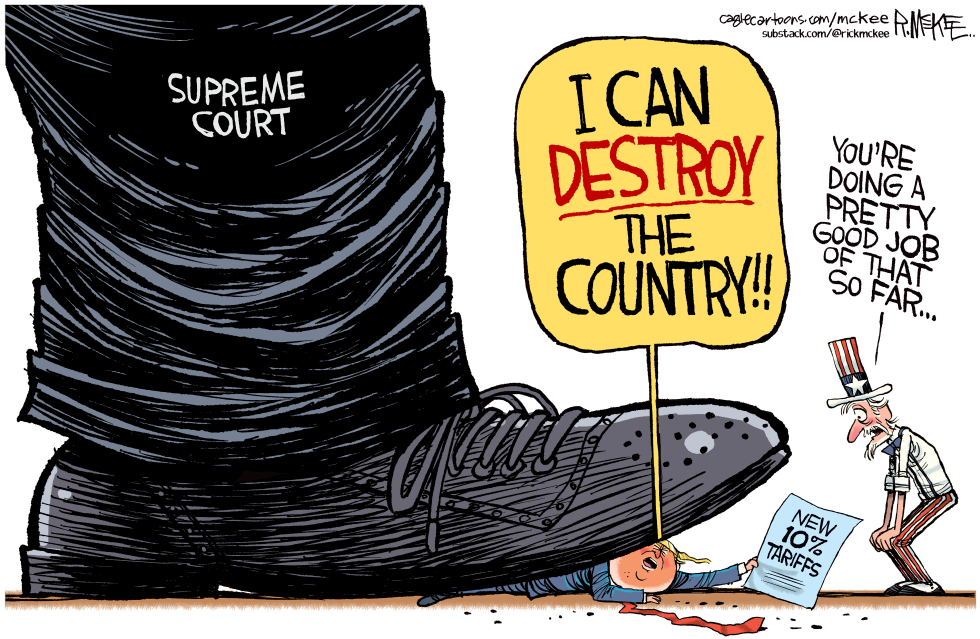
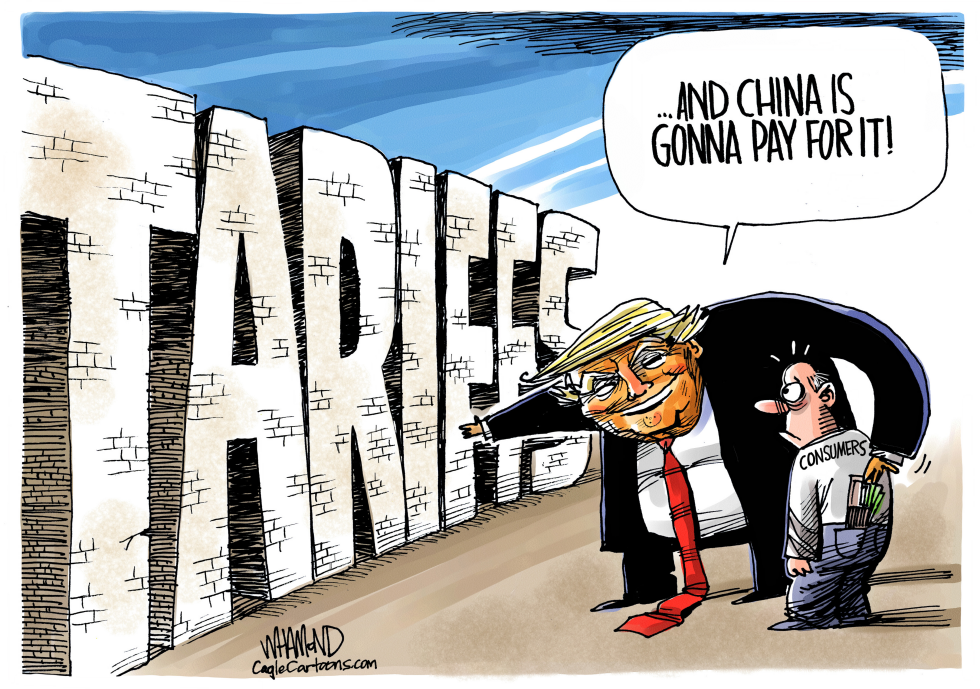
The Supreme Court issued a ruling against new tariffs proposed by former President Trump. The decision halts the 10 percent tariffs shown in the image. Uncle Sam notes the ongoing economic effects.
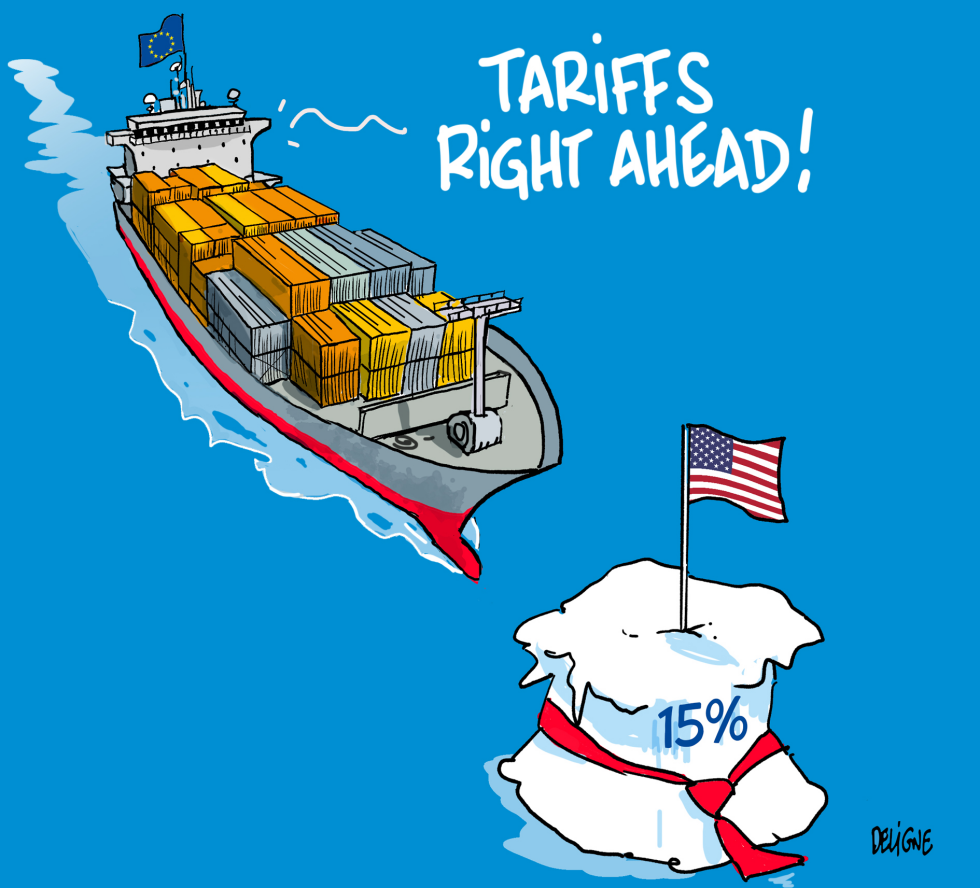
A European-flagged cargo ship laden with export containers sails directly toward a 15 percent iceberg flying the American flag. Bold text above the scene reads TARIFFS RIGHT AHEAD. The image captures rising trade tensions between the European Union and the United States over new tariff measures scheduled for late July 2025.
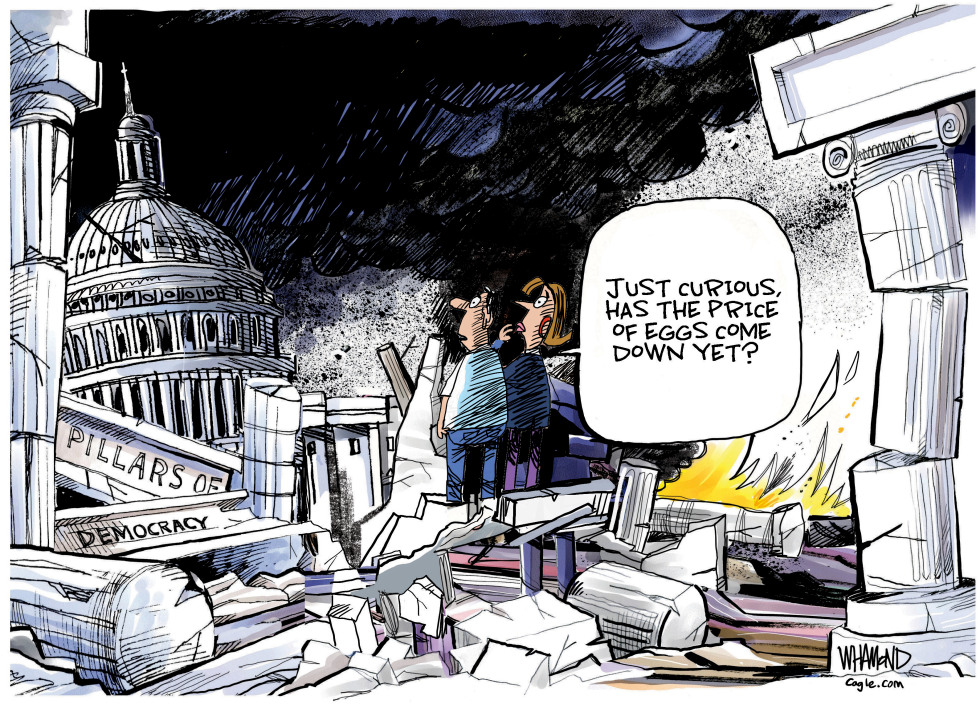
A political cartoon dated February 2, 2025, depicts the U.S. Capitol in ruins with broken pillars labeled 'PILLARS OF DEMOCRACY.' Two onlookers stand amid debris as one asks if egg prices have dropped. The image references ongoing debates over inflation, tariffs, and government changes following the 2024 election. Artist Dave Whamond uses destruction to highlight perceived costs of recent political decisions.