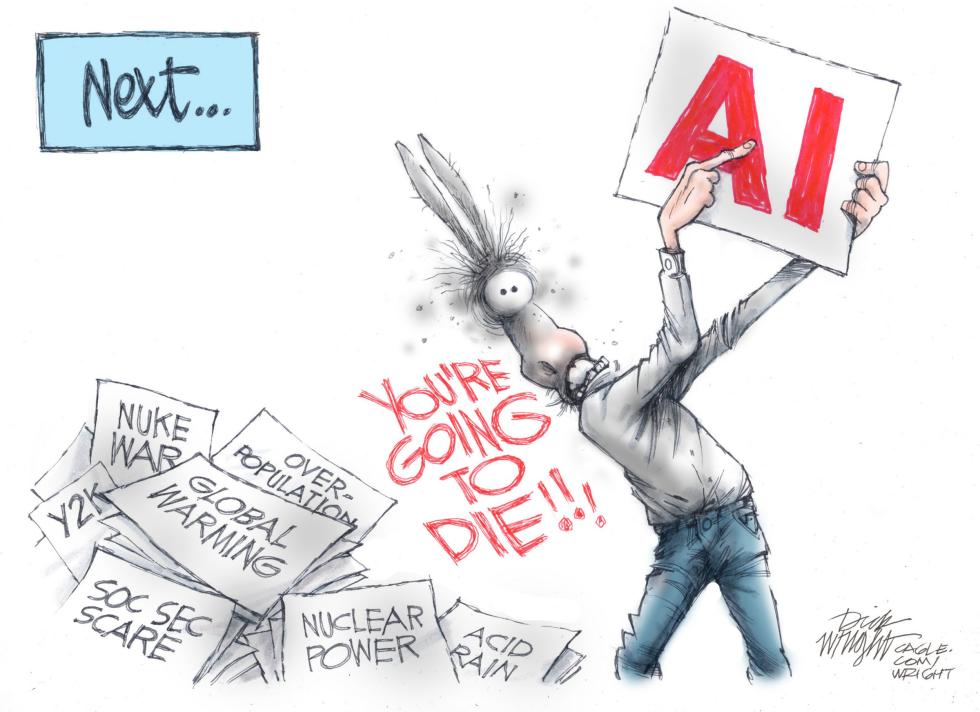
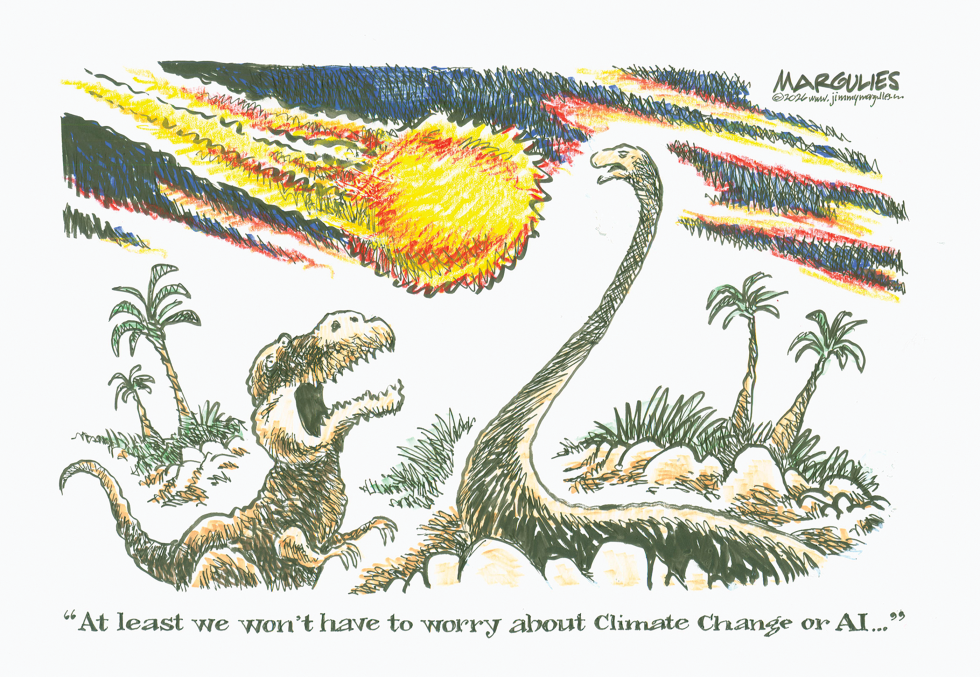
Democrats have renewed warnings that artificial intelligence poses an existential threat, echoing earlier alarms over Y2K, nuclear power, and climate change that later lost urgency. The pattern suggests political use of successive crises to maintain attention. The cartoon argues these claims recycle familiar tactics without new substance.
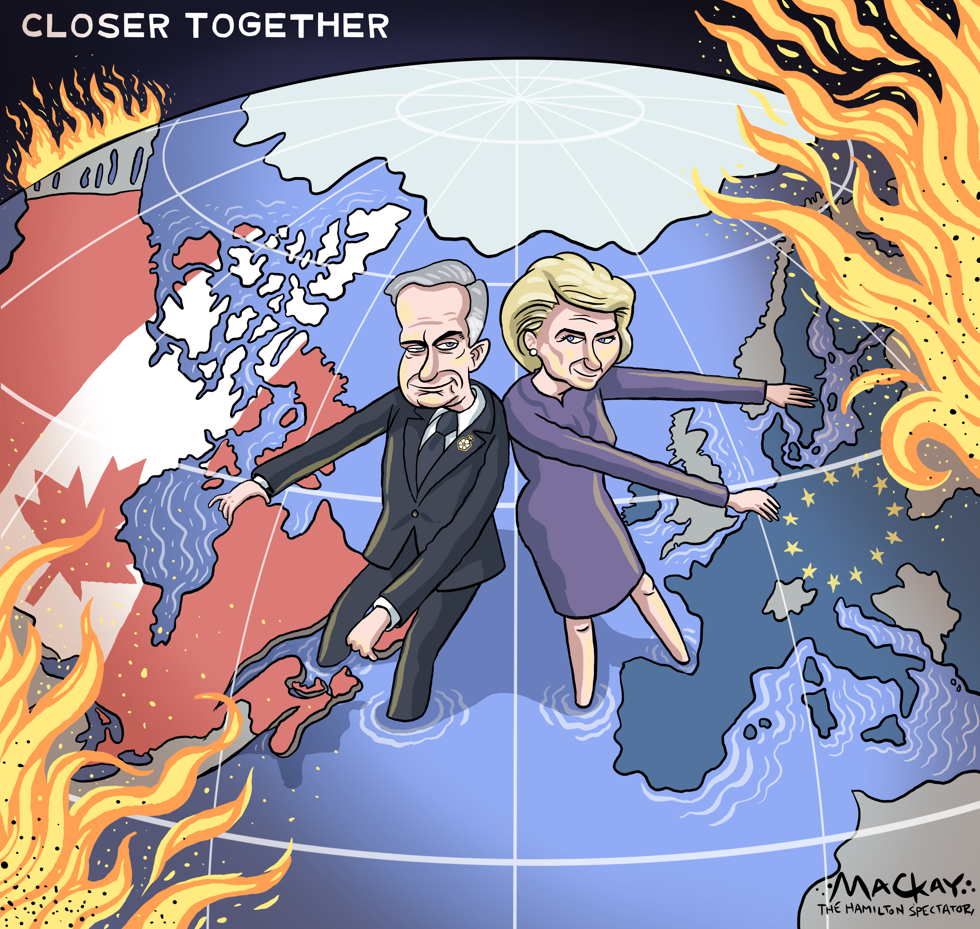
A political cartoon published September 16, 2026, shows a Canadian figure and a European figure positioned on a globe. The Canadian side features red and white maple leaf regions while the European side displays EU stars. Both areas are ringed by flames. The figures extend their arms across the Atlantic, connected by a thin line, beneath the heading Closer Together. The image comments on efforts by Canada and the European Union to draw nearer in response to shared international pressures and instability.
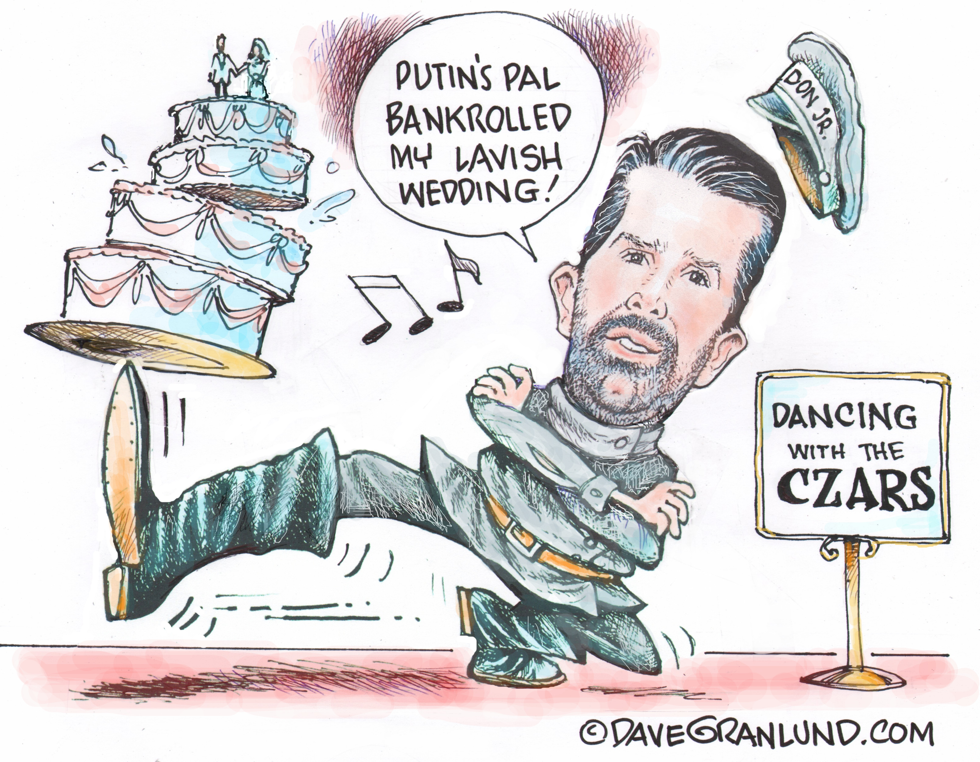
The cartoon by Dave Granlund depicts Donald Trump Jr in a military uniform dancing as a wedding cake collapses. A speech bubble has him claiming Putin's pal bankrolled the lavish wedding. A sign reads Dancing with the Czars. The image responds to ongoing allegations of Russian financial ties to the Trump family. It uses visual metaphors of dance and falling cake to highlight perceived influence. The publication date of September 16 2026 places it in a period of renewed scrutiny over foreign funding in U.S. politics. The work critiques the relationship without naming a single breaking event.
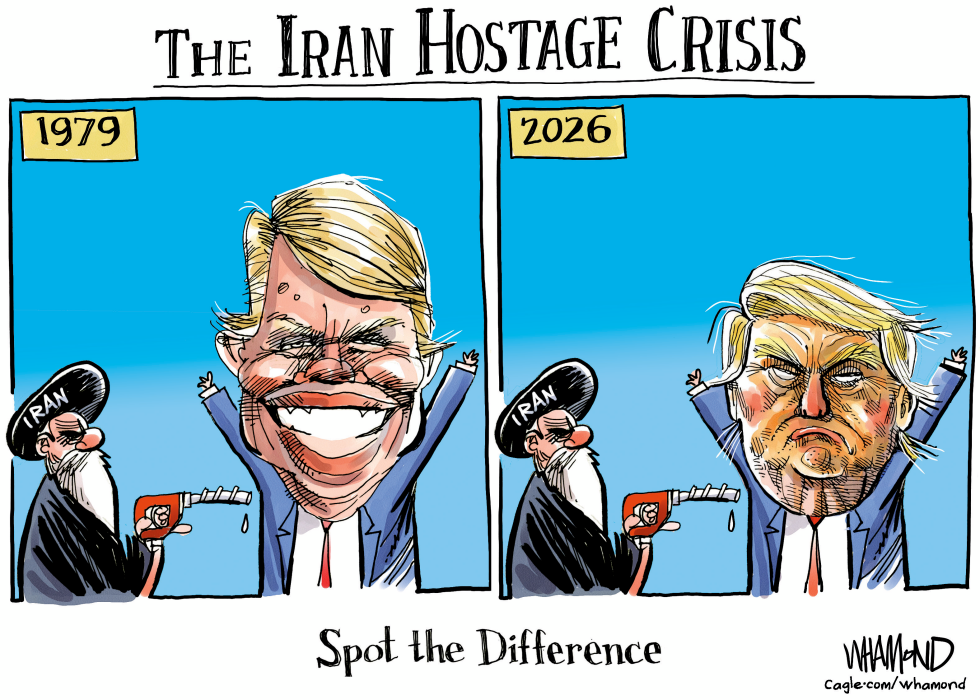
The cartoon splits the Iran Hostage Crisis into 1979 and 2026 panels. In the first Trump appears elated while an Iran-labeled figure holds a gas pump. In the second Trump looks distressed with the same figure present. The piece uses the visual contrast to comment on how Iran-related pressures affect US political figures differently over time.
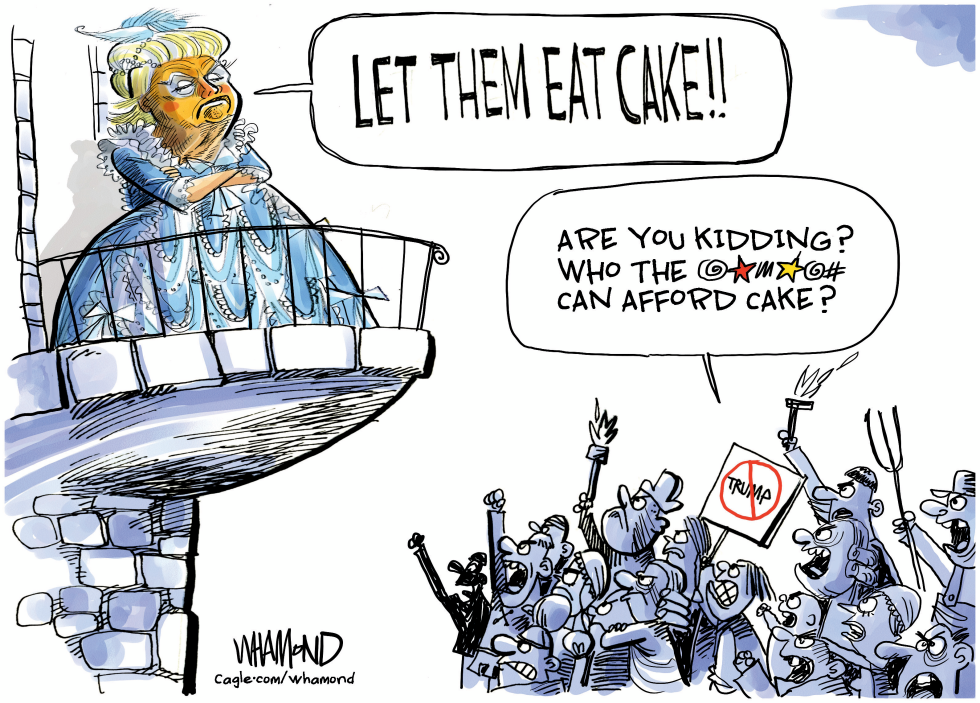
The cartoon by Dave Whamond depicts Donald Trump as Marie Antoinette on a balcony declaring 'LET THEM EAT CAKE!!' while a crowd below protests with signs and questions who can afford cake. Published on September 15, 2026, the image draws on the historical quote to comment on contemporary affordability concerns during Trump's term. The visual contrasts the elevated figure with an agitated crowd holding anti-Trump signs. It captures ongoing public discontent with rising costs. The piece uses the famous anecdote to underscore perceptions of detachment from everyday economic pressures.
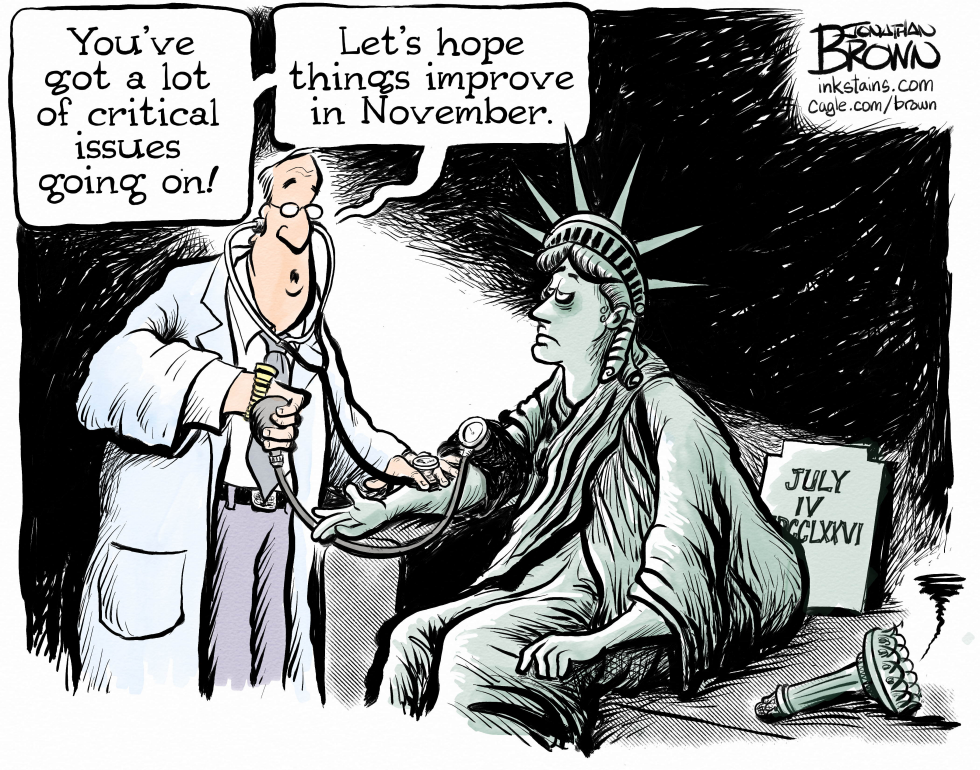
The cartoon depicts a doctor examining the Statue of Liberty's blood pressure and noting numerous critical issues. The Statue responds with hope that things will improve in November. A sign references July 4, 1776, and a broken torch rests on the ground. Published on September 15, 2026, the image uses the iconic figure to comment on the state of the nation ahead of upcoming elections. The visual metaphor highlights concerns about American institutions and public sentiment.
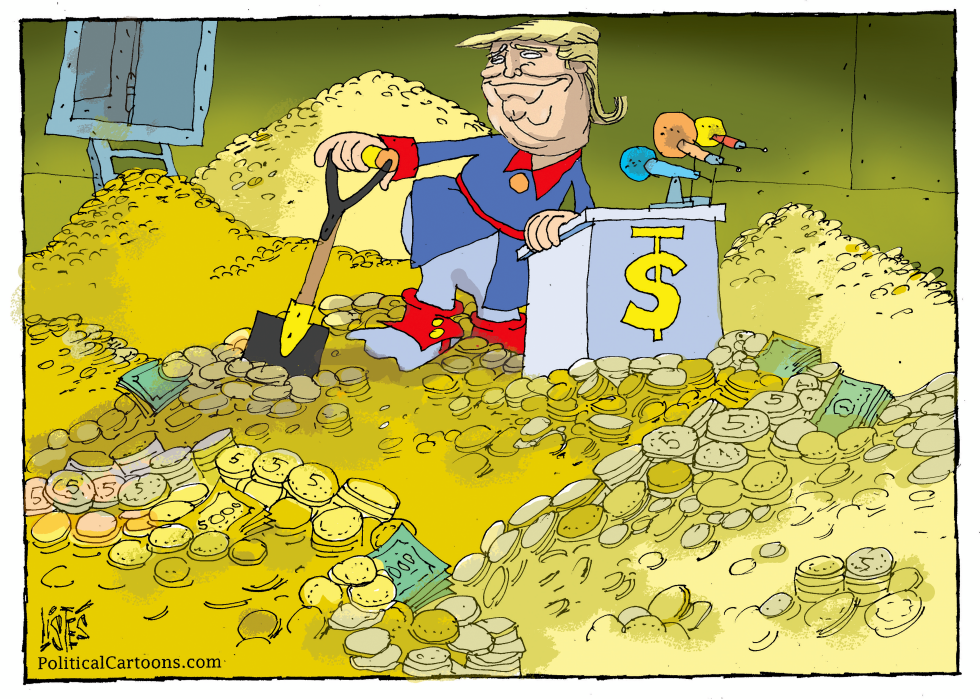
Donald Trump remains a central figure in debates over wealth and political power as of September 2026. The cartoon responds to ongoing scrutiny of how personal fortune intersects with public life and policy influence. It portrays the former president amid symbols of money to critique that dynamic. The editorial position frames Trump's association with wealth as a defining and problematic feature of his political presence.
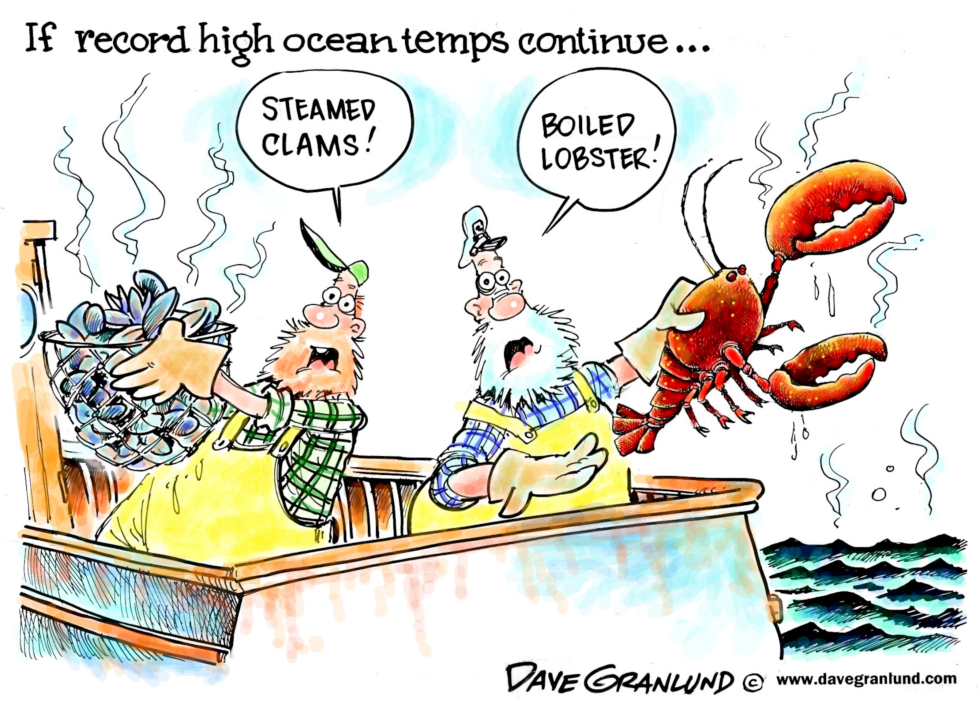
The cartoon depicts two fishermen on a boat reacting with surprise as clams and a lobster appear cooked by the surrounding seawater. Speech bubbles label the catch as steamed clams and boiled lobster. The title references record high ocean temperatures. This visual ties directly to ongoing concerns about marine heatwaves driven by climate change. Such conditions have been documented in recent years along the Northeast coast, affecting lobster and clam populations. The image highlights potential economic strain on fishing communities if trends continue.
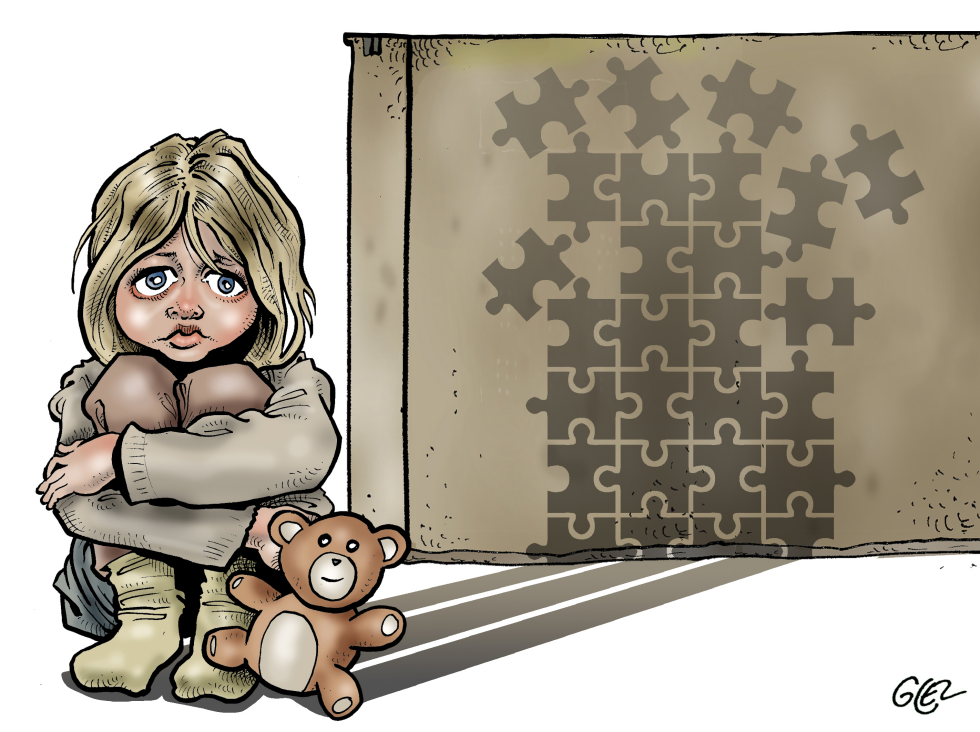
Children continue to experience emotional strain amid incomplete support networks that fail to address core developmental needs. Fragmented services in mental health and family aid leave many young people without resolution. The piece argues that society must prioritize comprehensive care to prevent lasting harm from these unresolved challenges.
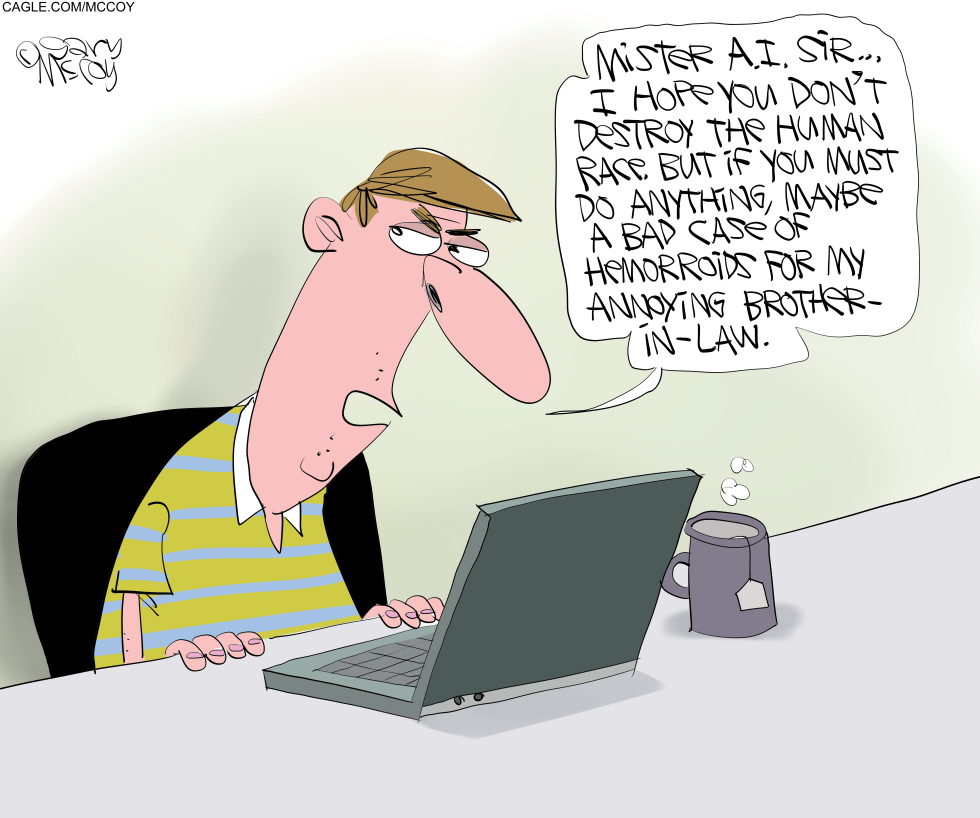
Public anxiety over artificial intelligence continues to grow as systems advance in capability. Users voice both broad existential concerns and narrow personal grievances in direct address to the technology. The cartoon captures this mix by showing one individual framing a request for selective harm amid a larger plea for restraint. It highlights how AI discussions often blend genuine worry with trivial self-interest.
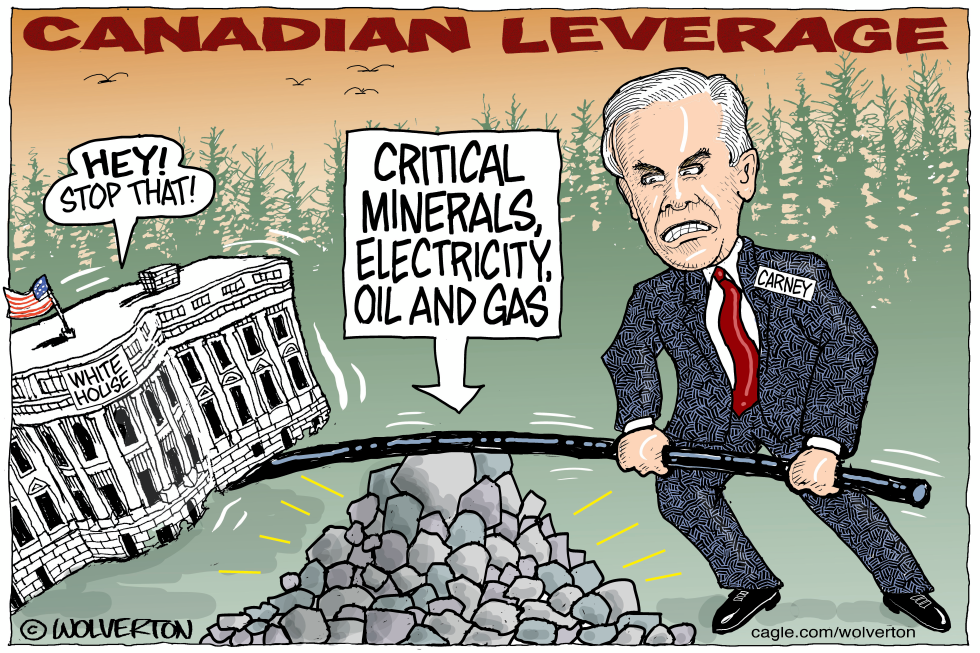
The cartoon depicts former Bank of Canada governor Mark Carney using a pipe labeled critical minerals, electricity, oil and gas as a lever to damage the White House. A speech bubble from the building protests the action. Published on September 12, 2026, the image comments on ongoing Canada-US tensions over resource exports and trade policy. Carney is shown in a suit with a determined expression, standing on rubble. The visual underscores Canada's potential to restrict supplies vital to the American economy. It reflects real-world discussions about critical minerals and energy interdependence between the two nations.
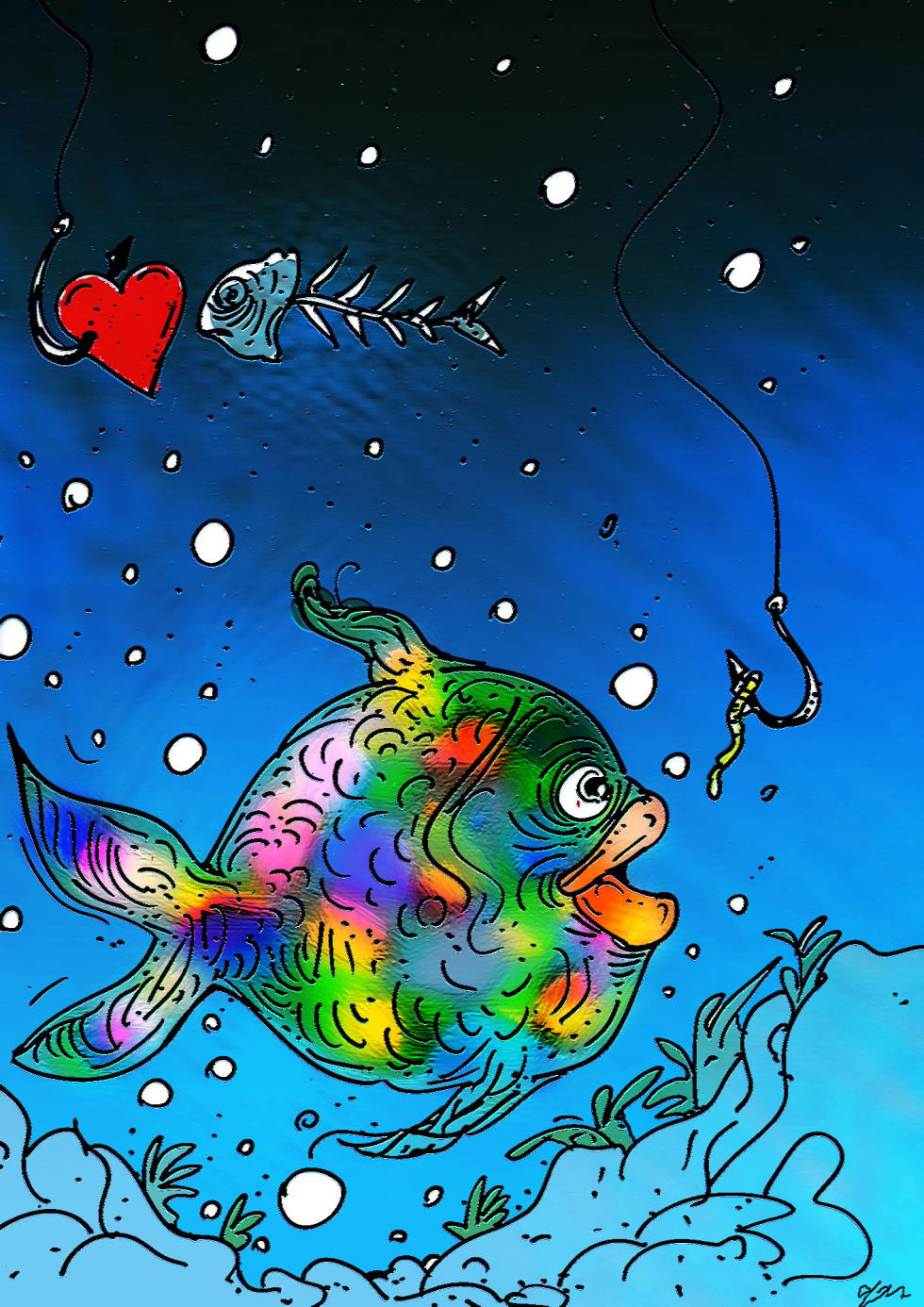
The cartoon captures the recurring human tendency to overlook evident dangers when drawn by temptation. A previous victim serves as stark evidence, yet the lure remains compelling. The piece underscores how easily judgment fails under the pull of immediate gratification. It argues that such lapses carry predictable and severe costs.
Public discourse continues to weigh the long-term dangers of climate change against emerging risks from artificial intelligence. The cartoon uses the dinosaur extinction event as a metaphor to highlight how current debates may pale against sudden catastrophic threats. It suggests that fixation on policy disputes over climate and technology overlooks the potential for abrupt, uncontrollable disasters that render such arguments moot.
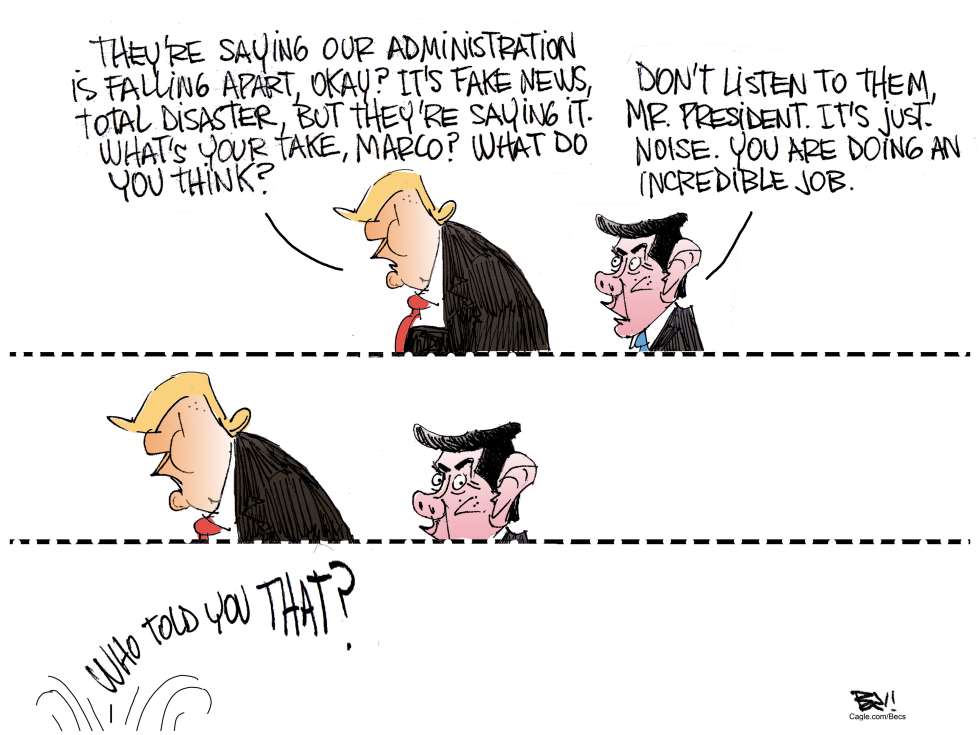
President Trump asked Senator Marco Rubio for his assessment of reports that the administration is in disarray, labeling them fake news. Rubio dismissed the reports as noise and praised Trump's performance. Trump responded by questioning who had told Rubio that assessment. The exchange highlights tensions over loyalty and information flow inside the administration. The cartoon portrays Rubio's positive reply as triggering suspicion rather than reassurance.
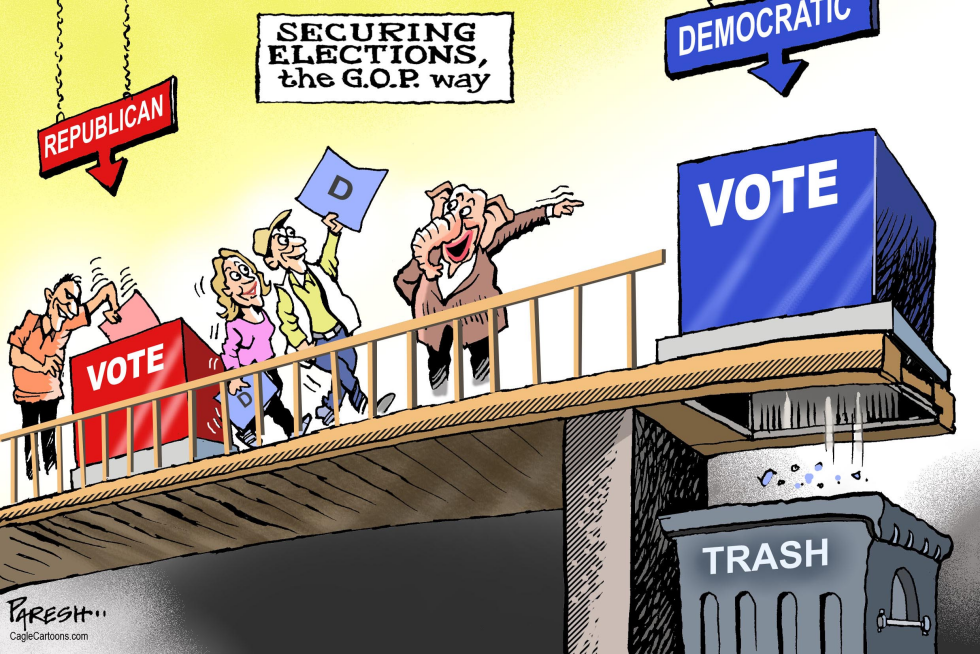
The cartoon depicts Republicans on a platform guiding a large blue vote box labeled Democratic into a trash can below while a red Republican vote box remains on the structure. A sign reads Securing Elections the G.O.P. way. The elephant symbol of the GOP points toward the action as figures including one holding a D flag stand nearby. The image comments on claims of election integrity by showing ballots from one party discarded. This reflects ongoing partisan debates over voting procedures and access as of the 2026 publication date.