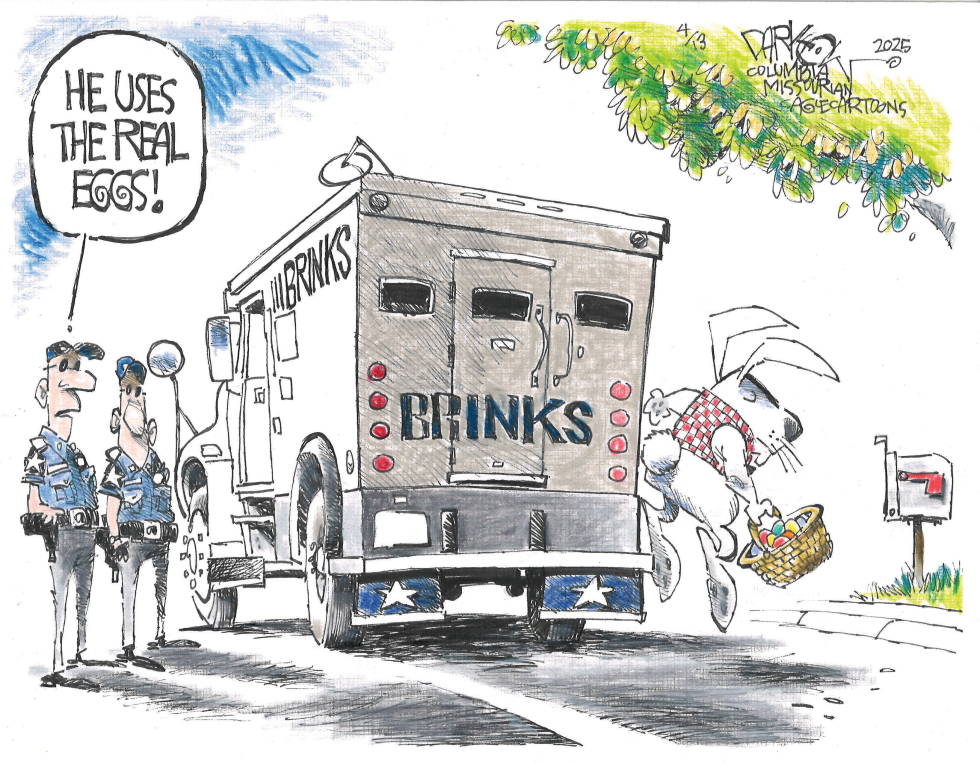
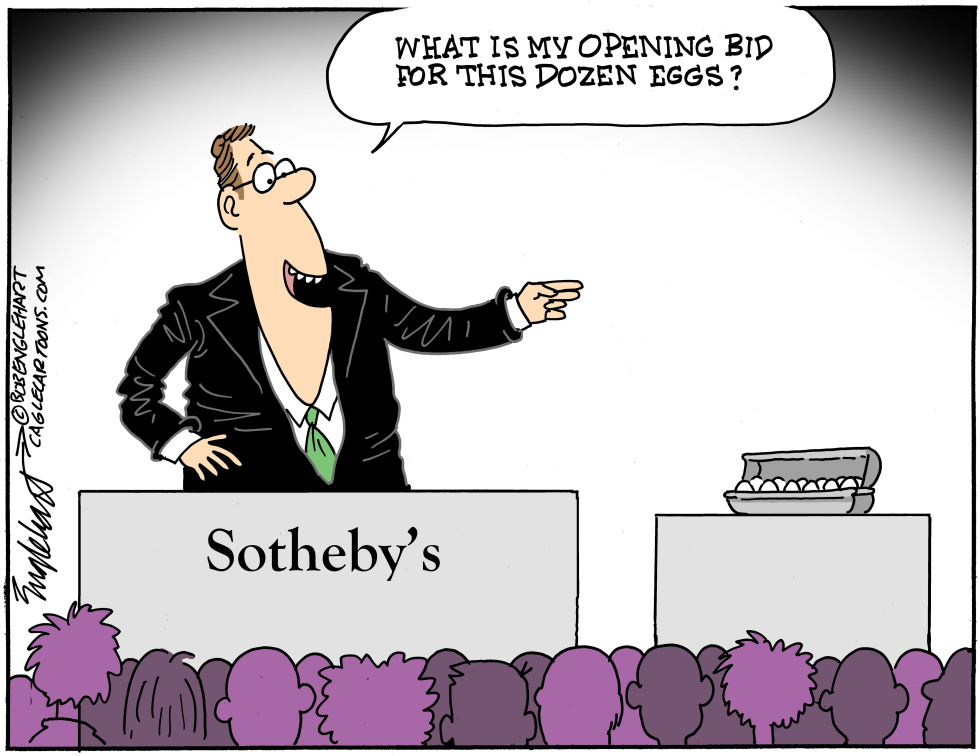
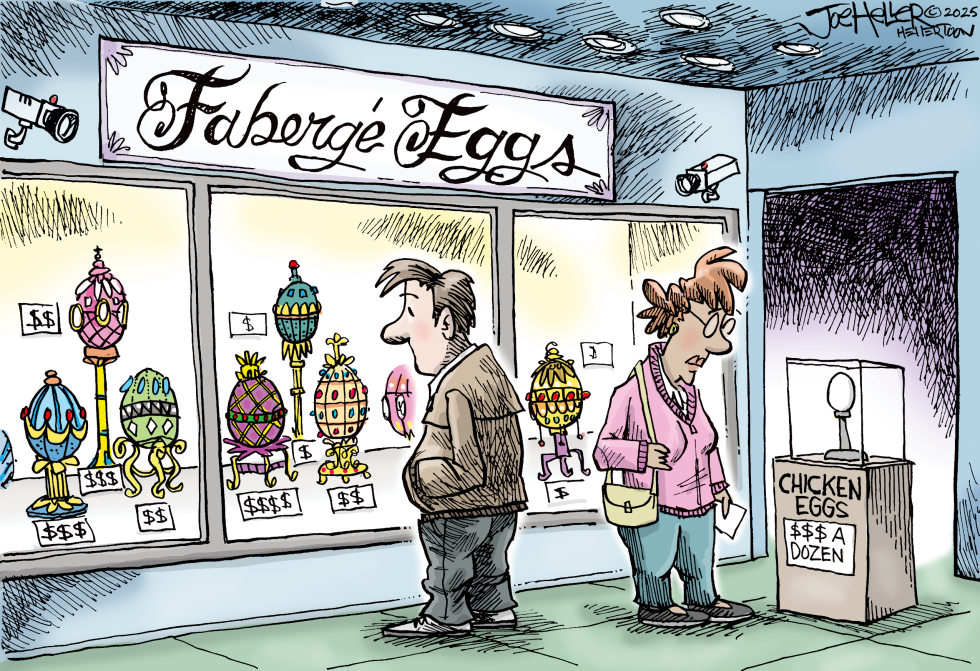
An armored Brinks truck and two police officers watch as the Easter Bunny carries a basket of eggs down a suburban street. A speech bubble notes the use of real eggs, tying into ongoing shortages and price spikes from bird flu affecting groceries ahead of Easter.
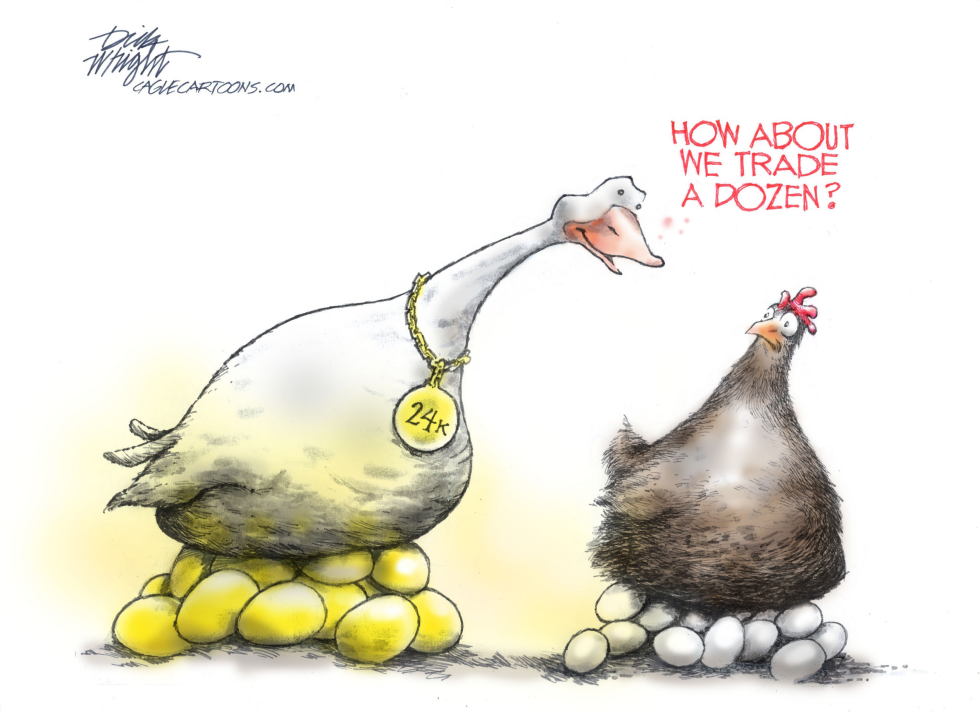
A goose labeled 24k stands atop a pile of yellow eggs and offers to trade a dozen with a chicken perched on white eggs. The exchange highlights ongoing egg shortages tied to bird flu culls and production losses reported in early 2025.
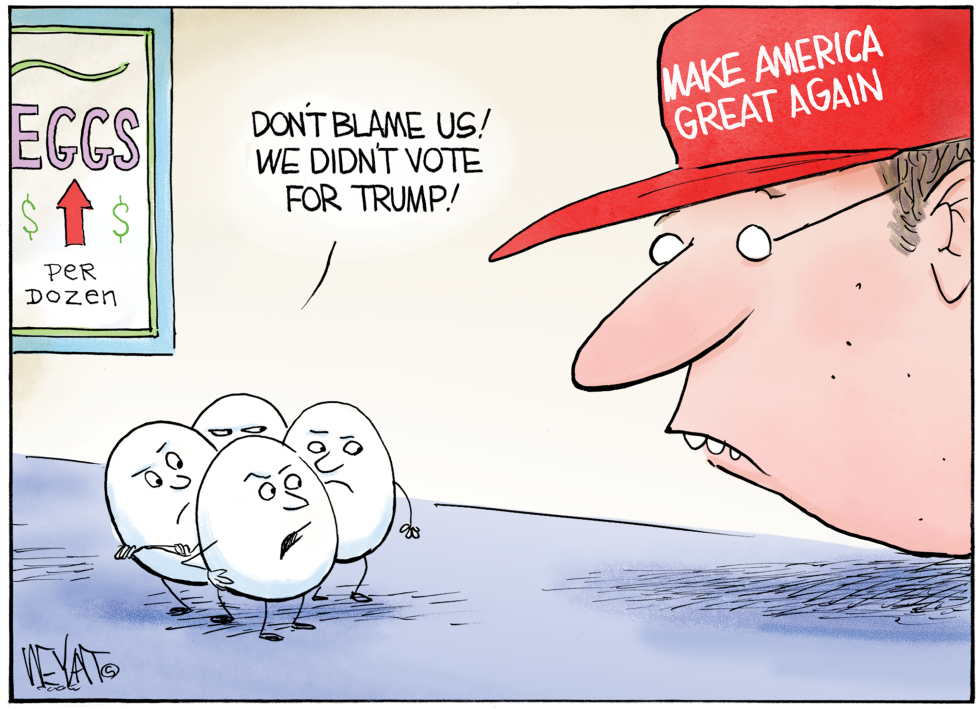
Anthropomorphic eggs stand before a price sign showing increases per dozen and tell a large figure wearing a red MAGA hat that they did not vote for Trump. The scene addresses ongoing inflation on groceries in early 2025 after the election.
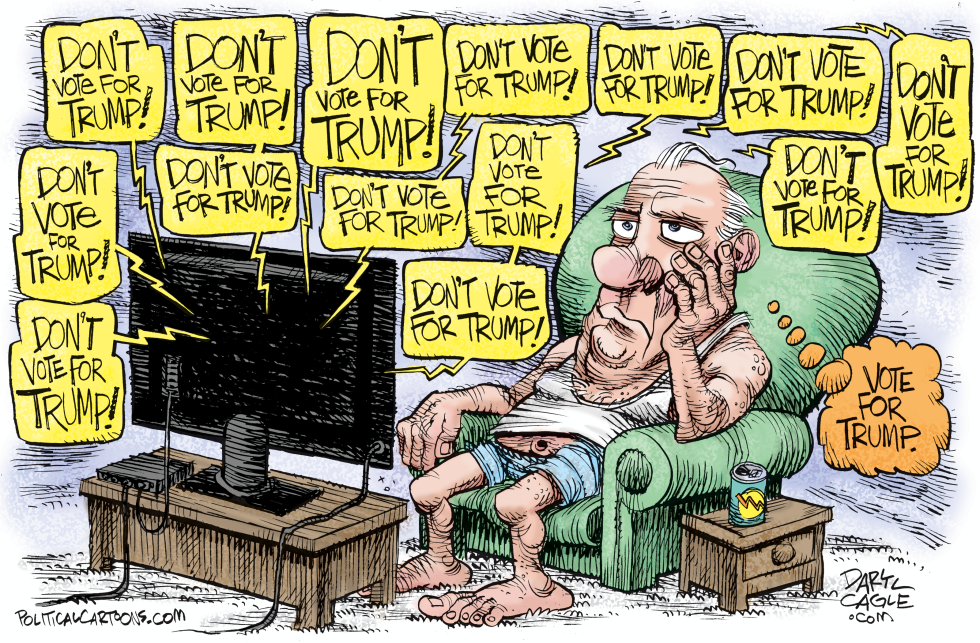
On April 5, 2024, as the presidential campaign heated up, cable news networks intensified coverage urging voters away from Donald Trump. The cartoon shows a weary man in his living room bombarded by repeated on-screen messages from CNN and MSNBC telling him not to support the former president. Despite the barrage, his private thought reveals he plans to vote for Trump anyway. The scene highlights the disconnect between mainstream media messaging and individual voter sentiment during the 2024 cycle.
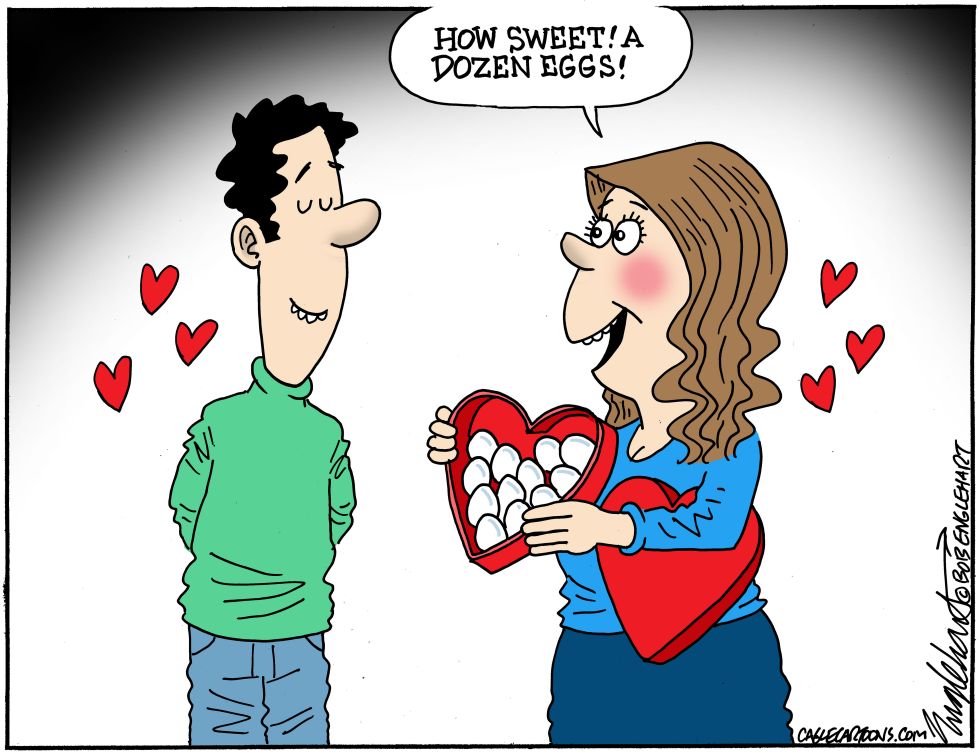
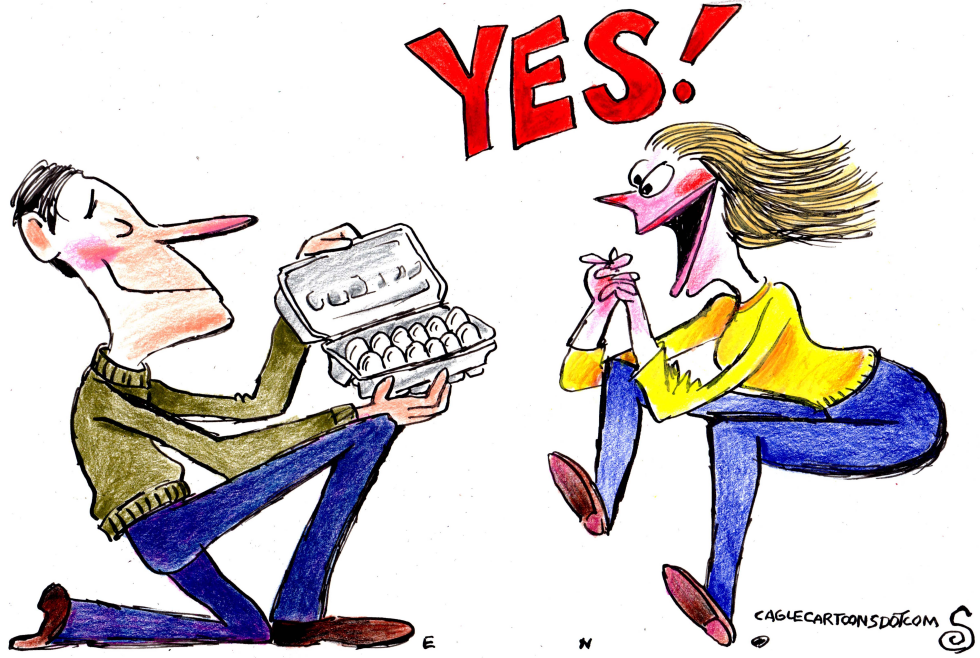
On January 14, 2023, a cartoon depicts a man on one knee presenting a carton of eggs to a woman who responds with an enthusiastic yes. The image references the sharp rise in egg prices driven by inflation and supply issues that winter. The visual substitutes the traditional ring with grocery staples to comment on household budget pressures.
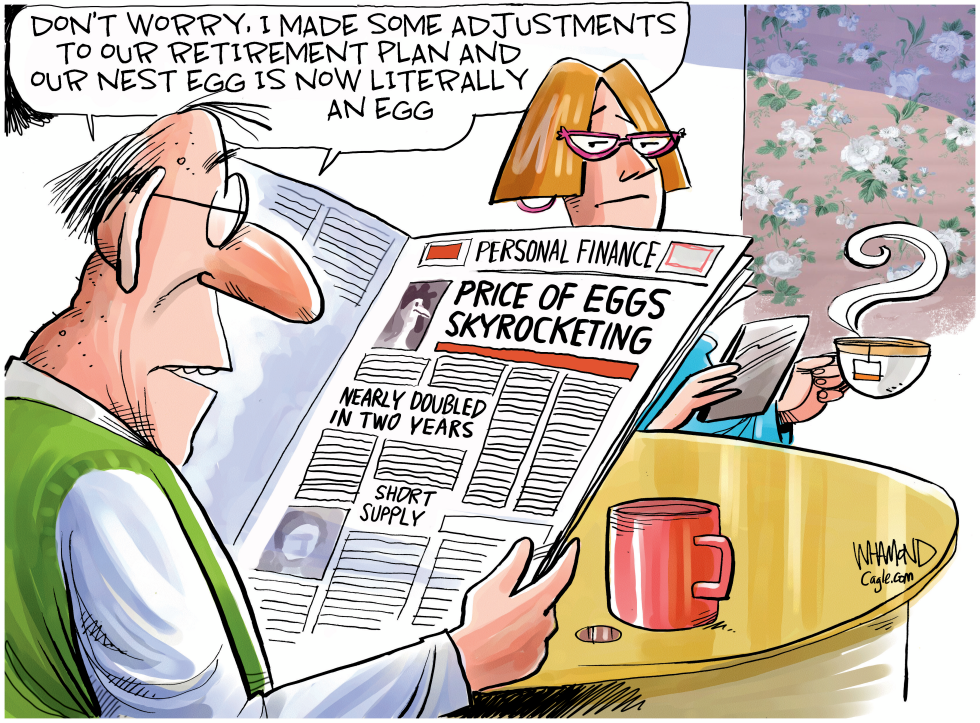
A man reads a newspaper headlined 'PRICE OF EGGS SKYROCKETING' and 'NEARLY DOUBLED IN TWO YEARS' at a kitchen table. His companion notes their retirement nest egg is now literally an egg after adjustments. The scene captures consumer reaction to rising grocery costs in early 2023.
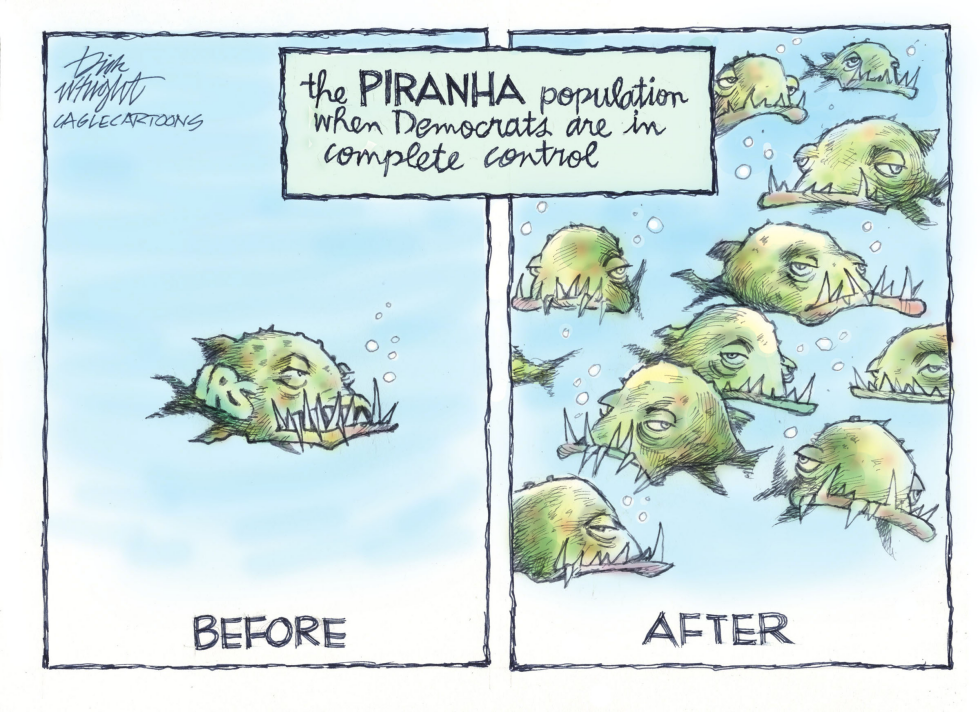
This Daryl Cagle political cartoon depicts the IRS as a lone piranha before Democrats assume complete control, then multiplying into a ferocious school afterward, bubbling with satirical bubbles. The IRS piranha metaphor cleverly critiques perceived overreach in tax enforcement, with the before after panels underscoring a conservative viewpoint on government expansion. Bubbles and grumpy fish expressions add humorous flair, making the Democrats control government satire both insightful and shareable. Overall, it's a witty jab at bureaucratic growth, perfect for sparking debates on fiscal policies.