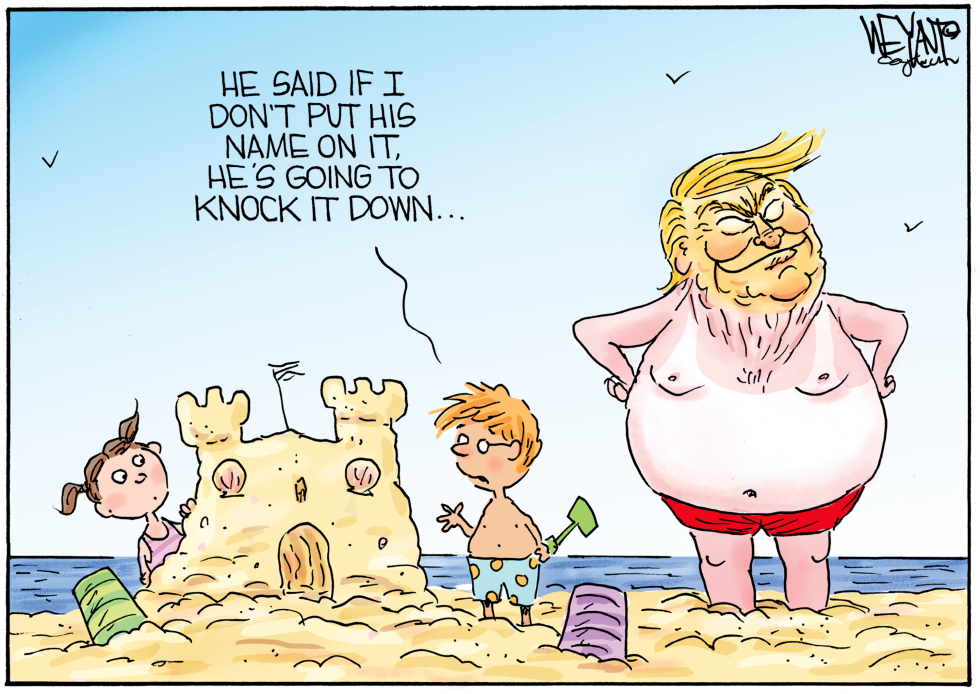
Donald Trump has long pressed for personal credit in public projects and political dealings. The pattern involves demands for recognition that extend even to minor or symbolic matters. This dynamic matters because it reveals how one figure seeks to dominate credit and loyalty across settings. The piece takes the position that such demands reflect an outsized need for acknowledgment that overrides ordinary boundaries.
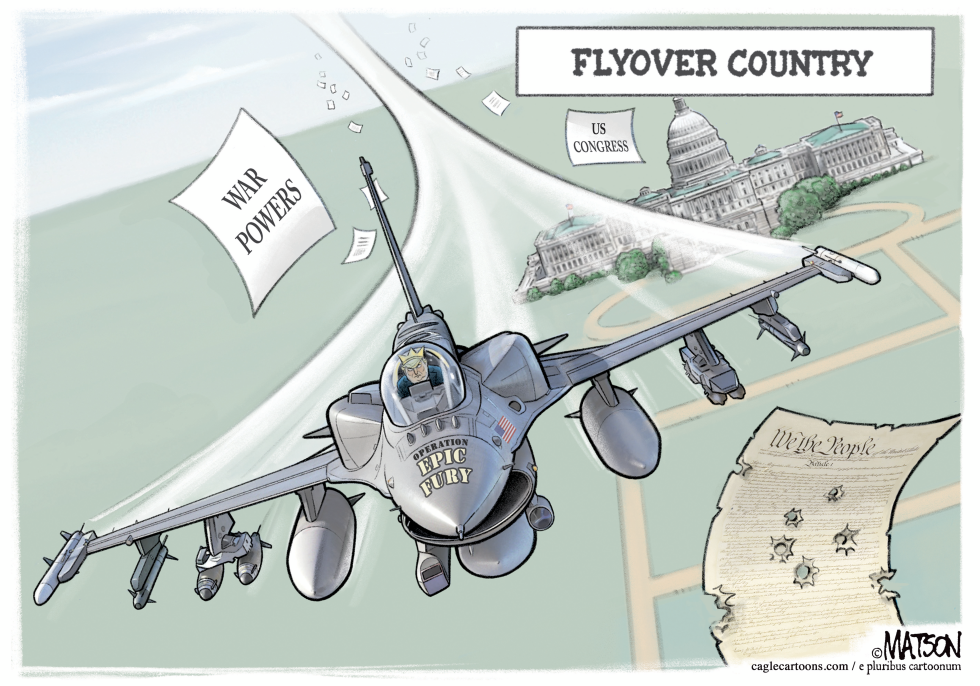
This sharp political cartoon captures the essence of executive overreach, with a fighter jet dubbed 'Epic Fury' zooming past US Congress, discarding war powers documents like confetti over flyover country. The torn US Constitution riddled with bullet holes symbolizes the erosion of constitutional principles amid unchecked military actions. Tags like political cartoon, war powers, US Congress, flyover country, US Constitution, and executive power underscore the satire on how presidents often sidestep legislative approval for wars, leaving the heartland—flyover country—to bear the brunt. It's a humorous yet insightful critique of the power imbalance in Washington, where the Capitol is just a scenic detour on the path to conflict.
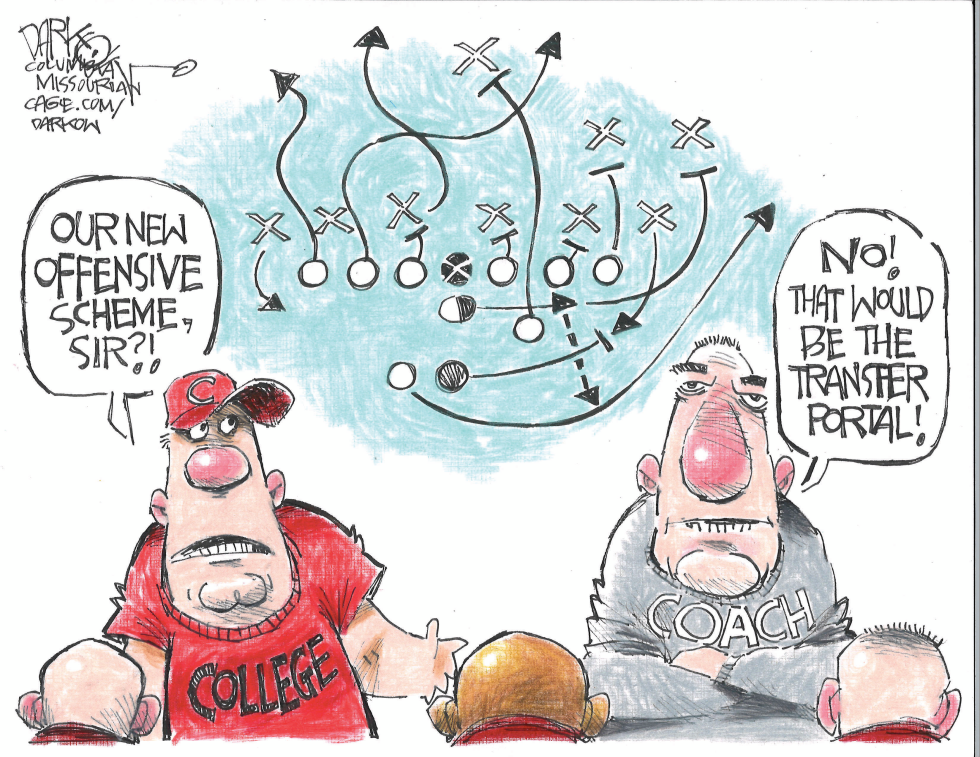
A college coach in a red shirt proposes a new offensive scheme to his colleague. The gray-shirted coach rejects the idea outright, insisting the diagram represents the transfer portal instead. The exchange highlights ongoing tensions in college athletics over player movement and its impact on team strategies.
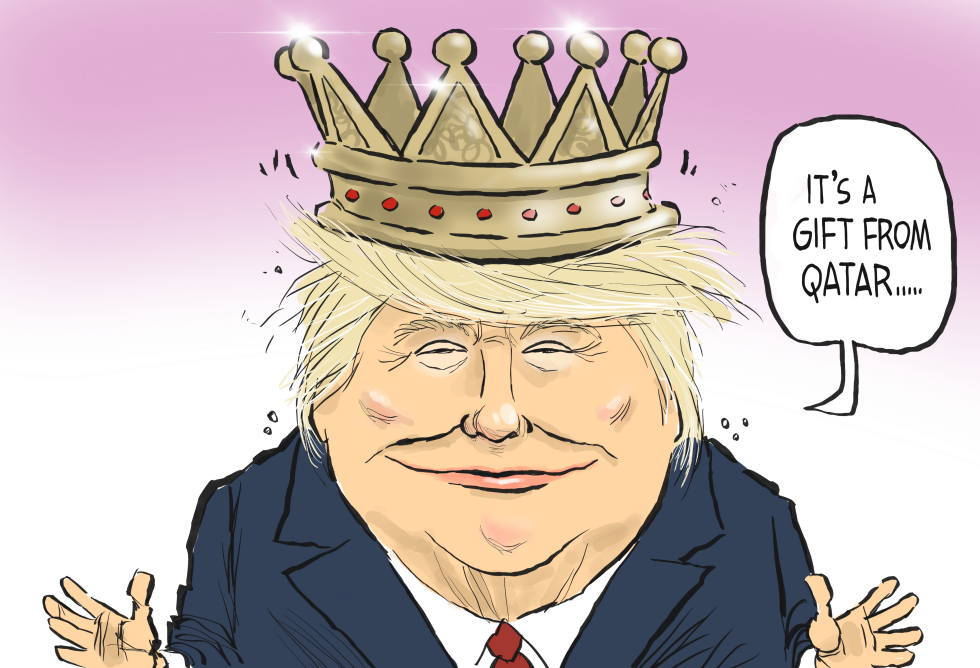
Jeff Koterba's cartoon captures Trump in a suit, topped with a golden crown that sparkles against a pink background, his hands outstretched as he speaks in a bubble: 'It's a gift from Qatar...!!' The tags like Qatar, Trump, crown, king, gift, ethics point to satire on political perks. Cartoons like this thrive on exaggeration, here turning Trump into a kingly figure accepting foreign gifts without a blink. It's straightforward humor, poking at ethics without overcomplicating the visuals. Readers see the crown as a clear symbol of assumed royalty, tied to tags on free gifts and potential scandals. Such pieces remind us how cartoons cut through the noise with simple, sharp imagery.
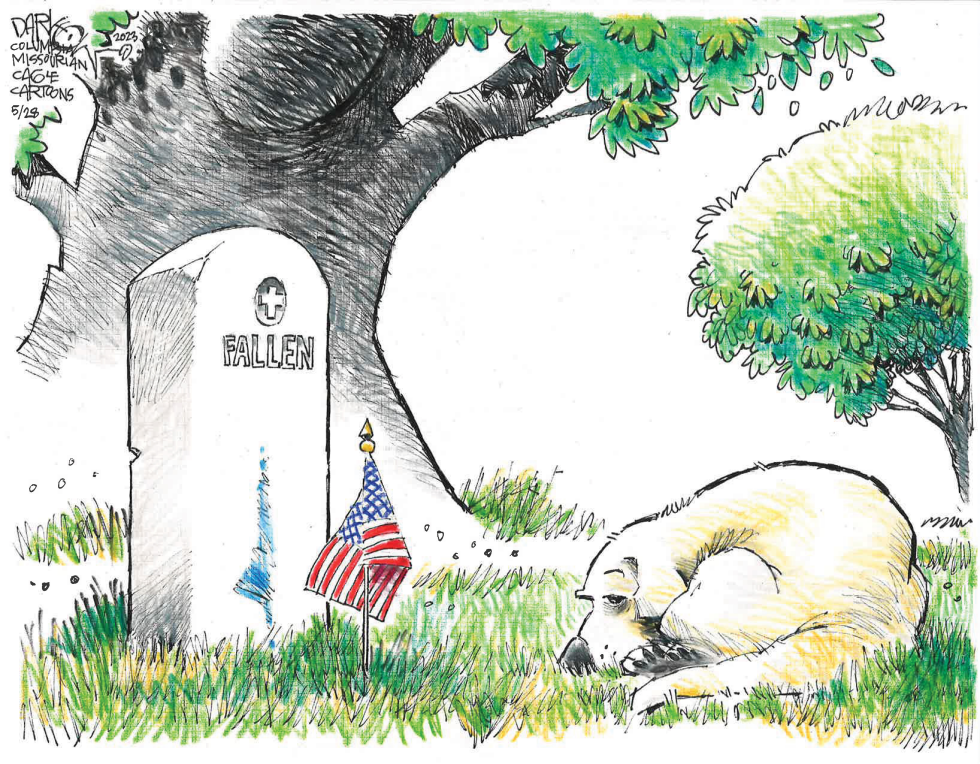
John Darkow draws a straightforward scene for Memorial Day: a gravestone labeled 'FALLEN' with a cross on top, a tiny American flag planted at its base, and a yellow dog curled up nearby on the grass, eyes closed in what looks like quiet rest. Trees frame the image, adding a peaceful outdoor setting. The tags thanks, sacrifice, Memorial Day, loyalty, remembering, honor, fallen, tribute, puppy dog, and decoration day all fit this simple tribute. No big metaphors here, just a dog and a stone reminding folks of those who didn't come back. Cartoonists know these quiet ones hit hard, especially around holidays when editors want something poignant without the punchline. Darkow keeps it clean, no clutter, letting the image speak to loyalty and loss.
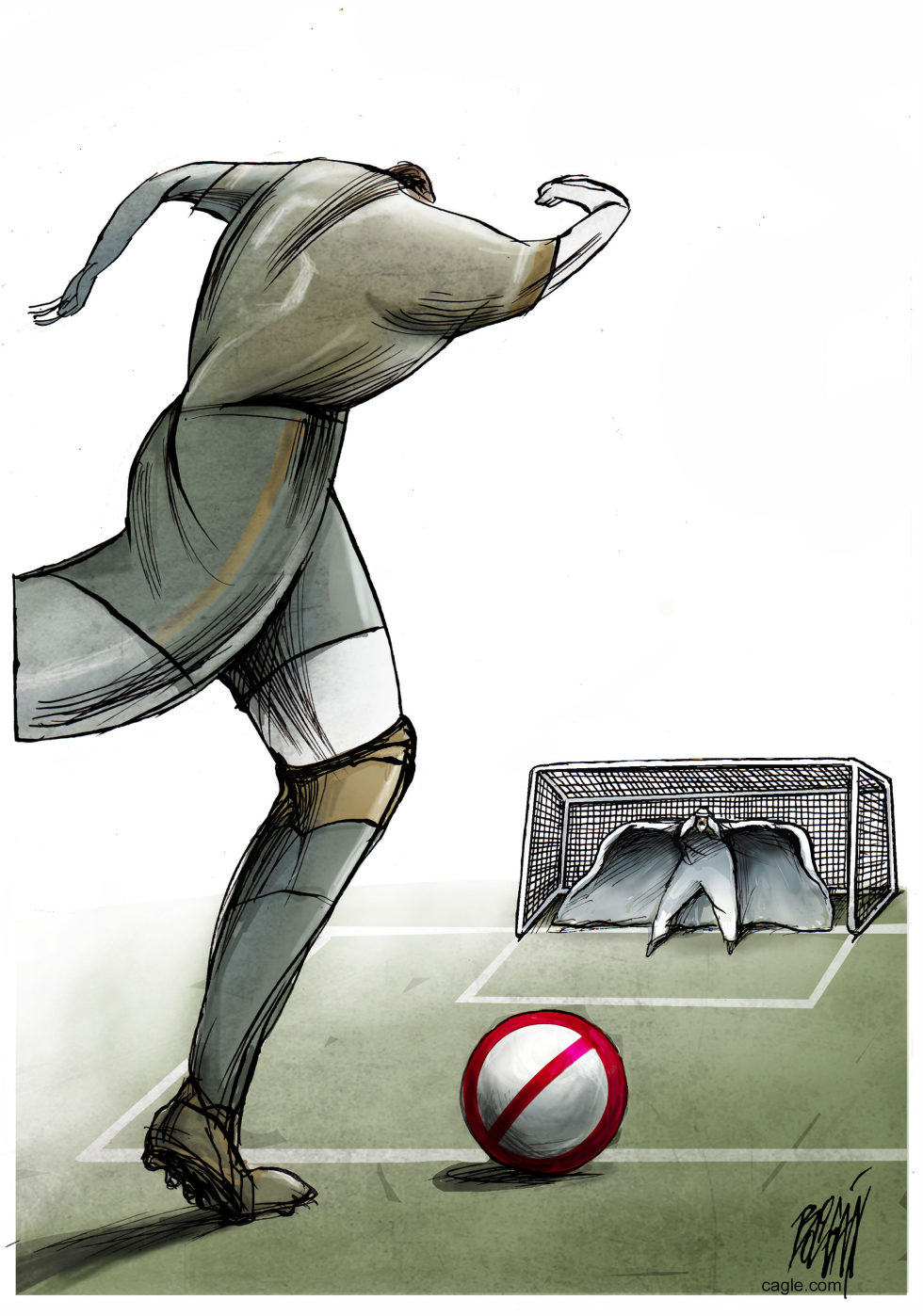
A soccer player in traditional robes prepares to kick a ball marked with a prohibition symbol toward a goal defended by another robed figure lying across the net. The scene references restrictions during the 2022 World Cup hosted by Qatar, where religious and cultural rules limited certain expressions of the sport.
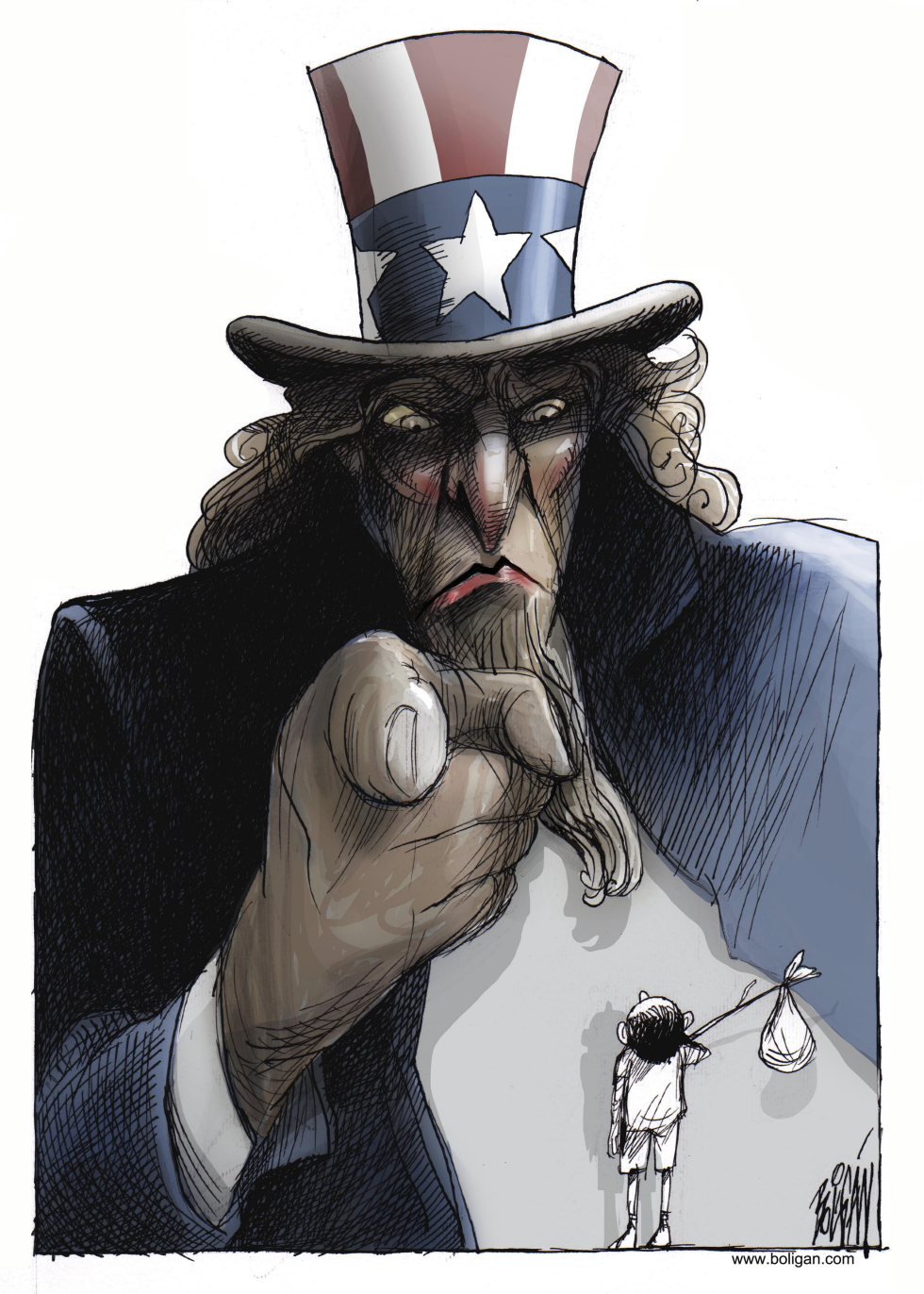
On July 18 2014 Angel Boligan depicts Uncle Sam towering over a small child migrant holding a bindle. The figure points directly downward with a stern expression. This responds to the surge of unaccompanied minors crossing the southern border from Central America that summer. The image captures official US resistance to the arrivals. Boligan highlights the tension between humanitarian concerns and enforcement priorities active that month.