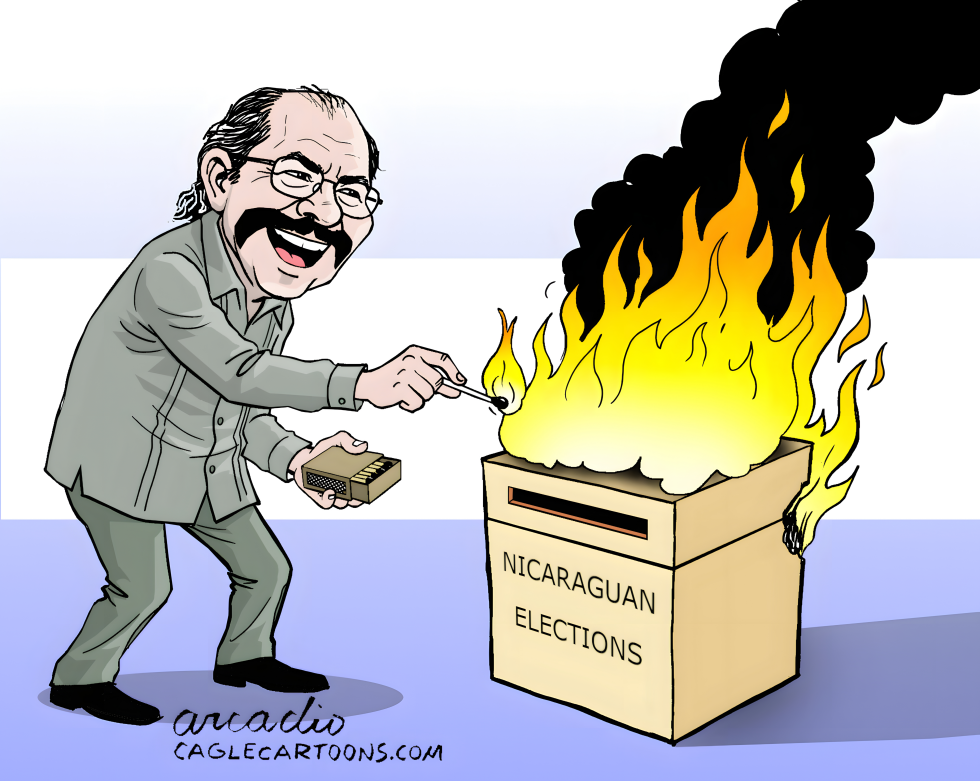
Nicaraguan President Daniel Ortega has publicly stated there will be no more elections, a move that solidifies his long-term grip on power. The declaration comes amid ongoing concerns over democratic backsliding in the Central American nation. This development matters because it removes any remaining avenues for political opposition and citizen participation in governance. The accompanying editorial takes the position that Ortega's action represents a deliberate destruction of democratic institutions rather than a legitimate policy choice.
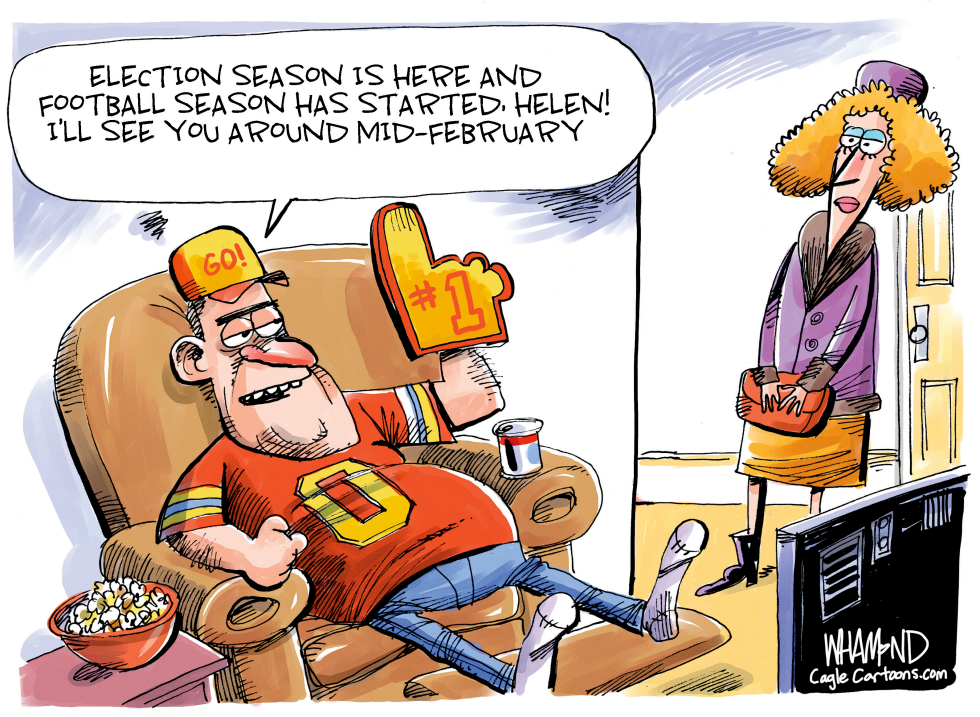
On September 3 2024 a cartoon shows a man in a recliner telling his wife he will be unavailable until mid-February because election season and football season have both started. He holds a foam finger and wears a team jersey while surrounded by snacks and a television. The scene highlights overlapping fall coverage of politics and sports that keeps viewers indoors.
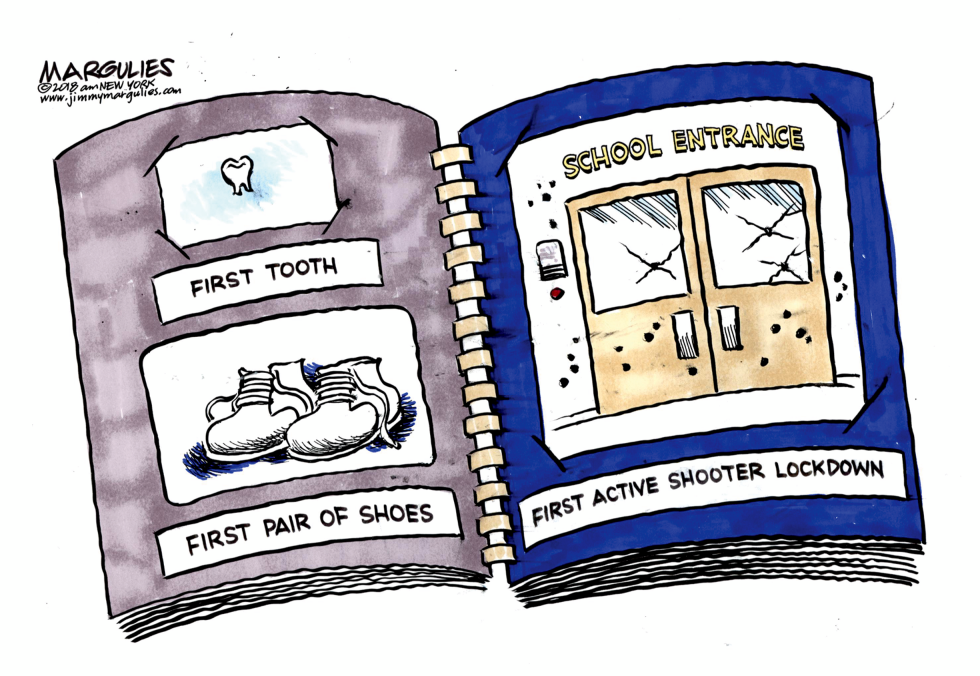
The February 14, 2018, Parkland school shooting in Florida killed 17 people and renewed national debate over gun access and school safety. Lawmakers faced immediate pressure to act on background checks and assault weapons while the NRA and congressional allies resisted new restrictions. The cartoon frames the event as another grim normalization, placing active shooter lockdown alongside traditional childhood milestones to underscore how repeated mass shootings have altered expectations for American schools.
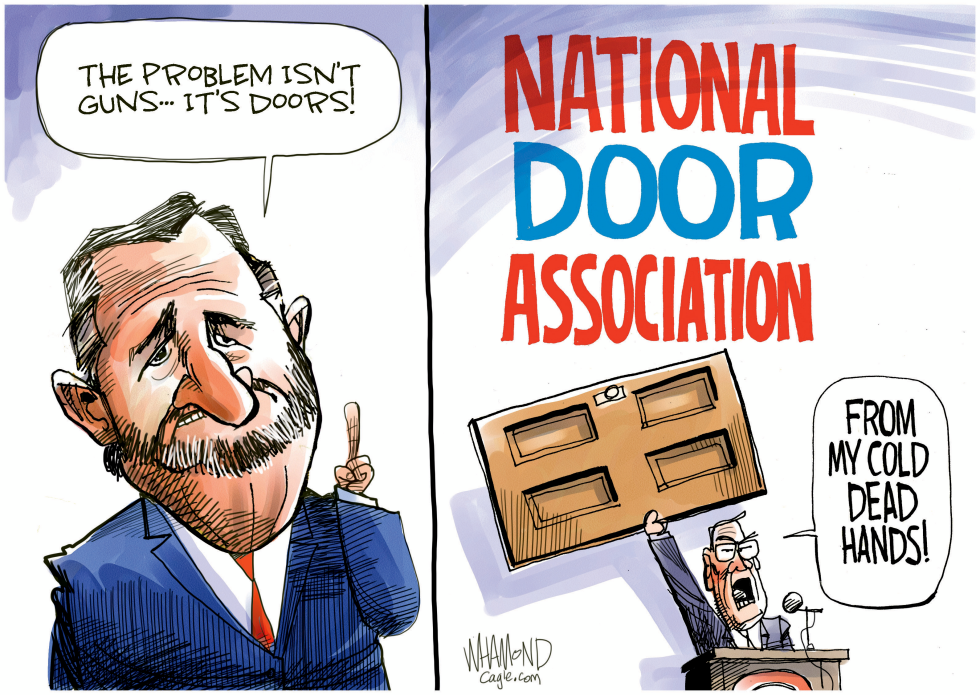
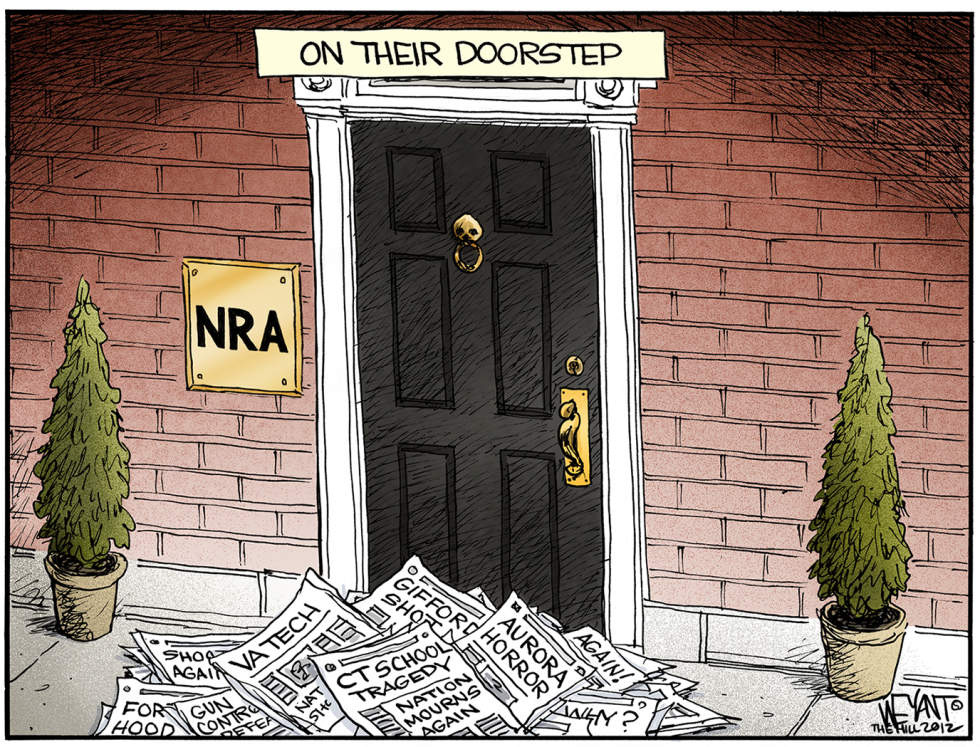
The December 2012 Sandy Hook Elementary School shooting in Newtown, Connecticut, killed 20 children and six adults, renewing calls for gun control measures. Similar prior attacks at Virginia Tech and an Aurora, Colorado, theater had already prompted debate. The piece argues the NRA must confront these recurring tragedies directly rather than avoid policy responses.