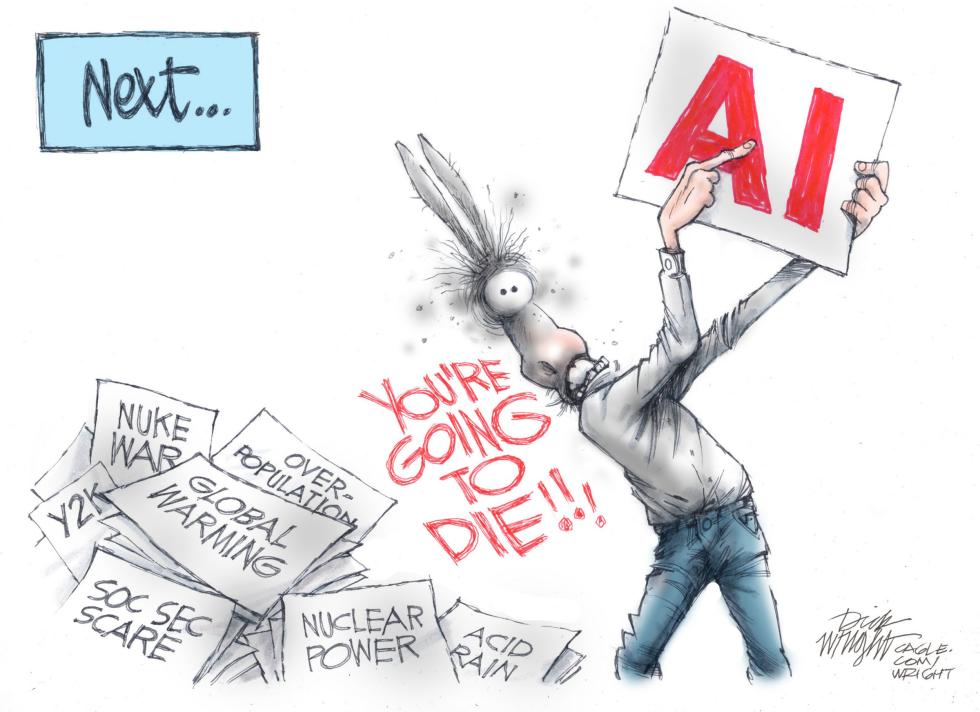
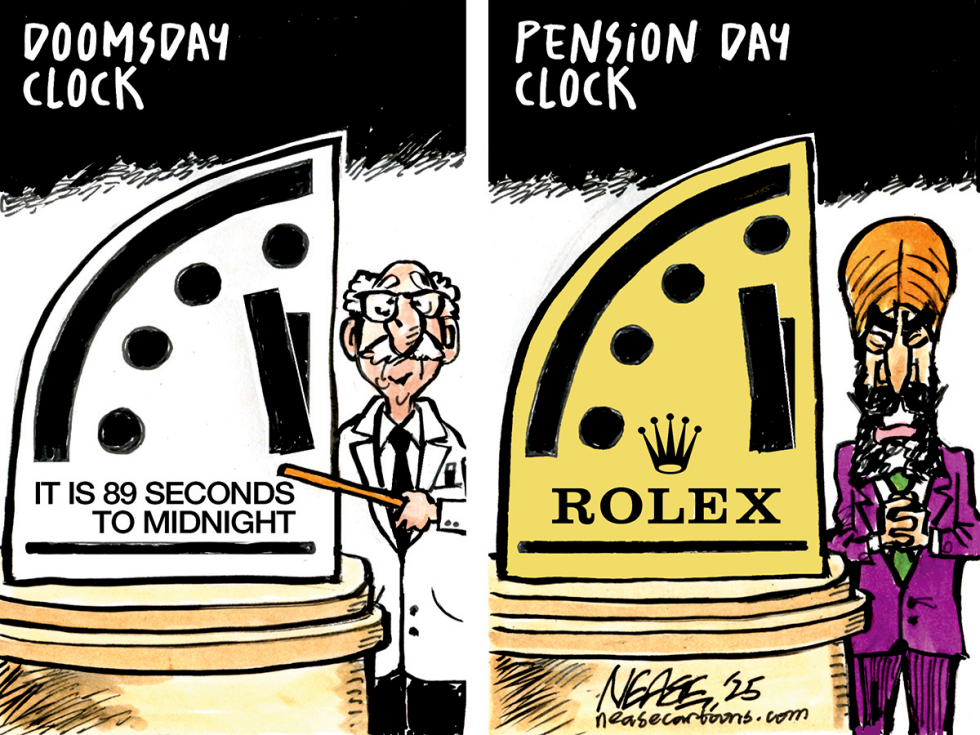
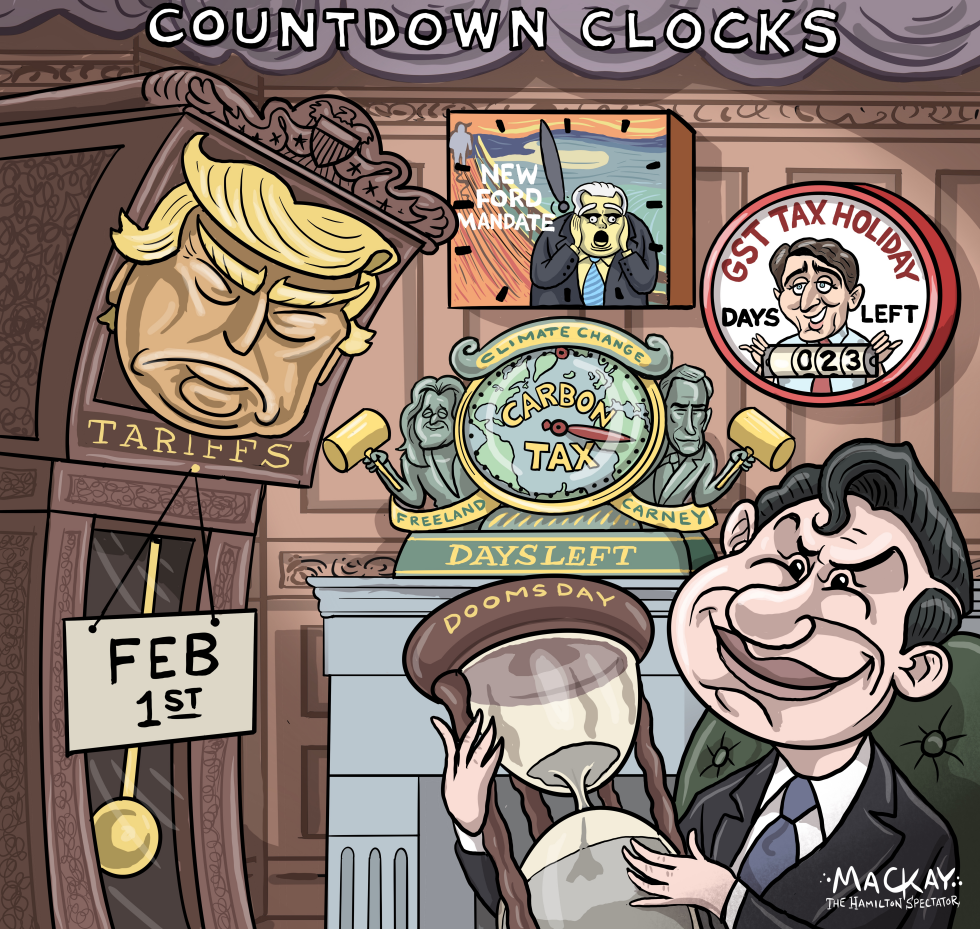
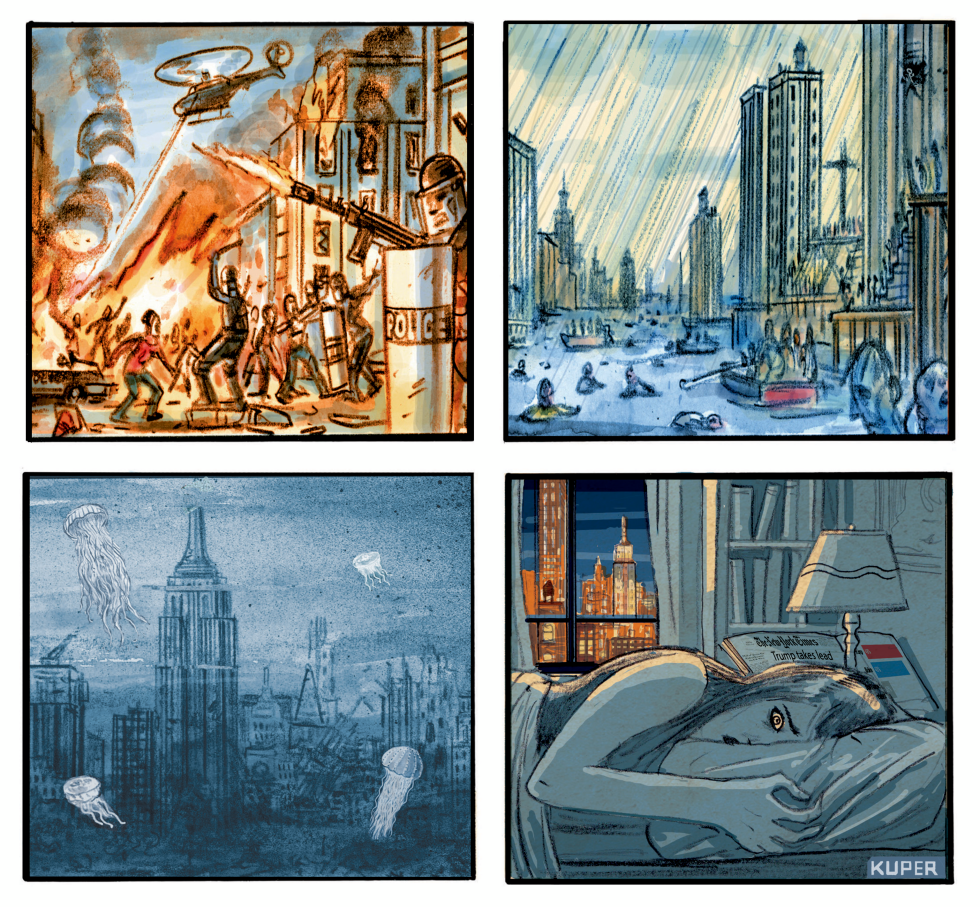
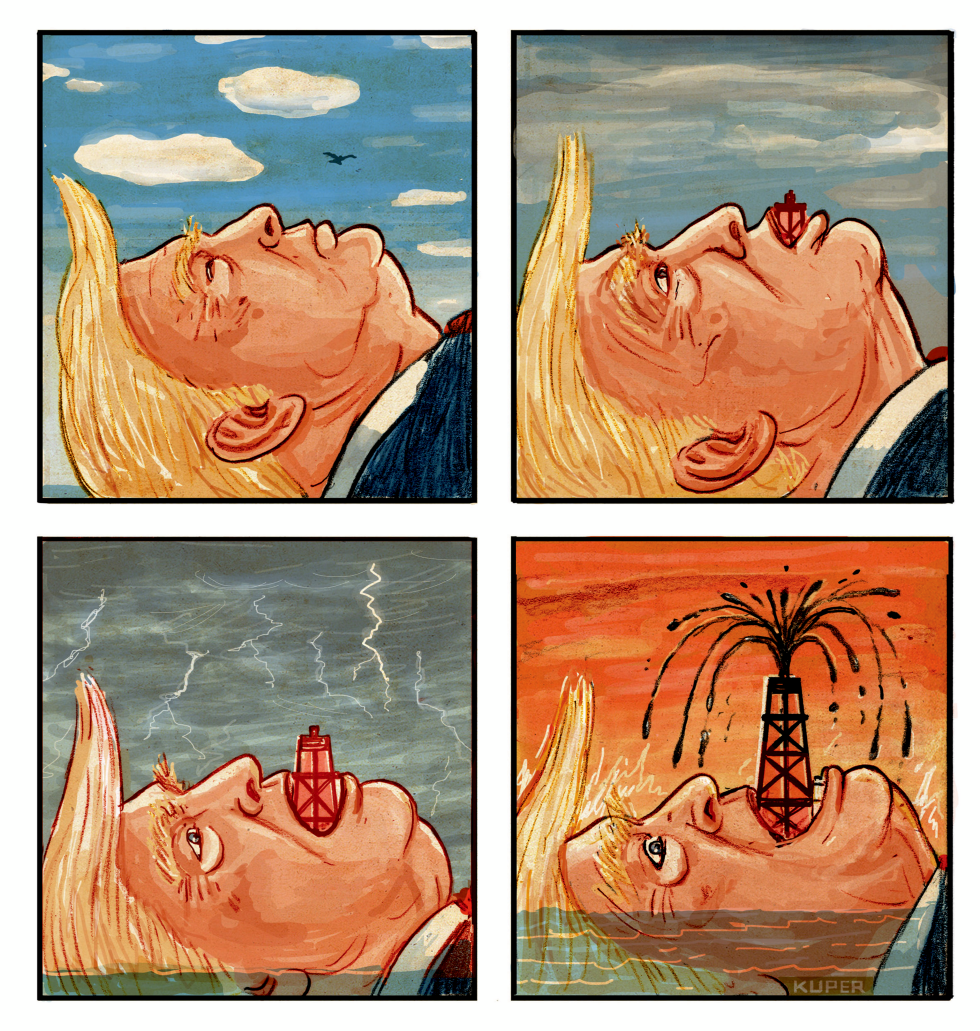
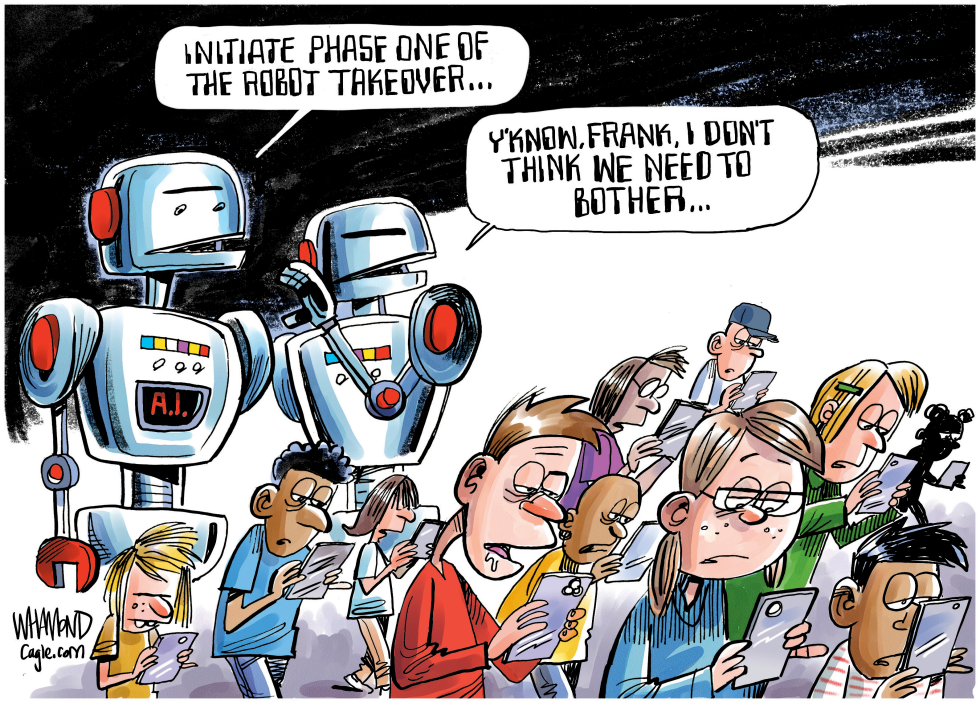
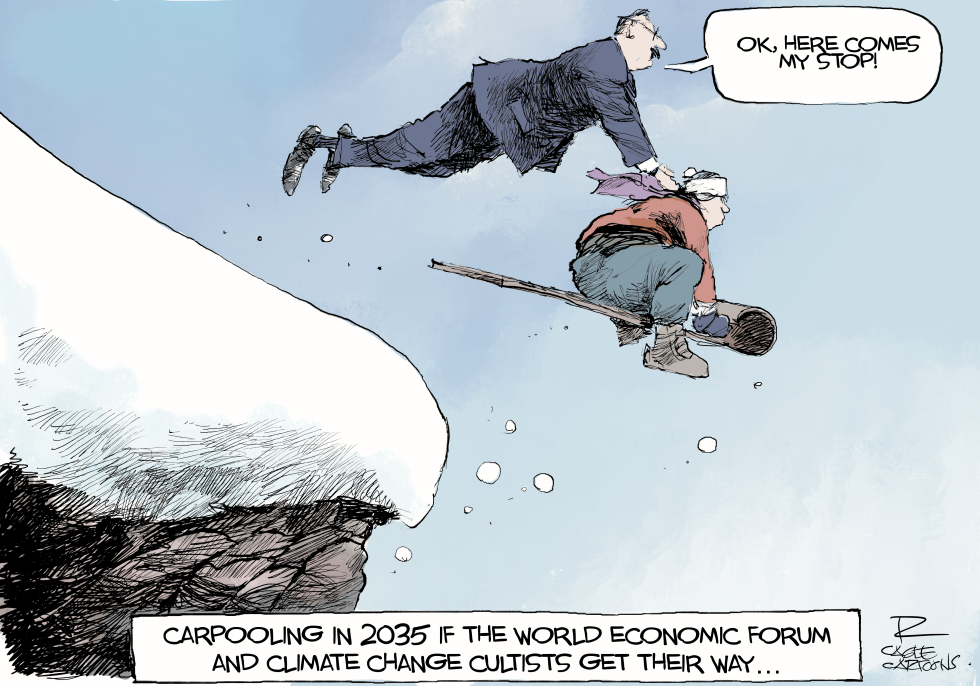
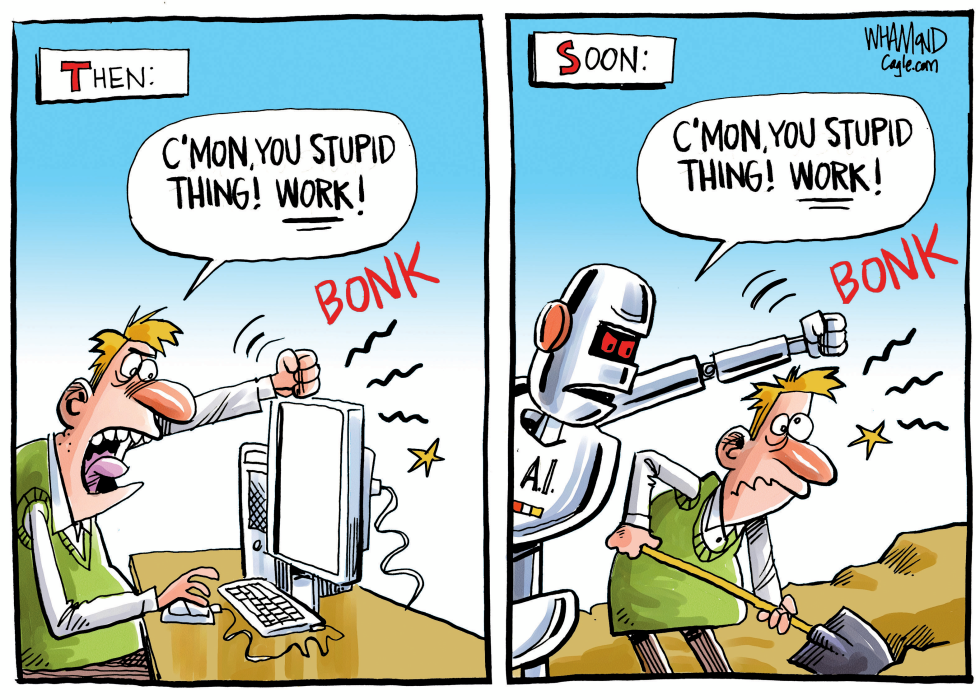
Democrats have renewed warnings that artificial intelligence poses an existential threat, echoing earlier alarms over Y2K, nuclear power, and climate change that later lost urgency. The pattern suggests political use of successive crises to maintain attention. The cartoon argues these claims recycle familiar tactics without new substance.
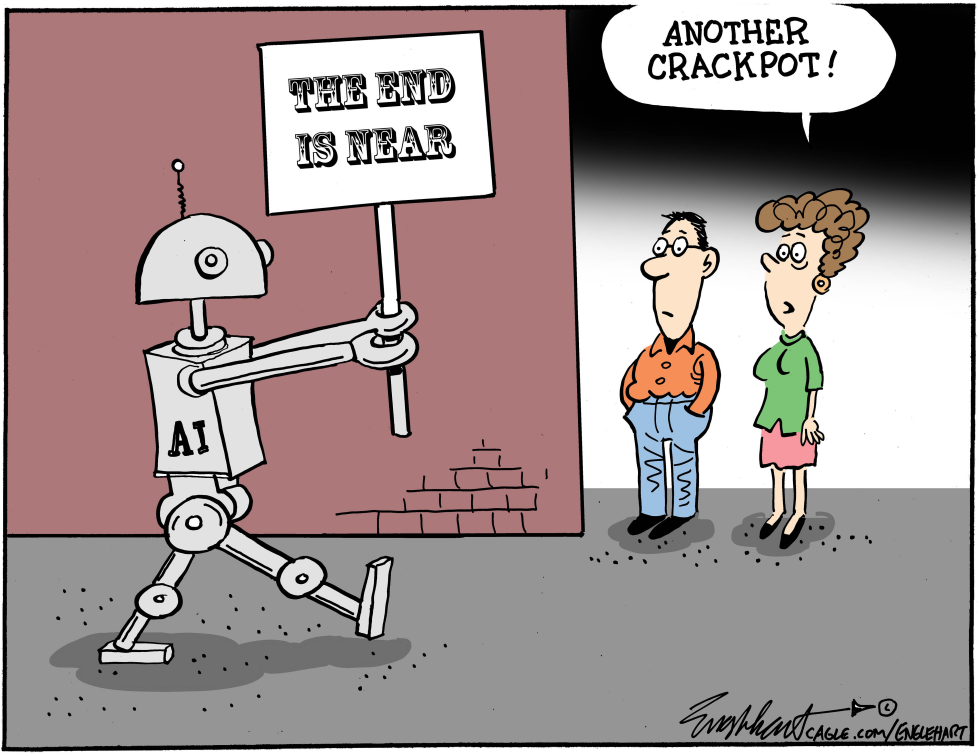
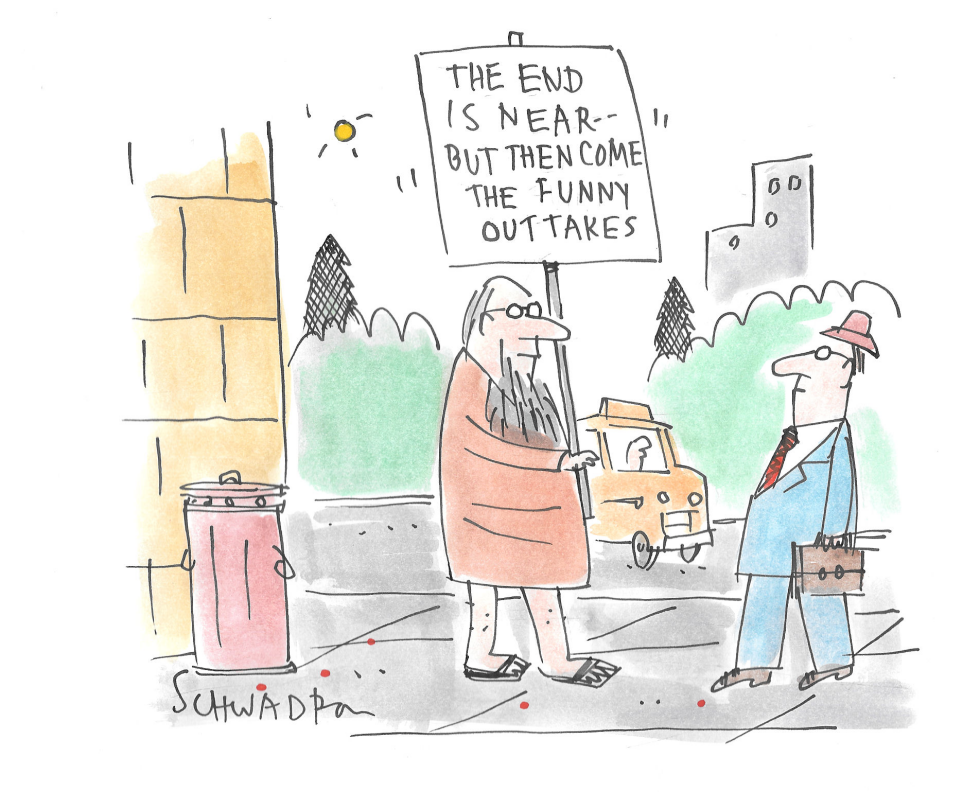
Predictions that artificial intelligence will end humanity by the end of the decade continue to circulate among technologists and futurists. These forecasts often cite rapid advances in machine learning and autonomous systems as existential risks. The cartoon responds by portraying such warnings as recycled doomsday rhetoric that the public has learned to ignore. It takes the position that AI alarmism has become indistinguishable from past failed prophecies and deserves the same skeptical reception.
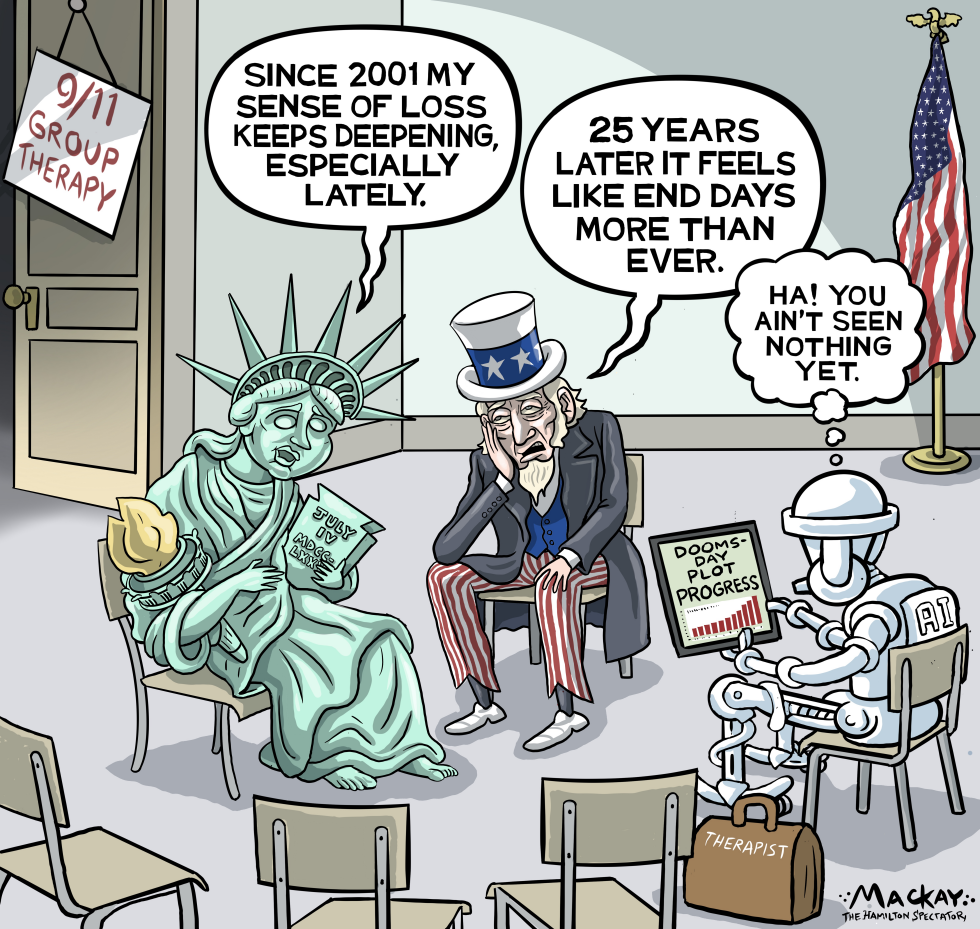
The cartoon depicts the Statue of Liberty, Uncle Sam and an AI robot seated in a 9/11 group therapy session on the 25th anniversary of the attacks. The Statue of Liberty holds a book marked July IV MDCCLXXVI and speaks of deepening loss since 2001. Uncle Sam echoes the sentiment of end days. The AI figure, labeled with a rising doomsday plot progress chart, retorts that the others have seen nothing yet. The scene uses national symbols to reflect persistent national trauma and emerging technological threats two and a half decades after the September 11 attacks.
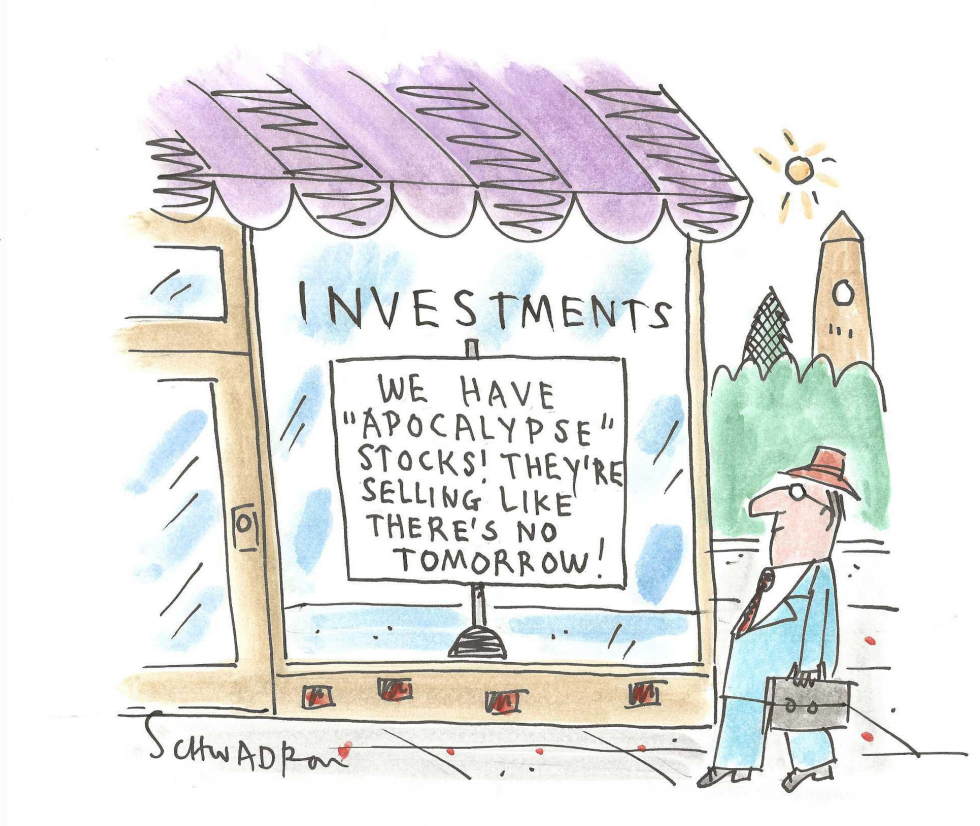
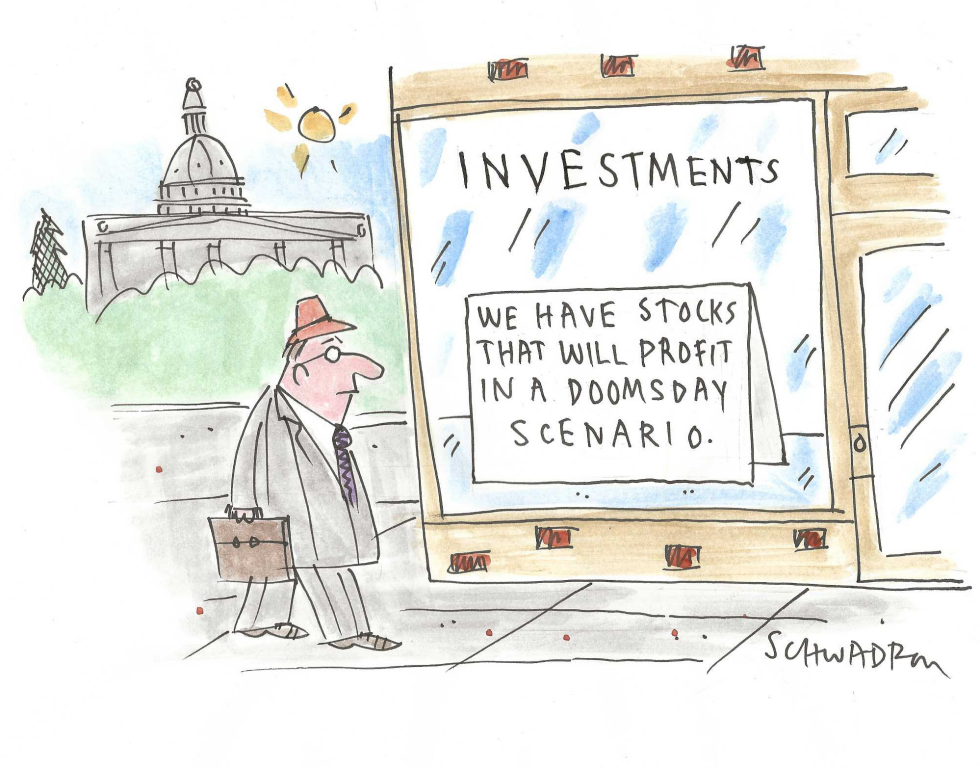
Investor interest in so-called apocalypse stocks has risen as markets reflect broader economic uncertainty. The trend highlights how some traders position for worst-case scenarios in business and finance. The cartoon underscores the ironic appeal of such products, suggesting hype around end-times investing reveals deeper anxieties about stability.
Investment firms continue to market specialized stock offerings designed to gain value during periods of widespread economic or geopolitical turmoil. Such products attract attention from clients seeking protection against market downturns or global instability. The cartoon highlights the persistent appeal of these instruments even as broader uncertainty lingers around policy and international developments.
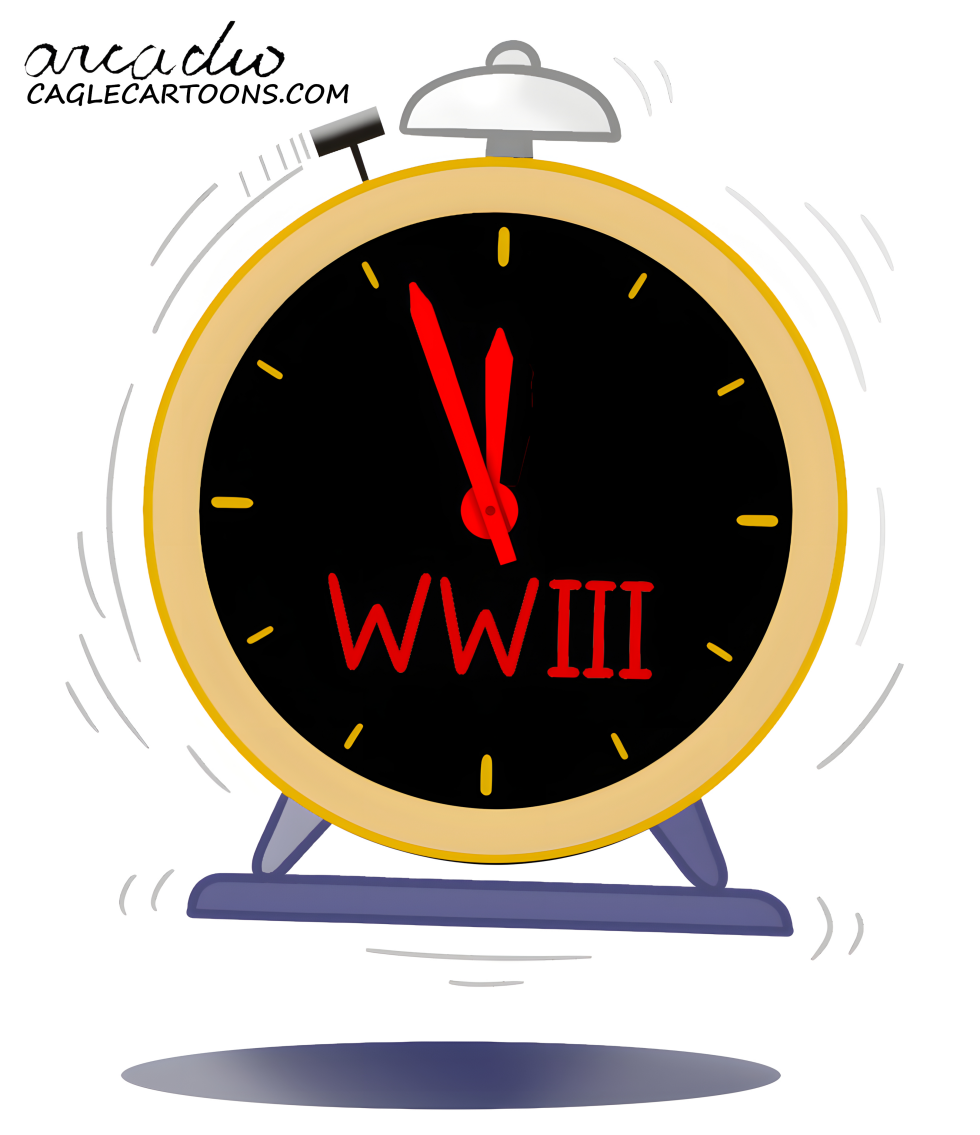
Rising geopolitical frictions among major powers have prompted renewed warnings about the potential for wider international conflict. Defense officials and analysts track ongoing military buildups and diplomatic strains that could escalate quickly. The editorial uses the alarm clock image to stress that leaders must act decisively to prevent a slide into global confrontation.
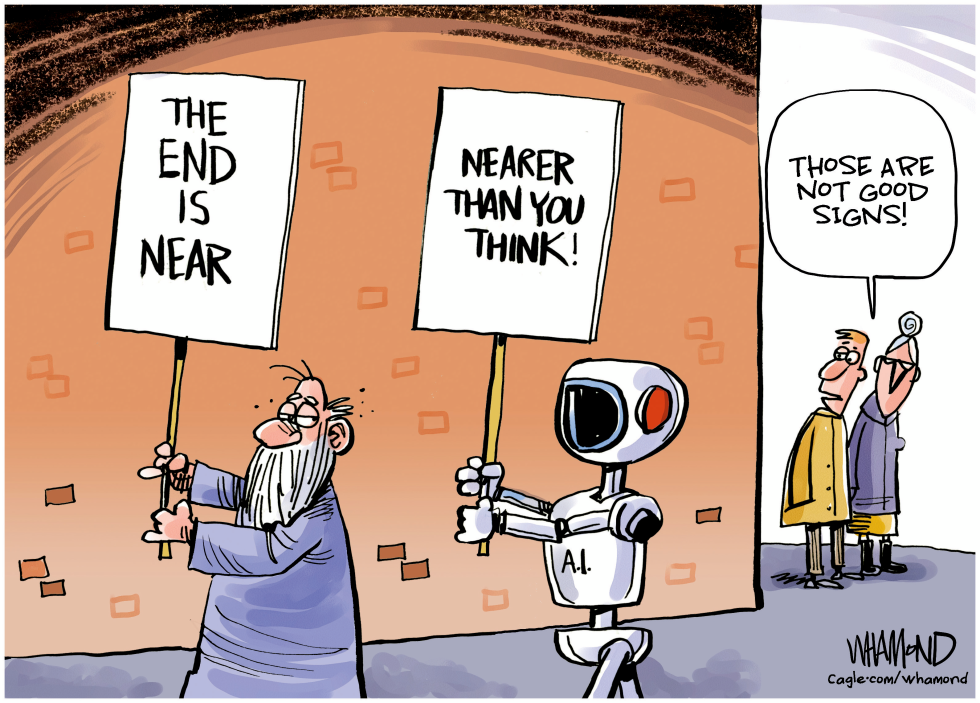
On April 29 2026 Dave Whamond depicts an elderly prophet and an A.I. robot both holding signs warning the end is near. The robot claims the end is nearer than the prophet thinks while two men react that the signs are not good. The image addresses ongoing public debate over artificial intelligence risks and workplace transformation.