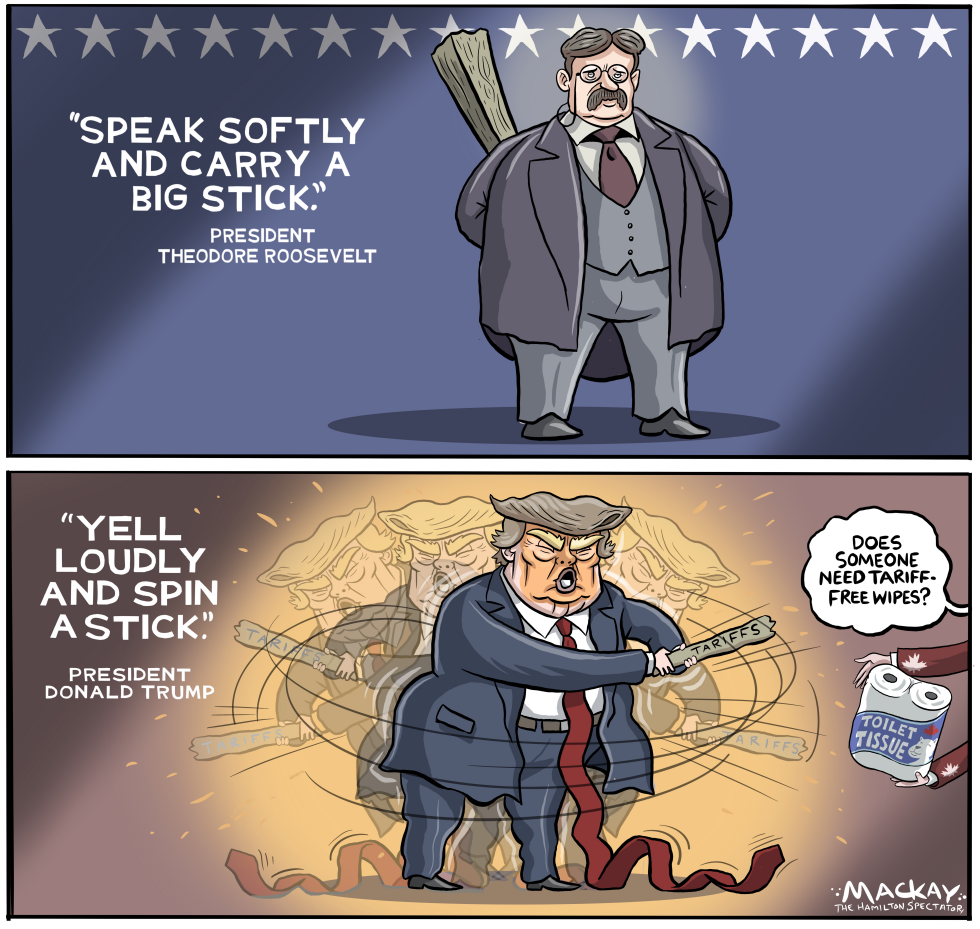
The cartoon by Graeme MacKay contrasts Theodore Roosevelt's famous speak softly and carry a big stick approach with Donald Trump's version of yelling loudly and spinning a stick covered in tariffs. In the lower panel Trump appears dizzy from the motion as a Canadian hand offers toilet tissue labeled tariff-free wipes. The image comments on recent US tariff actions and their impact on Canadian trade relations as of the September 2026 publication date.
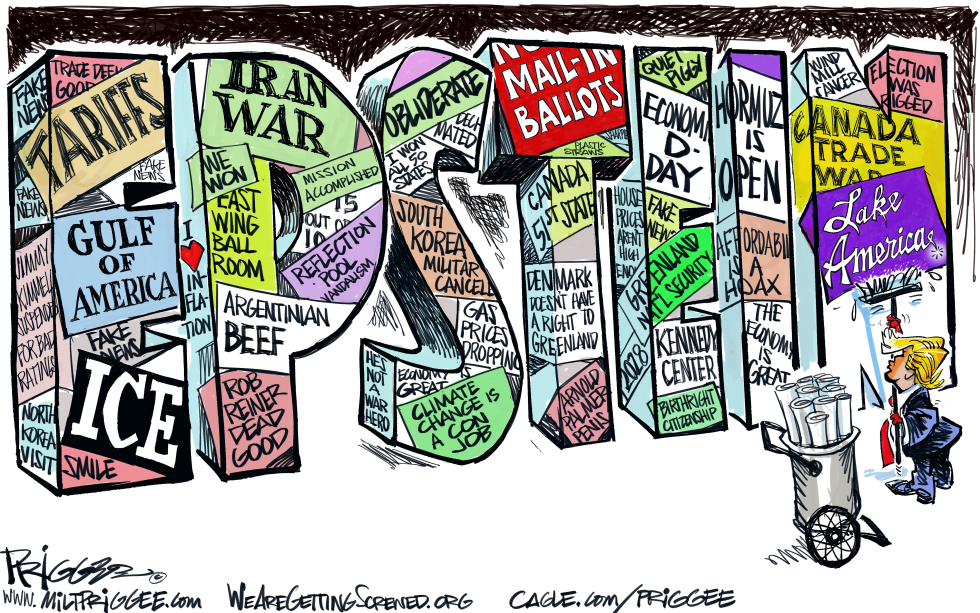
Donald Trump appears in a September 2026 cartoon pushing a cart stacked with signs promoting tariffs, questioning mail-in ballots, and asserting claims about Iran, Canada trade, and domestic issues. The image captures a pattern of public messaging that blends economic nationalism with repeated challenges to established processes. The editorial position frames these statements as a deliberate strategy to keep multiple controversies in motion at once.
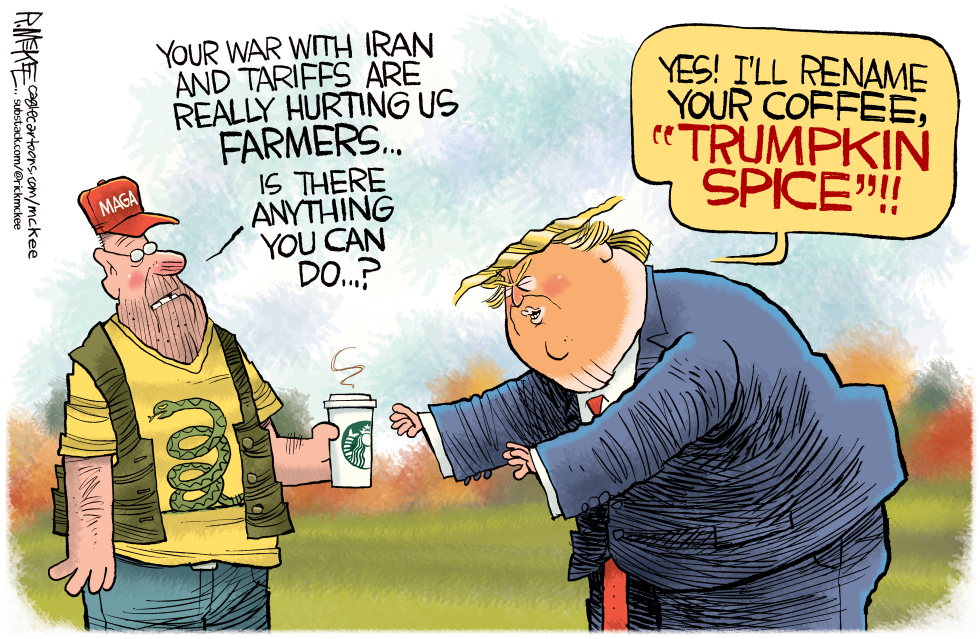
Farmers have raised concerns over the effects of tariffs and tensions with Iran on their livelihoods. President Trump responded by proposing to rename their coffee Trumpkin Spice rather than adjusting policy. The exchange underscores the administration's approach to addressing rural economic complaints through branding gestures instead of substantive relief measures. Critics argue this misses the core issues facing agricultural communities. The cartoon presents the interaction as emblematic of misplaced priorities in handling trade disputes and international relations.
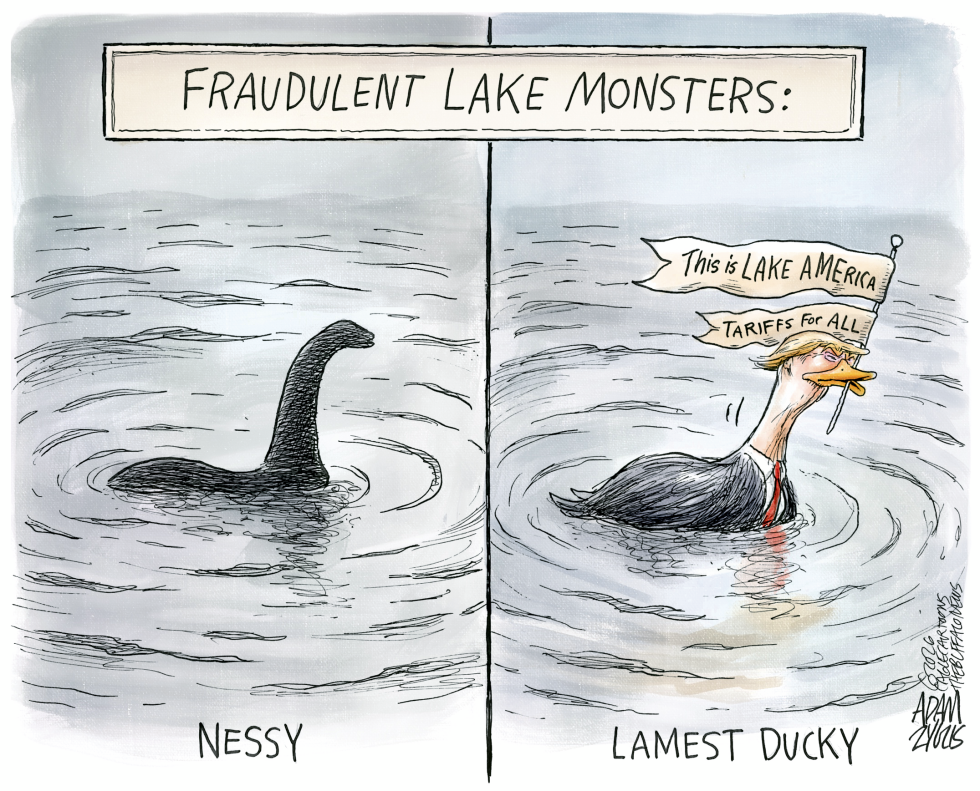
The cartoon published August 31, 2026, shows Donald Trump with the head of a duck body floating in water labeled Lake America. Banners read This is Lake America and Tariffs for All. It is placed beside an image of the Loch Ness Monster labeled Nessy under the heading Fraudulent Lake Monsters. The work comments on Trump's tariff agenda during his time in office.
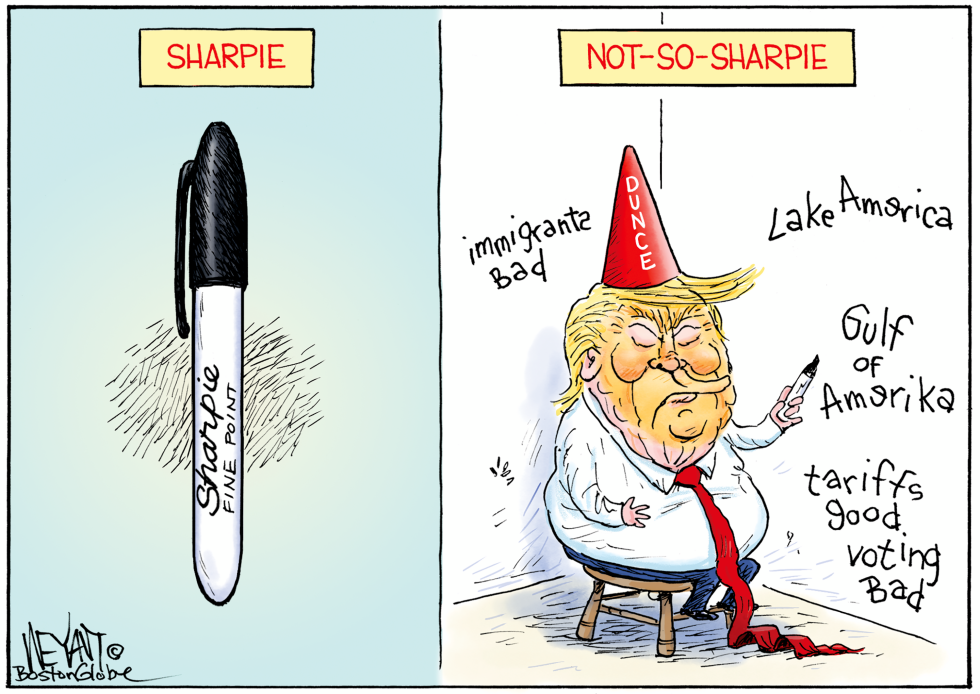
Donald Trump has continued to issue statements on tariffs, immigration enforcement and voting procedures that contain repeated factual inaccuracies. These comments have drawn renewed attention to his approach to governance. The cartoon portrays him as uninformed on these topics through the dunce cap and misspelled labels.
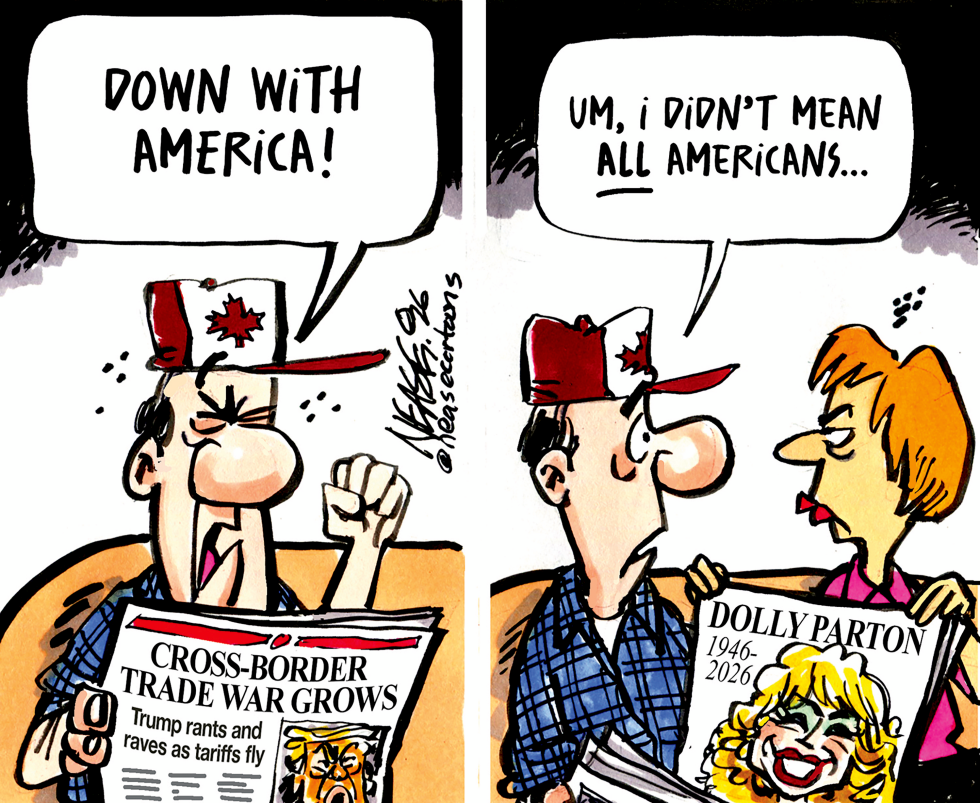
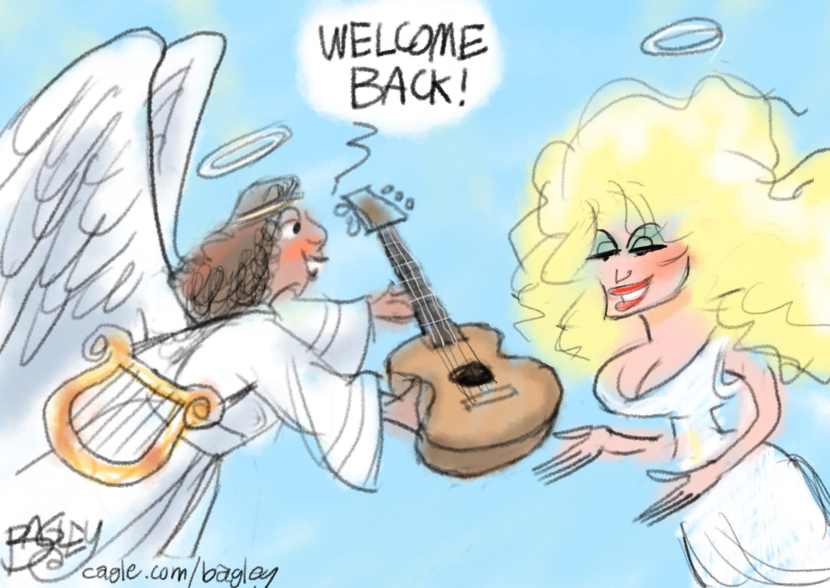
US-Canada trade tensions intensified in August 2026 as tariffs mounted amid heated rhetoric from President Trump. The dispute drew sharp reactions north of the border. The cartoon takes the position that even vocal critics of America make exceptions for beloved figures like Dolly Parton.
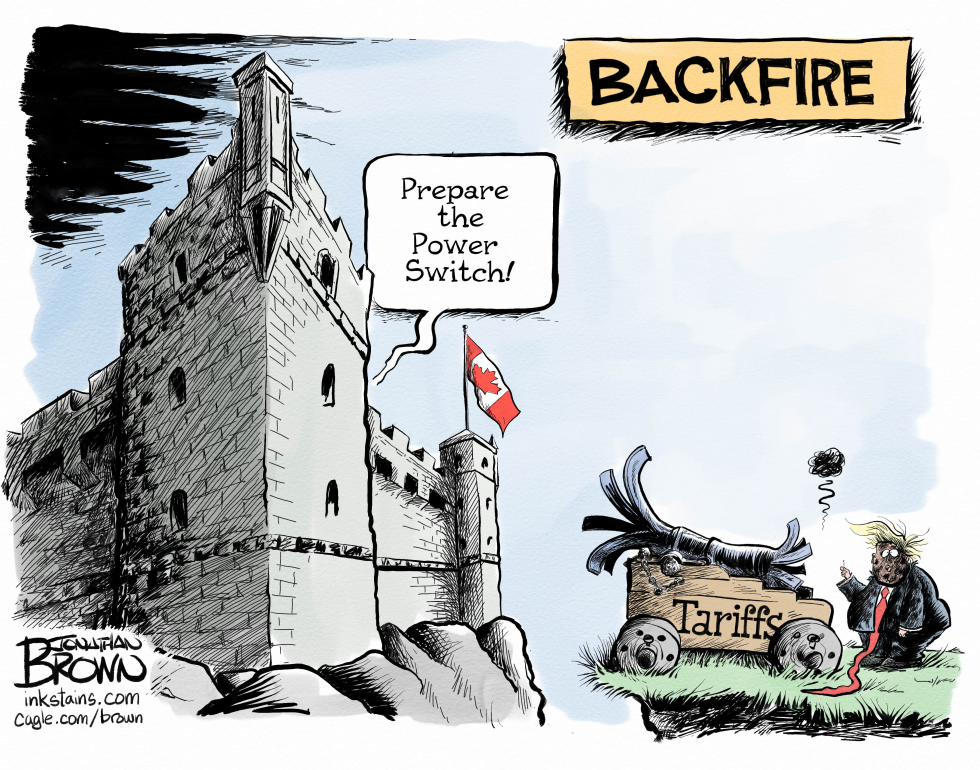
The cartoon shows a Canadian castle flying its flag while a cannon labeled Tariffs explodes backward toward a figure resembling Donald Trump. The scene responds to ongoing trade tensions where U.S. tariffs on Canadian goods prompted retaliatory measures. The visual emphasizes the policy rebounding on its originator rather than achieving intended pressure.
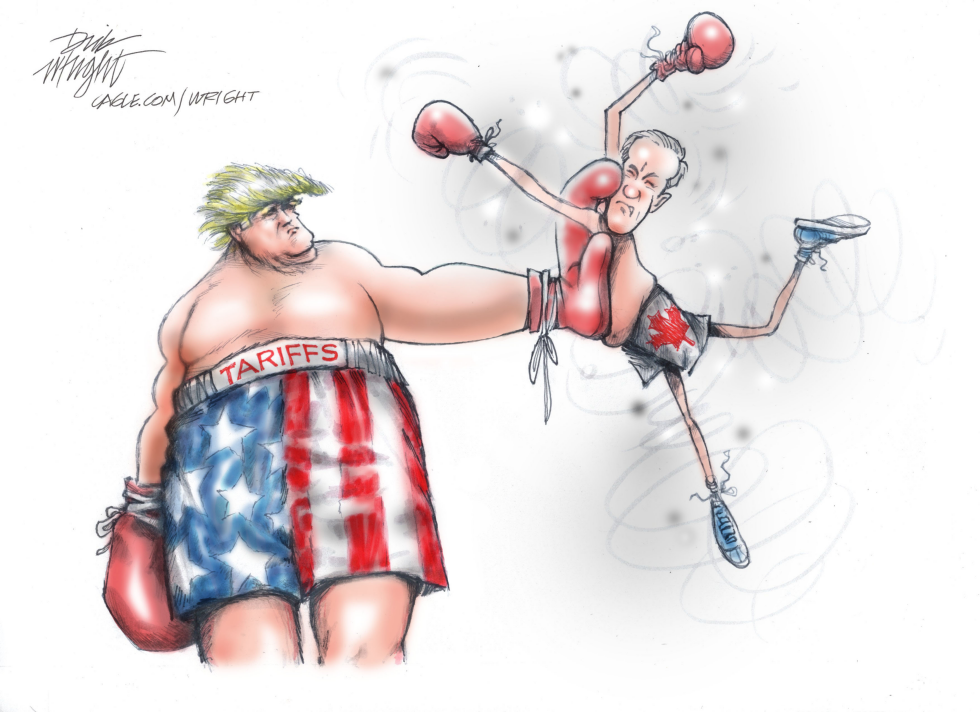
President Trump imposed new tariffs targeting Canadian goods in August 2026, escalating bilateral trade friction over lumber, dairy and autos. The measures aim to protect U.S. industries and renegotiate terms. Markets reacted with volatility in both countries. The editorial argues the tariffs represent necessary leverage that weakens Canada's position and forces concessions.
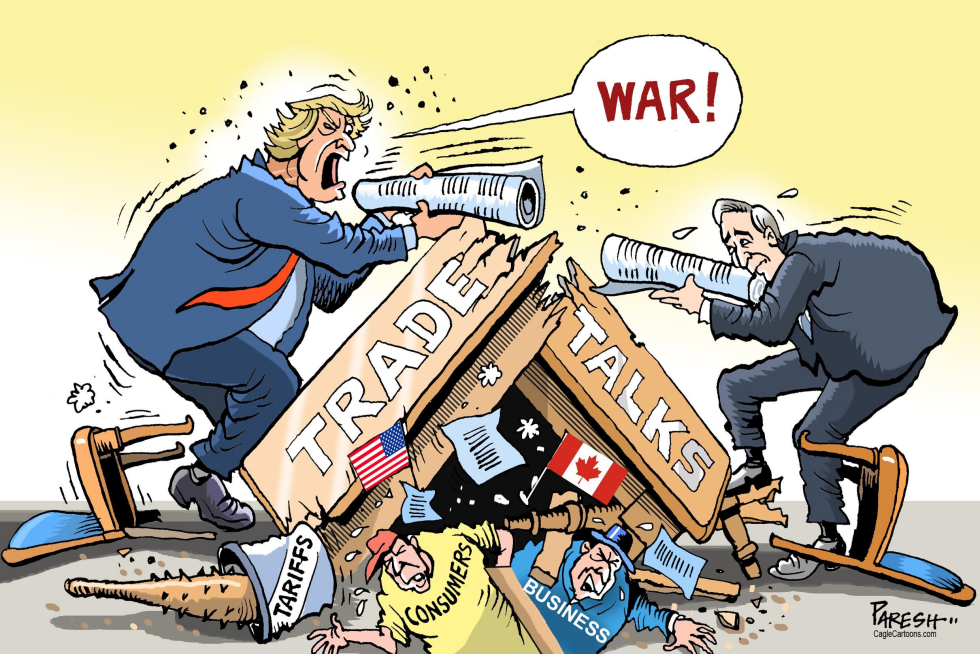
The cartoon depicts former President Donald Trump and a Canadian counterpart locked in combat, wielding rolled documents labeled tariffs and talks that smash apart a table marked trade talks. American and Canadian flags lie amid the debris while two figures representing consumers and business lie pinned underneath. Trump shouts war from a speech bubble. The image responds to ongoing US-Canada trade tensions by illustrating how aggressive tariff measures and failed negotiations harm everyday economic interests on both sides of the border.
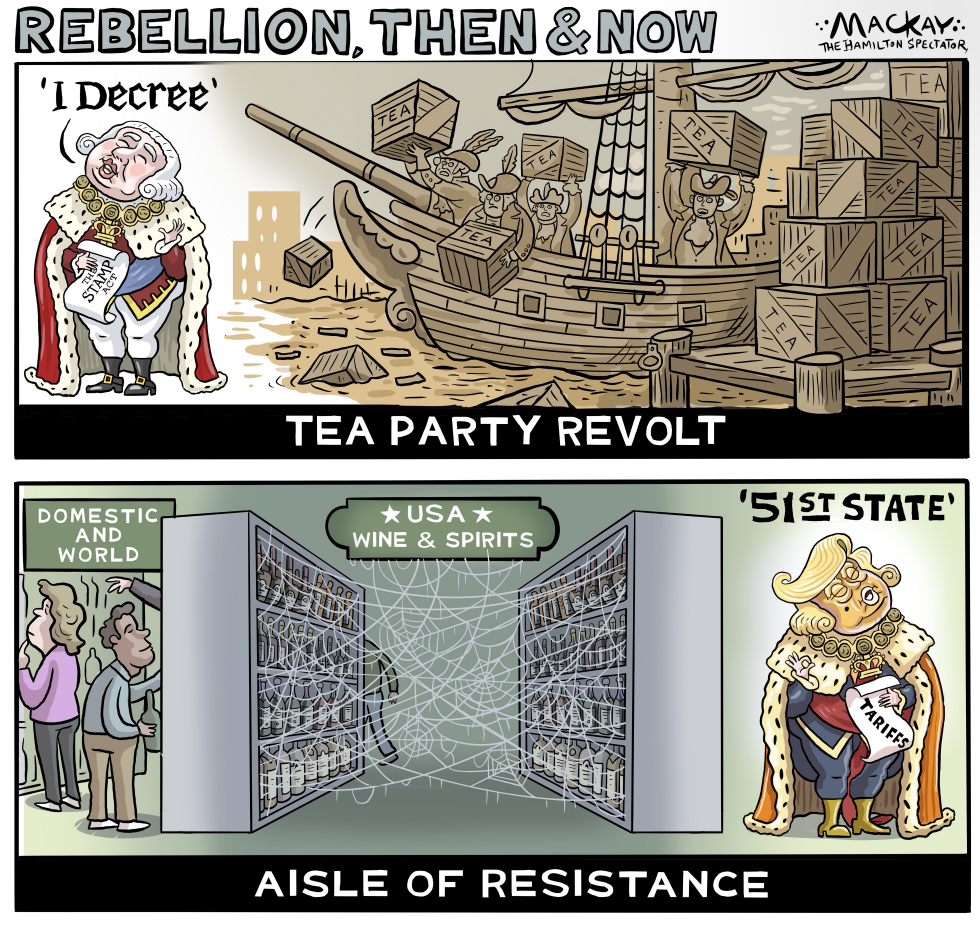
President Trump renewed tariff threats against Canada while floating the idea of the country becoming the 51st state. Canadian consumers responded with a boycott of American wine and spirits, leaving store shelves empty. The cartoon draws a parallel to the Boston Tea Party, casting the tariff policy as a modern decree provoking resistance.
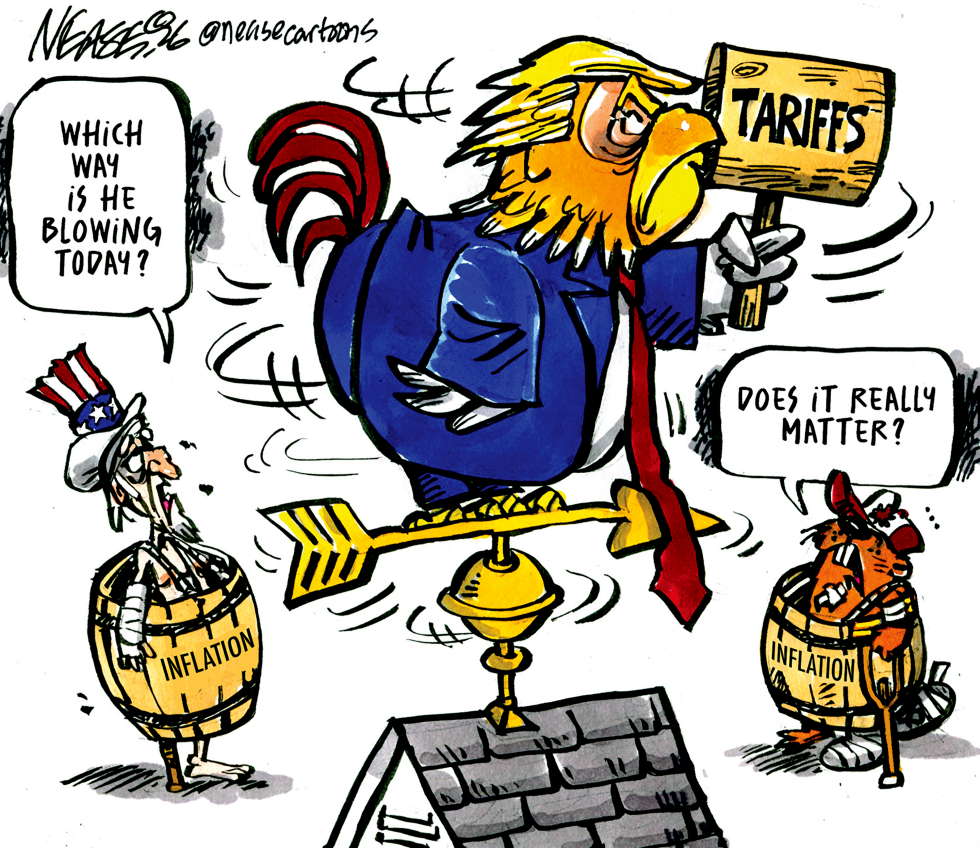
Donald Trump has proposed broad new tariffs on imports as part of his economic agenda. The measures have raised concerns about higher consumer prices and renewed inflation pressures. Markets and businesses are watching for clarity on timing and scope. The cartoon illustrates the confusion over which way tariff policy will ultimately point and whether the direction even matters to those already feeling inflation's effects.
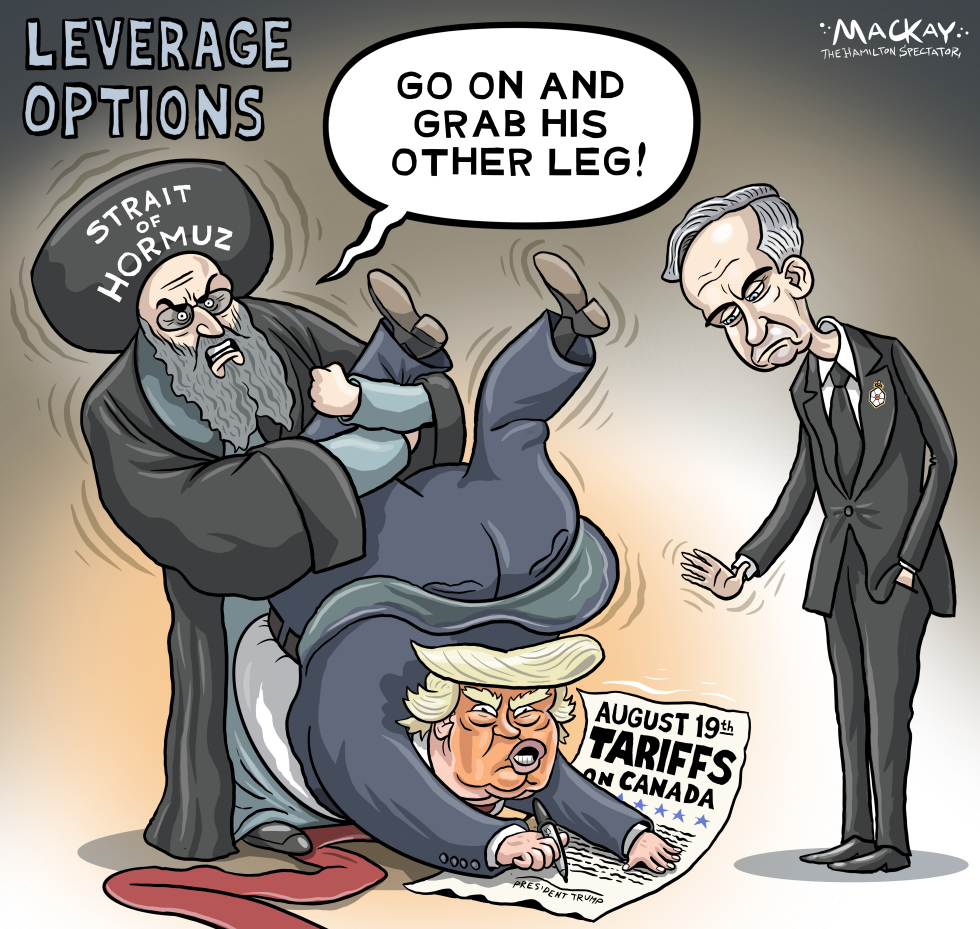
On August 12 2026 President Trump prepares to impose tariffs on Canada amid tensions involving the Strait of Hormuz. The move draws immediate pushback from Iran-linked actors seeking leverage. The piece argues that tariff policy invites risky entanglements that weaken U.S. position.
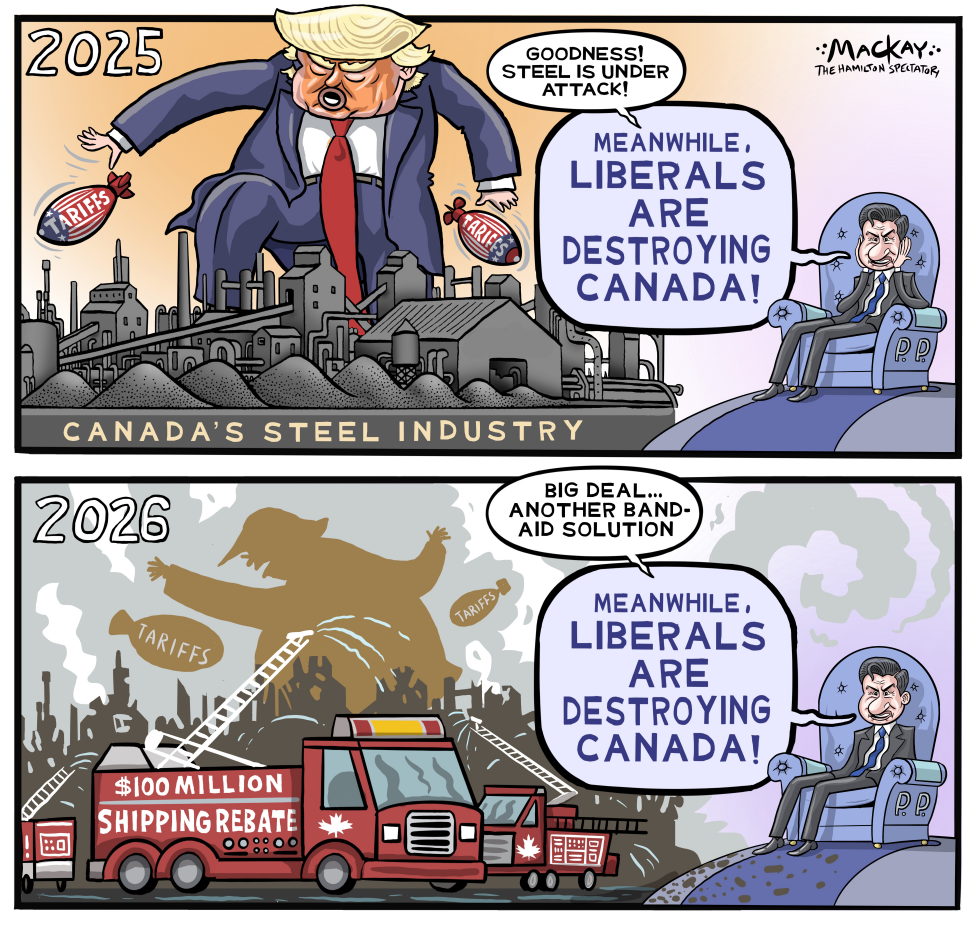
U.S. tariffs imposed on Canadian steel in 2025 triggered sharp declines in the domestic industry by 2026. The federal government responded with a $100 million shipping rebate. Conservative Leader Pierre Poilievre continued to focus attacks on the Liberal government rather than the trade shock. The cartoon argues this stance amounts to a repeated distraction from the core economic damage.
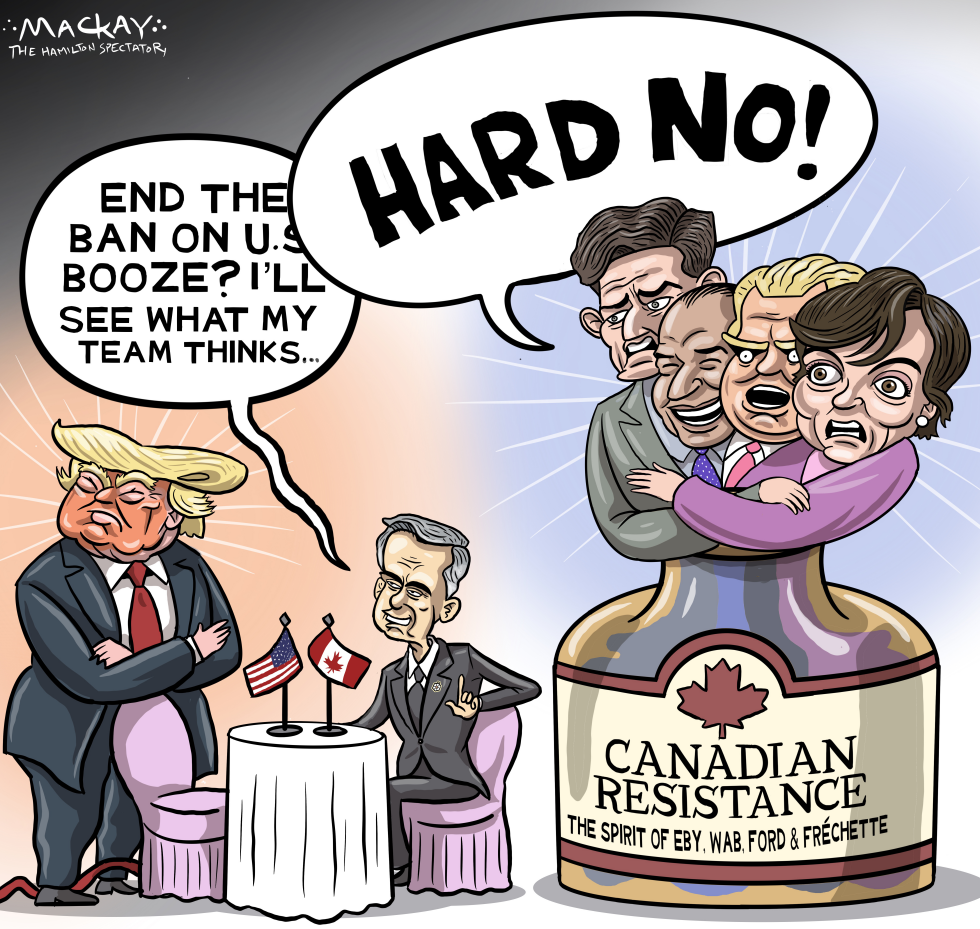
Donald Trump signaled openness to ending a ban on US alcohol imports into Canada during a meeting with Canadian officials. Provincial leaders including David Eby and Doug Ford responded with unified opposition. The cartoon portrays the premiers as a collective force of resistance and shows Trump deferring the decision to his team.
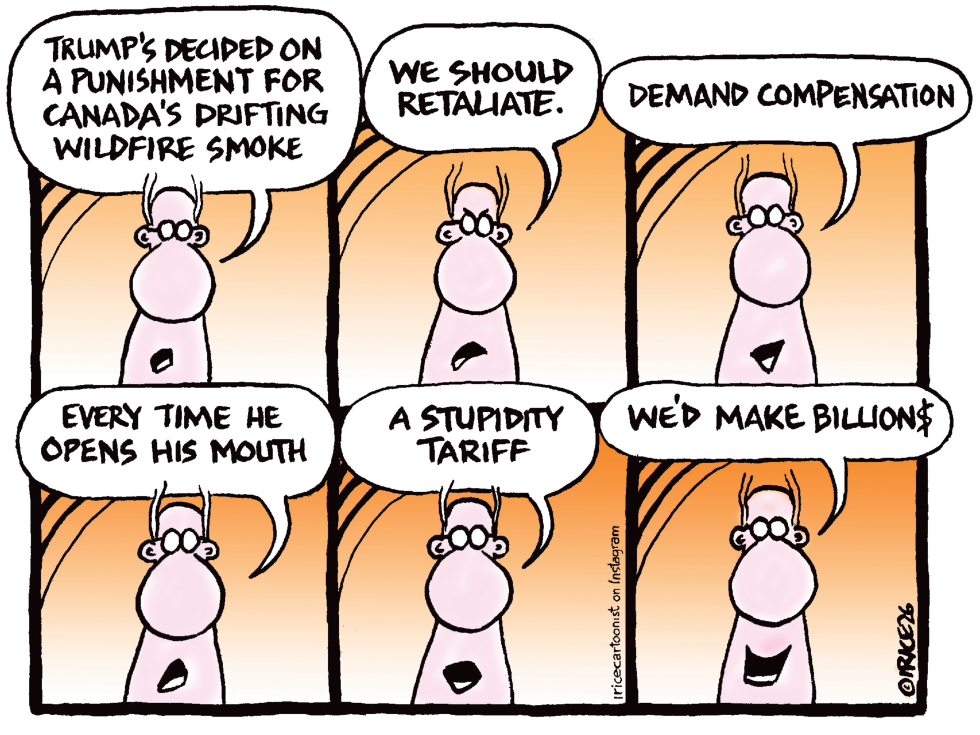
Donald Trump has floated imposing a tariff on Canada as punishment for wildfire smoke drifting across the border. The move draws immediate pushback from Canadian officials who suggest retaliation and compensation demands. The episode highlights ongoing trade tensions between the two neighbors and the economic stakes involved in cross-border disputes. The cartoon frames the tariff idea as a foolish overreaction likely to backfire financially on the United States.