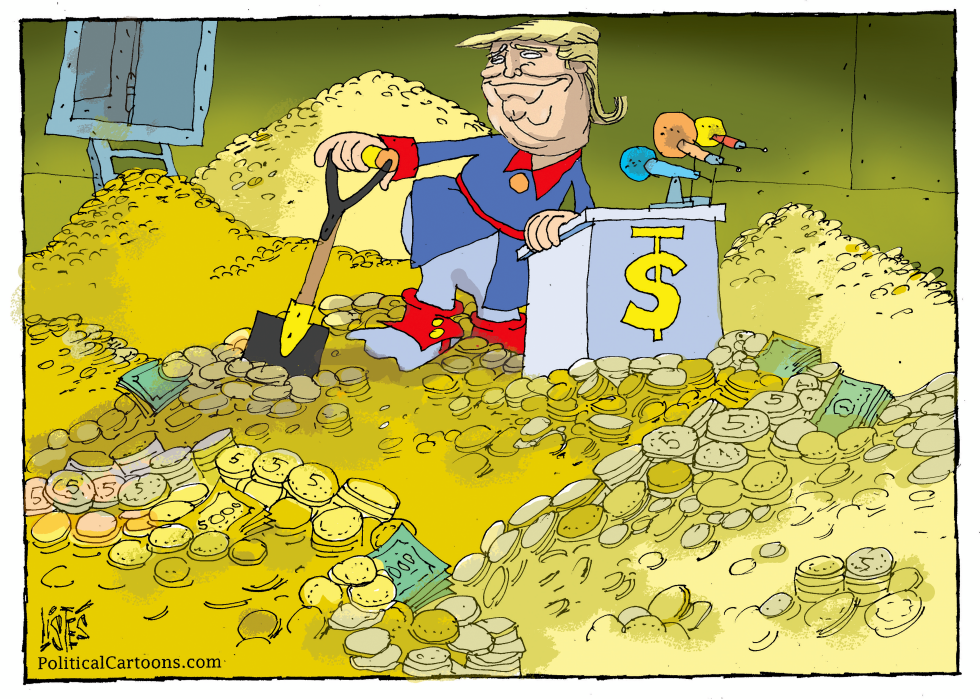
Donald Trump remains a central figure in debates over wealth and political power as of September 2026. The cartoon responds to ongoing scrutiny of how personal fortune intersects with public life and policy influence. It portrays the former president amid symbols of money to critique that dynamic. The editorial position frames Trump's association with wealth as a defining and problematic feature of his political presence.
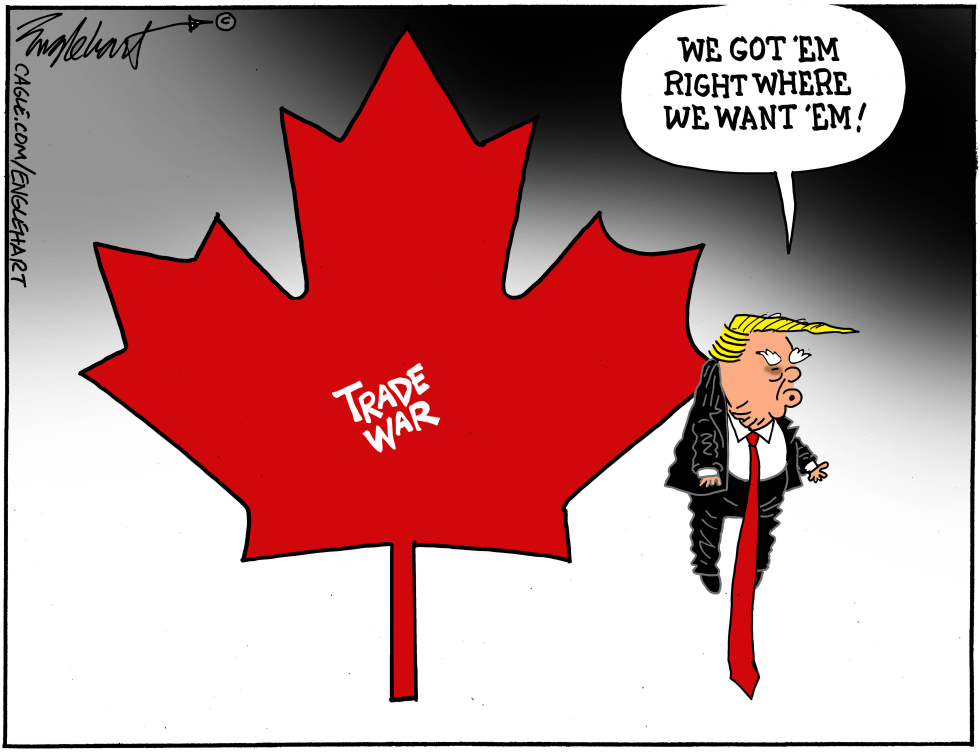
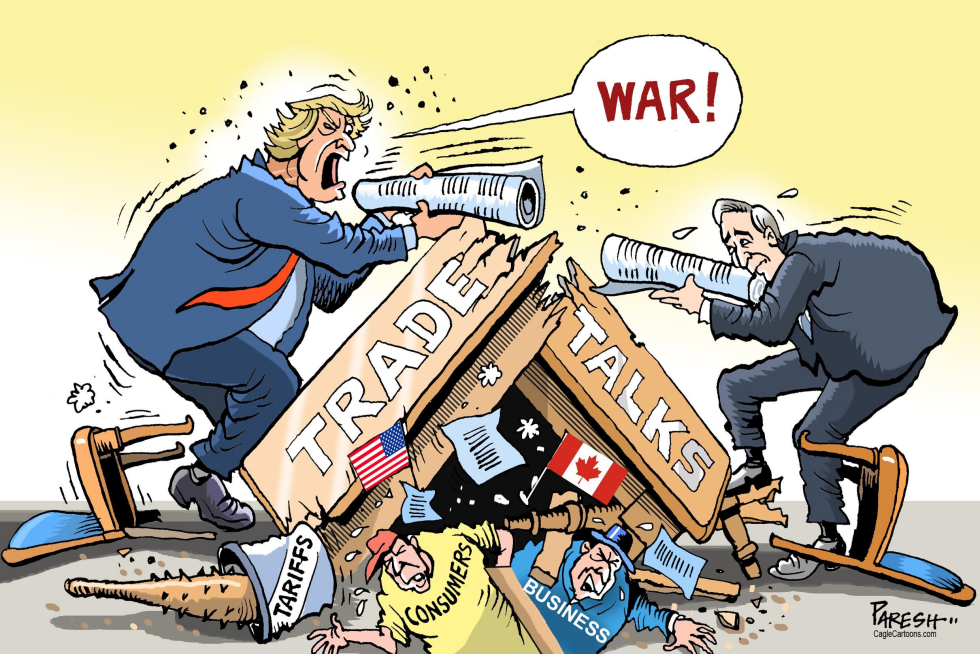
President Donald Trump has escalated tariffs on Canadian goods in a widening trade dispute. Ottawa responded with targeted countermeasures that hit key US exports. The standoff raises costs for American consumers and businesses while straining long-standing alliance ties. The cartoon portrays Trump as overconfident in a confrontation where Canada holds leverage.
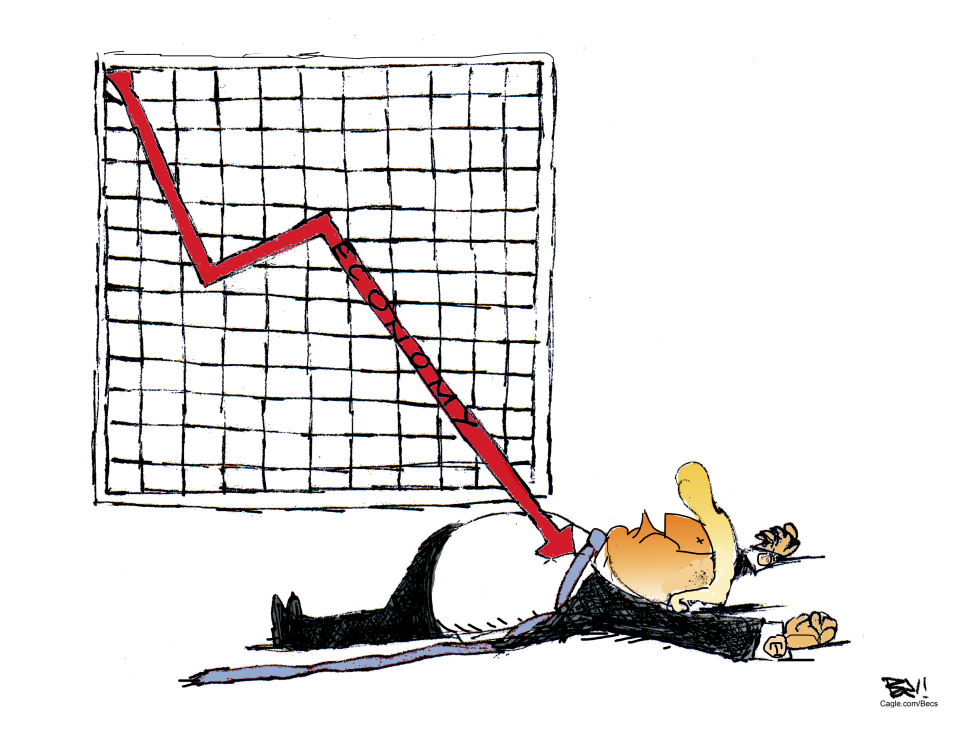
Economic indicators released in late August 2026 showed continued contraction in key sectors including manufacturing and consumer spending. President Donald Trump faced direct political fallout from the downturn. The data underscored challenges in sustaining growth amid inflation pressures and global trade tensions. The cartoon depicts the president flattened by the falling trend line, underscoring the administration's vulnerability on economic performance. It argues that the president bears responsibility for the slide and cannot escape its consequences.
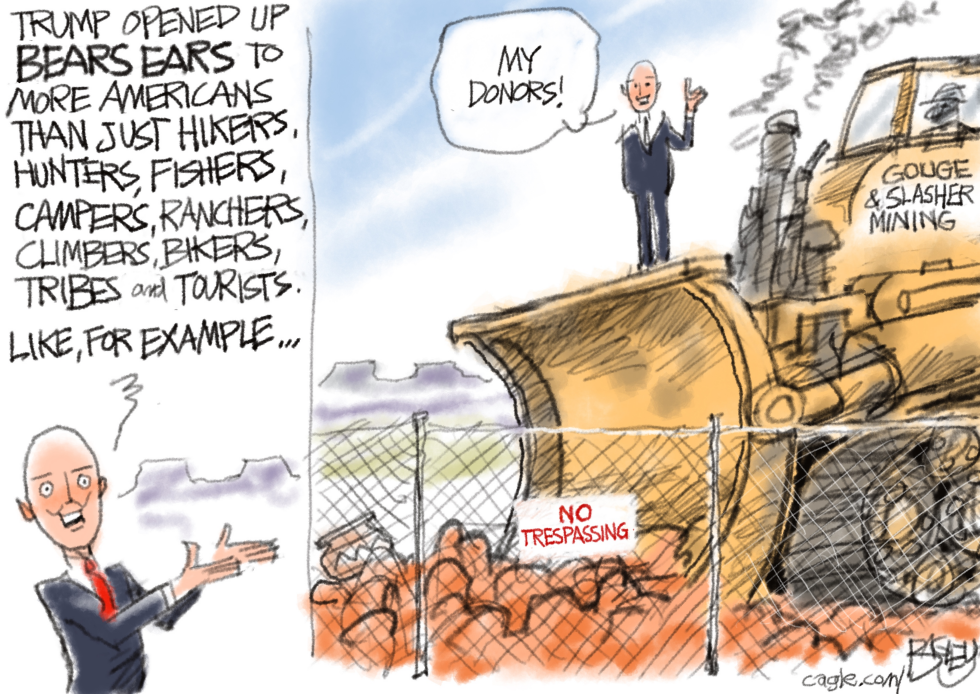
President Trump opened Bears Ears National Monument to expanded mining operations, citing broader public access. The move benefits mining companies and political donors while limiting protections for hikers, tribes and recreational users. The cartoon criticizes the decision as donor-driven favoritism over conservation.
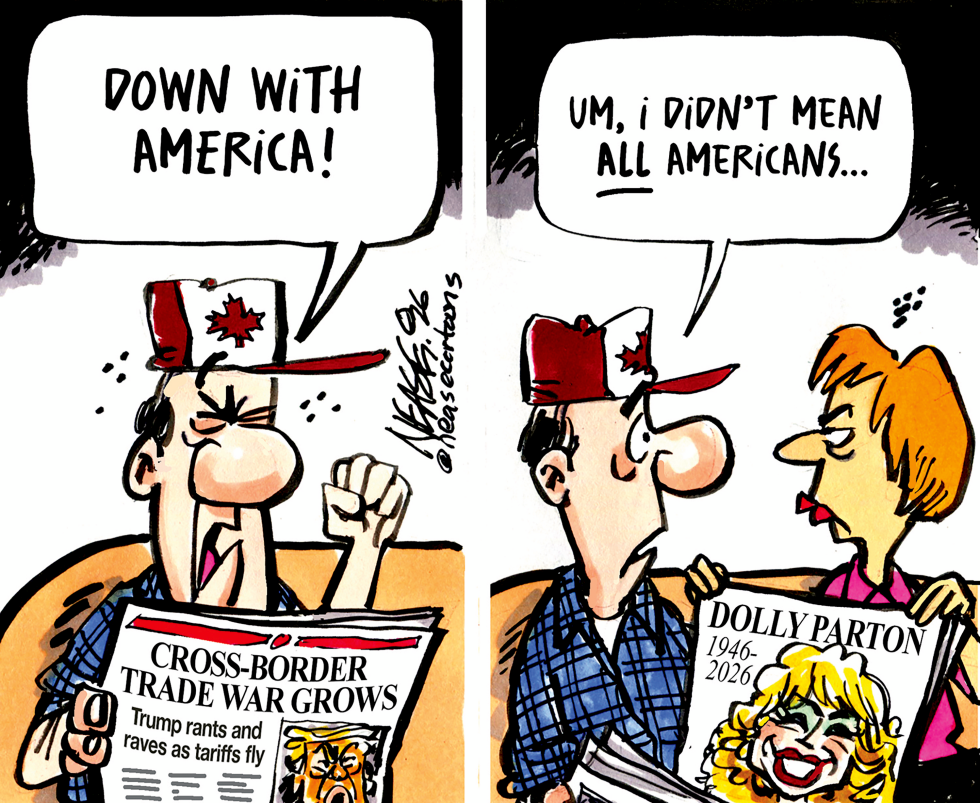
US-Canada trade tensions intensified in August 2026 as tariffs mounted amid heated rhetoric from President Trump. The dispute drew sharp reactions north of the border. The cartoon takes the position that even vocal critics of America make exceptions for beloved figures like Dolly Parton.
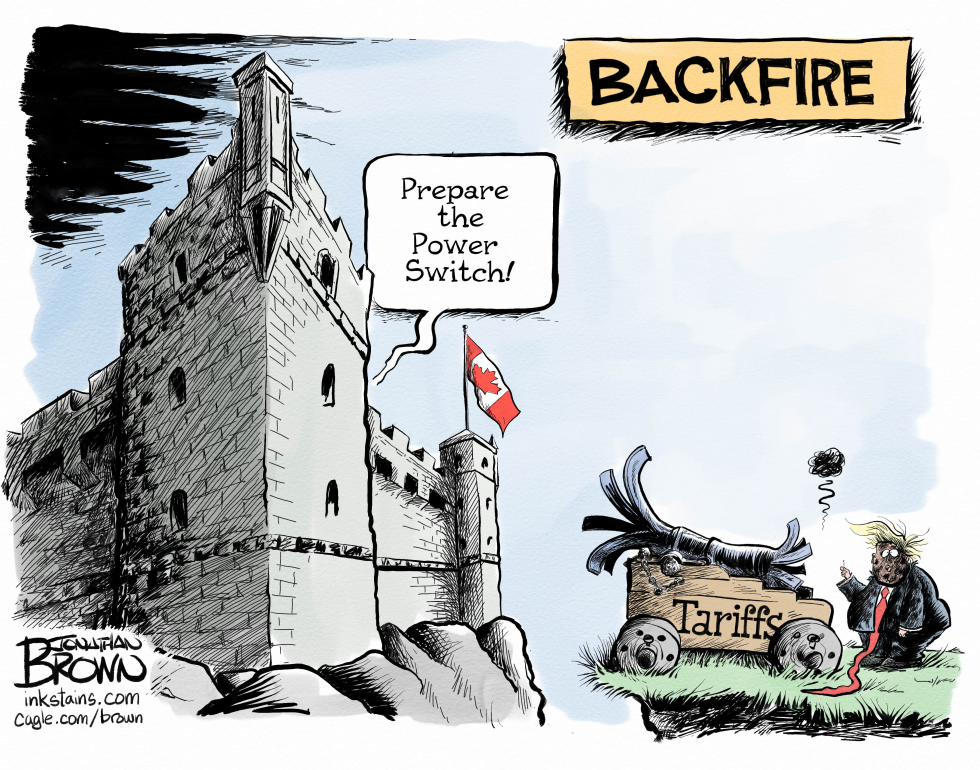
The cartoon shows a Canadian castle flying its flag while a cannon labeled Tariffs explodes backward toward a figure resembling Donald Trump. The scene responds to ongoing trade tensions where U.S. tariffs on Canadian goods prompted retaliatory measures. The visual emphasizes the policy rebounding on its originator rather than achieving intended pressure.
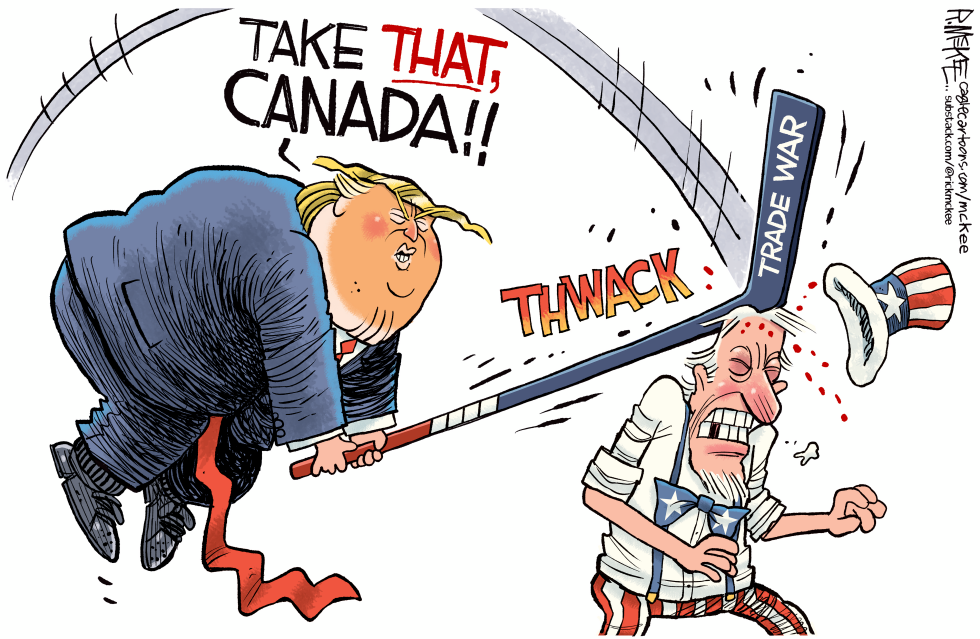
President Trump escalated trade tensions with Canada through new tariffs and barriers in August 2026. The moves targeted key sectors including lumber, dairy and autos. Domestic industries braced for retaliation while consumers faced higher prices. The action drew criticism for harming American interests alongside the intended foreign pressure. The cartoon portrays the policy as self-inflicted damage on the United States itself.
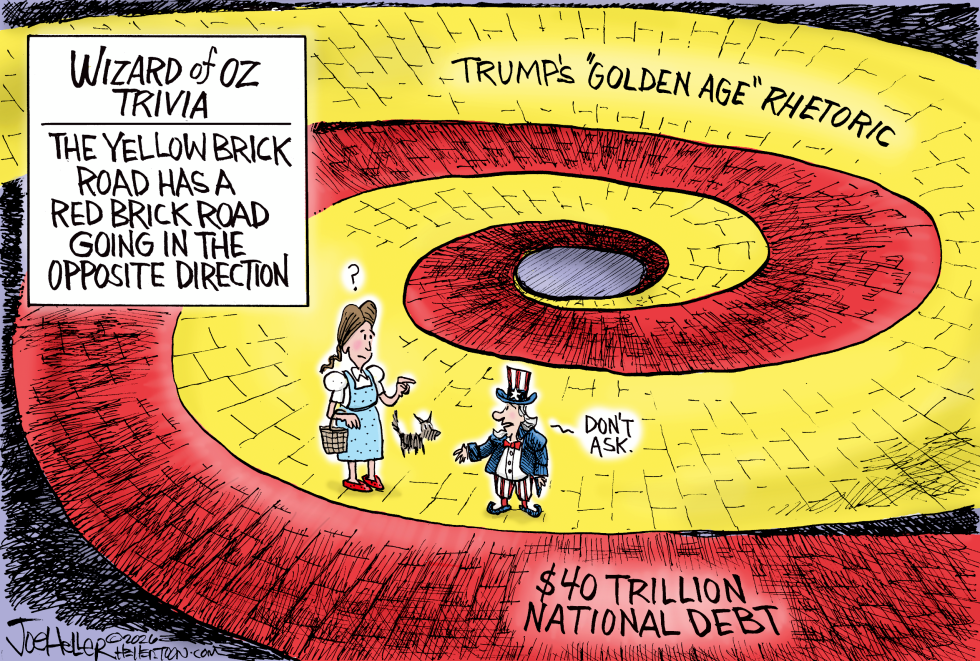
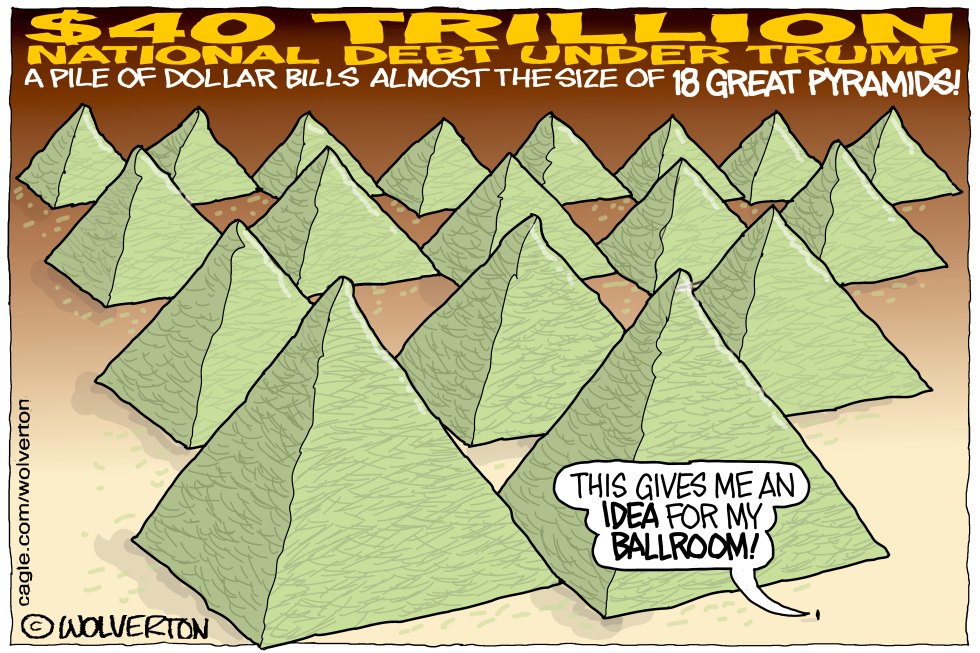
National debt has reached forty trillion dollars amid ongoing debate over fiscal policy. The administration promotes a golden age vision while critics highlight unsustainable borrowing. The piece argues that optimistic rhetoric masks a path leading directly into deeper financial trouble.
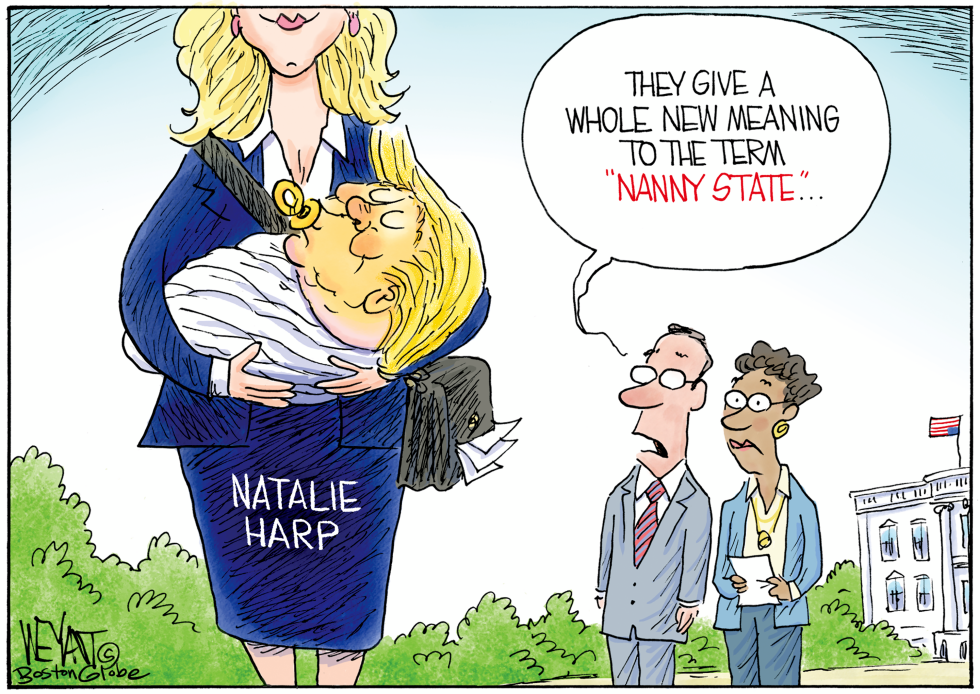
Natalie Harp, a Trump aide, appears in a Boston Globe cartoon holding an infant version of the former president. The image plays on the term nanny state as Harp carries Trump in a carrier. The piece comments on the close personal dynamic between the two figures amid ongoing political developments in 2026.
The cartoon depicts former President Donald Trump and a Canadian counterpart locked in combat, wielding rolled documents labeled tariffs and talks that smash apart a table marked trade talks. American and Canadian flags lie amid the debris while two figures representing consumers and business lie pinned underneath. Trump shouts war from a speech bubble. The image responds to ongoing US-Canada trade tensions by illustrating how aggressive tariff measures and failed negotiations harm everyday economic interests on both sides of the border.
The image presents a field of green pyramids constructed from dollar bills set against a brown and tan background. Large text at the top states the $40 trillion national debt figure under Trump and compares the pile size to 18 great pyramids. A speech bubble emerges from one pyramid in the foreground with a remark about a ballroom idea. The composition places the largest structures toward the front and smaller ones receding into the distance. The visual ties the debt total directly to the current administration period referenced in the text.
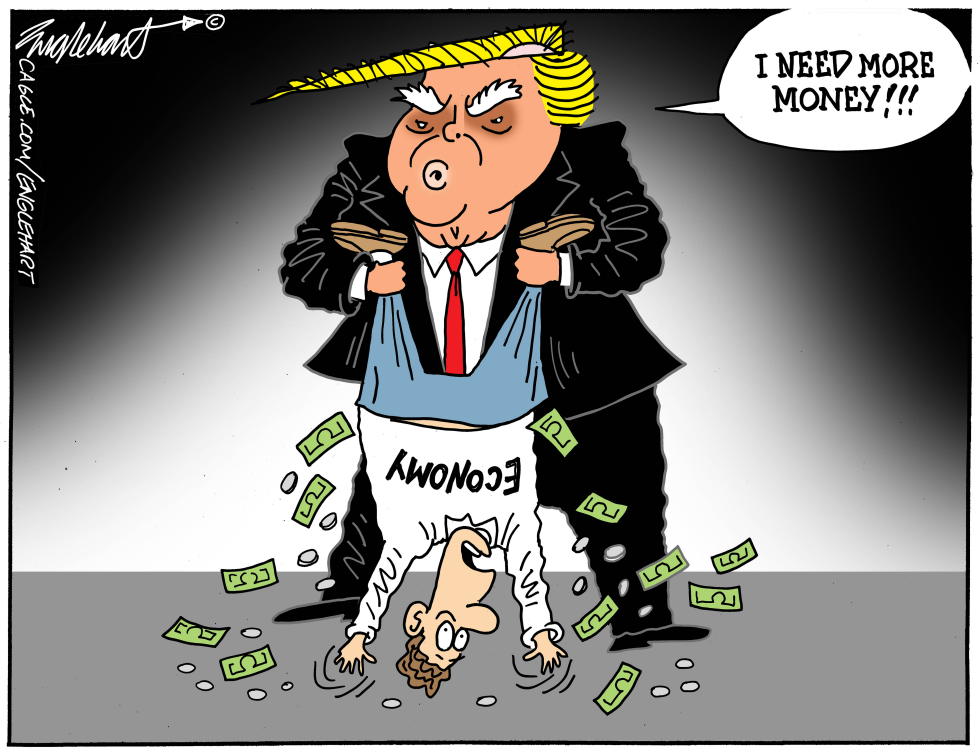
Donald Trump has pressed for additional revenue streams amid ongoing economic pressures. The move highlights tensions over fiscal demands and growth priorities. The piece portrays the action as direct extraction from economic resources.
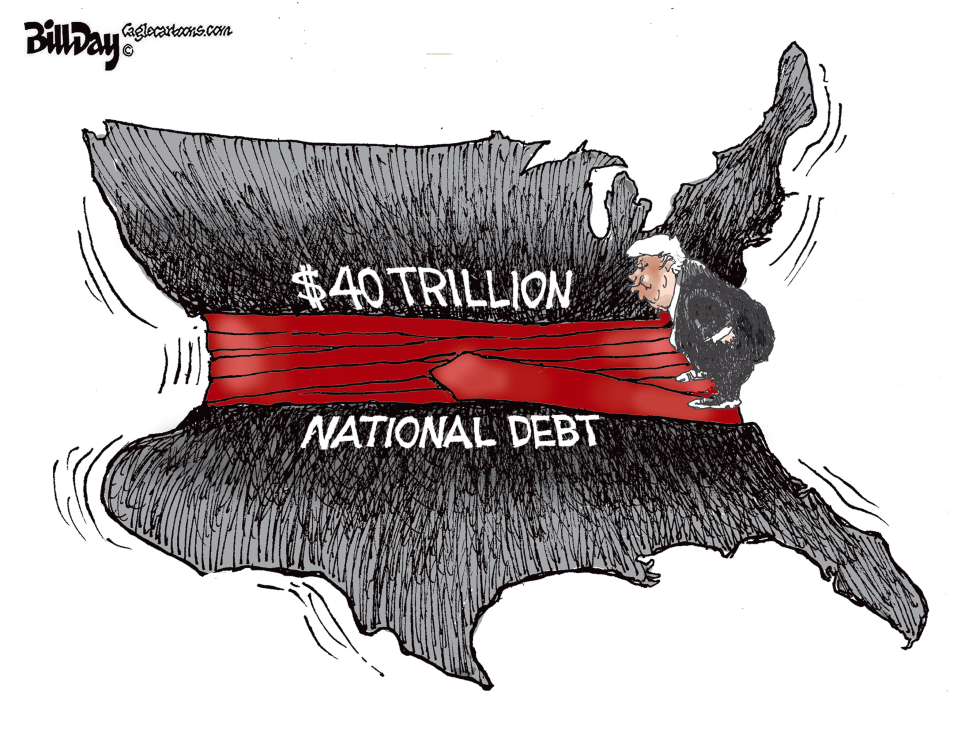
The cartoon shows Donald Trump positioned next to a red band labeled $40 trillion national debt stretched across a shaded map of the United States. The red band cuts through the map with motion lines suggesting strain. Text identifies the debt amount and the national debt label below it. The image responds to ongoing concerns about federal debt levels projected to reach that figure. It places the president in direct visual association with the fiscal challenge.
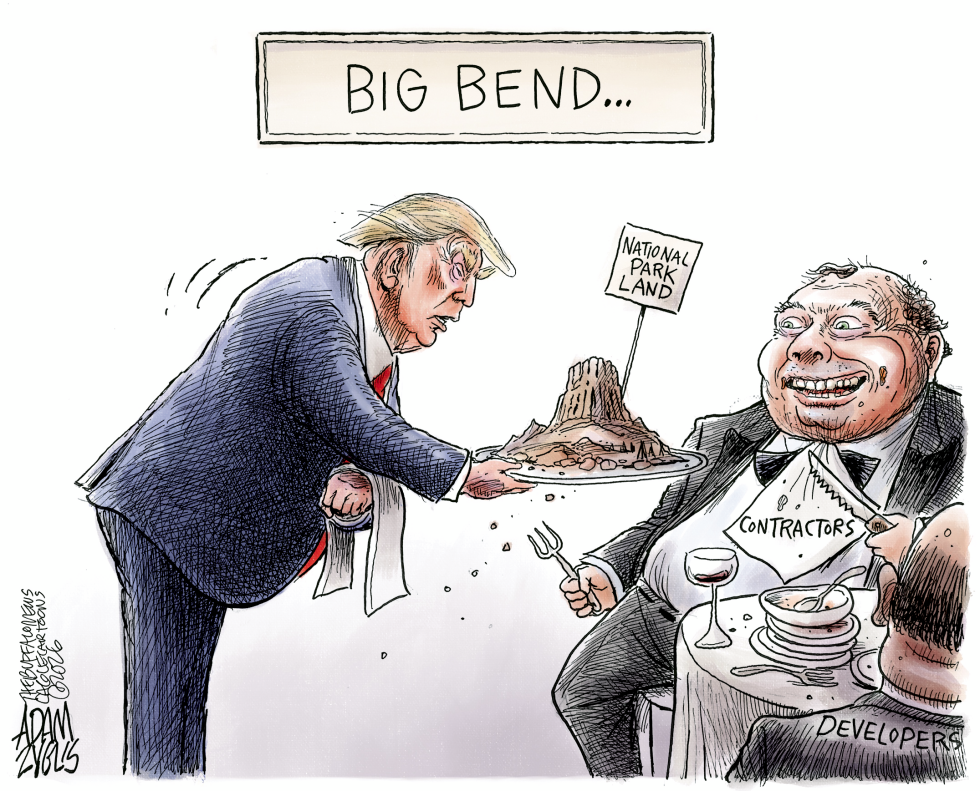
The cartoon shows Donald Trump acting as a waiter and presenting a plate topped with a mountain labeled national park land to a seated contractor. A sign reading Big Bend appears overhead. The image responds to ongoing debates over development proposals affecting protected federal lands including Big Bend National Park.
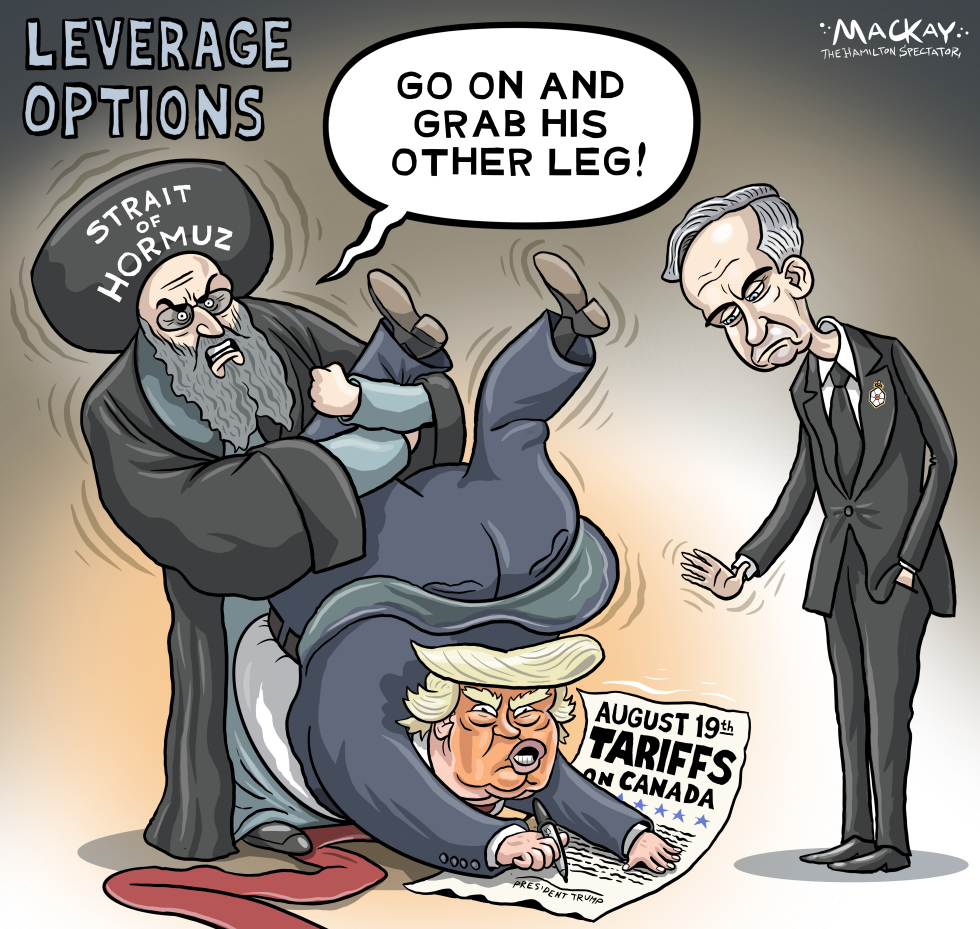
On August 12 2026 President Trump prepares to impose tariffs on Canada amid tensions involving the Strait of Hormuz. The move draws immediate pushback from Iran-linked actors seeking leverage. The piece argues that tariff policy invites risky entanglements that weaken U.S. position.