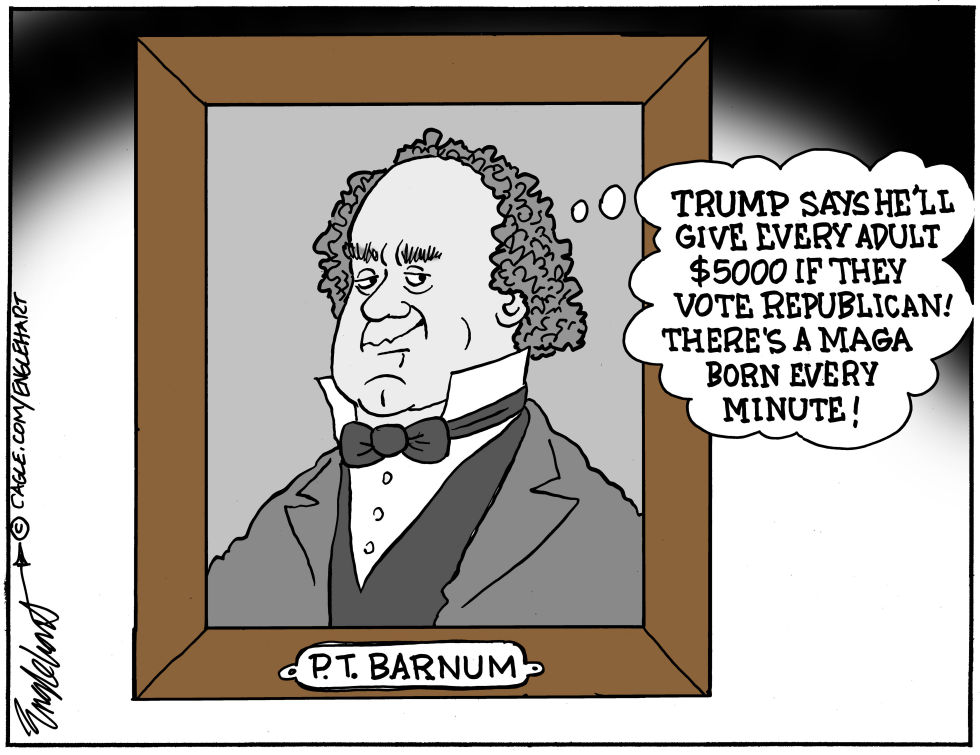
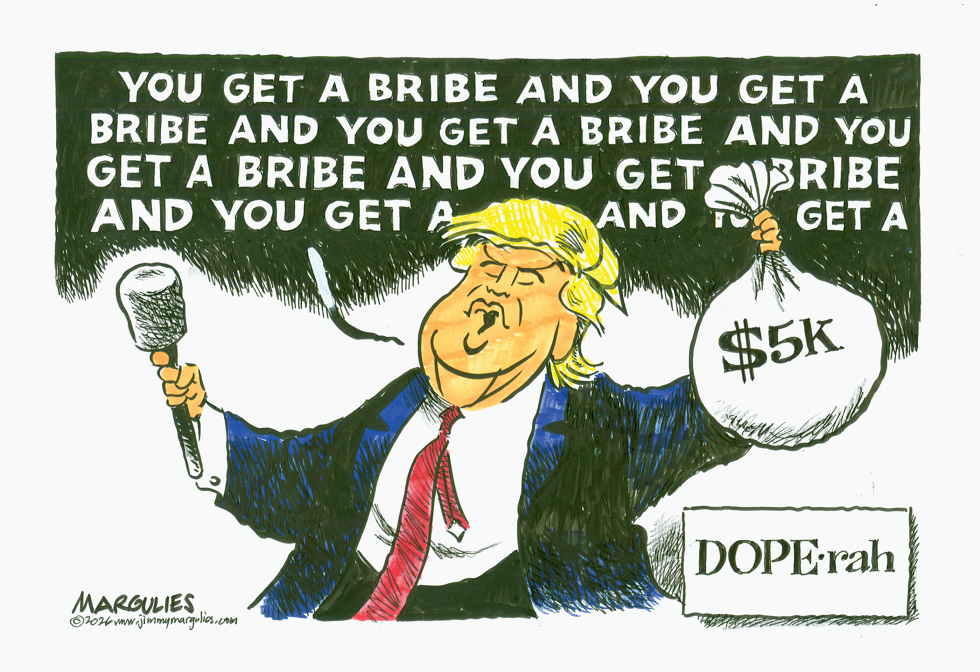
Donald Trump proposed giving $5000 to every adult who votes Republican ahead of the 2026 midterms. The offer drew immediate comparisons to historical figures known for exploiting public gullibility. The cartoon uses the P.T. Barnum portrait and the altered sucker line to argue that the proposal treats voters as marks rather than citizens. It frames the cash pledge as a transparent attempt to buy support through direct payment. The piece suggests the tactic reveals low regard for voter intelligence and reduces elections to transactional exchanges.
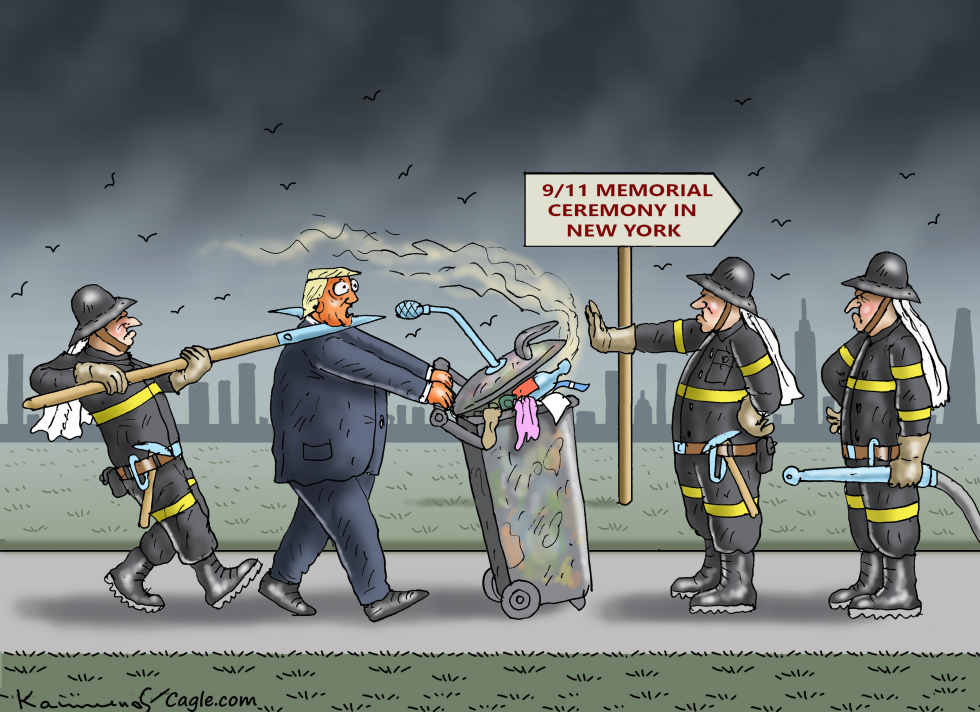
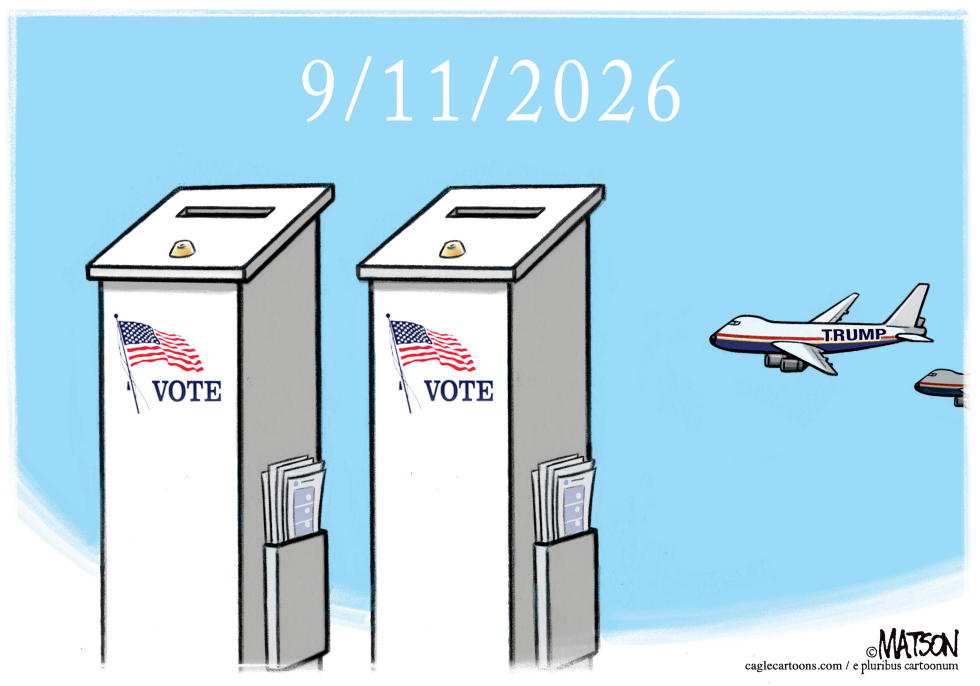
On the 2026 anniversary of the September 11 attacks, New York firefighters prevented Donald Trump from delivering remarks at the memorial ceremony in New York. The action reflects ongoing tensions between the former president and first responders over his past comments and conduct. The cartoon portrays the rejection as decisive and final, underscoring that Trump's presence remains unwelcome at the site.
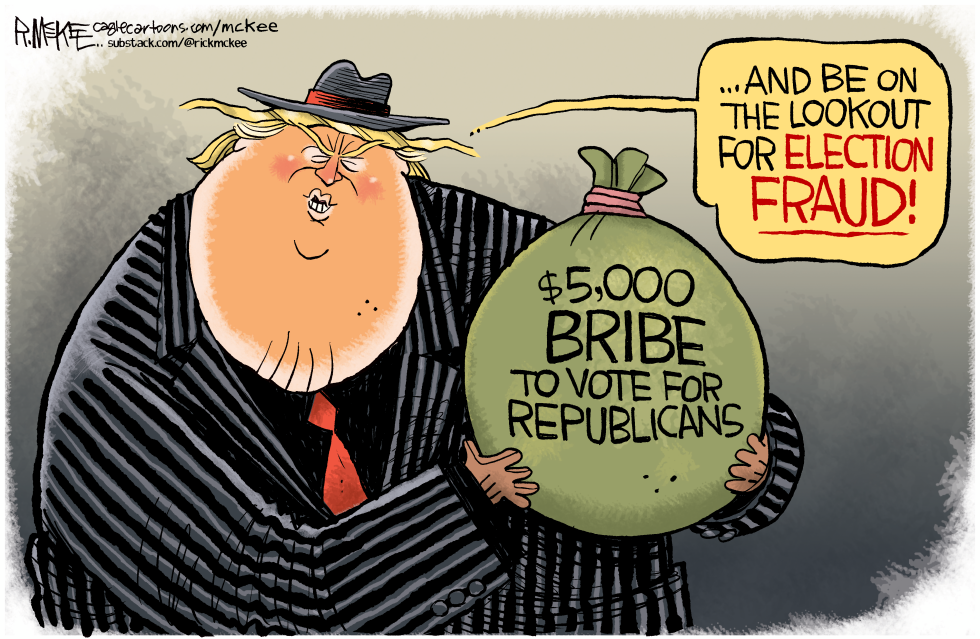
Donald Trump has repeatedly claimed that elections are rigged against Republicans and urged vigilance against fraud. The cartoon responds to this pattern by depicting him offering cash incentives to secure votes for his party. It underscores the perceived double standard in ongoing debates over voting access and integrity ahead of the 2026 midterms. The piece takes the position that such rhetoric from Trump undermines genuine concerns about election security.
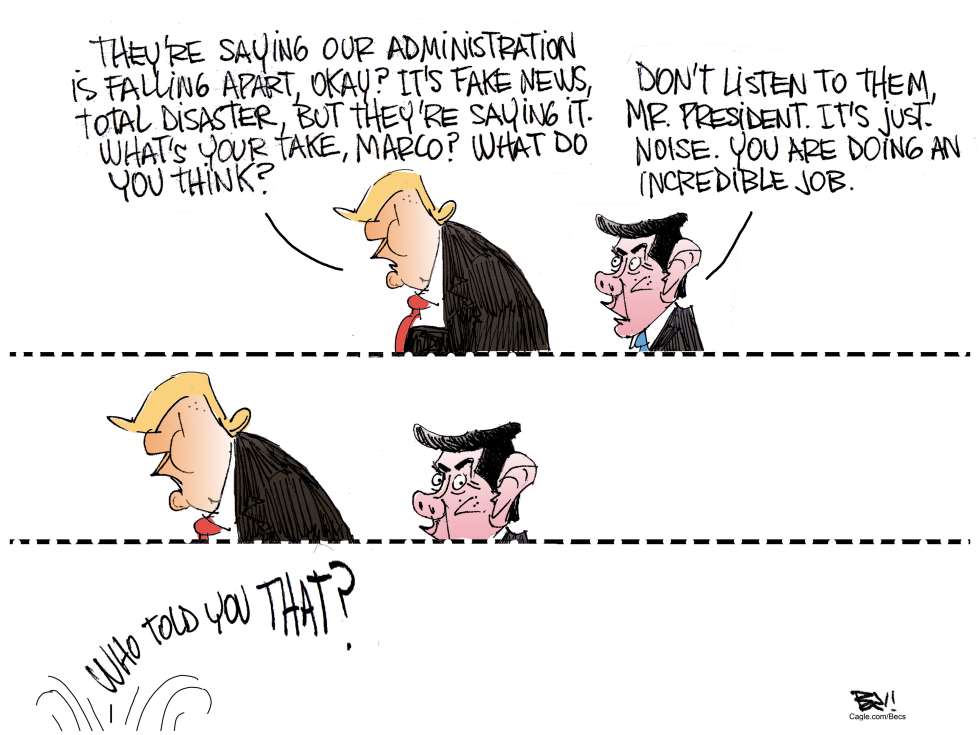
President Trump asked Senator Marco Rubio for his assessment of reports that the administration is in disarray, labeling them fake news. Rubio dismissed the reports as noise and praised Trump's performance. Trump responded by questioning who had told Rubio that assessment. The exchange highlights tensions over loyalty and information flow inside the administration. The cartoon portrays Rubio's positive reply as triggering suspicion rather than reassurance.
Donald Trump has faced renewed scrutiny over allegations of using official authority to distribute favors and payments. The pattern involves judicial and executive actions that critics say cross into bribery. Such conduct raises questions about accountability in high office. The cartoon frames the behavior as a deliberate, widespread distribution of bribes to allies and supporters. It argues that this approach undermines public trust and normalizes corruption at the highest levels.
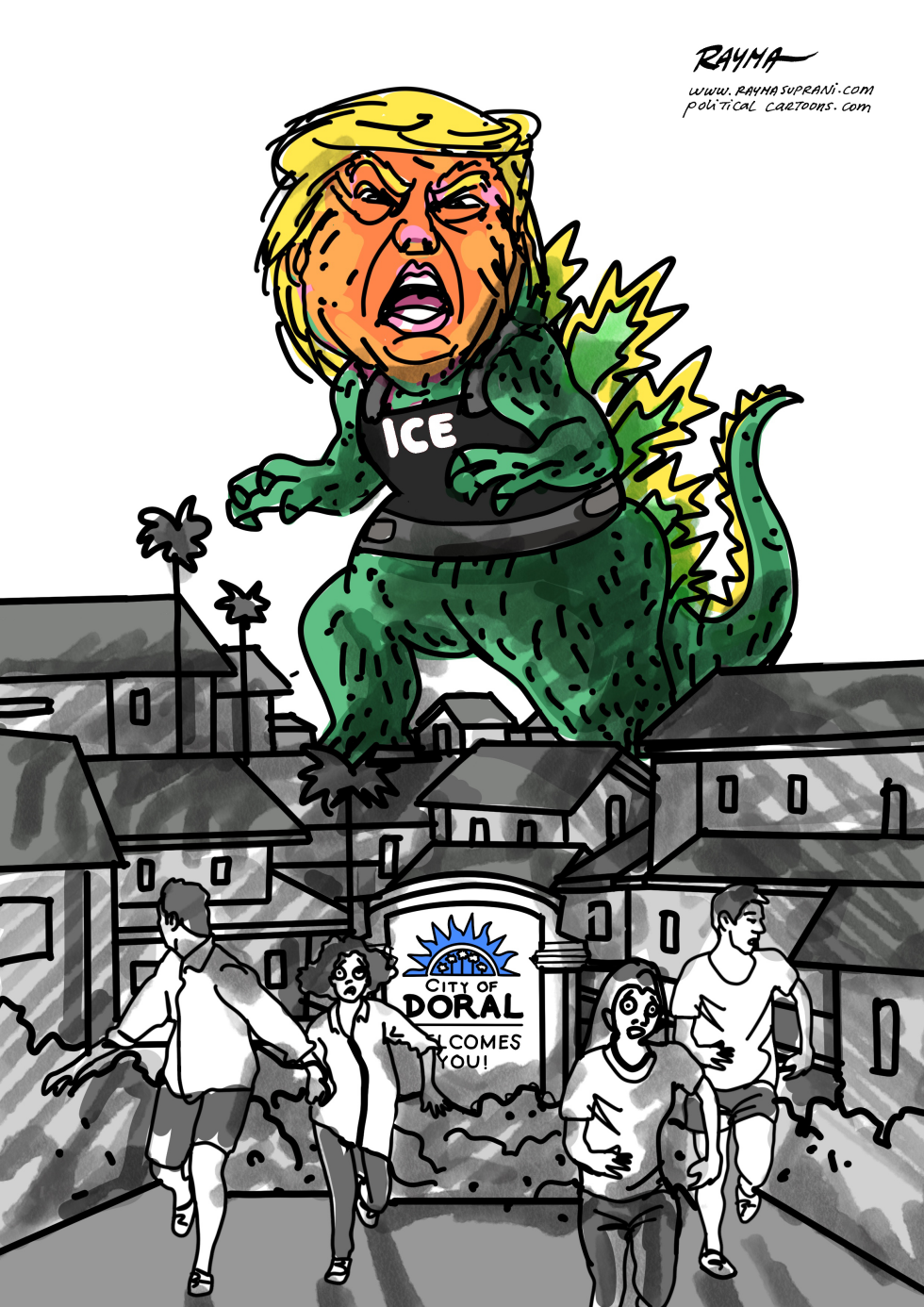
The image shows a large figure resembling Donald Trump dressed as an ICE agent towering over the city of Doral. People run from the scene near a welcome sign. The work addresses immigration enforcement policies active in Florida during 2026.
Donald Trump has signaled plans to impose new voting restrictions before the 2026 midterm elections. The moves come as Republicans seek advantages in key races. Critics argue the changes would suppress turnout among Democratic-leaning voters. Supporters claim the steps address fraud concerns. The cartoon frames the timing as an attack on voting access itself.
Donald Trump has publicly offered $5000 payments to Americans who follow his directives, framing the incentive as a direct reward for alignment. The pledge has drawn immediate questions from his own base about the status of related DOGE checks previously promised. The move underscores ongoing efforts to maintain supporter enthusiasm through financial inducements. Critics view the tactic as an attempt to convert political loyalty into personal obedience. The cartoon highlights the transactional nature of the offer and the skepticism it has already generated among core supporters.
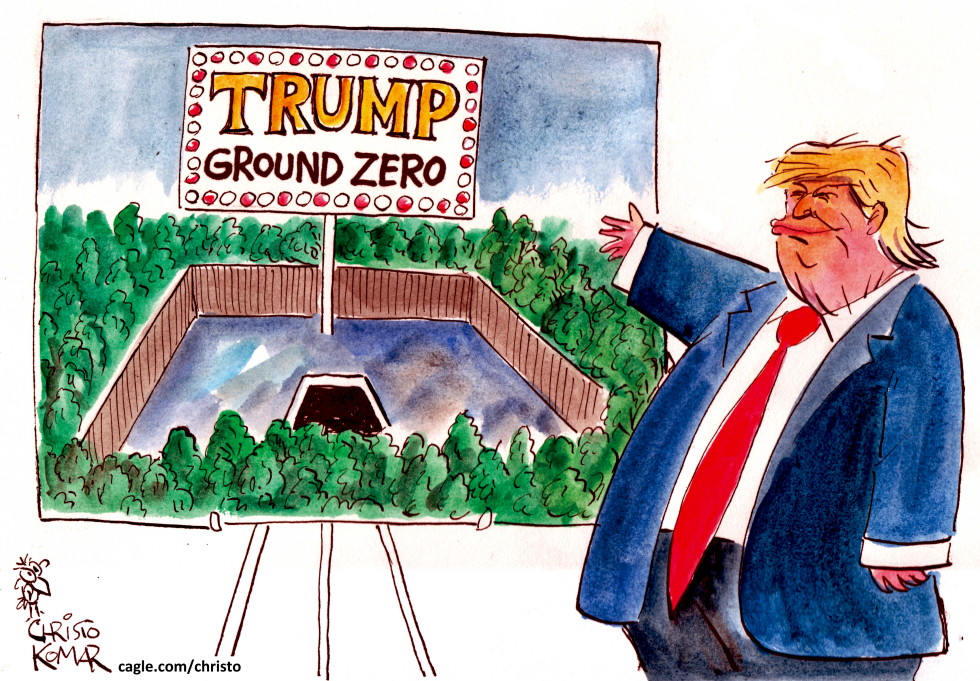
Donald Trump has floated the idea of branding the Ground Zero memorial site with his name. The proposal revives long-standing debates over commercial use of the 9/11 location. Critics argue the move prioritizes personal promotion over solemn remembrance. Supporters see it as consistent with Trump's business approach to public projects. The cartoon depicts the former president enthusiastically presenting the branded sign. It highlights concerns that such branding trivializes a national tragedy for individual gain.
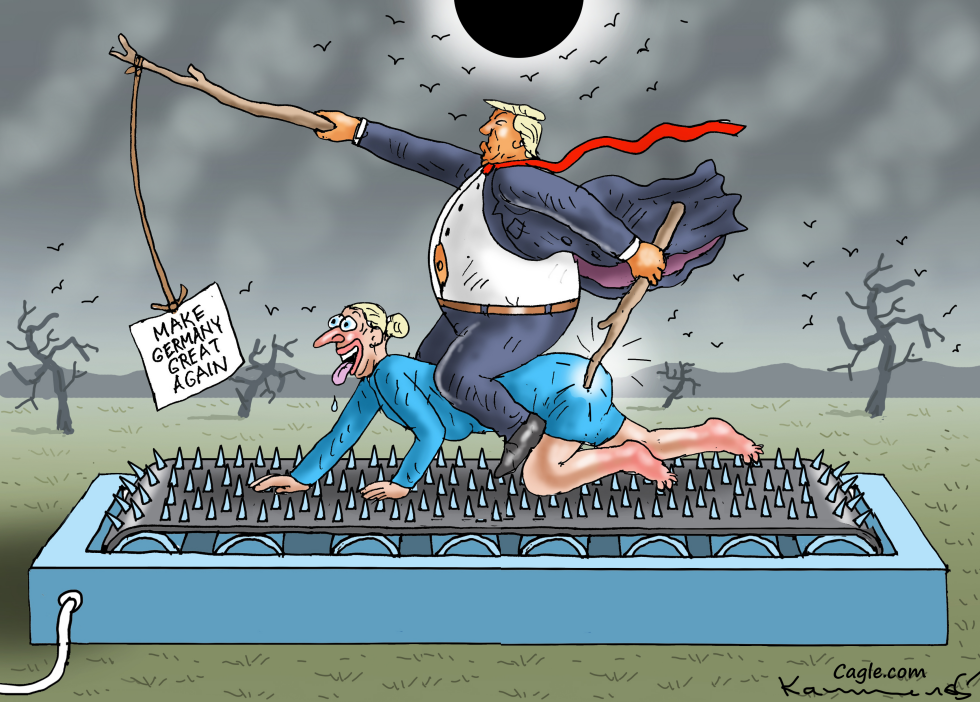
Donald Trump promotes a revival slogan aimed at Germany while Angela Merkel faces the consequences. The effort highlights ongoing tensions in transatlantic relations and questions about external influence on European domestic policy. The piece argues that such interventions impose unnecessary hardship without delivering benefits.
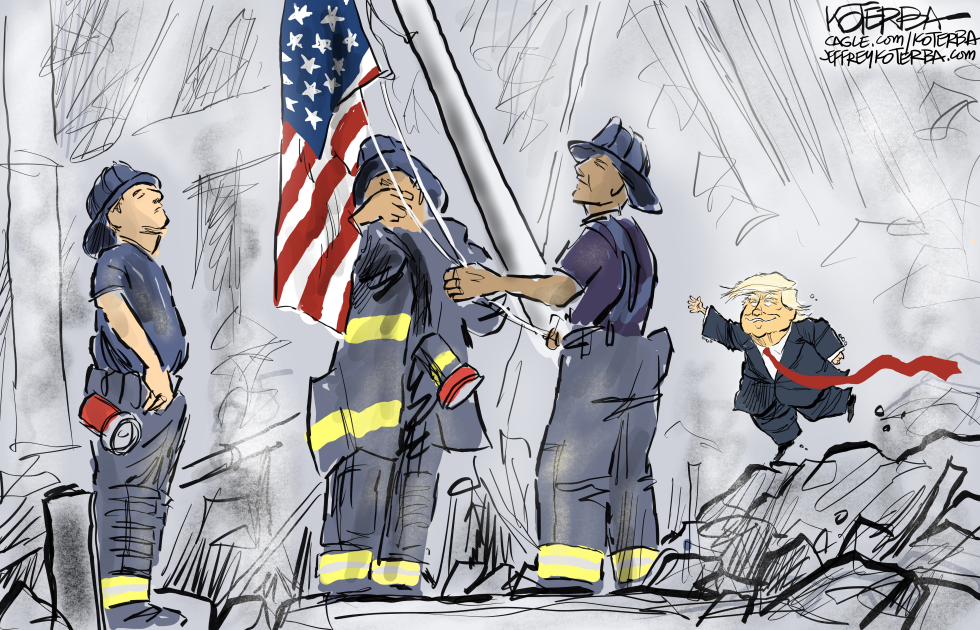
On the eve of the 2026 September 11 anniversary, a cartoon depicts Donald Trump rushing into the iconic firefighter flag-raising scene amid rubble. The image critiques Trump's repeated efforts to associate himself with the 9/11 response despite his limited direct role at the time. The editorial stance highlights perceived opportunism in political figures revisiting national tragedies for personal gain.
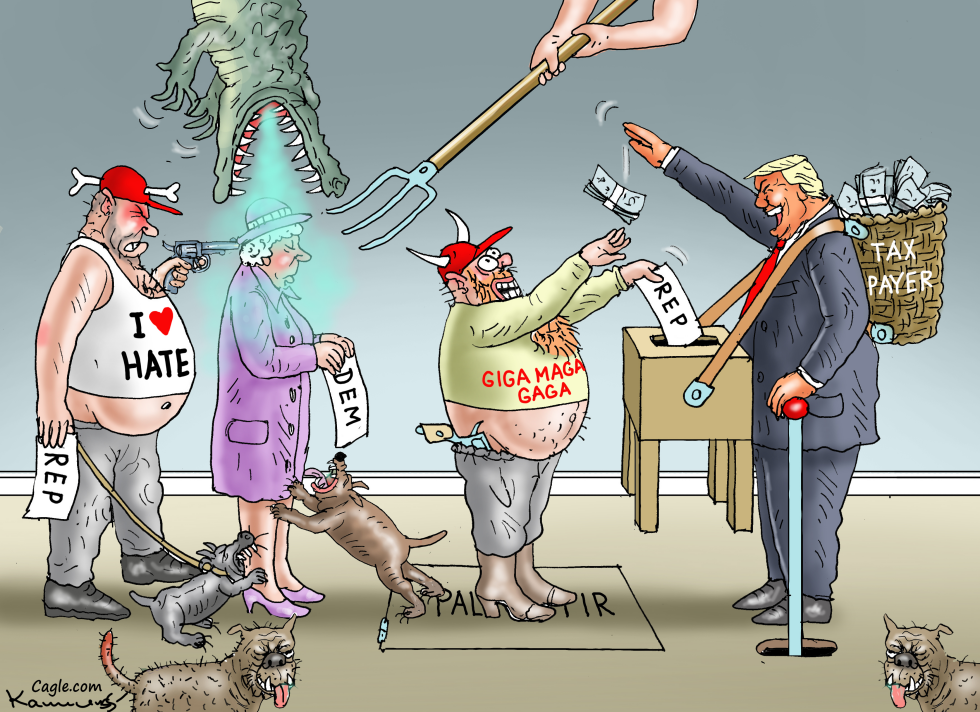
As the 2026 midterm elections approach, former President Trump has positioned himself as a central force in Republican campaigns, directing resources and mobilizing supporters. The cartoon highlights the use of taxpayer money in these efforts and the intense partisan divide, with Democrats portrayed as under attack. It takes the position that such involvement risks undermining fair electoral processes.
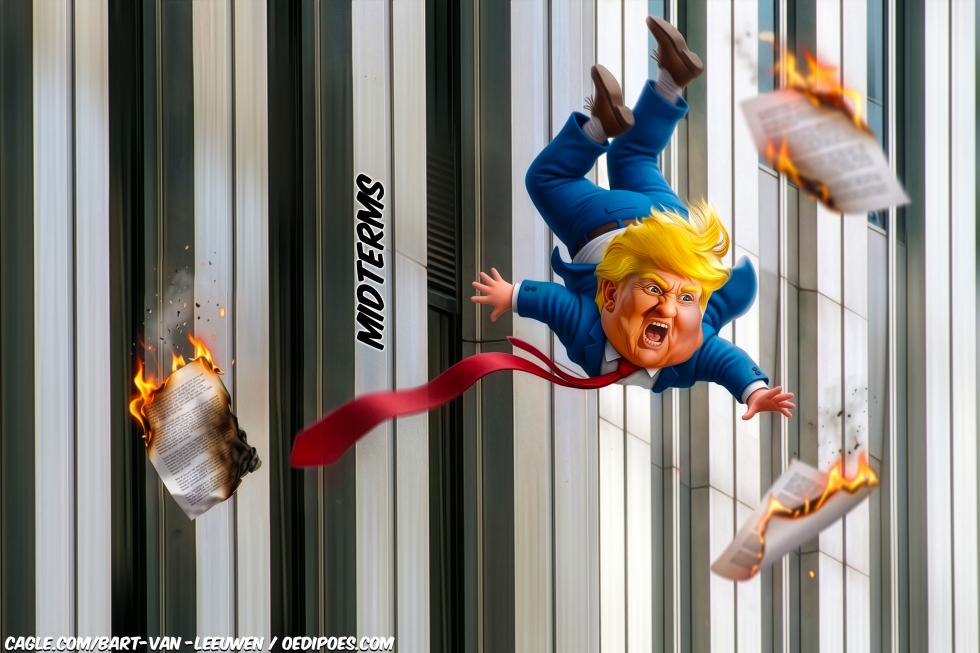
The cartoon shows a caricature of Donald Trump tumbling from a tall building while clutching at burning documents. Vertical lettering spells out midterms along the facade. The scene captures the editorial view of Trump's political position weakening ahead of the 2026 elections. Burning papers suggest damaging records or failed policies catching fire. The falling figure with an open mouth conveys alarm and loss of control. Publication occurred on September 9, 2026, during active midterm campaigning.
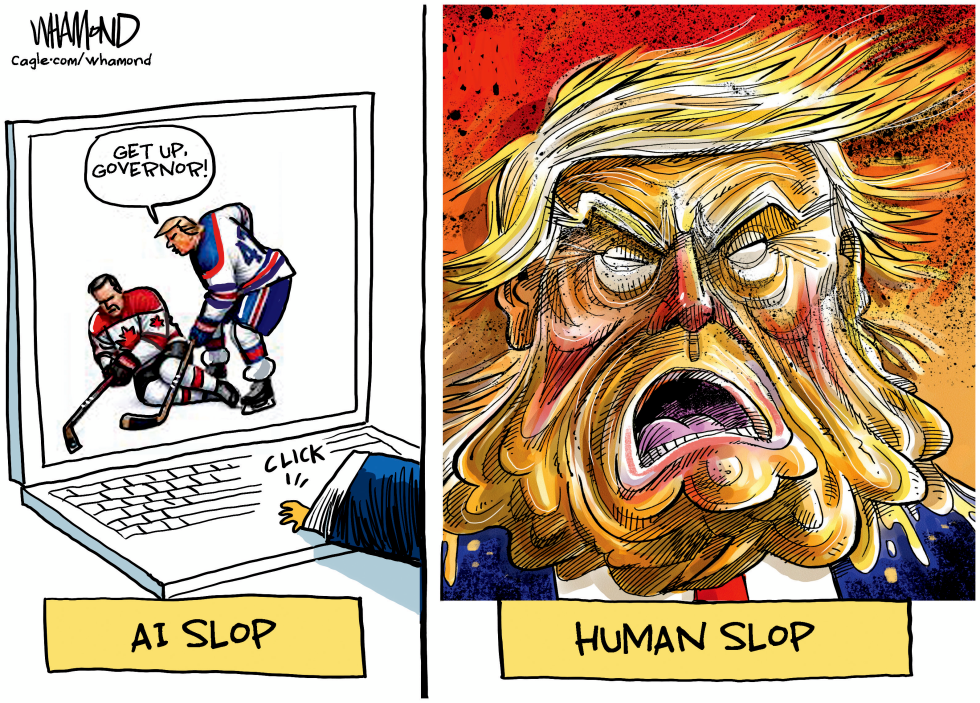
AI tools produce flawed political images while human artists create equally flawed ones. The piece highlights declining quality in both digital generation and traditional caricature of figures like Donald Trump. It argues neither approach delivers credible or effective visual commentary.
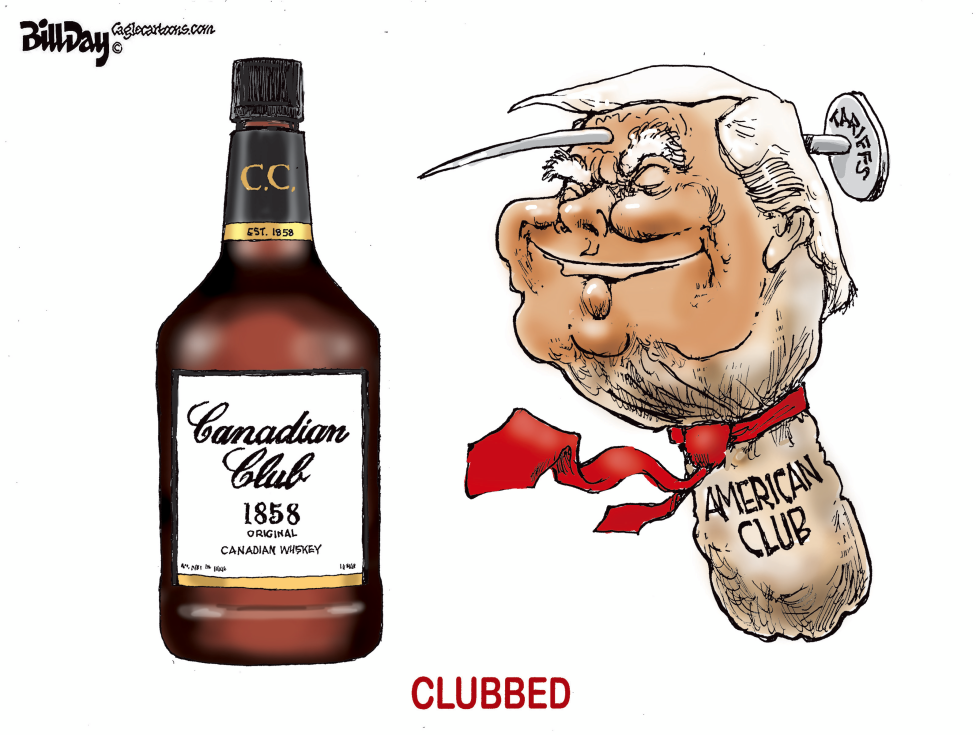
On September 9, 2026, the cartoon responds to ongoing US-Canada trade friction under the second Trump administration. Trump has pursued aggressive tariff policies against Canadian imports, prompting Ottawa to consider reciprocal measures. The piece uses the Canadian Club whiskey brand to illustrate how such policies rebound on American interests. It argues that Trump's approach harms US businesses and consumers rather than strengthening them.