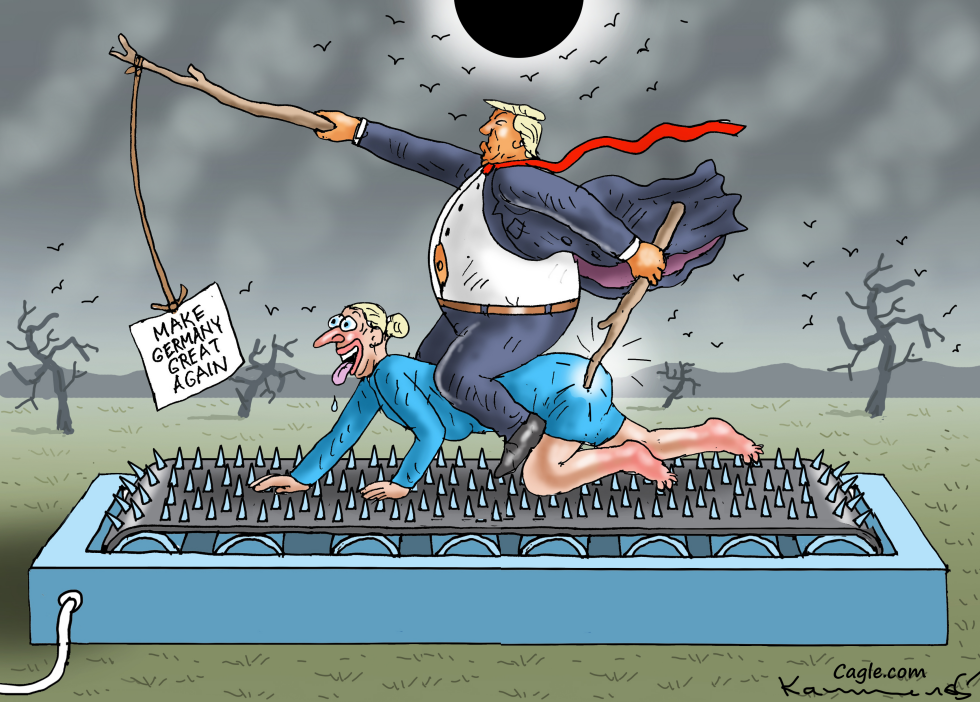
Donald Trump promotes a revival slogan aimed at Germany while Angela Merkel faces the consequences. The effort highlights ongoing tensions in transatlantic relations and questions about external influence on European domestic policy. The piece argues that such interventions impose unnecessary hardship without delivering benefits.
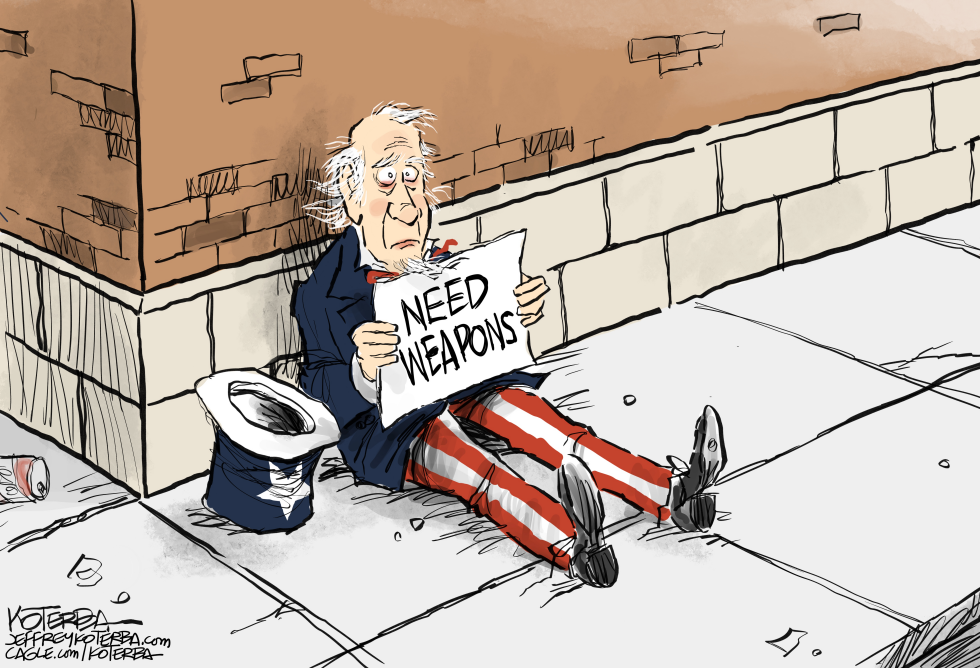
Uncle Sam appears as a disheveled figure on a sidewalk holding a sign requesting weapons. The image captures an ongoing national debate over military resources and international commitments. The editorial stance highlights perceived weakness in current arms policy and funding priorities.
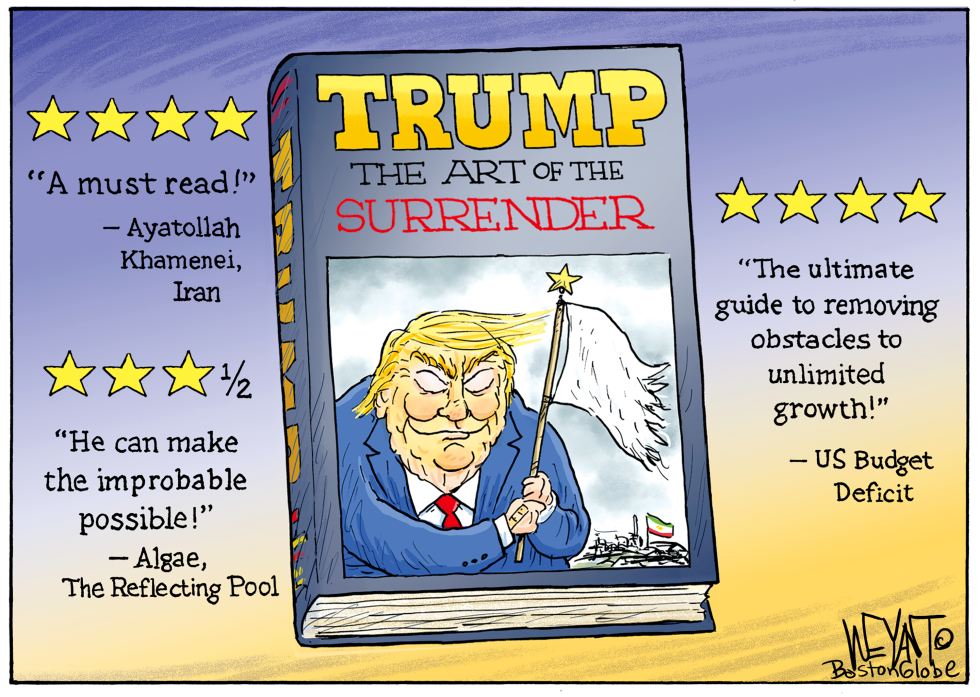
The June 28 2026 cartoon by Christopher Weyant shows a book titled Trump The Art of the Surrender. Donald Trump appears on the cover holding a white flag. Background includes an Iranian flag. Endorsements from Ayatollah Khamenei and the US Budget Deficit appear on either side with star ratings. The image responds to ongoing US Iran tensions and fiscal debates active in late June 2026.
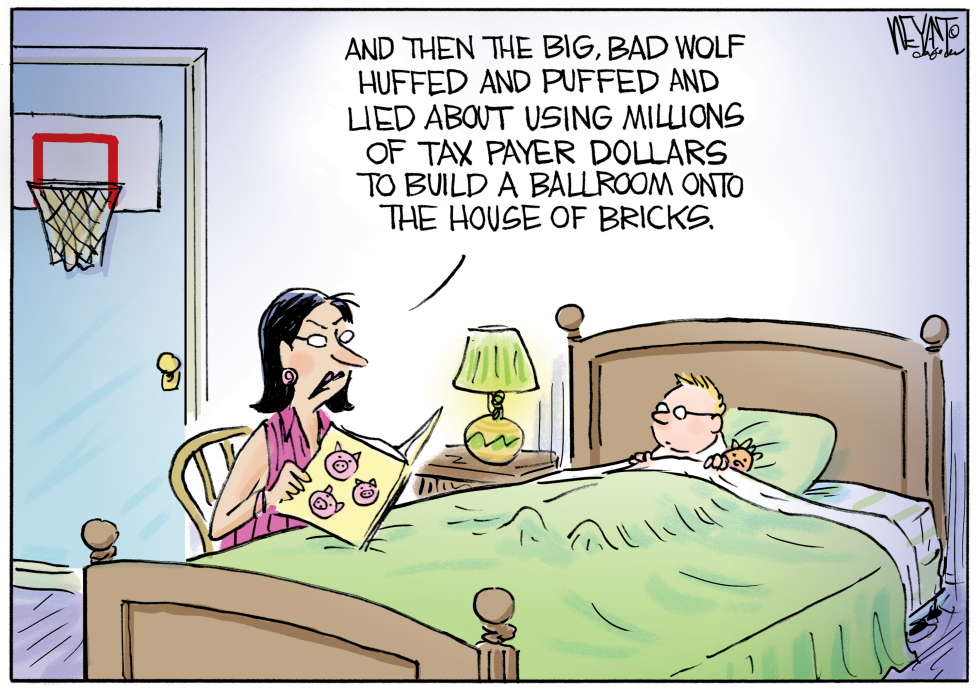
A mother reads a bedtime story to her child, altering the three little pigs tale to accuse the big bad wolf of lying about spending millions of taxpayer dollars to add a ballroom to the house of bricks. The scene unfolds in a child's bedroom with a basketball hoop visible through the door and a green lamp on the nightstand. This image responds to recent controversies over public fund misuse for private or extravagant projects by political figures.
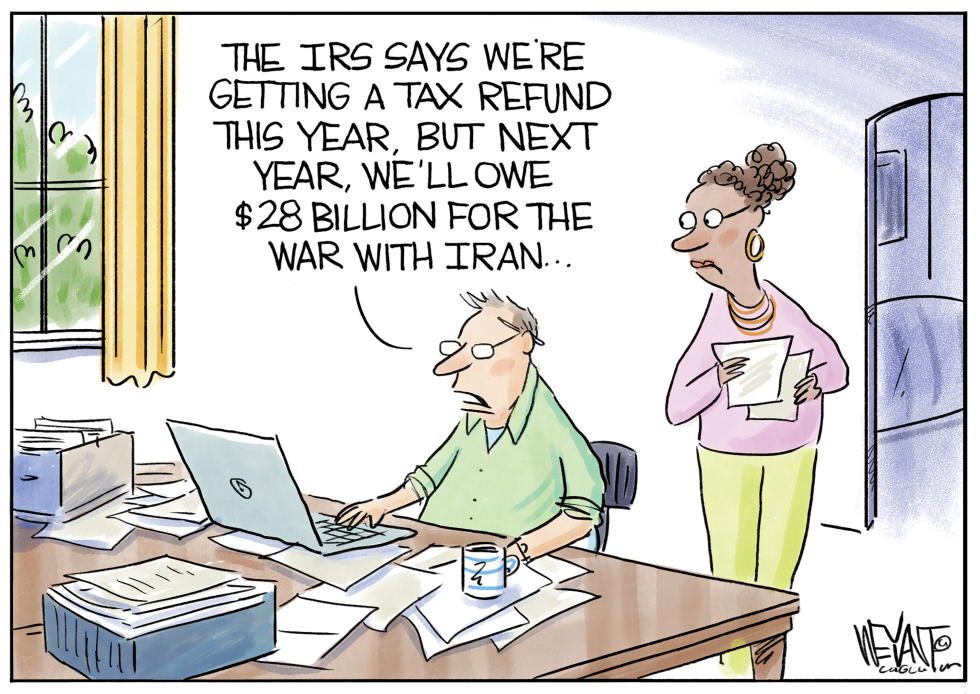
Dive into this biting political cartoon tax refund piece where a woman, holding papers, informs a laptop-working man about their IRS windfall this year, only to drop the bomb of owing $28 billion next for the war with Iran. The satirical cartoon Iran war vibe captures the absurdity of US taxes funding wars, with cluttered desks and exasperated expressions underscoring the humorous take on federal spending. It's a classic taxpayer burden Iran conflict jab, poking fun at government spending satire while illustrating the disconnect between personal finances and massive military expenses. Through cartoon about military expenses, it cleverly critiques fiscal policy in an office setting, making the war with Iran taxpayer joke both relatable and irreverently insightful for viewers pondering editorial cartoon fiscal policy.
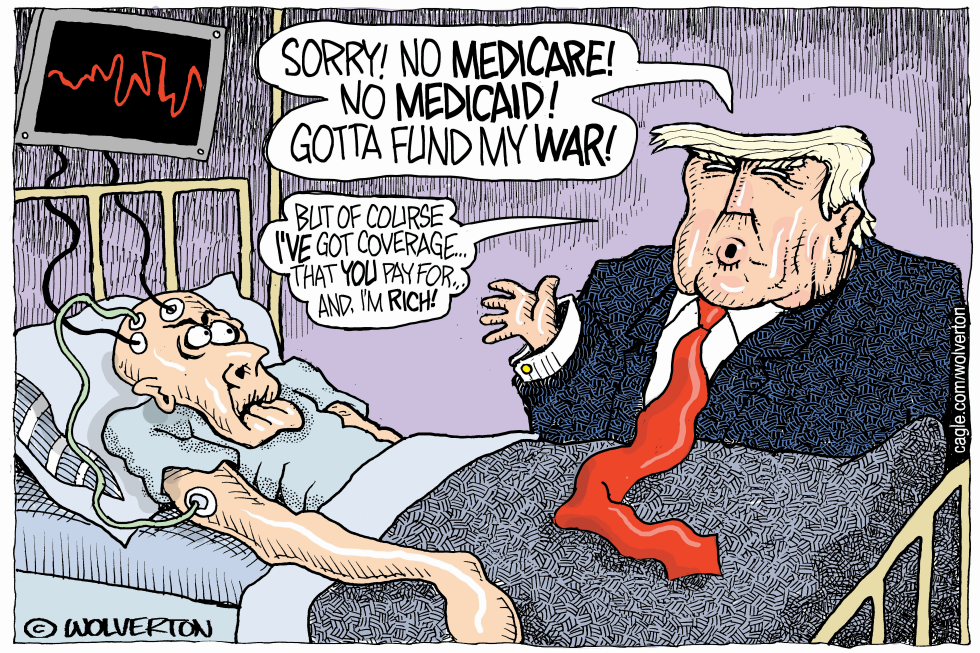
On April 3, 2026, a political cartoon depicts President Donald Trump at the bedside of a patient in a hospital room. Trump states that Medicare and Medicaid cannot be provided because funds must support an ongoing war. The patient replies that coverage exists because Trump pays for it and the patient is wealthy. The image references the Iran War and healthcare access issues.
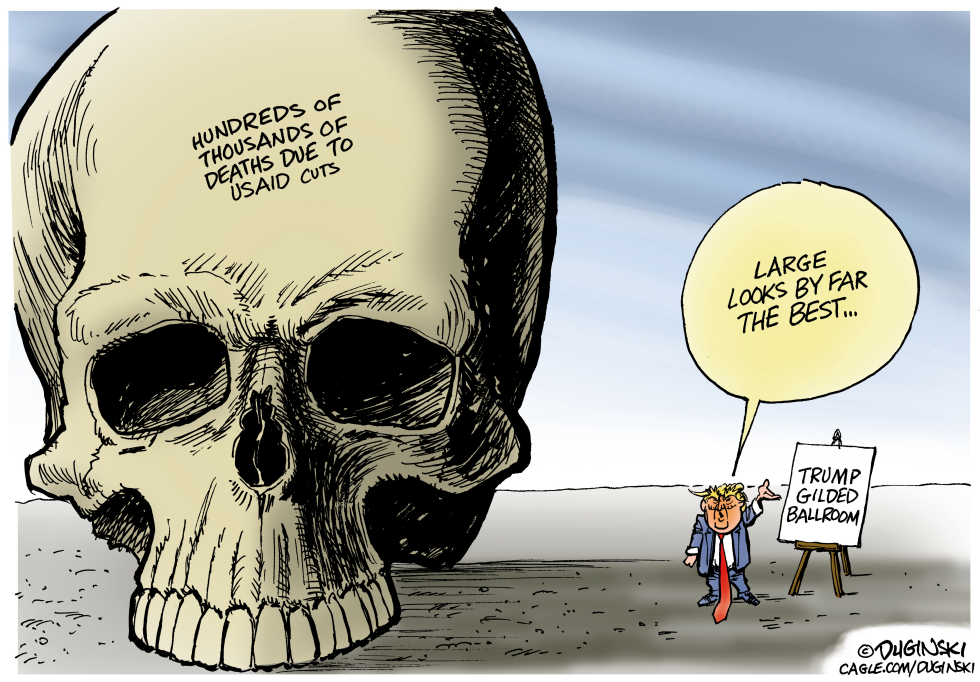
Donald Trump stands on barren ground and gestures toward a sign for a Trump gilded ballroom. A massive skull behind him carries text about hundreds of thousands of deaths due to USAID cuts. A speech bubble from the figure states large looks by far the best.
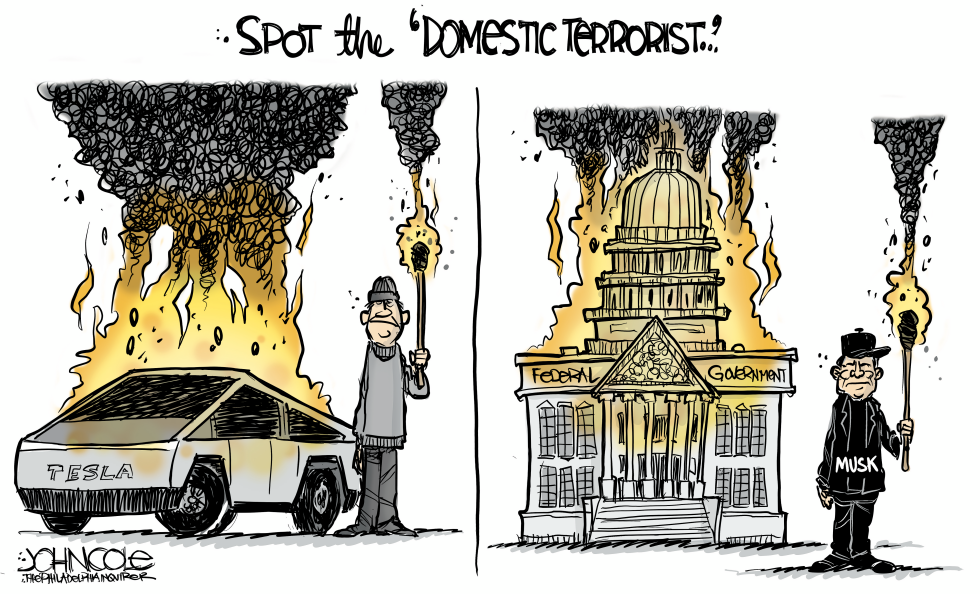
The April 23 2025 cartoon by John Cole contrasts a burning Tesla with a torch-bearing figure against a flaming Federal Government building beside Elon Musk holding a lit torch. It responds to recent DOGE efficiency drives and federal employee reductions under the Trump administration. The visual questions selective application of domestic terrorism rhetoric to critics versus implementers of spending cuts and agency restructuring.