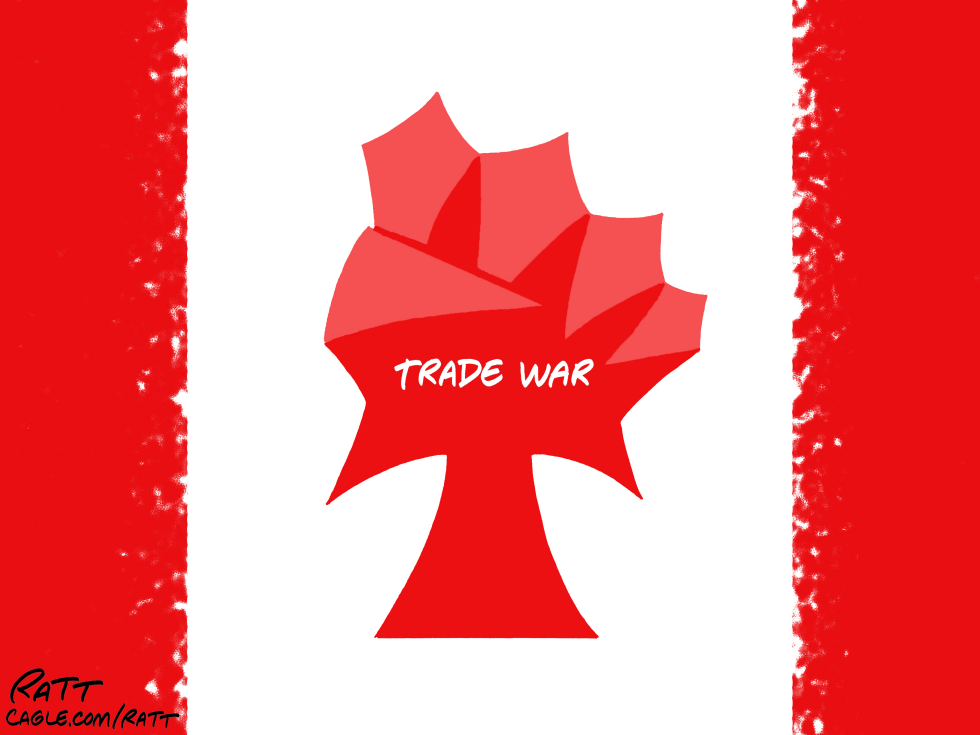
Ongoing US-Canada trade tensions escalated in 2026 with new tariff threats targeting Canadian exports. The dispute threatens key sectors including autos, lumber and agriculture, raising costs for consumers on both sides of the border. Canada has signaled plans to diversify markets and strengthen domestic industry. The cartoon frames the conflict as a direct assault on Canadian sovereignty and economic stability. It portrays the trade war as fracturing national symbols while urging a stronger northern response.
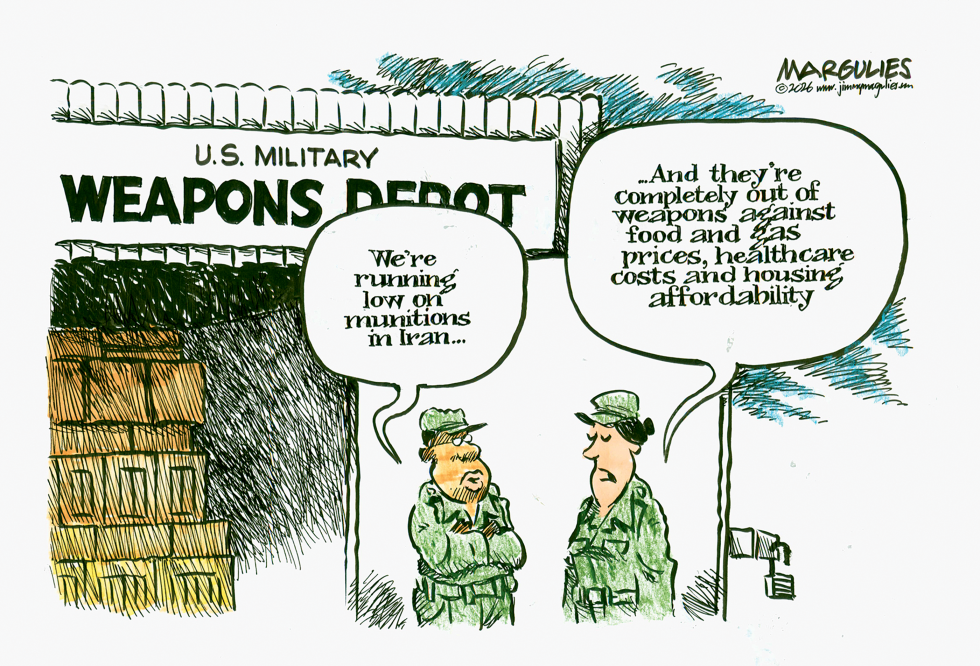
The cartoon depicts two U.S. soldiers outside a weapons depot labeled U.S. Military Weapons Depot. One soldier states the facility is running low on munitions in Iran. The second replies that domestic fronts are out of weapons against food and gas prices, healthcare costs and housing affordability. The image responds to ongoing debates over U.S. military aid commitments abroad and competing budget pressures at home as of the August 2026 publication date. It uses the depot setting and dialogue to contrast foreign military demands with economic challenges facing American households.
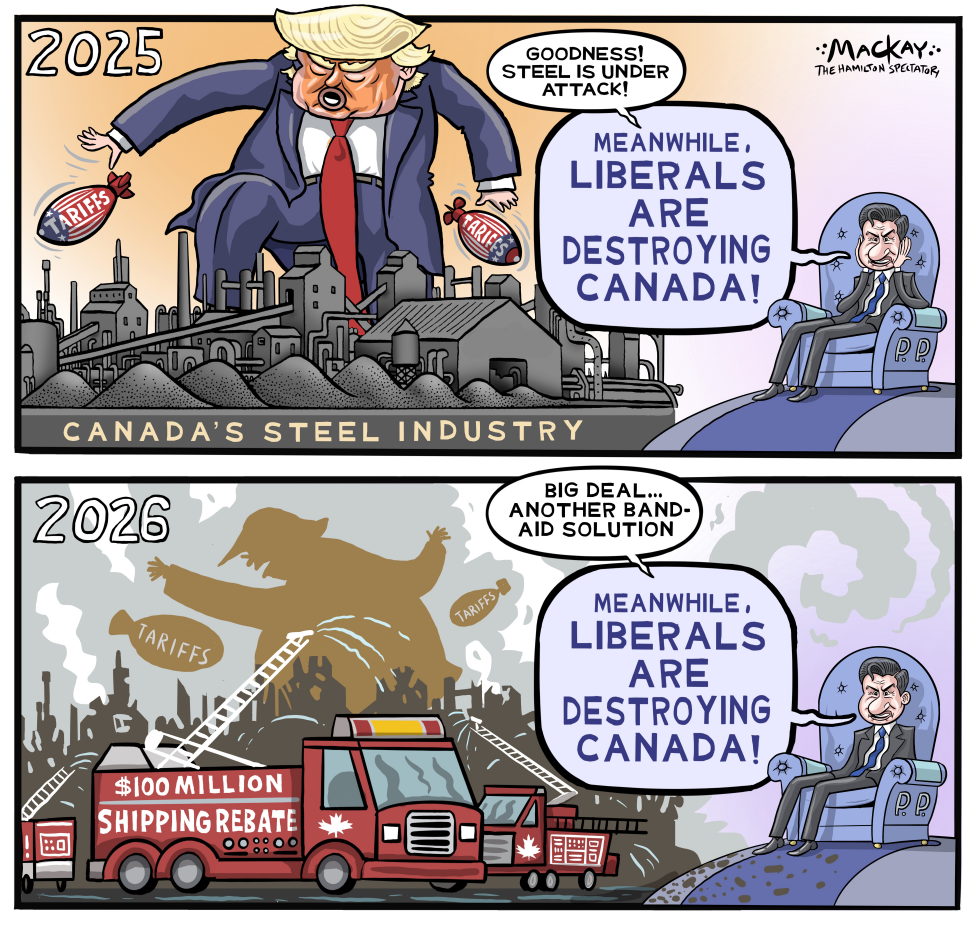
U.S. tariffs imposed on Canadian steel in 2025 triggered sharp declines in the domestic industry by 2026. The federal government responded with a $100 million shipping rebate. Conservative Leader Pierre Poilievre continued to focus attacks on the Liberal government rather than the trade shock. The cartoon argues this stance amounts to a repeated distraction from the core economic damage.
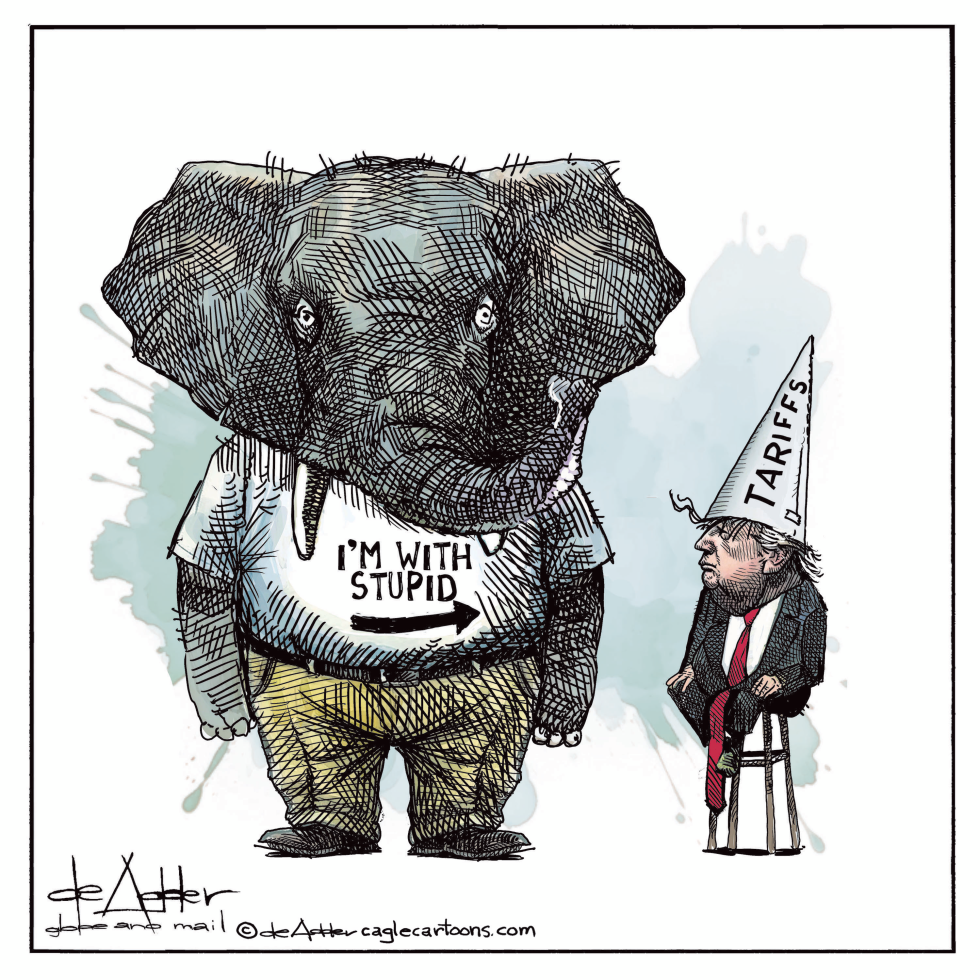
Donald Trump faces renewed scrutiny over his tariffs approach as the Republican Party grapples with the economic fallout. The policy has drawn internal party tension amid broader trade debates. The piece portrays the GOP as aligned with a flawed leader on the issue.
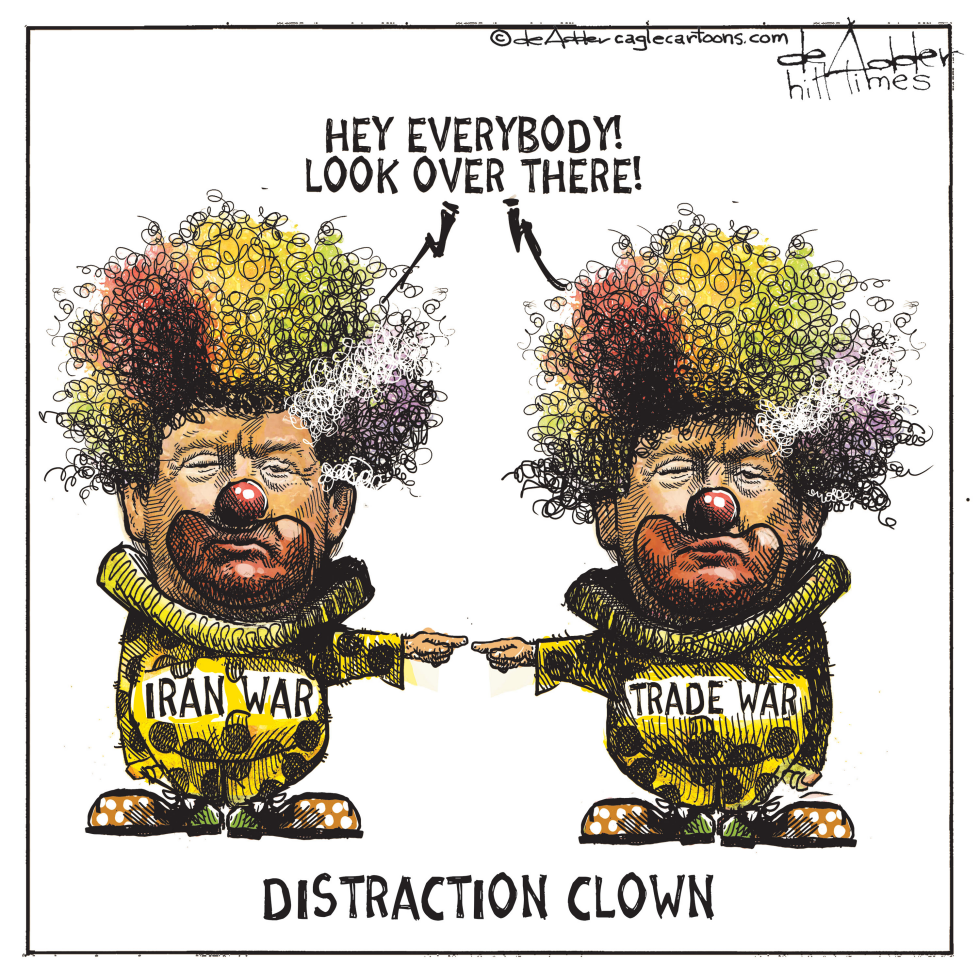
Public attention is being directed toward simultaneous Iran and trade conflicts as potential diversions from other issues. The editorial depicts the two crises as interchangeable distractions promoted by the same source. It argues that leaders are using these flashpoints to shift focus rather than address underlying problems.
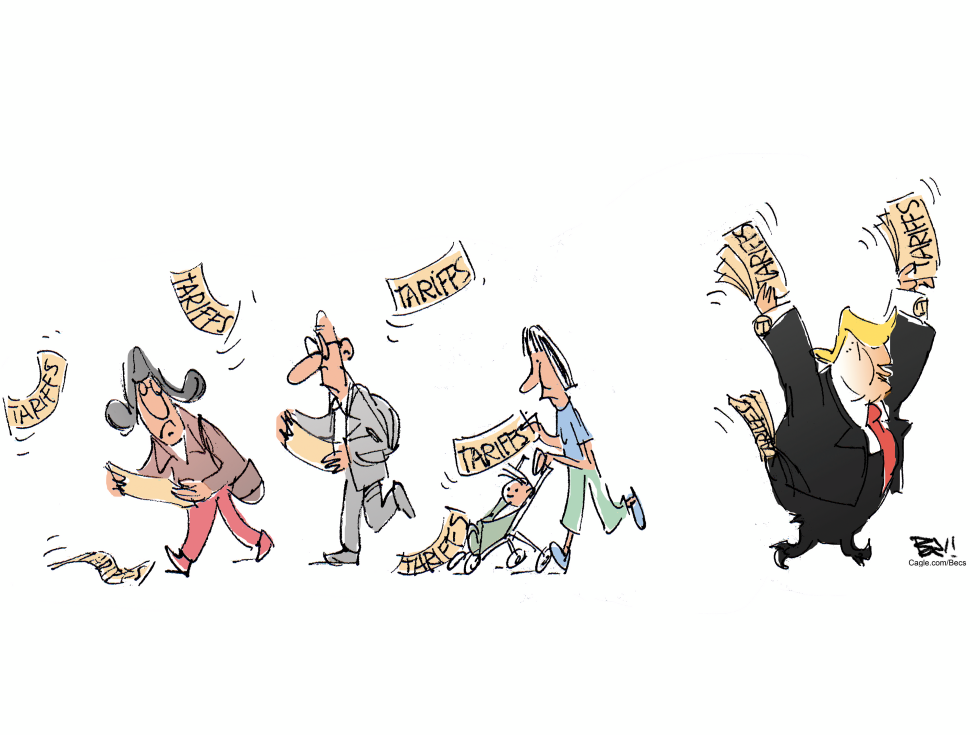
Donald Trump expanded tariffs across trading partners in mid-2026, triggering immediate market volatility and diplomatic pushback. The move raised costs for consumers and businesses reliant on imports. The piece portrays the policy as an indiscriminate barrage that disrupts daily life and global commerce.
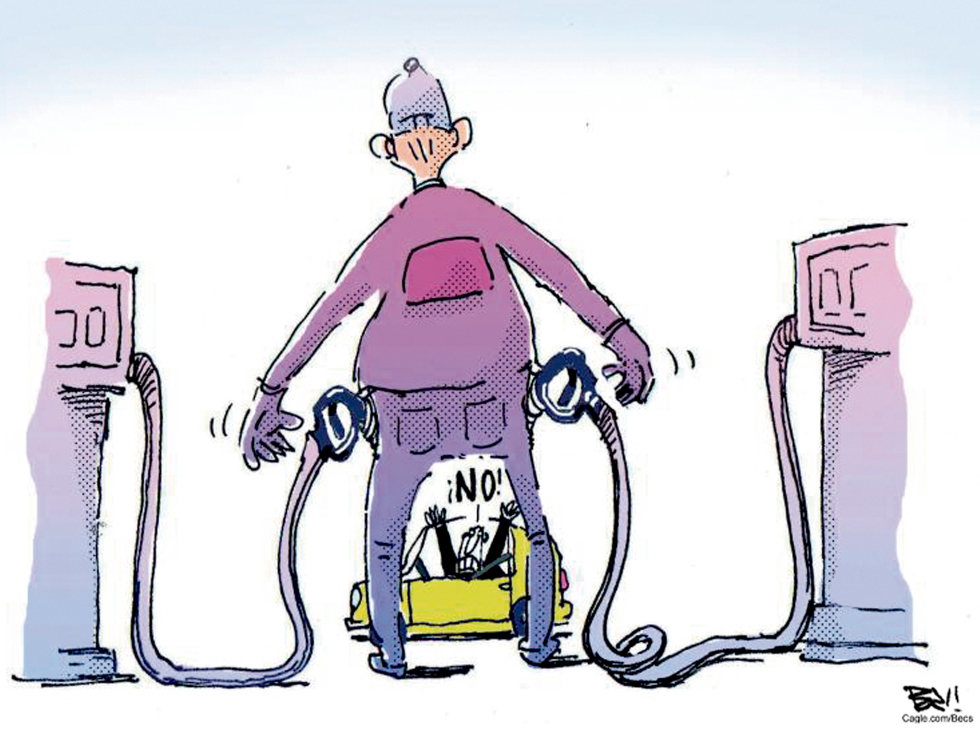
A cartoon published March 23, 2026, shows a figure at gas pumps holding two nozzles over a yellow car with a passenger shouting NO. The image responds to elevated oil prices linked to Middle East developments involving Israel and Iran during the Trump administration. Netanyahu's role in regional dynamics contributes to supply concerns and consumer costs at the pump.
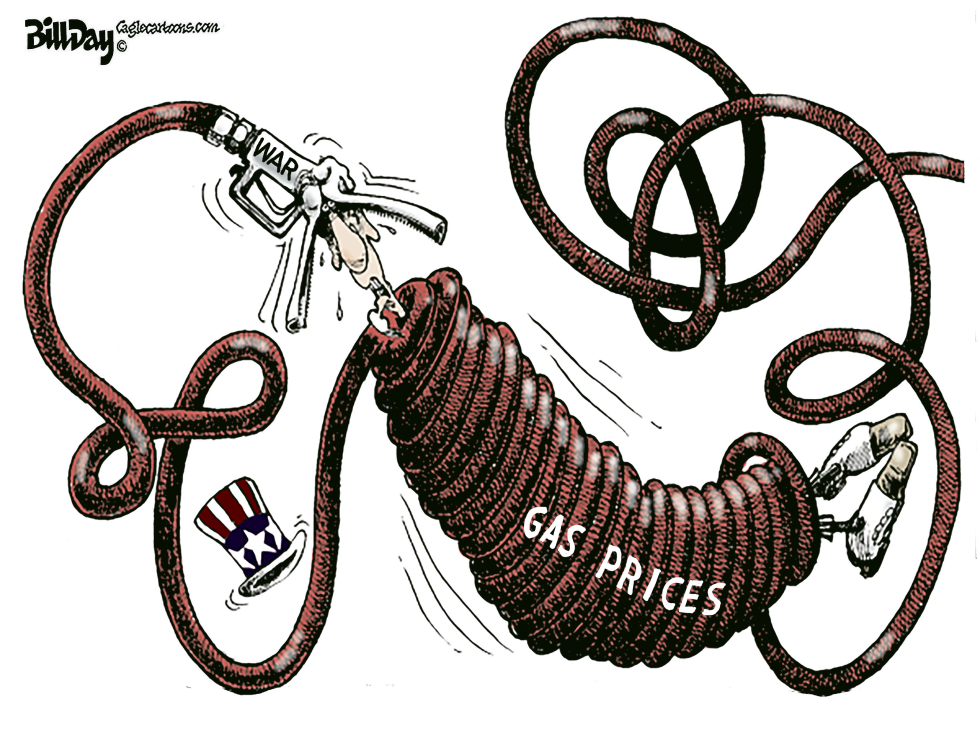
Bill Day's cartoon depicts a gas pump nozzle marked 'WAR' aggressively pumping into a twisted red hose that forms a noose-like figure labeled 'GAS PRICES,' with arms and legs dangling, suggesting strangulation. An Uncle Sam hat adorned with the American flag falls away, emphasizing national impact. This satirical image ties into tags like gas prices, Iran war, gas pump, Strait of Hormuz, and NATO, highlighting how military conflicts drive up fuel costs. The coiled hose resembles a hanged person, underscoring economic peril from oil disruptions. Day's style uses bold lines and clear labels for immediate visual punch, a staple in political cartoons that critique policy fallout.
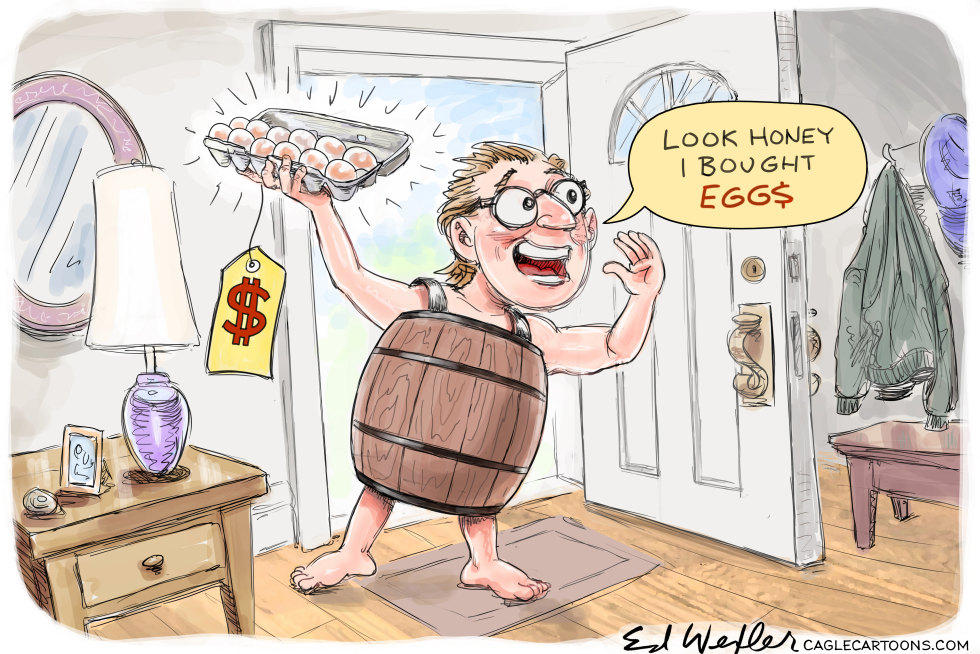
A barefoot man wearing only a wooden barrel bursts through the front door holding a carton of eggs aloft. His speech bubble reads 'LOOK HONEY I BOUGHT EGGS' with a dollar sign replacing the final letter. A large yellow price tag marked with a dollar sign hangs from a nearby lamp. The January 2023 scene highlights the sharp rise in egg prices driven by avian flu outbreaks and broader inflation affecting American households.
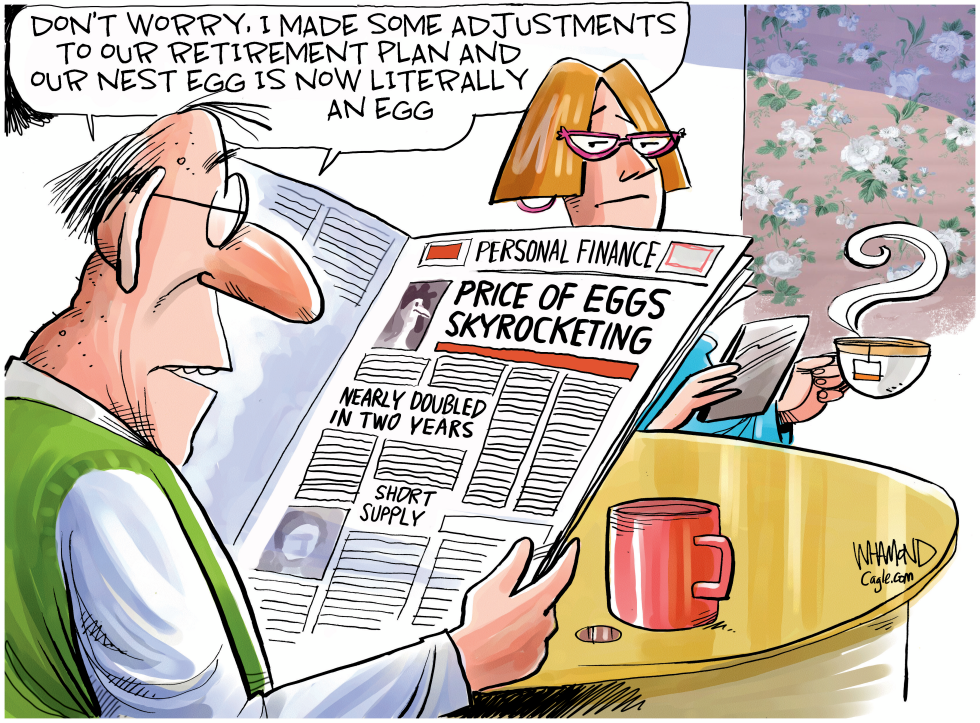
A man reads a newspaper headlined 'PRICE OF EGGS SKYROCKETING' and 'NEARLY DOUBLED IN TWO YEARS' at a kitchen table. His companion notes their retirement nest egg is now literally an egg after adjustments. The scene captures consumer reaction to rising grocery costs in early 2023.
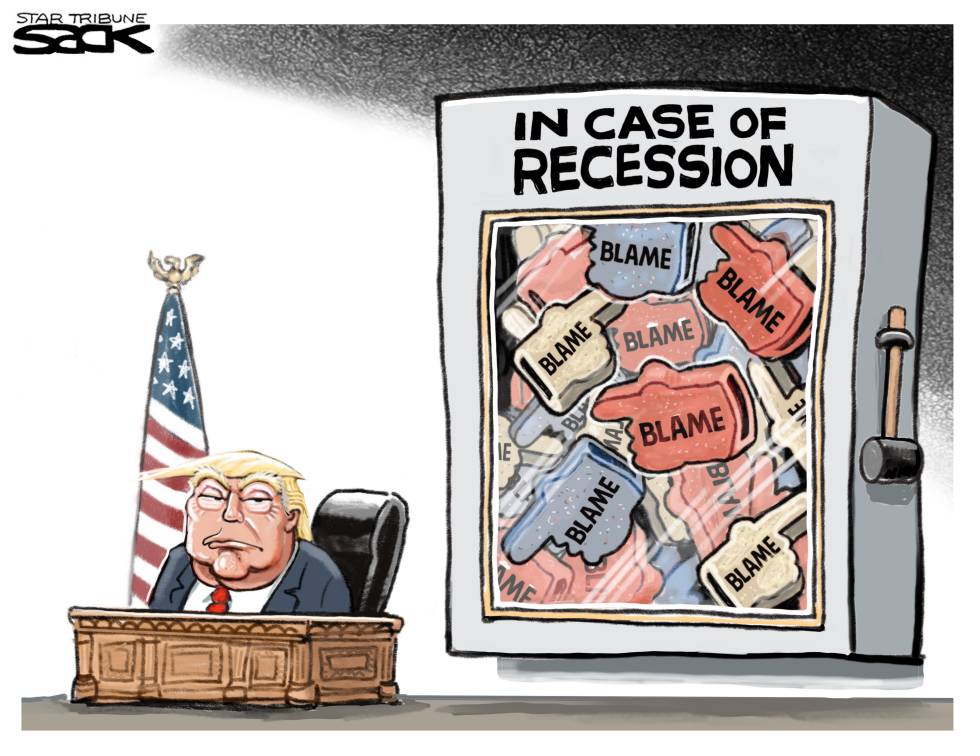
Steve Sack's 2019 cartoon captures Trump seated at a desk, an American flag nearby, staring at a emergency-style glass case marked 'IN CASE OF RECESSION.' Inside, numerous pointing fingers labeled 'BLAME' pile up, ready to be broken out with a hammer. The image tags Trump, recession, blame, tariff, trade war, China, and economy, poking fun at blame-shifting tactics during economic uncertainty. Cartoonists often use such direct visuals to critique leadership styles, where the obvious setup of blame dispensers underscores a readiness to deflect responsibility rather than address root causes like tariffs or trade disputes. This piece fits into broader discussions on presidential accountability amid fluctuating markets.