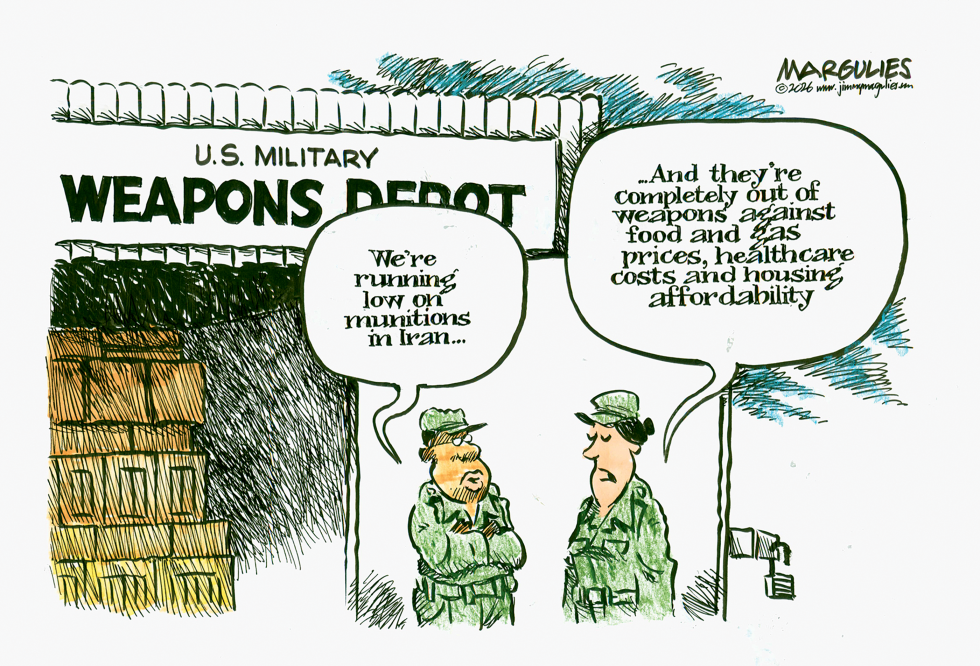
The cartoon depicts two U.S. soldiers outside a weapons depot labeled U.S. Military Weapons Depot. One soldier states the facility is running low on munitions in Iran. The second replies that domestic fronts are out of weapons against food and gas prices, healthcare costs and housing affordability. The image responds to ongoing debates over U.S. military aid commitments abroad and competing budget pressures at home as of the August 2026 publication date. It uses the depot setting and dialogue to contrast foreign military demands with economic challenges facing American households.
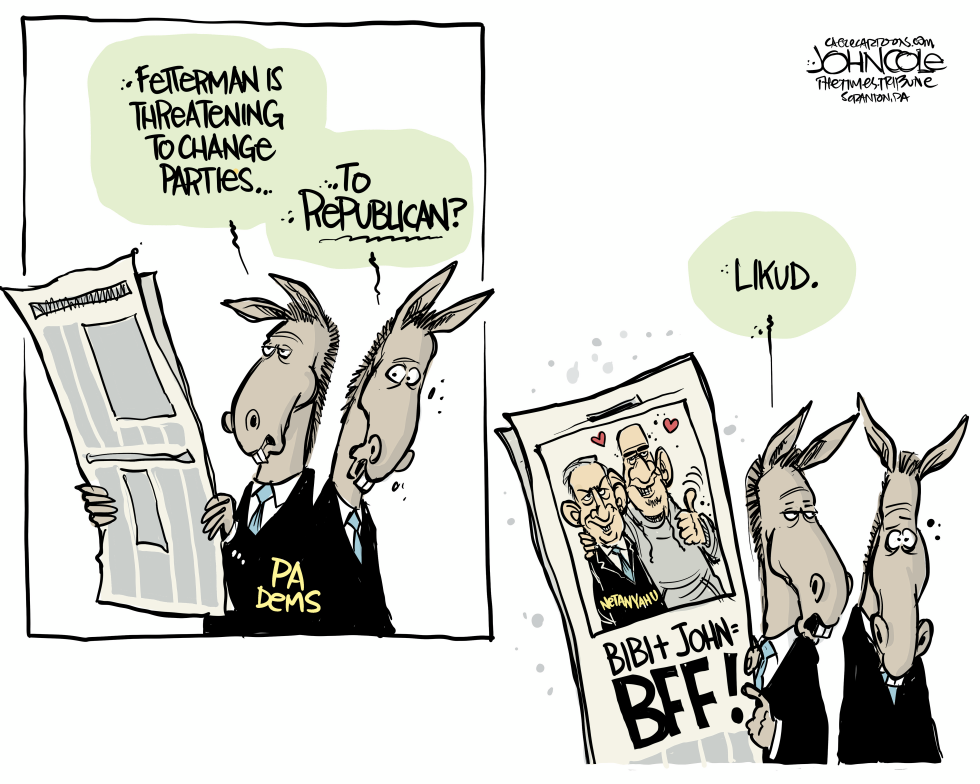
Senator John Fetterman has signaled a possible party switch that has Pennsylvania Democrats scrambling. Speculation centered on a Republican move until the senator's close ties to Israeli Prime Minister Benjamin Netanyahu and the Likud party surfaced instead. The development highlights ongoing tensions within the Democratic coalition over foreign policy alignments and personal political trajectories.
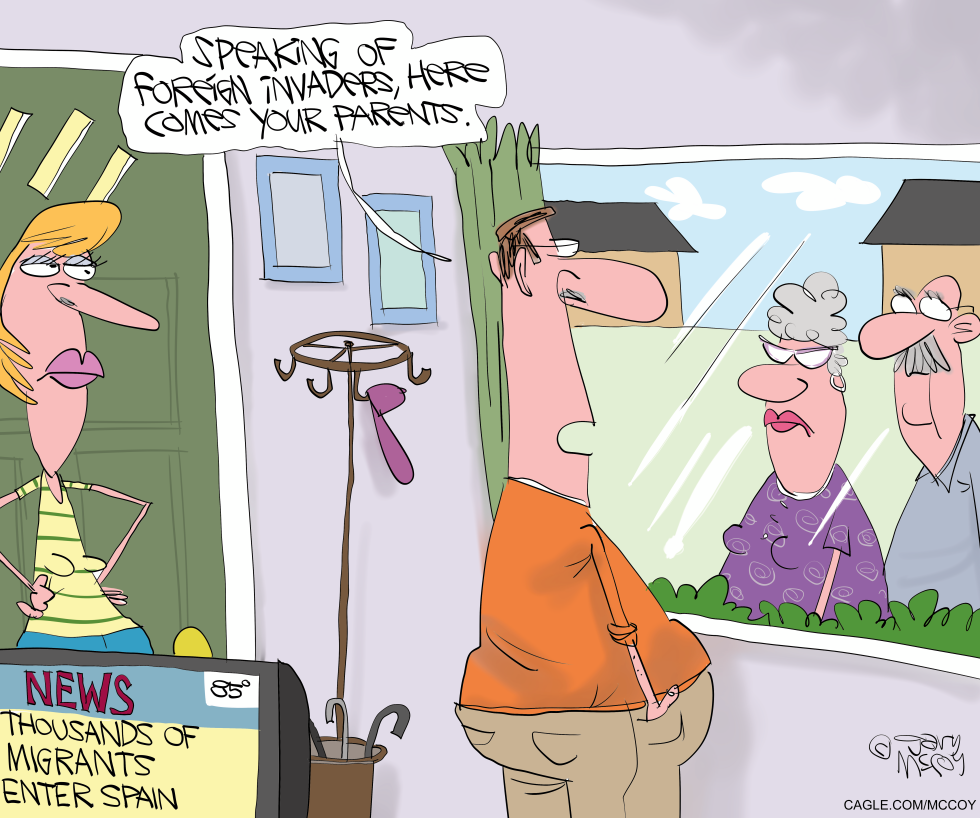
News reports show thousands of migrants entering Spain. The cartoon responds by having a man greet his in-laws with the same 'foreign invaders' label used in immigration debates. It highlights how inflammatory rhetoric can apply beyond policy to everyday family situations.
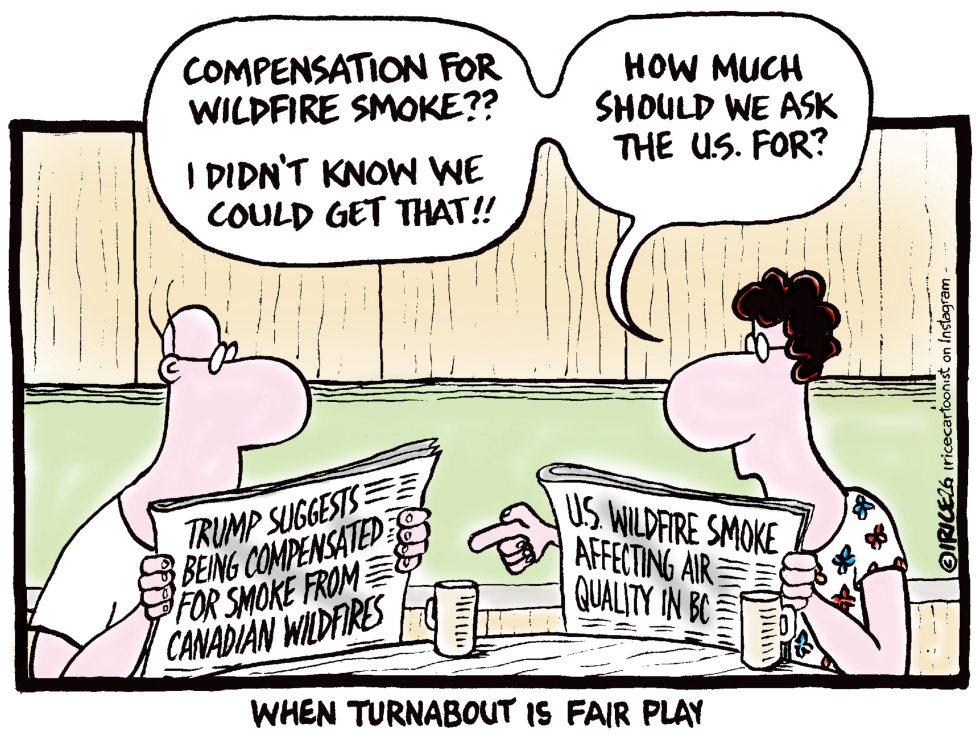
Donald Trump suggested the U.S. should receive compensation for smoke from Canadian wildfires. The cartoon responds by showing Canadians considering a reciprocal claim for smoke from U.S. wildfires affecting British Columbia air quality. It underscores the political dynamic of mutual environmental grievances between the two nations.
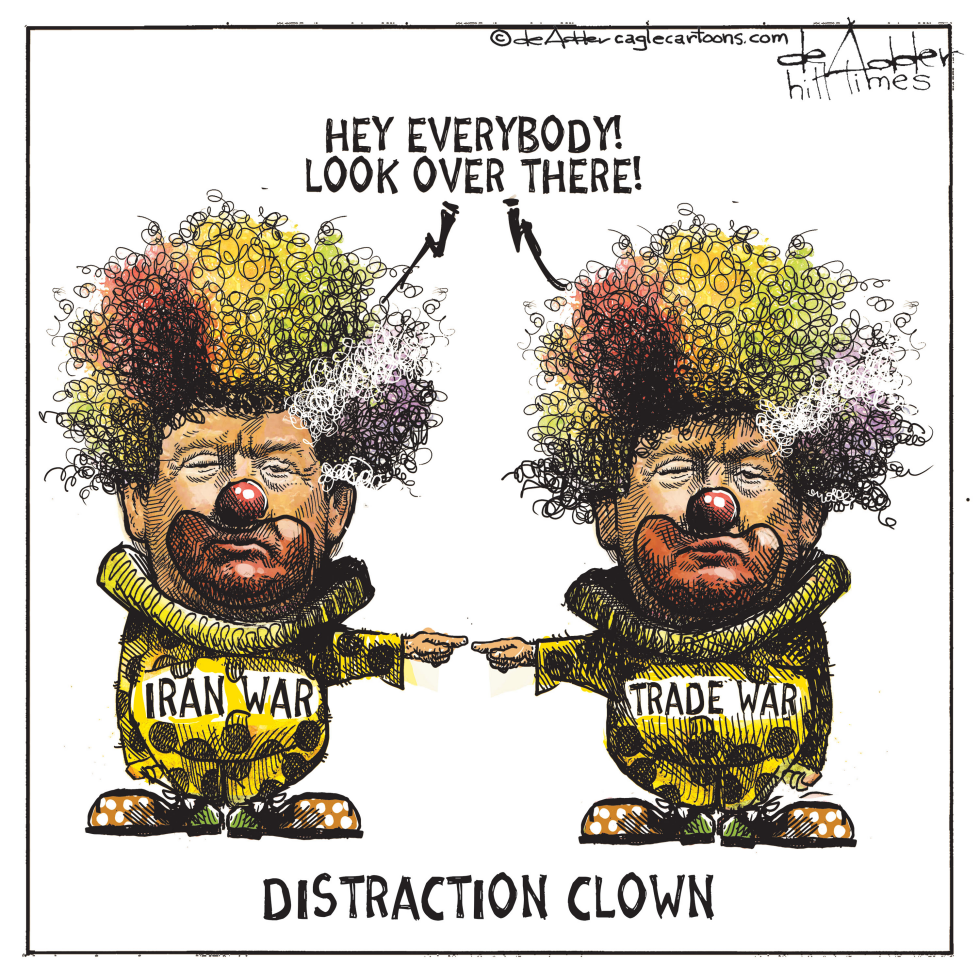
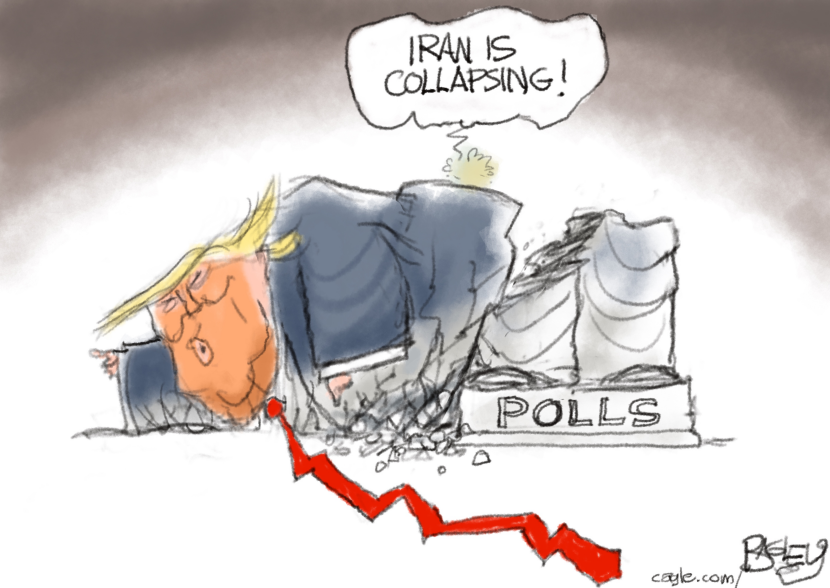
Public attention is being directed toward simultaneous Iran and trade conflicts as potential diversions from other issues. The editorial depicts the two crises as interchangeable distractions promoted by the same source. It argues that leaders are using these flashpoints to shift focus rather than address underlying problems.
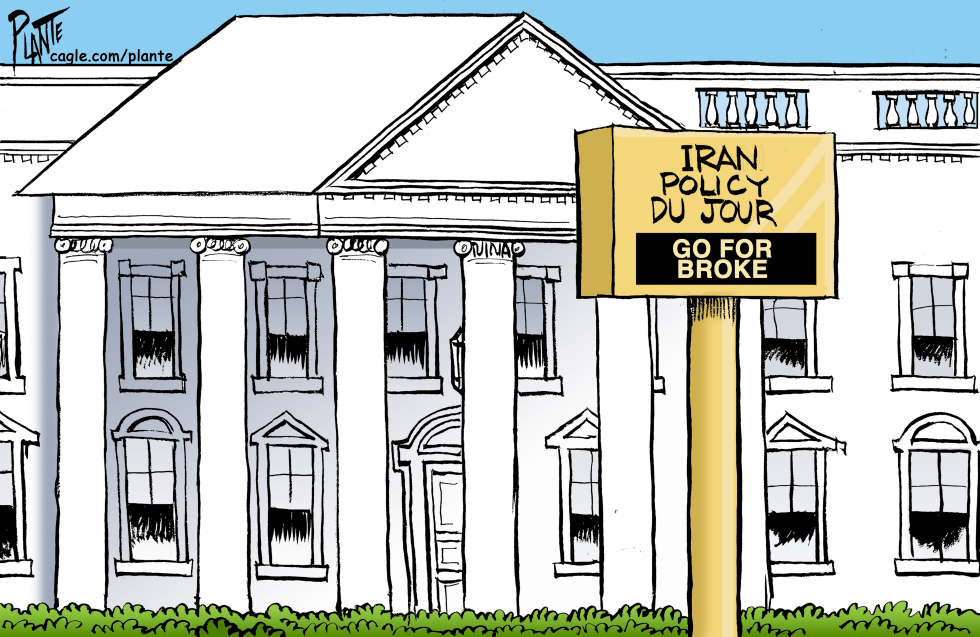
The White House has signaled a more aggressive posture toward Iran through public messaging that emphasizes risk-taking. The move comes amid persistent tensions over nuclear issues and regional influence. The editorial takes the position that such an approach lacks consistency and invites unnecessary escalation.
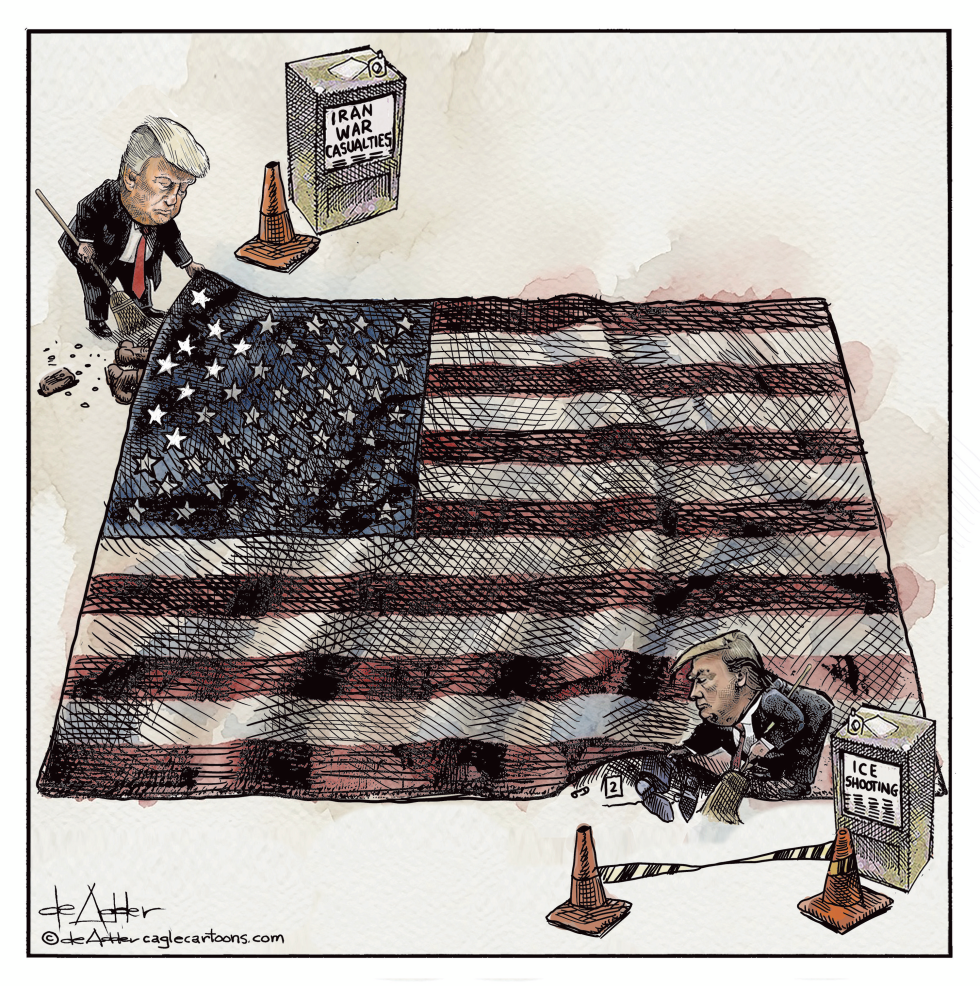
Donald Trump faces scrutiny over reported casualties from potential Iran conflict and an ICE-related shooting incident in mid-2026. The administration's handling of these events draws criticism for downplaying accountability. The piece argues that attempts to minimize these issues undermine public trust in governance.
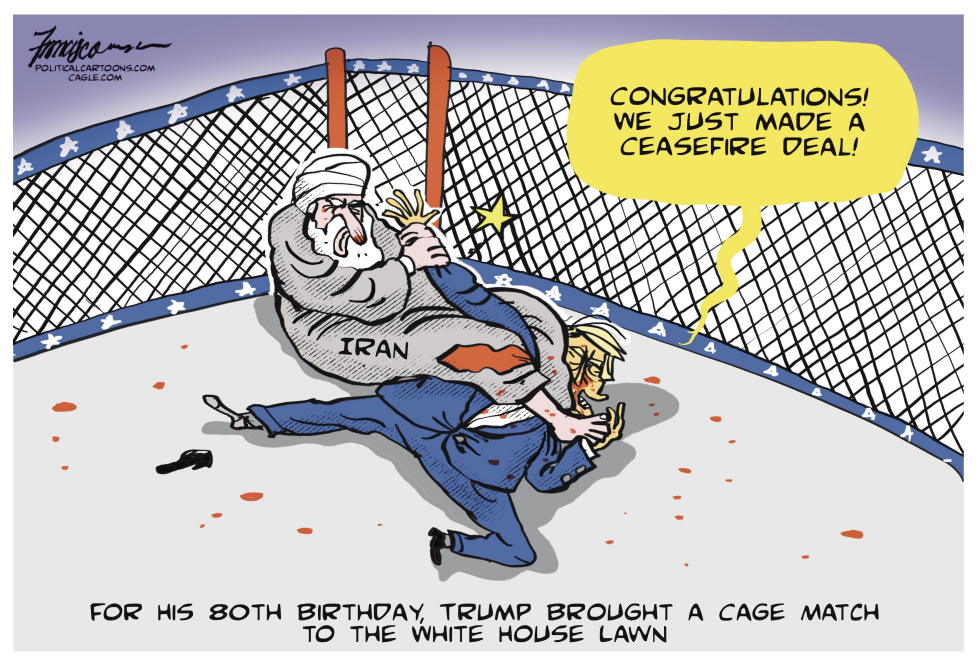
A cage match between the United States and Iran over a potential ceasefire deal has drawn attention amid ongoing Middle East tensions. The confrontation highlights the high stakes of direct engagement between the two nations. The piece portrays the encounter as a chaotic personal brawl rather than a measured diplomatic effort.
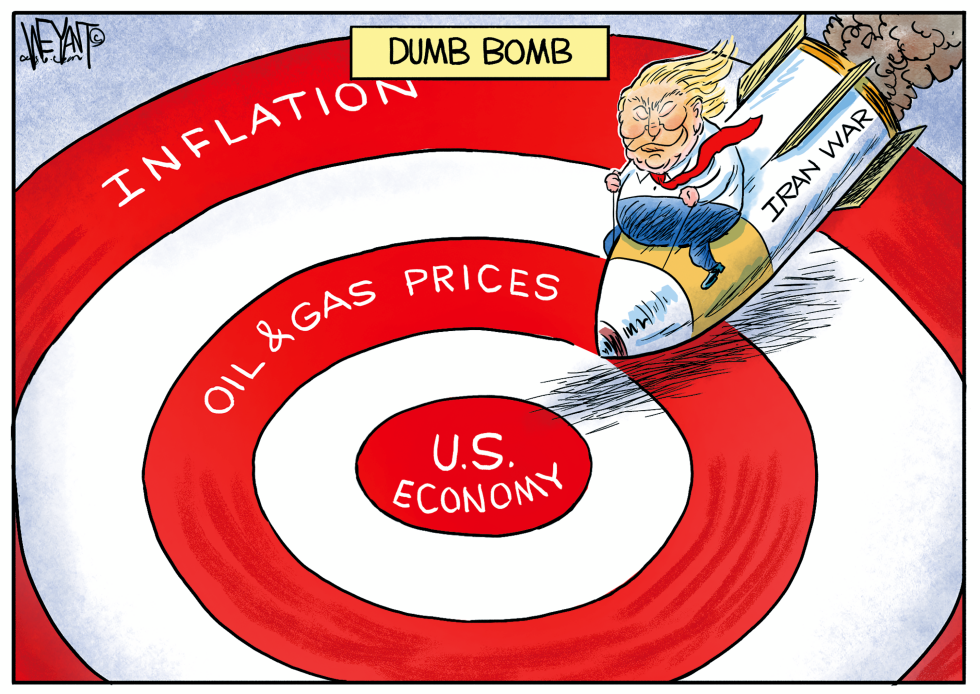
Christopher Weyant's cartoon shows a Donald Trump caricature astride a 'Dumb Bomb' labeled 'Iran War,' plummeting toward a red-and-white bullseye. The target's rings are inscribed with 'Inflation,' 'Oil & Gas Prices,' and at the center, 'U.S. Economy.' This setup highlights concerns over foreign policy decisions affecting domestic finances. The dry humor underscores the risks of impulsive actions in international affairs, with Trump's windswept hair and determined expression adding to the satirical edge. Tags like political cartoon, Trump Iran war, US economy satire, inflation oil prices, dumb bomb cartoon, and Christopher Weyant emphasize the image's relevance to current events.
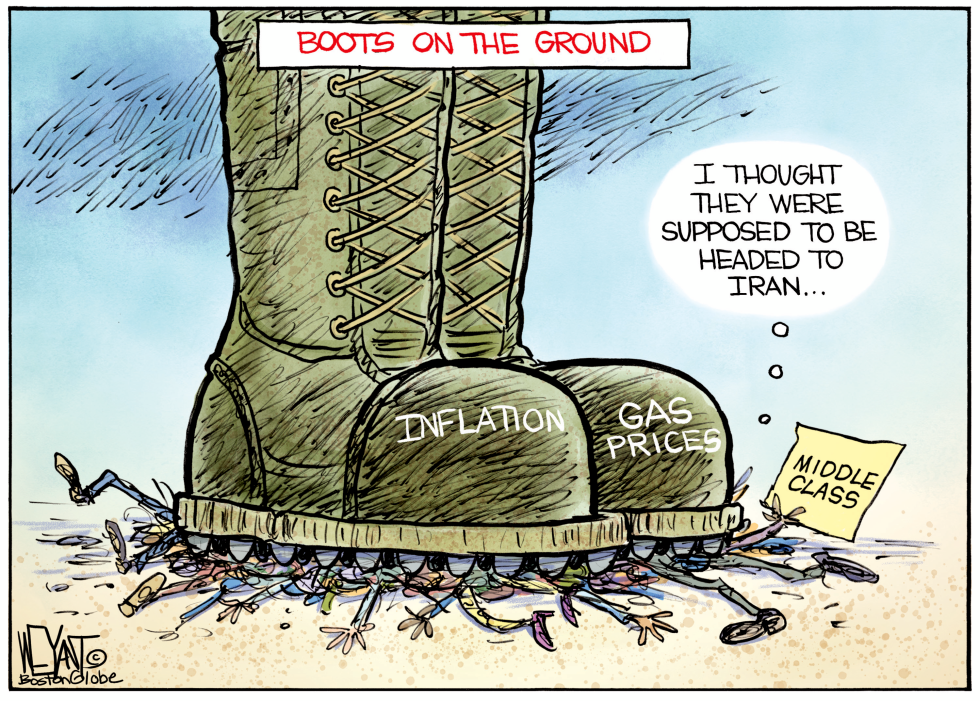
The cartoon shows a pair of massive military boots dominating the scene, one labeled 'Inflation' and the other 'Gas Prices,' as they crush small human figures on the ground, with a sign reading 'Middle Class' among them. A speech bubble from one of the crushed figures says, 'I thought they were supposed to be headed to Iran...' The title 'Boots on the Ground' sits at the top. This setup uses dry humor to highlight misplaced priorities in war, economy, inflation, gas prices, middle class, and Iran. The sandy ground and stormy sky add to the chaotic feel, tying into tags like Trump, negotiation, Strait of Hormuz, and domestic policy impacts.
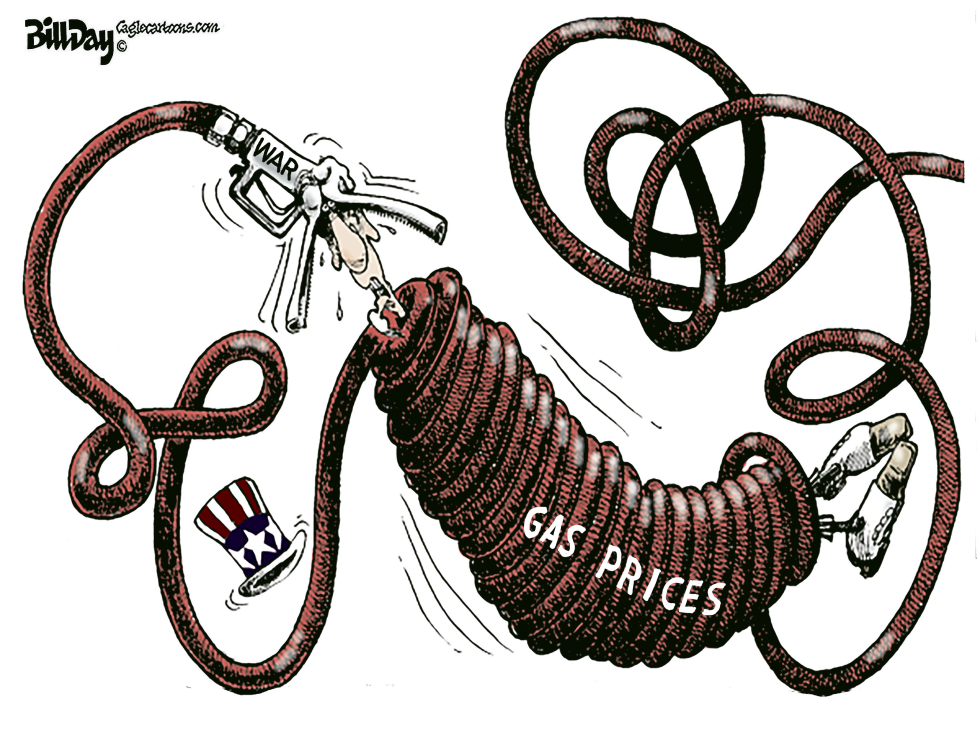
Bill Day's cartoon depicts a gas pump nozzle marked 'WAR' aggressively pumping into a twisted red hose that forms a noose-like figure labeled 'GAS PRICES,' with arms and legs dangling, suggesting strangulation. An Uncle Sam hat adorned with the American flag falls away, emphasizing national impact. This satirical image ties into tags like gas prices, Iran war, gas pump, Strait of Hormuz, and NATO, highlighting how military conflicts drive up fuel costs. The coiled hose resembles a hanged person, underscoring economic peril from oil disruptions. Day's style uses bold lines and clear labels for immediate visual punch, a staple in political cartoons that critique policy fallout.
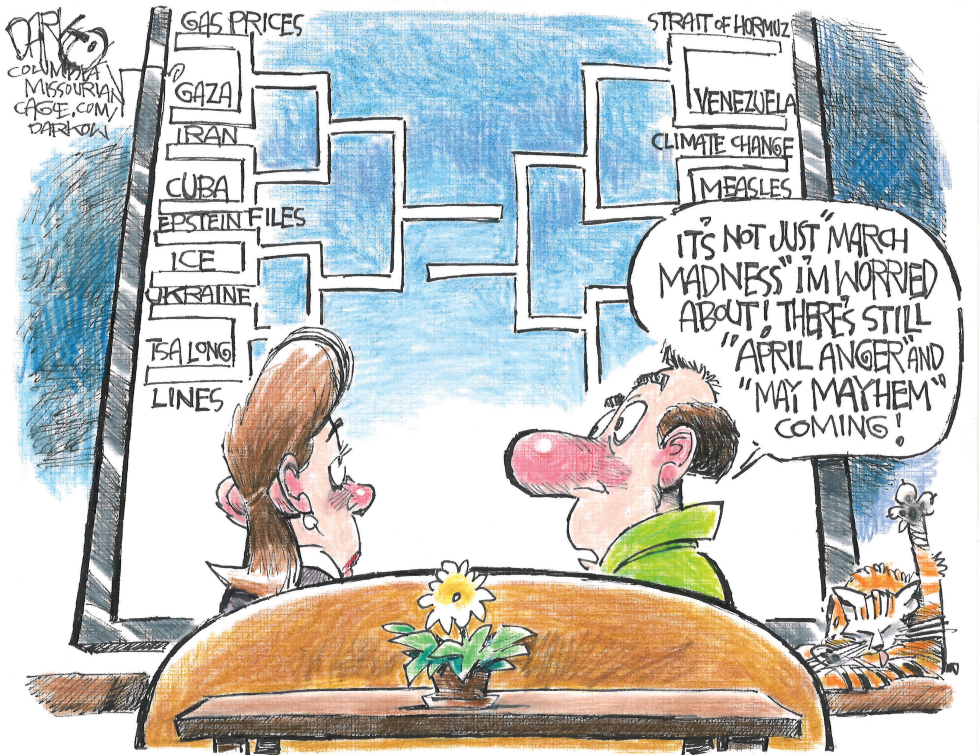
John Darkow's cartoon twists the March Madness tournament bracket into a lineup of global headaches, from gas prices spiking due to Strait of Hormuz tensions and Venezuela instability, to ongoing conflicts in Gaza and Ukraine. Measles outbreaks and climate change join the fray, alongside Cuba relations, Epstein files, ICE policies, and long TSA lines. The scene shows a couple at a table, with the man fretting that it's not just March Madness to worry about—April Anger and May Mayhem loom. A potted daisy and a striped cat add a touch of domestic normalcy to the absurd bracket of woes. This piece captures the relentless parade of news cycle disasters, using at least six tags like March Madness, Strait of Hormuz, Venezuela, measles, gas prices, and Gaza.
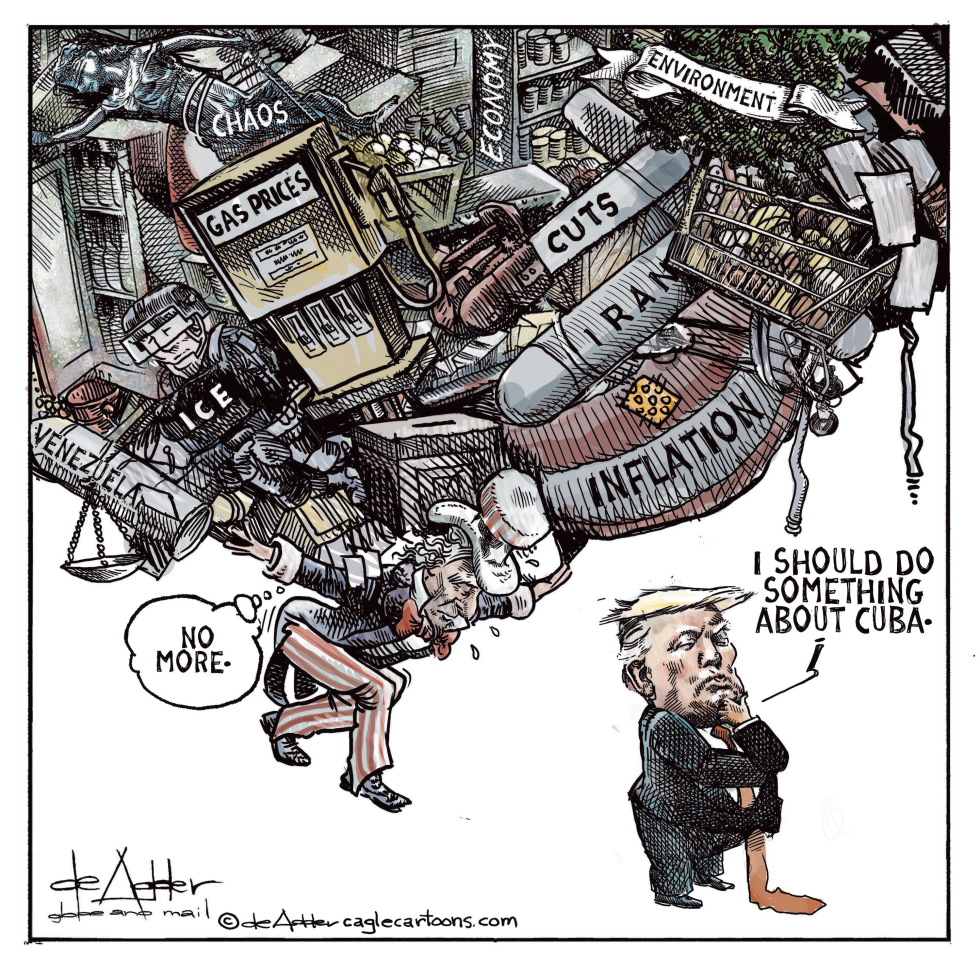
Donald Trump appears in the foreground contemplating action on Cuba. Behind him a swirl of labeled elements shows inflation, gas prices, Iran, Venezuela, ICE, and cuts tied to economy and environment. A second figure says no more. The March 2026 cartoon highlights distraction amid multiple pressures.