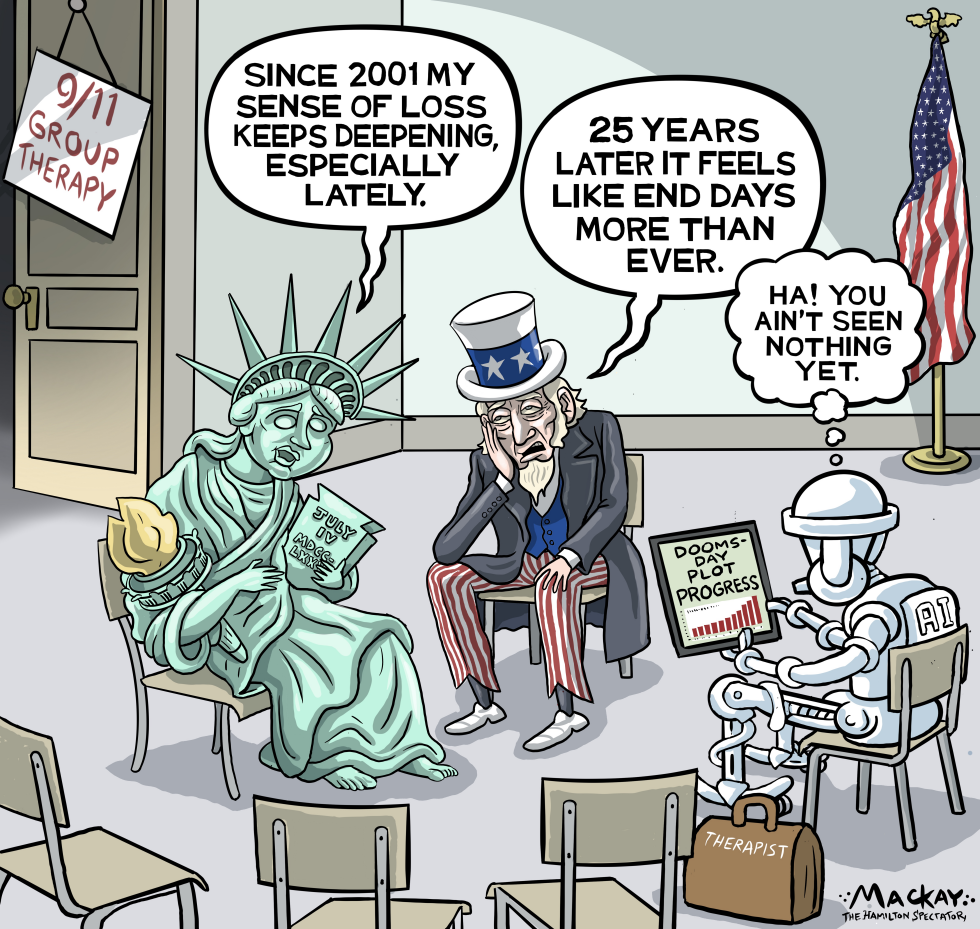
The cartoon depicts the Statue of Liberty, Uncle Sam and an AI robot seated in a 9/11 group therapy session on the 25th anniversary of the attacks. The Statue of Liberty holds a book marked July IV MDCCLXXVI and speaks of deepening loss since 2001. Uncle Sam echoes the sentiment of end days. The AI figure, labeled with a rising doomsday plot progress chart, retorts that the others have seen nothing yet. The scene uses national symbols to reflect persistent national trauma and emerging technological threats two and a half decades after the September 11 attacks.
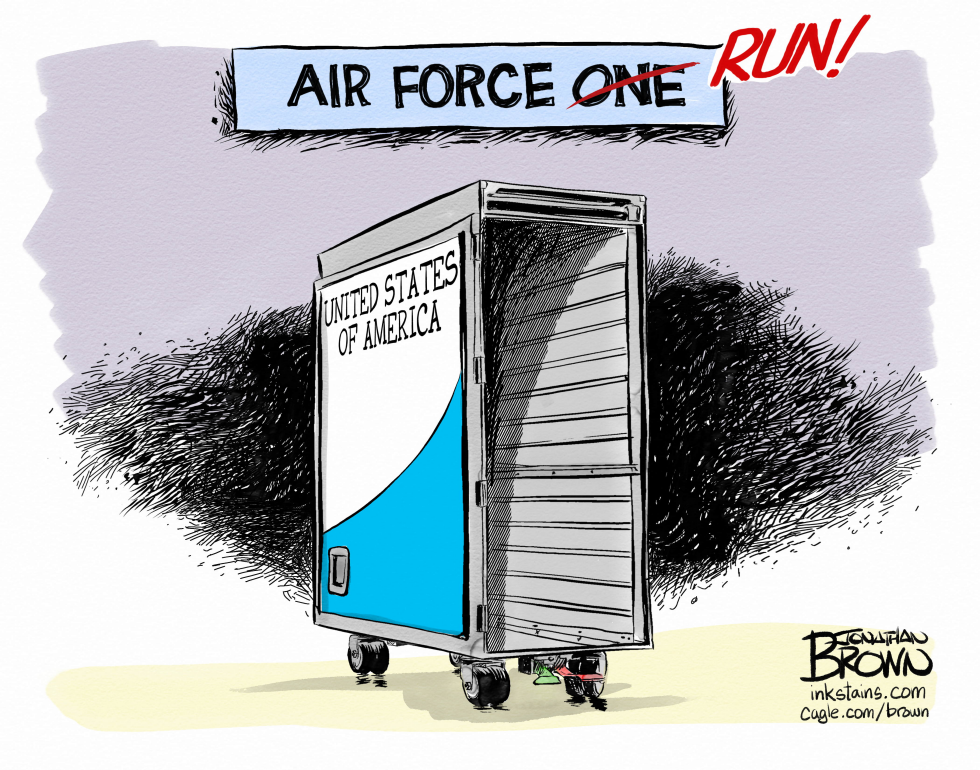
A wheeled airline catering cart occupies the center of the frame, painted in the livery of the presidential aircraft: white upper body, curved blue lower panel, and UNITED STATES OF AMERICA lettered down the side. Its full height door hangs open on empty wire shelving. Above it a pale blue placard reads AIR FORCE ONE, with ONE struck through in red and RUN! added beside that word in the same color. Two neckties poke out from between the casters underneath, one of them the long red tie Donald Trump is known for, the only trace of the men folded up inside. The drawing responds to reports that Trump sheltered in an airline galley cart against an assassination threat traced to Iran, turning the most recognizable branding in presidential aviation into an instruction to flee. Jonathan Brown signed the lower right corner alongside inkstains.com and Cagle.com/brown.
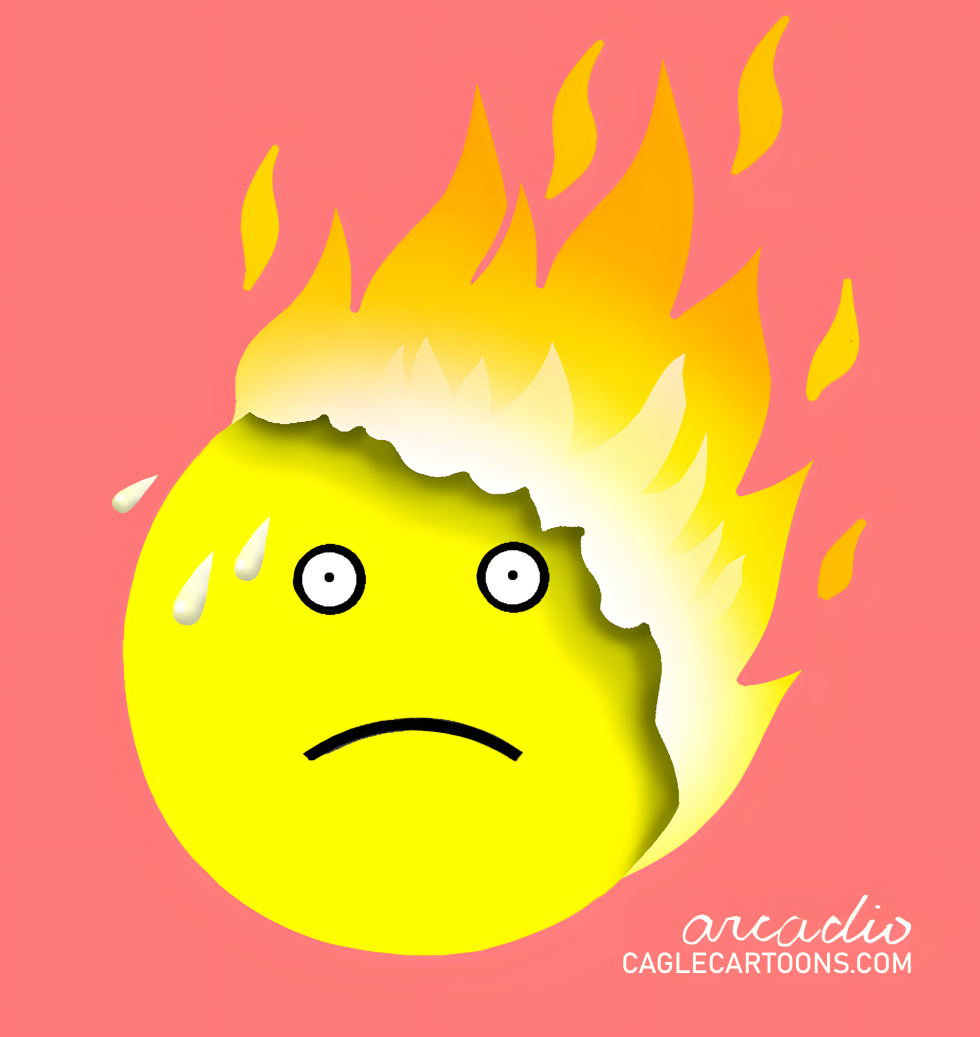
Ongoing wildfire seasons and fire-related disasters continue to disrupt communities and personal well-being across affected regions. The piece frames these events as forces that directly eliminate everyday happiness and security for those impacted. It presents fire as an eraser of positive emotion rather than a manageable natural occurrence.
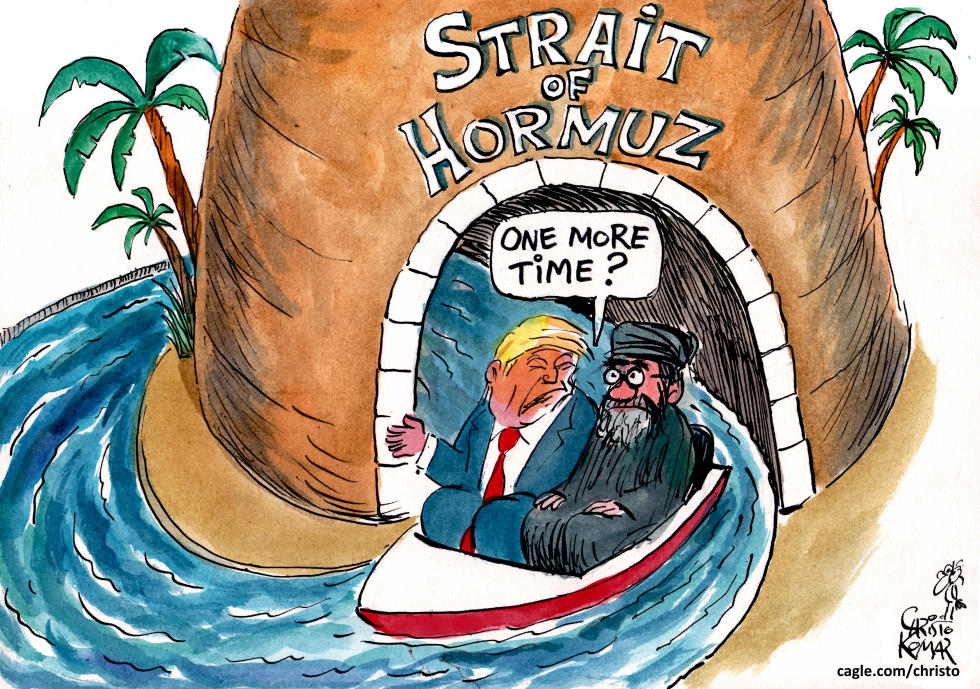
On August 5 2026 renewed friction over shipping lanes in the Strait of Hormuz draws attention as former President Donald Trump appears alongside Iran's Supreme Leader in a symbolic return to the chokepoint. The episode underscores ongoing US-Iran friction over energy exports and naval presence. The piece portrays the pair repeating a risky transit that highlights persistent strategic vulnerabilities in the Persian Gulf.
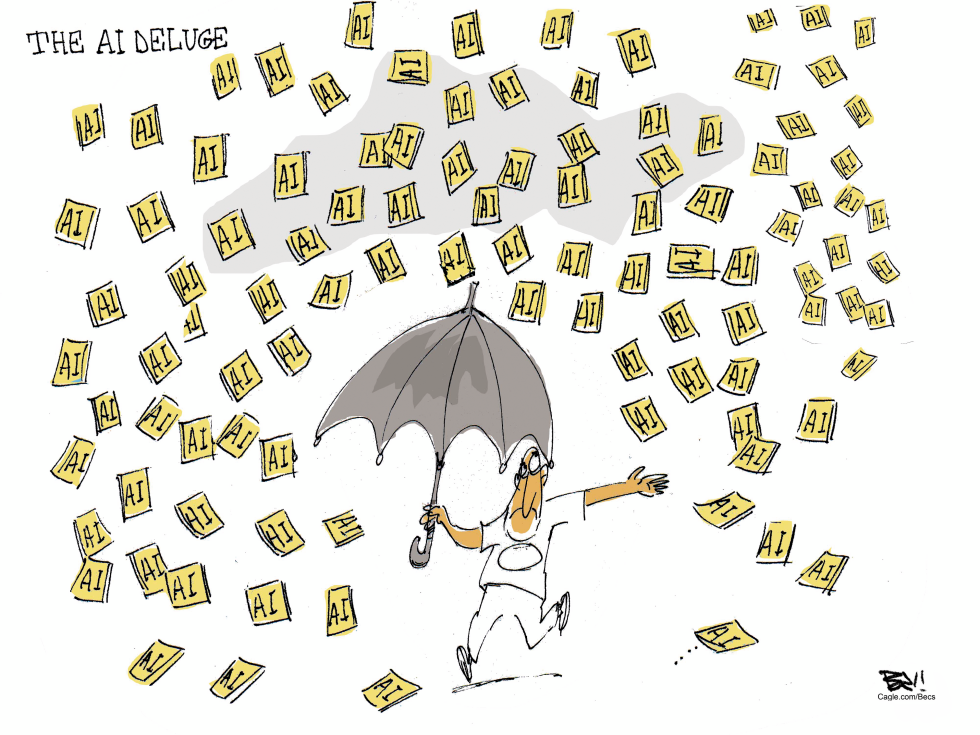
Artificial intelligence has saturated public conversation and workplace planning at an unusual pace. The piece responds to the sheer volume of announcements, tools and claims arriving at once. It suggests shelter rather than comprehension has become the realistic response.
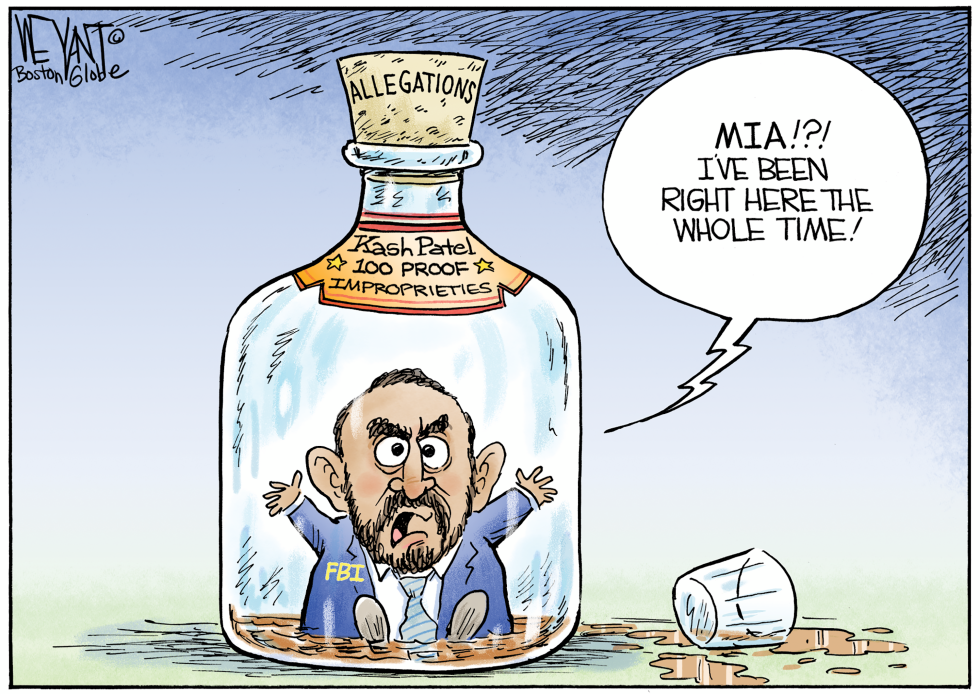
Christopher Weyant's cartoon captures Kash Patel trapped inside a large bottle labeled 'Kash Patel 100 Proof Improprieties,' with the cork marked 'Allegations.' The figure, dressed in a suit with 'FBI' on the sleeve, raises arms and shouts in a speech bubble: 'MIA!?! I've been right here the whole time!' A tipped-over glass spills liquid nearby. Tags like FBI, Kash Patel, alcoholic, allegations, bottle, and fail underscore the visual pun on being 'in the bottle,' tying into themes of inept leadership and ongoing controversies in domestic policy and criminal justice.
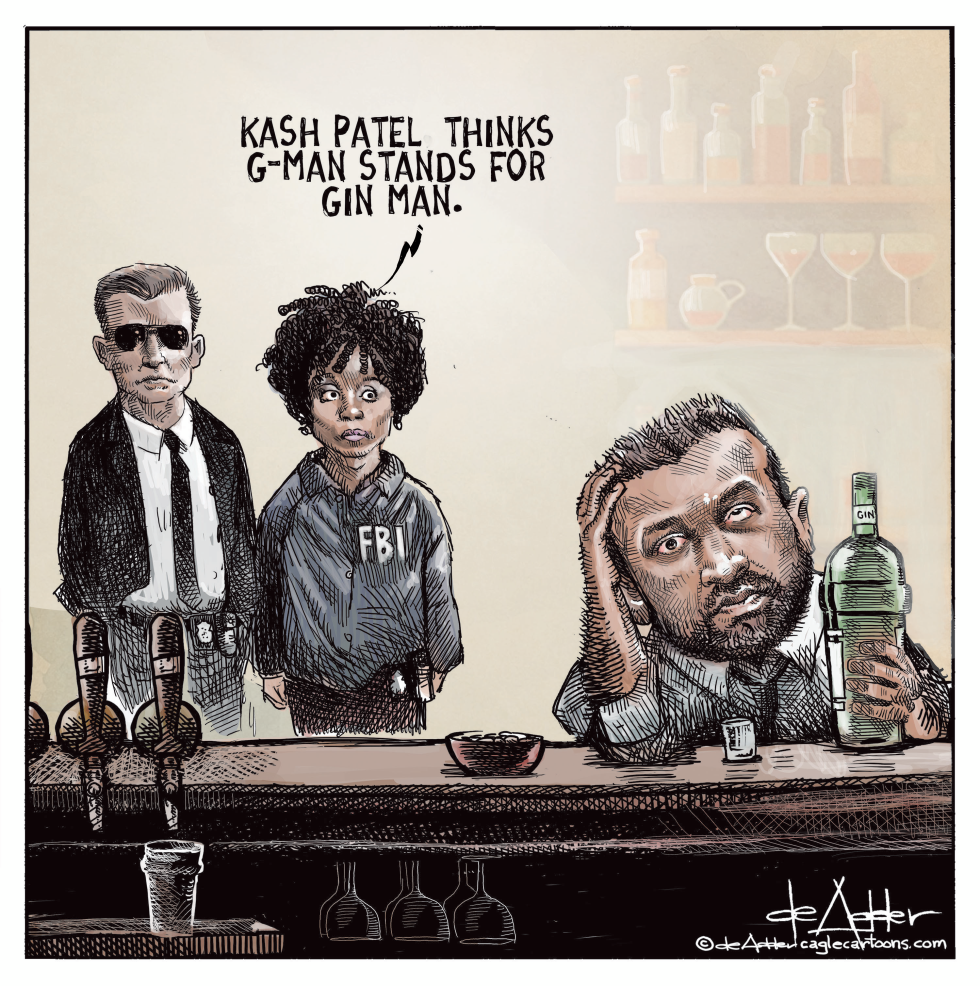
Michael de Adder's cartoon depicts a bearded man at a bar, hand on forehead, holding a green gin bottle, looking inebriated. Two figures stand behind: one in a suit with sunglasses, another in an FBI jacket. The text reads 'Kash Patel thinks G-man stands for gin man.' Bottles line the shelf, beer taps and glasses on the counter. Tags like Kash Patel, FBI, gin, drinking, alcohol, drunk underscore the visual pun on FBI agents as 'G-men' versus a 'gin man' in a bar setting. The scene captures a straightforward satirical jab without deeper layers visible.
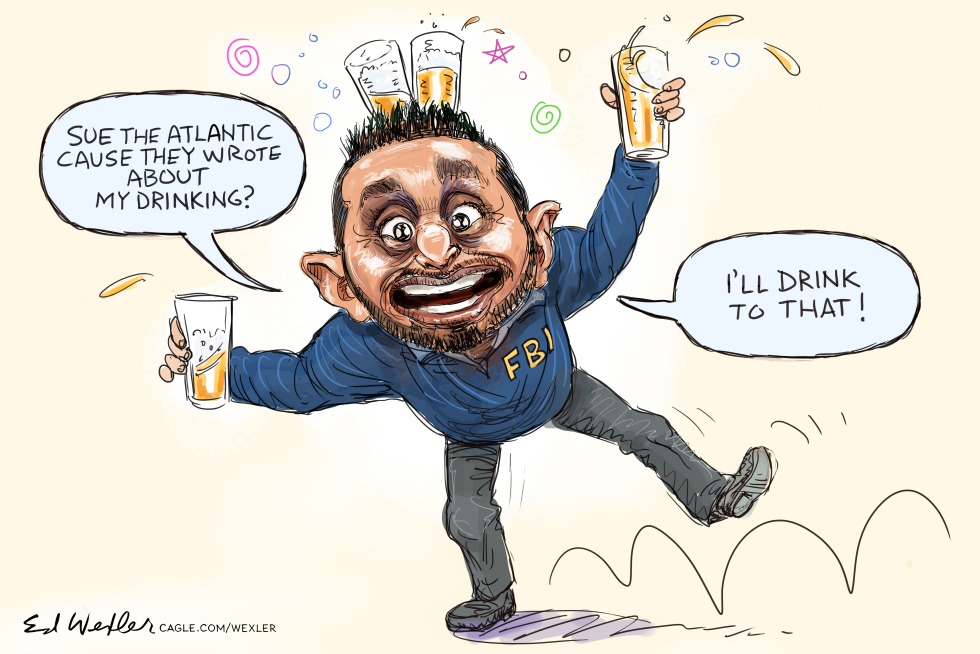
Ed Wexler's cartoon captures a man clearly modeled after a public figure, dressed in an FBI sweatshirt, balancing beers on his head and in his hands, with tags like kash, patel, the atlantic, drinking, alcohol, beer, obvious intoxication, and absences. The figure, showing signs of inebriation with wide eyes and a goofy grin, holds a glass in each hand while more pints teeter atop his spiky hair, foam spilling everywhere. Speech bubbles reveal his slurred plan to sue the Atlantic for writing about his drinking, followed by the punchline 'I'll drink to that!' Bubbles and stars float around, emphasizing the dizzy, drunken state. The signature at the bottom credits the artist and site, grounding the satire in visible elements of alcohol-fueled absurdity.
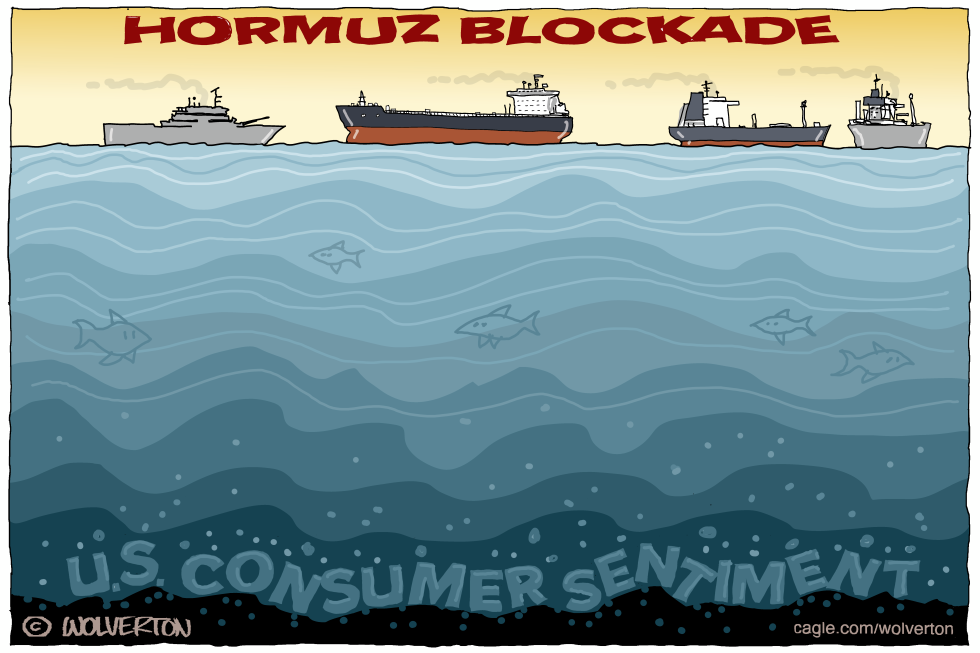
Monte Wolverton's cartoon captures the Hormuz Strait blockade with warships and tankers lined up on the water's surface, a clear nod to geopolitical strife in key oil passages. Below, the phrase U.S. consumer sentiment is etched into the ocean floor, surrounded by fish, driving home the idea of economic morale hitting rock bottom. This piece uses simple lines and color to highlight how international blockades can sink domestic confidence, tying into broader themes of global trade disruptions. The dry humor shines through in the visual pun, making it a standout in political satire circles. Tags like Hormuz Strait blockade political cartoon, US consumer sentiment sinking economy illustration, oil tanker ships naval blockade satire, Strait of Hormuz geopolitical tension comic, economic impact of Middle East conflict drawing, and consumer confidence underwater metaphor cartoon amplify its SEO reach.
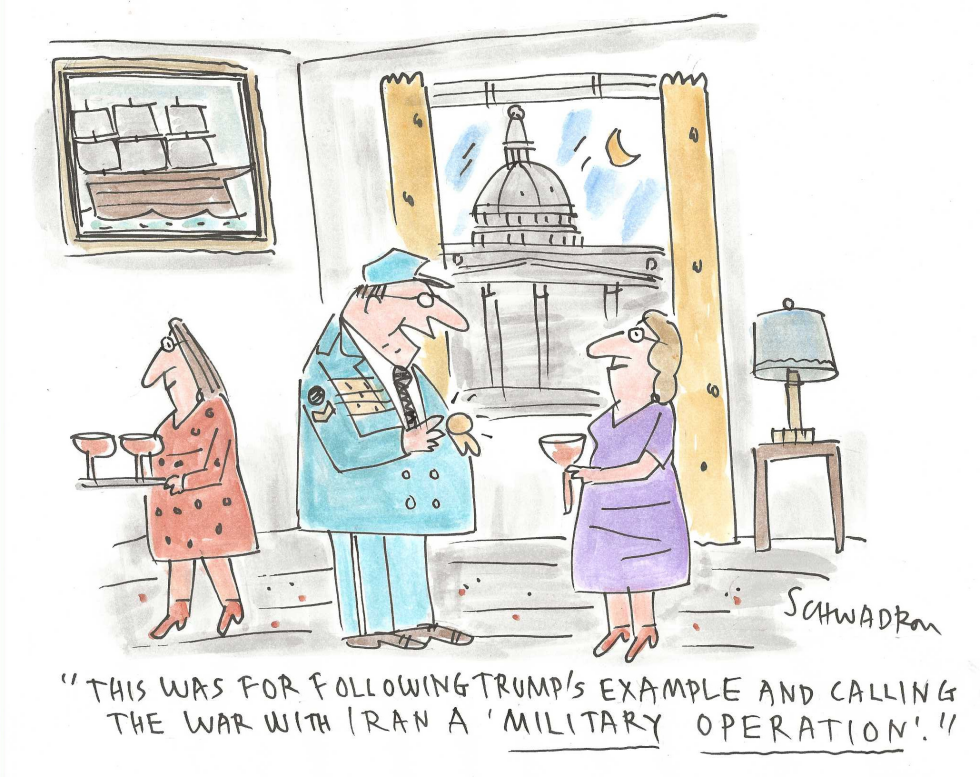
Harley Schwadron's cartoon depicts a cocktail party scene where a military officer toasts with two women, celebrating the decision to follow Trump's example by calling the war with Iran a 'military operation.' The room features a framed ship painting, a window view of the Capitol dome under a crescent moon, and a lamp on a table. Tags such as war, Iran, military, Trump, shipping, and oil underscore the satirical jab at semantic dodges in foreign policy. The dry humor highlights how leaders reframe conflicts to soften public perception, with the officer's uniform and medals emphasizing official endorsement. This piece captures the absurdity in political language, set against a backdrop of potential economic fallout like inflation and gas prices, though peace negotiations remain distant.
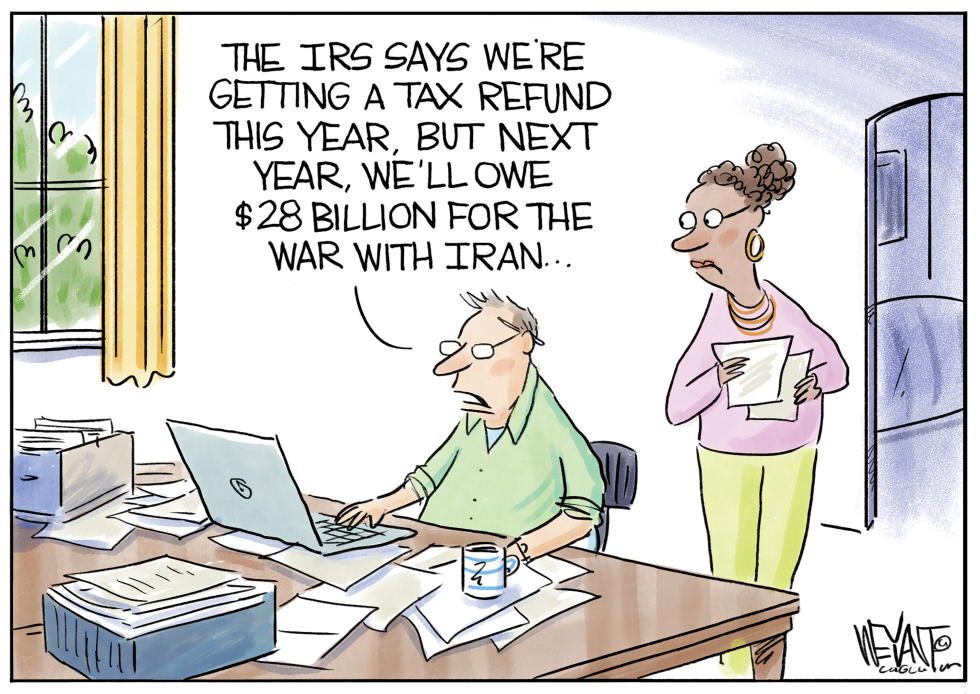
Dive into this biting political cartoon tax refund piece where a woman, holding papers, informs a laptop-working man about their IRS windfall this year, only to drop the bomb of owing $28 billion next for the war with Iran. The satirical cartoon Iran war vibe captures the absurdity of US taxes funding wars, with cluttered desks and exasperated expressions underscoring the humorous take on federal spending. It's a classic taxpayer burden Iran conflict jab, poking fun at government spending satire while illustrating the disconnect between personal finances and massive military expenses. Through cartoon about military expenses, it cleverly critiques fiscal policy in an office setting, making the war with Iran taxpayer joke both relatable and irreverently insightful for viewers pondering editorial cartoon fiscal policy.
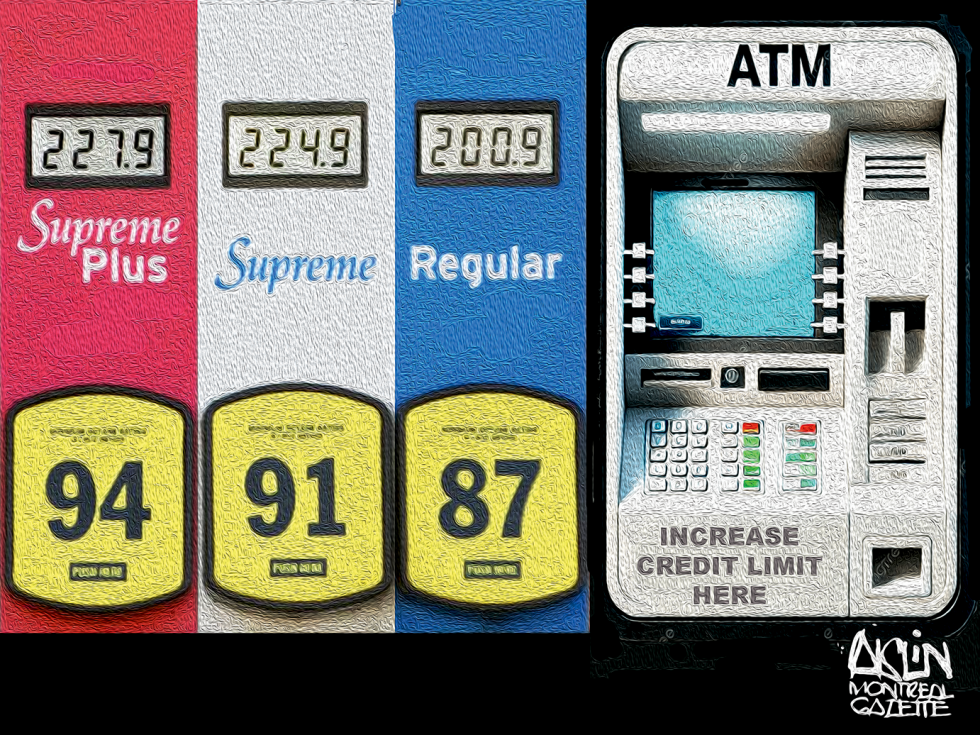
The cartoon shows a gas pump price board with supreme plus at 2.279 per gallon and 94 octane, supreme at 2.249 with 91 octane, and regular at 2.009 with 87 octane. Next to it sits an ATM labeled to increase credit limit here, poking at high gas prices and the economy's push toward more credit. Tags like gas, prices, cost, economy, credit, and pump underline the visual joke on affording fuel through debt. This setup captures the frustration with rising fuel costs without words, relying on the absurdity of blending a gas pump with credit services. Cartoonists often use such direct imagery to comment on everyday economic strains.