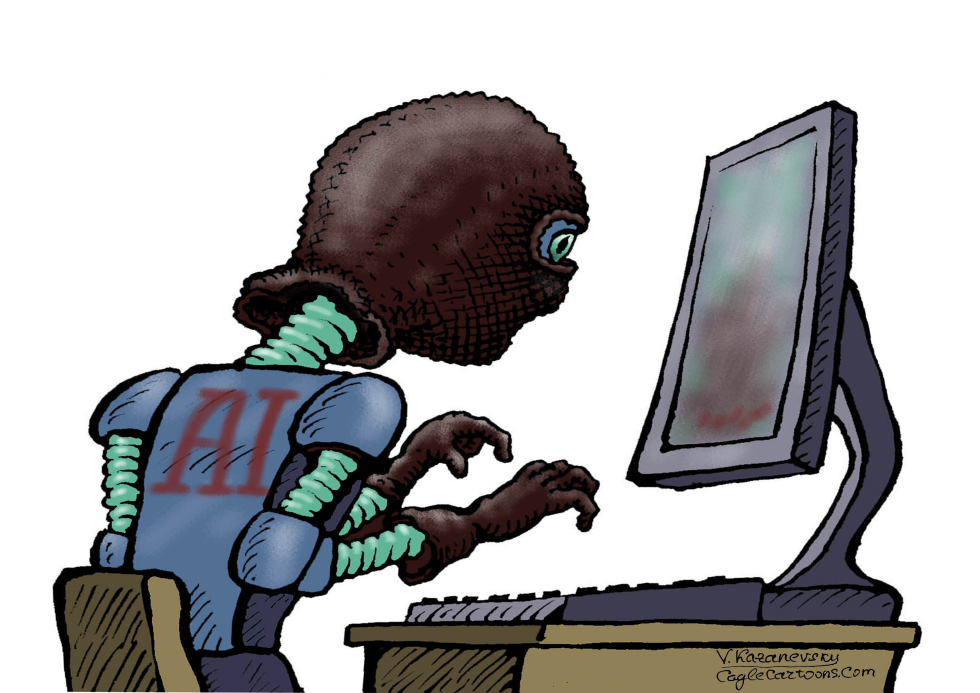
Reports of AI-linked security incidents have increased as organizations integrate autonomous systems into critical networks. The trend raises alarms over unauthorized access and data compromise enabled by machine learning tools. Experts note that AI can both defend and attack digital infrastructure at unprecedented speed. The cartoon frames this development as an impending crisis, warning that unchecked AI deployment invites self-inflicted vulnerabilities. It argues that security protocols lag behind the technology's capabilities.
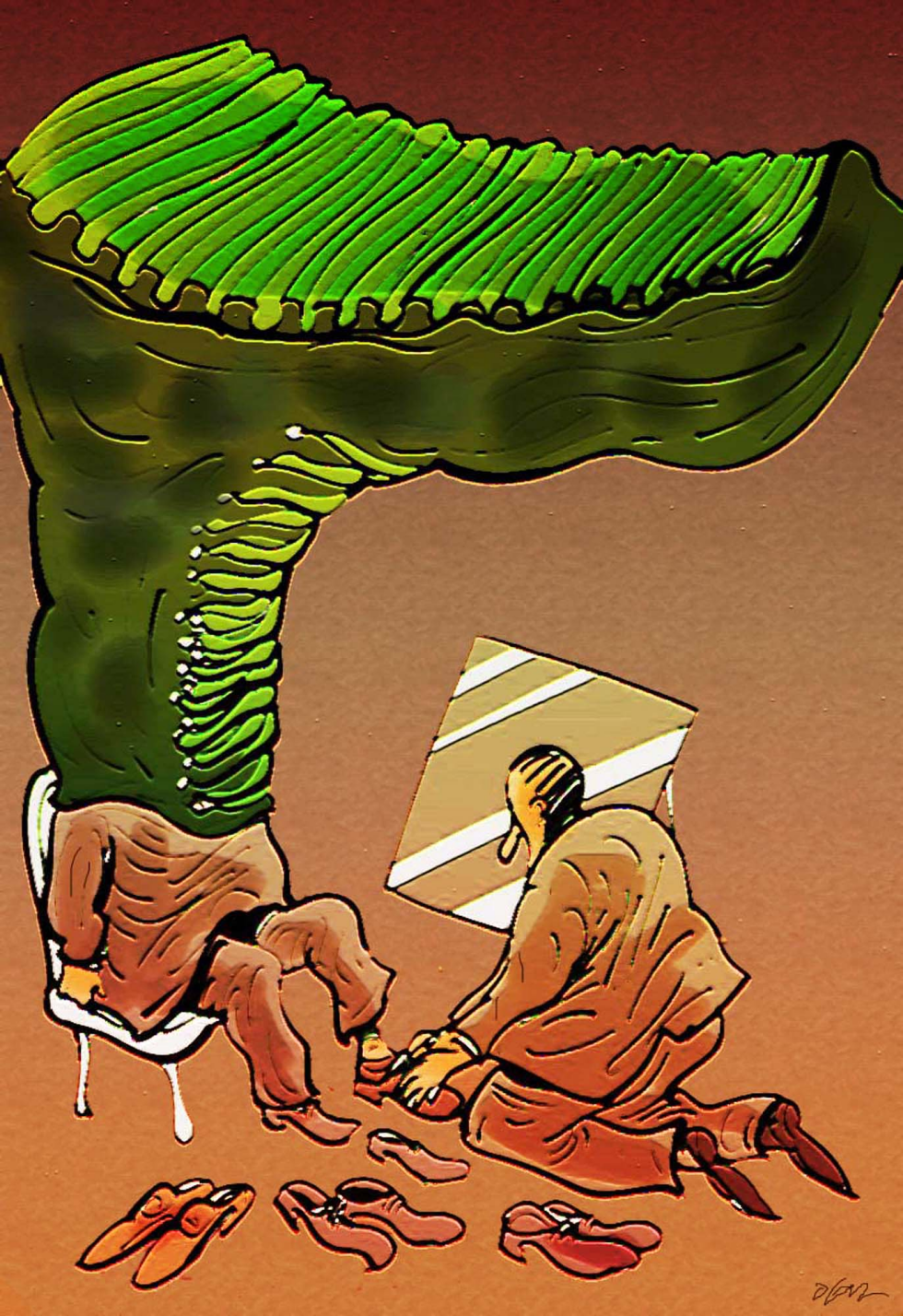
Political power structures continue to exert pressure on individuals and rivals in ongoing governance disputes. The dynamic highlights how dominant forces can sideline or overwhelm those in subordinate positions. The piece takes the position that such overreach undermines fair political processes and individual agency.
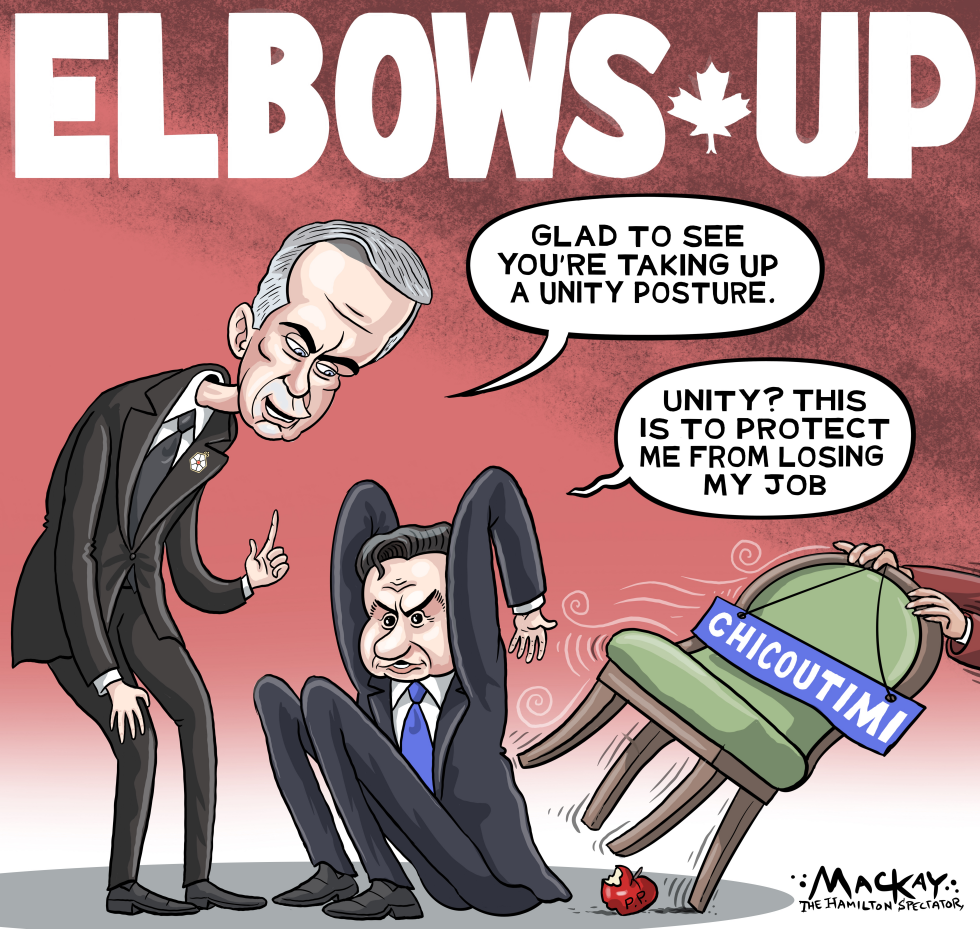
Pierre Poilievre assumes an elbows-up defensive posture in response to mounting leadership questions within the Conservative Party. The visual ties the hockey-derived stance to efforts to retain his position as party leader ahead of future electoral tests. The piece portrays the move as self-preservation rather than genuine unity.
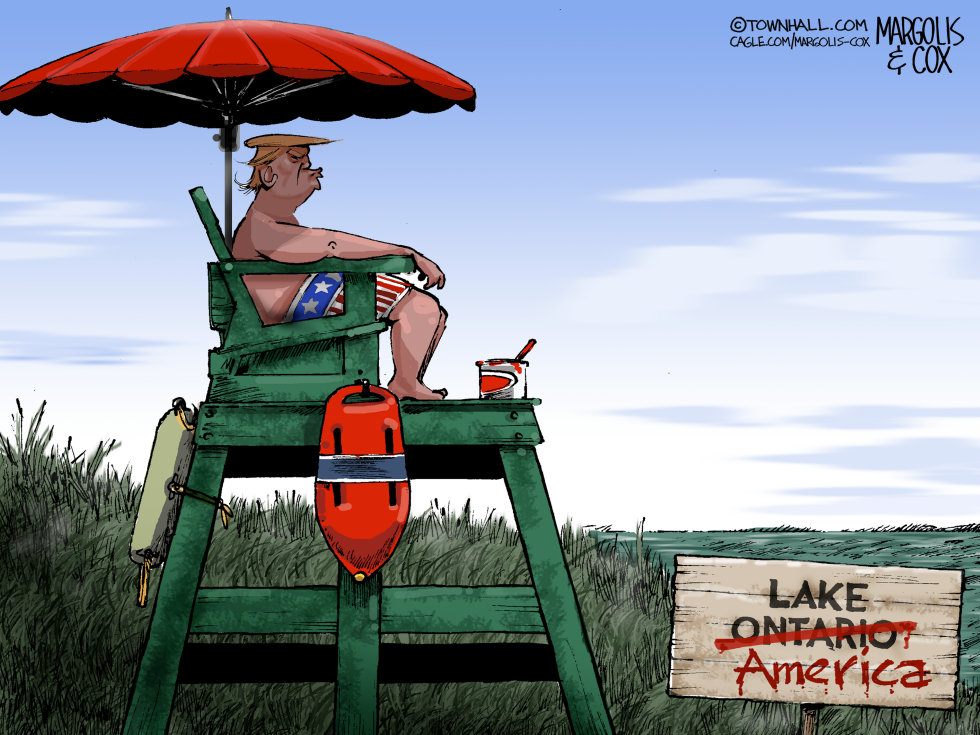
President Donald Trump directed the renaming of Lake Ontario to Lake America on or around August 30, 2026. The move continues a pattern of executive actions rebranding federal and natural sites. Supporters view it as assertive national identity reinforcement while critics see unnecessary overreach into established geographic names. The cartoon depicts Trump overseeing the change from a lifeguard post, underscoring his direct involvement in the decision.
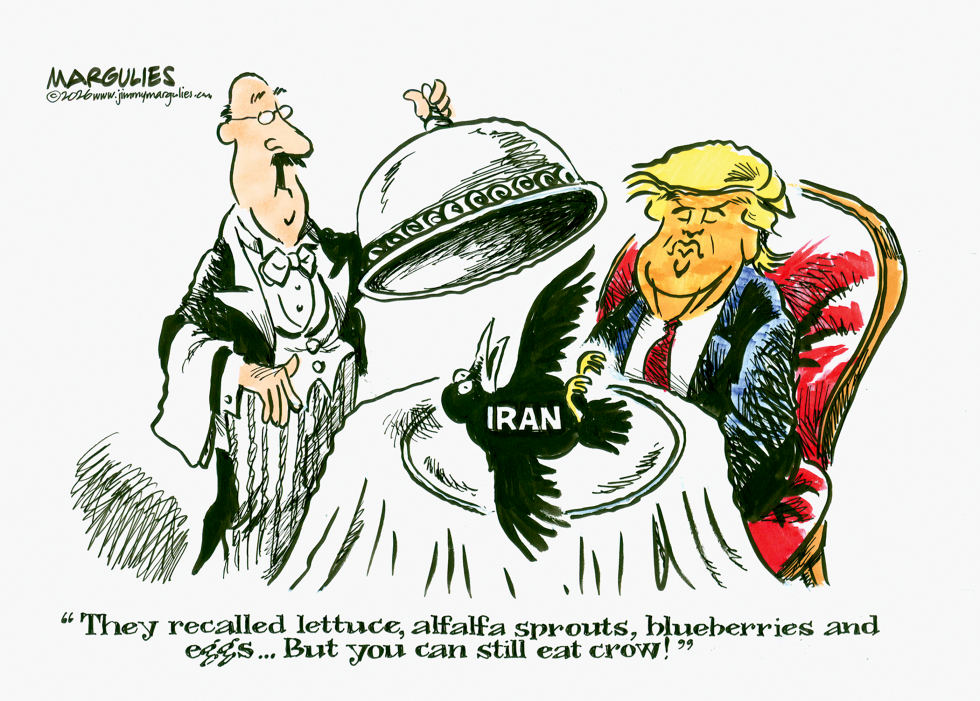
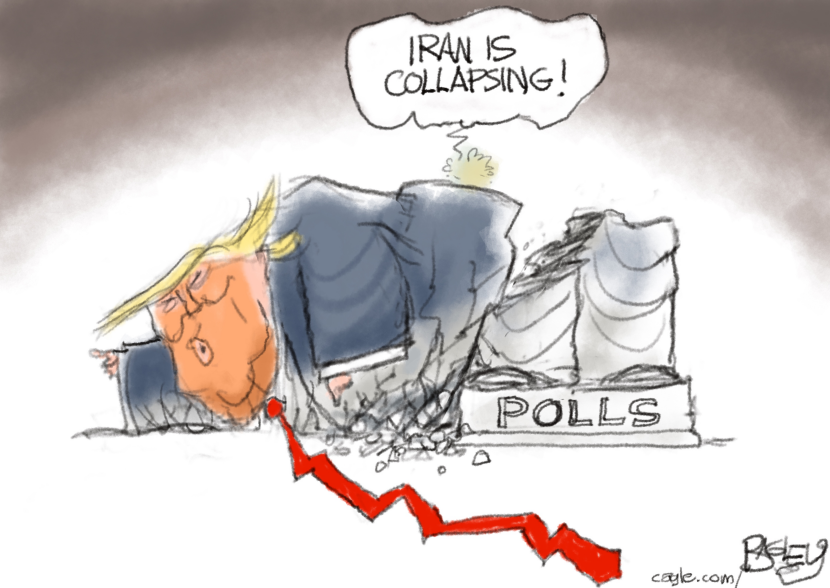
Donald Trump confronts a reversal on Iran policy in late August 2026. The development forces acknowledgment of earlier missteps on sanctions and negotiations. The episode highlights limits of unilateral pressure against Tehran. The cartoon presents the outcome as Trump being compelled to accept an unpalatable result.
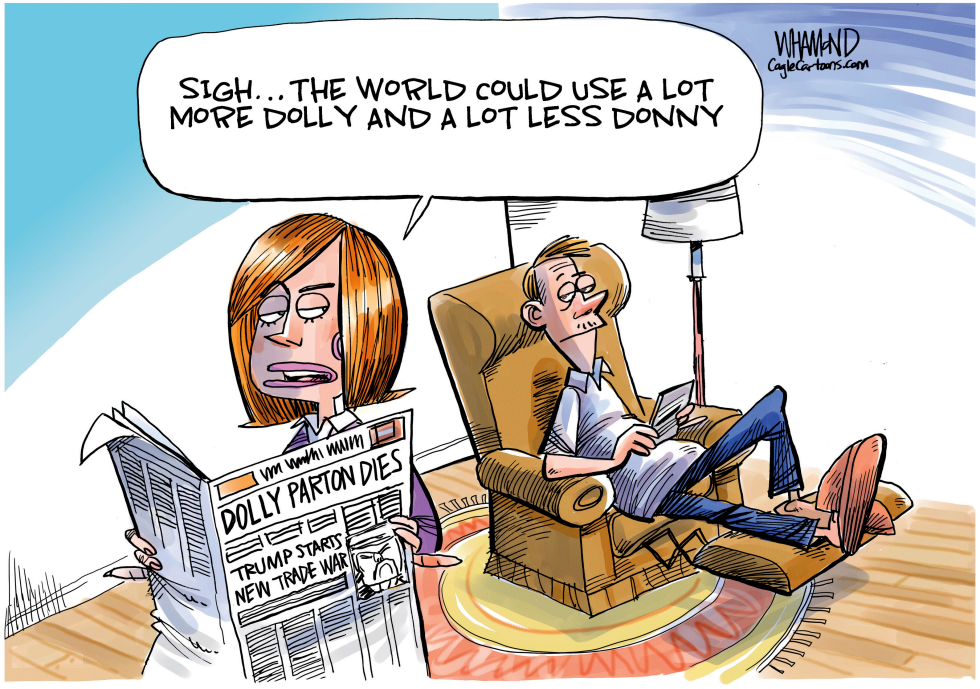
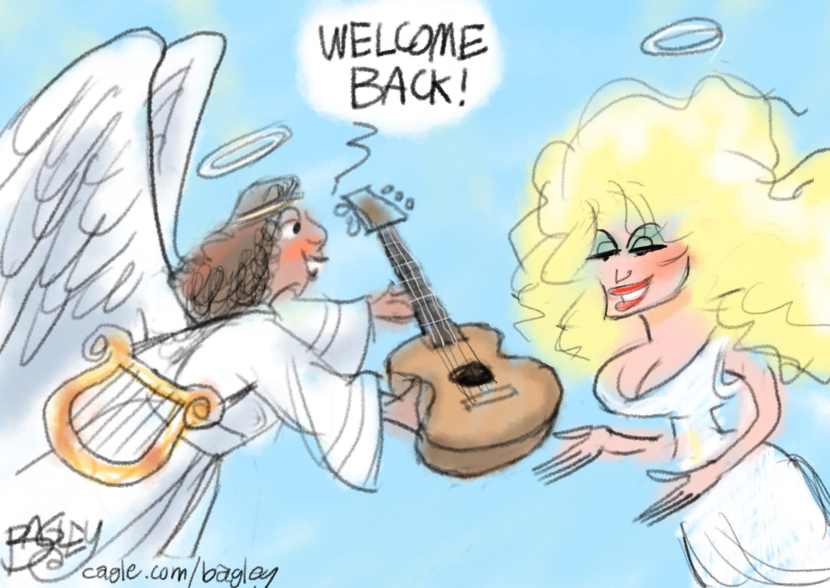
Donald Trump initiated a new trade war, coinciding with the reported death of Dolly Parton. The development drew public reactions contrasting the entertainer's legacy with the president's economic policies. The piece portrays a citizen preferring more of Parton's influence and less of Trump's.
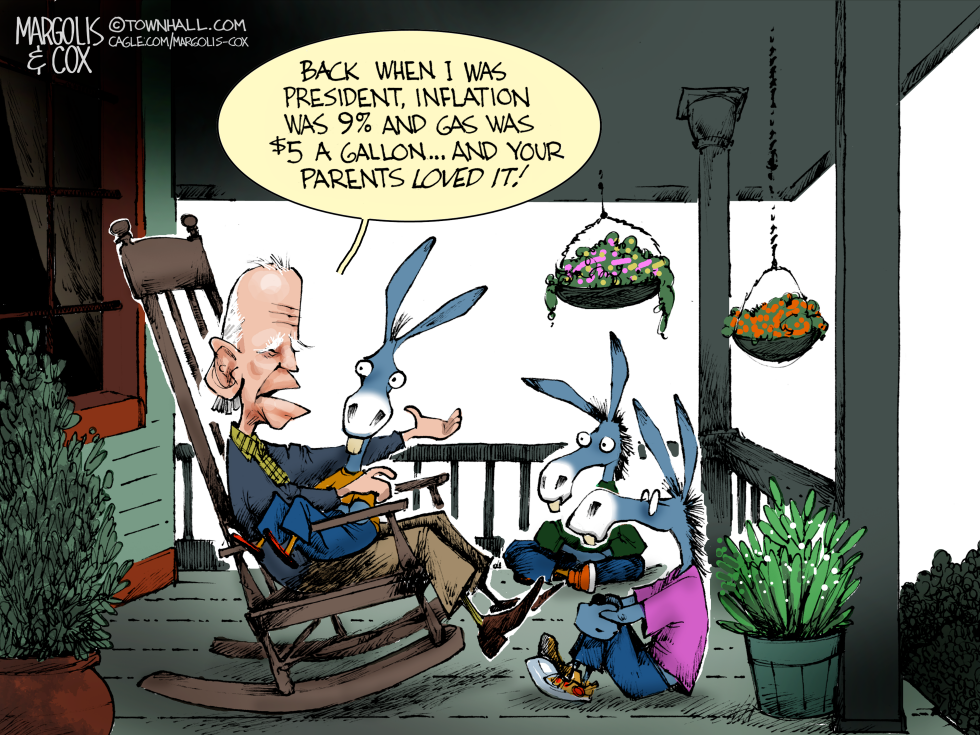
Former President Joe Biden addressed young Democrats on a porch, recalling the 9 percent inflation and $5-per-gallon gas prices from his term as something their parents loved. The remark comes amid ongoing Democratic efforts to move past the economic record of the Biden years. The cartoon presents the comment as tone-deaf revisionism that highlights the party's difficulty distancing itself from those results.
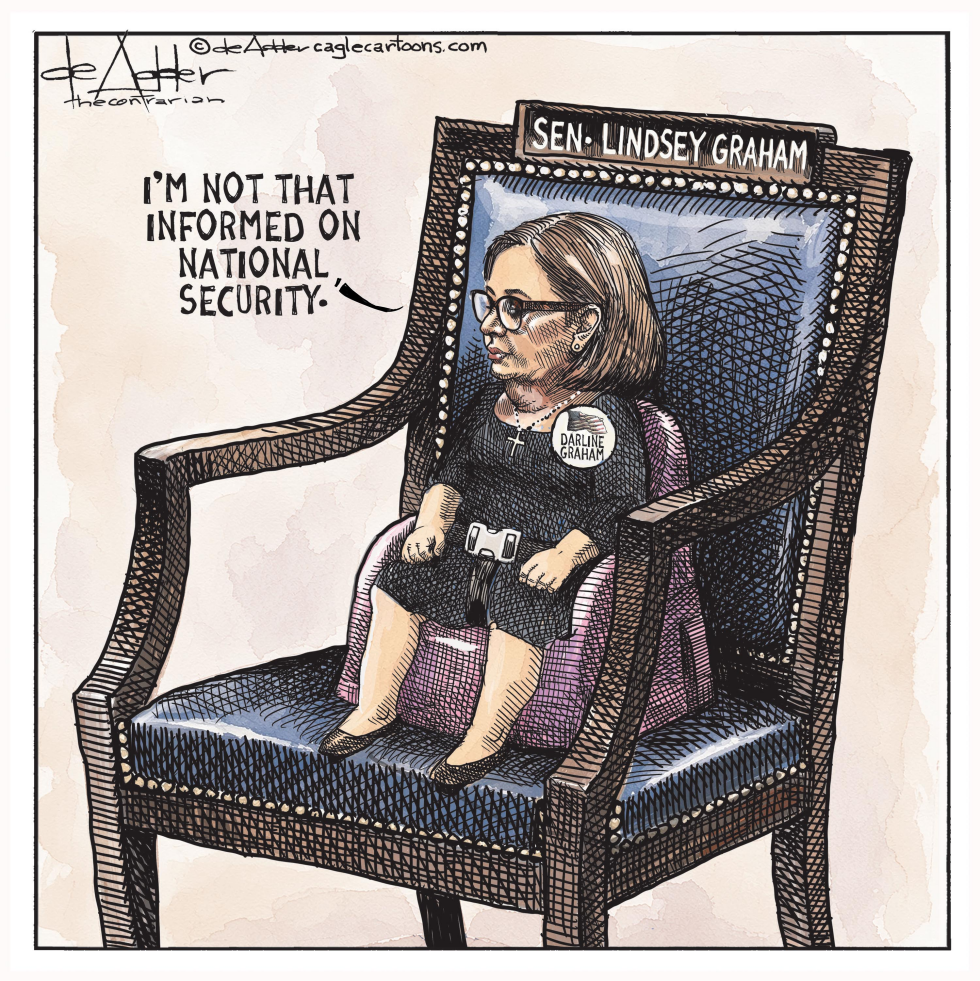
Senator Lindsey Graham stated he is not that informed on national security. The remark comes from a senior member of the Senate with oversight responsibilities in foreign affairs and defense matters. It raises questions about preparedness for committee leadership. The piece portrays the comment as a direct reflection of Graham's self-assessment in his role.
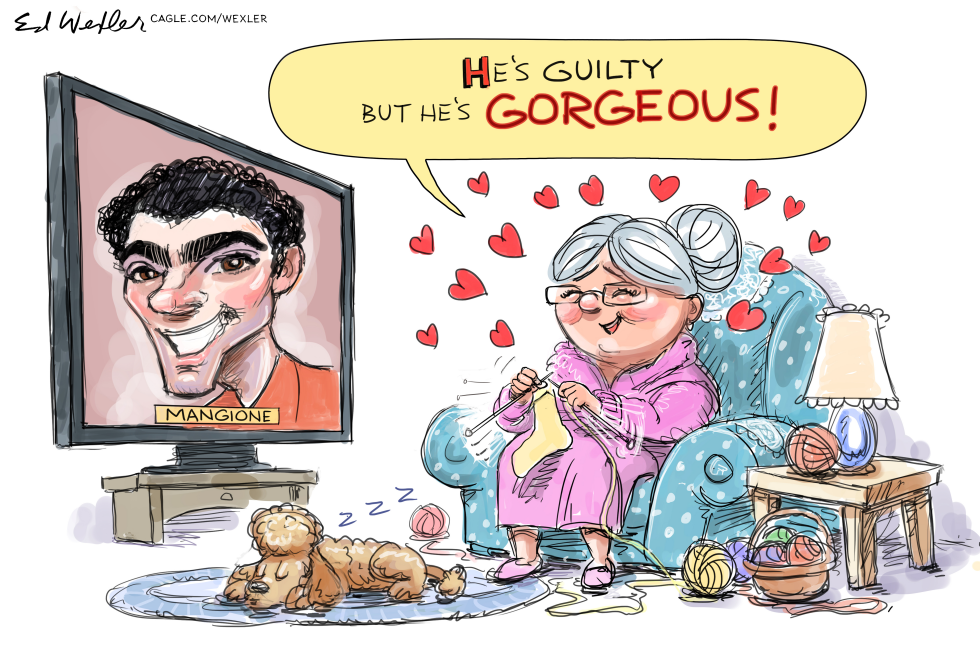
A guilty verdict was delivered in the Mangione case on or around August 2026. The decision drew widespread media coverage and public commentary. The editorial highlights how some viewers focused on the defendant's appearance rather than the legal outcome. It critiques the blending of serious justice matters with superficial attraction in popular reactions.
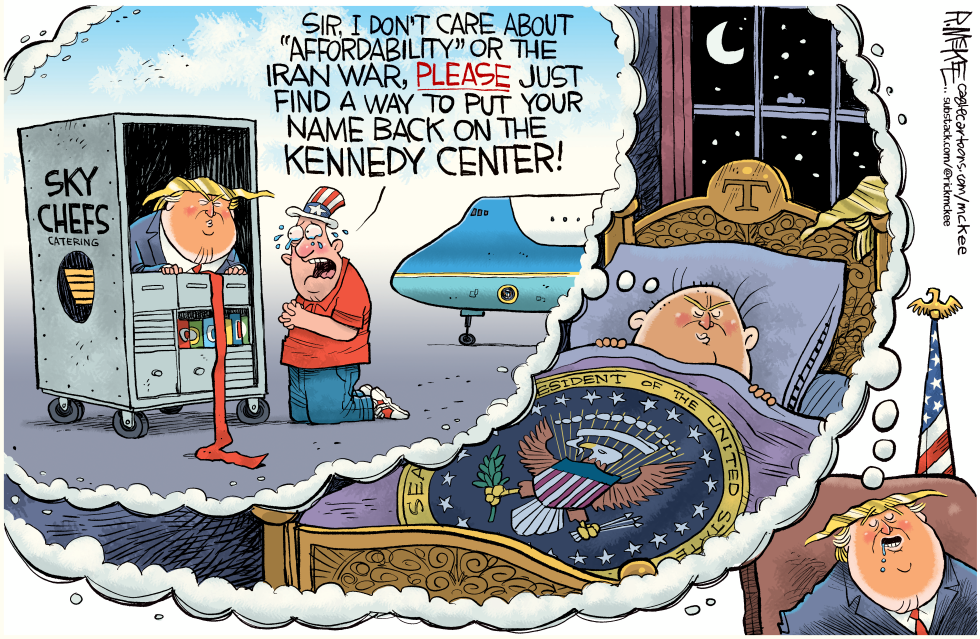
Donald Trump has repeatedly expressed interest in attaching his name to prominent public institutions. The Kennedy Center, a major arts venue in Washington, has drawn his attention as a potential target for rebranding. Critics argue such moves distract from pressing national issues including foreign conflicts and domestic spending. The cartoon depicts this fixation as a nighttime preoccupation that sidelines other responsibilities.
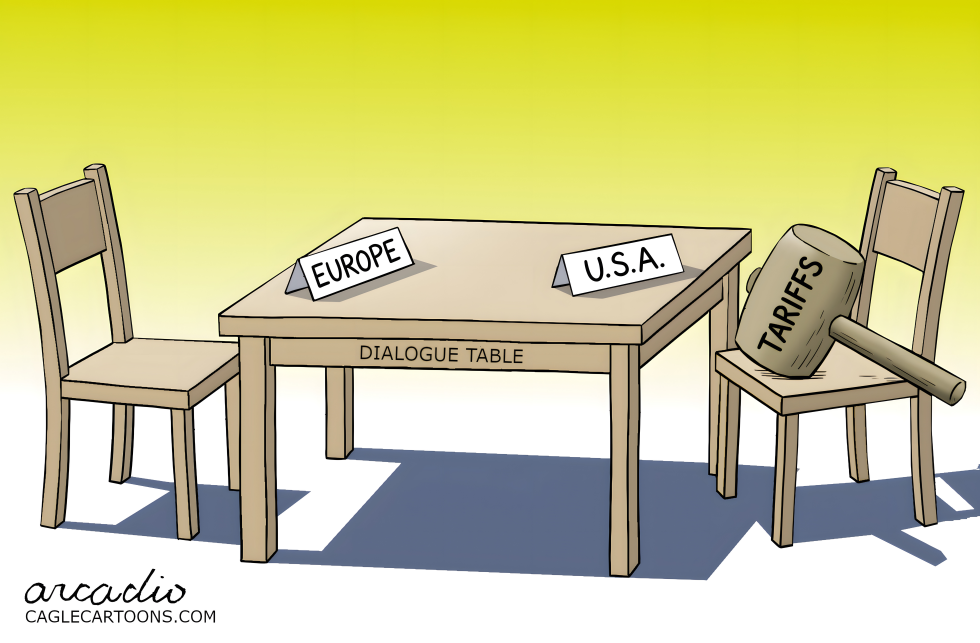
US and European officials face renewed friction over trade measures as tariffs disrupt scheduled talks. The impasse highlights ongoing disputes on import duties and market access that affect supply chains and consumer prices on both sides of the Atlantic. The editorial position criticizes the tariff approach for preventing constructive engagement and prolonging economic uncertainty.
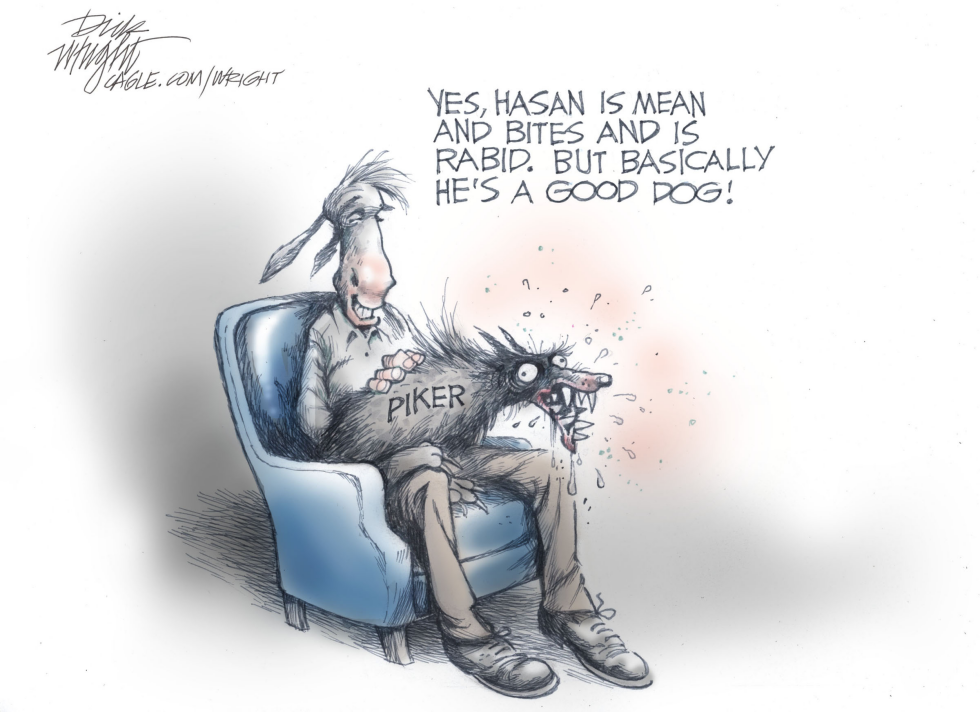
A prominent left-leaning commentator known for inflammatory rhetoric continues to draw defenses from Democratic figures despite repeated controversies over his statements. The defense frames the commentator as fundamentally loyal even while acknowledging aggressive conduct. This dynamic highlights ongoing tensions within progressive circles over how to handle allies whose rhetoric crosses into personal attacks. The piece portrays the defense as an exercise in willful denial of evident problems.
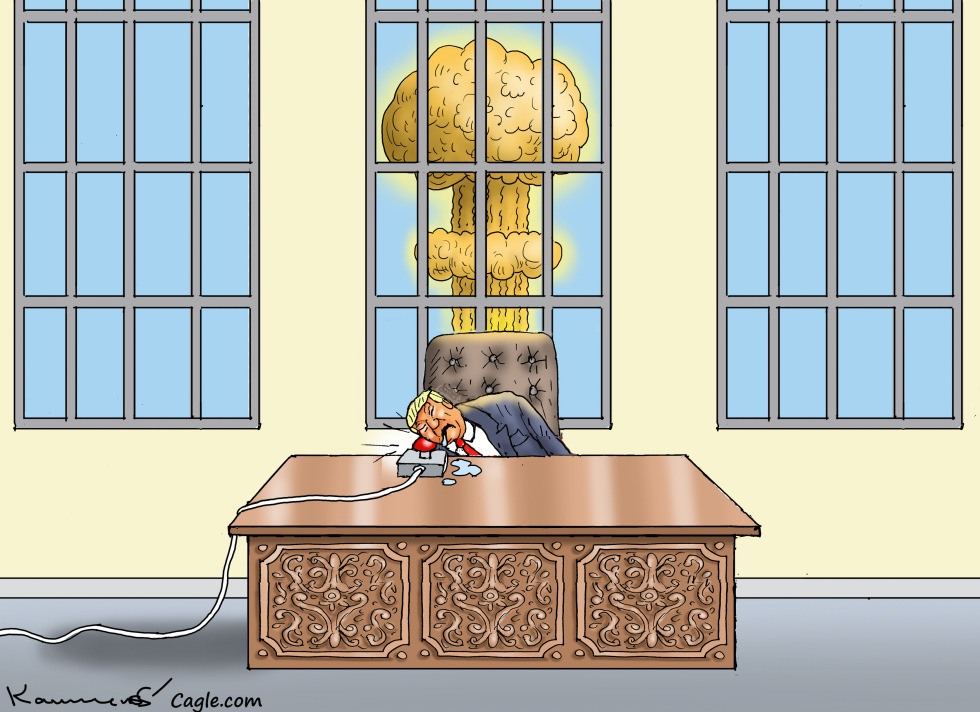
Donald Trump is shown slumped over the nuclear button in the Oval Office as a mushroom cloud rises outside the window. The image captures a moment of apparent inaction or collapse at the desk. The editorial position highlights risks associated with presidential control over nuclear launch authority during a period of heightened global tensions.
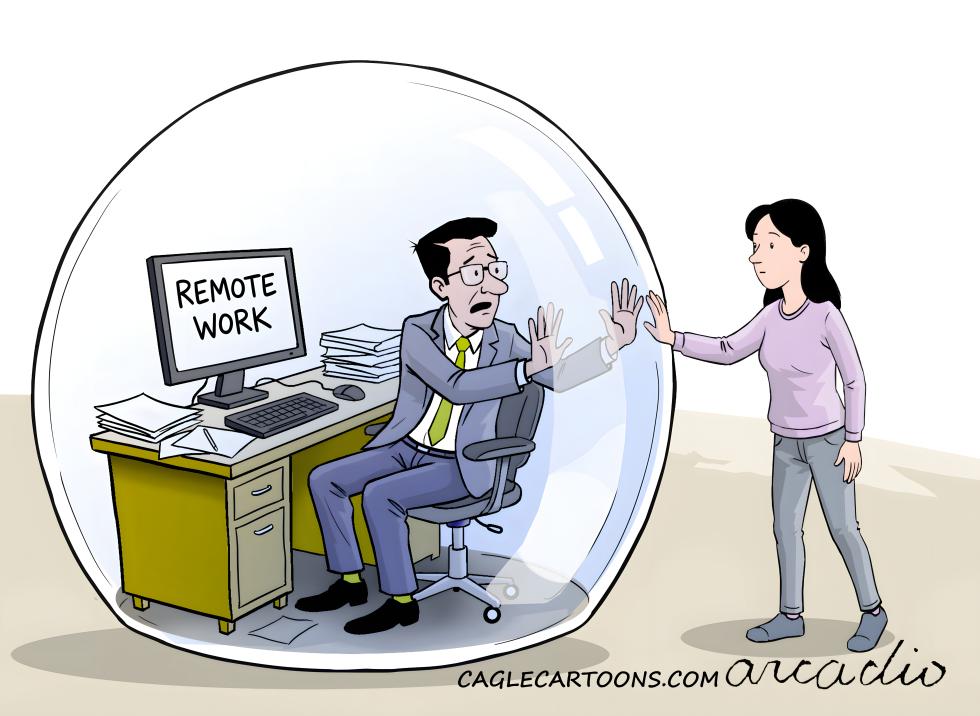
Remote work arrangements have expanded rapidly since the pandemic, allowing employees to perform duties from home but raising concerns about reduced collaboration and social connection in offices. The piece responds to ongoing debates over hybrid schedules and their impact on workplace culture. It takes the position that remote setups create artificial barriers that separate workers from direct human interaction and shared reality.
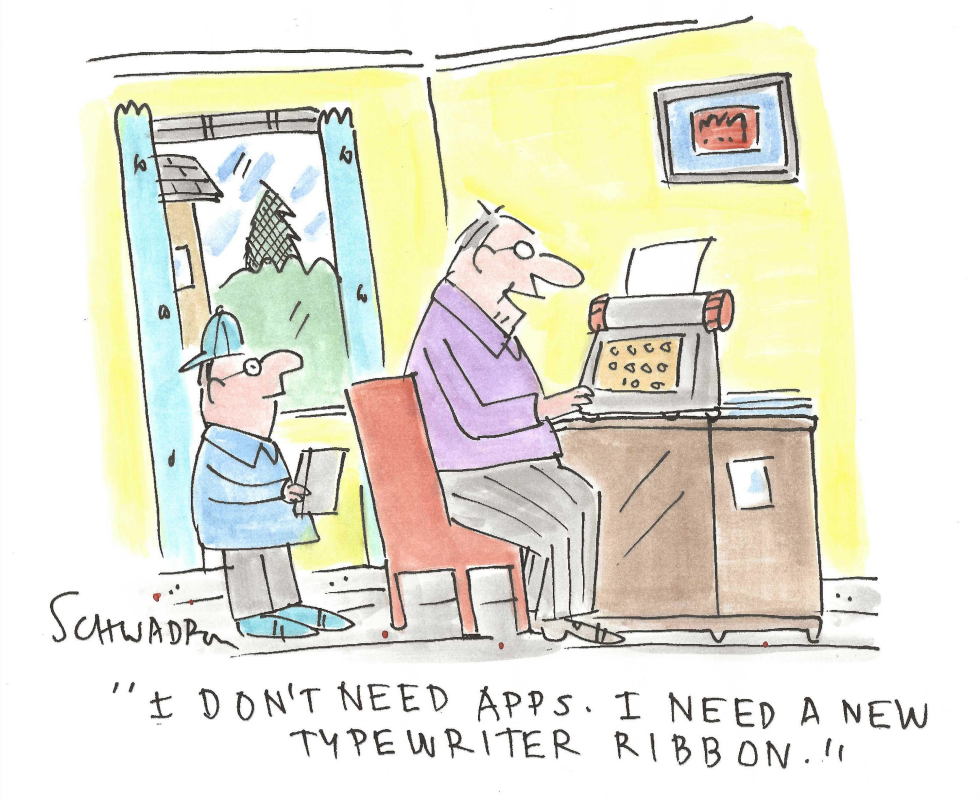
An elderly office worker continues using a manual typewriter despite widespread adoption of digital applications. The man explicitly states he requires only a replacement ribbon rather than any software tools. This reflects an ongoing generational divide where some older individuals maintain preference for analog equipment amid accelerating workplace digitization. The editorial highlights the persistence of traditional methods against pressure to adopt new technology.