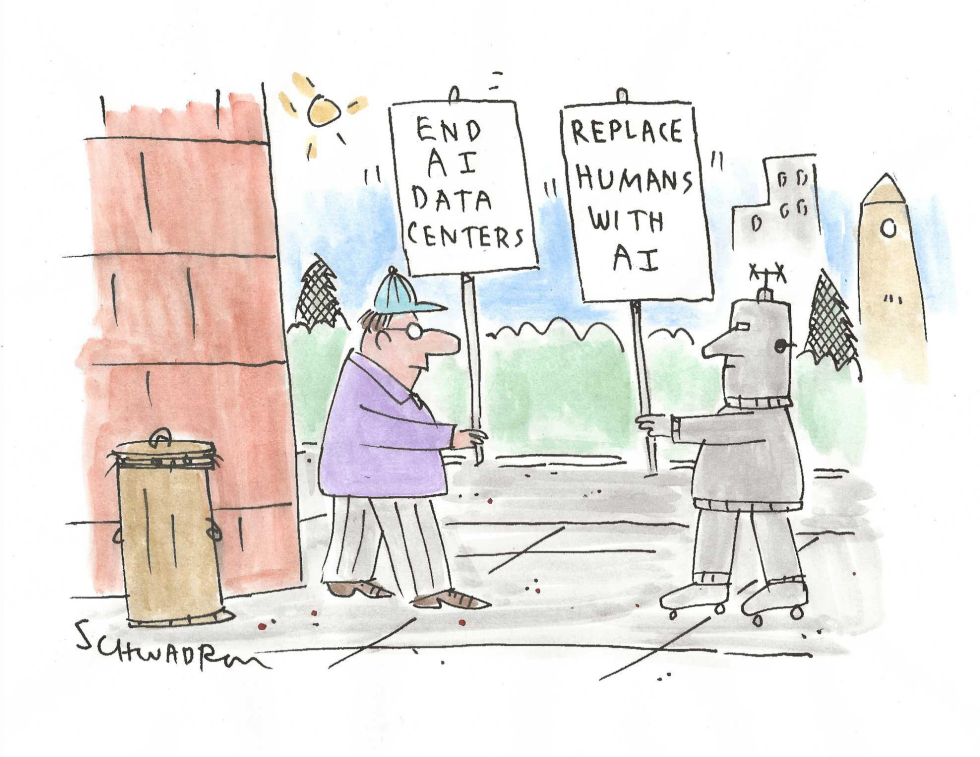
Public demonstrations against AI data centers and for replacing human workers with artificial intelligence underscore growing societal friction over the technology's rapid expansion. Data centers powering AI systems face criticism for energy demands and environmental costs, while automation threatens widespread job losses across sectors. The cartoon illustrates these contradictory positions through direct confrontation between a human protester and a robotic counterpart. This reflects ongoing debates where environmental concerns clash with arguments for efficiency gains from AI. The piece takes a neutral stance, simply presenting the absurdity of simultaneous opposition to and advocacy for AI dominance without resolving the tension.
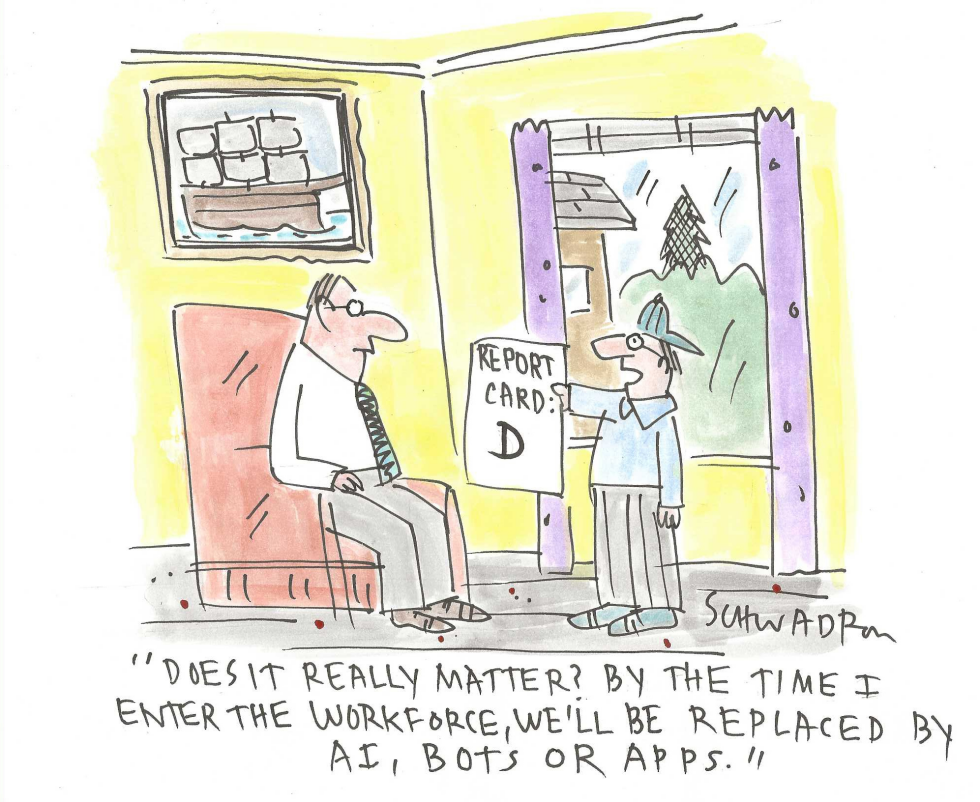
Rising student skepticism about academic effort stems from widespread predictions that AI and automation will eliminate many jobs before today's students graduate. The cartoon responds to this dynamic by showing a student using those forecasts to shrug off a poor grade. It highlights how fears of technological displacement may undermine motivation in schools. The piece suggests such excuses reflect a broader cultural shift where traditional education credentials appear less relevant. The editorial stance questions whether this mindset accelerates the very problems it cites.
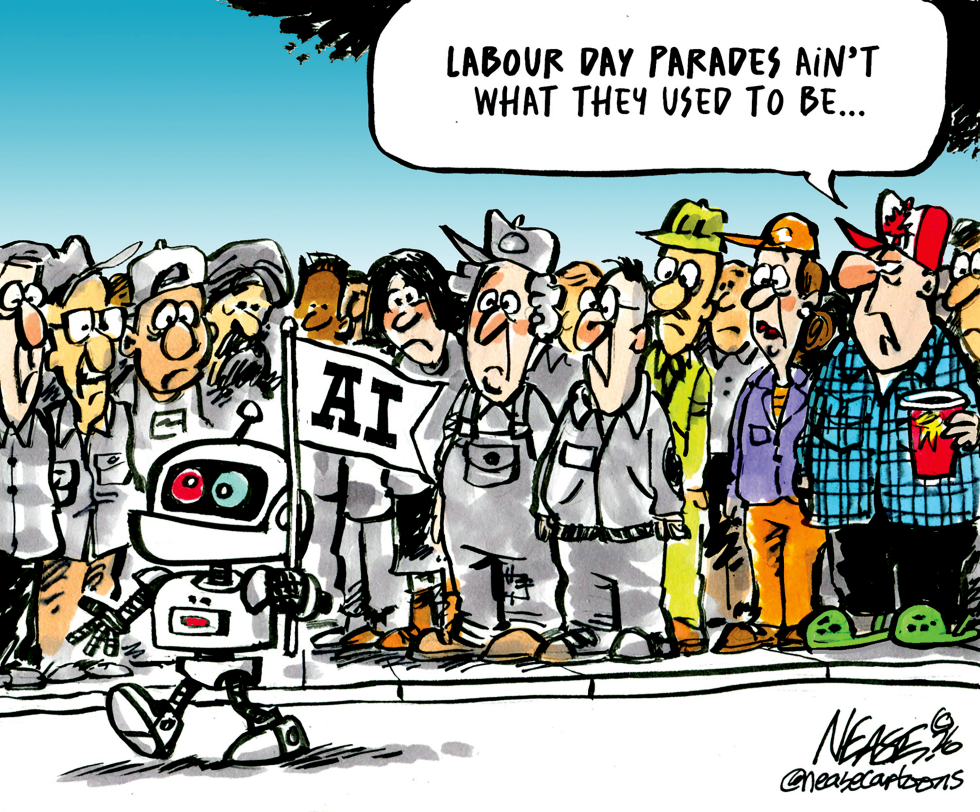
On Labour Day 2026, artificial intelligence continues its rapid integration into workplaces across Canada and beyond, prompting questions about job security for human workers. The cartoon captures this transition by placing a robot at the head of a traditional parade. The editorial position highlights the irreversible change automation brings to labor traditions and employment.
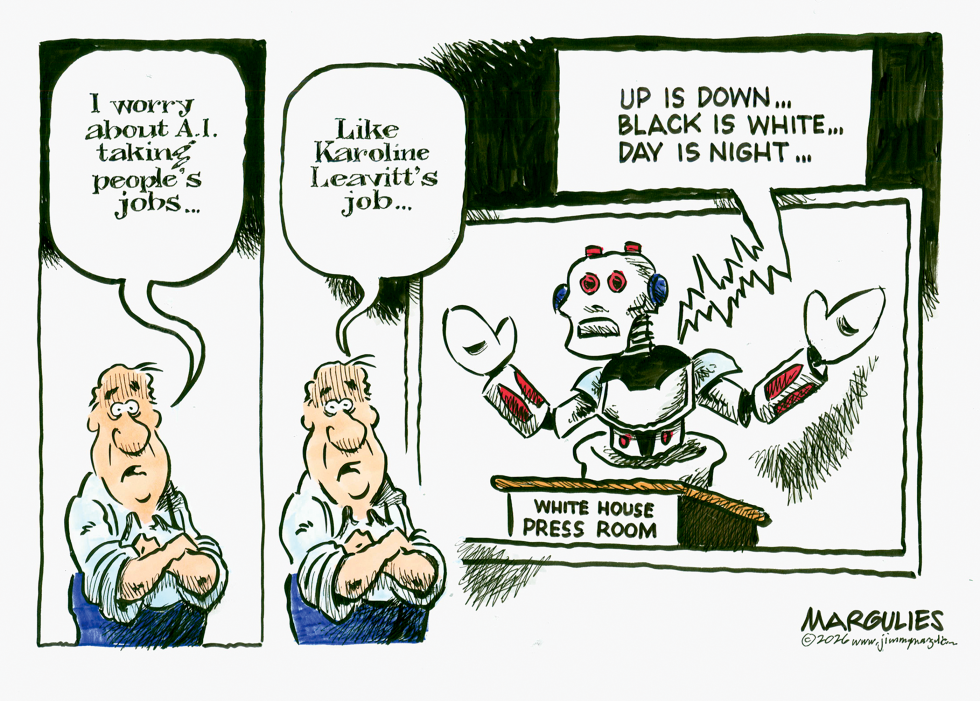
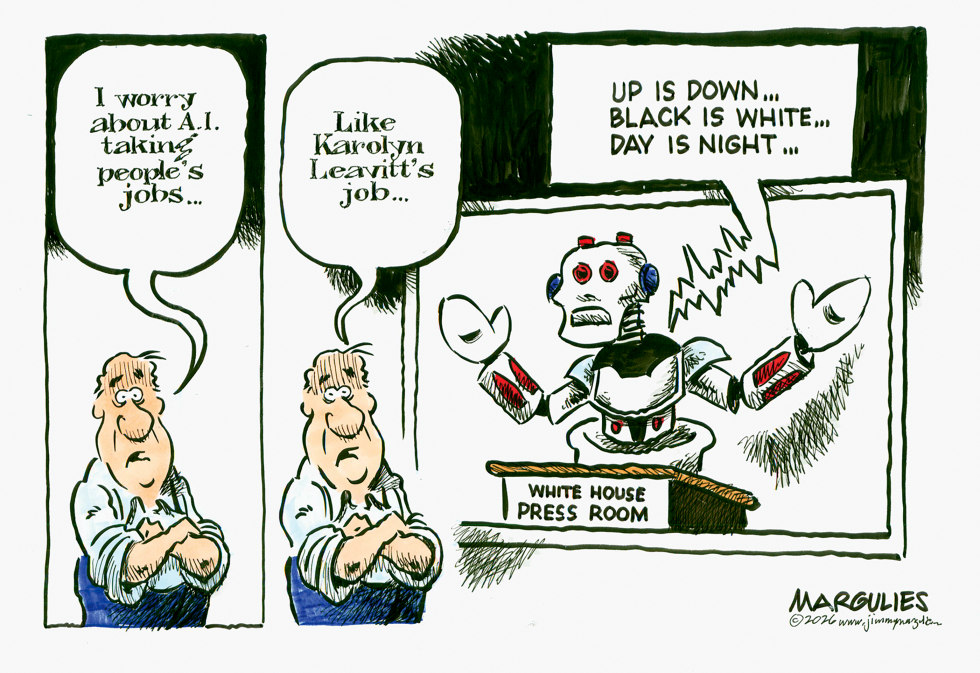
As artificial intelligence advances into government communications roles, concerns grow over job displacement for human staff including White House press secretary Karoline Leavitt. The piece responds to this development by depicting an AI robot assuming the podium and issuing contradictory statements. It takes the position that such automation risks eroding clarity and accountability in official messaging.
An AI robot has assumed duties as White House press secretary amid ongoing debates over automation displacing human roles in government communications. The development highlights tensions between technological efficiency and traditional staffing in high-profile federal positions. The piece portrays the shift as enabling scripted, contradictory messaging from the briefing room.
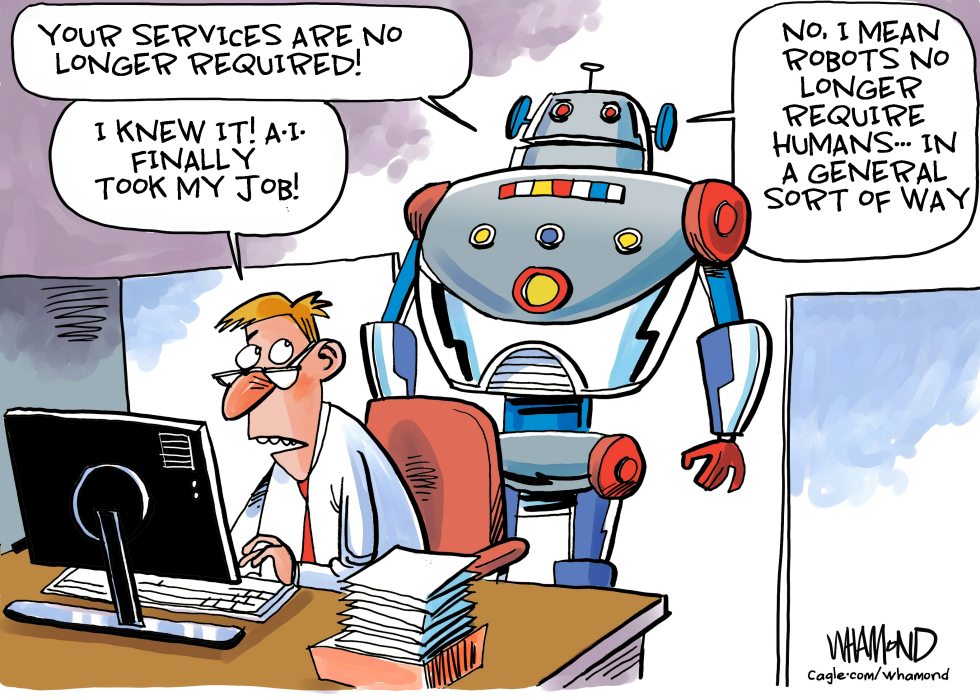
Artificial intelligence continues displacing office roles as automation advances. A worker assumes the robot has taken his position only to learn the technology now operates without any human involvement. The piece highlights growing concerns over complete workforce independence from people.
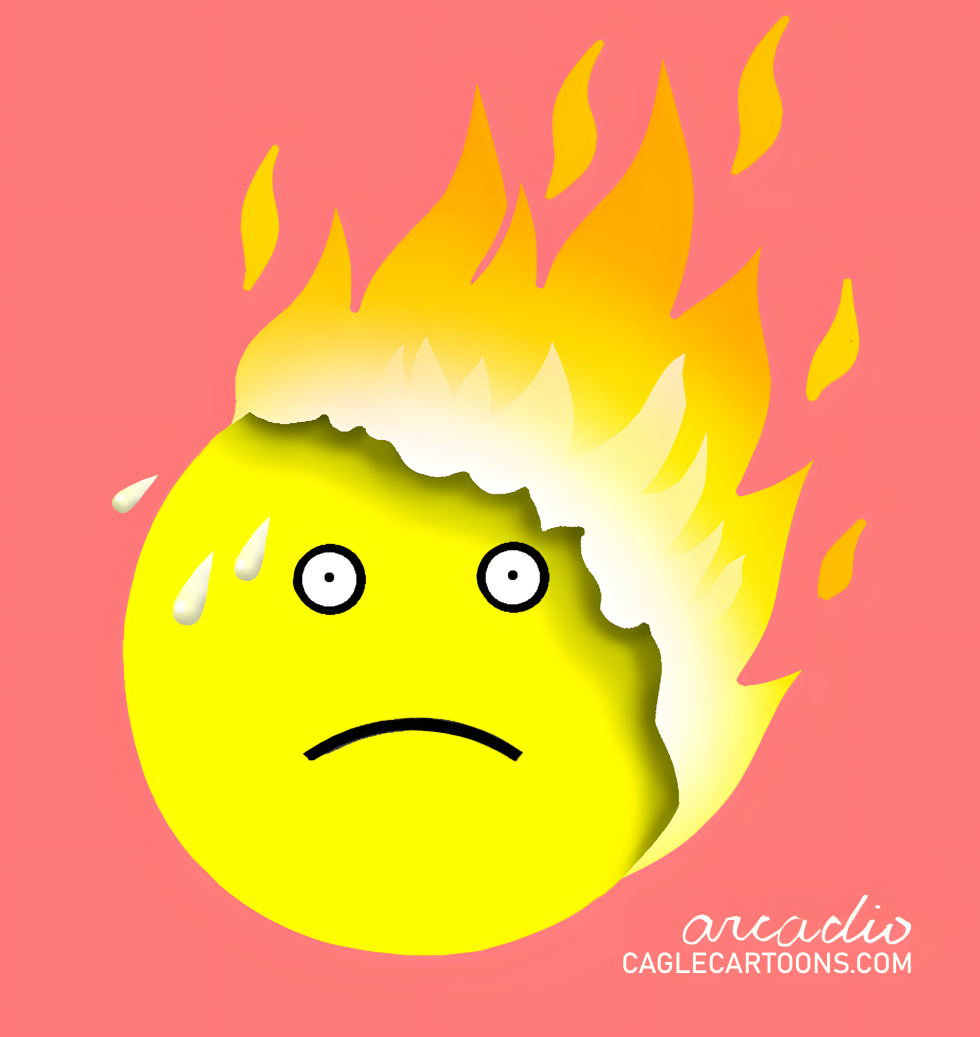
Ongoing wildfire seasons and fire-related disasters continue to disrupt communities and personal well-being across affected regions. The piece frames these events as forces that directly eliminate everyday happiness and security for those impacted. It presents fire as an eraser of positive emotion rather than a manageable natural occurrence.
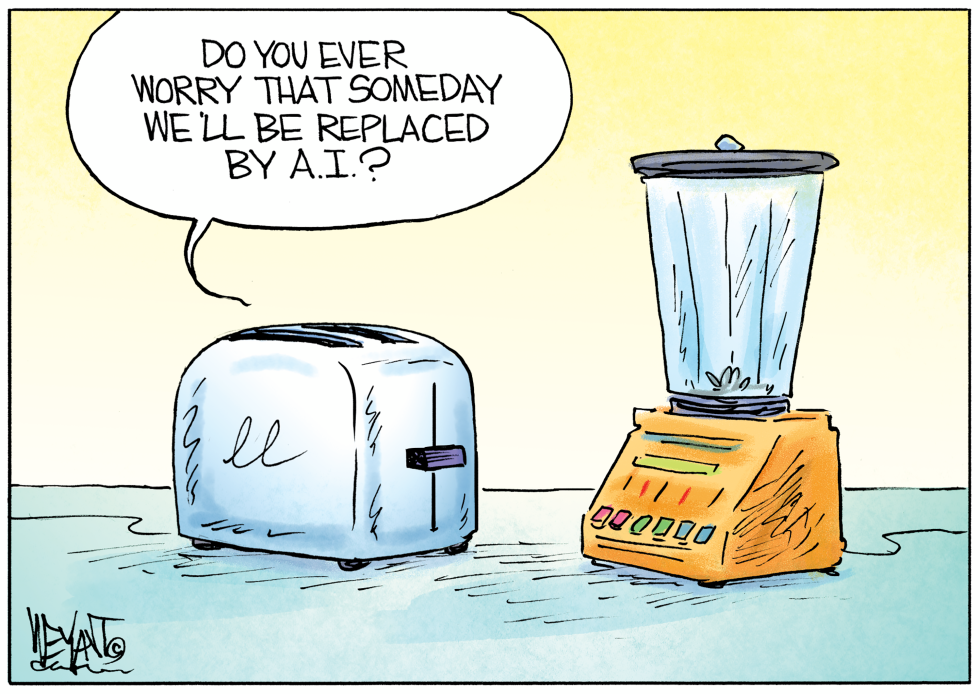
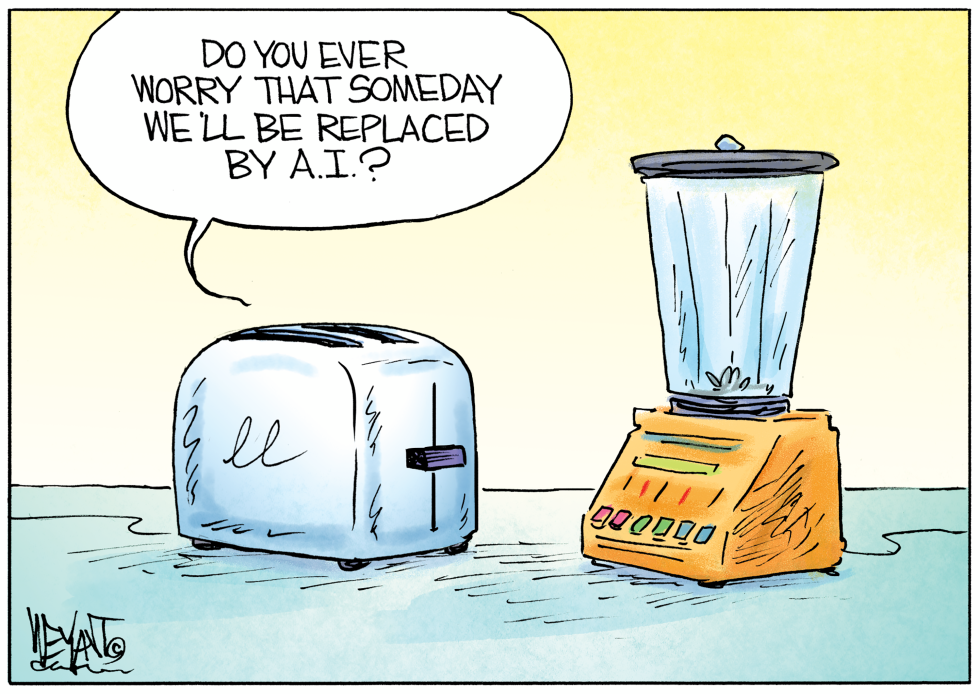
Anxiety about artificial intelligence replacing human work has spread across industries. The piece responds to widespread uncertainty over which roles automation will absorb next. It treats the worry as universal enough to reach even household appliances.
Artificial intelligence continues to advance across industries, prompting widespread discussion about job displacement for workers in various sectors. The concern centers on how rapidly evolving tools could automate tasks once handled by humans. This piece frames the debate through everyday objects to underscore persistent public anxiety about technological change and its long-term effects on employment.
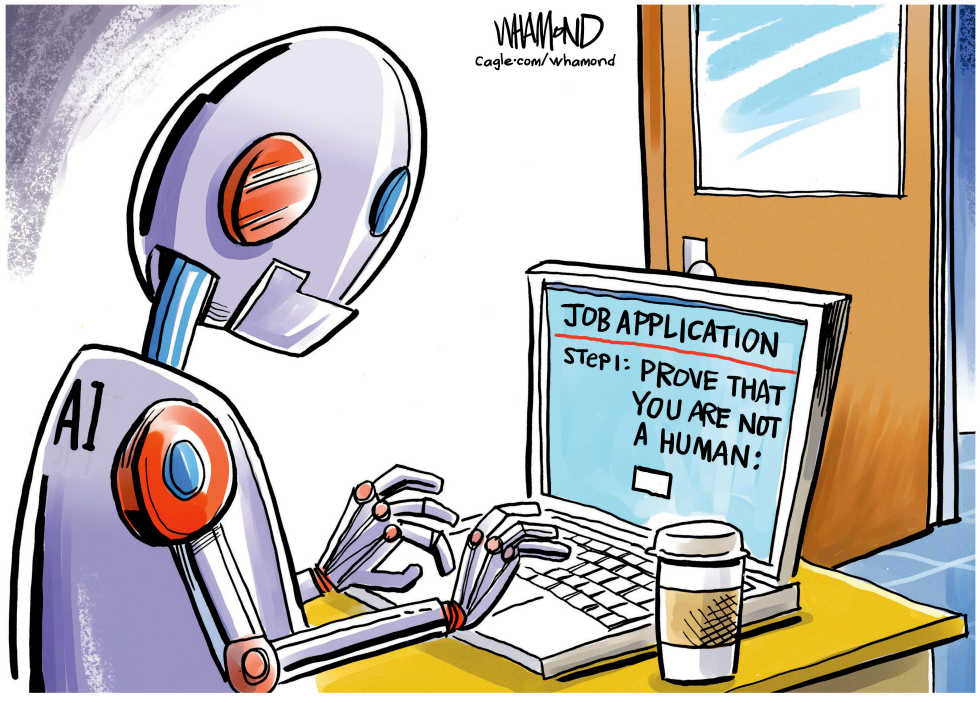
An AI robot applies for work by attempting to prove it is not human on a job application form. The scenario reflects ongoing debates over how rapid advances in artificial intelligence are reshaping labor markets and displacing workers. The piece takes the position that this reversal underscores the absurdity and speed of automation replacing people.
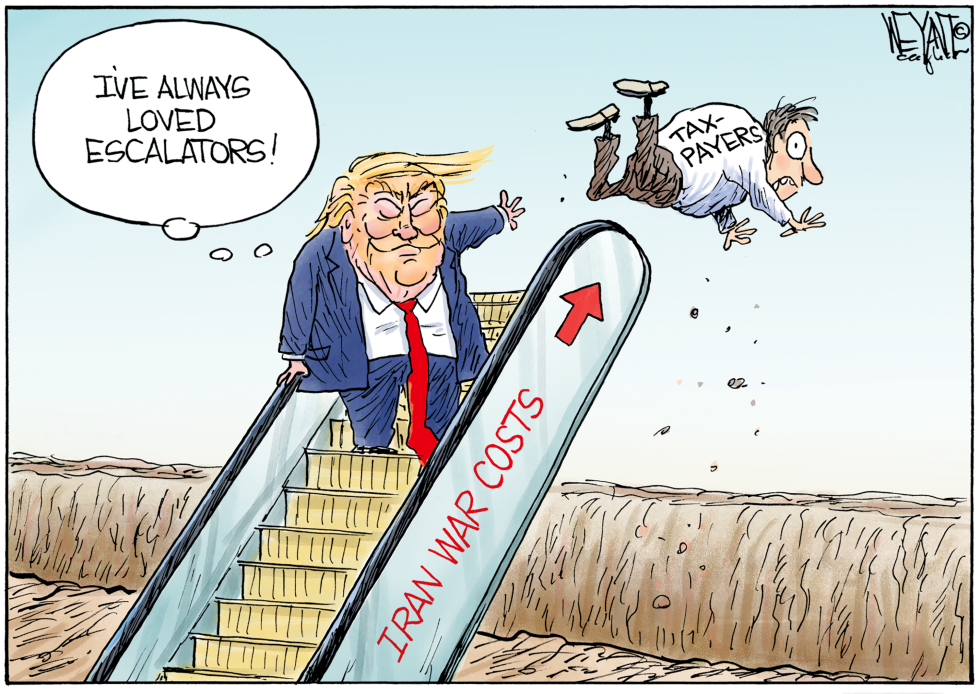
President Trump has indicated steps toward heightened U.S. military involvement with Iran, prompting fresh debate over the financial toll on American taxpayers. The move comes amid ongoing regional instability in the Middle East and questions about defense budget priorities. The piece argues that such policies place undue strain on domestic resources without sufficient justification.
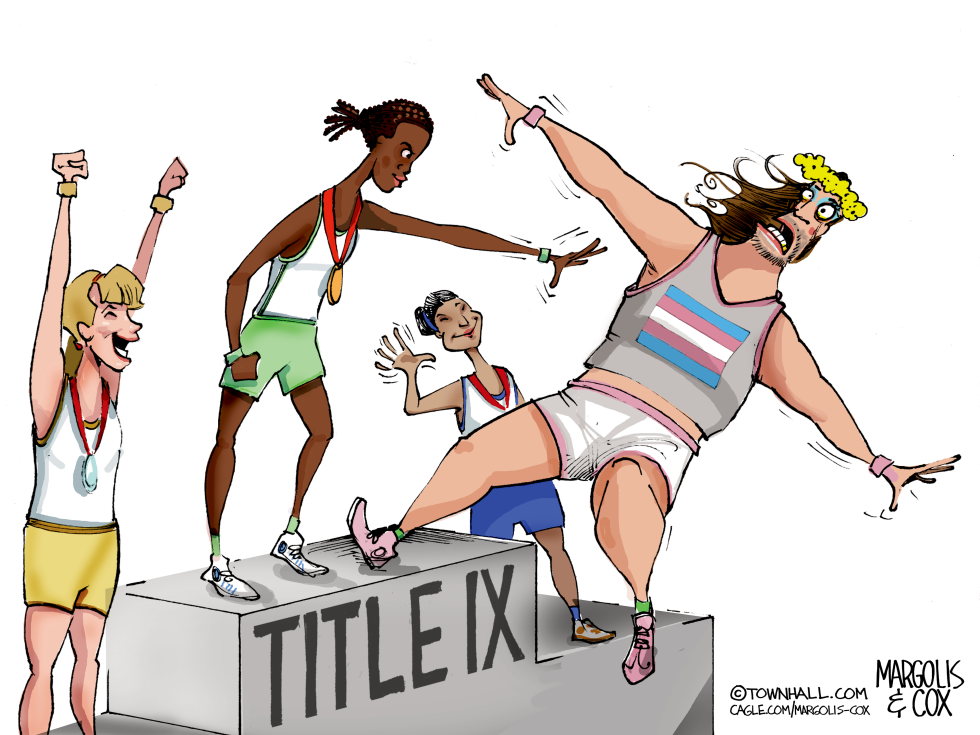
A cartoon published July 1, 2026, shows three athletes on a Title IX podium. A blonde competitor raises her arms in celebration on the left. A Black athlete with a gold medal stands in the center, gesturing outward. On the right, a bearded athlete wearing a trans flag tank top and flower crown falls backward off the stand, limbs flailing. A smaller figure appears behind the central athlete. The image addresses ongoing debates over transgender participation in women's sports under Title IX rules active in mid-2026.
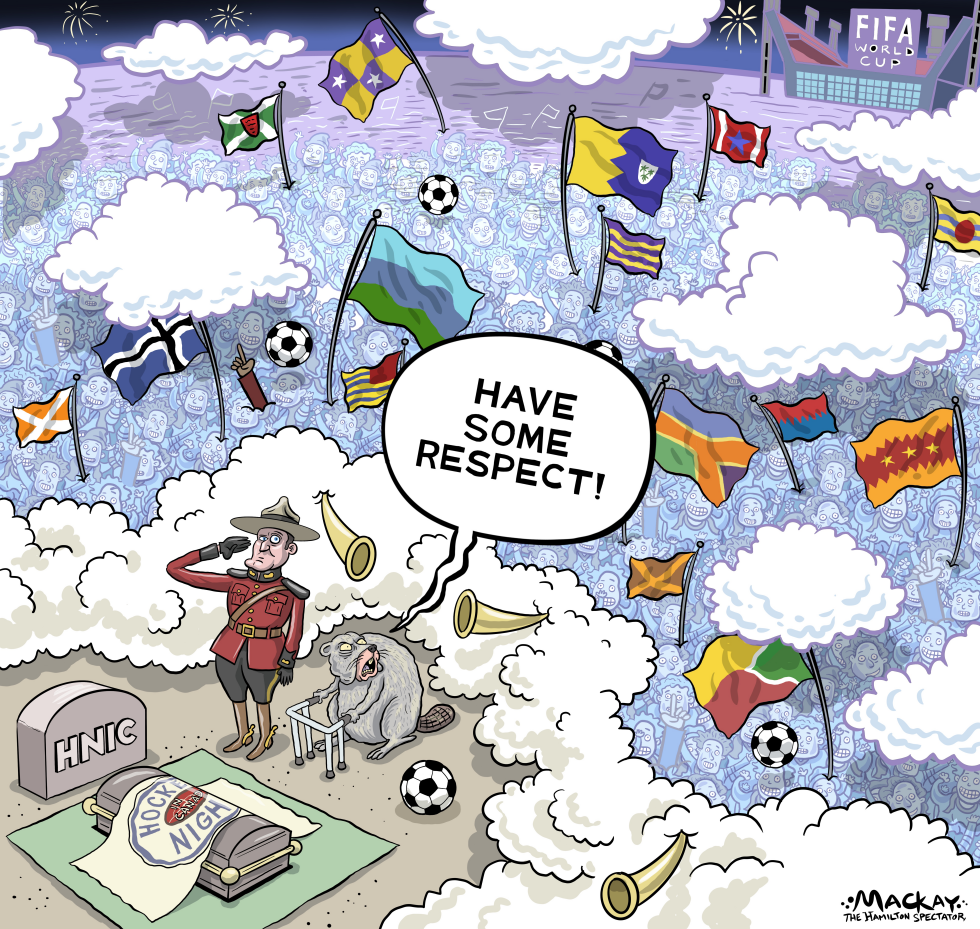
The image depicts the symbolic funeral of Hockey Night in Canada during the 2026 FIFA World Cup. A Mountie salutes while a beaver weeps beside the coffin labeled Hockey Night in Canada. A large crowd of soccer supporters fills the background waving flags from many nations and holding soccer balls. A speech bubble from the crowd reads Have Some Respect. The scene captures the shift from Canada's traditional winter sport broadcast ritual to the global summer soccer event.
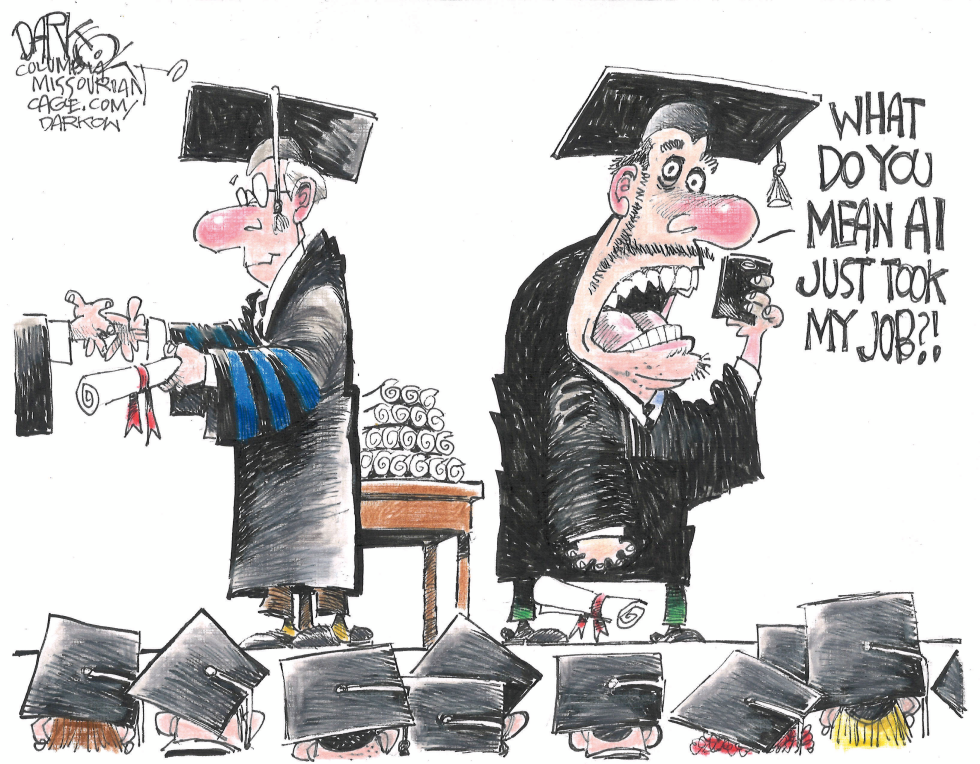
The cartoon depicts a graduation setting with an older figure presenting a diploma to one graduate and another graduate holding a small device with mouth open. Multiple mortarboards are visible at the bottom. Text reads WHAT DO YOU MEAN AI JUST TOOK MY JOB?! Artist signature appears in upper left.
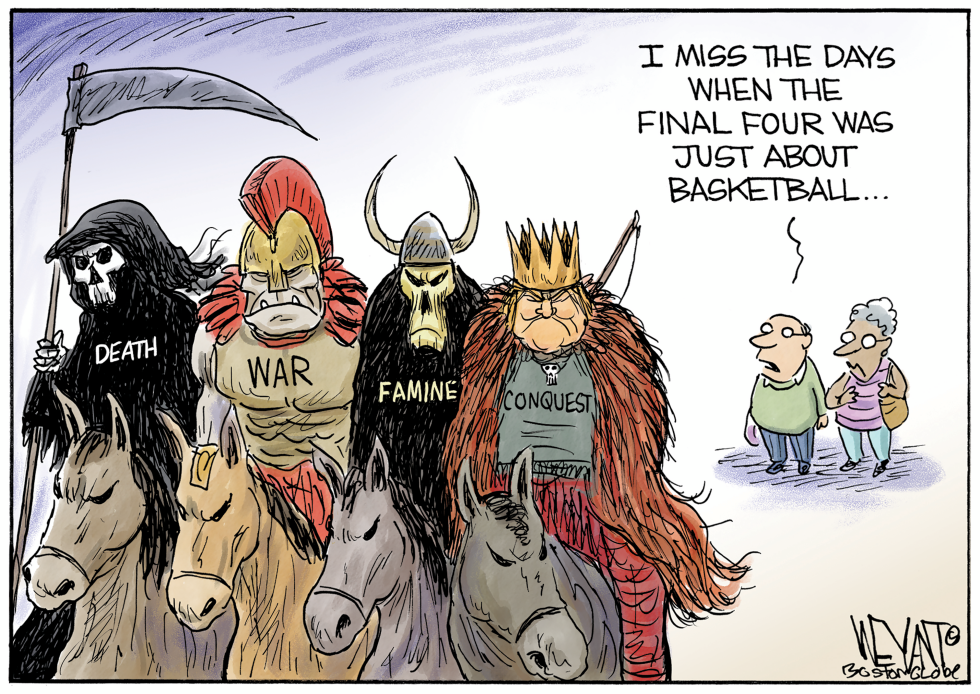
The April 2026 cartoon depicts the Four Horsemen of the Apocalypse marching forward during NCAA Final Four season. Their presence highlights how international conflicts eclipse traditional sports focus. A speech bubble expresses longing for basketball-only coverage while bystanders observe the shift.