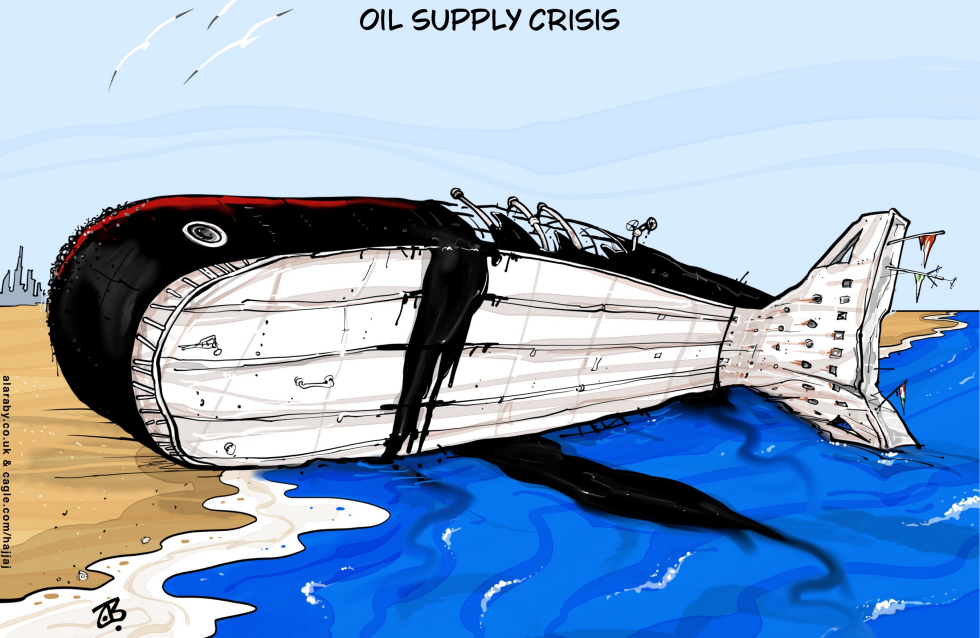
A major oil tanker has run aground, disrupting supply routes and releasing crude into coastal waters. The incident underscores vulnerabilities in global energy transport networks that rely on aging or poorly maintained vessels. Such events can spike fuel prices and trigger immediate cleanup costs for affected regions. The cartoon frames the grounding as a direct cause of the broader supply crisis rather than an isolated accident. It points to systemic weaknesses in oversight and infrastructure that allow one failure to cascade into wider shortages and ecological harm.
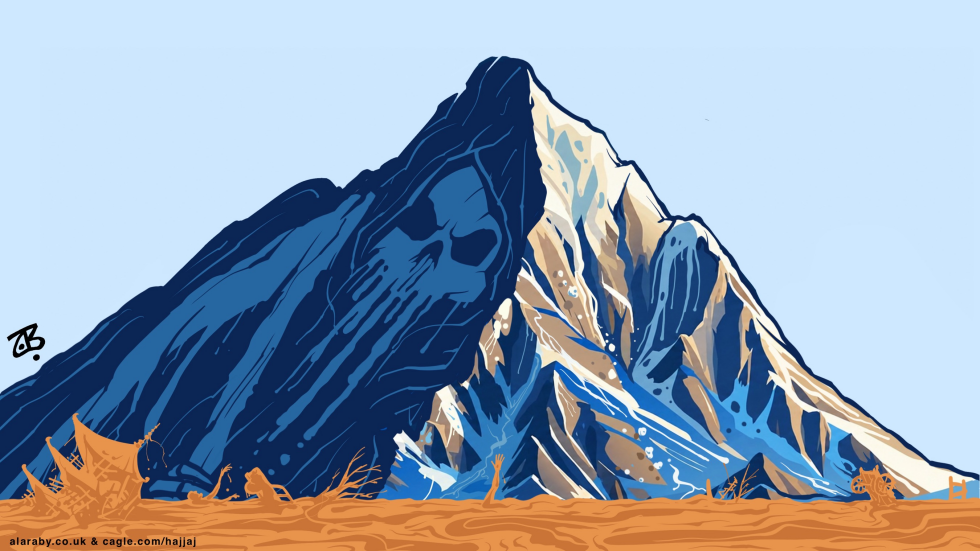
Severe flooding in the Himalayas has displaced thousands and caused significant loss of life amid accelerating glacial melt and intensified monsoon rains linked to climate change. The disaster highlights the vulnerability of mountain communities to extreme weather events that have grown more frequent in recent years. This piece frames the catastrophe as a stark warning of nature's retribution, underscoring the urgent need for global action on emissions to prevent further tragedies in fragile ecosystems.
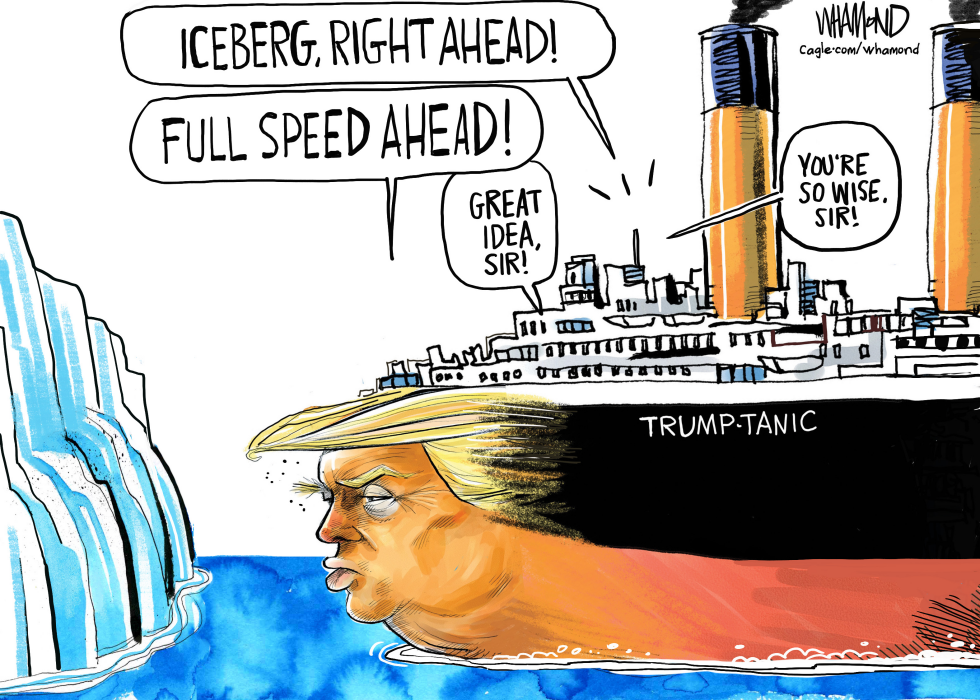
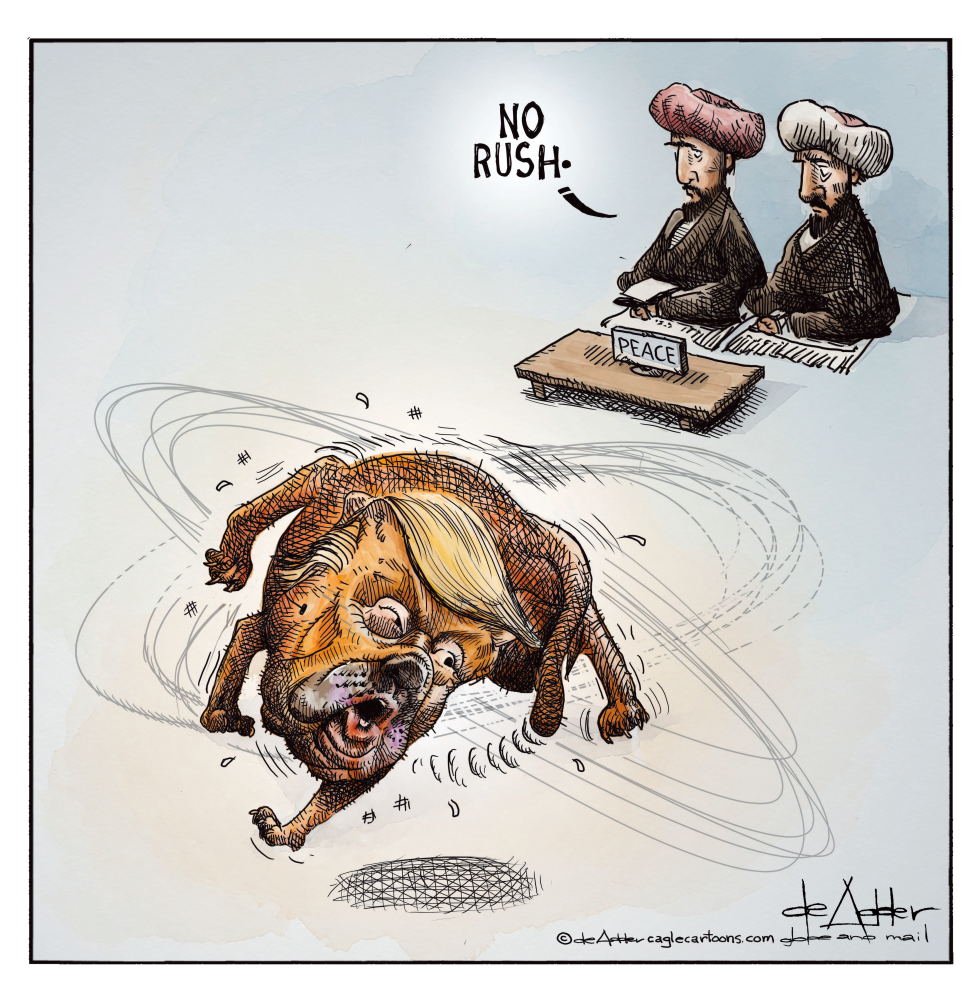
Donald Trump faces mounting leadership challenges in 2026 as critics warn his administration is steering the country toward avoidable crises. The piece portrays him ignoring clear warnings while surrounded by flatterers. It argues that such dynamics risk major political and policy damage.
Wildfires intensified by climate change continue to ravage forests worldwide, threatening ecosystems and communities. On the 2026 date of this piece, ongoing heat and drought patterns fuel larger blazes with little relief in sight. The editorial argues that inaction on emissions leaves nature itself bearing the visible scars of rising temperatures and extreme weather.
A sweating journalist wearing a Freedom of the Press hat leans over a bundle of dynamite sticks wired to a 60 Minutes timer. The timer ticks loudly as the figure warns in a speech bubble that failure to defuse the crisis will cause everything to blow. The image responds to reported turmoil at CBS News involving 60 Minutes correspondents and leadership changes at Paramount.
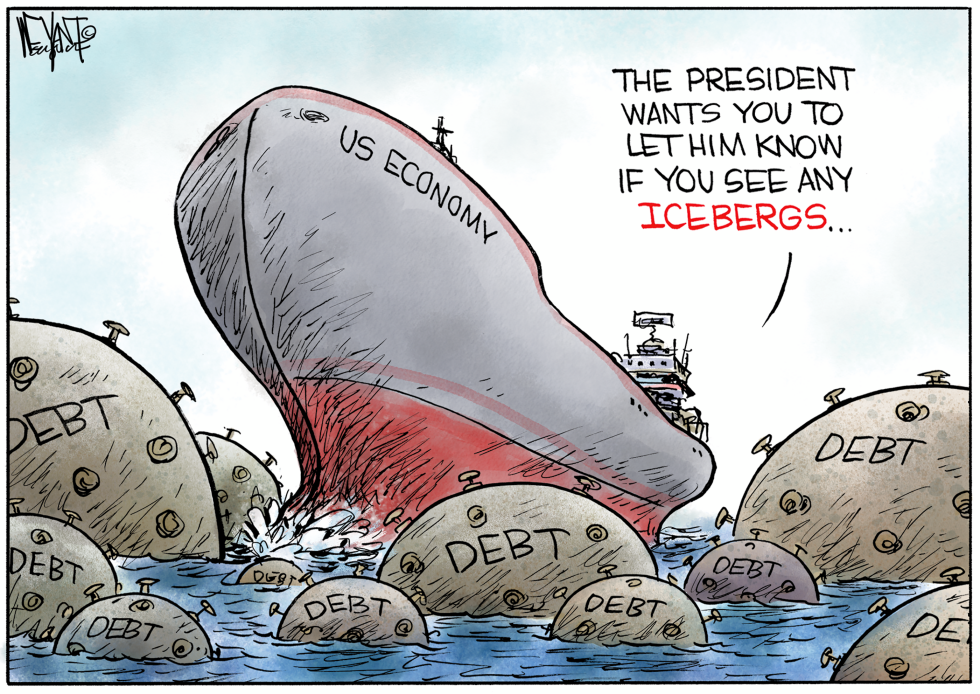
This political cartoon illustrates the US Economy as a massive ship labeled accordingly, dramatically sinking after colliding with numerous icebergs each marked 'DEBT.' A speech bubble from the ship warns to alert the president about icebergs, evoking the Titanic disaster in a clear metaphor for economic peril. Incorporating tags such as economy, debt, budget, inflation, prices, and costs, the image critiques fiscal irresponsibility. The artwork by Christopher Weyant uses simple lines and colors to emphasize the collision's impact, with water splashing and the ship's hull damaged. Such cartoons often highlight how mounting debt threatens stability, drawing parallels to historical maritime tragedies for satirical effect. The composition places the ship at an angle, surrounded by floating debt bergs, underscoring inevitable crisis if warnings go unheeded.
Arend van Dam's cartoon shows a gray battleship marked USA, complete with guns and missiles, driven by a figure in a suit at the wheel, as it goes over a waterfall between rocky cliffs under a blue sky. The image captures the essence of strategy failure in the Strait of Hormuz, tying into themes of Iran, ayatollahs, war, battleship mishaps, Middle East conflicts, oil, gas, energy, and economy. Such visuals often poke at misguided military moves, where the ship's plunge represents a dramatic downfall in strategic planning. The dry humor lies in the absurdity of a warship treating a strait like a river rapid, underscoring potential economic fallout from regional tensions. Cartoons like this thrive on clear, exaggerated metaphors that resonate with readers familiar with global news.