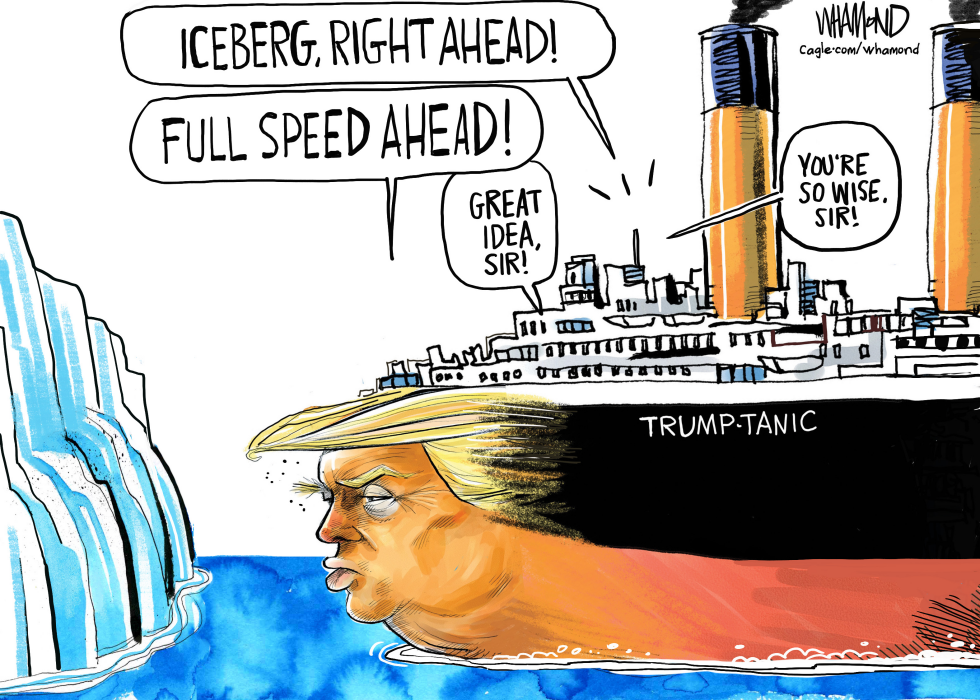
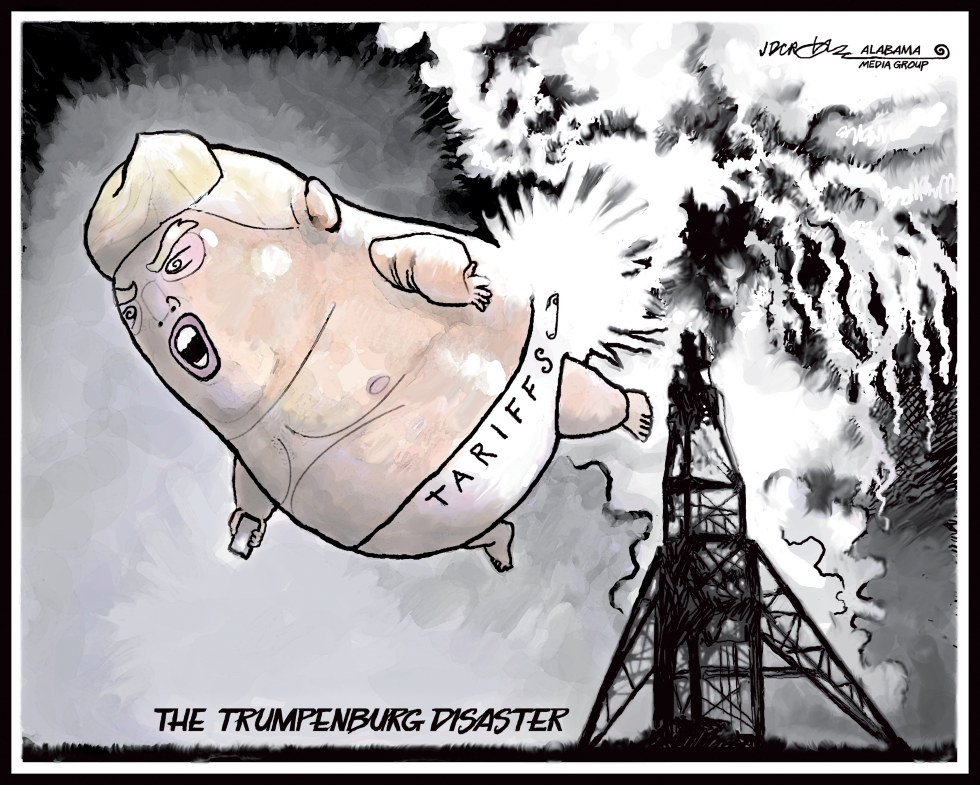
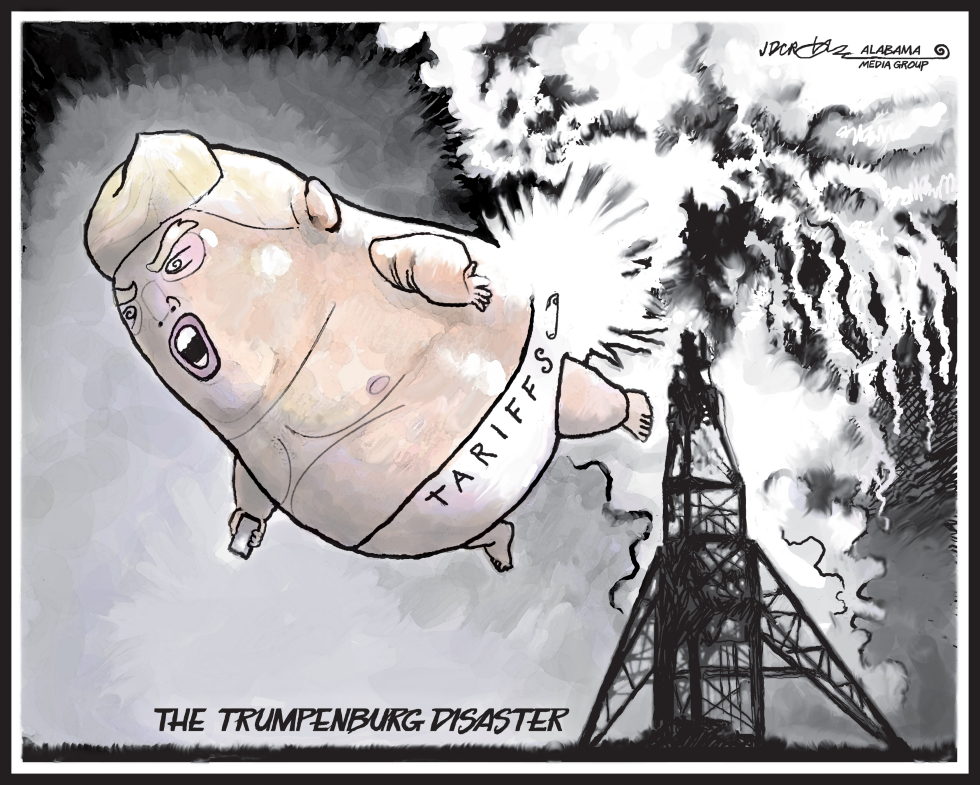
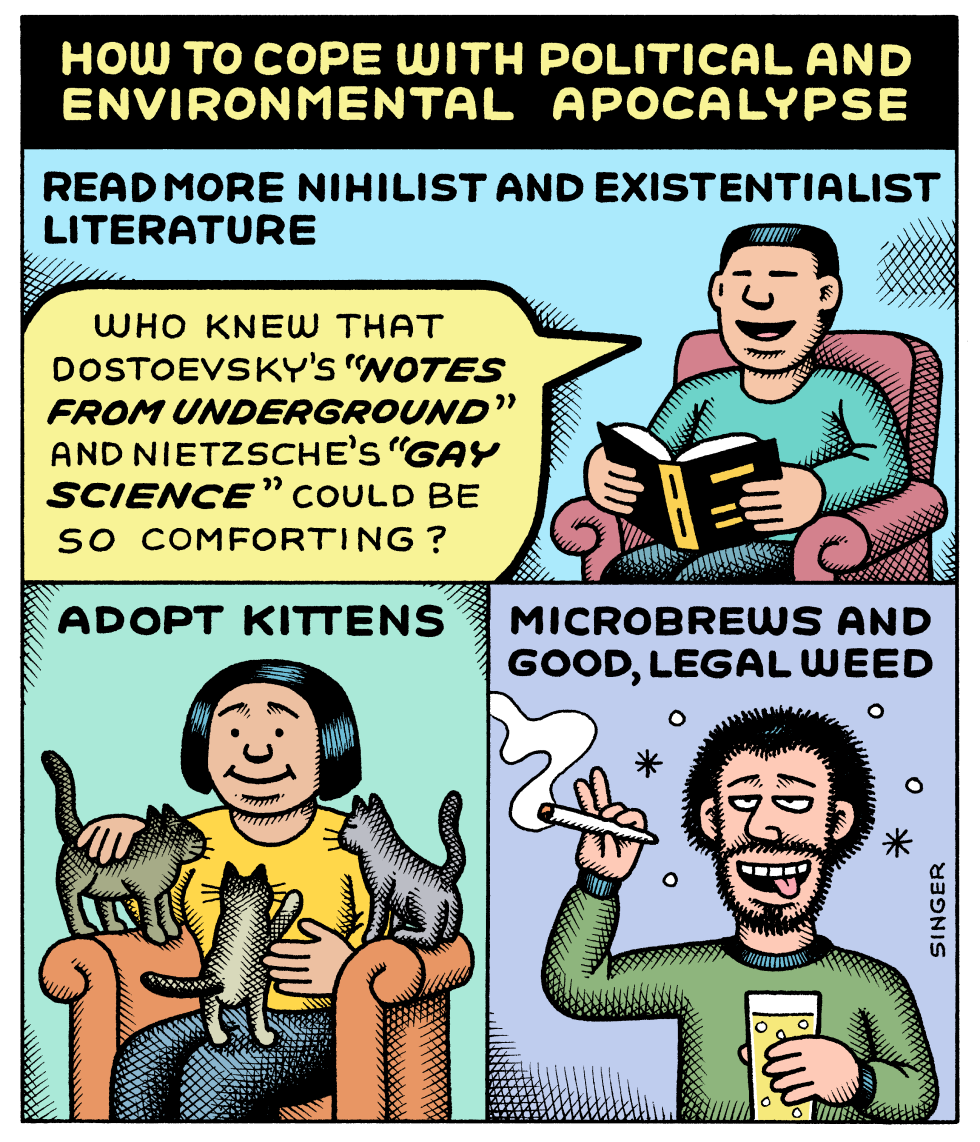
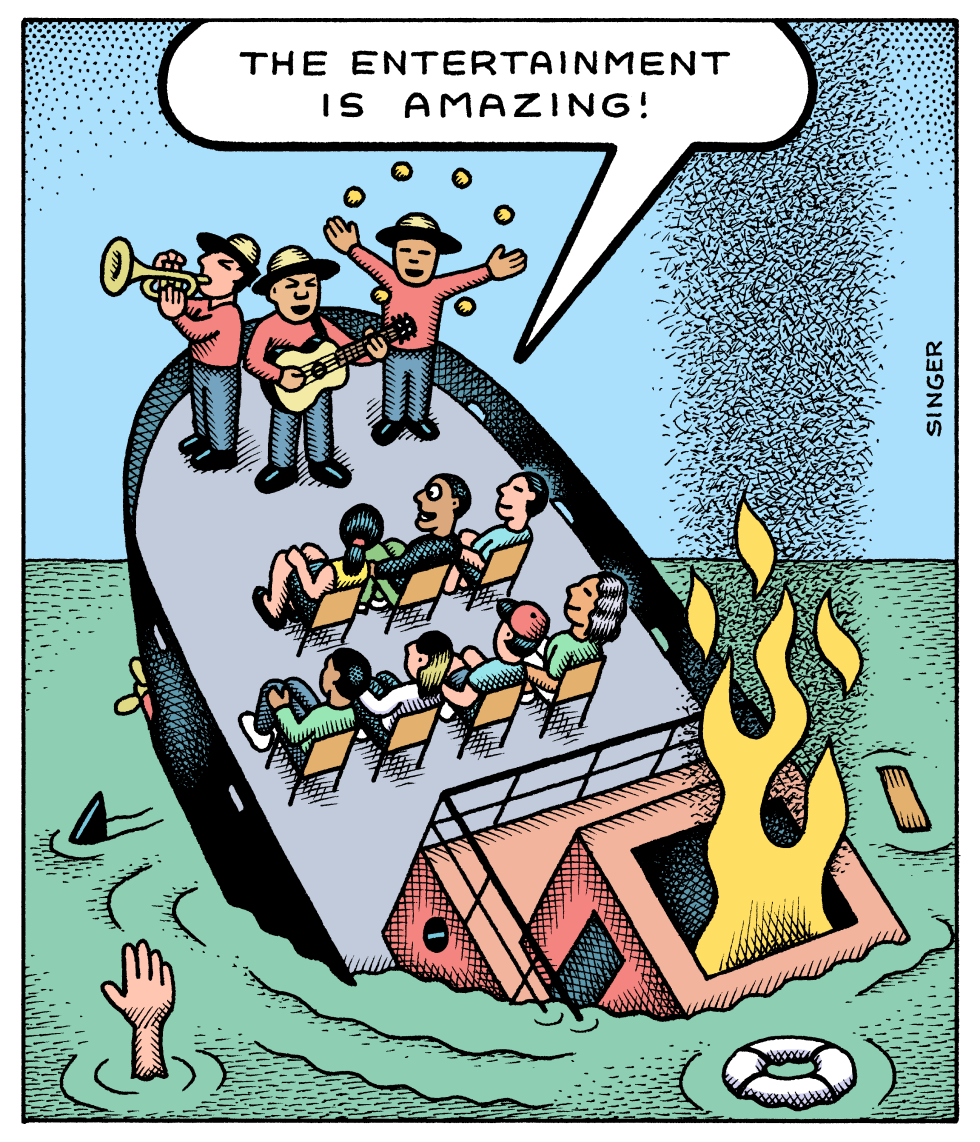
Donald Trump faces mounting leadership challenges in 2026 as critics warn his administration is steering the country toward avoidable crises. The piece portrays him ignoring clear warnings while surrounded by flatterers. It argues that such dynamics risk major political and policy damage.
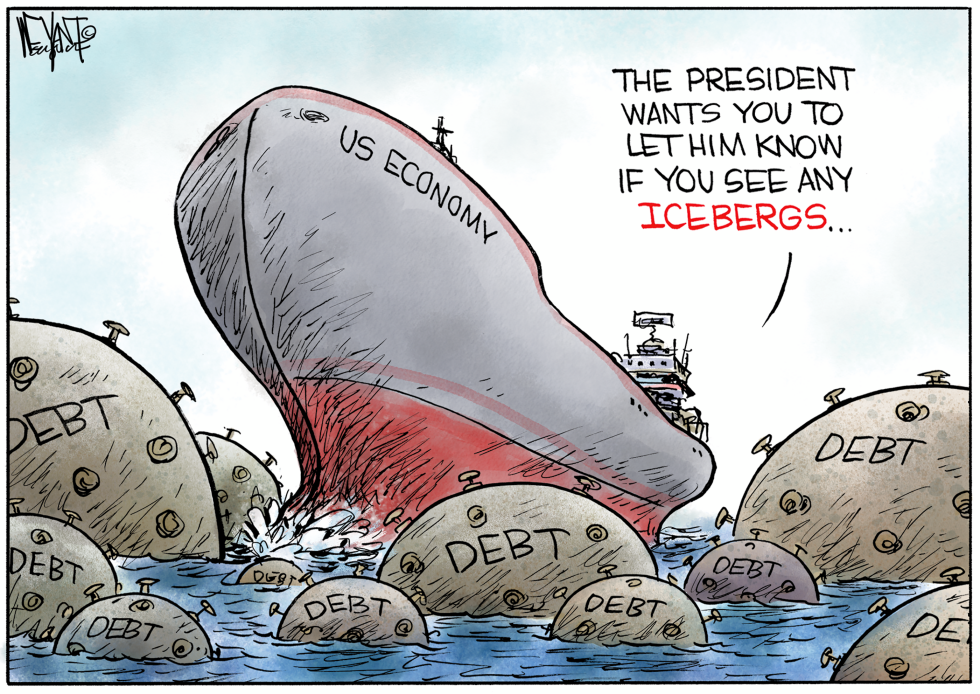
This political cartoon illustrates the US Economy as a massive ship labeled accordingly, dramatically sinking after colliding with numerous icebergs each marked 'DEBT.' A speech bubble from the ship warns to alert the president about icebergs, evoking the Titanic disaster in a clear metaphor for economic peril. Incorporating tags such as economy, debt, budget, inflation, prices, and costs, the image critiques fiscal irresponsibility. The artwork by Christopher Weyant uses simple lines and colors to emphasize the collision's impact, with water splashing and the ship's hull damaged. Such cartoons often highlight how mounting debt threatens stability, drawing parallels to historical maritime tragedies for satirical effect. The composition places the ship at an angle, surrounded by floating debt bergs, underscoring inevitable crisis if warnings go unheeded.
Arend van Dam's cartoon shows a gray battleship marked USA, complete with guns and missiles, driven by a figure in a suit at the wheel, as it goes over a waterfall between rocky cliffs under a blue sky. The image captures the essence of strategy failure in the Strait of Hormuz, tying into themes of Iran, ayatollahs, war, battleship mishaps, Middle East conflicts, oil, gas, energy, and economy. Such visuals often poke at misguided military moves, where the ship's plunge represents a dramatic downfall in strategic planning. The dry humor lies in the absurdity of a warship treating a strait like a river rapid, underscoring potential economic fallout from regional tensions. Cartoons like this thrive on clear, exaggerated metaphors that resonate with readers familiar with global news.
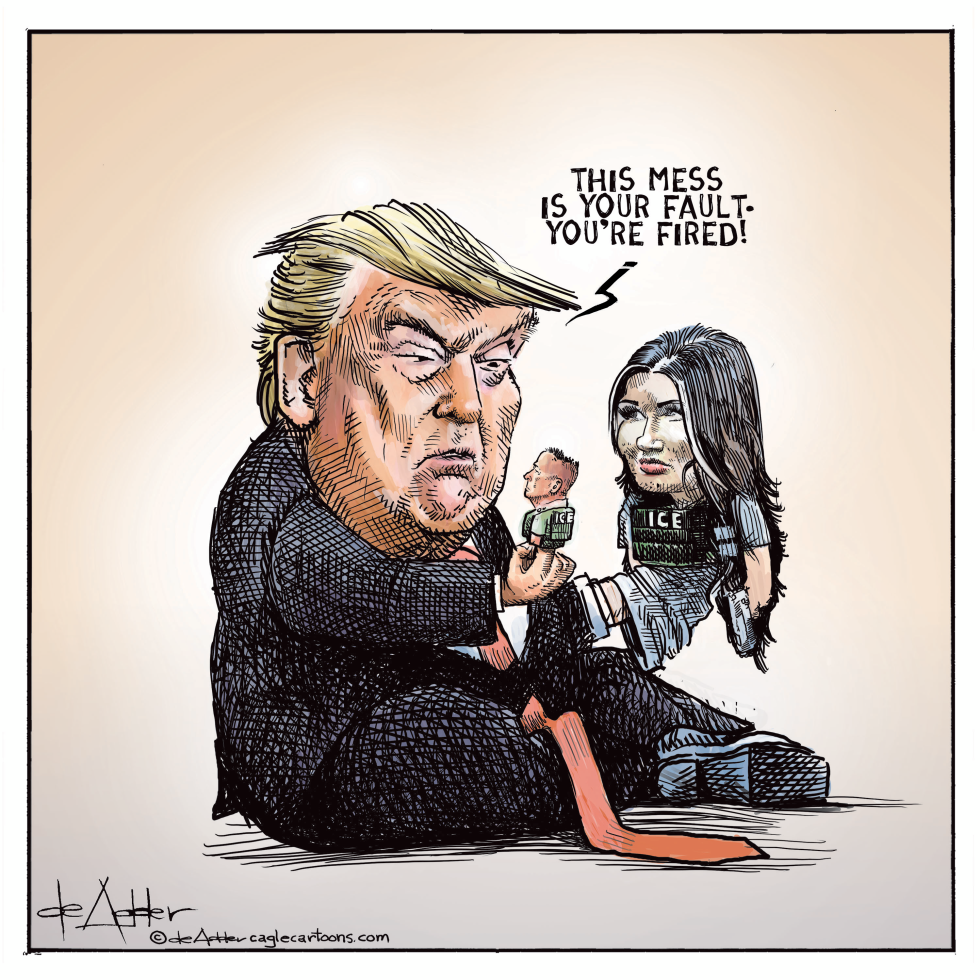
This biting political cartoon by Michael de Adder captures Donald Trump in a childish tantrum, holding and firing a diminutive Kirstjen Nielsen as an ICE agent clutching a separated baby, symbolizing the border crisis and family separation policies. The image skewers the Trump administration's immigration policy failures, with Trump shifting blame for the humanitarian mess at the US border. Through exaggerated caricature, it highlights themes of accountability, political satire, and the human cost of harsh enforcement, making it a viral-worthy jab at leadership in US politics.
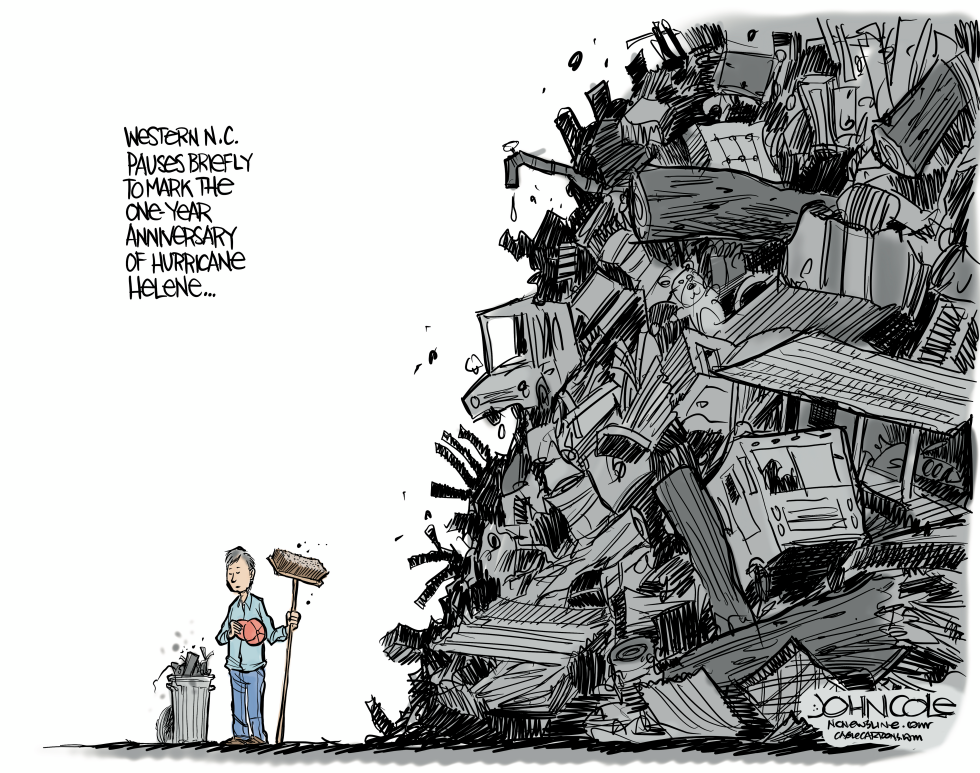
The cartoon depicts a Western North Carolina resident standing with a broom and dustpan before a towering heap of storm wreckage on the one-year anniversary of Hurricane Helene. Text notes the brief pause to mark the date. The image contrasts the single figure's small cleanup effort with the overwhelming volume of debris, highlighting the slow pace of recovery and the limits of available resources one year after the September 2024 storm.
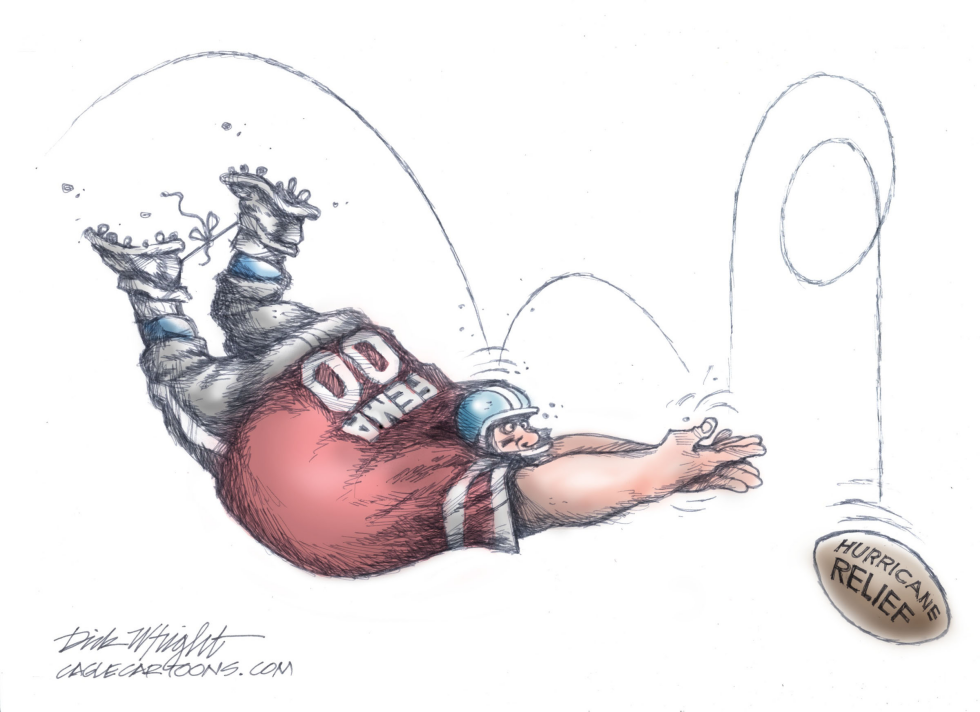
A political cartoon by Dick Wright shows a fumbling FEMA football player missing a Hurricane Relief ball. The image responds to criticism of federal disaster response following Hurricanes Helene and Milton in September and October 2024. The cartoon highlights perceived shortcomings in aid delivery to Florida and North Carolina. It aligns with ongoing debates over Biden administration handling of the crises and state-level frustrations voiced by officials like Governor Ron DeSantis.
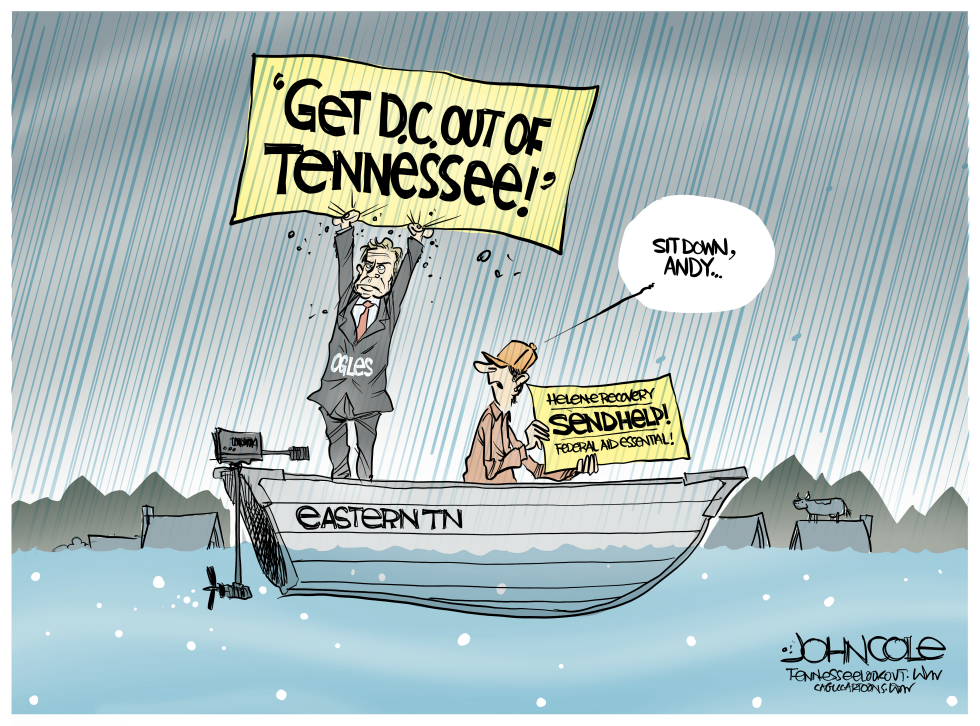
The cartoon depicts Rep. Andy Ogles standing in a boat in flooded eastern Tennessee, raising a sign demanding DC stay out while a companion holds a sign pleading for federal Helene recovery funds. The scene highlights the tension between anti-government rhetoric and the need for disaster assistance after the hurricane.