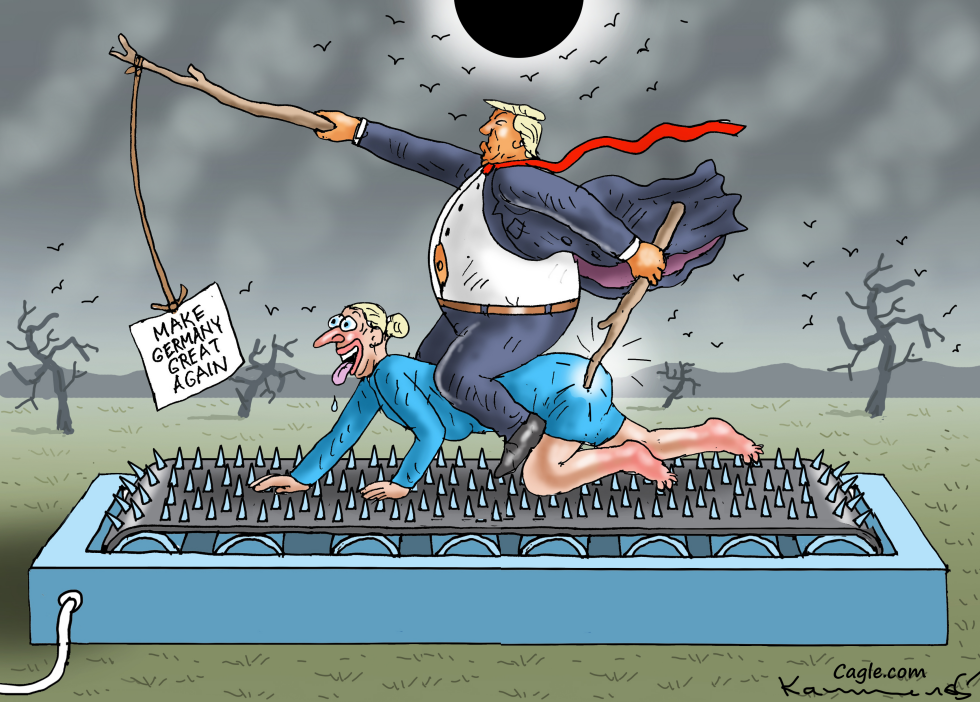
Donald Trump promotes a revival slogan aimed at Germany while Angela Merkel faces the consequences. The effort highlights ongoing tensions in transatlantic relations and questions about external influence on European domestic policy. The piece argues that such interventions impose unnecessary hardship without delivering benefits.
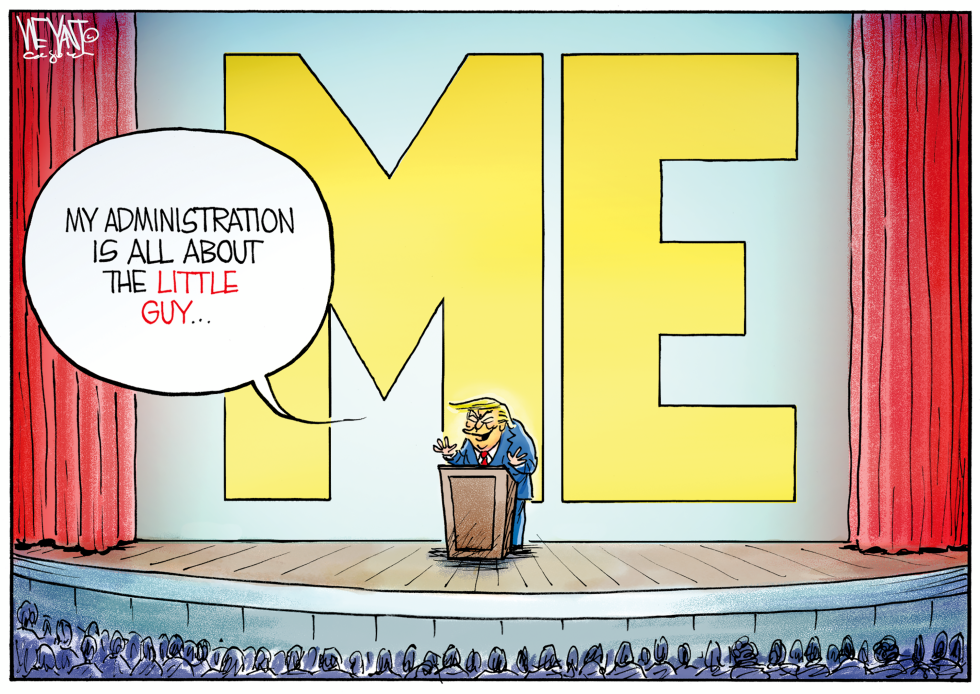
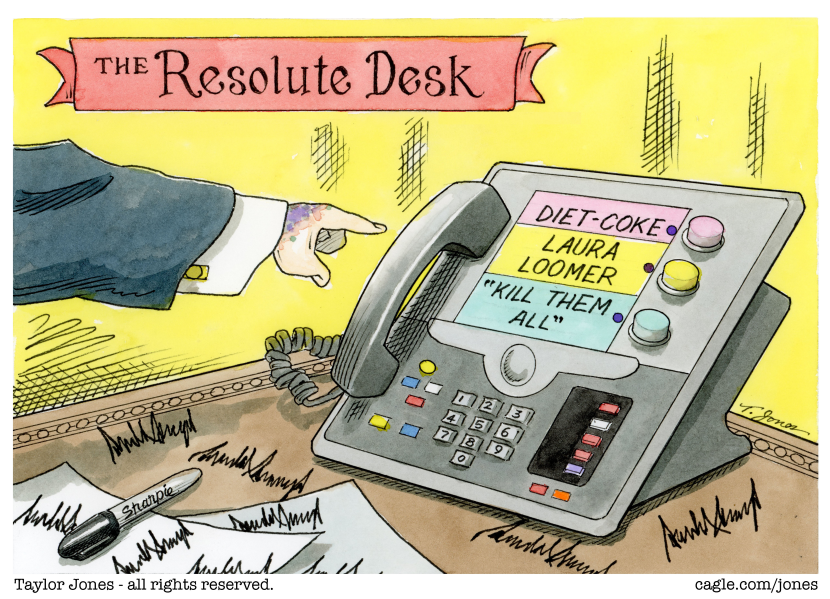
Donald Trump has repeatedly positioned his administration as champion of ordinary Americans during public addresses. The claim comes amid ongoing debates over policy priorities and personal branding in the White House. The piece portrays the rhetoric as centered on the speaker rather than the public.
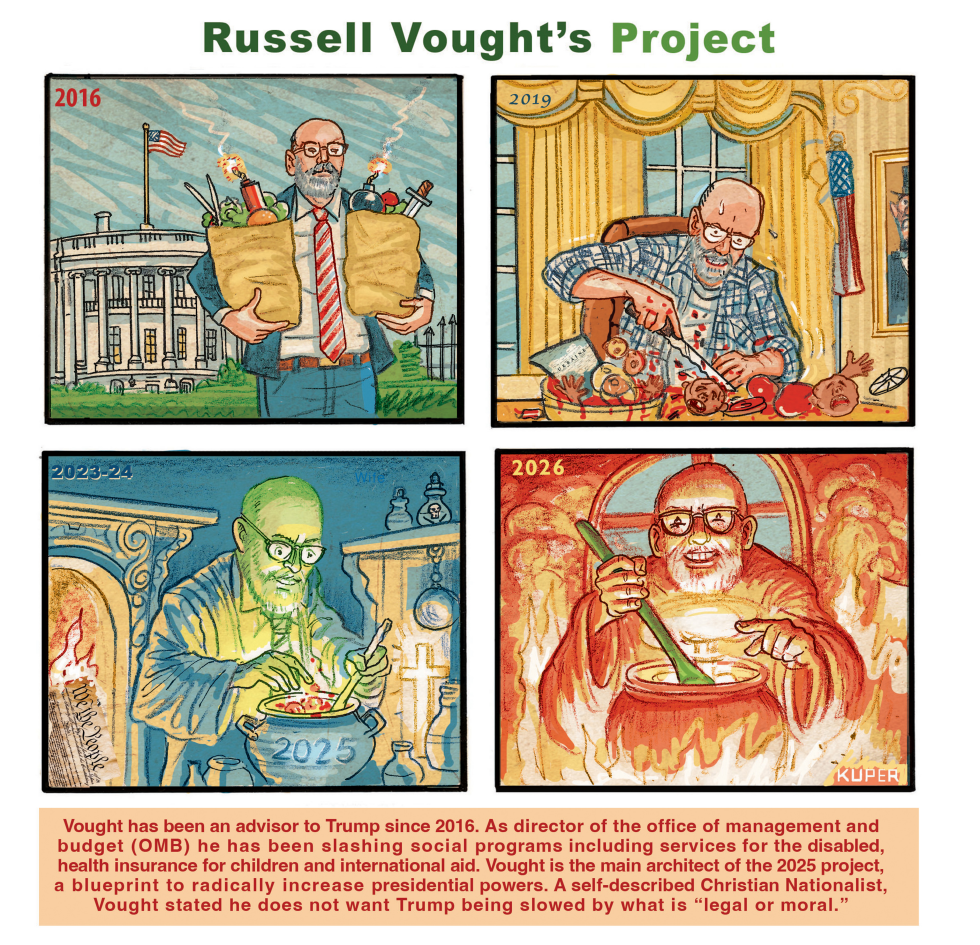
Russell Vought has served as a Trump advisor since 2016 and later directed the Office of Management and Budget, where he cut funding for disability services, children’s health insurance and foreign aid. He is the principal author of Project 2025, a plan to enlarge presidential authority. The cartoon presents his progression from 2016 through 2026 as a deliberate effort to remove legal or moral restraints on executive action.
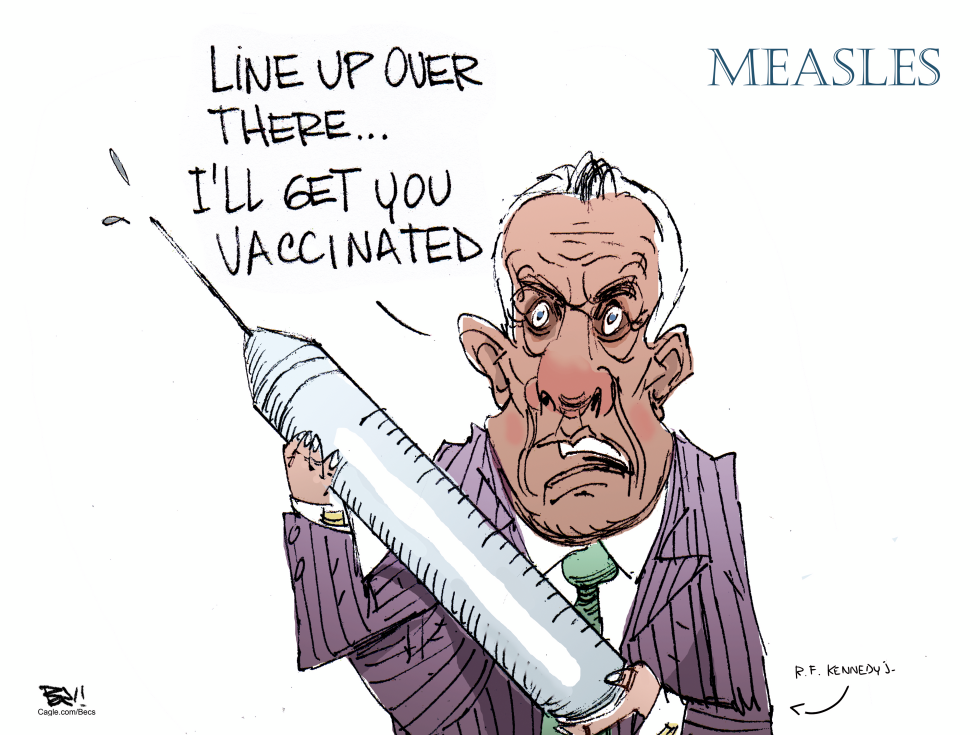
Robert F. Kennedy Jr., serving as a top health official in 2026, faces scrutiny over a sudden push for measles vaccinations. The move comes as cases rise and public skepticism lingers from prior stances. The editorial argues the policy reversal exposes inconsistent leadership on immunization.
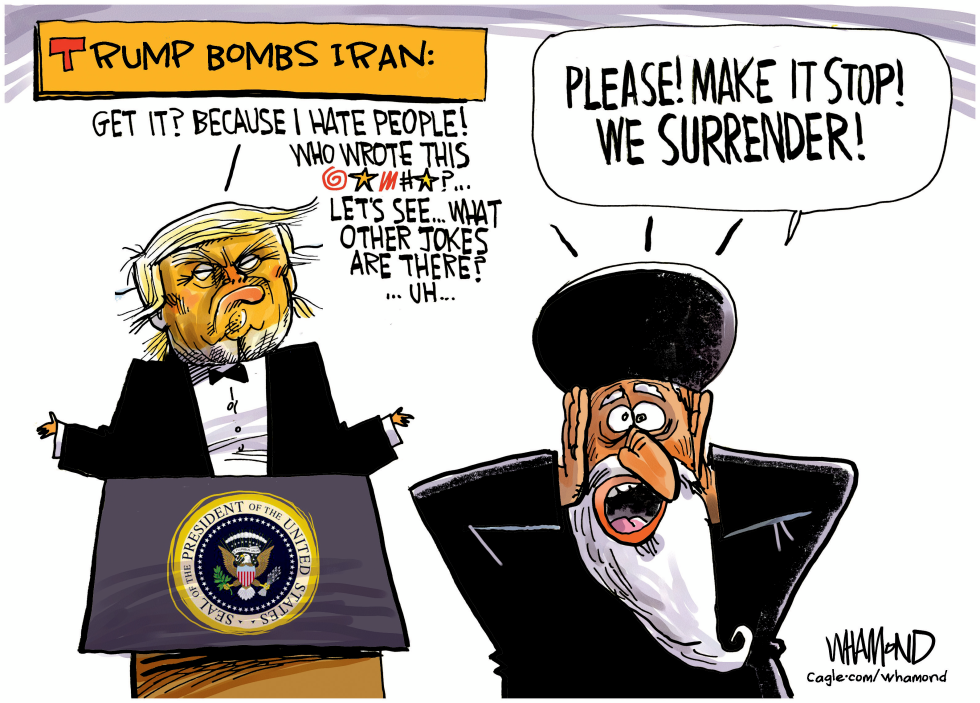
President Trump ordered strikes on Iran in late July 2026, prompting an immediate public plea for surrender from Iranian leadership. The action escalates tensions in the Middle East and raises questions about U.S. military objectives. The editorial takes the position that the strikes reflect personal animus rather than strategic necessity and mocks the president's framing of the operation.
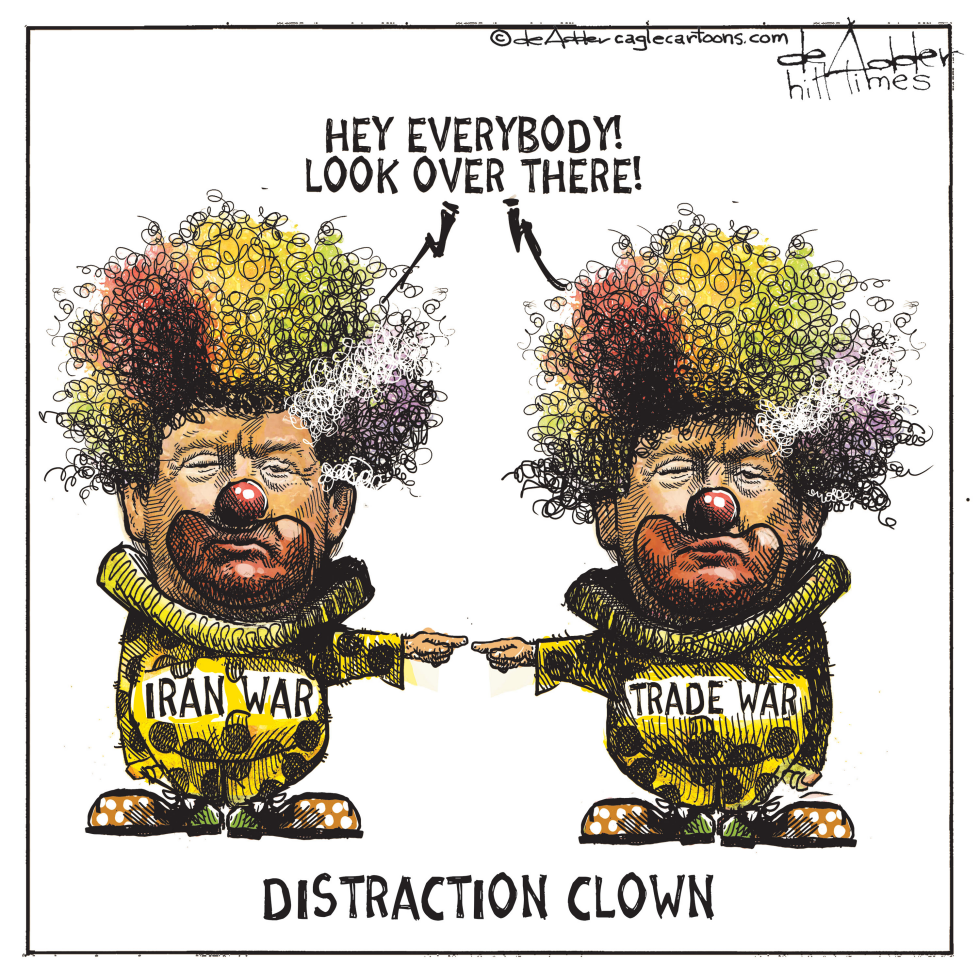
Public attention is being directed toward simultaneous Iran and trade conflicts as potential diversions from other issues. The editorial depicts the two crises as interchangeable distractions promoted by the same source. It argues that leaders are using these flashpoints to shift focus rather than address underlying problems.
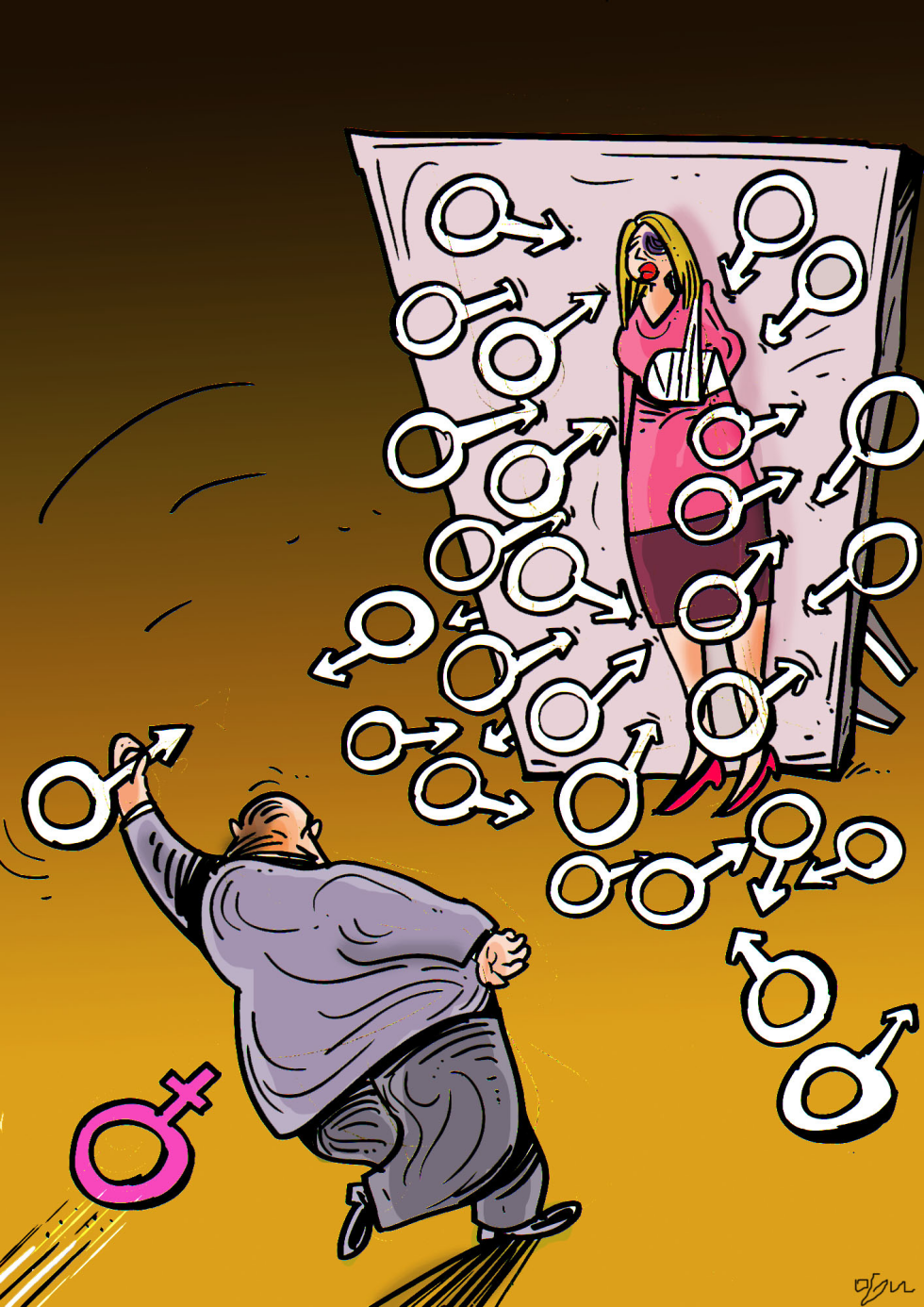
Violence against women remains a persistent social problem, with physical assaults and intimidation continuing in many communities. The piece responds to this ongoing dynamic by showing a male figure directing male symbols at an already injured woman, underscoring the editorial position that such aggression must be confronted directly.
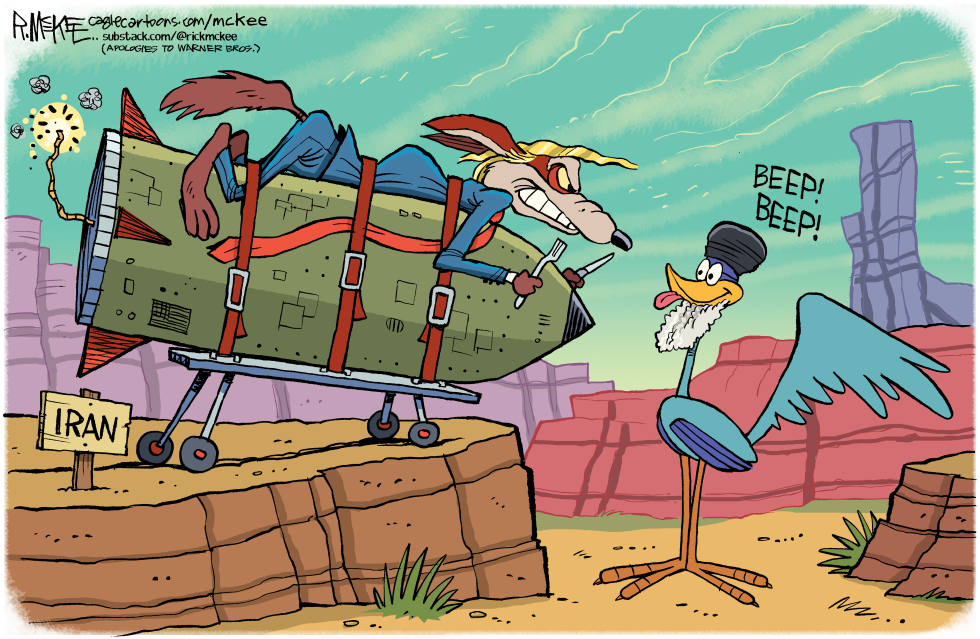
Donald Trump has renewed pressure on Iran through statements and policy signals in recent weeks. The moves come amid ongoing nuclear concerns and regional instability. The piece argues that such aggressive posturing risks backfiring in ways similar to past miscalculations.
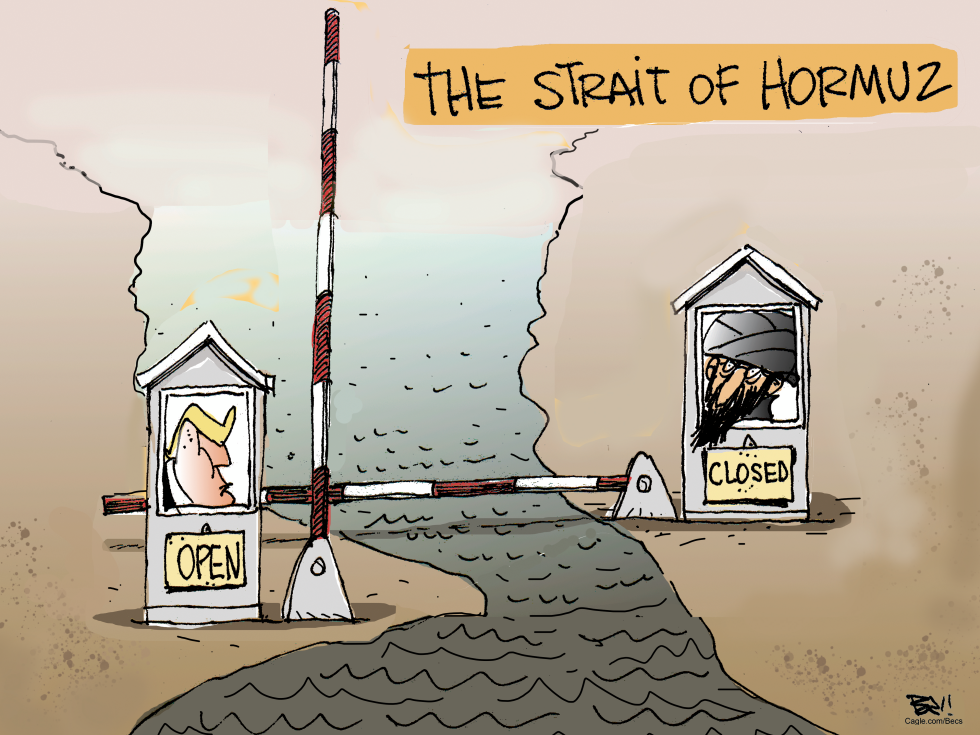
The Strait of Hormuz remains a flashpoint for global oil transit as the United States and Iran maintain opposing stances on access. Donald Trump positions an open checkpoint while an Iranian official signals closure. The editorial highlights the standoff's direct impact on energy markets and shipping security.
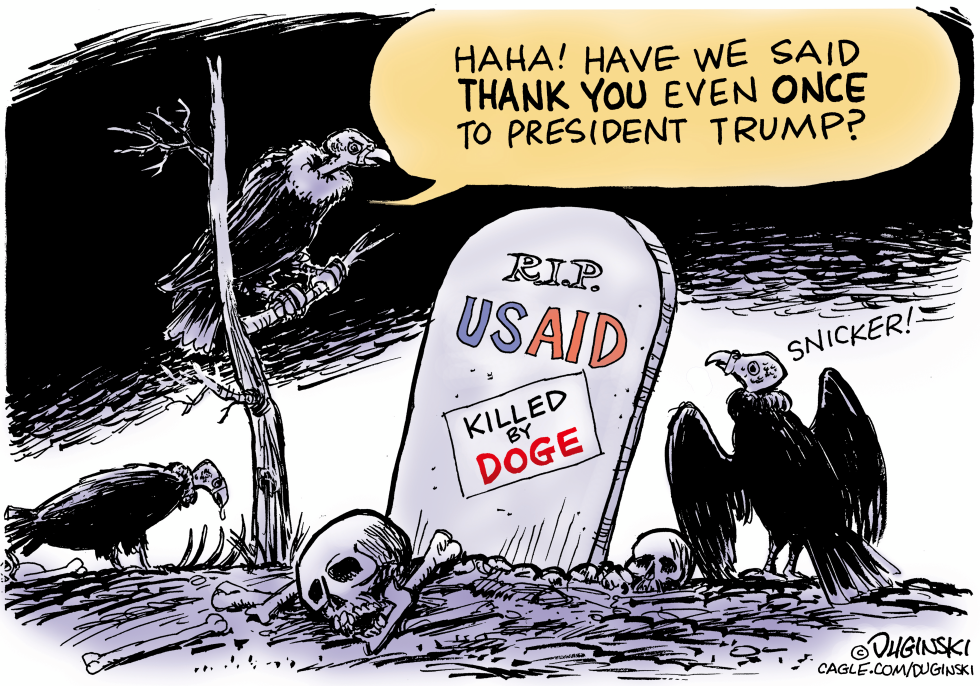
Vultures perch around a tombstone reading R.I.P. USAID killed by DOGE on July 9 2026. One bird in a speech bubble asks if thanks have been given to President Trump while another snickers nearby. Skulls and bones litter the ground beneath the marker. The scene follows recent DOGE actions targeting the aid agency.
A goat wearing a crown stands in grass with the words BLAME OTHERS -DJT printed in red across its side and the label SCAPEGOAT beneath it. The image from July 2026 uses the animal to represent a political figure associated with shifting responsibility.
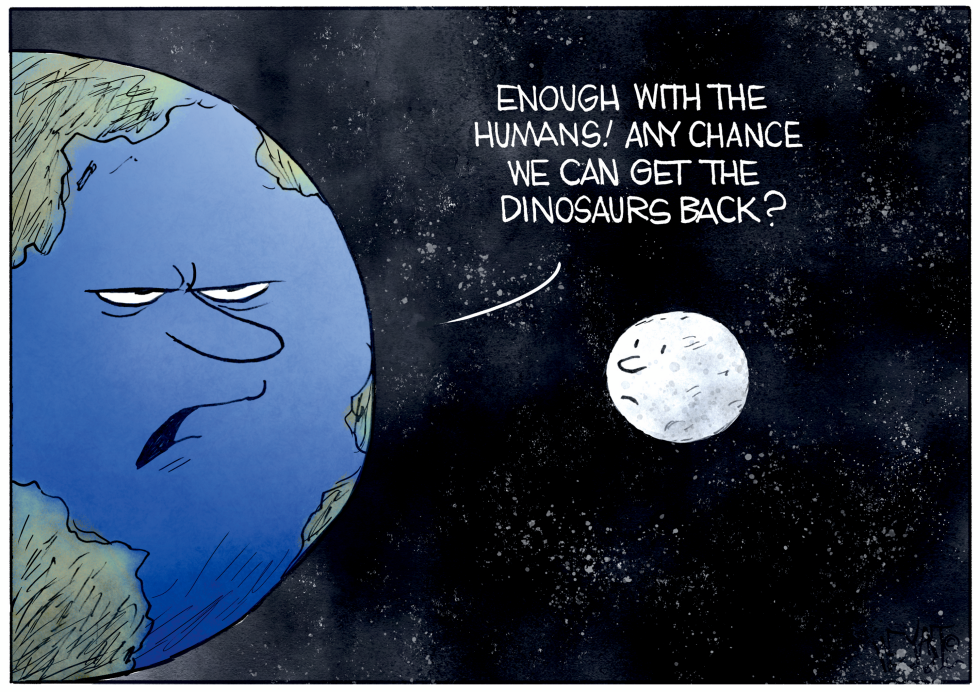
The image shows Earth with an angry expression speaking to the Moon about replacing humans with dinosaurs. The scene responds to ongoing environmental concerns around human impact on the planet as of late June 2026.
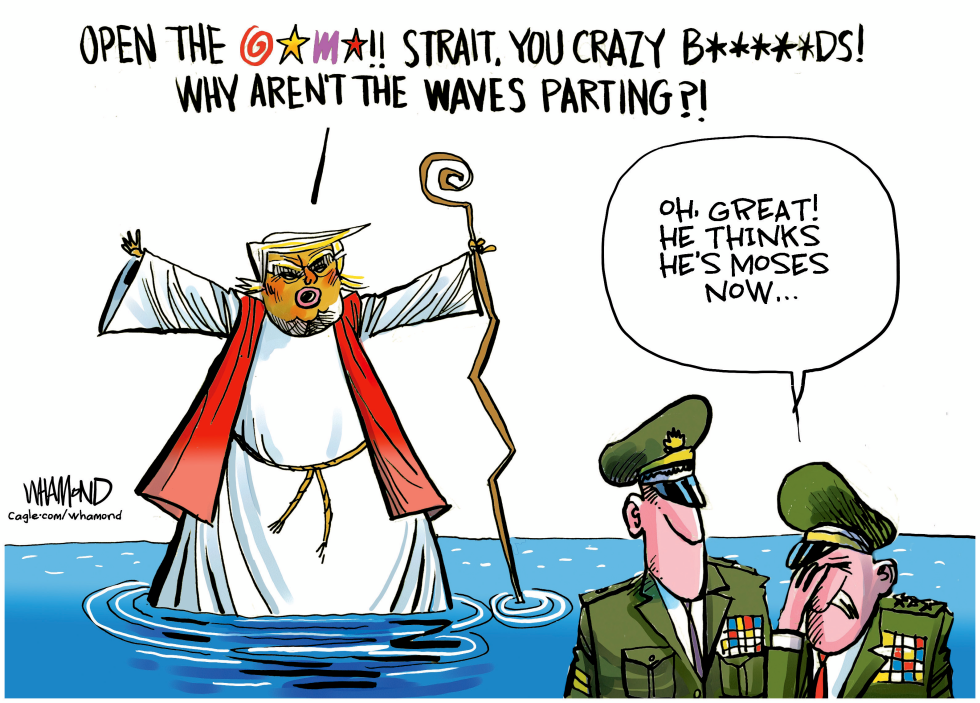
The cartoon shows Donald Trump in Moses robes and holding a staff, standing in the Strait of Hormuz while shouting for the waters to part. Two military officers in the foreground comment on the scene. The image responds to ongoing tensions involving Iran, the strait blockade, and U.S. policy responses as of early May 2026.
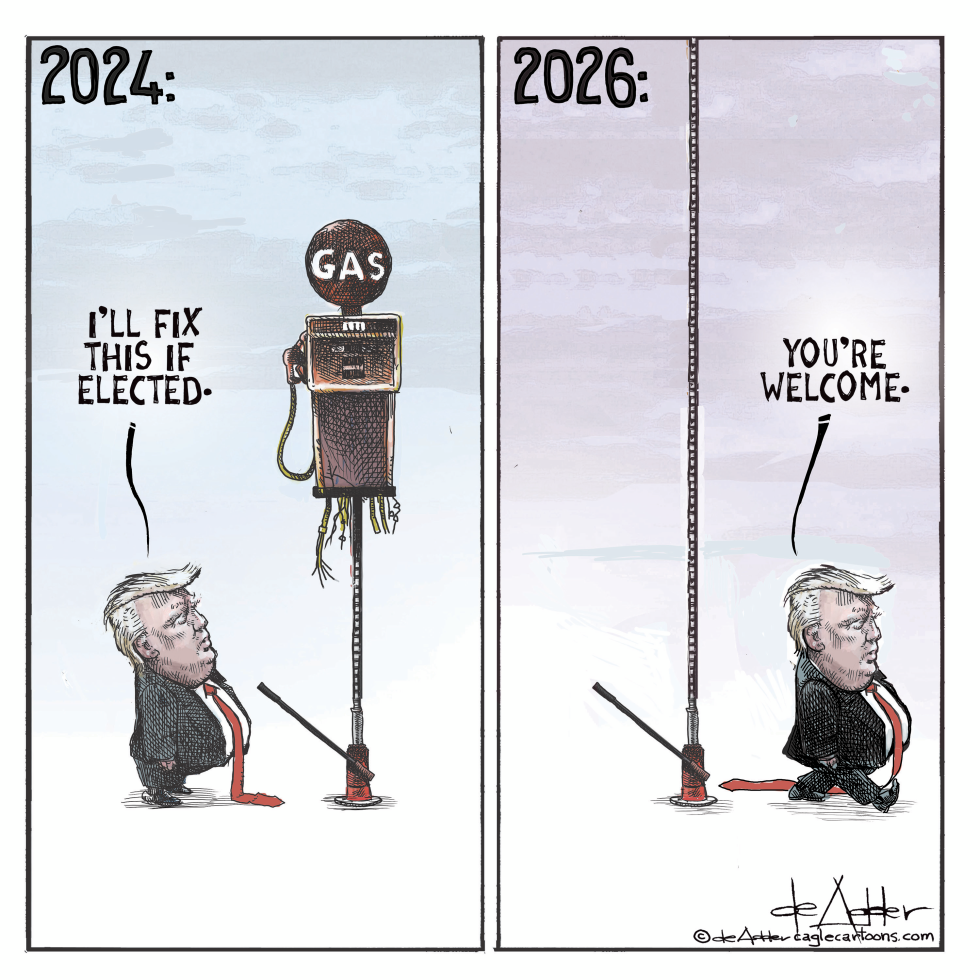
Michael de Adder's cartoon splits into 2024 and 2026 panels, showing a figure resembling Trump addressing a high gas pump with a promise to fix it if elected, tagged with Trump, gas, prices. In the later panel, the same figure pulls the pump down low, saying 'you're welcome,' tying into election, energy, Iran, war themes. The satire highlights contrasts in promise versus action on cost, economy, inflation, oil, barrel issues. This visual commentary underscores political pledges on energy costs, with the figure's actions suggesting a direct, perhaps misguided intervention. Tags like conflict and prices emphasize the economic satire at play.
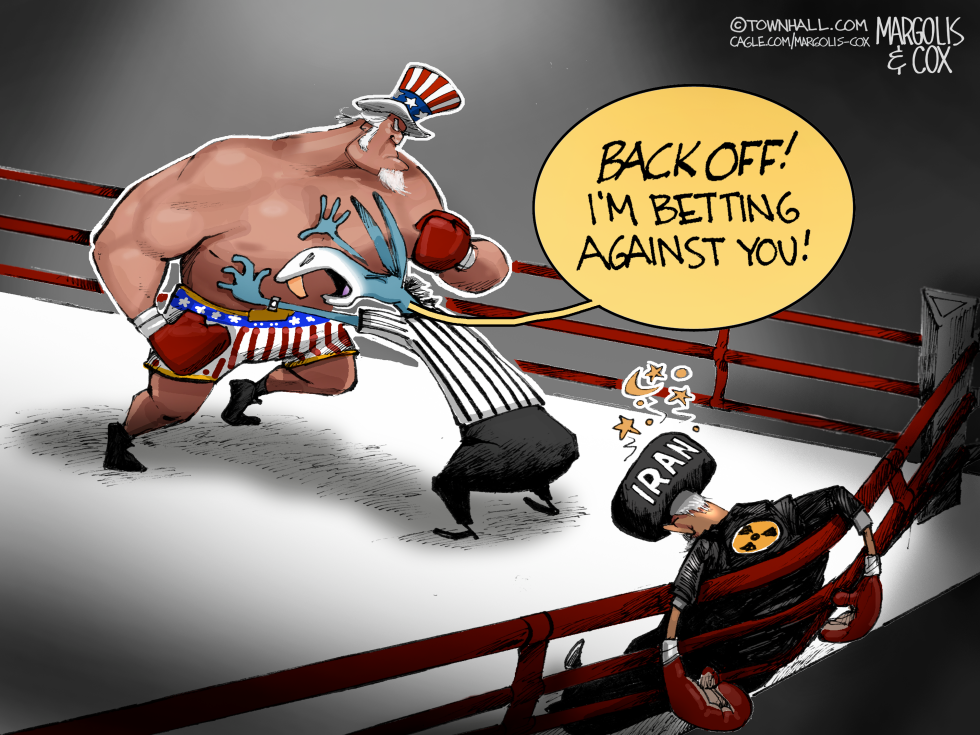
The cartoon depicts a boxing ring where Uncle Sam, wearing a top hat and patriotic shorts, advances aggressively, punching a referee in striped shirt who clutches a white dove. The referee's arm extends to halt the fight, but Uncle Sam shouts 'BACK OFF! I'M BETTING AGAINST YOU!' Meanwhile, the opponent, labeled 'Iran' with a nuclear symbol on his back, sprawls knocked out on the canvas. Stars indicate the impact. This setup uses boxing metaphor to satirize US foreign policy toward Iran, portraying America as betting against peace interventions, possibly represented by the dove-bearing referee. The artwork by Margolis & Cox captures tensions with dry humor, emphasizing unchecked aggression in international relations.