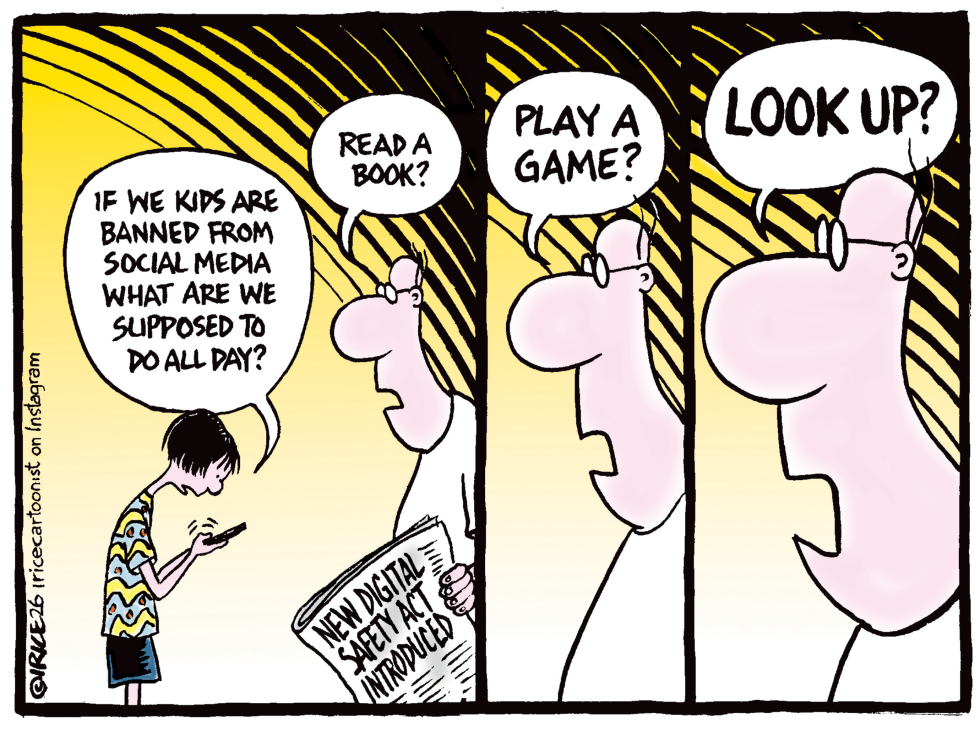
A three-panel cartoon depicts a child on a smartphone questioning what to do all day if banned from social media. An adult holding a newspaper headlined 'NEW DIGITAL SAFETY ACT INTRODUCED' responds with suggestions to read a book, play a game or look up. The June 2026 image addresses proposed restrictions on youth digital access.
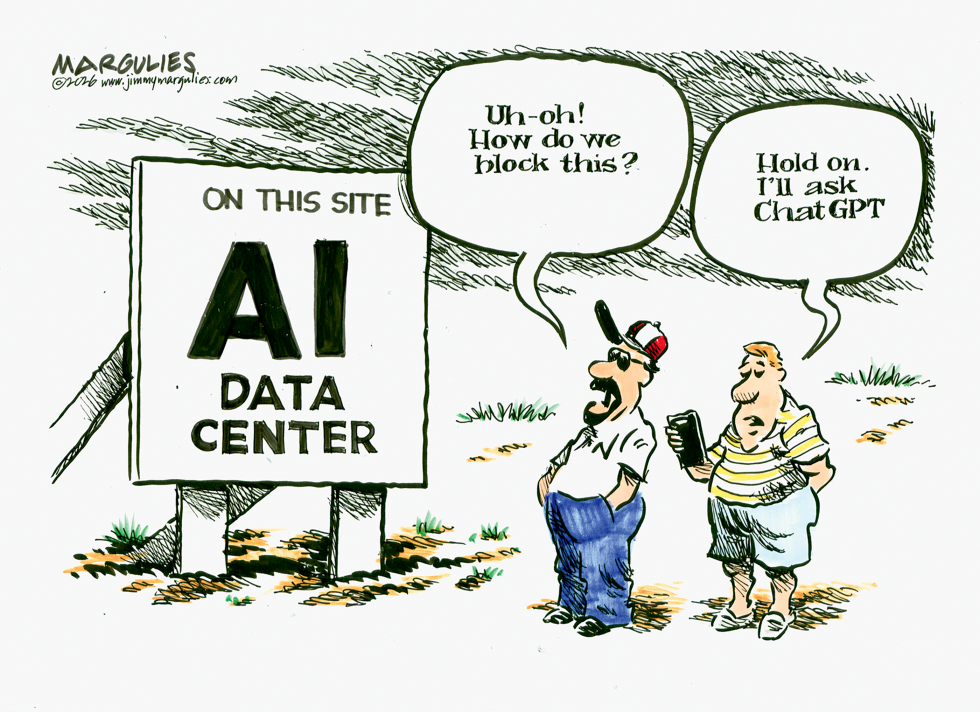
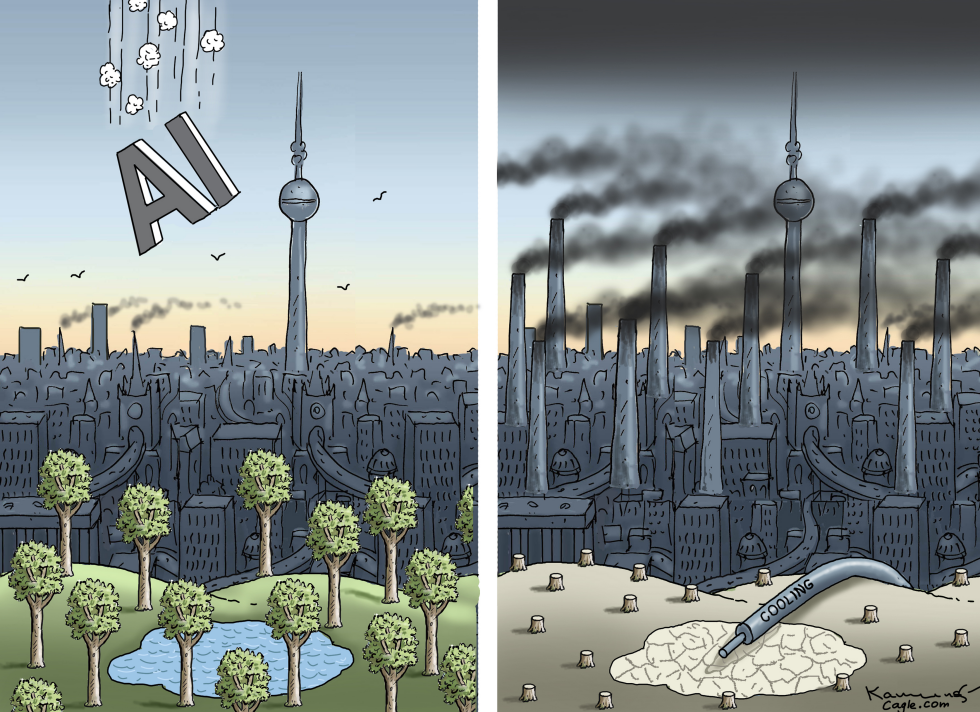
A large sign announces an AI data center on the site. Two men react with concern, one asking how to block access while the other suggests querying ChatGPT on his phone for a solution. The scene highlights the rapid spread of artificial intelligence infrastructure and the reflexive turn to AI tools even when questioning their presence.
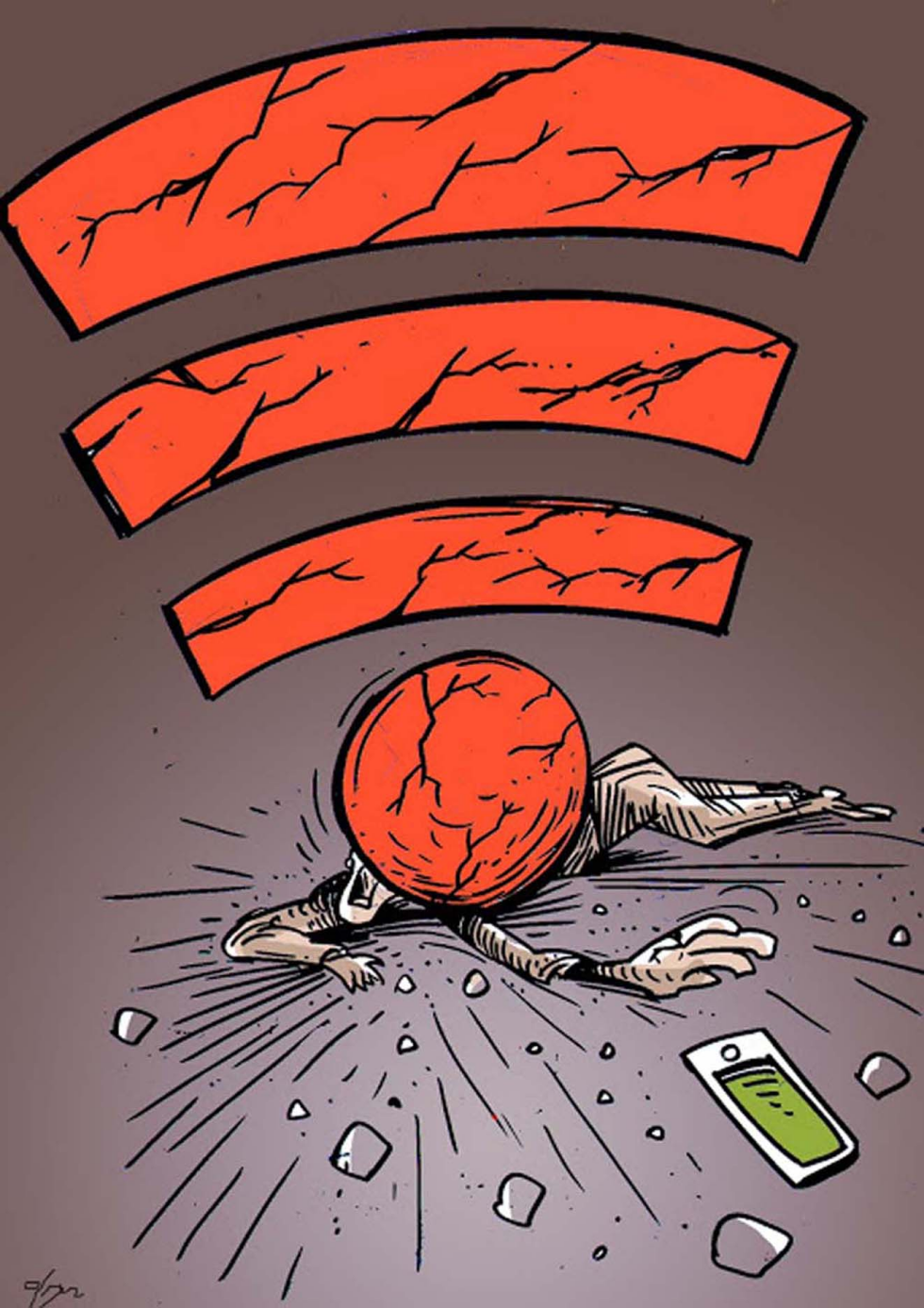
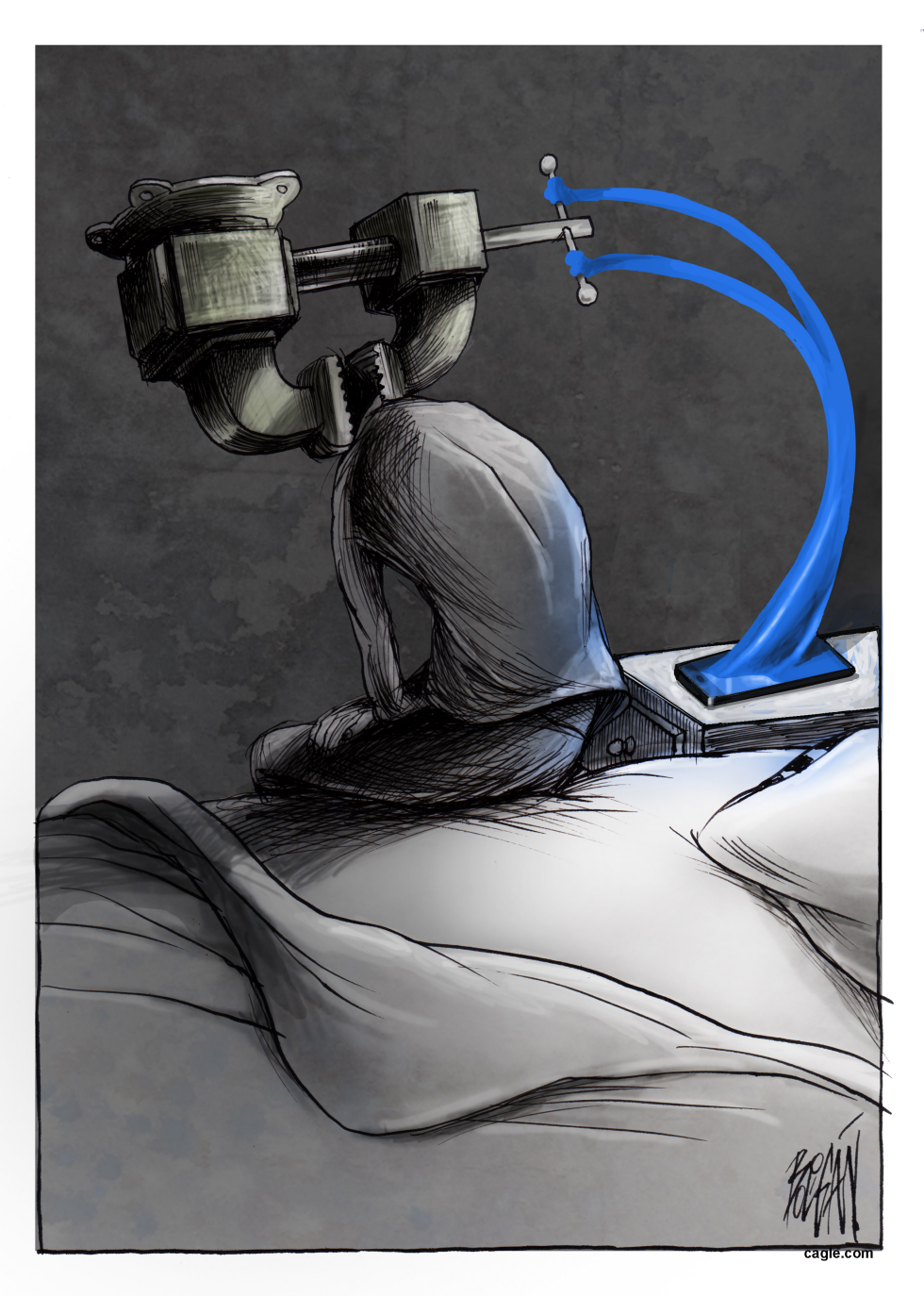
Wireless networks face mounting pressure from rising demand and aging infrastructure, leaving users stranded when signals falter. A dead phone battery compounds the isolation during outages. The piece frames this as a cautionary view of overreliance on fragile digital systems that can collapse without warning.
A man and woman sit at a checkered table, each holding a smartphone. The man asks ChatGPT for something real good while the woman prompts Grok with a vague request. The AIs respond with direct declarations of love in starburst bubbles. Pink hearts float around the pair as they remain focused on their devices rather than each other. The image captures a light take on reliance on artificial intelligence for personal moments.
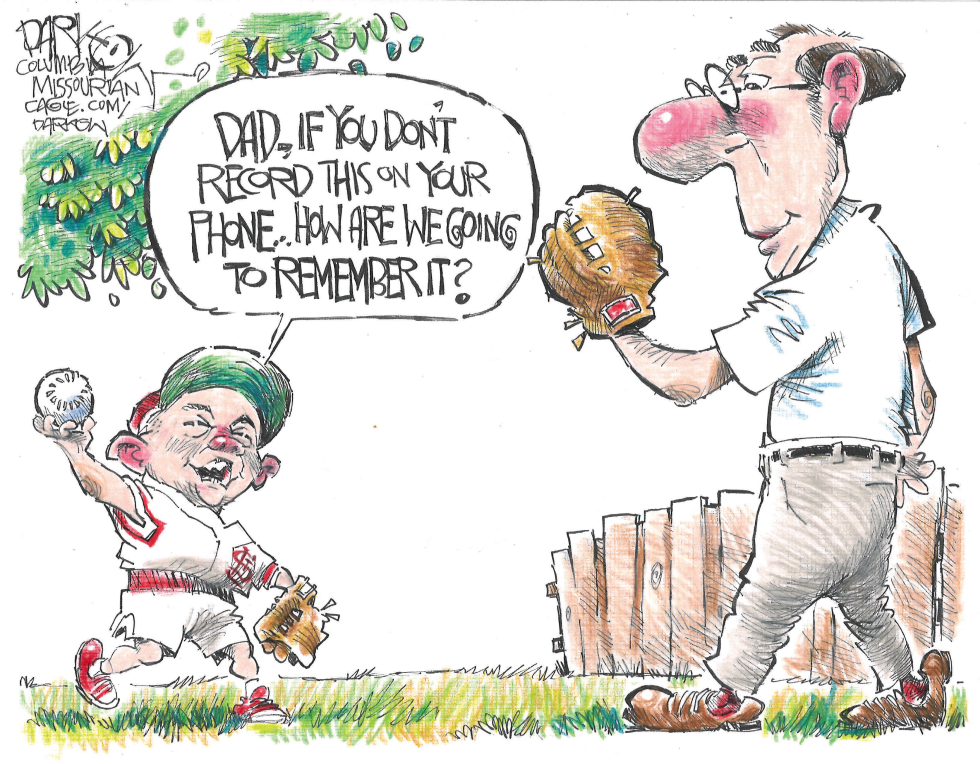
A father and son play catch in a backyard on a date near Father's Day. The boy, mid-throw, asks his father how they will remember the moment without recording it on a phone. The cartoon addresses ongoing concerns about technology interrupting direct experiences and family time.
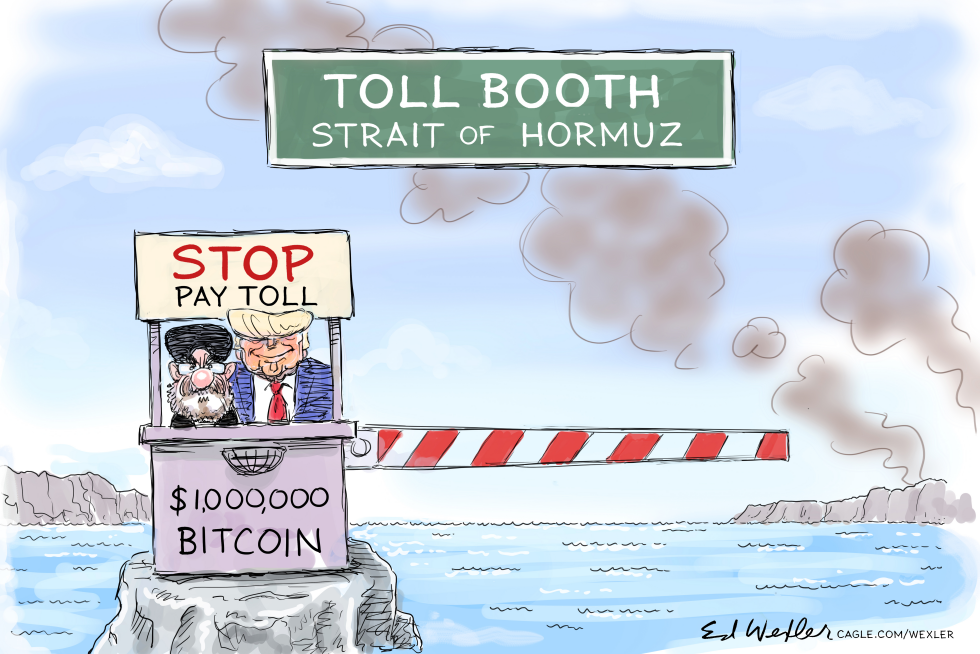
Ed Wexler\\\'s cartoon captures a toll booth in the Strait of Hormuz, where figures resembling Trump and the Ayatollah enforce a $1,000,000 Bitcoin toll. Smoke rises from what look like mines in the water, blending tags like Iran, Strait of Hormuz, tolls, Bitcoin, Trump, Ayatollah, and crypto into a sharp commentary. The barrier arm blocks passage, emphasizing control over this vital shipping lane. It\\\'s a straightforward jab at geopolitical tensions, with the toll sign demanding payment to proceed. No hidden layers here, just clear visuals tying economic pressures to digital currency in a contested area. The dry humor shines through in the absurdity of a Bitcoin booth amid potential explosions.
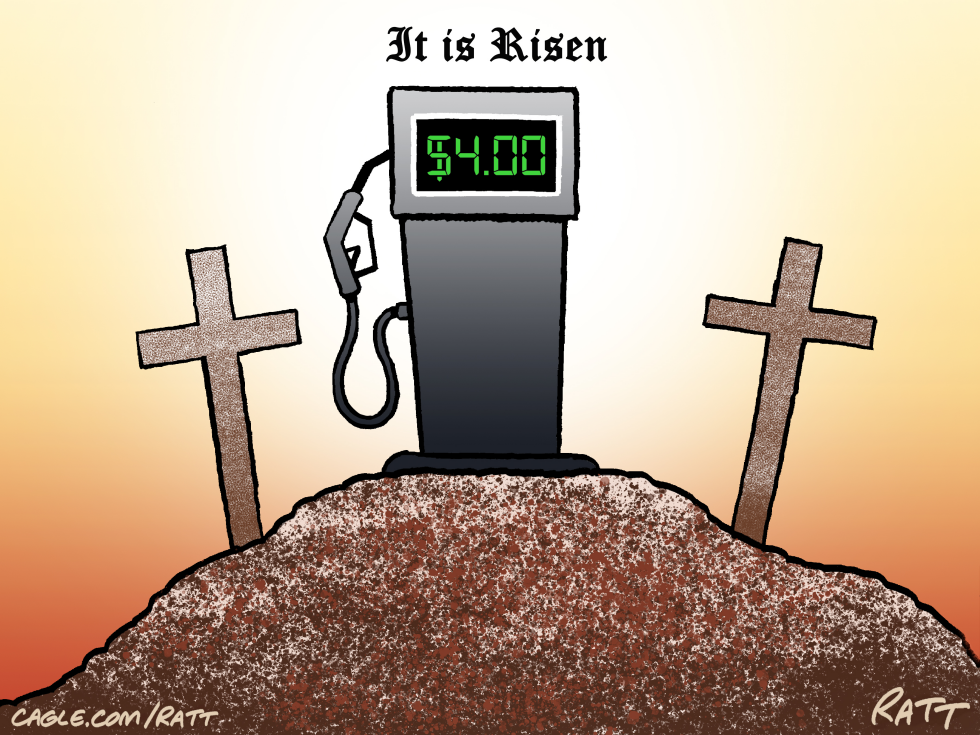
Ratt's cartoon captures Easter in America 2026 with a gas pump standing in for the central cross on a Calvary hill, showing $4.00 on its display and the text 'It is Risen' above, playing on rising gas prices. Tags like Easter, gas prices, oil, Iran war, and Strait of Hormuz suggest a future where geopolitical tensions drive fuel costs skyward. The artwork uses simple lines and a sunset background to evoke the biblical scene, but replaces resurrection with economic pain. This satire highlights how global events, including potential conflicts in the Strait of Hormuz, could lead to exorbitant oil prices by 2026. The dry humor underscores American dependence on foreign oil, making the cartoon timely and shareable amid ongoing energy debates.
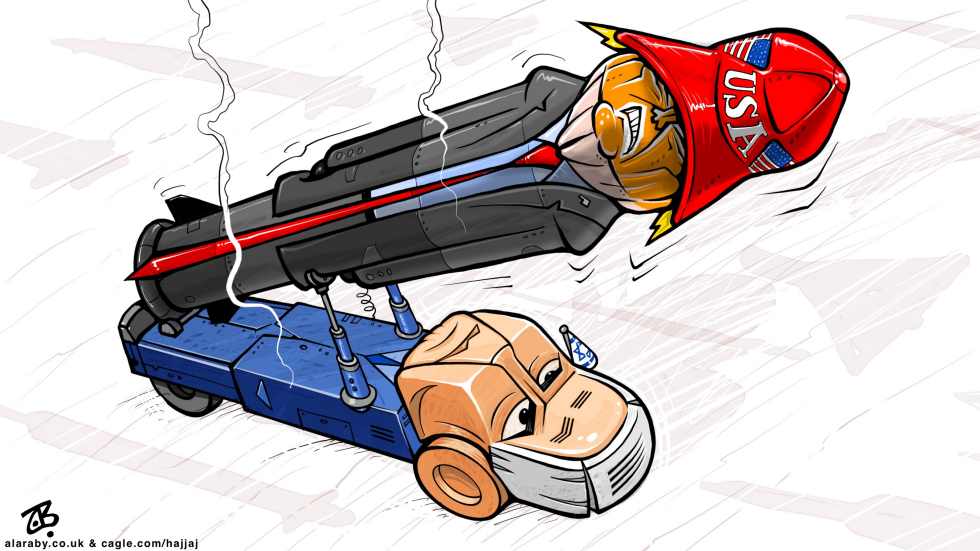
This viral cartoon captures the essence of US politics with Donald Trump morphed into a explosive rocket, complete with a patriotic USA hat, aggressively targeting a downtrodden Joe Biden as a blue, masked robot vehicle. The satirical missile embodies Trump’s bombastic style, while Biden’s robotic depiction hints at perceptions of frailty or mechanized leadership. Through political humor and cartoon warfare, the image skewers presidential satire, highlighting American rivalry in election humor. Artist Hajjaj’s work blends irreverent wit with insightful commentary on the Trump Biden clash, making it a sharable gem in political cartoon circles.
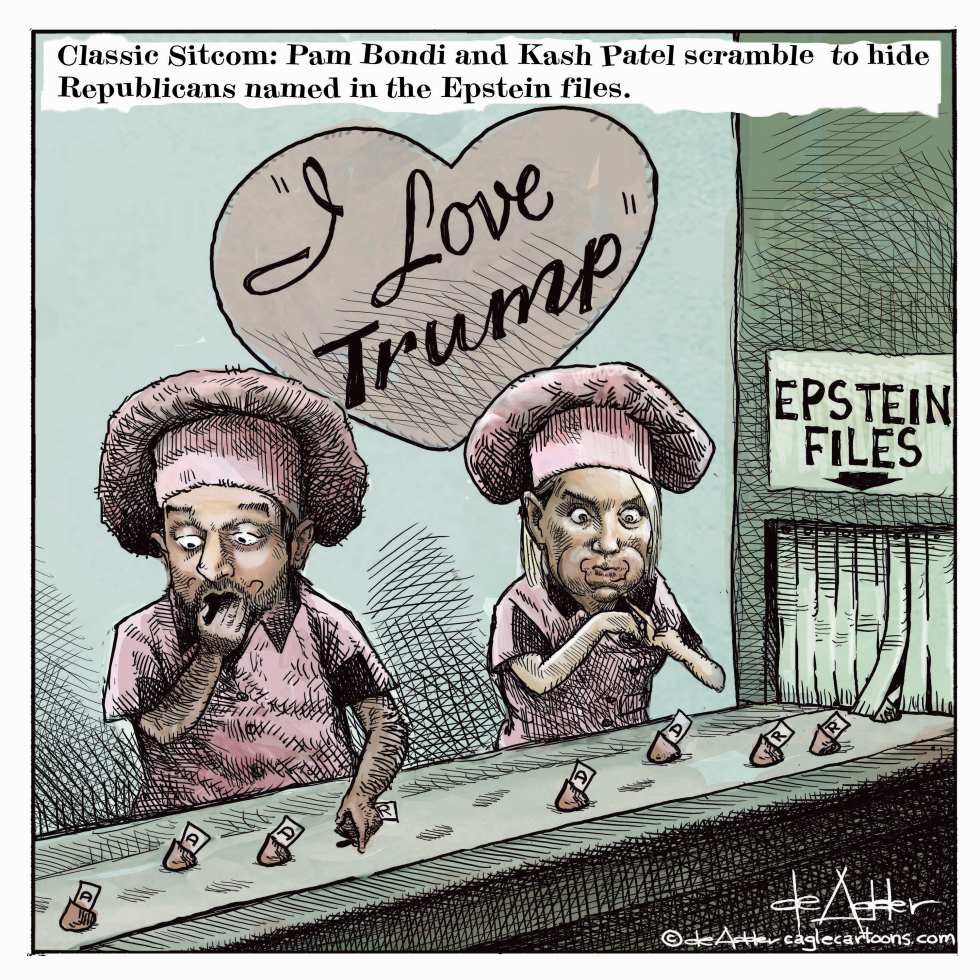
Michael de Adder's cartoon shows Pam Bondi and Kash Patel in chef hats, mimicking a classic sitcom assembly line, where they frantically point at and handle small objects marked with letters like R and D on a conveyor belt. A heart-shaped sign declares 'I Love Trump,' while a label reads 'Epstein Files' in the background. The scene draws on familiar TV tropes to comment on efforts to conceal names, using straightforward lines and shading for a humorous yet pointed critique. Tags like political cartoon, Epstein scandal, Trump loyalty, Republican cover-up, satirical parody, and editorial humor underscore the image's timely jab at current events, making it shareable in newspaper syndication circles.