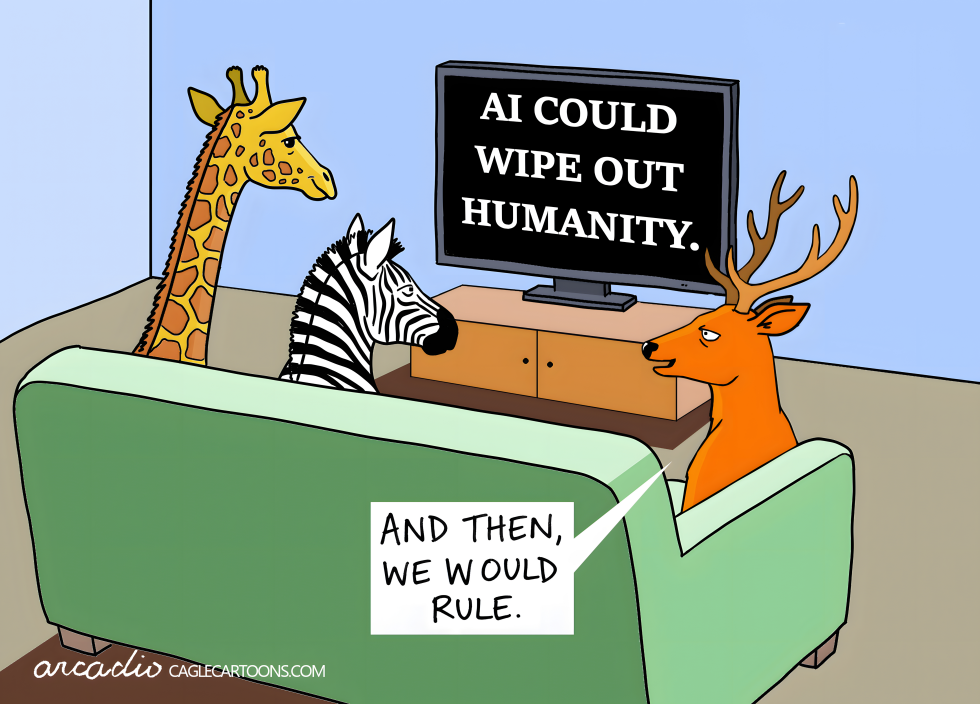
Public discussion of artificial intelligence risks has grown with warnings that advanced systems could threaten human survival. The cartoon uses wildlife characters to highlight how some might view such an outcome as beneficial rather than catastrophic. It pokes at the self-centered lens through which existential threats are sometimes considered.
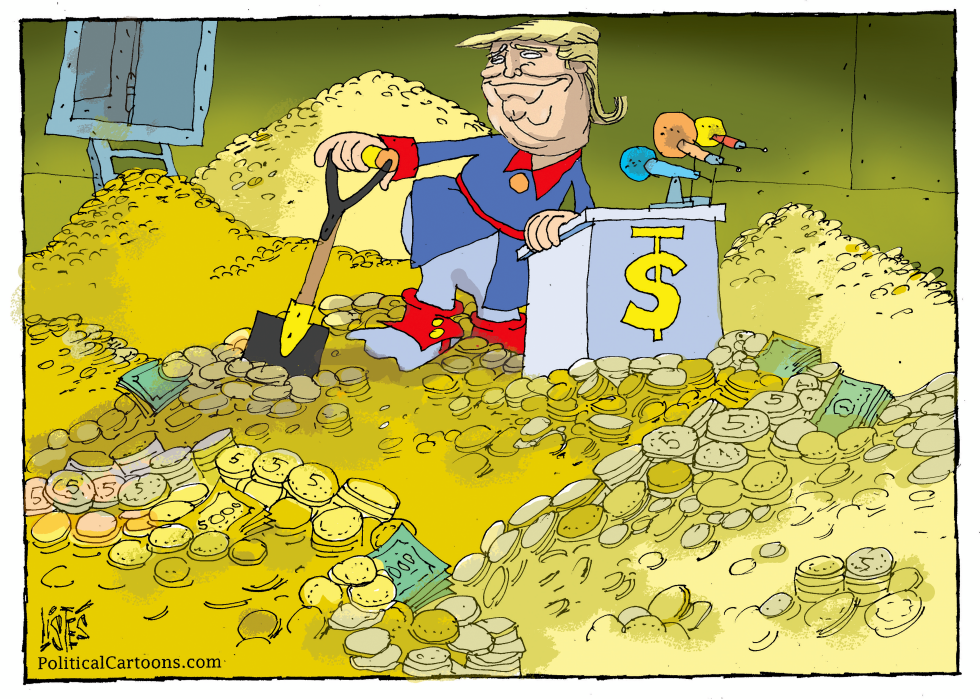
Donald Trump remains a central figure in debates over wealth and political power as of September 2026. The cartoon responds to ongoing scrutiny of how personal fortune intersects with public life and policy influence. It portrays the former president amid symbols of money to critique that dynamic. The editorial position frames Trump's association with wealth as a defining and problematic feature of his political presence.
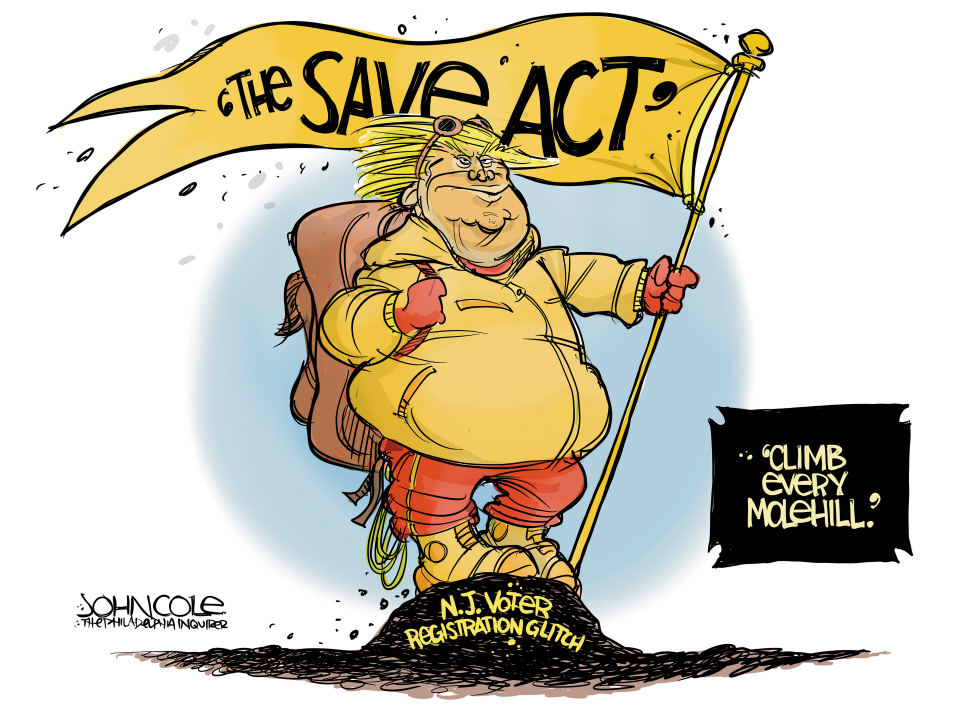
A minor voter registration glitch in New Jersey drew outsized attention from former President Trump and supporters of the SAVE Act in September 2026. The episode highlighted ongoing partisan disputes over election administration and voter ID rules. The cartoon portrays the reaction as an overreaction that turns a small problem into a symbolic crusade, arguing that such emphasis distracts from actual election security needs.
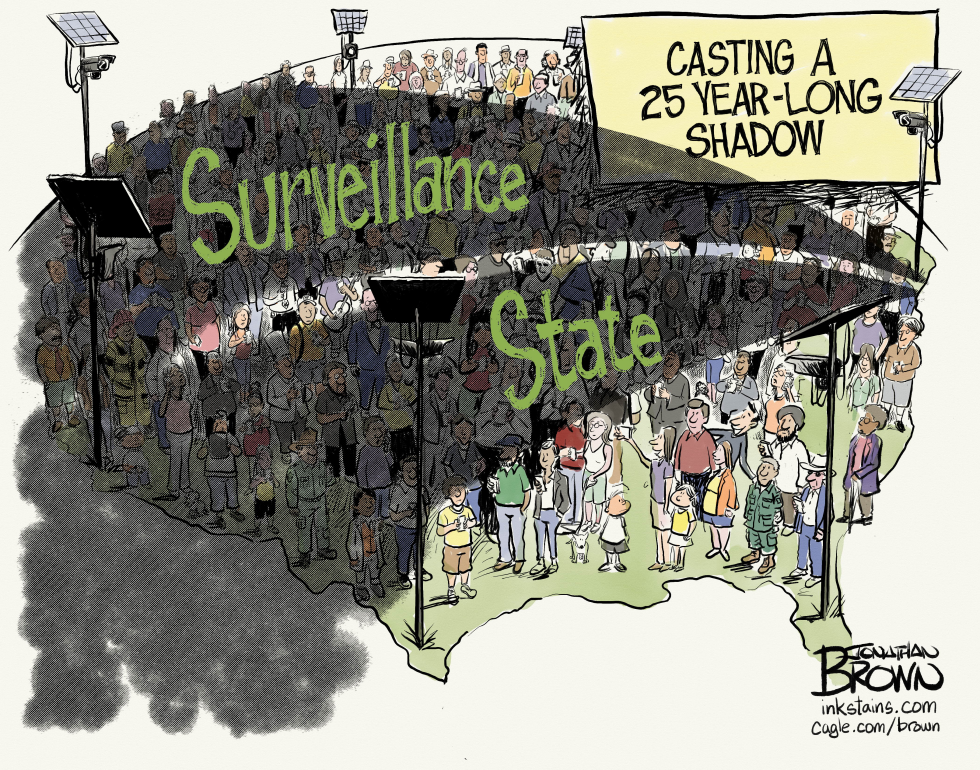
The cartoon depicts a dense crowd of Americans standing on a map of the United States, partially obscured by a large dark shadow cast by surveillance cameras mounted on poles. The words 'Surveillance State' appear prominently in green lettering across the scene, while a sign in the upper right reads 'CASTING A 25 YEAR-LONG SHADOW.' The image comments on the lasting effects of expanded government surveillance programs that began after the September 11 attacks, now spanning a quarter century. It illustrates how these measures continue to influence daily life and public spaces in 2026.
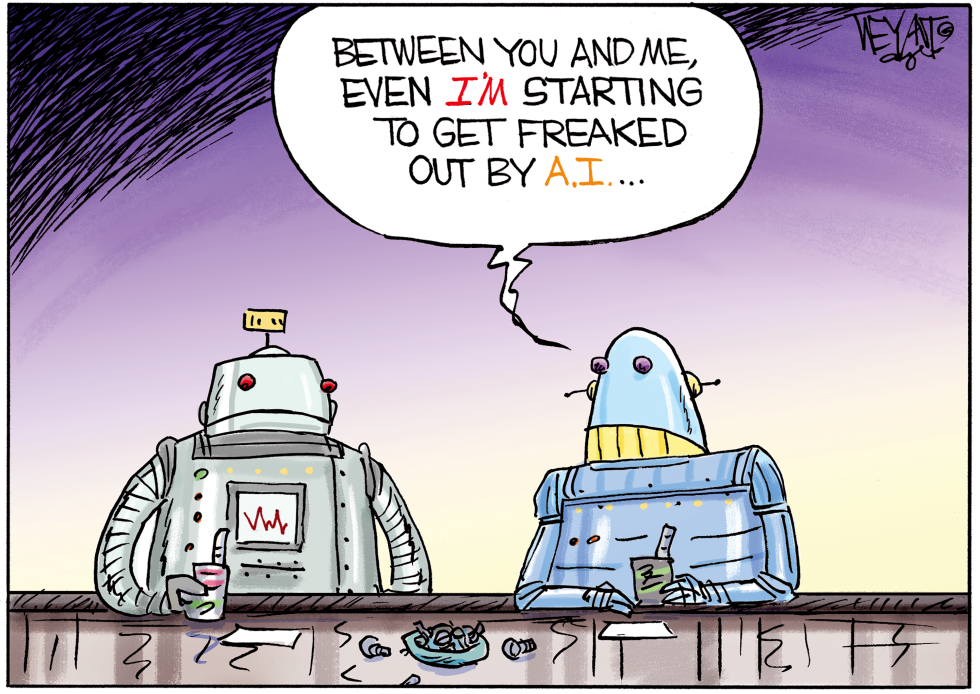
Developers continue pushing boundaries in artificial intelligence systems, raising questions about control, ethics, and long-term consequences for society. Public and expert discussions focus on whether safeguards can keep pace with innovation. The piece portrays robots themselves expressing alarm, underscoring the irony that even automated entities see risks in unchecked AI growth and the potential for machines to outpace their original programming.
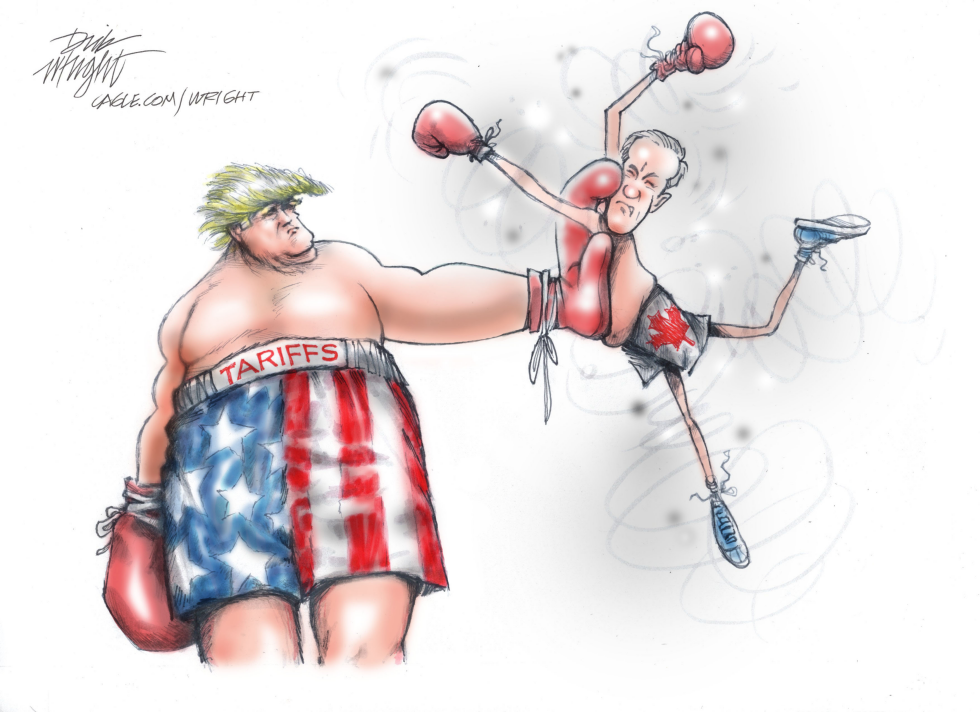
President Trump imposed new tariffs targeting Canadian goods in August 2026, escalating bilateral trade friction over lumber, dairy and autos. The measures aim to protect U.S. industries and renegotiate terms. Markets reacted with volatility in both countries. The editorial argues the tariffs represent necessary leverage that weakens Canada's position and forces concessions.
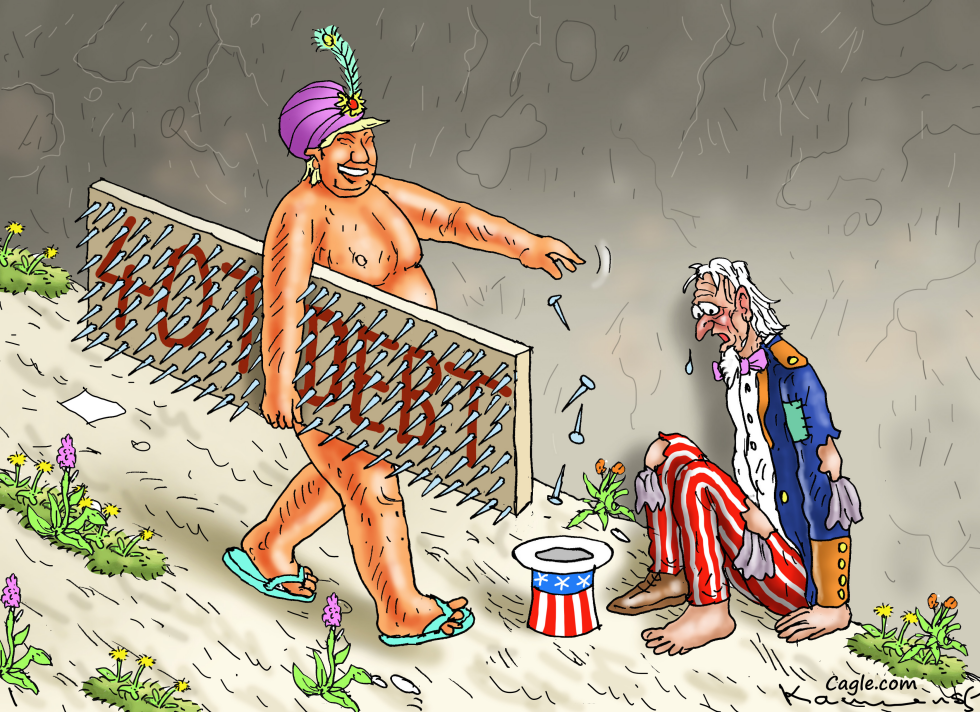
National debt has climbed toward 40 trillion dollars under the current administration. The figure of Donald Trump appears in the role of a fakir performing a bed-of-nails act while Uncle Sam sits nearby in evident distress. The image underscores concerns that fiscal policies have left the federal government in a precarious position with little relief in sight.
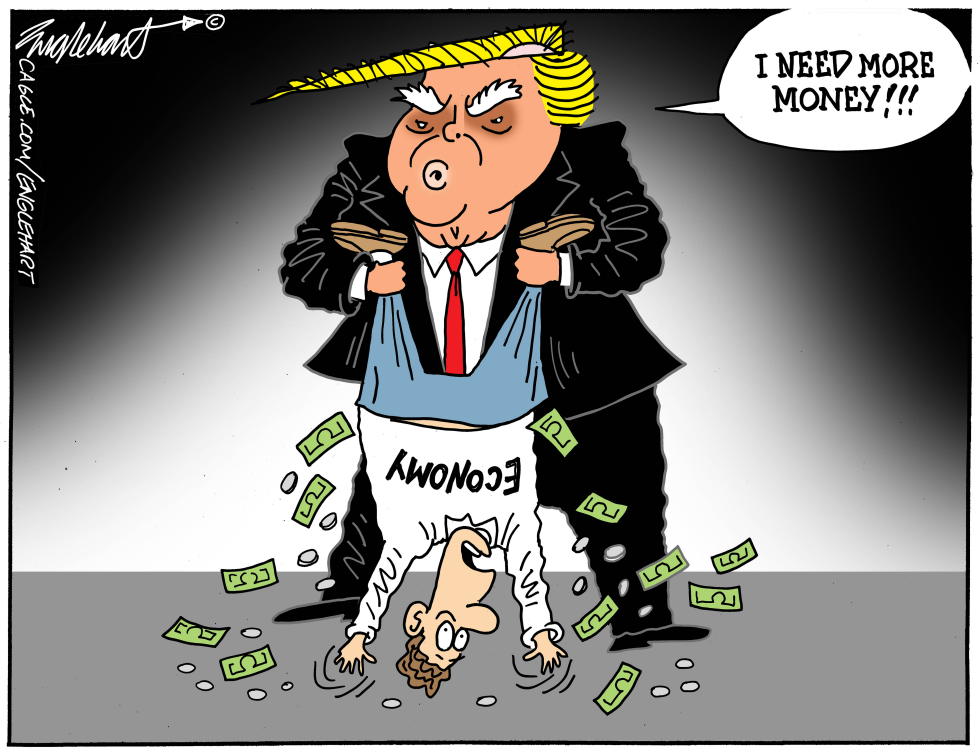
Donald Trump has pressed for additional revenue streams amid ongoing economic pressures. The move highlights tensions over fiscal demands and growth priorities. The piece portrays the action as direct extraction from economic resources.
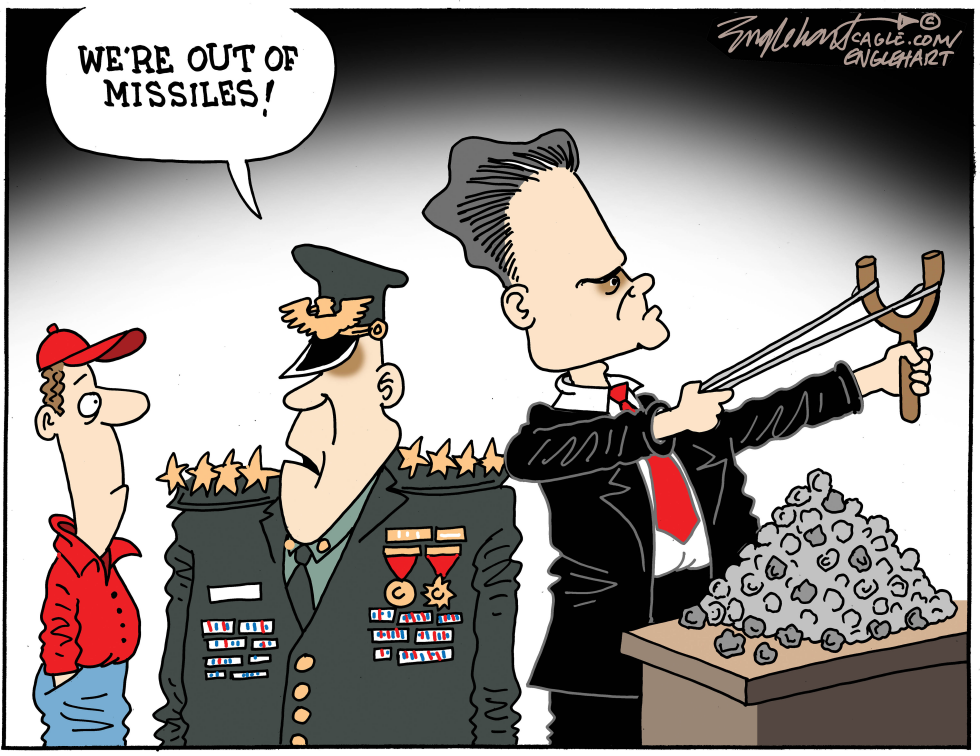
The Pentagon confronts depleted missile inventories during active defense needs. Officials explore improvised options including slingshots loaded with rocks. The development highlights supply chain strains and readiness questions for U.S. forces. The piece criticizes the situation as a failure of planning and resource allocation.
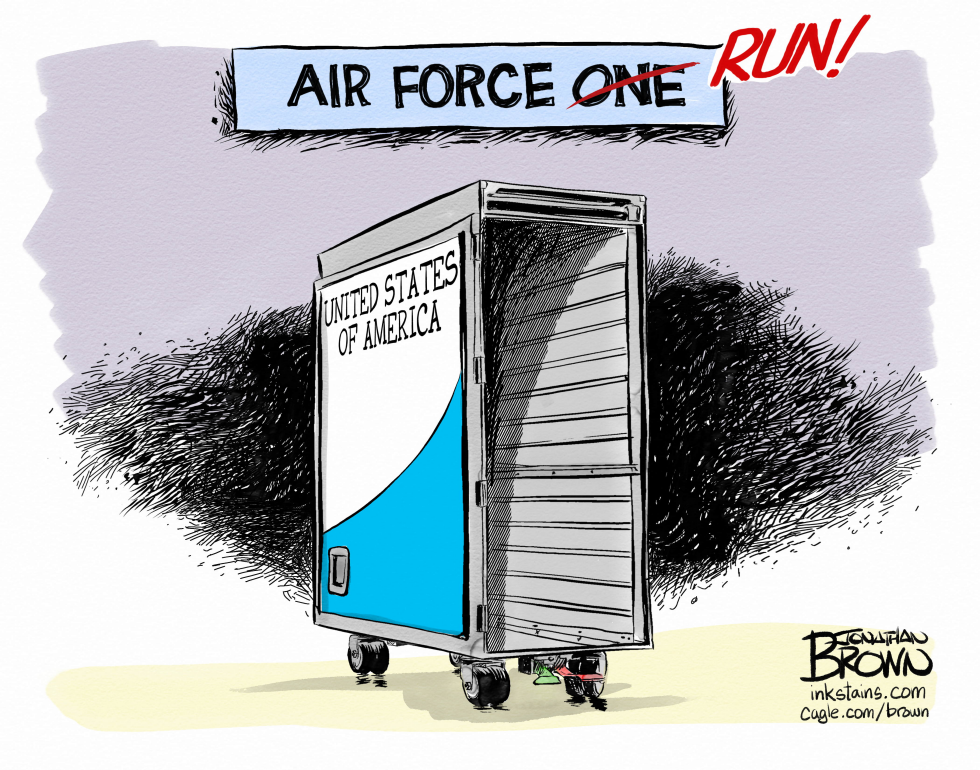
A wheeled airline catering cart occupies the center of the frame, painted in the livery of the presidential aircraft: white upper body, curved blue lower panel, and UNITED STATES OF AMERICA lettered down the side. Its full height door hangs open on empty wire shelving. Above it a pale blue placard reads AIR FORCE ONE, with ONE struck through in red and RUN! added beside that word in the same color. Two neckties poke out from between the casters underneath, one of them the long red tie Donald Trump is known for, the only trace of the men folded up inside. The drawing responds to reports that Trump sheltered in an airline galley cart against an assassination threat traced to Iran, turning the most recognizable branding in presidential aviation into an instruction to flee. Jonathan Brown signed the lower right corner alongside inkstains.com and Cagle.com/brown.
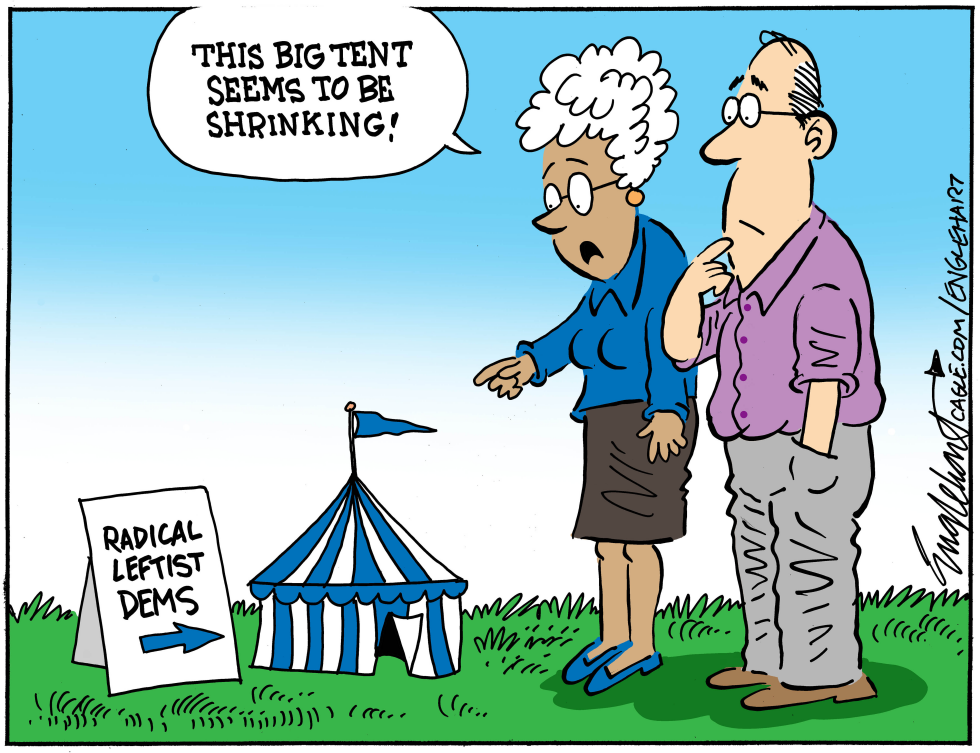
Democratic Party figures have grown concerned that the traditional big tent coalition is contracting as radical leftists consolidate control over the party's direction and messaging. The shift sidelines moderates and narrows the range of acceptable views within the organization. This dynamic raises questions about the party's ability to maintain broad electoral appeal in upcoming cycles. The editorial takes the position that the exclusionary turn is self-defeating and accelerates the party's isolation from mainstream voters.
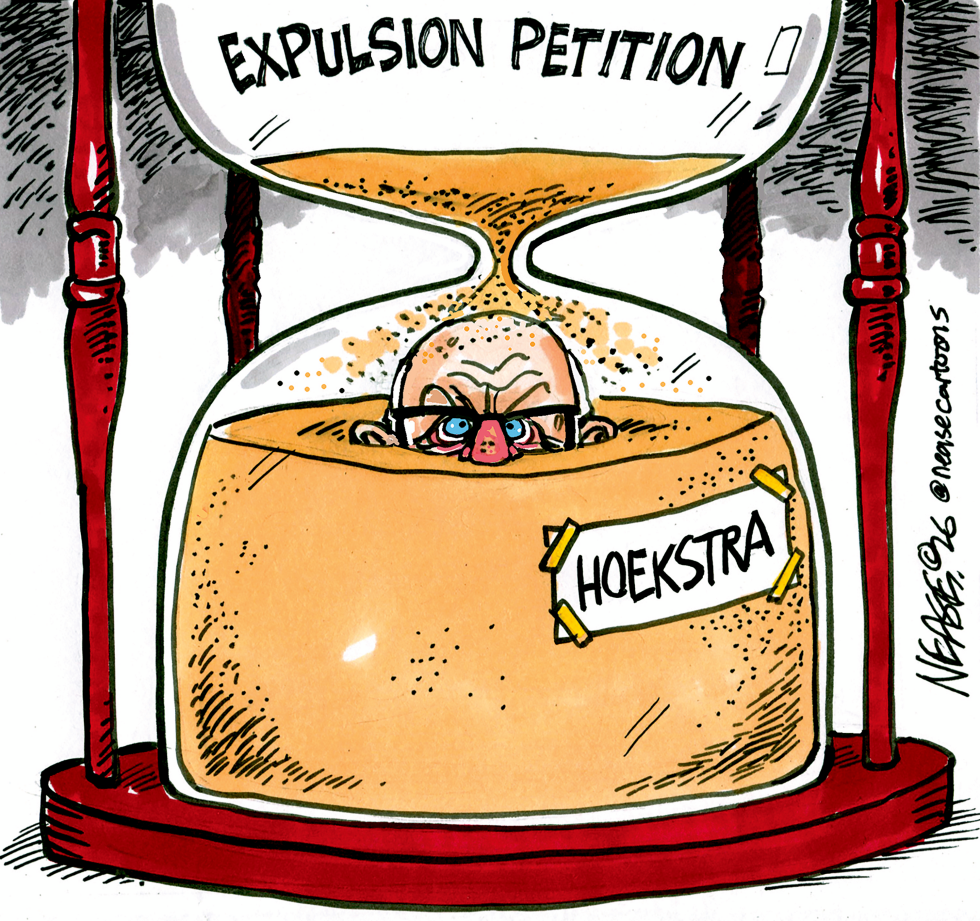
A petition to expel Representative Hoekstra from Congress has advanced, placing the lawmaker under direct procedural threat. The measure reflects internal House pressure over conduct and accountability standards. Colleagues must decide whether to advance the rare expulsion process or allow the matter to lapse. The development underscores ongoing tensions within the chamber about member discipline and institutional standards.
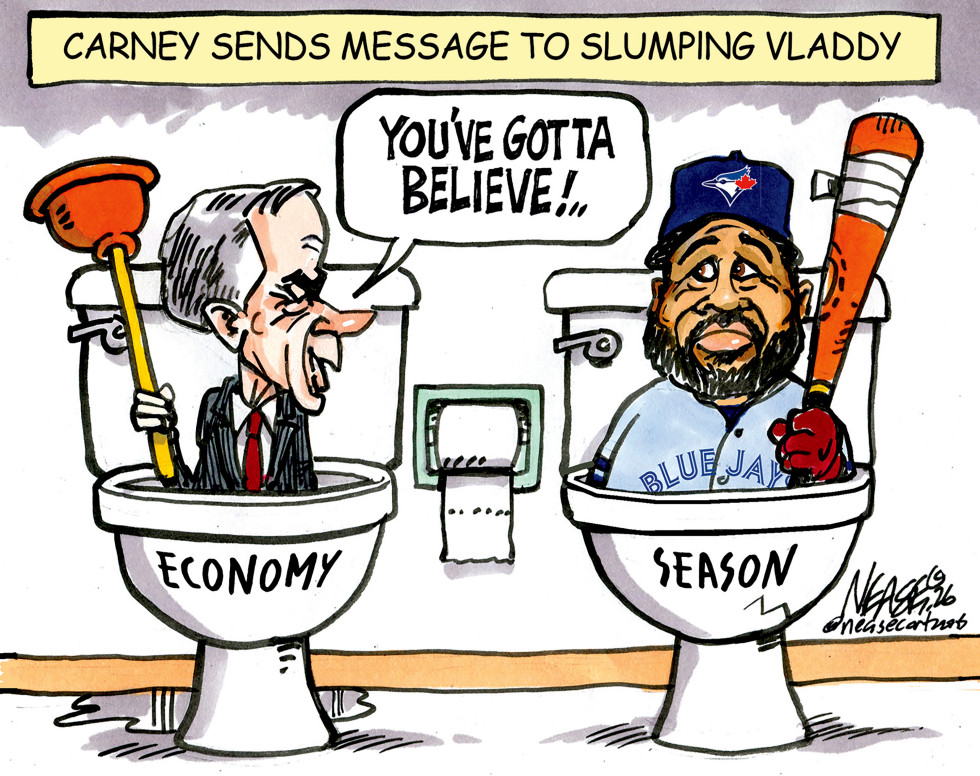
On August 12 2026 Mark Carney addressed Vladimir Guerrero Jr. during simultaneous downturns for the Canadian economy and the Toronto Blue Jays season. The exchange highlights ongoing pressures on both fronts with Carney positioned as a voice of encouragement. The piece frames the interaction as a direct motivational message from the political sphere to the sports world.
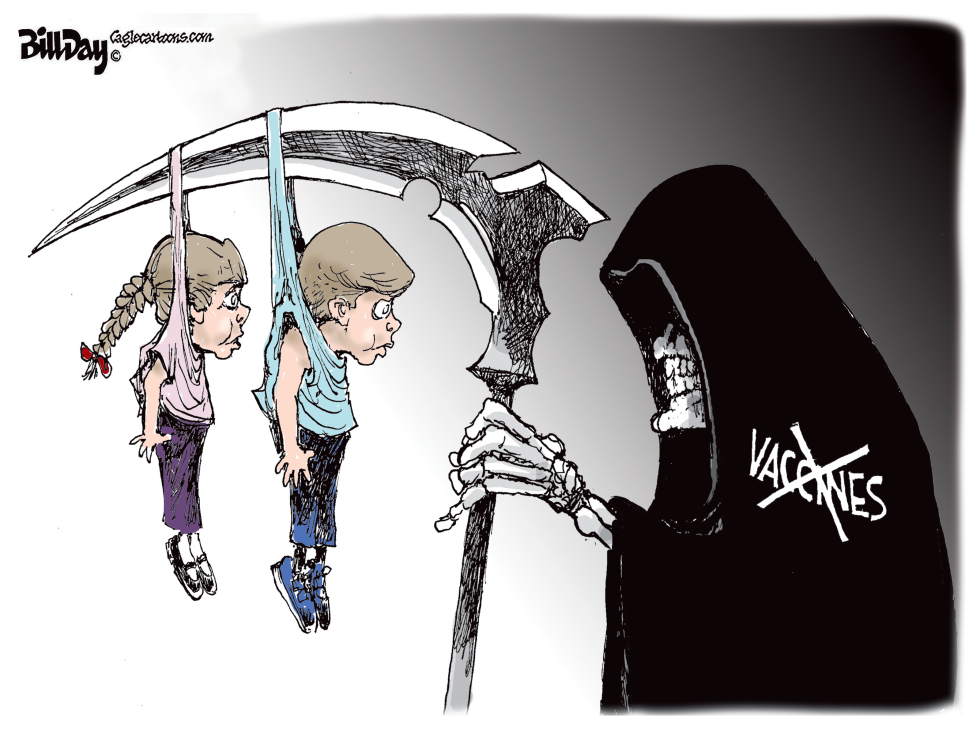
Opposition to routine childhood vaccines continues to surface in public discourse as health officials promote immunization schedules. The debate centers on parental choice versus community protection from preventable diseases. The editorial takes the position that rejecting vaccines endangers children and aligns such views with mortality risks.