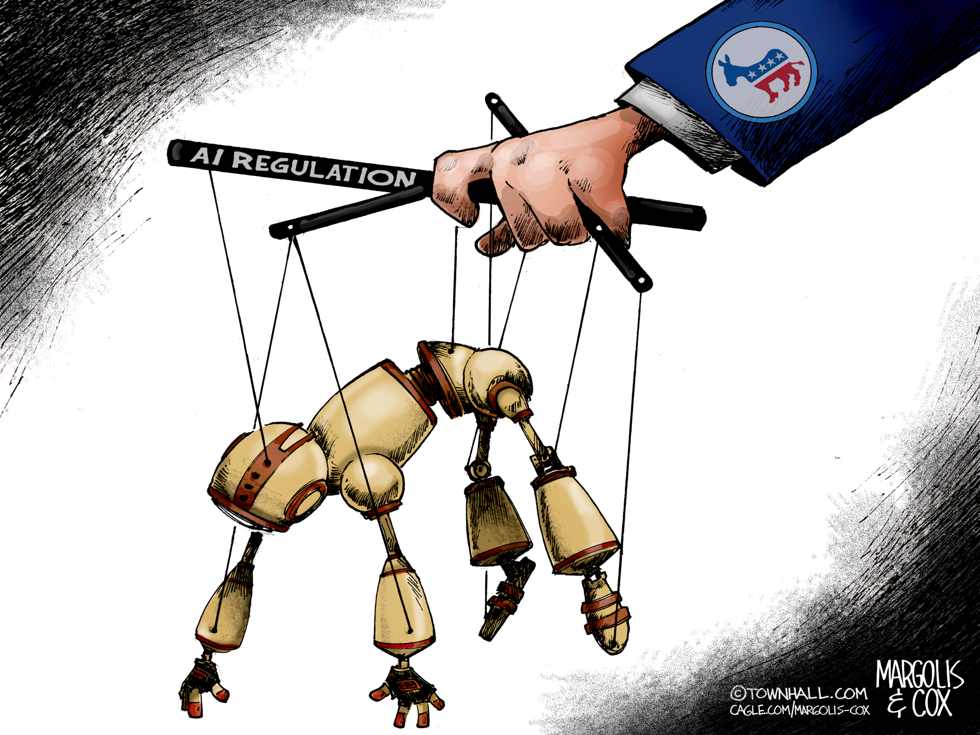
Republicans have advanced proposals to regulate artificial intelligence development and deployment. The moves come amid growing bipartisan interest in oversight of the technology sector. Critics argue the effort masks an attempt to steer innovation along party lines rather than neutral standards. The cartoon portrays the regulatory framework as a direct mechanism of control. It suggests the party in power uses rules to dictate outcomes in a critical industry.
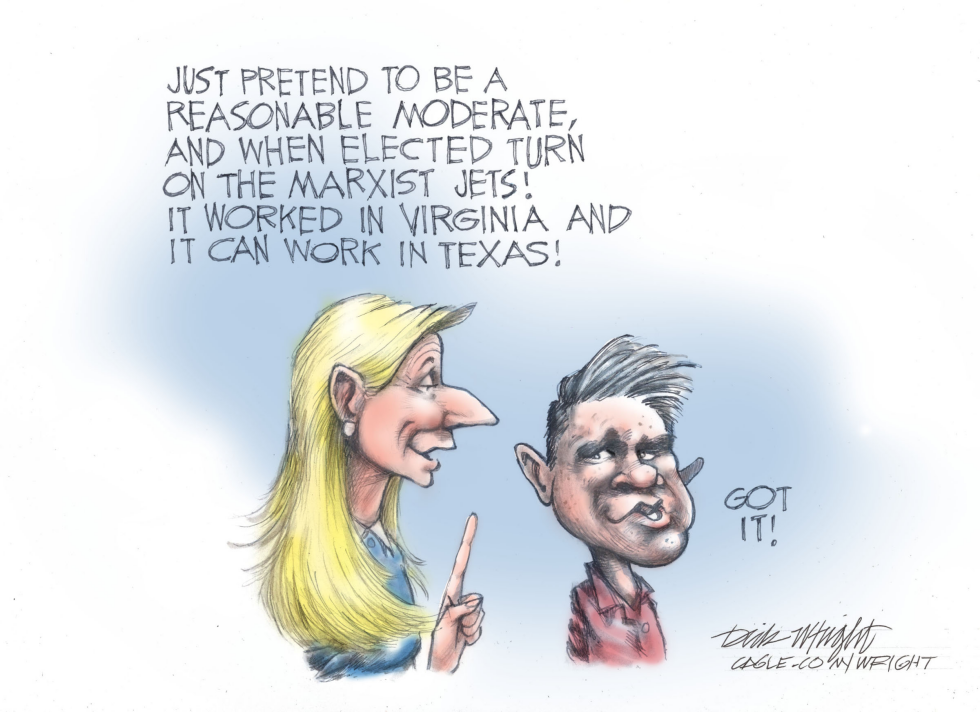
A Texas political candidate is depicted receiving advice to campaign as a moderate before revealing a more radical agenda after election, modeled on Abigail Spanberger's Virginia approach. The cartoon highlights concerns over deceptive campaign strategies in the 2026 cycle and questions the authenticity of centrist positioning by progressive candidates.
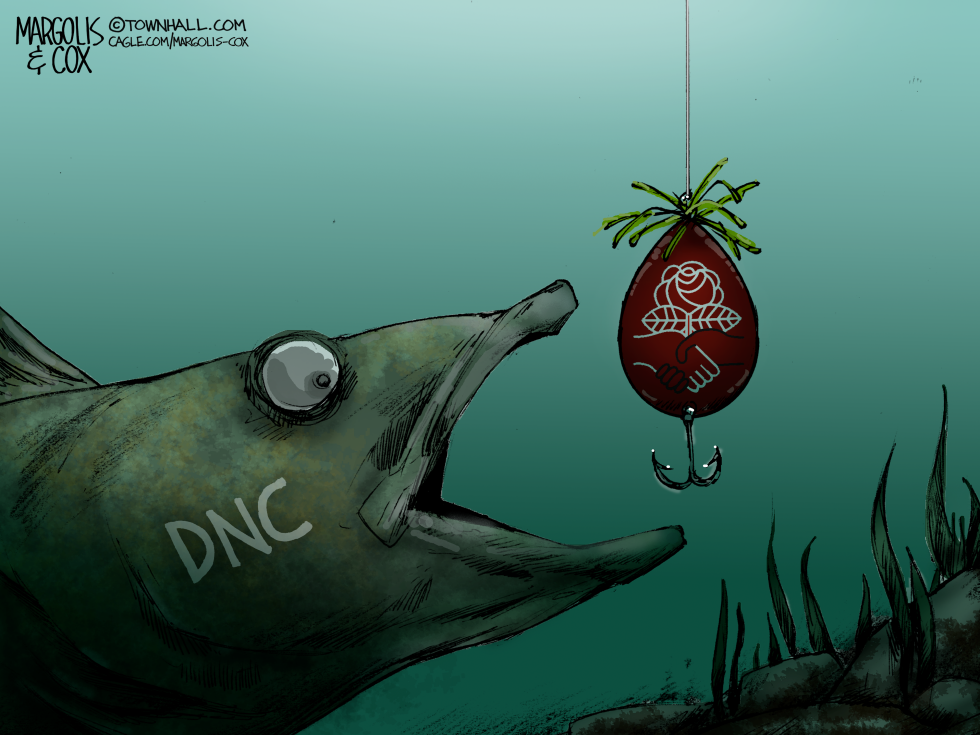
The Democratic National Committee faces growing influence from the Democratic Socialists of America. The cartoon depicts the DNC as a fish drawn to a lure bearing the DSA rose and handshake symbol. This reflects ongoing efforts by the socialist faction to shape Democratic priorities on economic policy and party direction. The piece suggests the DNC risks being pulled toward more radical positions. It highlights internal party dynamics where progressive activists seek greater control over the broader Democratic apparatus.
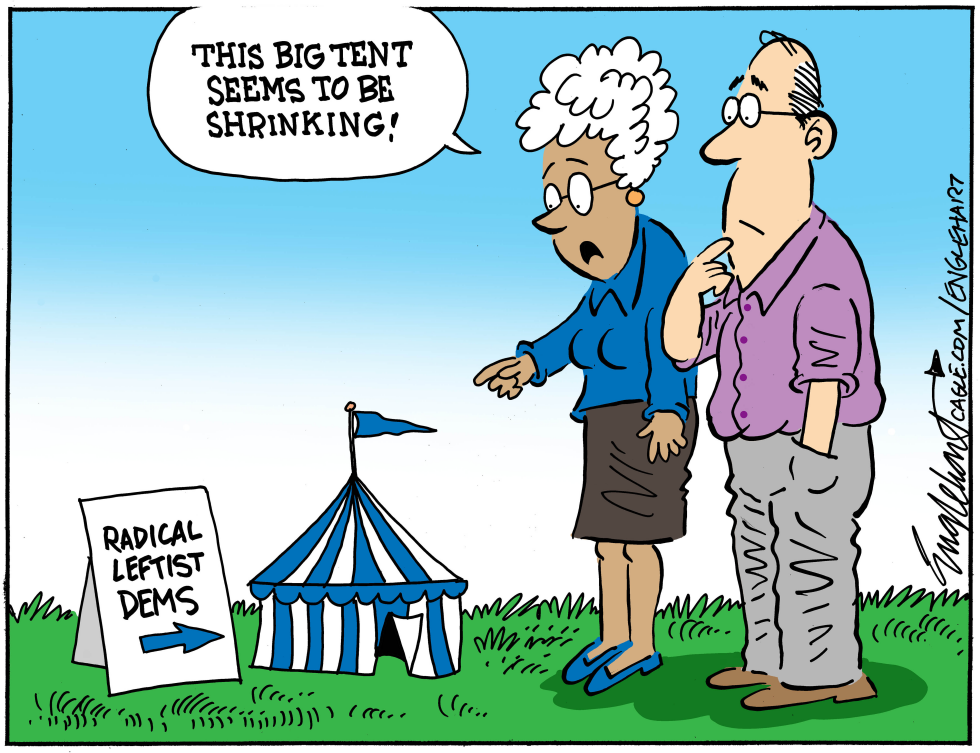
Democratic Party figures have grown concerned that the traditional big tent coalition is contracting as radical leftists consolidate control over the party's direction and messaging. The shift sidelines moderates and narrows the range of acceptable views within the organization. This dynamic raises questions about the party's ability to maintain broad electoral appeal in upcoming cycles. The editorial takes the position that the exclusionary turn is self-defeating and accelerates the party's isolation from mainstream voters.