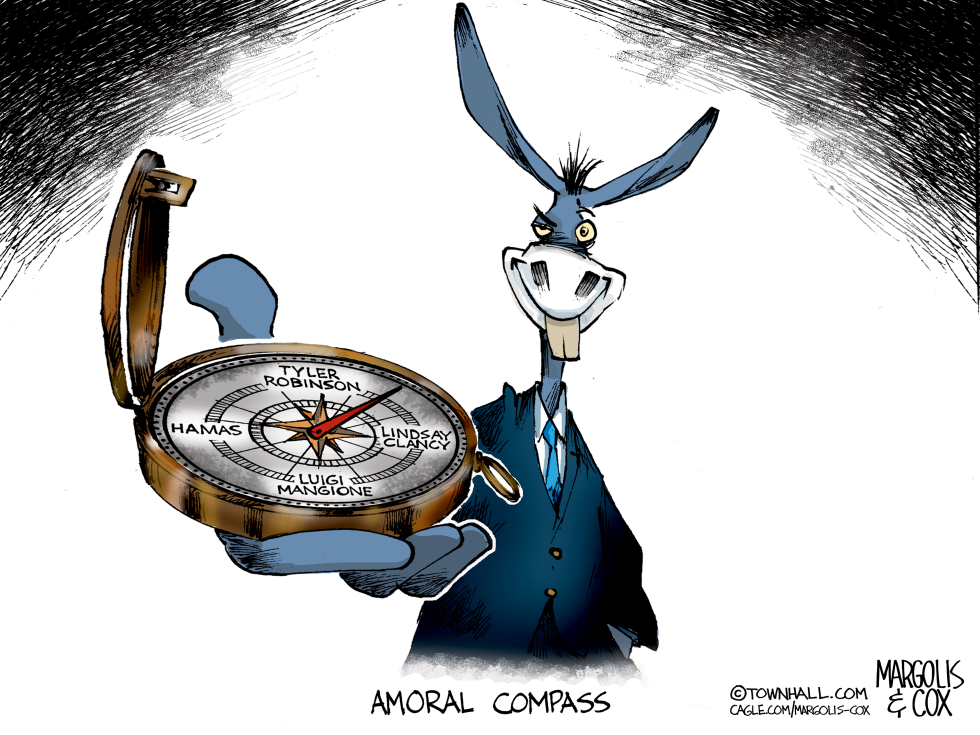
On September 11, 2026, a political cartoon by Margolis & Cox depicts the Democratic Party's moral framework as broken by associating it with figures such as Luigi Mangione, Lindsay Clancy, Tyler Robinson, and Hamas. The piece argues that progressive tolerance for these cases reveals a deeper ethical failure. It matters because public trust in political morality shapes elections and policy debates. The cartoon takes the position that the left has abandoned consistent principles in favor of selective outrage.
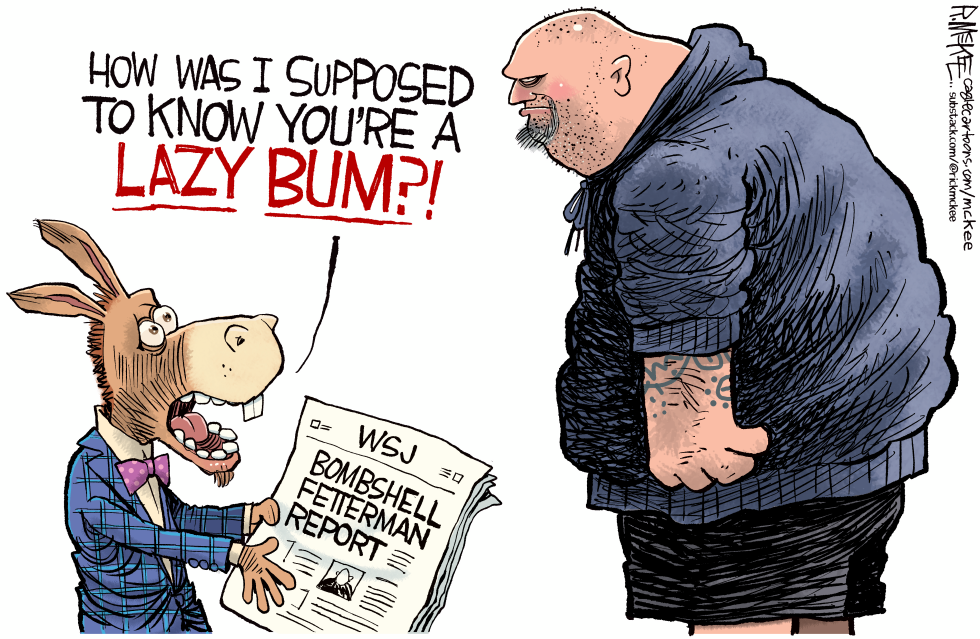
A Wall Street Journal report labeled Sen. John Fetterman a lazy bum, prompting a sharp response from the Pennsylvania Democrat. The piece highlights ongoing questions about his Senate attendance and engagement. Fetterman dismissed the characterization as unfair. Democrats portrayed the coverage as an attack on one of their members. The cartoon captures the party's defensive posture toward the criticism.
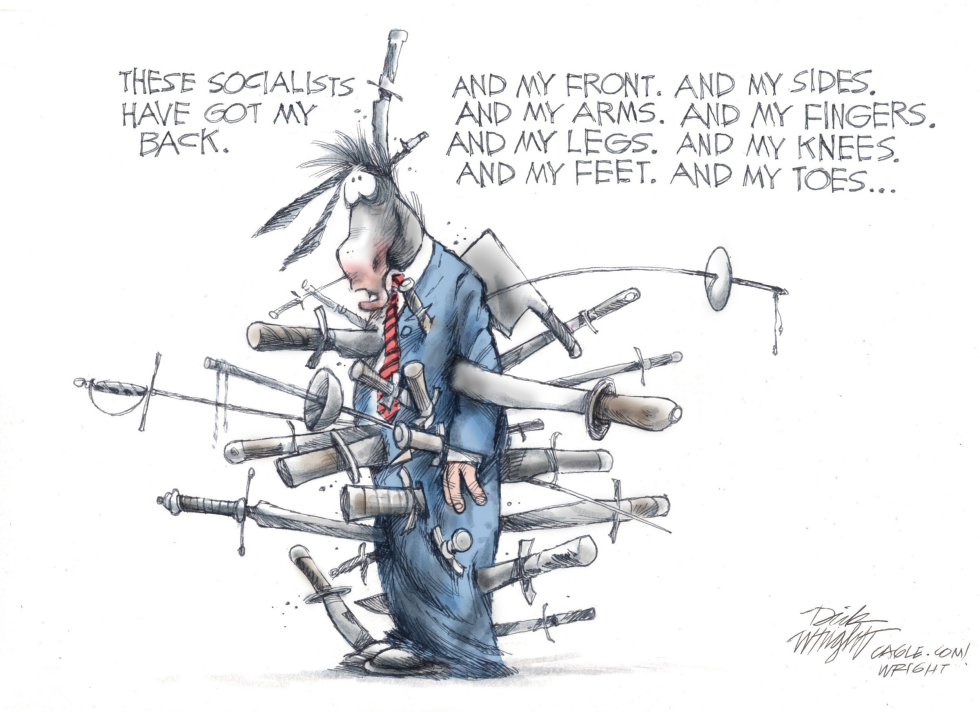
Tensions between socialist factions and mainstream Democrats continue to strain party cohesion ahead of future elections. The cartoon depicts socialists as actively harming the Democratic brand through relentless internal attacks. It argues that such infighting weakens the party's ability to govern effectively and appeal to broader voters.
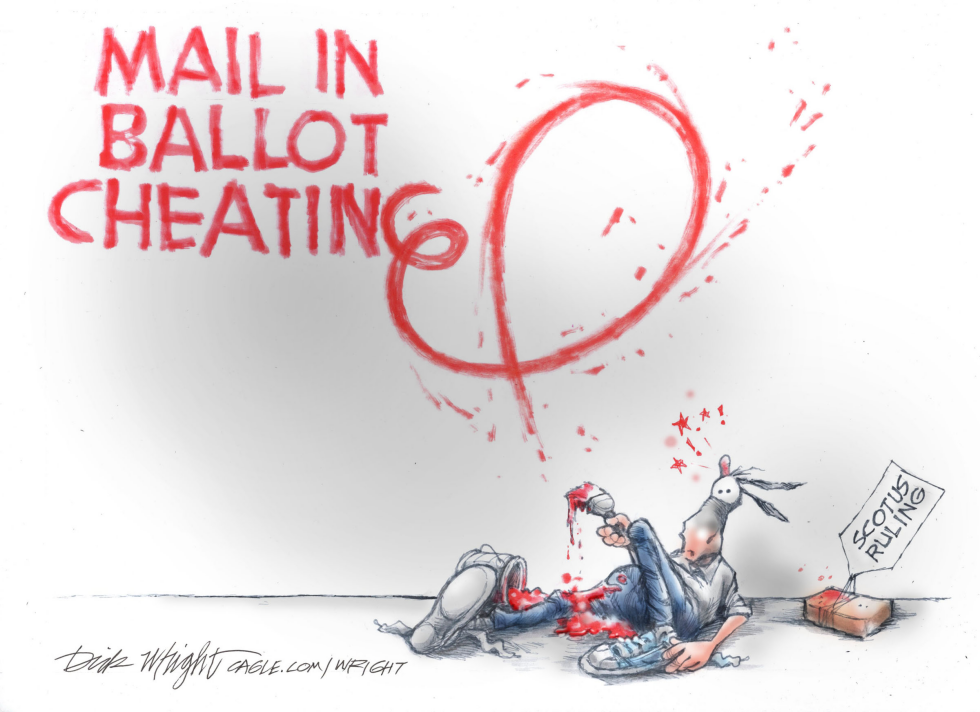
The image depicts the Democratic Party symbol as a donkey lying wounded on the ground with red liquid visible near its body. A large red prohibition symbol covers the words mail in ballot cheating at the top. A sign reading SCOTUS ruling stands nearby next to a box. The composition responds to a Supreme Court decision limiting certain mail-in ballot procedures. The visual argument centers on claims of reduced opportunities for improper voting practices. Publication occurred on August 25 2026. The work uses the party emblem to illustrate the effect of the ruling on one political side. No specific prior case details appear in the image itself.
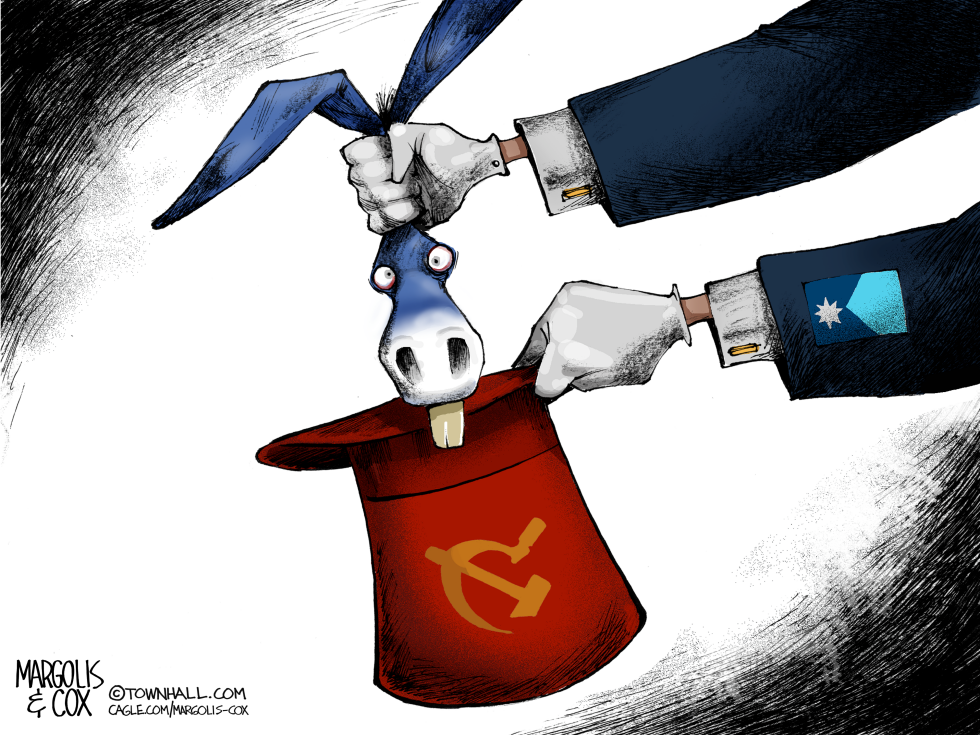
Accusations that Democratic policies carry communist undertones have persisted in partisan debate for years. The image frames the party as emerging directly from a communist emblem through a conjurer's reveal. This visual argument underscores ongoing conservative critiques that Democratic governance veers toward authoritarian economic controls rather than traditional American principles.
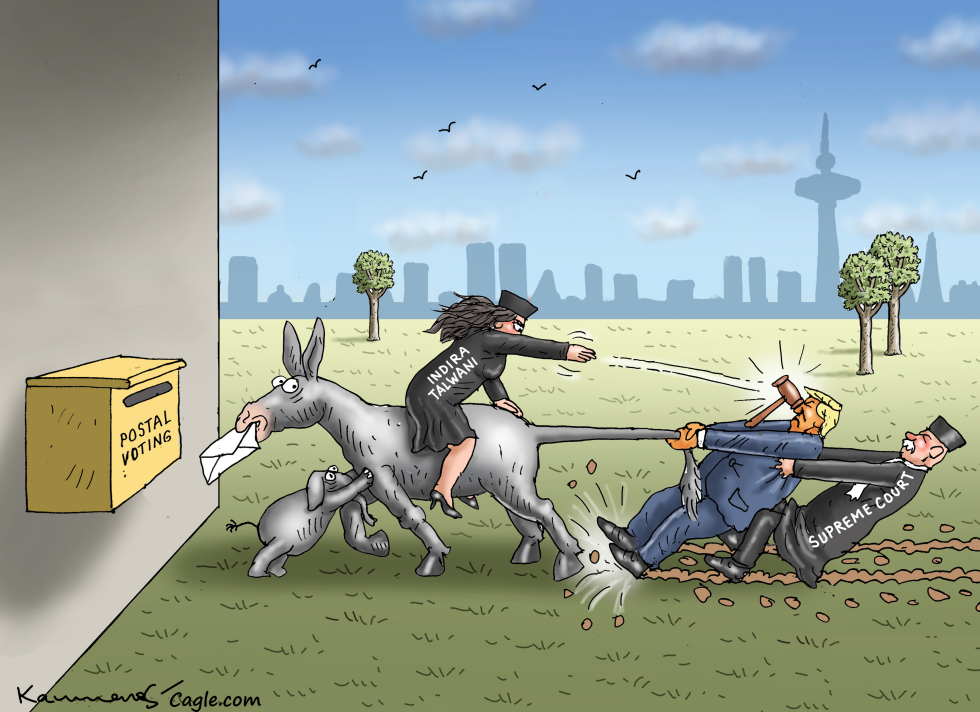
A political cartoon shows federal Judge Indira Talwani riding a Democratic donkey labeled with postal voting while dragging two Supreme Court justices across a field near the Space Needle. The image responds to ongoing disputes over postal voting rules and federal court involvement in election procedures. Talwani, a U.S. District Judge, has issued rulings affecting voting access in recent cases. The cartoon uses the donkey as a party symbol and a yellow ballot box to illustrate the conflict between lower court decisions and the Supreme Court. The visual argument centers on judicial power in election law matters active in 2026.
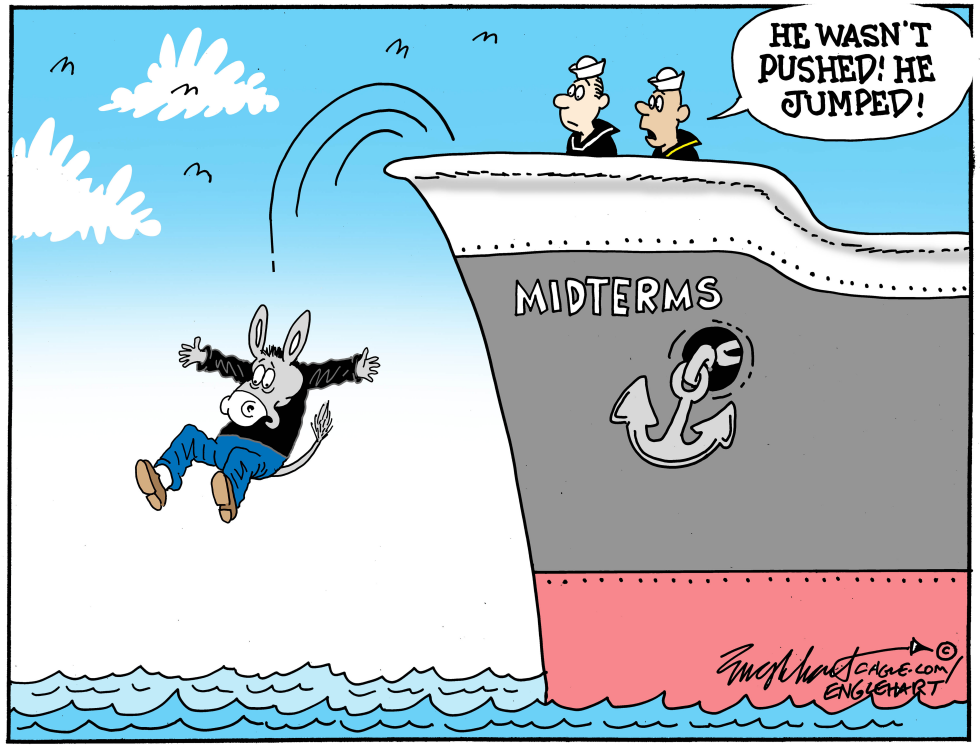
With the 2026 midterm elections approaching, Democratic candidates face headwinds in key races. The party symbol is shown leaping from the midterms vessel into open water. Sailors on deck insist the departure was voluntary. The image captures ongoing Democratic struggles to maintain momentum and voter support in competitive districts. The editorial position frames the move as self-inflicted rather than externally forced.
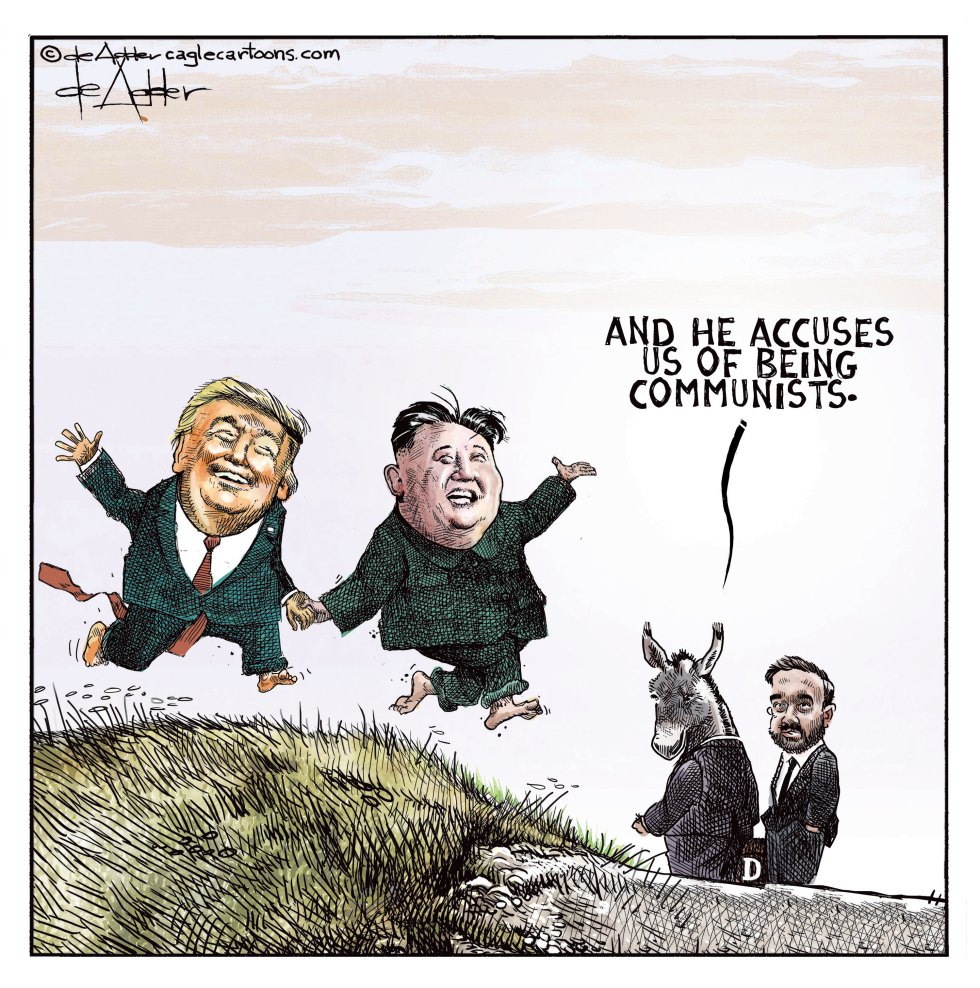
Donald Trump and Kim Jong Un appear together in a political scene accusing Democrats of communist leanings. The depiction highlights their joint action amid ongoing partisan rhetoric. The editorial position frames the accusation as inconsistent given the shared leap.
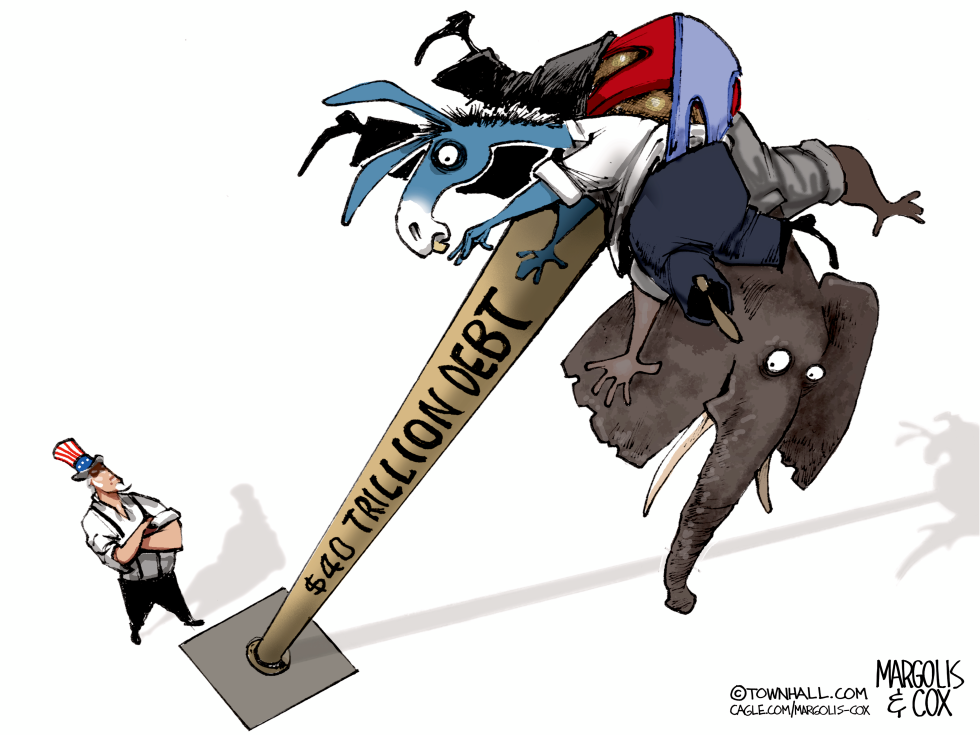
The national debt has reached $40 trillion, with both major parties continuing to support spending measures that add to the total. Lawmakers from each side have backed recent appropriations and tax policies that widen the gap without corresponding offsets. The situation matters because interest payments now consume a growing share of the federal budget, crowding out other priorities. The editorial position criticizes both Democrats and Republicans for riding the debt higher rather than addressing the underlying imbalance.
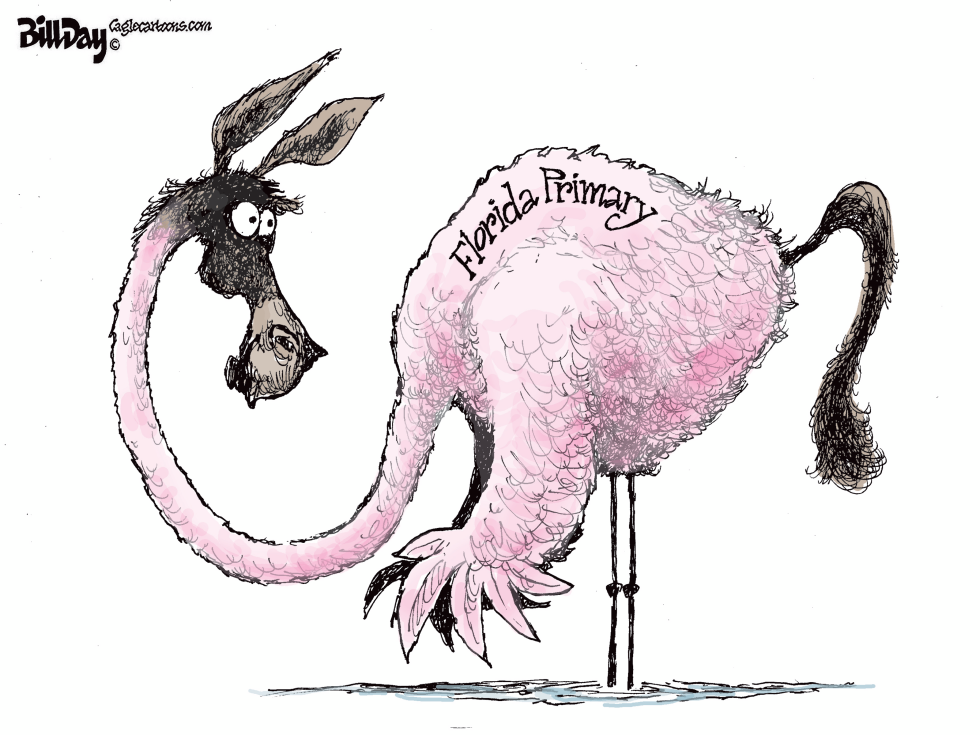
Florida prepares for its primary election with Democratic candidates competing for key nominations. The contest draws attention due to the state's role in national party positioning. The piece portrays the primary as an awkward fusion of traditional party identity and local Florida elements, suggesting the process strains familiar symbols.
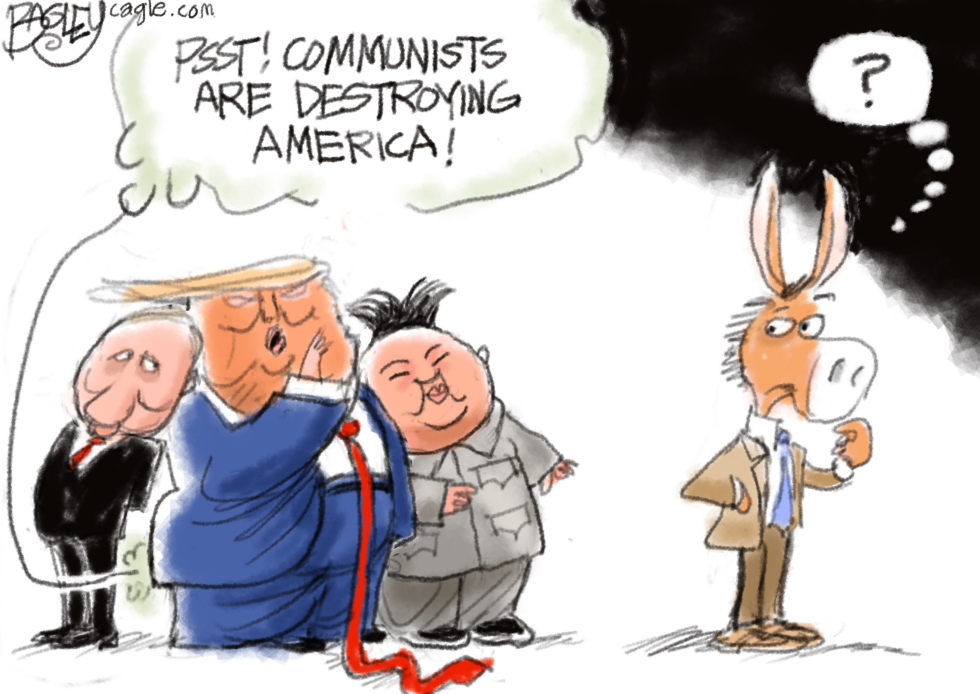
Donald Trump has renewed warnings that communists are undermining the United States, directing the message at Democratic leaders. The claim comes amid ongoing partisan clashes over domestic policy and foreign influence. The piece presents the Democratic response as skeptical and uncertain.
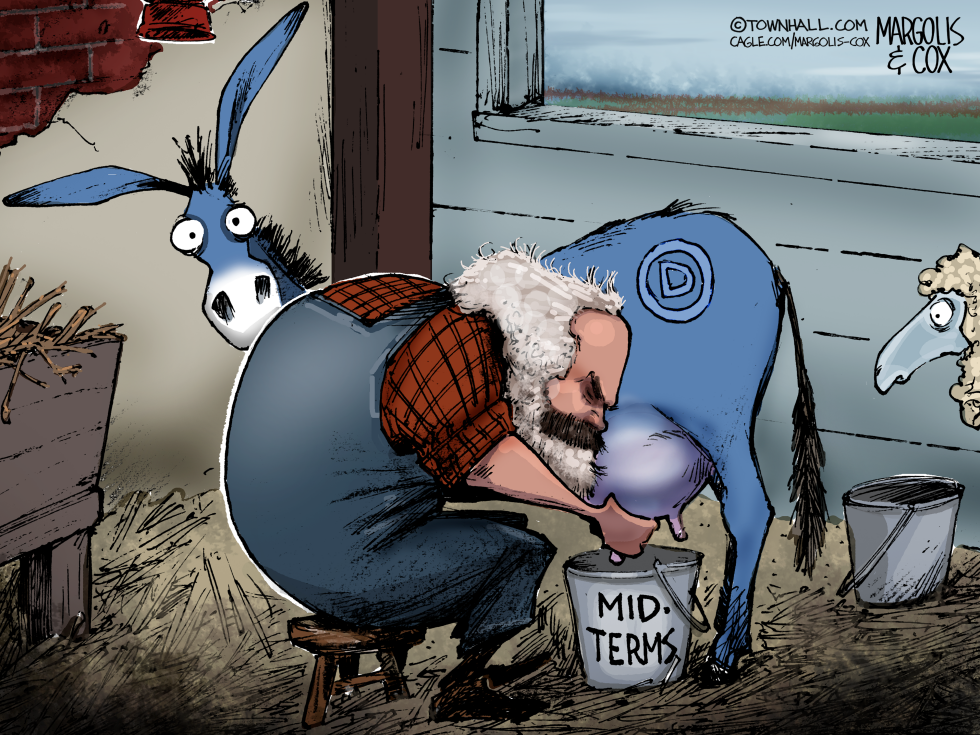
Democrats face ongoing questions about ideological influences from socialist thinkers as they prepare midterm strategies. The piece portrays Karl Marx directly engaging the party symbol to extract electoral gains. It argues that such roots undermine the party's mainstream appeal and long-term viability.
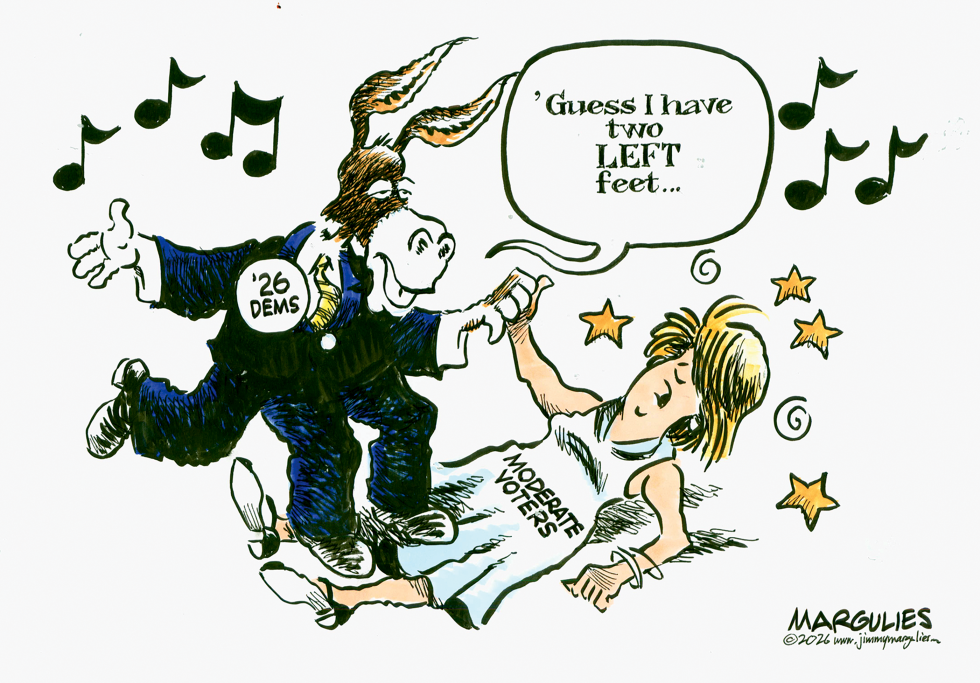
Democrats heading into the 2026 midterms face internal pressure to energize their base with progressive policies, yet this risks further distancing moderate voters essential for broader electoral success. The party has advanced left-leaning positions on issues like spending and social policy in recent cycles. Critics argue this approach prioritizes ideological purity over coalition building. The piece portrays the Democratic donkey as stepping on moderates while acknowledging its own missteps, highlighting the tension between base mobilization and centrist appeal.
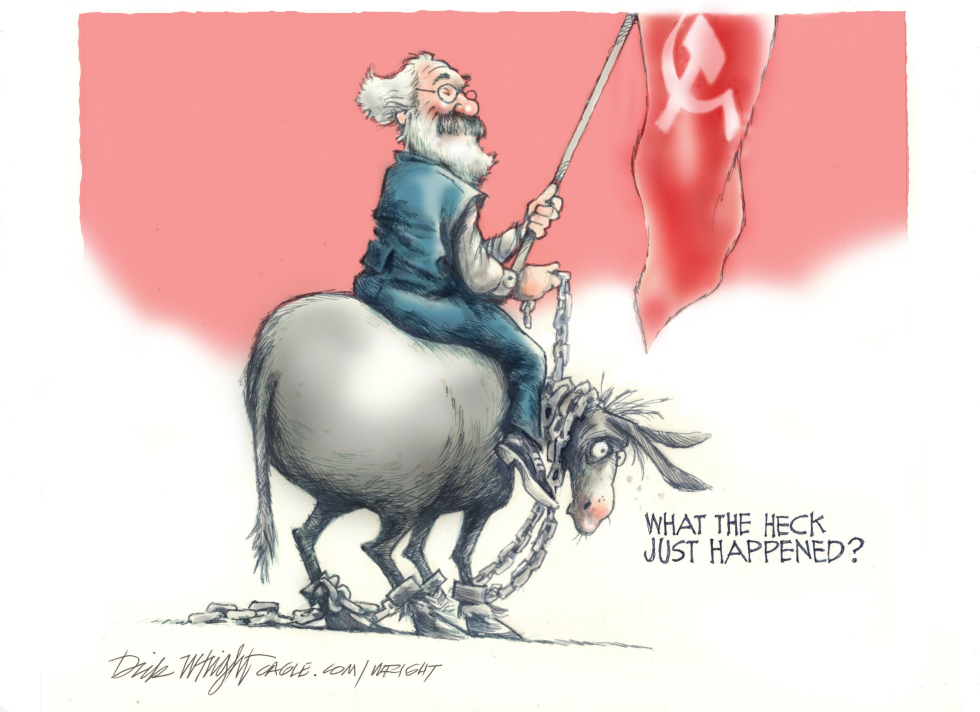
A Marxist figure has taken the reins of the Democratic Party symbol, raising a hammer-and-sickle flag over a donkey bound in chains. The image captures the moment the animal registers the shift in control. The editorial argues that radical communist influence has overtaken the party and left its traditional base bewildered by the abrupt change in direction.
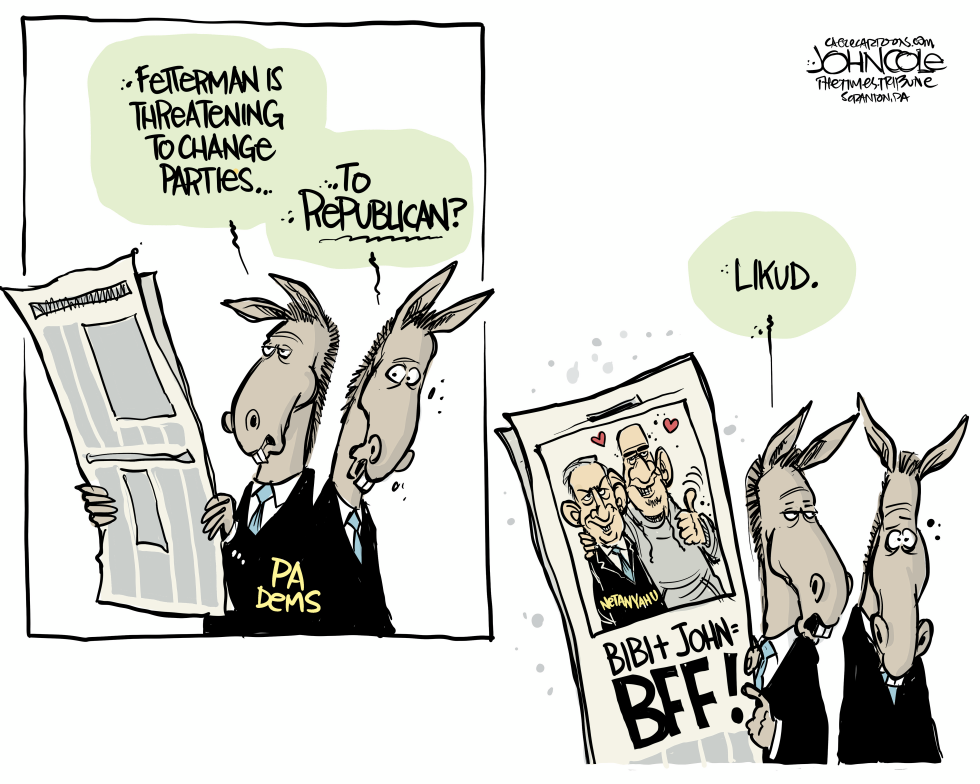
Senator John Fetterman has signaled a possible party switch that has Pennsylvania Democrats scrambling. Speculation centered on a Republican move until the senator's close ties to Israeli Prime Minister Benjamin Netanyahu and the Likud party surfaced instead. The development highlights ongoing tensions within the Democratic coalition over foreign policy alignments and personal political trajectories.