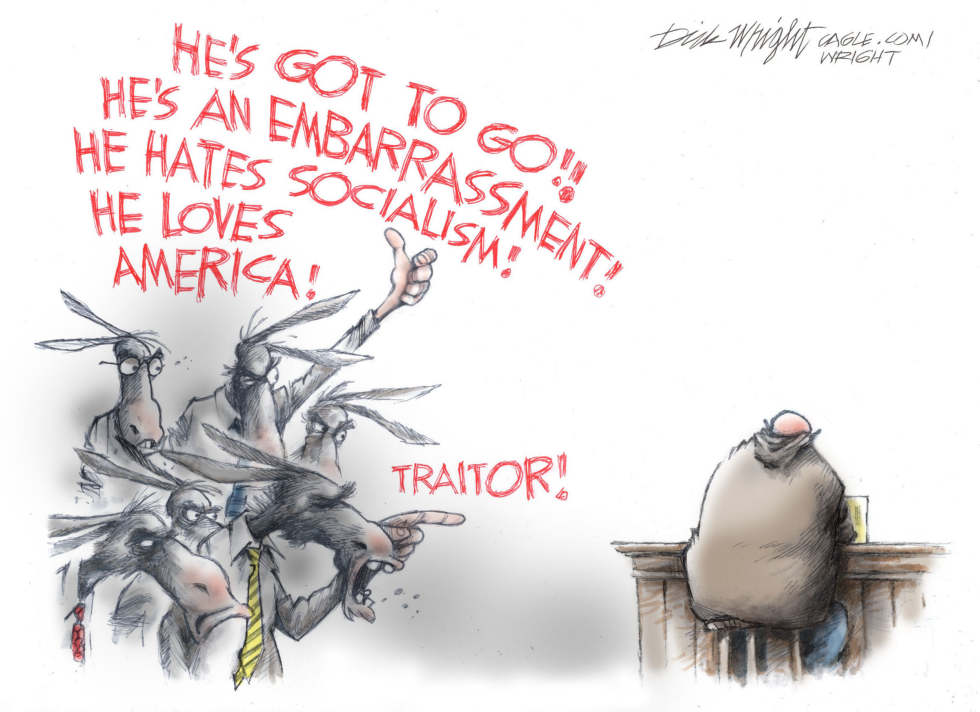
Senator John Fetterman drew sharp criticism from fellow Democrats in September 2026 for publicly rejecting socialism and emphasizing his love of America. The episode highlights deepening tensions within the party over ideological purity tests. The cartoon portrays the attacks as self-destructive party infighting.
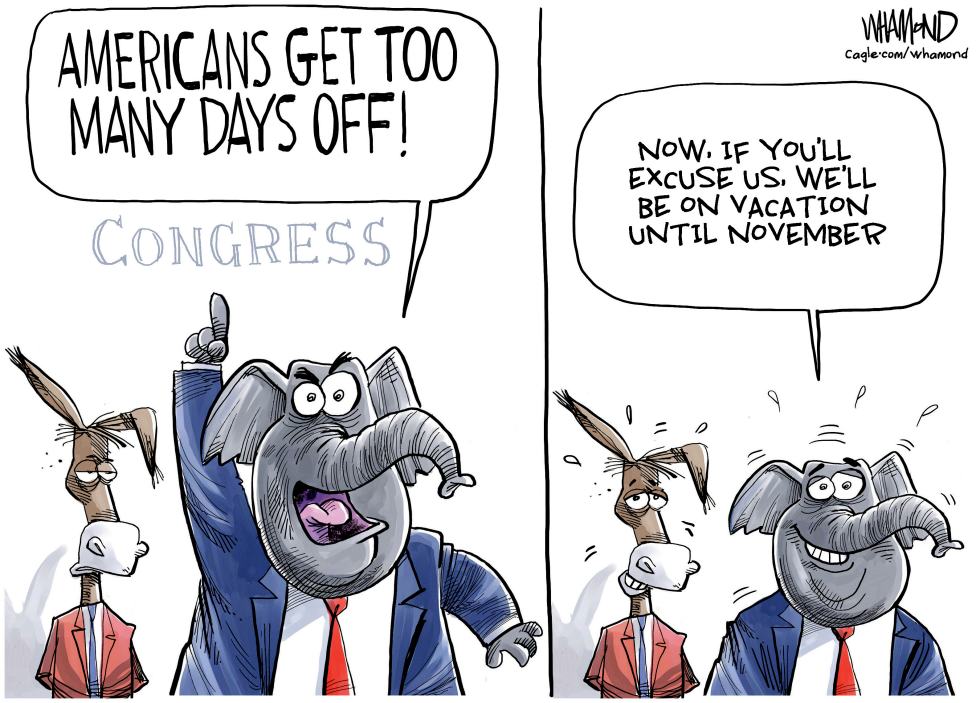
Congressional leaders from both parties have drawn criticism for lecturing American workers about taking too many days off while preparing to recess until November. The move comes as lawmakers face questions over productivity and priorities in an election year. The cartoon highlights the perceived double standard between public statements on labor and the actual schedule of elected officials.
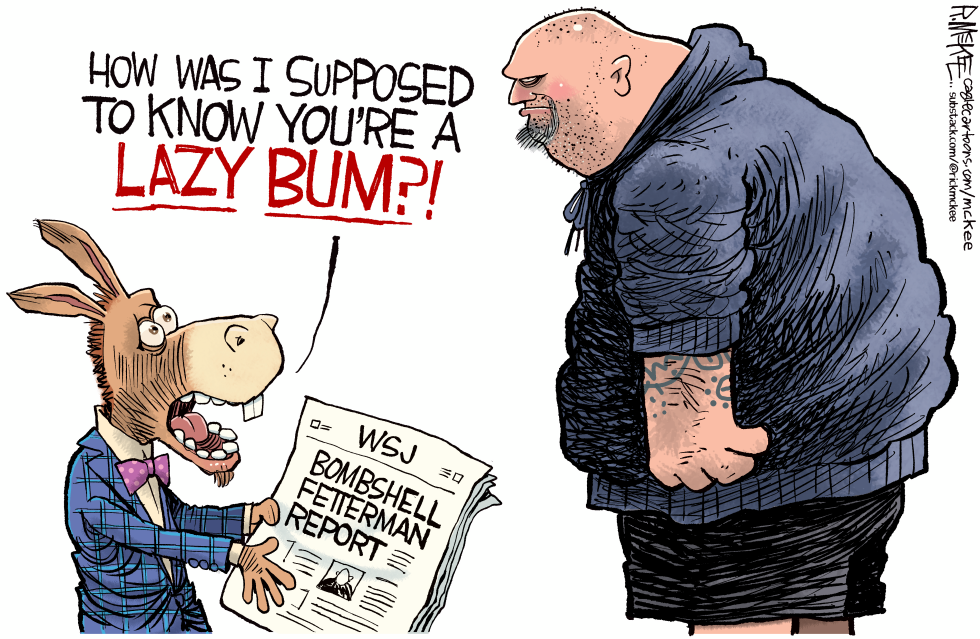
A Wall Street Journal report labeled Sen. John Fetterman a lazy bum, prompting a sharp response from the Pennsylvania Democrat. The piece highlights ongoing questions about his Senate attendance and engagement. Fetterman dismissed the characterization as unfair. Democrats portrayed the coverage as an attack on one of their members. The cartoon captures the party's defensive posture toward the criticism.
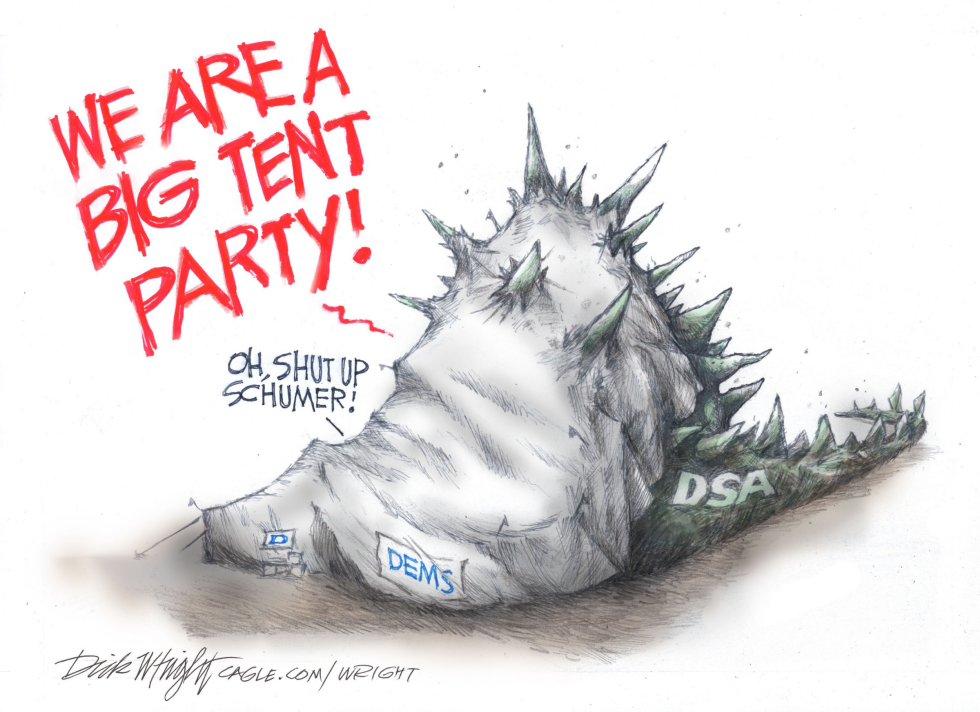
Democratic leaders continue to promote the party as a big tent open to all factions. The DSA's growing role creates visible friction with establishment figures like Senate Minority Leader Chuck Schumer. This dynamic highlights ongoing tensions over the party's direction and messaging ahead of future elections. The piece argues that the big tent claim rings hollow when the socialist wing dominates and dismisses traditional voices.
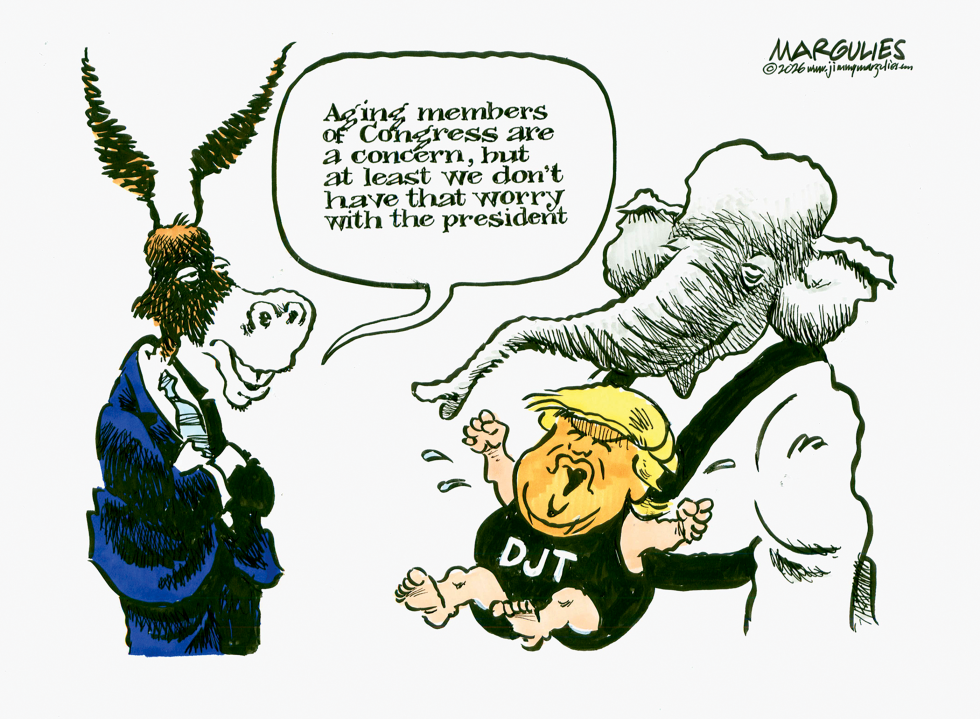
Democrats have raised alarms about aging lawmakers in Congress while downplaying similar concerns about President Trump. The dynamic reflects partisan divides over leadership fitness and selective scrutiny of age in politics. The piece argues this stance reveals inconsistency in how age is treated depending on the officeholder.
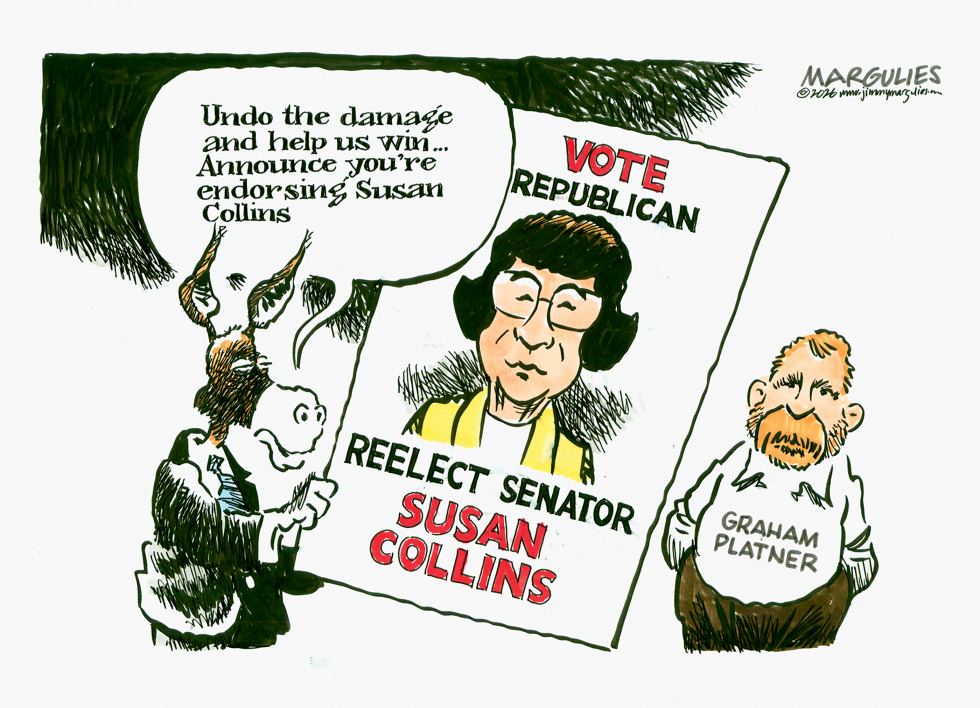
A cartoon depicts a Democratic donkey urging Graham Platner to announce an endorsement of Republican Senator Susan Collins. The donkey holds a large sign reading 'Reelect Senator Susan Collins' and 'Vote Republican.' Platner stands nearby wearing a shirt with his name. The speech bubble from the donkey calls for undoing damage and helping win by backing Collins. The image is dated July 2026 and signed by Jimmy Margulies.
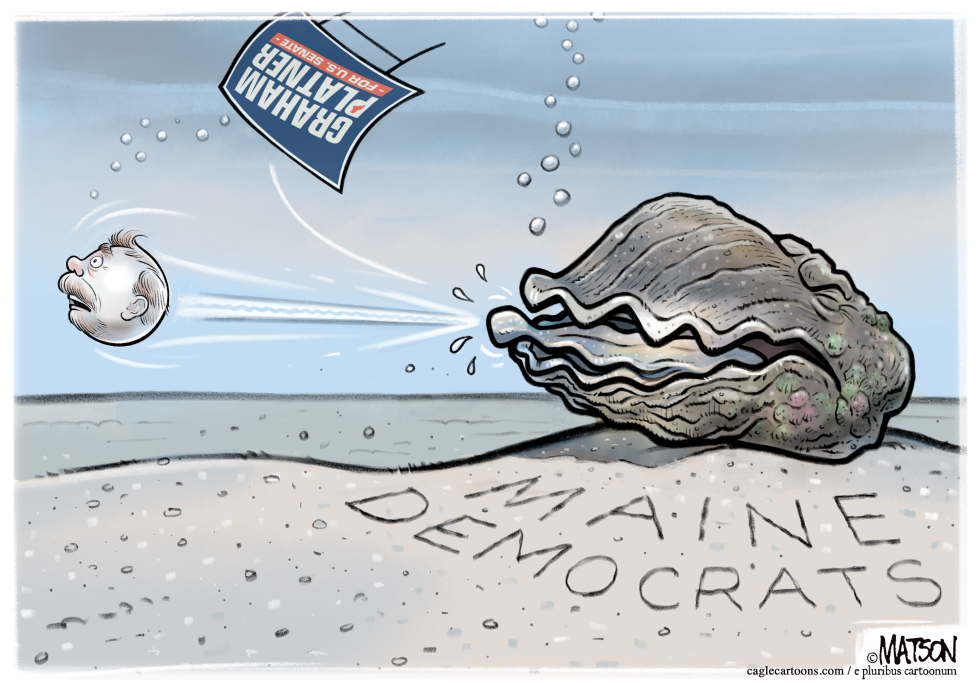
The image depicts Maine Democrats rejecting Graham Platner as a U.S. Senate candidate. A large oyster positioned on sand labeled Maine Democrats expels the candidate head into the air. A campaign sign for Graham Platner for U.S. Senate flies above. Bubbles and water trails emphasize the expulsion action. The scene responds to the party's decision during the 2026 midterm cycle. The visual uses the oyster as a symbol of the coastal state and the rejection process. Broader context involves Democratic Party screening of candidates ahead of Senate contests in Maine.
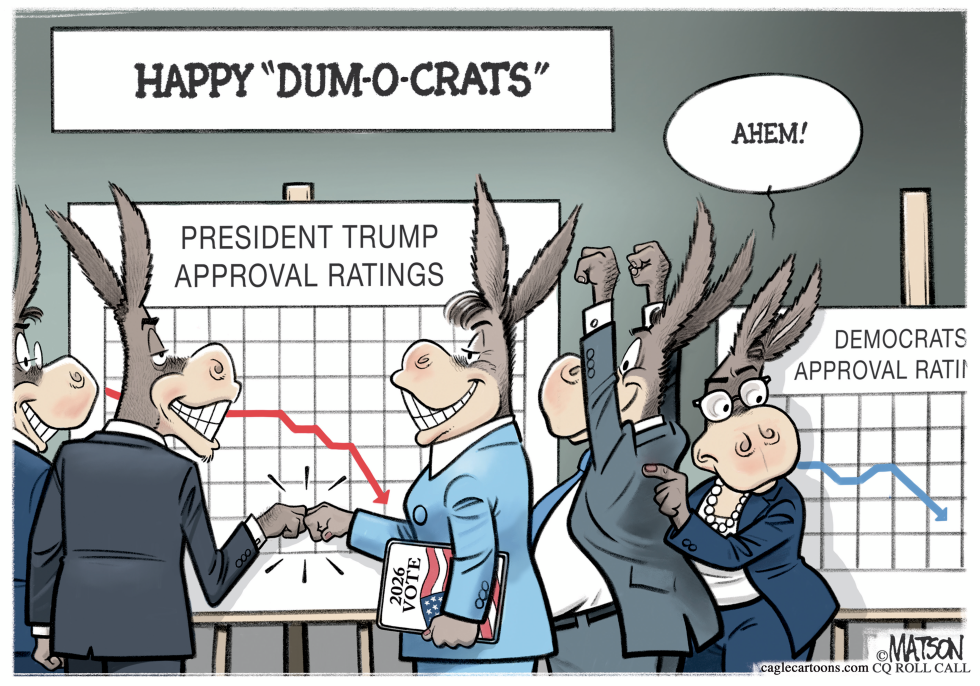
The cartoon depicts Democratic lawmakers depicted as donkeys celebrating a sharp drop in President Trump's approval ratings on a large chart. One figure holds a notebook labeled 2026 VOTE while others raise fists in triumph. A second chart on the right shows Democratic approval ratings also declining. A speech bubble with the word AHEM interrupts the celebration. The image highlights the party's focus on opposition polling rather than its own standing with voters ahead of the midterm elections.
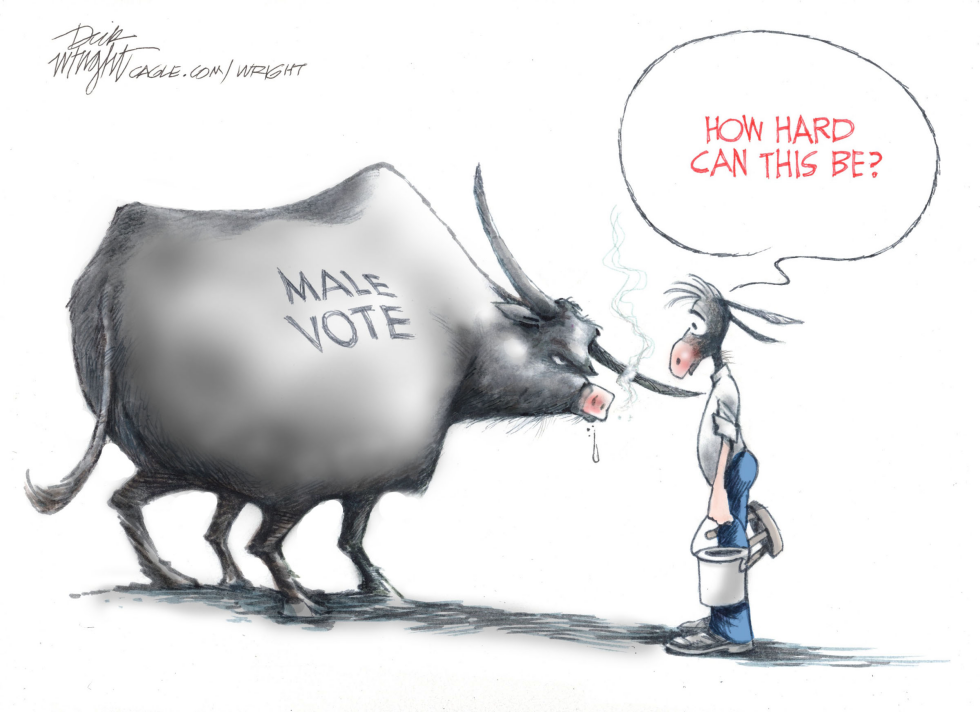
The cartoon depicts a Democratic donkey holding a bucket and gripping the nose ring of a large bull marked male vote. The donkey asks how hard the task can be while the bull resists. This visual reflects Democratic efforts to regain support among men who have trended away from the party in recent elections. The image uses the classic donkey and bull symbols to illustrate outreach difficulties. Publication occurs during a period of party reflection on voter demographics and messaging strategies.
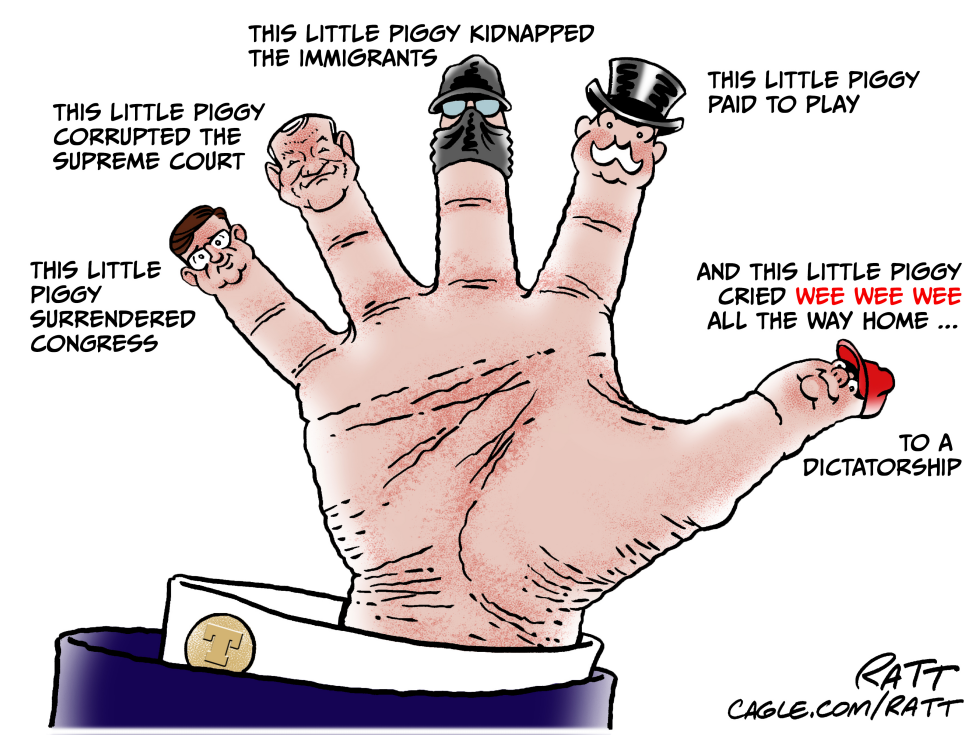
This political cartoon uses the nursery rhyme 'This Little Piggy' to satirize political corruption, power dynamics, and the manipulation of institutions like Congress and the Supreme Court. Each finger represents a different aspect of political critique, from corruption to the surrender of power, culminating in a commentary on dictatorship. The illustration employs humor and allegory to convey a strong political message about the current state of governance and influence.
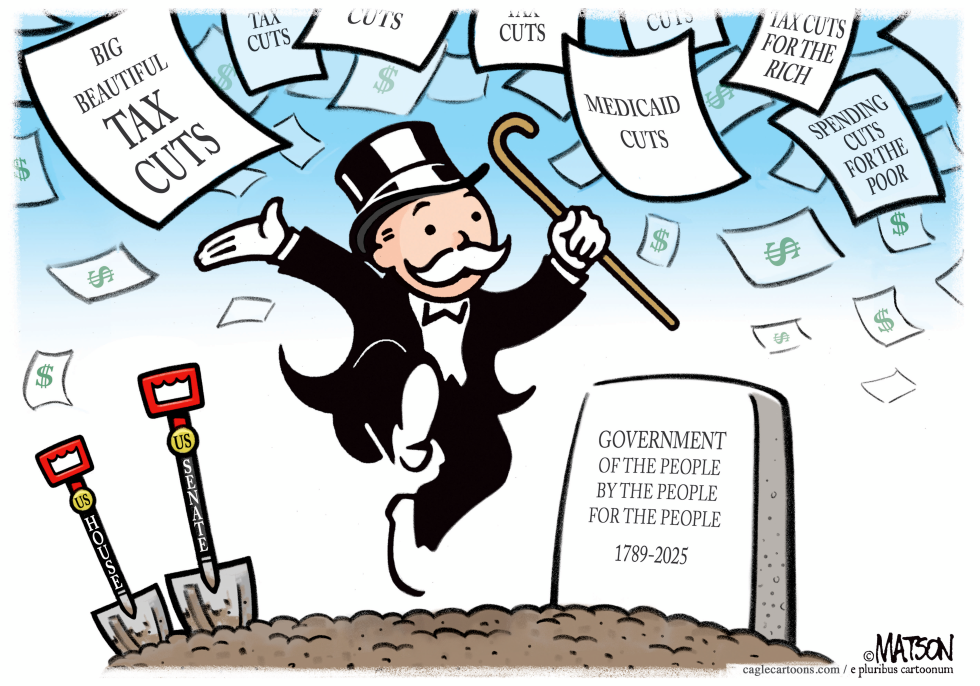
On June 30 2025 the cartoon shows the Monopoly Man dancing over the grave of government of the people by the people for the people dated 1789-2025. Papers labeled big beautiful tax cuts tax cuts for the rich Medicaid cuts and spending cuts for the poor swirl around. Shovels marked House and Senate stand ready in the dirt. The image responds to recent congressional action on a major tax and spending bill that reduces Medicaid and targets benefits toward wealthier interests.