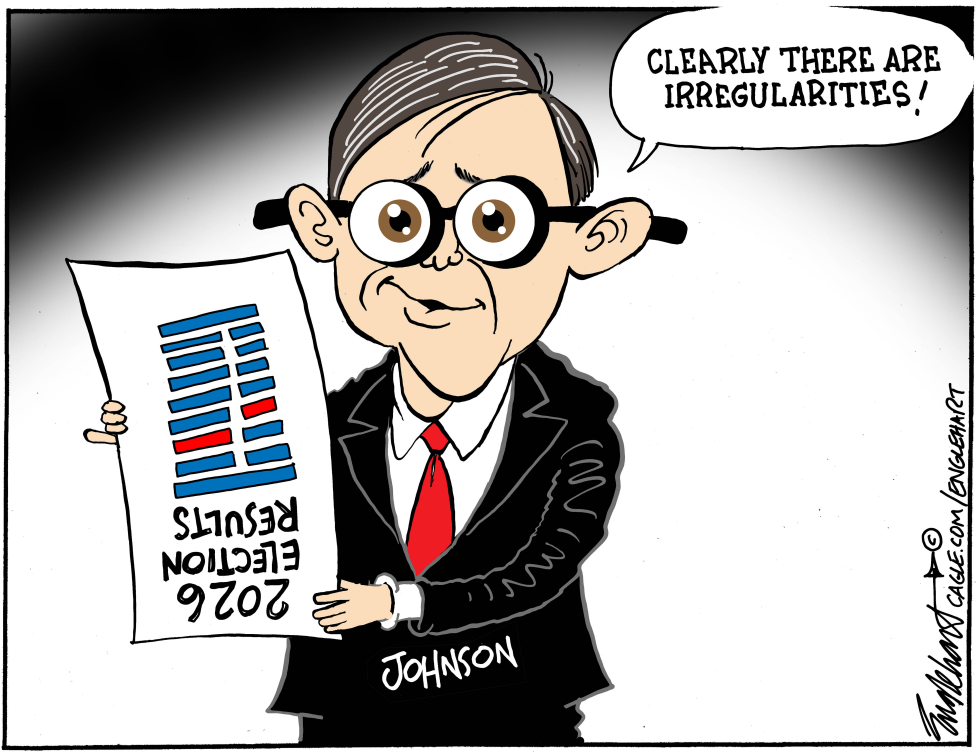
House Speaker Mike Johnson publicly questioned the integrity of the 2026 election results in September 2026, citing irregularities in a bar chart of outcomes. The move raised alarms about potential delays or challenges to congressional certification of the vote. Critics argue the statements undermine public confidence in the electoral process without evidence of widespread fraud. The cartoon portrays Johnson as actively sowing doubt in the results to influence outcomes. It takes the position that such rhetoric from congressional leadership threatens democratic norms and the peaceful transfer of power.
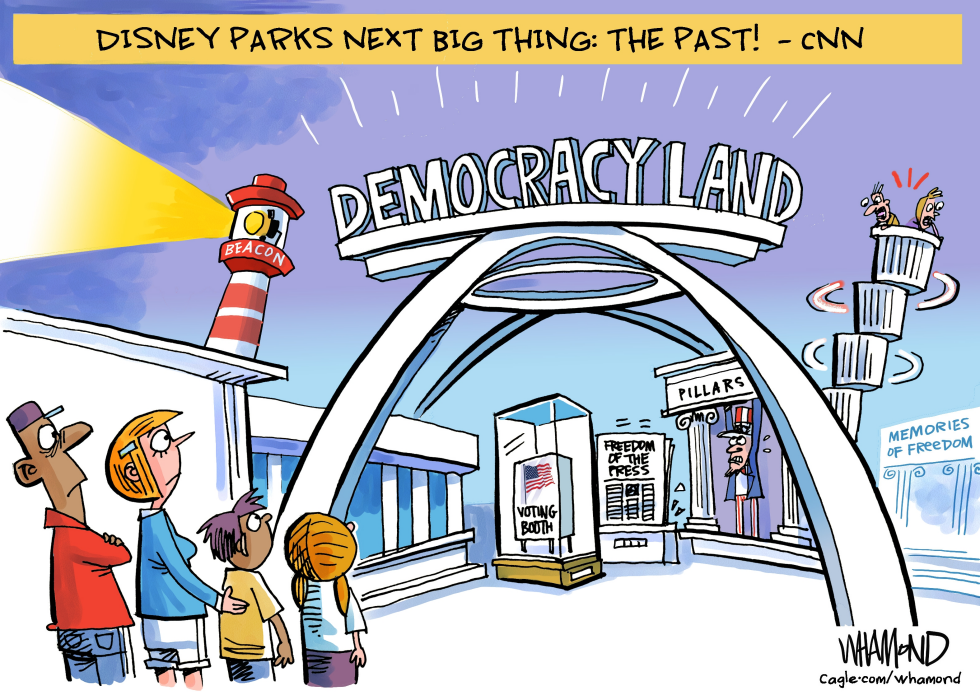
A CNN report on Disney parks reviving past attractions coincides with ongoing debates over voting access and press protections in 2026. Critics argue recent policies have weakened core democratic safeguards, turning once-central institutions into historical curiosities. The cartoon frames this shift as an editorial critique of backsliding norms.
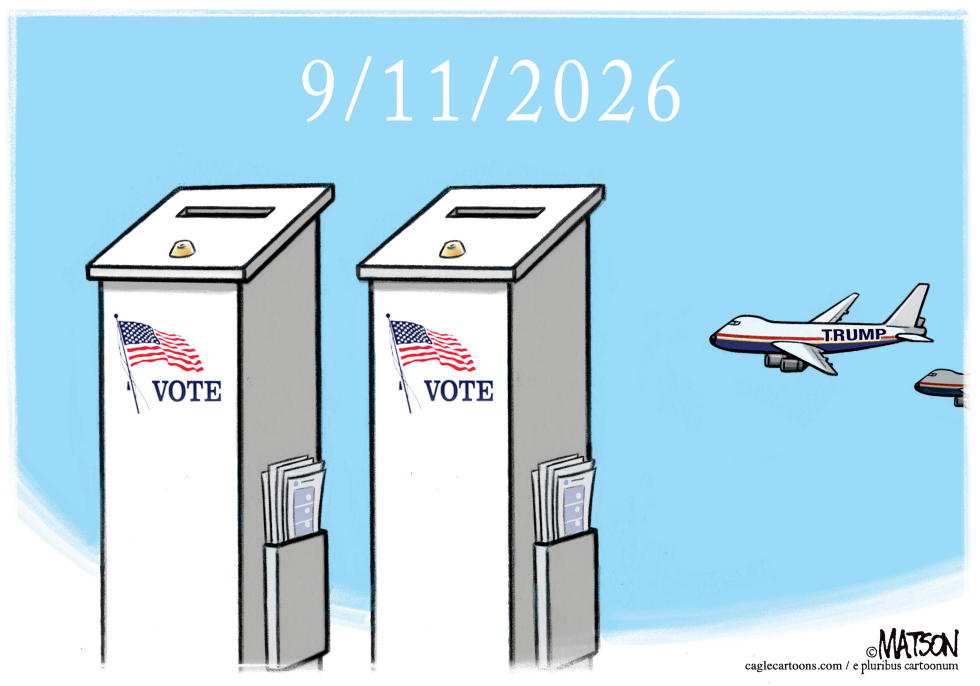
Donald Trump has signaled plans to impose new voting restrictions before the 2026 midterm elections. The moves come as Republicans seek advantages in key races. Critics argue the changes would suppress turnout among Democratic-leaning voters. Supporters claim the steps address fraud concerns. The cartoon frames the timing as an attack on voting access itself.
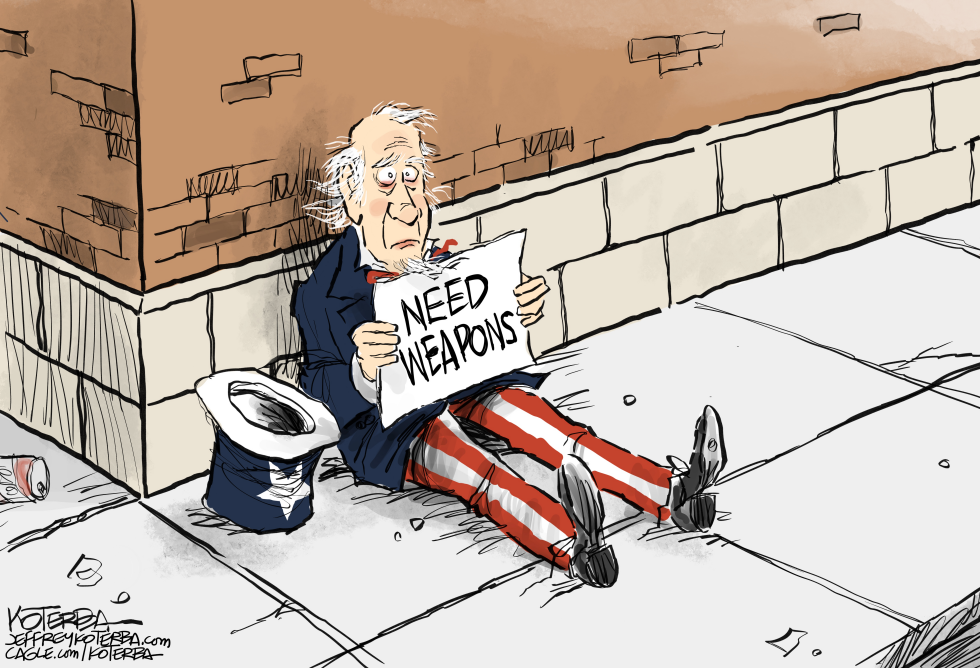
Uncle Sam appears as a disheveled figure on a sidewalk holding a sign requesting weapons. The image captures an ongoing national debate over military resources and international commitments. The editorial stance highlights perceived weakness in current arms policy and funding priorities.
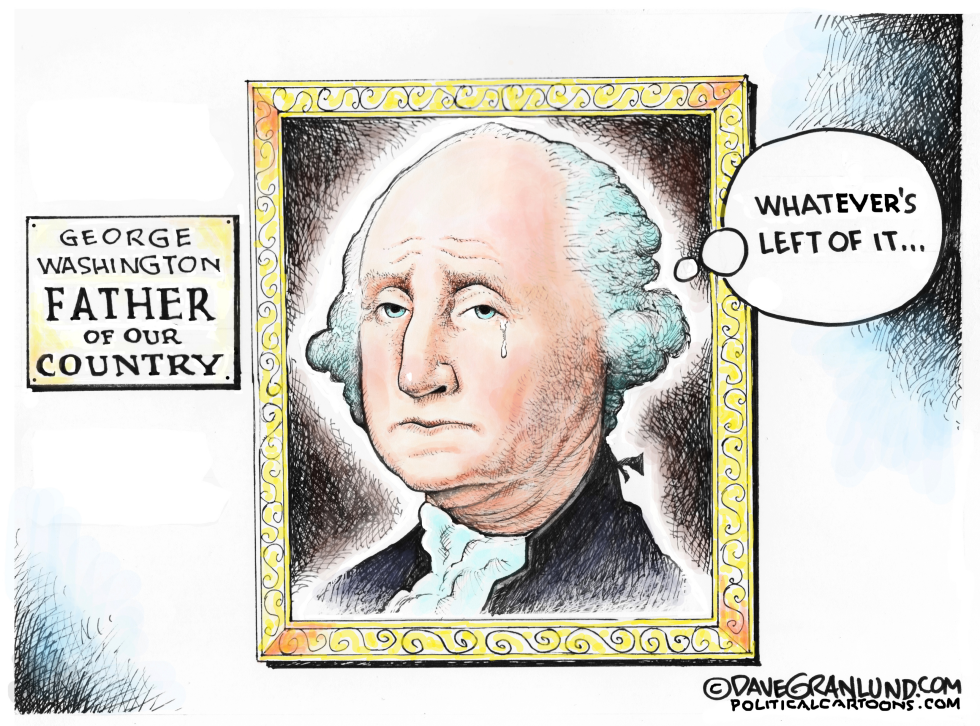
A framed portrait of George Washington shows the founding father with a tear rolling down his cheek. A sign to the left identifies him as the father of the country. His speech bubble reads whatever is left of it.
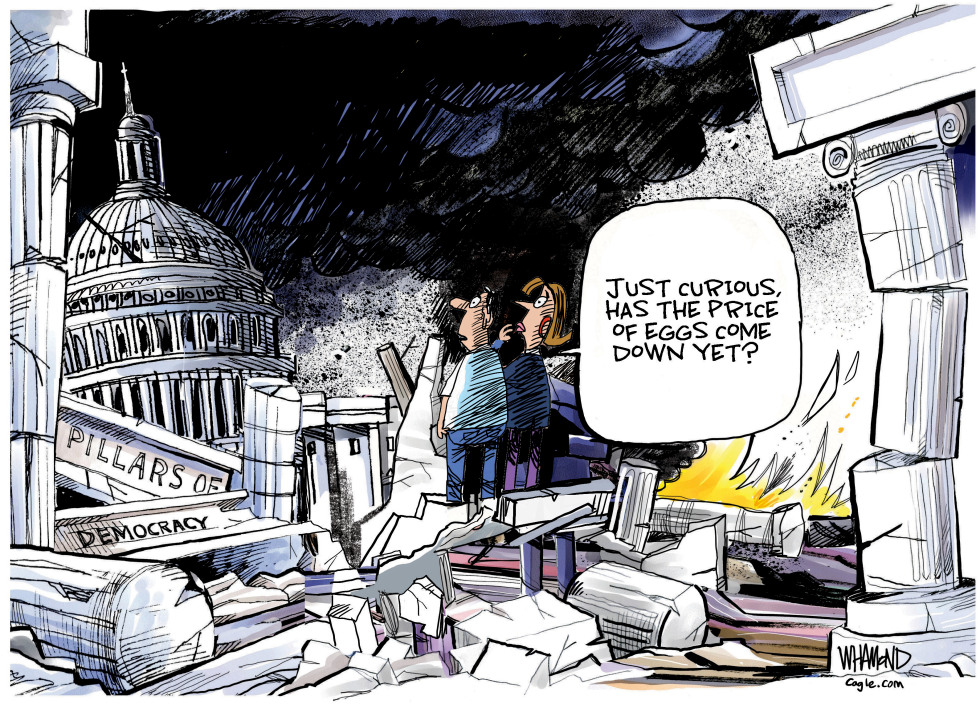
A political cartoon dated February 2, 2025, depicts the U.S. Capitol in ruins with broken pillars labeled 'PILLARS OF DEMOCRACY.' Two onlookers stand amid debris as one asks if egg prices have dropped. The image references ongoing debates over inflation, tariffs, and government changes following the 2024 election. Artist Dave Whamond uses destruction to highlight perceived costs of recent political decisions.
The image shows a border sign reading Canada U.S. Border with text about building a wall. Two beavers construct a dam from branches while a figure resembling the president-elect watches. A speech bubble from one beaver references the dam. The top banner notes repeated threats to annex Canada. This responds to recent statements on tariffs and potential territorial moves involving Canada and other areas like Greenland.
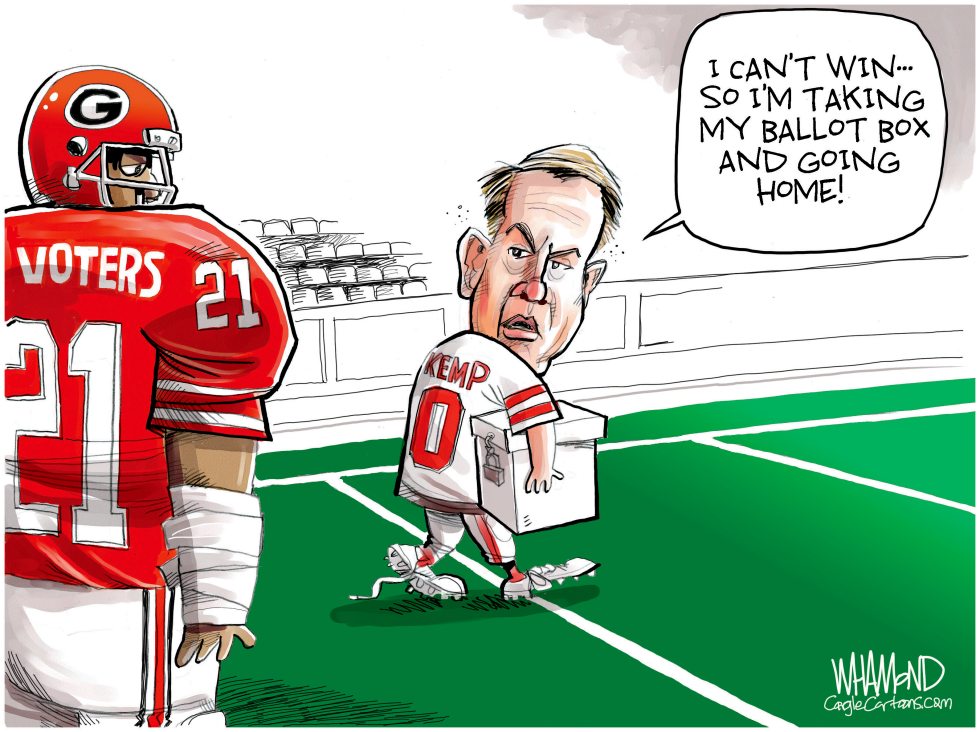
The cartoon depicts Georgia Gov. Brian Kemp with his head on a football player's body numbered zero, carrying a ballot box off a field while a larger voter figure in a Georgia helmet watches. Kemp's speech bubble states he cannot win so he is taking the ballot box and going home. The image responds to the March 2021 signing of Senate Bill 202, a sweeping Georgia election law that tightened voting rules including limits on absentee ballots and early voting access after the 2020 election. The visual metaphor frames the legislation as a retreat by Republicans unable to secure victories under prior rules.
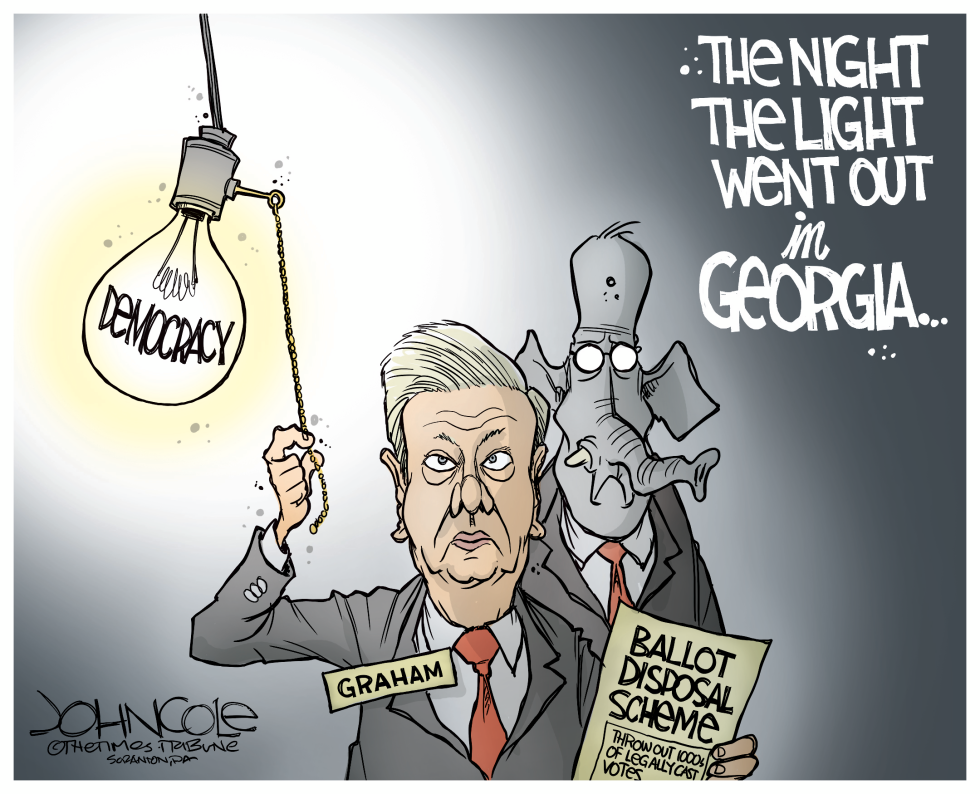
The cartoon published November 18, 2020, shows Sen. Lindsey Graham pulling the chain on a light bulb labeled democracy that is going out. Behind him stands a GOP elephant holding a paper titled ballot disposal scheme that calls for throwing out thousands of legally cast votes. Large text in the upper right reads the night the light went out in Georgia. The image responds to post-election disputes in Georgia over mail-in ballots and vote counting during the 2020 presidential contest between Donald Trump and Joe Biden.