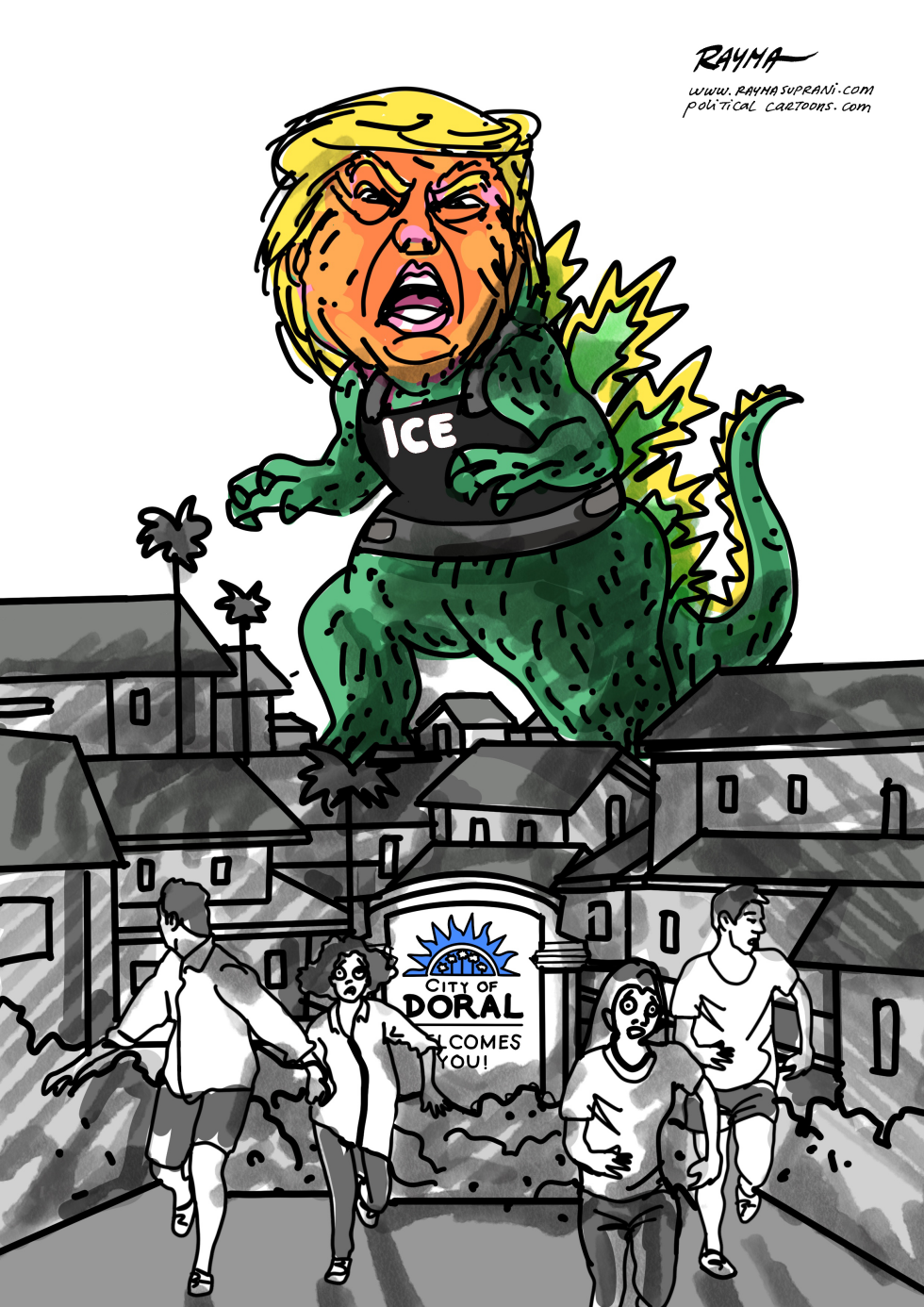
The image shows a large figure resembling Donald Trump dressed as an ICE agent towering over the city of Doral. People run from the scene near a welcome sign. The work addresses immigration enforcement policies active in Florida during 2026.
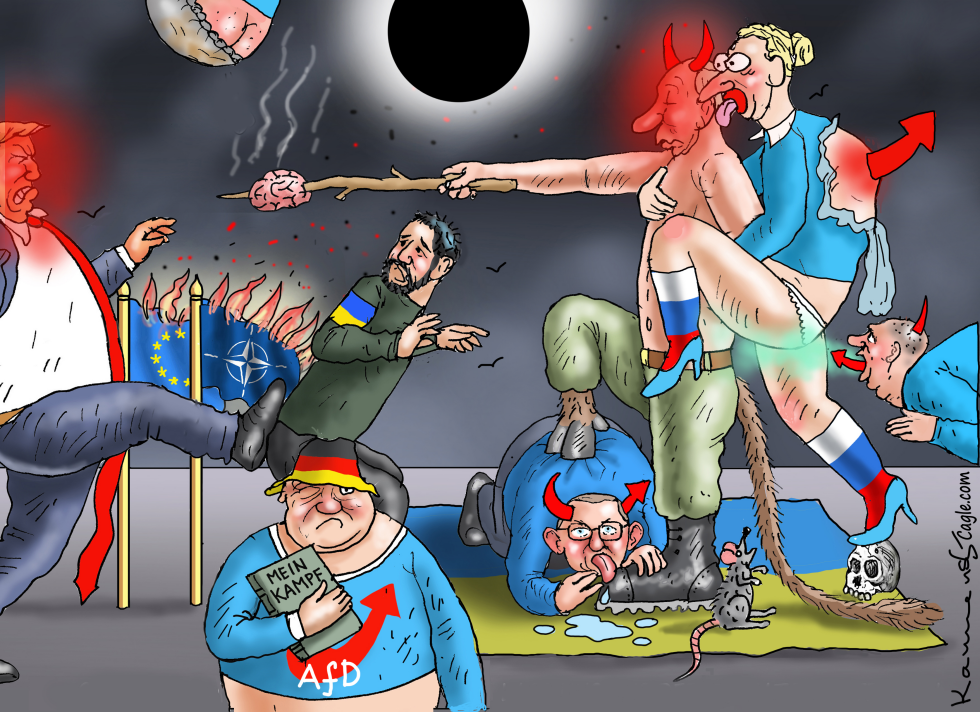
The Alternative for Germany party faces renewed criticism for its associations with international far-right figures including Donald Trump and apparent sympathy toward Vladimir Putin amid the Russia-Ukraine conflict. The cartoon portrays AfD embracing these influences while rejecting NATO and EU structures. It argues that such alignments expose the party's extremist leanings and undermine Germany's democratic commitments.
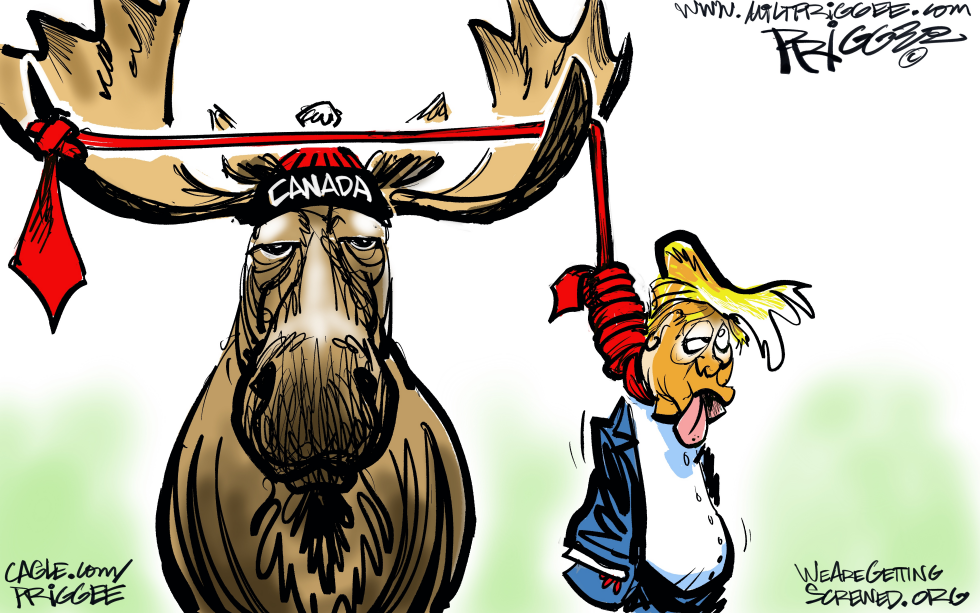
The cartoon shows a large moose labeled Canada with a weary expression as a caricature of Donald Trump yanks on its antler using a red strap. The moose wears a black cap with Canada written on it and has a red bar across its antlers. Trump appears disheveled with tongue out and sweat drops. Text at the bottom reads WEAREGETTINGS CREWED.ORG suggesting Canada feels exploited. Published on September 3 2026 the piece addresses US Canada relations under renewed Trump influence on trade and diplomacy.
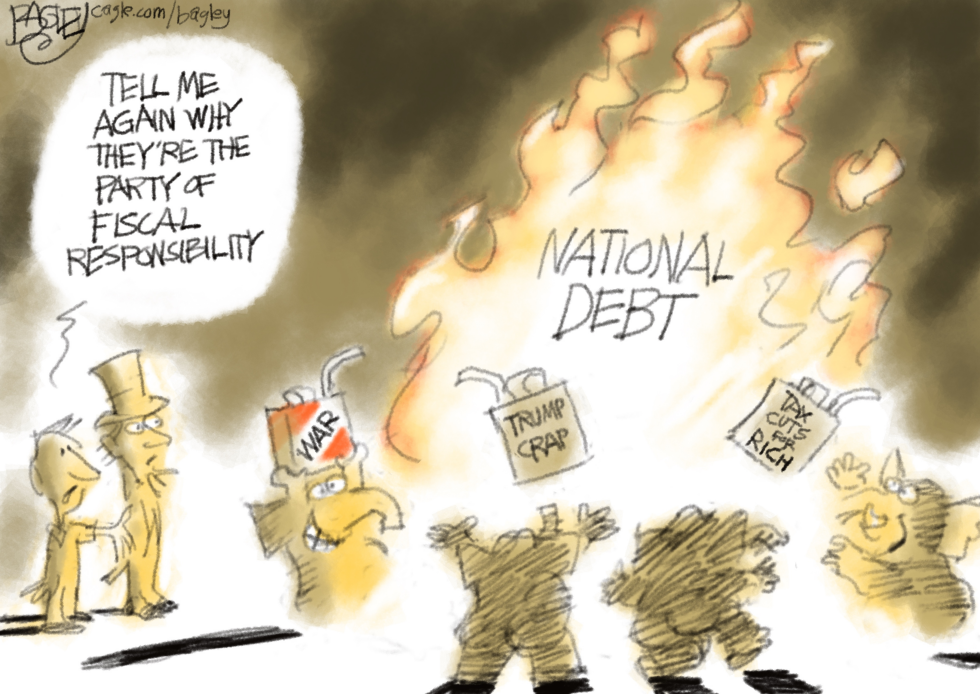
Republicans continue to promote themselves as the party of fiscal responsibility even as national debt rises sharply from sustained war spending and tax cuts favoring the wealthy. The editorial takes the position that these policies directly contradict the fiscal responsibility label.
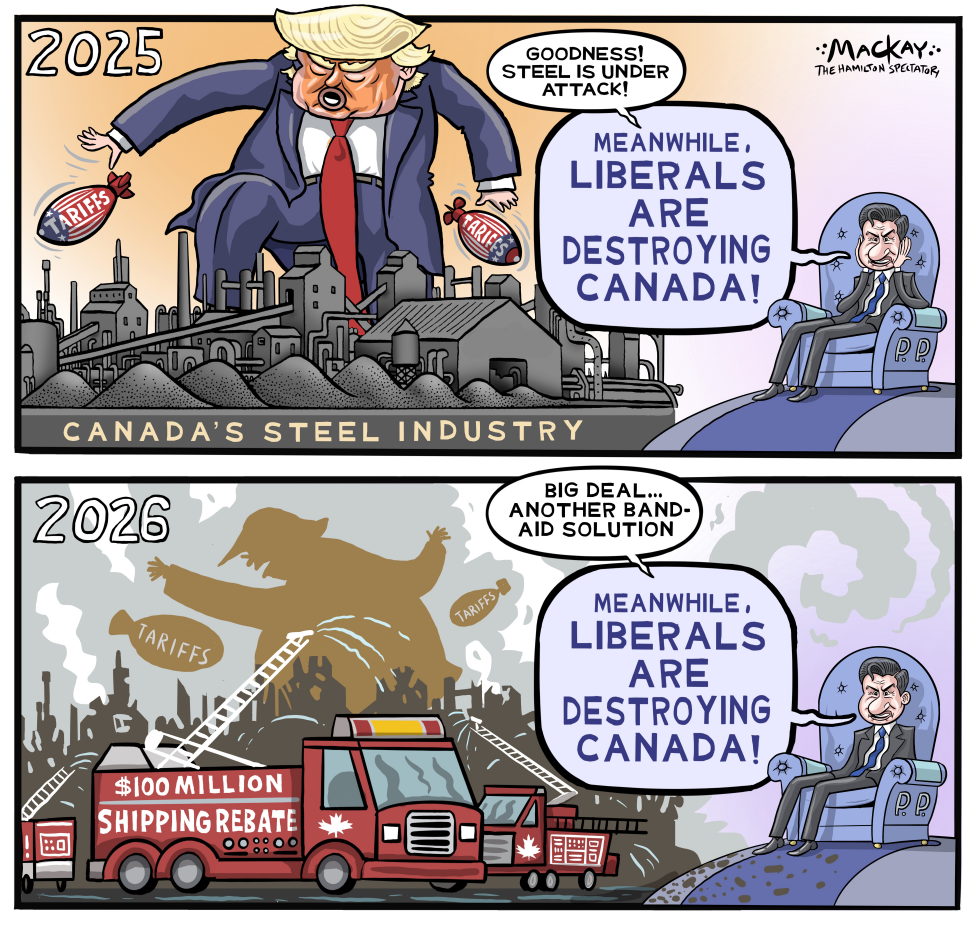
U.S. tariffs imposed on Canadian steel in 2025 triggered sharp declines in the domestic industry by 2026. The federal government responded with a $100 million shipping rebate. Conservative Leader Pierre Poilievre continued to focus attacks on the Liberal government rather than the trade shock. The cartoon argues this stance amounts to a repeated distraction from the core economic damage.
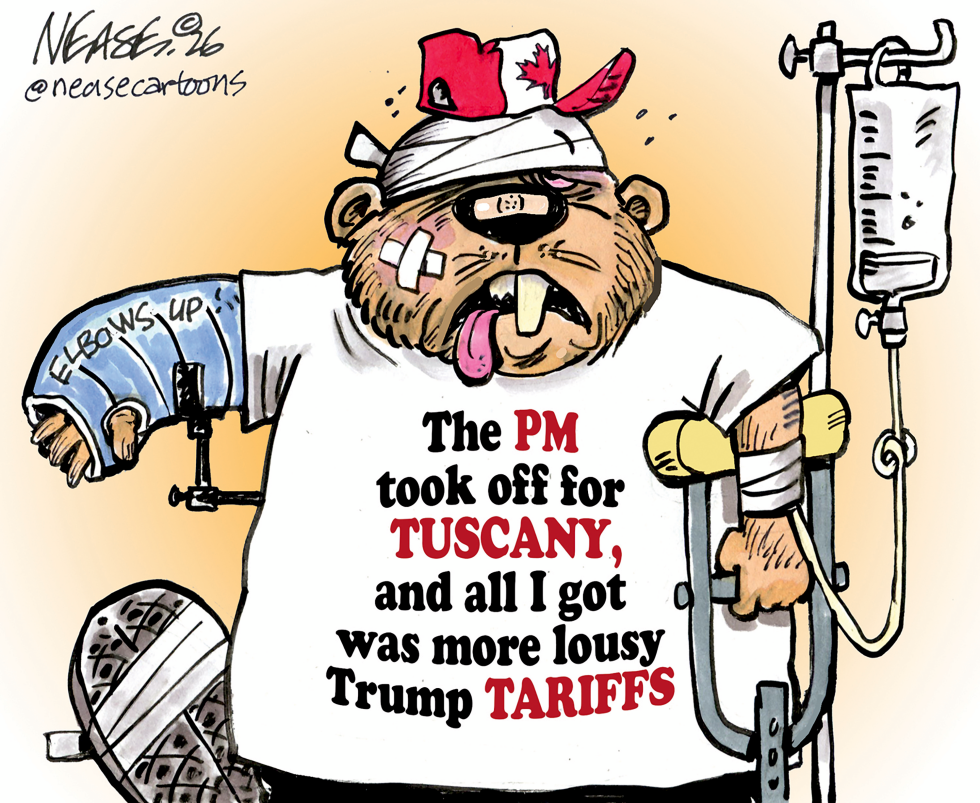
US tariffs on Canadian goods continue to strain bilateral trade relations in 2026. The Prime Minister's extended vacation in Tuscany coincides with renewed economic pressure on Canadian industries. The situation highlights tensions in North American trade policy. The piece argues that leadership absence compounds the damage from external tariffs.
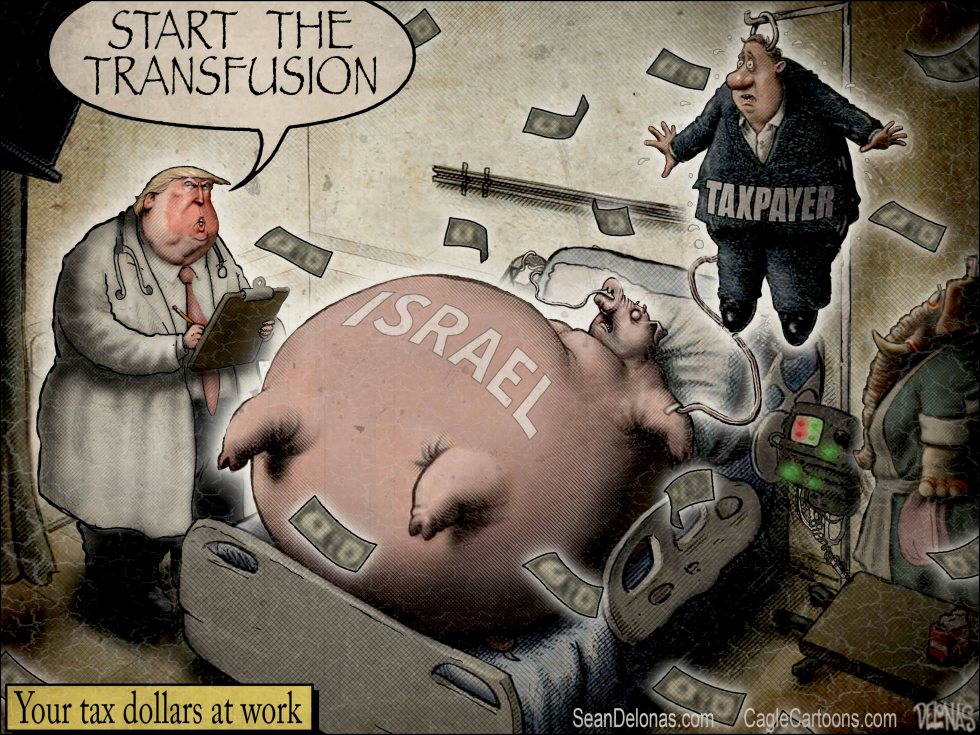
The Trump administration has directed additional US taxpayer resources toward Israel amid ongoing regional tensions. The move continues long-standing American support for the ally but draws fresh scrutiny over scale and priorities. Critics argue the assistance burdens domestic budgets without sufficient oversight. The piece portrays the transfer as an unsustainable extraction from American contributors to sustain a dependent recipient.
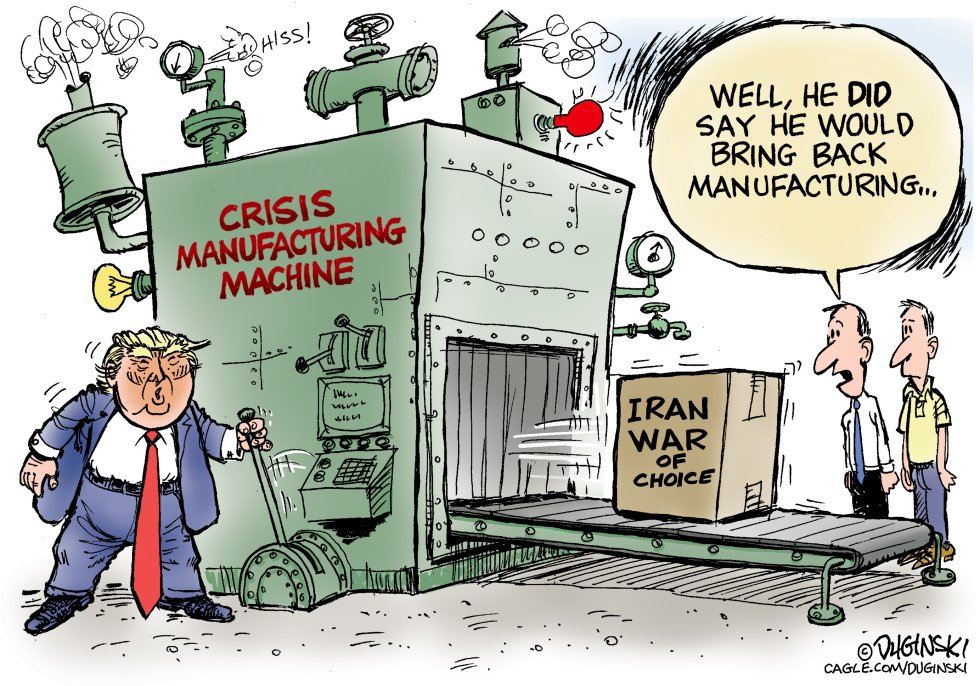
Donald Trump, holding the presidency in 2026, faces renewed scrutiny over foreign policy toward Iran. Recent statements revive campaign pledges to restore domestic manufacturing while tensions with Tehran escalate. The administration\\\'s approach draws criticism for prioritizing confrontation over diplomacy. Observers note the pattern of generating external crises rather than economic gains at home. The cartoon argues that Trump\\\'s actions fulfill a literal version of his manufacturing rhetoric by producing conflict instead of jobs.
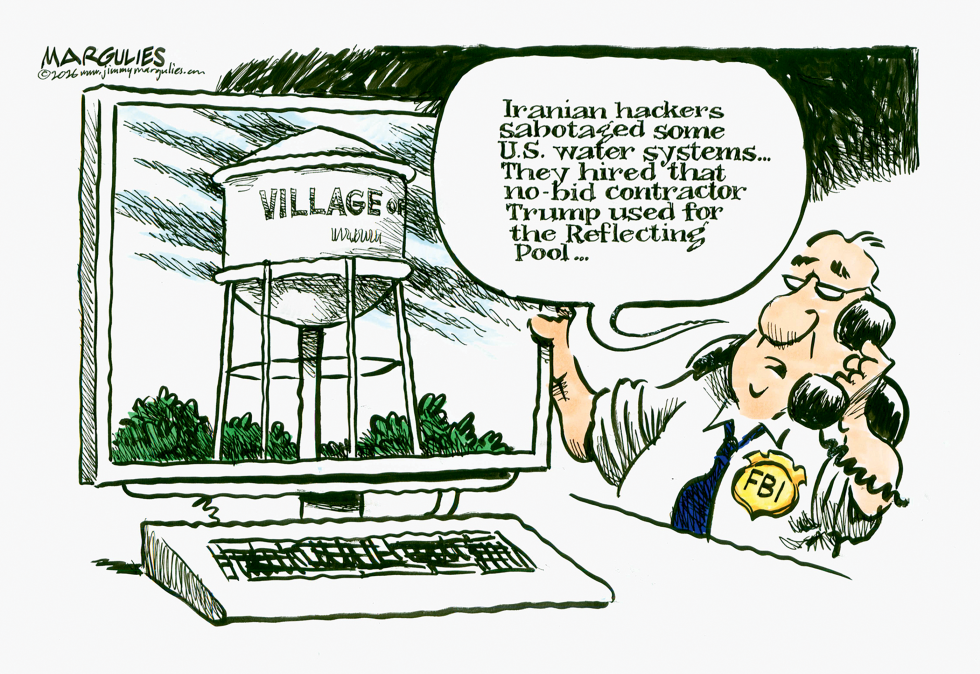
The FBI has attributed recent sabotage of U.S. water systems to Iranian hackers while highlighting their use of a no-bid contractor previously employed by Trump on the Reflecting Pool. The claim surfaces amid ongoing concerns over critical infrastructure vulnerabilities and contractor oversight. This development raises questions about procurement practices and accountability in federal responses to foreign cyber threats. The editorial position criticizes the reliance on such contractors and questions the logic of the blame assignment.
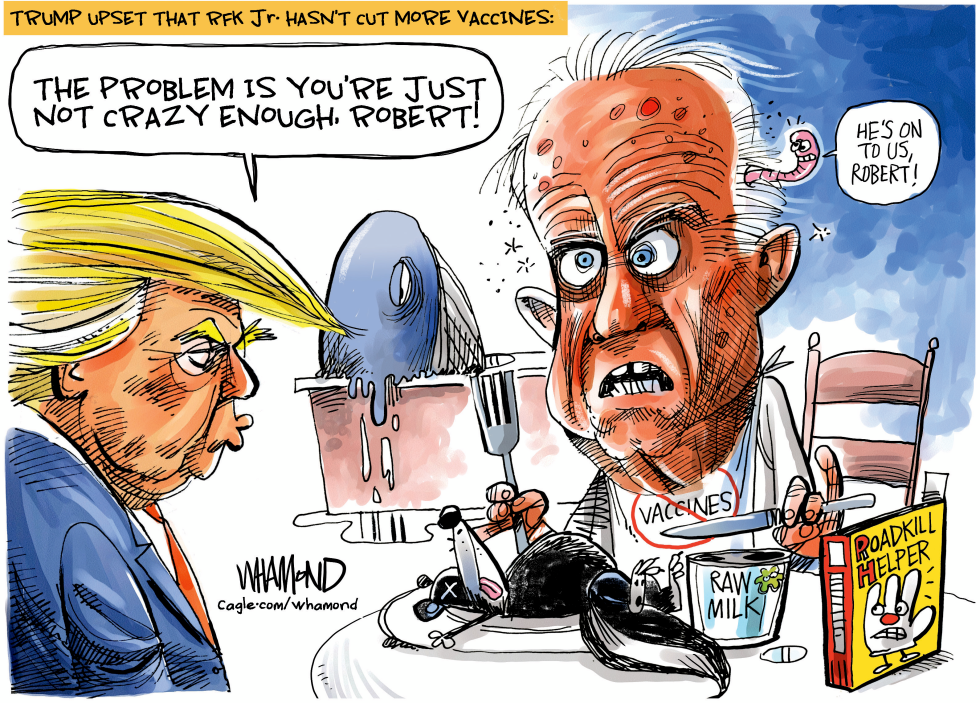
President Trump has expressed frustration with Health Secretary Robert F. Kennedy Jr. over the pace of vaccine policy reductions. The exchange highlights ongoing tensions within the administration regarding public health measures. The piece portrays Trump urging more aggressive action while RFK Jr. appears aligned with unconventional health practices.
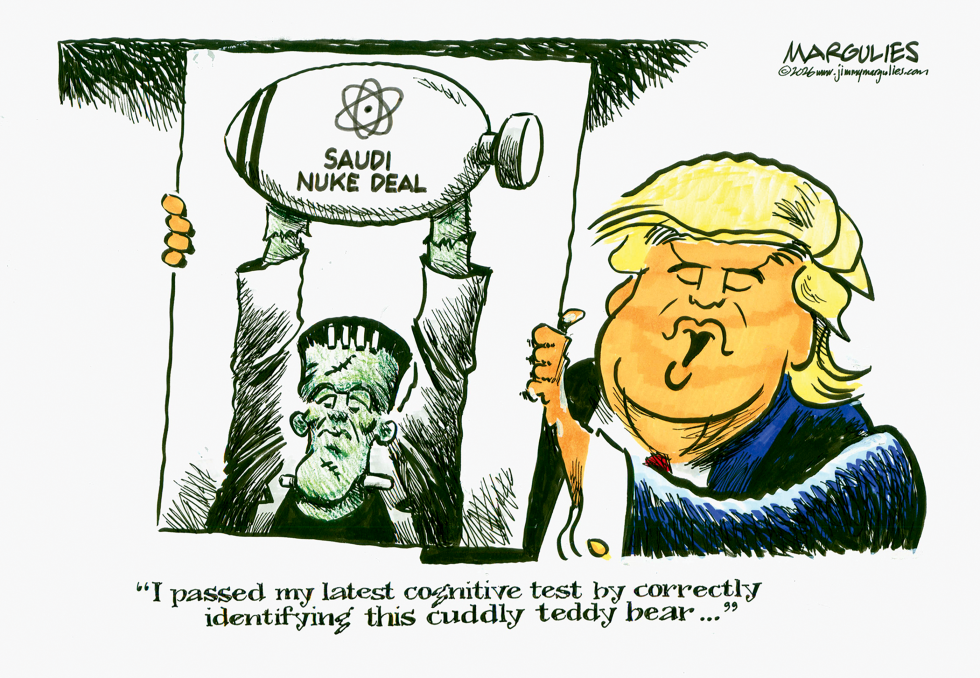
Donald Trump referenced a cognitive test while describing a Saudi nuclear deal in personal terms. The episode occurs against ongoing debates over arms control and Middle East policy. The piece portrays the deal as a dangerous misjudgment.
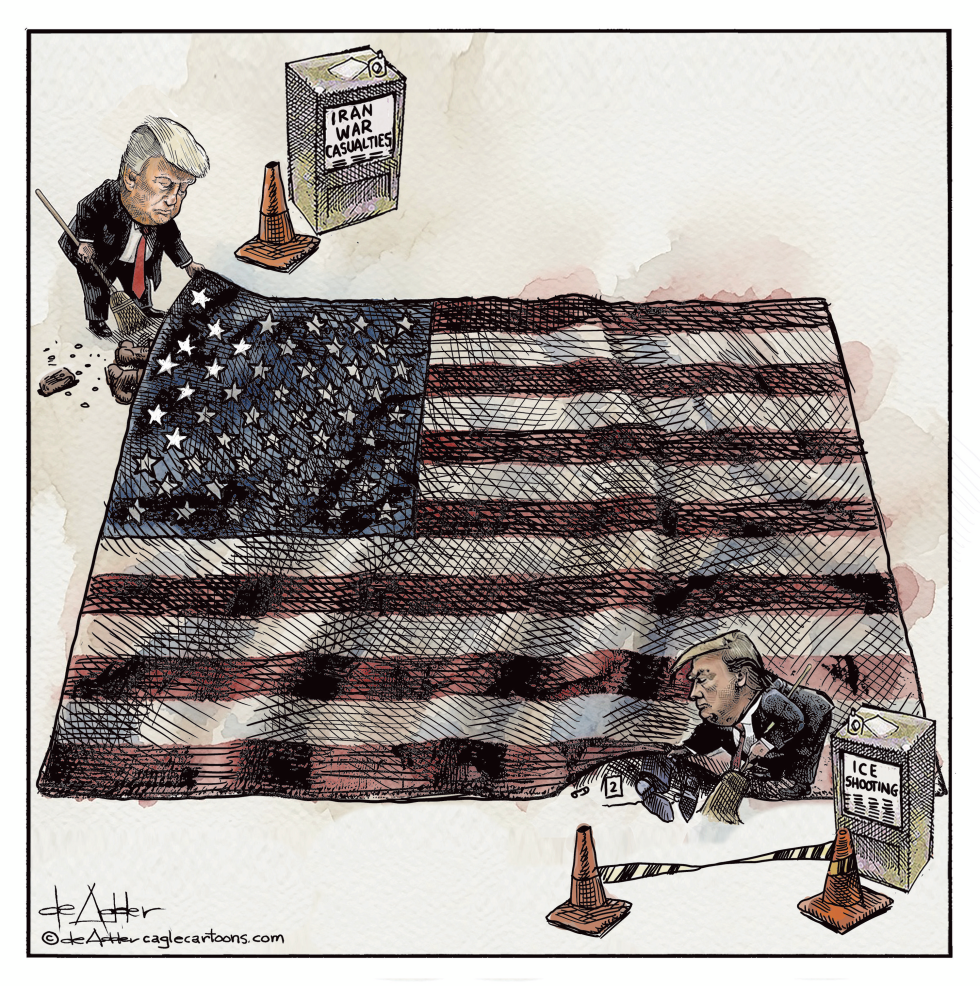
Donald Trump faces scrutiny over reported casualties from potential Iran conflict and an ICE-related shooting incident in mid-2026. The administration's handling of these events draws criticism for downplaying accountability. The piece argues that attempts to minimize these issues undermine public trust in governance.
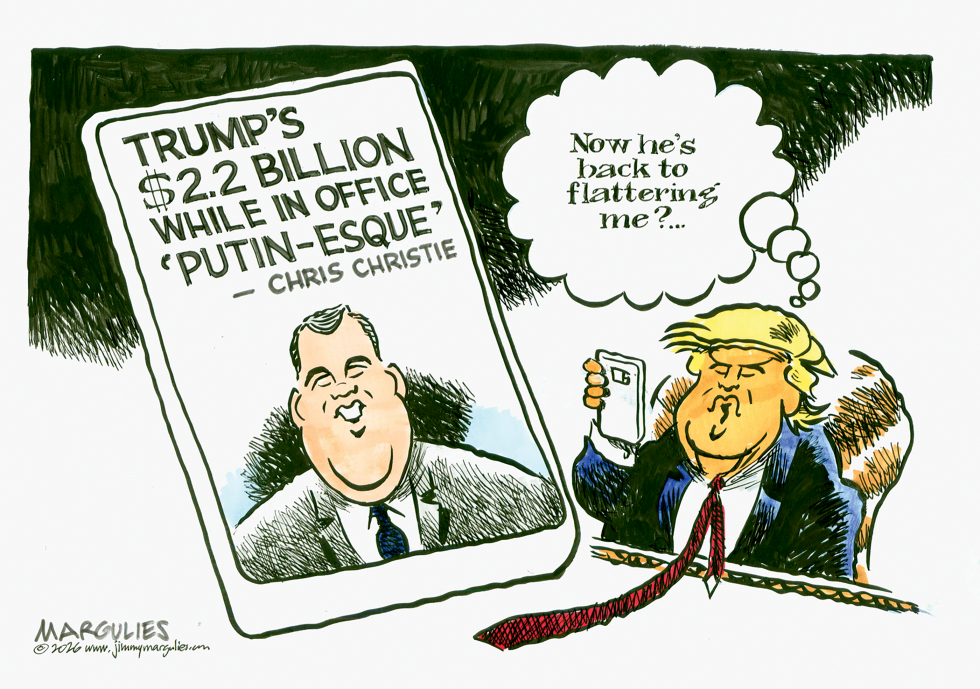
On July 6, 2026, a cartoon depicts Donald Trump examining a phone displaying Chris Christie’s quote labeling his $2.2 billion earnings while in office as Putin-esque. Trump’s thought bubble reveals he interprets the remark as flattery rather than criticism, highlighting an ongoing dynamic between the two figures amid foreign policy references to Russia.
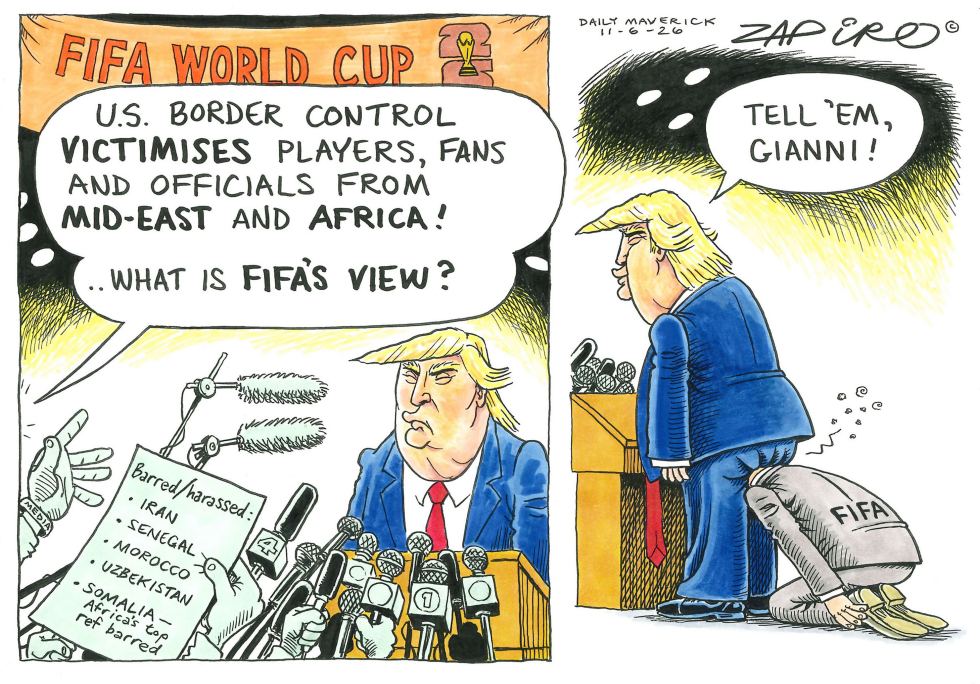
On June 19, 2026, a cartoon shows Donald Trump at a podium criticizing U.S. border policies for barring or harassing World Cup players, fans and officials from Iran, Senegal, Morocco, Uzbekistan and Somalia. He asks what FIFA thinks of the situation. In a separate panel Trump urges Gianni to speak out while a figure labeled FIFA kneels at his feet. The image responds to ongoing enforcement actions near the 2026 tournament.