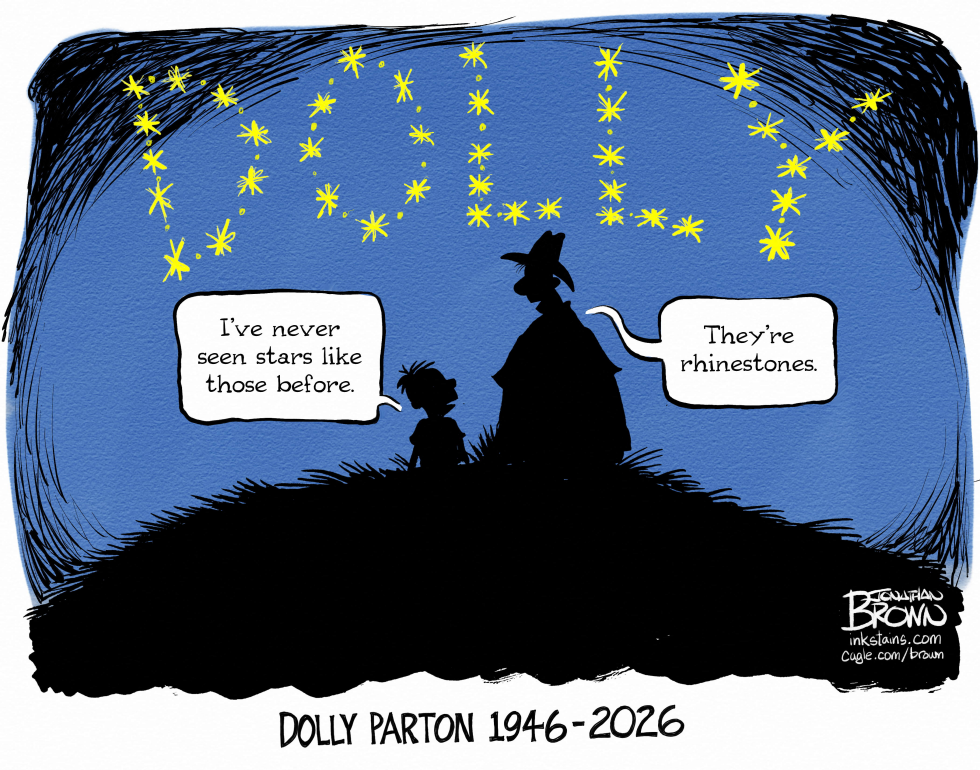
Dolly Parton passed away in 2026 at age 80. Fans and the public mourned the loss of the country music legend known for her rhinestone outfits and charitable work. The tribute highlights her enduring sparkle and cultural impact through a celestial memorial image. The piece positions her legacy as one of warmth, generosity, and unmistakable glamour that continues to shine.
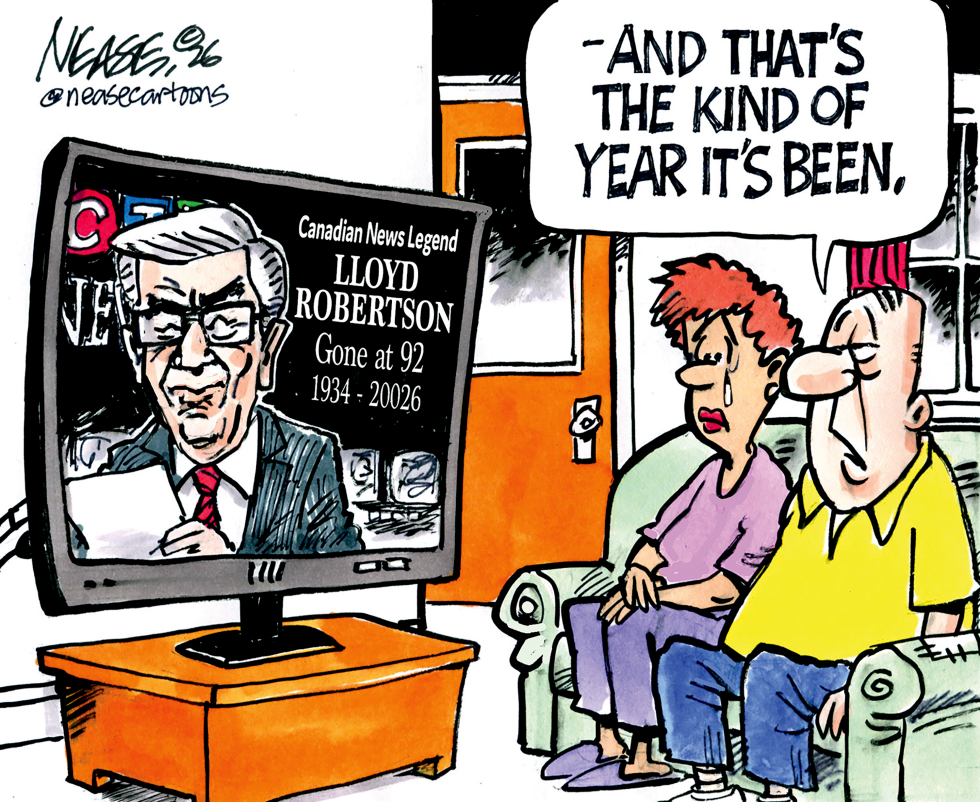
Canadian broadcasting icon Lloyd Robertson died in 2026 at age 92 after a long career as a news anchor. The announcement prompted widespread reflection on a year filled with notable passings and challenges. The editorial takes the position that such losses underscore the cumulative weight of difficult events.
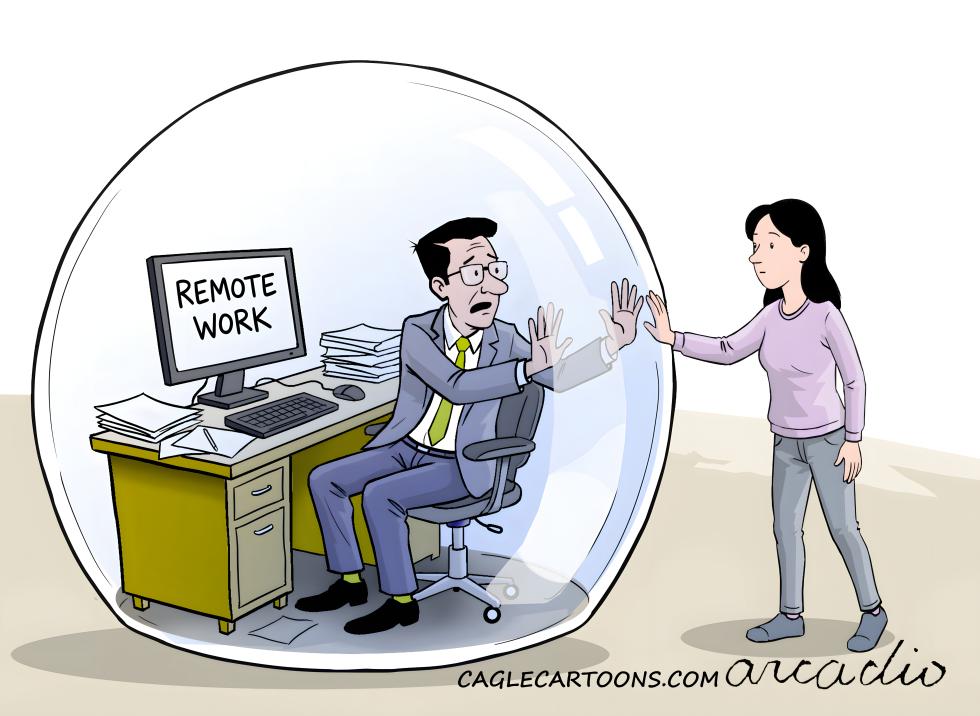
Remote work arrangements have expanded rapidly since the pandemic, allowing employees to perform duties from home but raising concerns about reduced collaboration and social connection in offices. The piece responds to ongoing debates over hybrid schedules and their impact on workplace culture. It takes the position that remote setups create artificial barriers that separate workers from direct human interaction and shared reality.
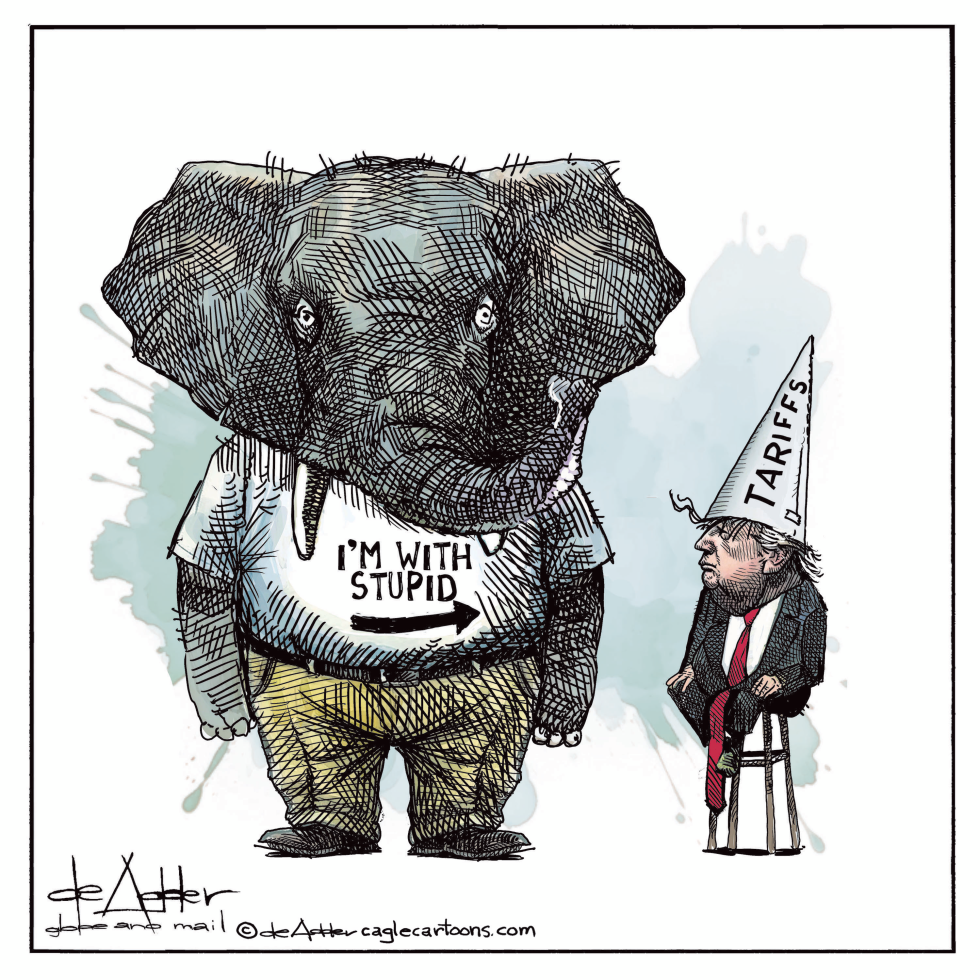
Donald Trump faces renewed scrutiny over his tariffs approach as the Republican Party grapples with the economic fallout. The policy has drawn internal party tension amid broader trade debates. The piece portrays the GOP as aligned with a flawed leader on the issue.
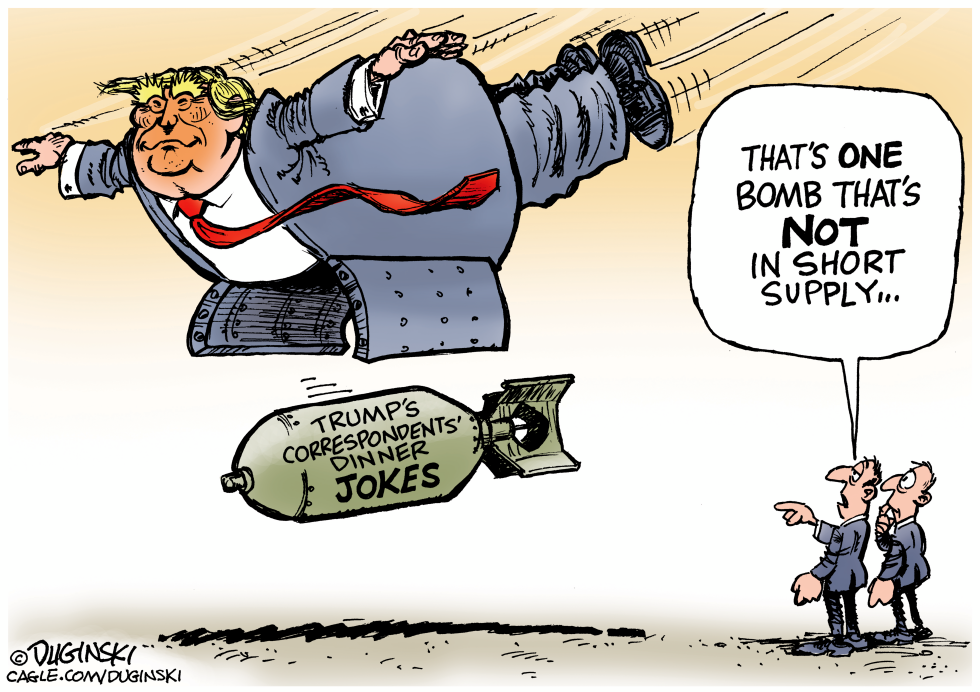
Donald Trump delivered jokes at the 2026 White House Correspondents Dinner that landed poorly with the audience. The event drew attention for the president's comedic missteps amid ongoing tensions with the press. The piece argues the routine exposed a persistent pattern of tone-deaf delivery rather than isolated misfires.
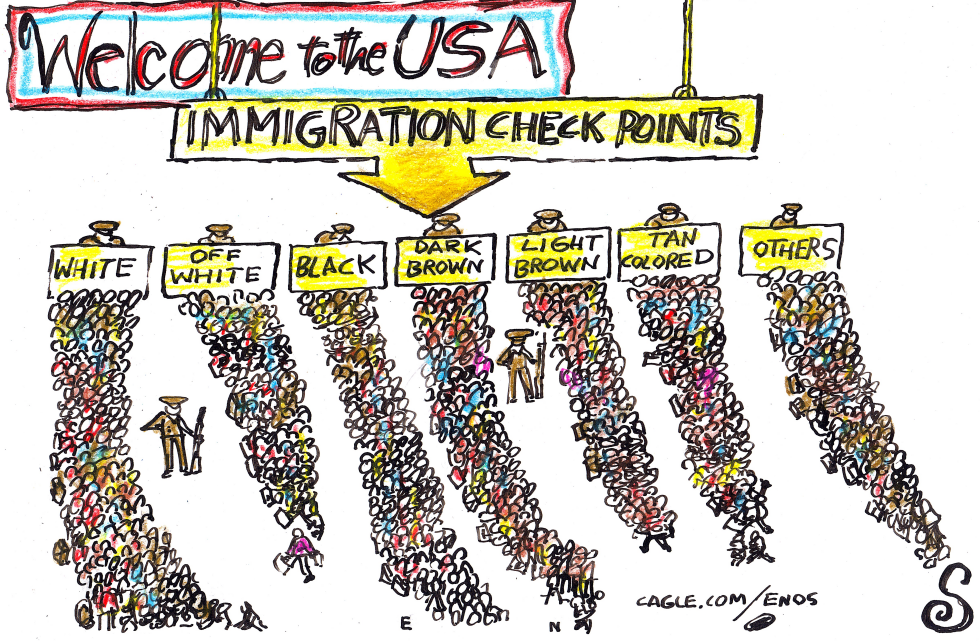
A cartoon depicts seven distinct lines of people at US immigration checkpoints, each labeled by skin color from white through off-white, black, dark brown, light brown, tan colored and others. Guards stand watch while a prominent welcome banner and immigration sign direct arrivals into the segregated queues. The image highlights the visual separation of entrants based on appearance.
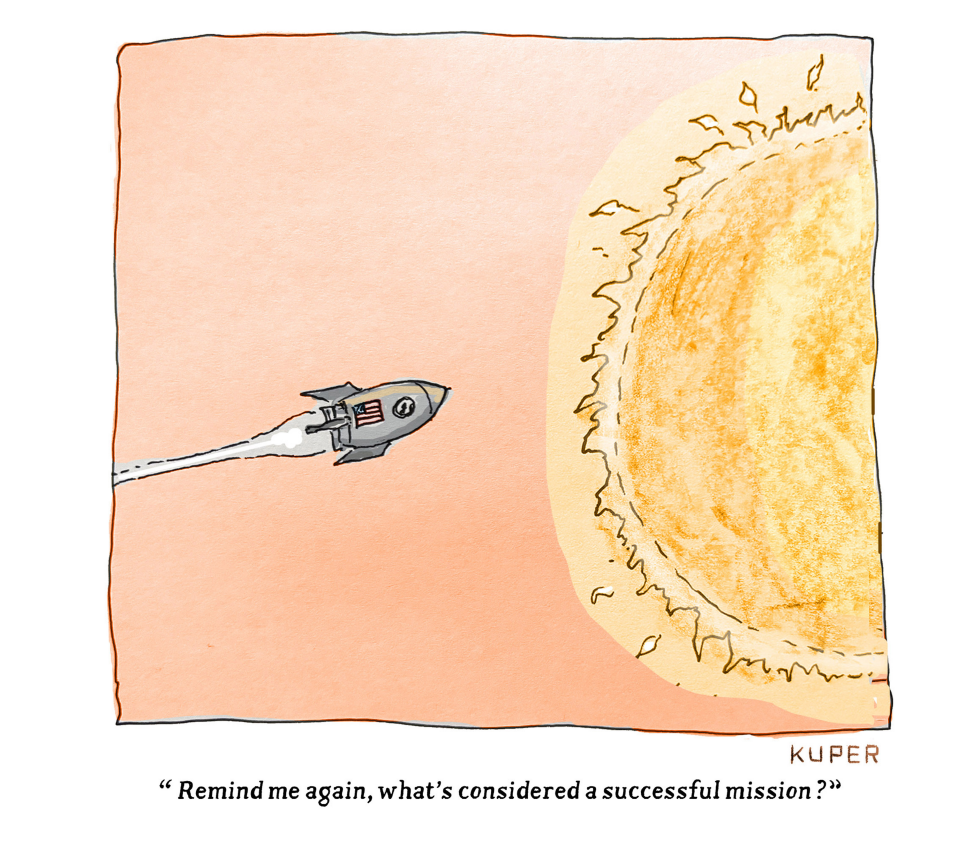
The cartoon shows a US-flagged missile streaking toward a large fiery orb, evoking an ill-defined strike on Iran. The caption questions the meaning of a successful mission. Published amid reports of Iranian nuclear activity and regional tensions, the image critiques the absence of an exit strategy. It references potential economic fallout such as closed shipping lanes and higher oil prices. The work also nods to internal administration finger-pointing involving JD Vance. Overall the piece underscores the hazards of military action without a coherent plan.
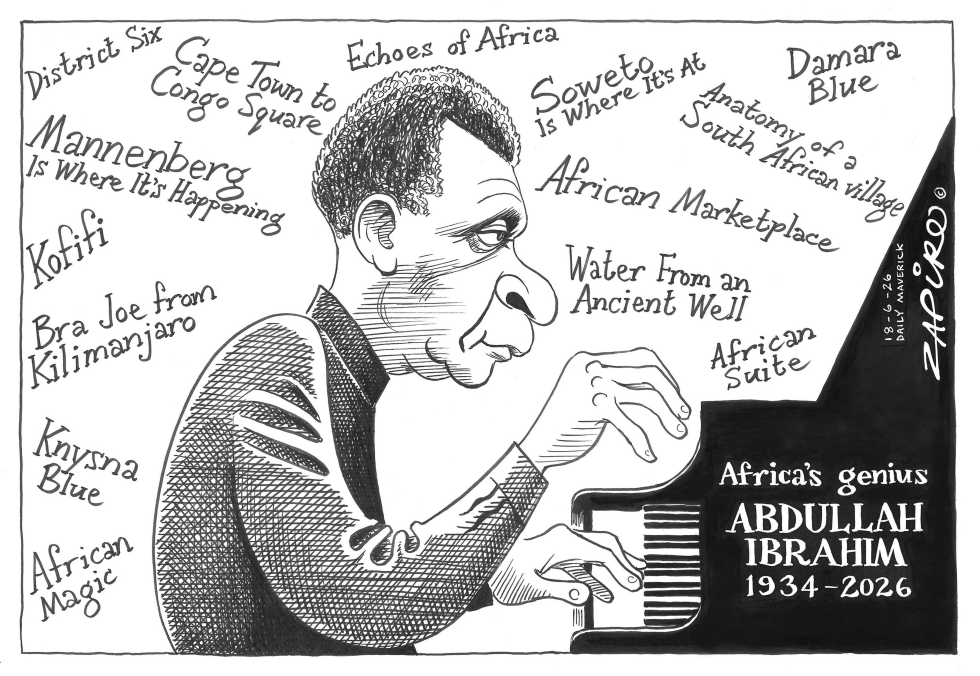
Zapiro created this tribute illustration of Abdullah Ibrahim following the South African jazz pianist's death in 2026. The drawing shows Ibrahim at the keyboard with titles of his well-known works arrayed around him, including Mannenberg, District Six, Soweto Is Where It's At, African Suite, and others drawn from his discography spanning decades of performances rooted in Cape Town and broader African musical traditions.
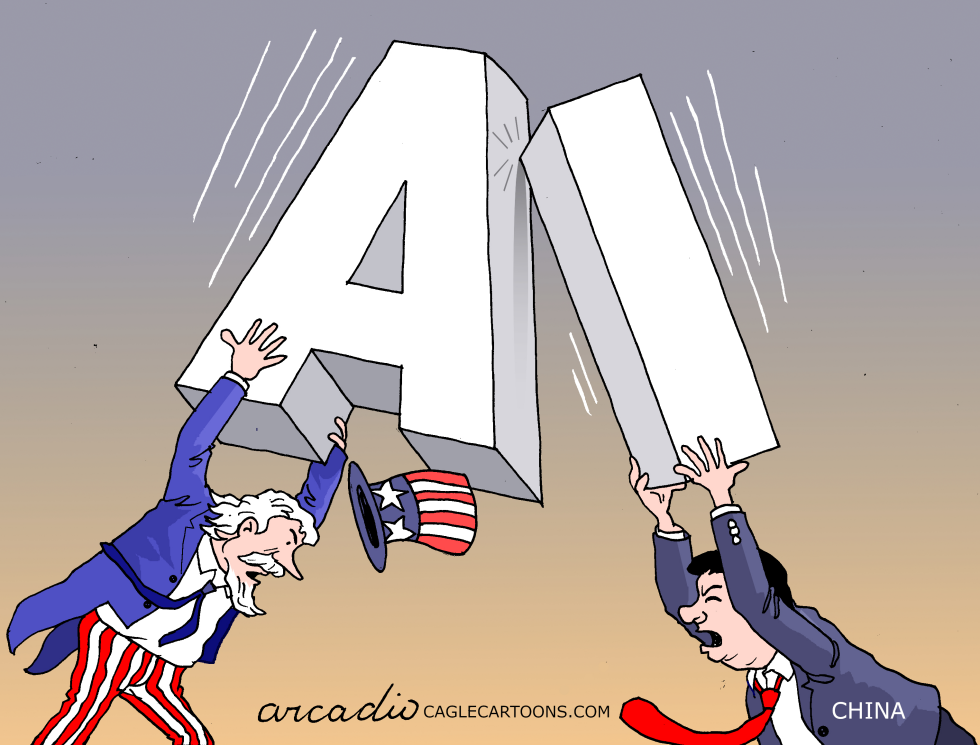
The image depicts Uncle Sam and a representative from China both attempting to support a large AI structure. The scene illustrates the ongoing competition between the United States and China for leadership in artificial intelligence. Published on February 18 2026 the cartoon captures the physical and strategic strain of this technological contest. Both figures appear determined yet challenged by the size of the letters they hold. The rivalry remains a central focus in global technology discussions at the time.
Daryl Cagle's political cartoon cleverly twists the classic monster under bed scenario into a commentary on immigration fear, with a parent assuring a terrified child that there are no ICE agents lurking below. The image captures the essence of deportation fears plaguing families amid strict border enforcement and Trump era politics. Through satirical humor, it highlights childhood anxiety amplified by real-world immigration policy, family separation, and immigrant rights concerns, making a poignant statement on how political decisions invade even the sanctity of bedtime stories.
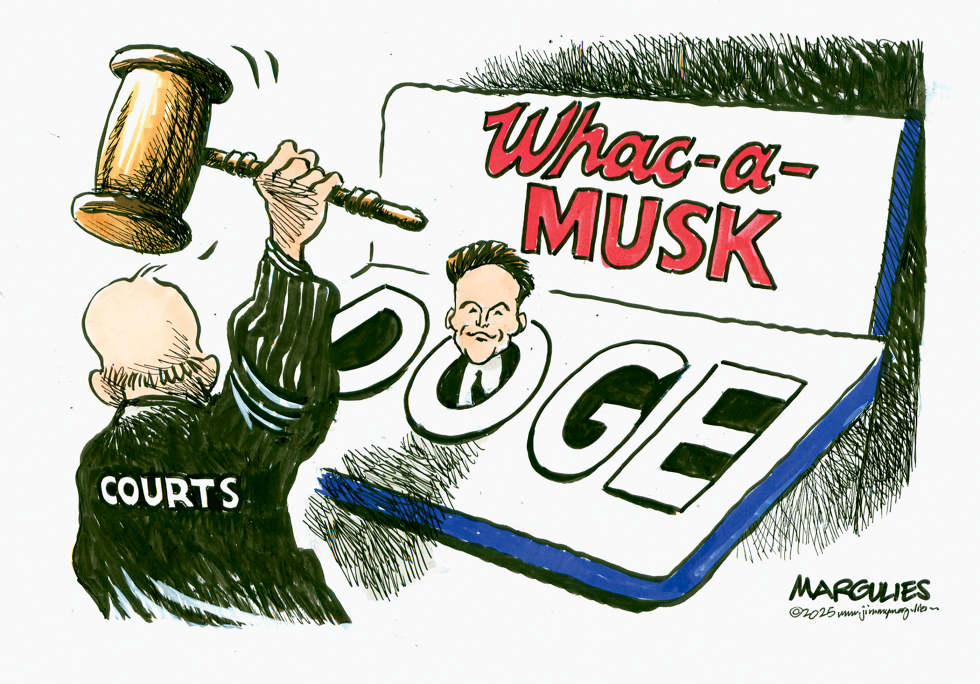
A political cartoon depicts a judge labeled Courts raising a gavel toward a Whac-a-Mole cabinet marked DOGE. Elon Musk's face appears in one hole beneath a Whac-a-MUSK sign. The image comments on legal challenges facing the Department of Government Efficiency in February 2025. Recent court actions have blocked or delayed several Musk-led reviews of federal agencies including IRS data and Social Security systems. The visual frames ongoing disputes between the executive branch efficiency drive and judicial oversight.
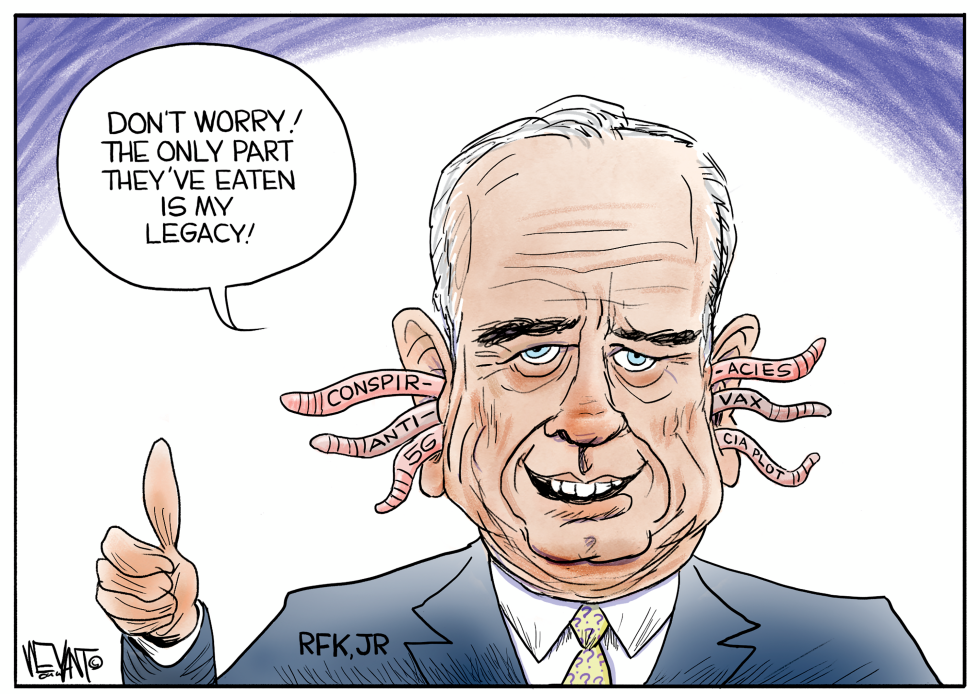
Robert F. Kennedy Jr. appears in a May 2024 cartoon responding to reports of a brain worm affecting his health and independent presidential bid. The image shows him claiming the parasite only consumed his legacy amid labels of conspiracy theories and vaccine skepticism.
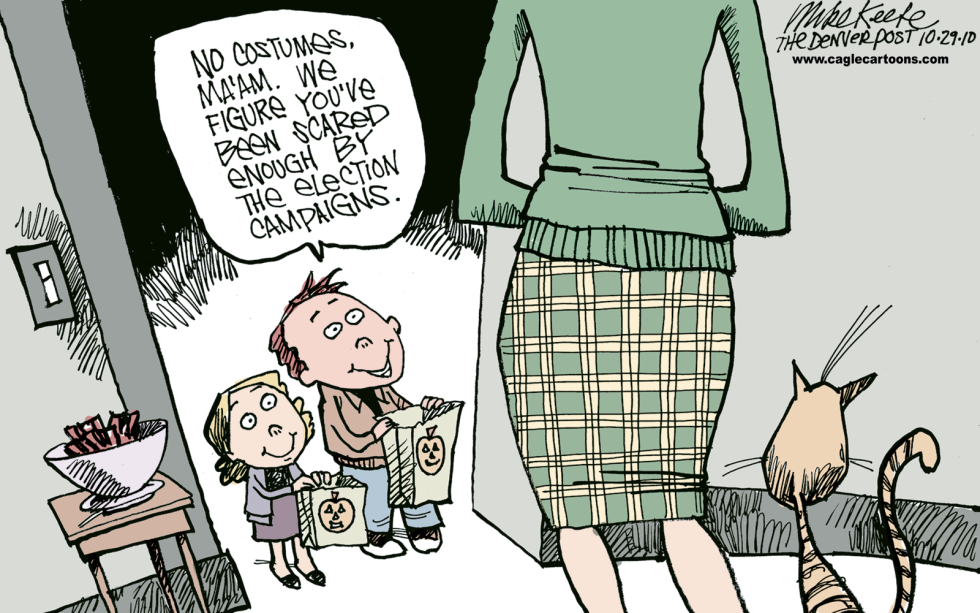
On October 28, 2010, a Denver Post cartoon by Mike Keefe depicts two children at a doorstep during Halloween. They carry pumpkin bags and tell the woman answering the door that no costumes are needed because election campaigns have already scared her enough. A bowl of candy sits nearby and a cat watches from the floor. The image captures the mood of the 2010 midterm elections marked by heavy negative advertising from both parties and the rising Tea Party movement. The cartoon uses the holiday setting to highlight voter fatigue with attack ads.