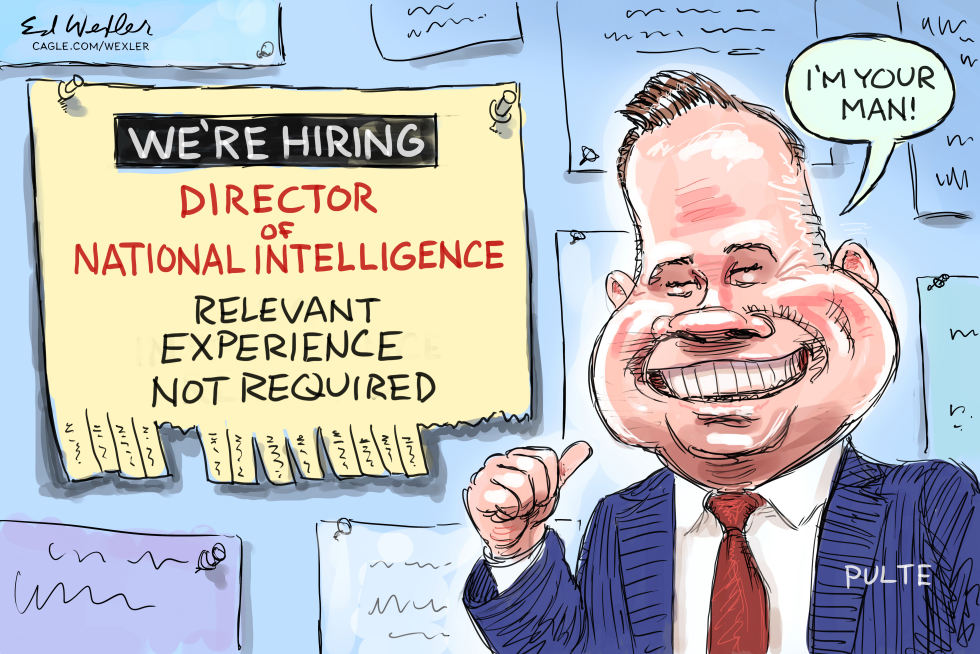
Bill Pulte appears in a political cartoon dated June 8, 2026, responding to discussions around his potential nomination as Director of National Intelligence. The image shows a hiring notice posted in an office setting that explicitly states relevant experience is not required for the role. Pulte, labeled on his suit, smiles broadly and declares himself the man for the job in a speech bubble. The cartoon highlights ongoing debates about qualifications for senior government intelligence positions during that period.
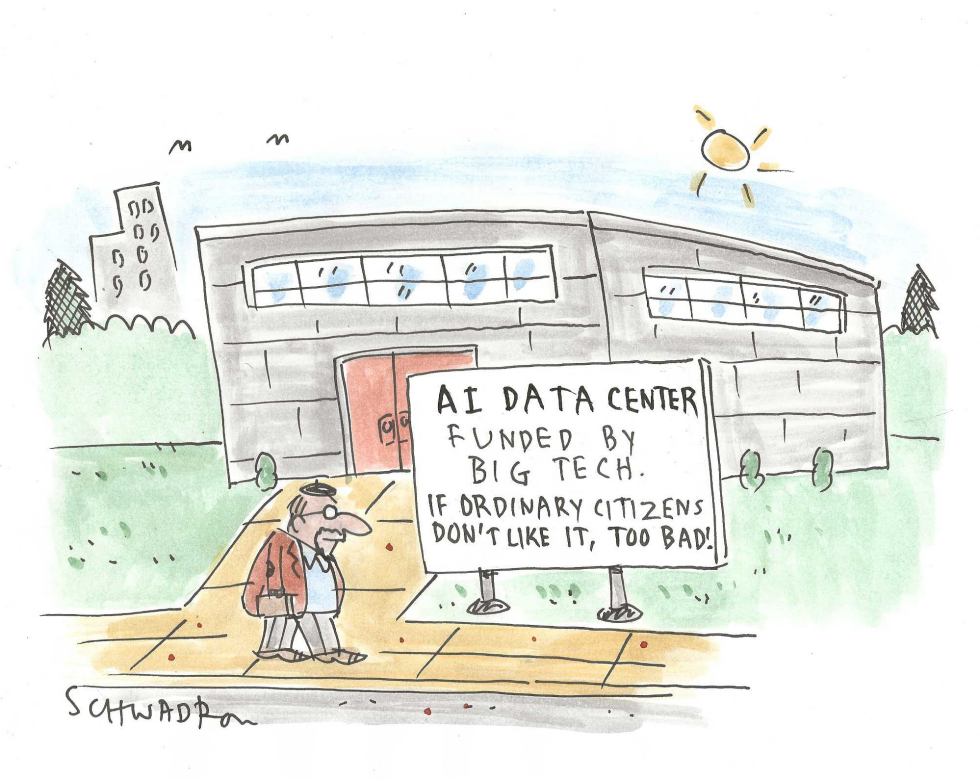
On June 6, 2026, a political cartoon depicts a man approaching an AI data center funded by big tech. The facility's sign bluntly informs ordinary citizens that their objections do not matter. The drawing highlights tensions between rapid AI infrastructure growth and public concerns over environmental consequences such as pollution and resource use. The cartoonist uses the dismissive message to underscore how technology companies often proceed without community consent.
Steve Sack's June 2026 cartoon shows Bari Weiss as a watch repair technician who has attached a 60 Minutes clock to a bundle of dynamite. The sign above reads Bari Weiss Watch Repair While U Wait. Weiss states in a speech bubble that the show was not broken so she fixed it. The image responds to ongoing discussions about editorial independence at CBS and Weiss's media role.
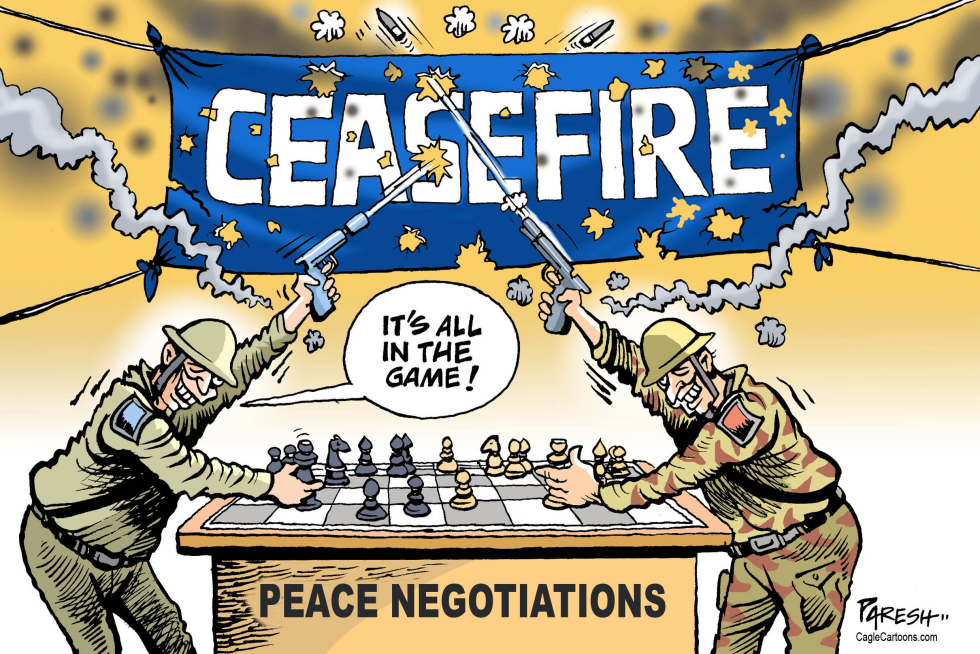
The cartoon depicts two soldiers in different uniforms aiming pistols at each other across a chessboard marked peace negotiations. A large blue banner reading ceasefire hangs above with multiple bullet holes and tears. One soldier declares it is all in the game. The scene illustrates the tension in ongoing Middle East ceasefire efforts involving multiple parties.
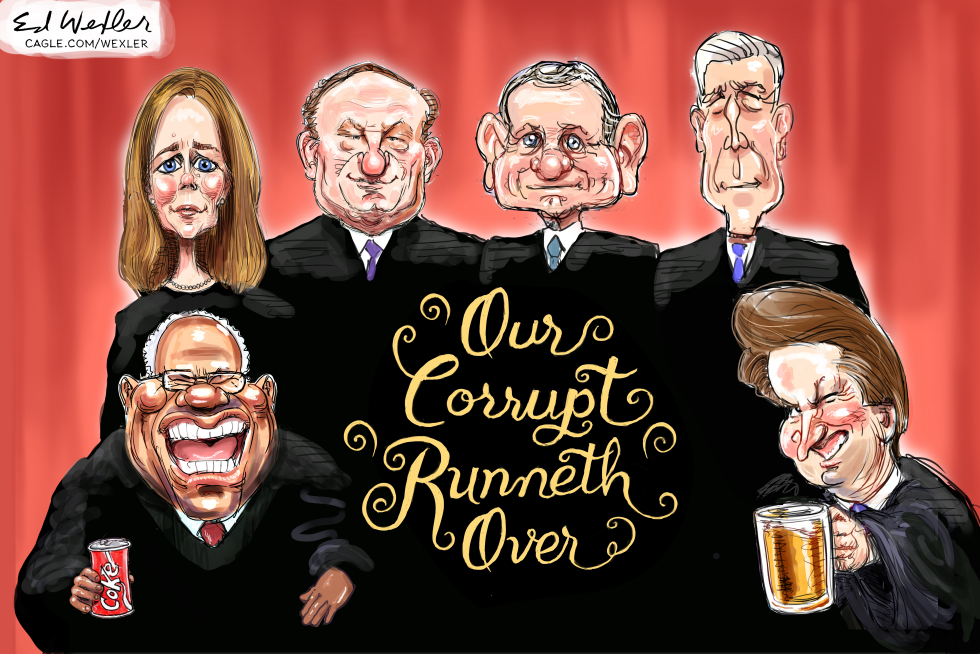
The cartoon from May 2026 shows six Supreme Court justices in black robes against a red curtain. Central figures include Clarence Thomas laughing with a Coke, Brett Kavanaugh with a beer, and others with stern or smirking expressions. Gold text reads Our Corrupt Runneth Over. The image references ongoing ethics debates involving several conservative members of the court.
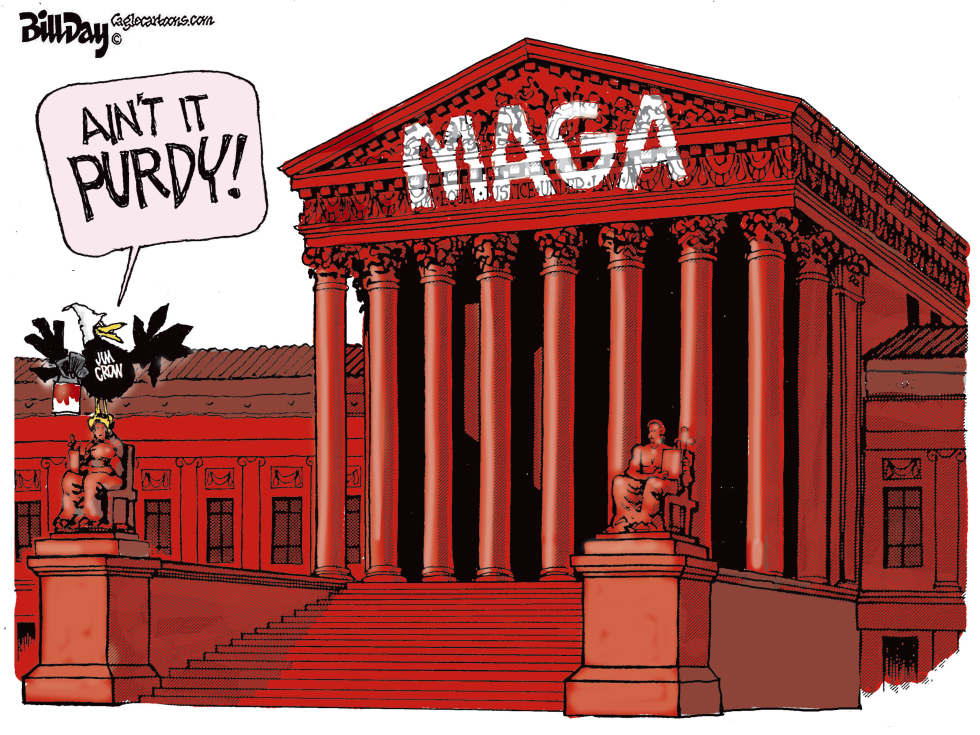
The May 2026 cartoon by Bill Day depicts the U.S. Supreme Court building painted red with MAGA letters dominating the pediment. A figure labeled Jim Crow appears on the left beside a crowned seated person. A speech bubble from the bird reads AIN'T IT PURDY! The frieze text EQUAL JUSTICE UNDER LAW remains partially visible beneath the new lettering. The image ties recent redistricting and voting rights debates to historical racial restrictions.
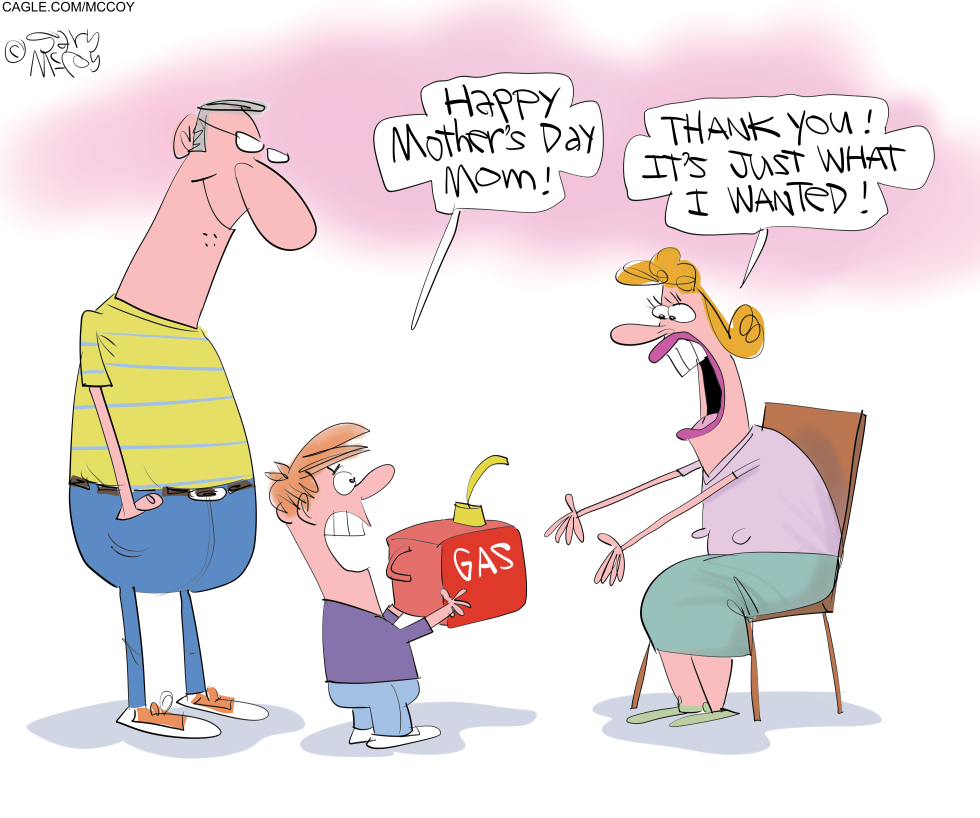
Gary McCoy's cartoon captures a family moment where a young son hands his mother a lit bomb marked GAS, exclaiming Happy Mother's Day, while she thanks him enthusiastically. The image ties into tags like Mom, mother, Mothers Day, gas, oil, petro, prices, economy, inflation. It highlights the burden of rising energy costs on families, with the explosive gift symbolizing volatile fuel markets. Amid references to Iran, strait of hormuz, Trump, the satire underscores how global tensions affect everyday life, blending holiday cheer with economic reality in a straightforward, exaggerated style typical of political cartoons.
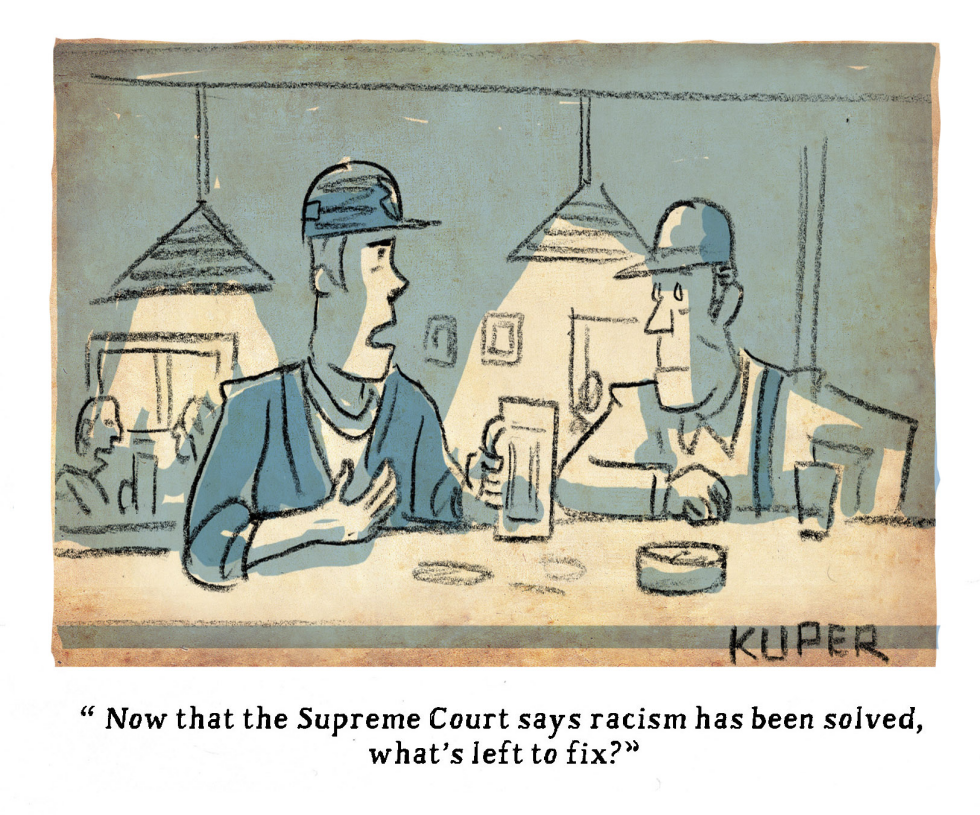
The cartoon depicts two men at a bar reacting to a Supreme Court decision on the Voting Rights Act. One asks what is left to fix now that racism is declared solved. The image responds to recent rulings affecting redistricting and voter access in states like Louisiana. Justices including Roberts and Thomas are referenced in related tags. The piece highlights ongoing debates over race and electoral rules.
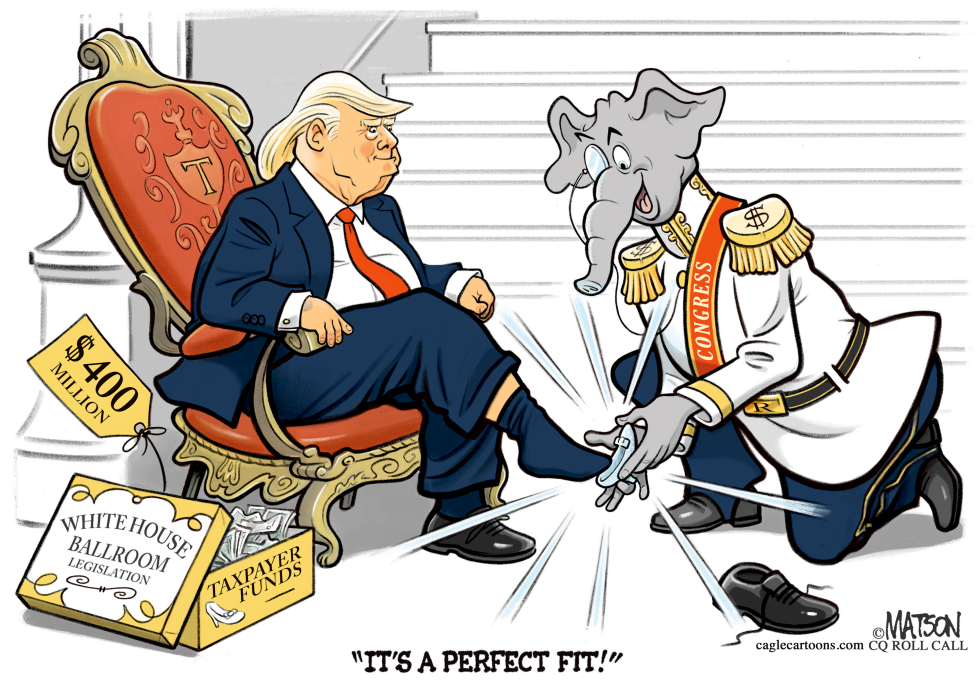
RJ Matson's cartoon depicts President Trump as Cinderella, lounging on a throne while a grinning Congress elephant, adorned with a sash and dollar-sign epaulets, slips a black shoe onto his foot, exclaiming 'It's a perfect fit!!' A box labeled 'White House Ballroom' overflows with 'Taxpayer Funds,' and a $400 million tag dangles nearby. This sharp satire targets Congressional Republicans' approval of hefty taxpayer funding for White House upgrades, echoing the fairy tale but with a political twist on government spending and Donald Trump's influence. The White House Correspondents Association Dinner at the Hilton Hotel lurks in the background tags, highlighting budget priorities amid fiscal debates.
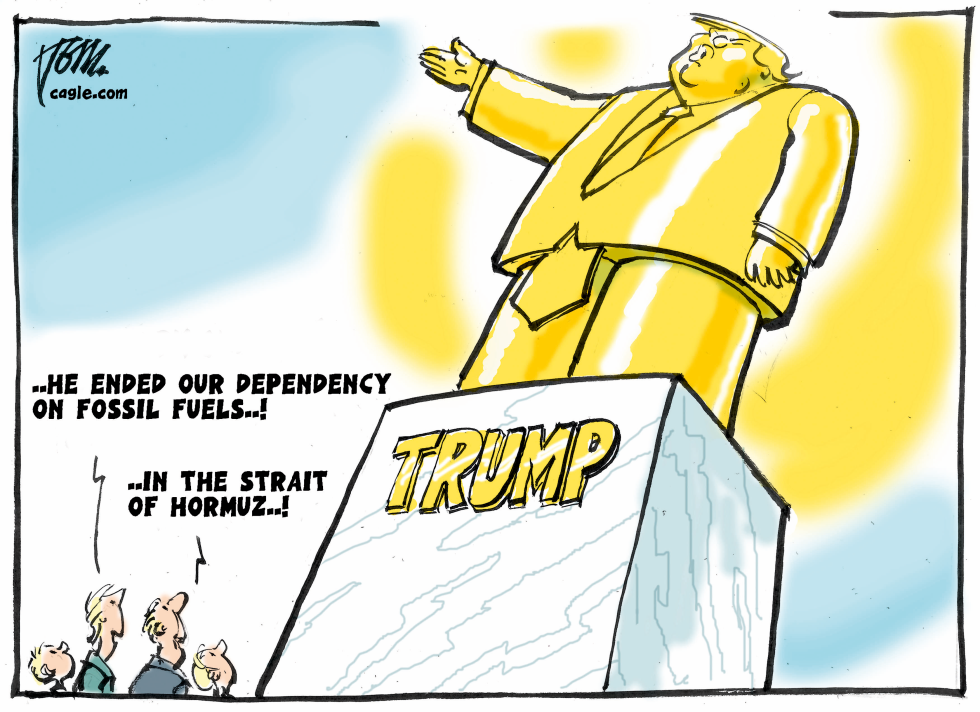
Tom Janssen draws a massive golden statue resembling Trump, arm raised triumphantly on a 'TRUMP' pedestal, with text boasting 'HE ENDED OUR DEPENDENCY ON FOSSIL FUELS!!' A small figure below quips '...IN THE STRAIT OF HORMUZ?!' Three tiny onlookers gaze up. The cartoon ties into tags like Strait of Hormuz, blockade, oil prices, inflation, Iran war, and fossil fuels. It pokes at ironic claims of energy independence through geopolitical tension. The yellow glow and exaggerated features amplify the dry humor on misguided victories. Cagle Cartoons syndicates such pointed takes, reminding editors how visuals cut through policy noise. This one's timely, blending current events with sharp wit.
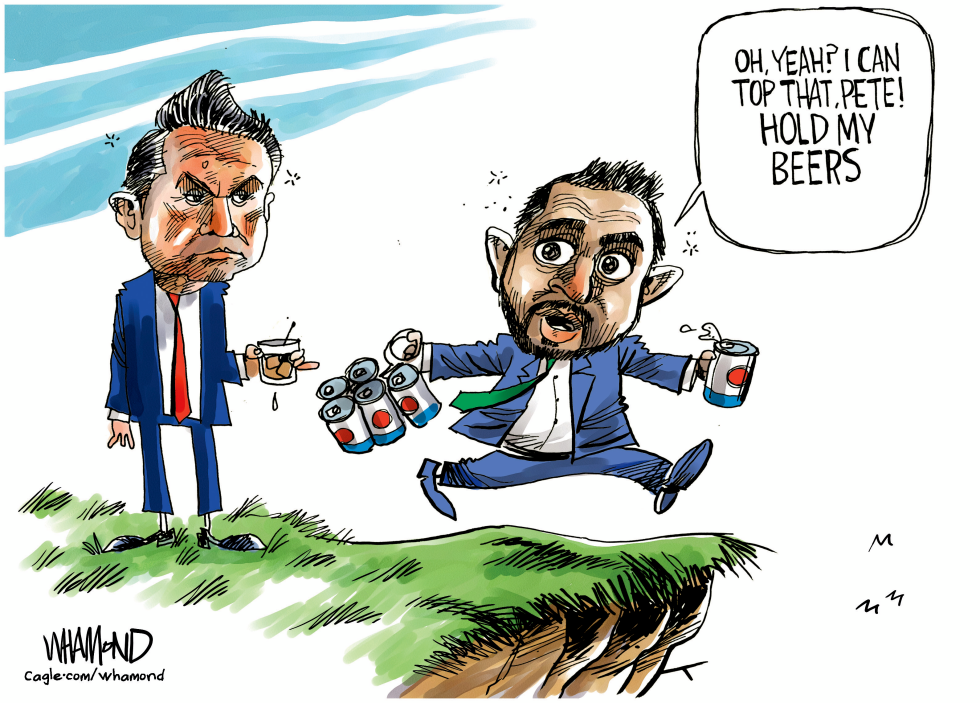
Dave Whamond's cartoon depicts Kash Patel energetically leaping from a grassy cliff, clutching a handful of beer cans and a drink, while yelling 'OH YEAH? I CAN TOP THAT PETE! HOLD MY BEERS' in a speech bubble. A stern-faced man in a suit stands nearby, holding a small drink. The scene plays on drinking allegations surrounding Patel's FBI director nomination, incorporating tags like The Atlantic article, reported alcohol use, drinks to excess, intoxication, unexplained absences, and Patel's 250M defamation lawsuit. The artwork uses caricature style to satirize political figures lashing out at press and Democrats demanding alcohol abuse tests, with Patel portrayed in a dynamic, over-the-top pose against a simple sky and grass background.
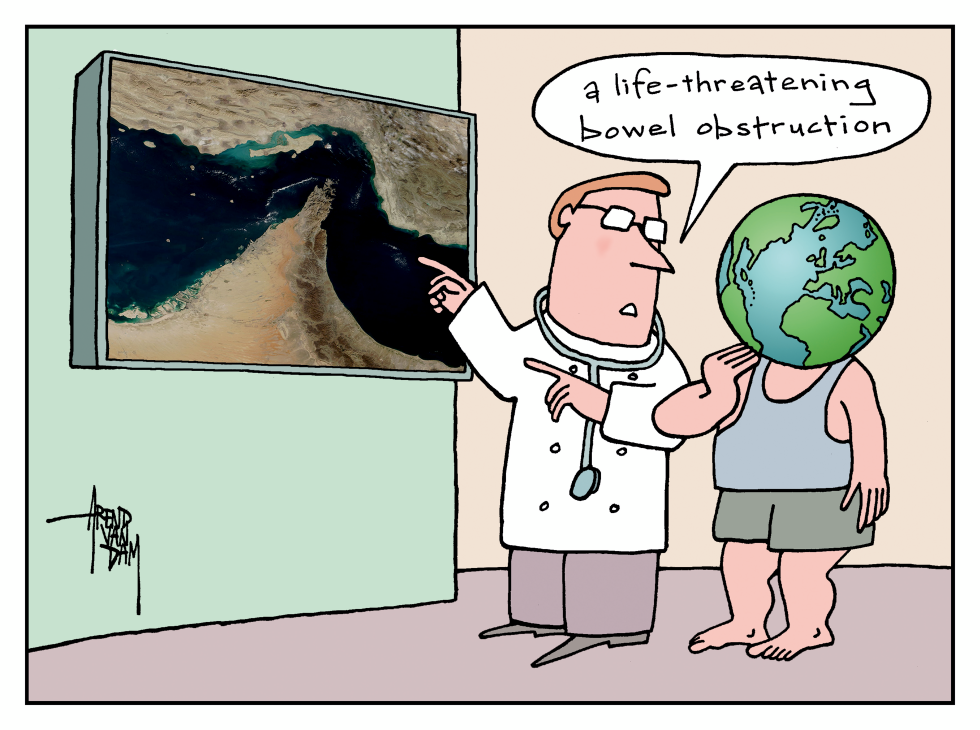
Arend van Dam\'s cartoon depicts a doctor diagnosing a child-like figure with a globe for a head, pointing to a screen showing the Strait of Hormuz as a life-threatening bowel obstruction. This visual metaphor ties into tags such as economy, world, oil, gas, obstruction, and war, illustrating how blockages in key trade routes threaten global stability. The barefoot patient in casual attire underscores vulnerability, while the doctor\'s serious demeanor adds dry humor to the geopolitical satire. Negotiations with ayatollahs and regime sanctions loom in the background, making the image a pointed commentary on how such conflicts create economic chokepoints. The overall composition blends medical analogy with international affairs for sharable impact.
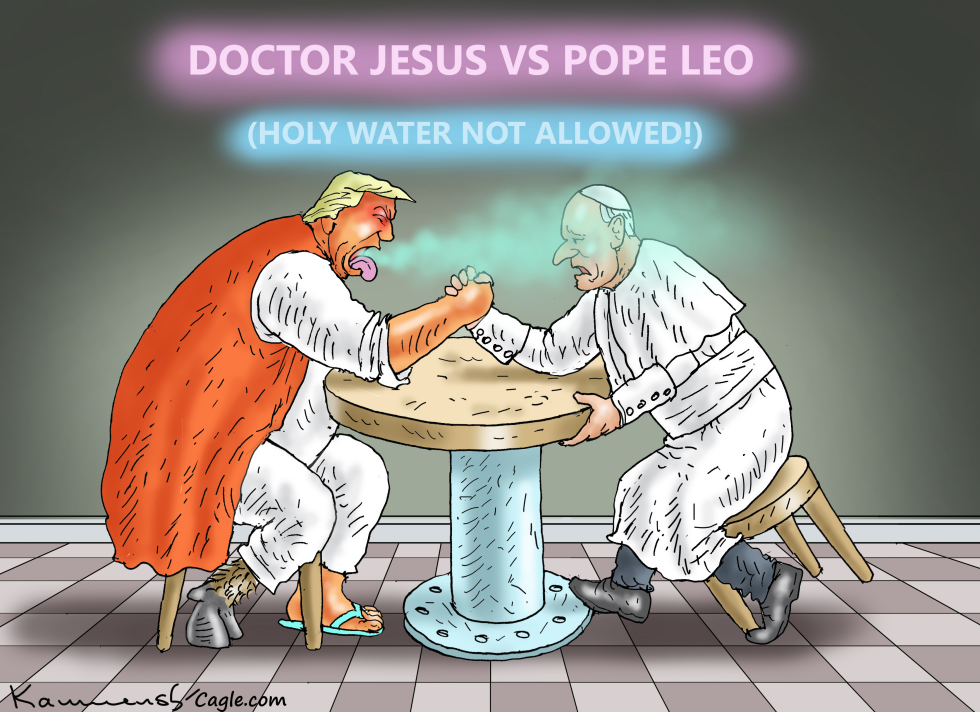
The image shows two figures engaged in arm wrestling, labeled as Doctor Jesus and Pope Leo, with a neon sign overhead stating 'DOCTOR JESUS VS POPE LEO' and a note that holy water is not allowed. Doctor Jesus appears with blonde hair, an orange cape, white robe, and sandals, while Pope Leo wears traditional white papal attire and shoes. A small elephant figure peeks from under Doctor Jesus's robe, and mist surrounds Pope Leo's head. The scene unfolds on a checkered floor with stools and a round table. This setup captures a direct, humorous confrontation between the caricatured holy figures, emphasizing the ban on holy water in their matchup. The artist's signature, Kamensky/Cagle.com, appears at the bottom.
John Darkow's cartoon captures the Artemis II crew gazing through their spacecraft window at the far side of the moon, where craters frame an unexpected sight: the Midvale School for the Gifted from Gary Larson's The Far Side, complete with a striped-shirted figure fumbling at a 'pull' door on stairs. Tagged with artemis ii, moon flyby, far side, gary larson, nasa, space, and science, the image blends real space exploration with absurd humor. One crew member exclaims excitement, labeled with Artemis II Crew and NASA markings. This satire highlights the blend of high-stakes missions and pop culture whimsy, poking fun at what astronauts might hope to find beyond the visible lunar surface. The dry wit underscores how science fiction tropes collide with actual programs like Artemis II.
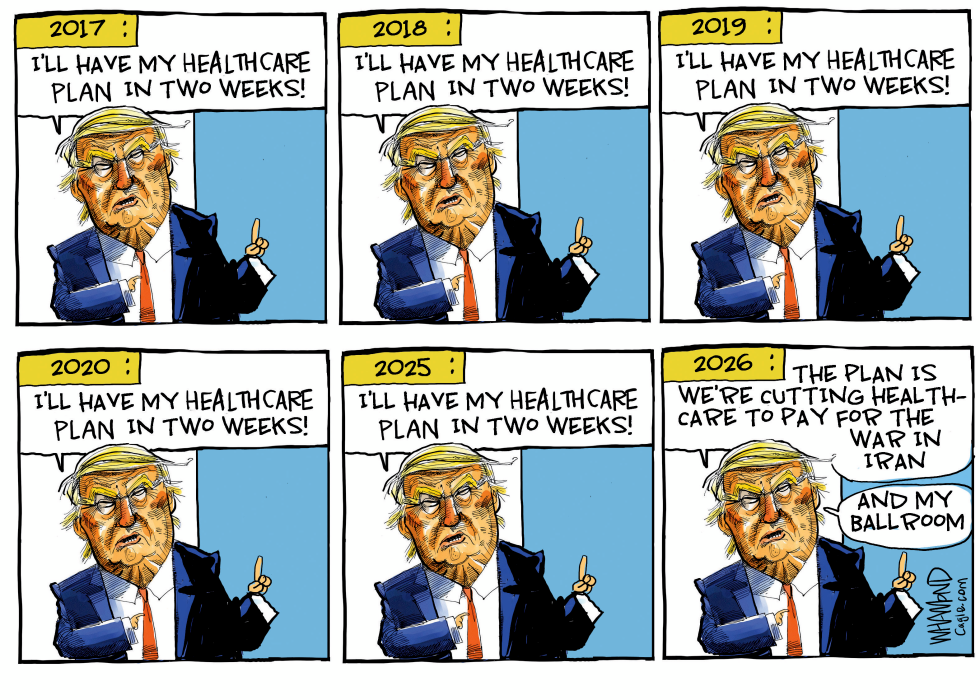
Dave Whamond's political cartoon depicts a recurring figure with distinctive blonde hair and suit, pointing emphatically while promising a healthcare plan 'in two weeks' from 2017 through 2025. The sequence builds to a 2026 punchline where the promise shifts to cutting healthcare to fund a war in Iran and a personal ballroom. This Trump healthcare plan political cartoon employs dry humor to critique endless delays and misplaced priorities. The US politics war funding criticism underscores how domestic needs like healthcare reform delay comic strip give way to military spending in this Republican healthcare policy parody. The endless two weeks promise meme captures the frustration with unfulfilled pledges in a sharp, sequential format.