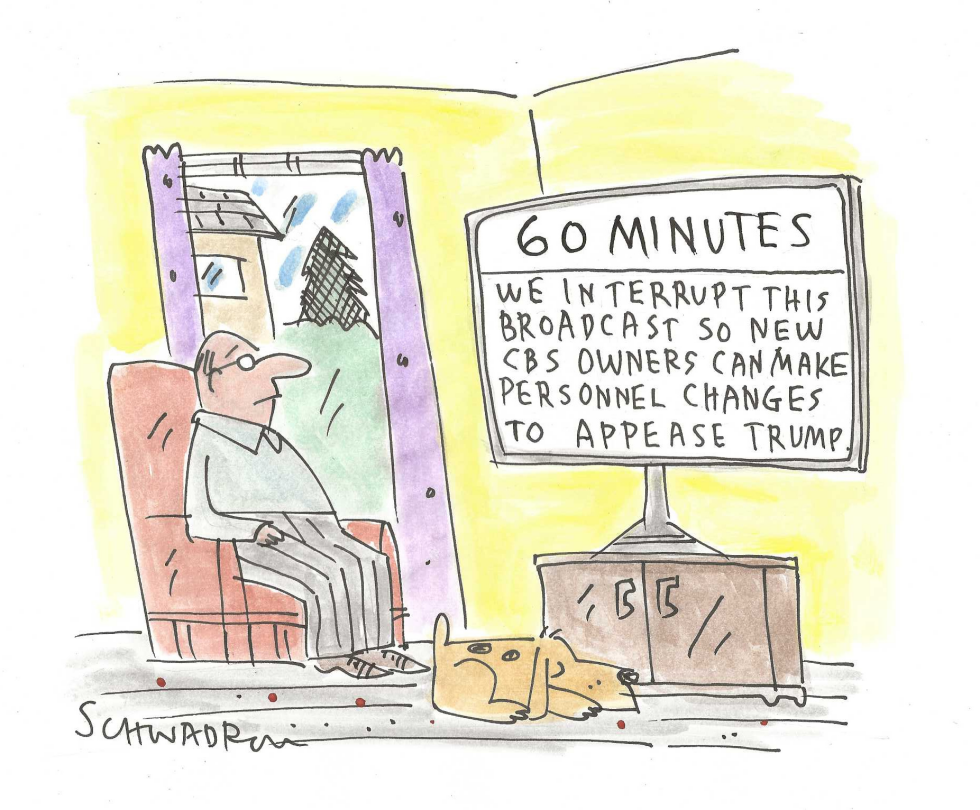
The cartoon depicts a viewer watching an on-screen announcement from 60 Minutes that interrupts the broadcast for personnel changes at CBS to appease Trump. The scene shows the television set displaying the message while the viewer remains seated and a dog lies on the floor. The date of June 2026 places the image in a period of ongoing discussion about media ownership and external political pressure on news outlets.
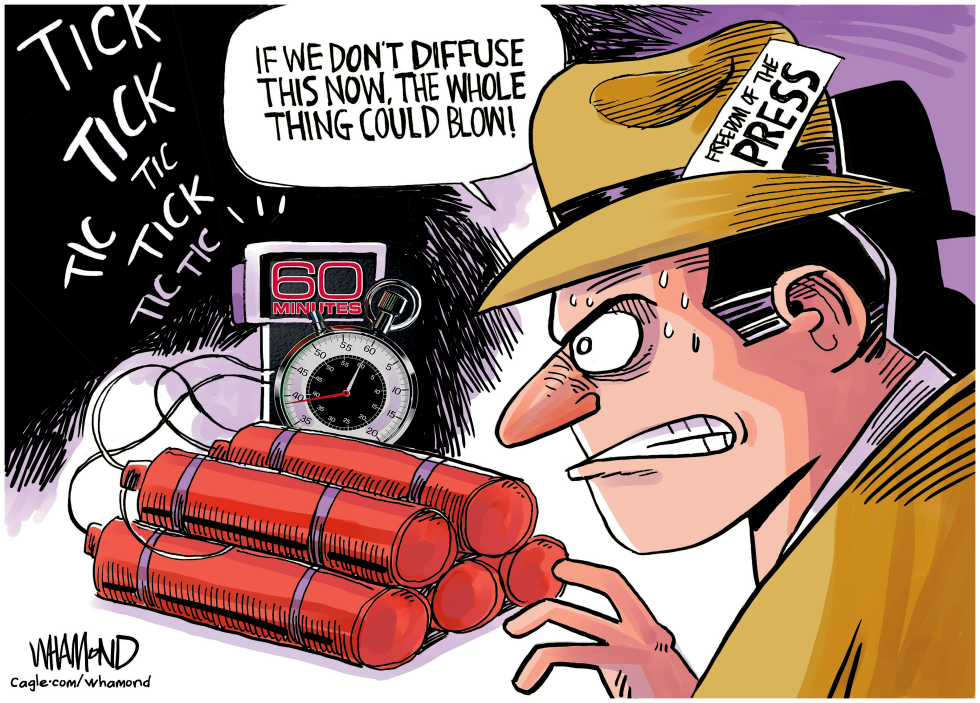
A sweating journalist wearing a Freedom of the Press hat leans over a bundle of dynamite sticks wired to a 60 Minutes timer. The timer ticks loudly as the figure warns in a speech bubble that failure to defuse the crisis will cause everything to blow. The image responds to reported turmoil at CBS News involving 60 Minutes correspondents and leadership changes at Paramount.
Steve Sack's June 2026 cartoon shows Bari Weiss as a watch repair technician who has attached a 60 Minutes clock to a bundle of dynamite. The sign above reads Bari Weiss Watch Repair While U Wait. Weiss states in a speech bubble that the show was not broken so she fixed it. The image responds to ongoing discussions about editorial independence at CBS and Weiss's media role.
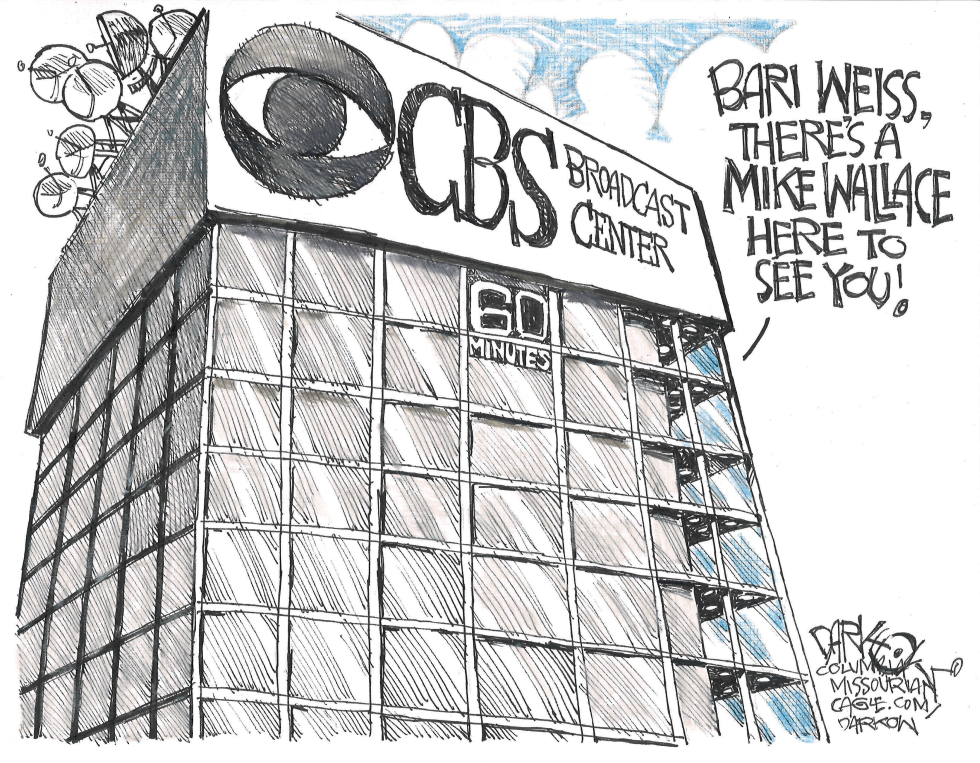
The drawing shows the CBS Broadcast Center in New York with its prominent eye logo and 60 Minutes signage. Large lettering on the right addresses Bari Weiss directly, stating a Mike Wallace figure has arrived to see her. The image appears amid reports of personnel changes and editorial disputes at CBS News in the spring of 2026.
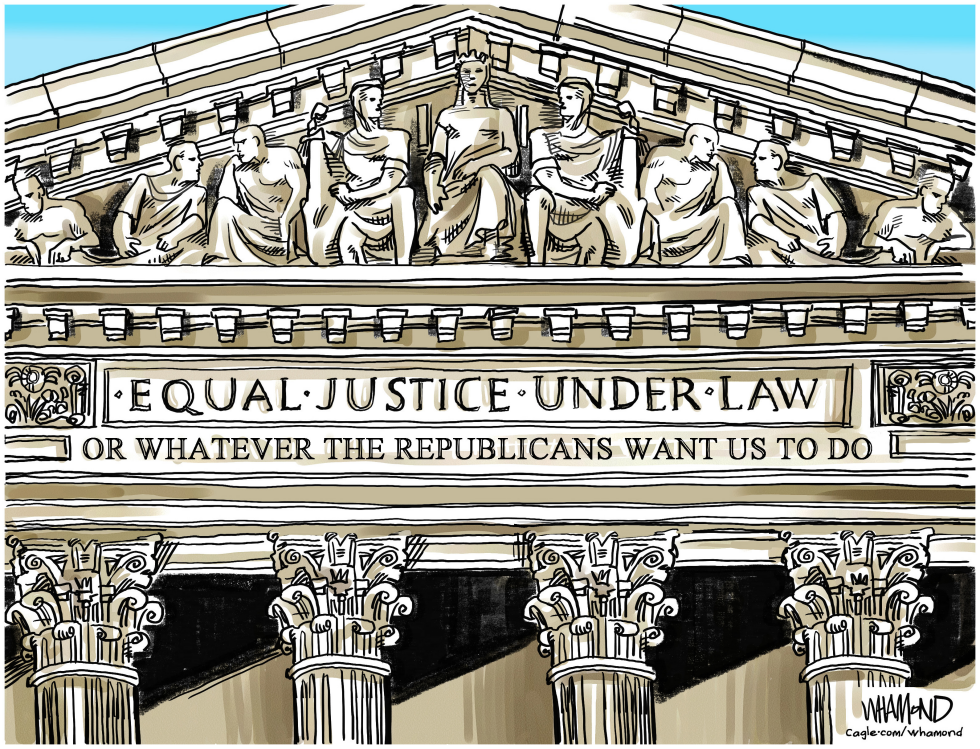
The cartoon depicts the U.S. Supreme Court building with its famous frieze inscription altered from Equal Justice Under Law to Or Whatever the Republicans Want Us to Do. This visual responds to recent rulings including the Alabama voting map decision that permitted GOP-drawn districts accused of diluting Black voter power. The image critiques the court's use of the shadow docket and perceived ideological alignment with Republican priorities on voting rights and gerrymandering.
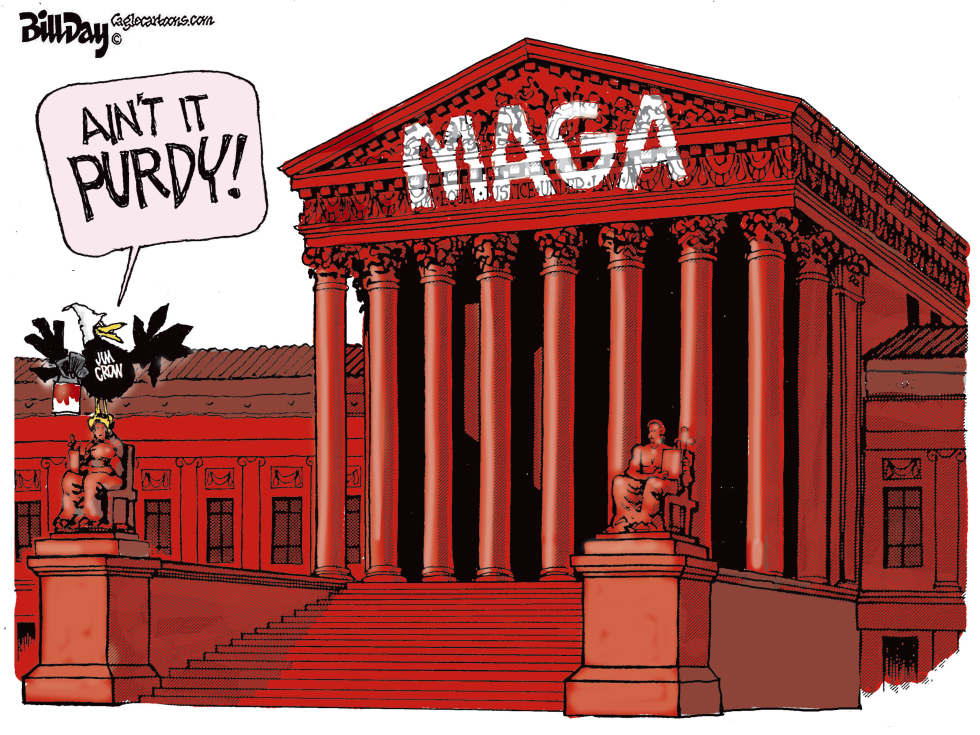
The May 2026 cartoon by Bill Day depicts the U.S. Supreme Court building painted red with MAGA letters dominating the pediment. A figure labeled Jim Crow appears on the left beside a crowned seated person. A speech bubble from the bird reads AIN'T IT PURDY! The frieze text EQUAL JUSTICE UNDER LAW remains partially visible beneath the new lettering. The image ties recent redistricting and voting rights debates to historical racial restrictions.
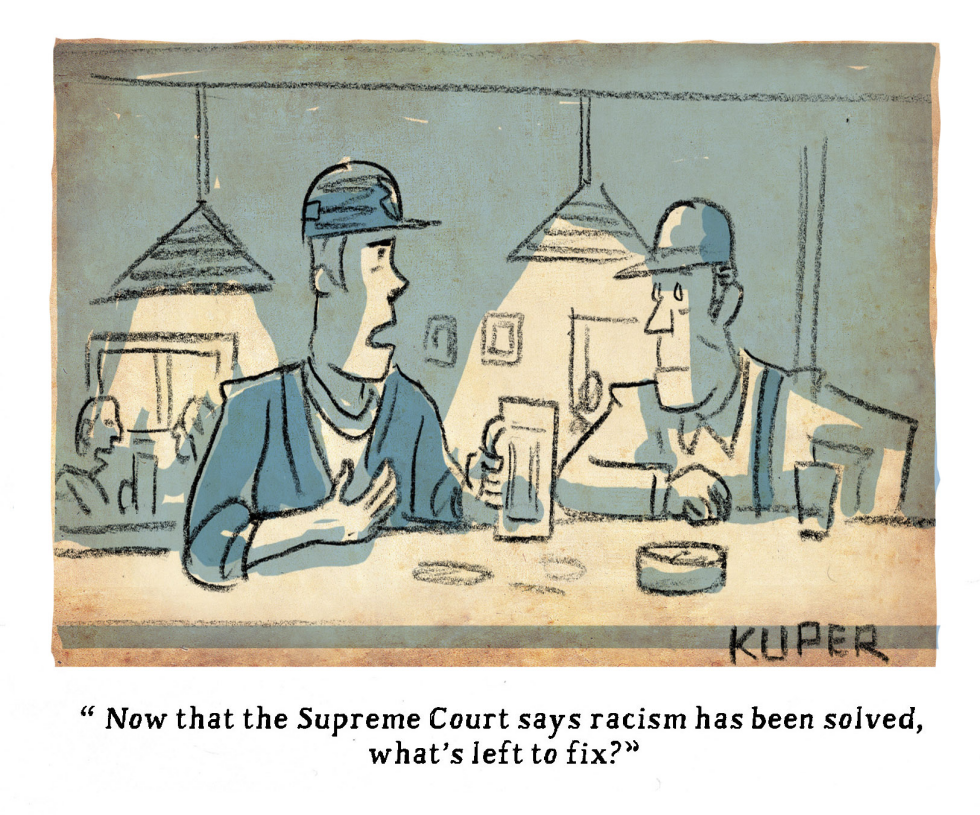
The cartoon depicts two men at a bar reacting to a Supreme Court decision on the Voting Rights Act. One asks what is left to fix now that racism is declared solved. The image responds to recent rulings affecting redistricting and voter access in states like Louisiana. Justices including Roberts and Thomas are referenced in related tags. The piece highlights ongoing debates over race and electoral rules.
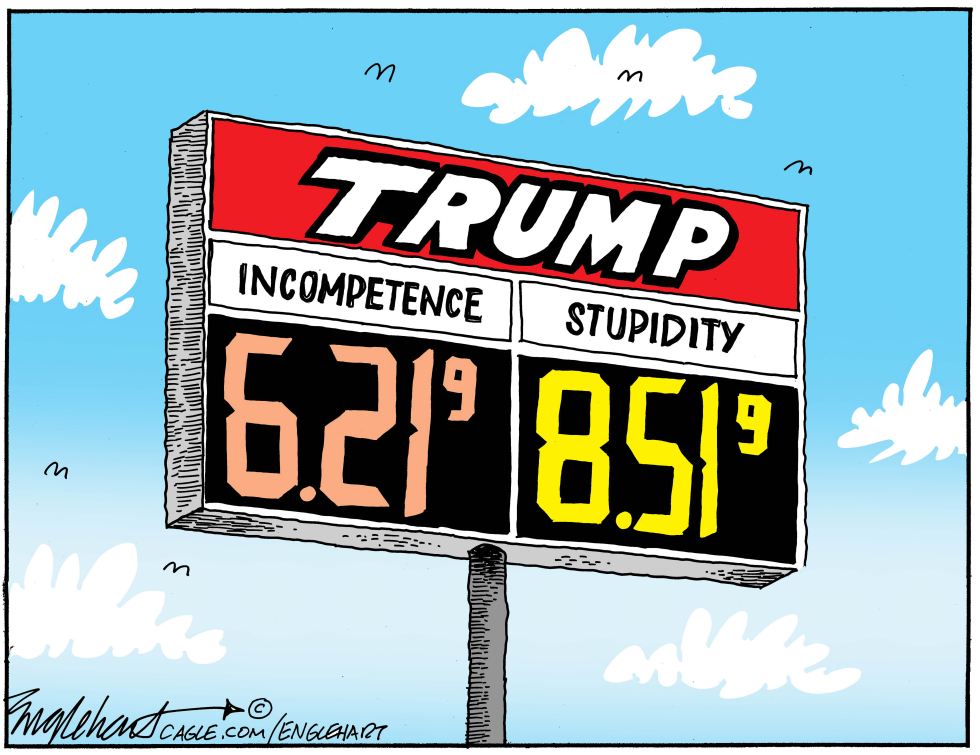
Bob Englehart's cartoon features a gas station sign with Trump at the top, showing prices for incompetence at 6.21⁹ and stupidity at 8.51⁹ against a blue sky with clouds. The tags Trump, Iran War, gas prices, gasoline, and gallon frame the visual pun. Such cartoons often tie political figures to everyday economic pains like fuel costs. The dry humor lands on how leadership flaws inflate prices, making it relatable for readers hit by pump shocks. With no characters, just the sign, it keeps the message direct. Tags like incompetence and stupidity drive the satire home, poking at perceived policy missteps without overcomplicating the scene.
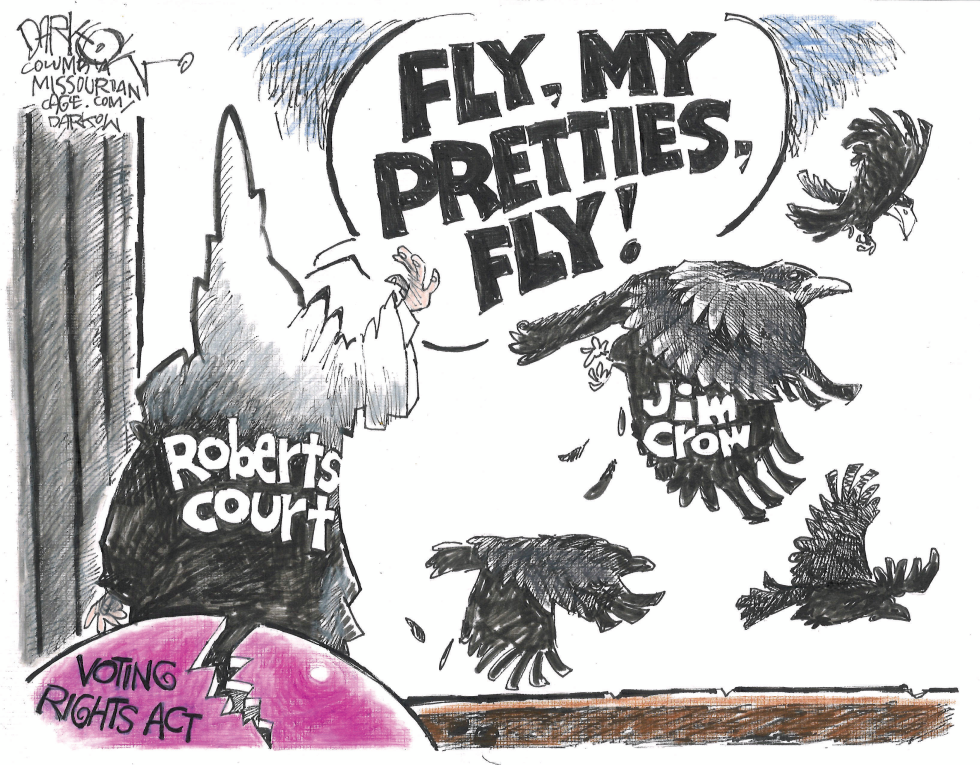
On May 2 2026 the cartoon depicts the Roberts Court as a bird-like figure shattering the Voting Rights Act. The image shows the court releasing multiple Jim Crow labeled birds into the air. This visual responds to ongoing Supreme Court actions affecting voting access and redistricting rules.
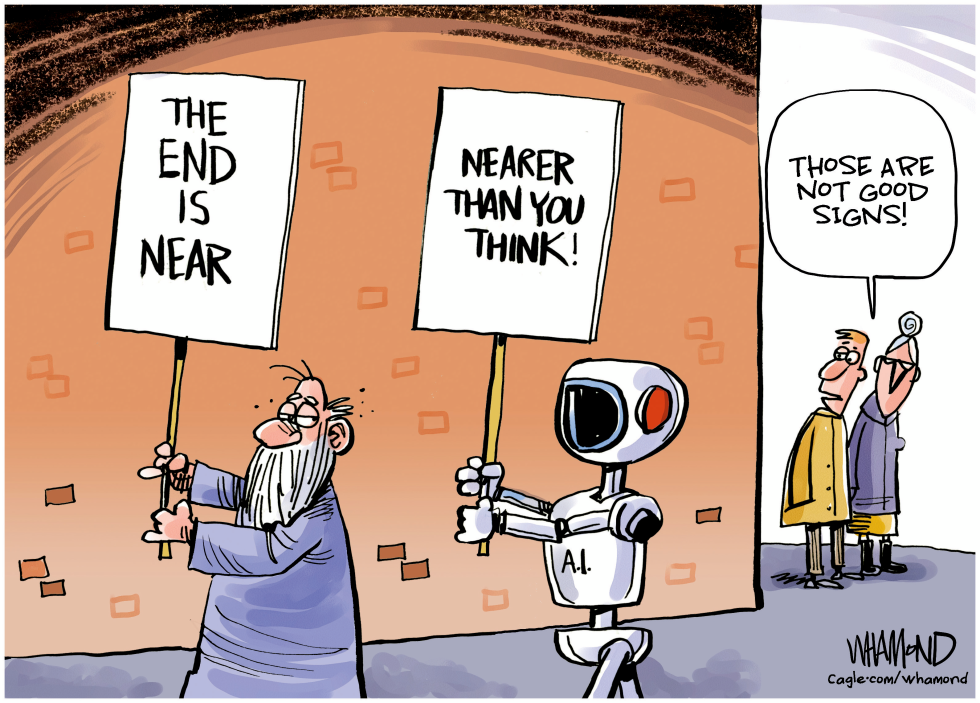
On April 29 2026 Dave Whamond depicts an elderly prophet and an A.I. robot both holding signs warning the end is near. The robot claims the end is nearer than the prophet thinks while two men react that the signs are not good. The image addresses ongoing public debate over artificial intelligence risks and workplace transformation.
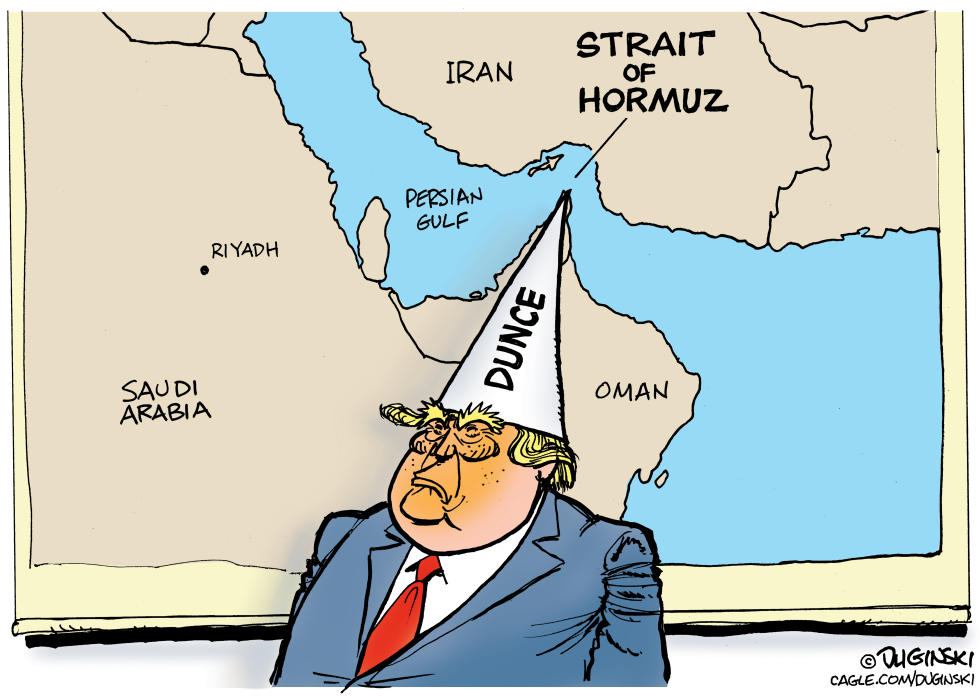
The cartoon depicts a simplified map of the Middle East, including labels for Iran, Saudi Arabia, Oman, Riyadh, and the Persian Gulf. The Strait of Hormuz is prominently marked, with a caricatured man in a suit and red tie wearing a dunce cap labeled \'DUNCE\' positioned over it. This setup uses the strait as a choke point for oil and energy, tying into themes of foreign policy, war, and ignorance. The image critiques handling of Middle East waterway issues, possibly linked to closure threats, tankers, and ceasefire efforts. Artist signature appears in the bottom right.
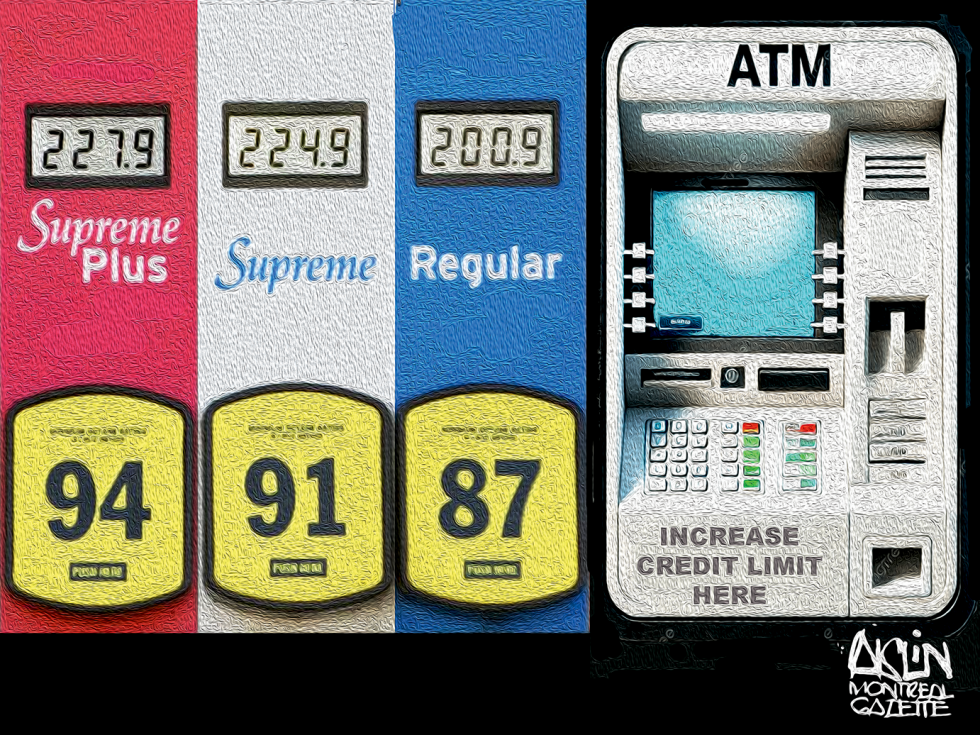
The cartoon shows a gas pump price board with supreme plus at 2.279 per gallon and 94 octane, supreme at 2.249 with 91 octane, and regular at 2.009 with 87 octane. Next to it sits an ATM labeled to increase credit limit here, poking at high gas prices and the economy's push toward more credit. Tags like gas, prices, cost, economy, credit, and pump underline the visual joke on affording fuel through debt. This setup captures the frustration with rising fuel costs without words, relying on the absurdity of blending a gas pump with credit services. Cartoonists often use such direct imagery to comment on everyday economic strains.
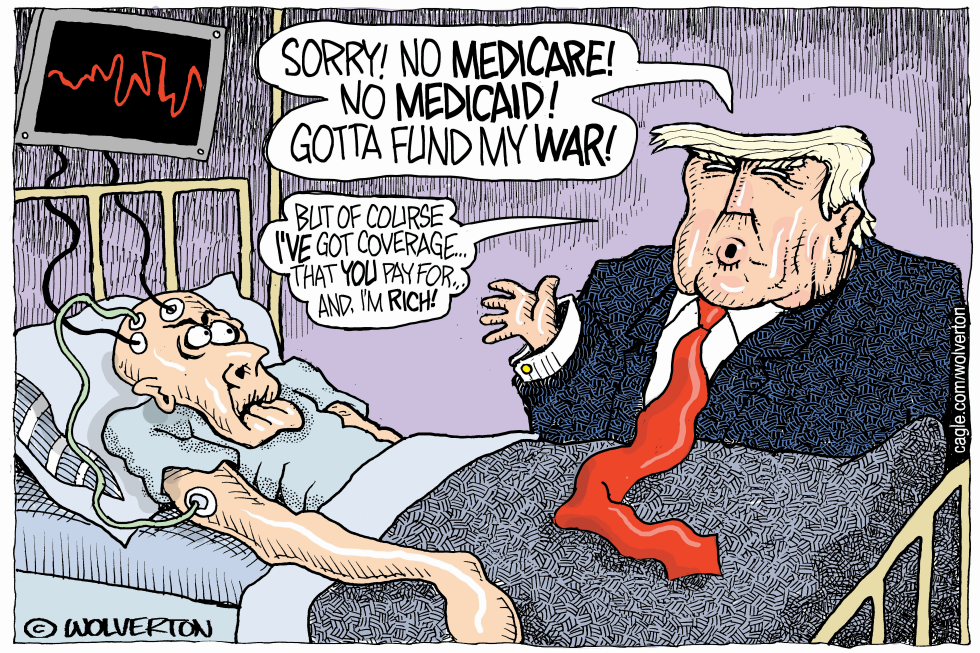
On April 3, 2026, a political cartoon depicts President Donald Trump at the bedside of a patient in a hospital room. Trump states that Medicare and Medicaid cannot be provided because funds must support an ongoing war. The patient replies that coverage exists because Trump pays for it and the patient is wealthy. The image references the Iran War and healthcare access issues.
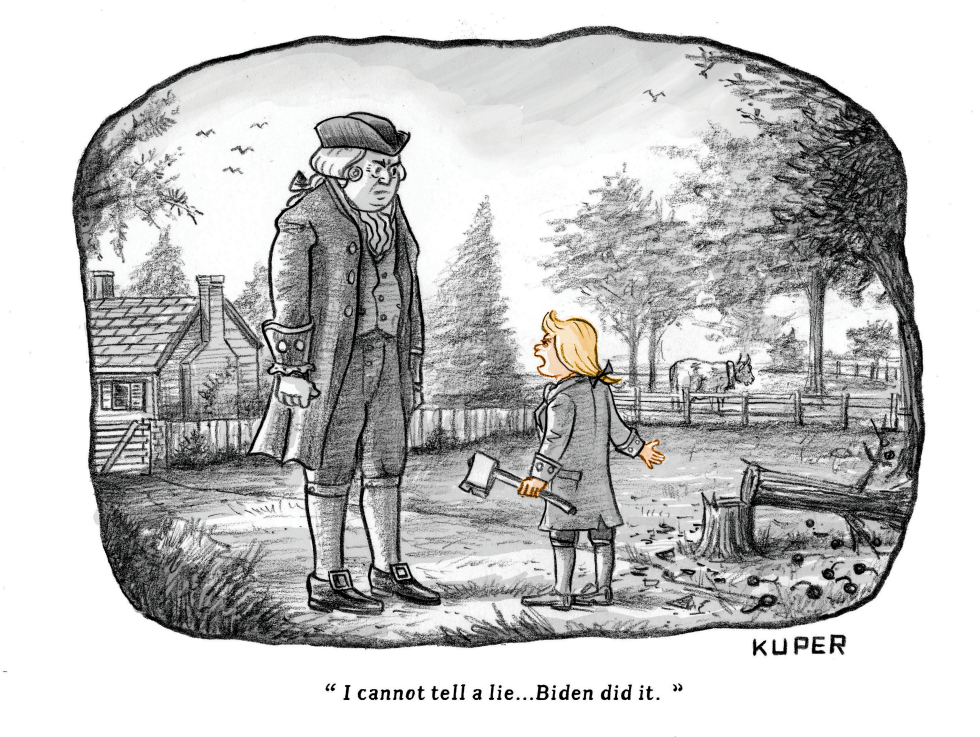
The cartoon reworks the George Washington cherry tree legend with a blonde child resembling Donald Trump holding an axe and declaring Biden responsible for the cut tree. An adult figure in 18th century attire looks on while a horse stands in the background. The scene references ongoing political blame games and recent cabinet tensions involving figures such as Kristi Noem and Pete Hegseth amid rising oil prices and foreign policy friction in the Strait of Hormuz.
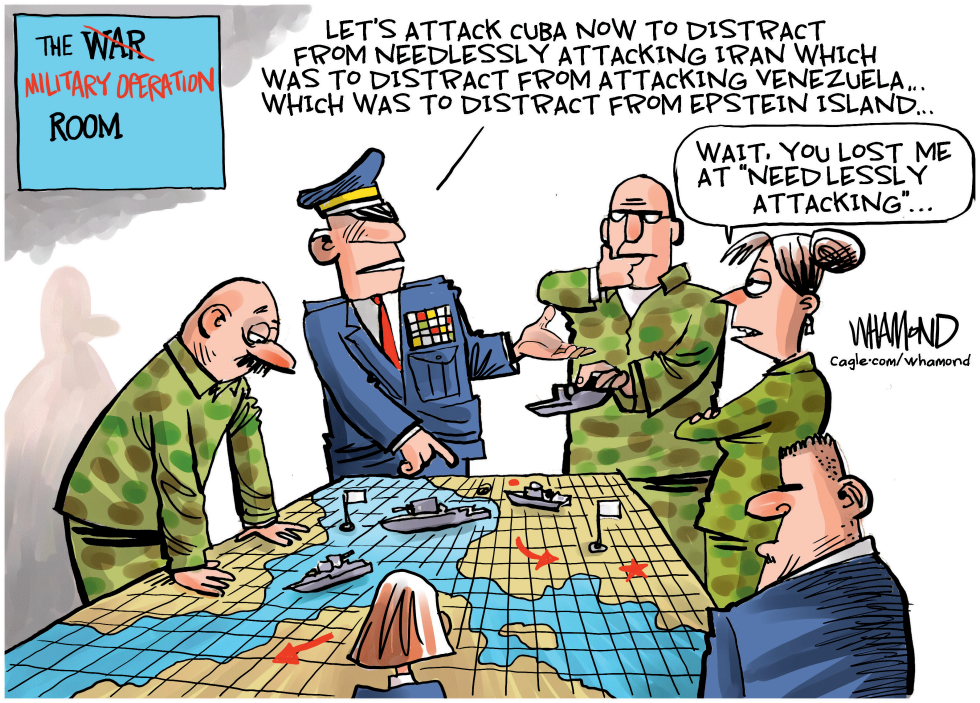
Dave Whamond's political cartoon depicts a group of military officials in a war room, gathered around a map with toy ships, discussing a chain of distractions starting from attacking Cuba to cover needless attacks on Iran, which distracted from Venezuela, looping back to Epstein Island. The scene captures the absurdity with one figure pointing at the map and another expressing confusion over 'needlessly attacking.' This satirical illustration uses dry humor to comment on convoluted military strategies and political diversions, incorporating elements like crossed-out 'War' sign replaced by 'Military Operation Room' for added irony. Tags like political satire, war distractions, foreign policy cartoon, Epstein Island reference, military humor, and endless distraction chain emphasize the cartoon's sharp critique.