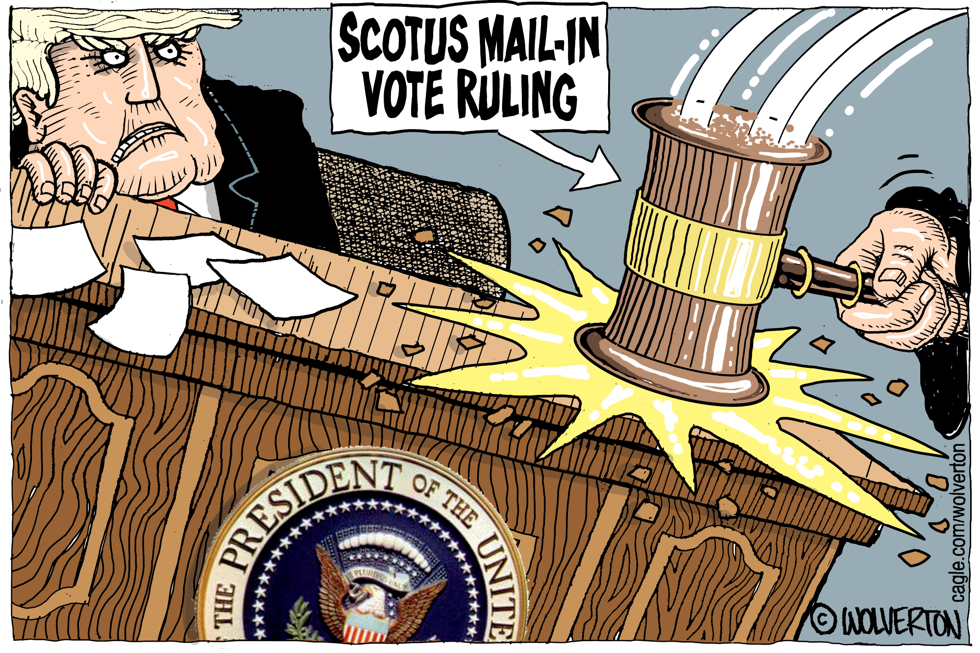
A new Supreme Court ruling on mail-in votes has drawn a sharp reaction from President Donald Trump. The decision appears to restrict certain ballot practices ahead of future elections. In the cartoon, the gavel smashes into the presidential podium where Trump stands, sending papers flying. Trump is depicted with an angry expression, leaning forward as the impact occurs. The image uses the visual of the striking gavel to illustrate the direct effect of the ruling on the administration. The cartoon was published on September 16, 2026, by artist Monte Wolverton.
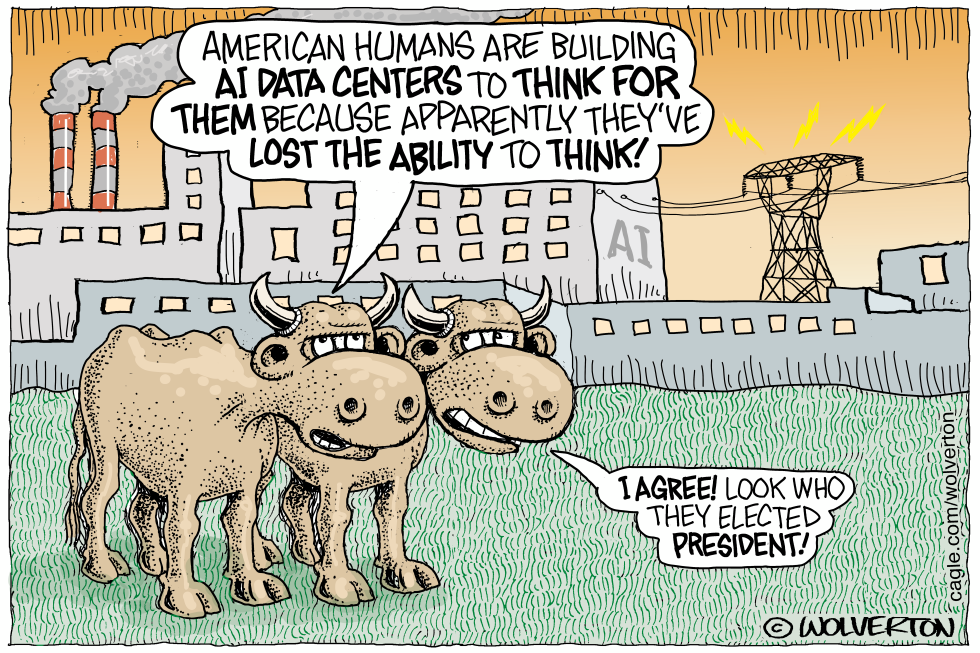
The drawing shows two cows in a field before industrial structures labeled AI. One cow states that American humans build AI data centers to think for them after losing that ability. The second cow agrees and points to the elected president. Smokestacks and an electricity tower appear in the background. The piece responds to ongoing debates over AI infrastructure demands and the 2026 election context by connecting energy use to political decisions.
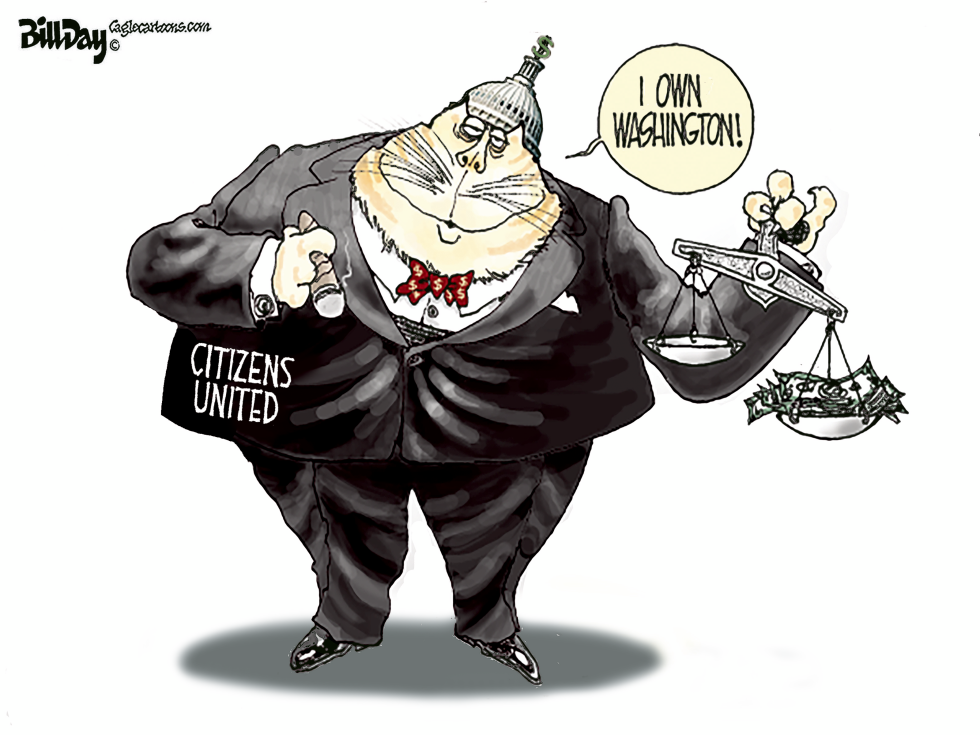
The 2010 Citizens United Supreme Court ruling opened the door to unlimited independent expenditures by corporations and unions in elections. Critics argue the decision amplified the voice of wealthy donors and special interests over average voters. The cartoon responds to the ongoing effects of that precedent by depicting a powerful corporate figure claiming control of the capital. It highlights how the ruling has reshaped campaign finance and public trust in government institutions.
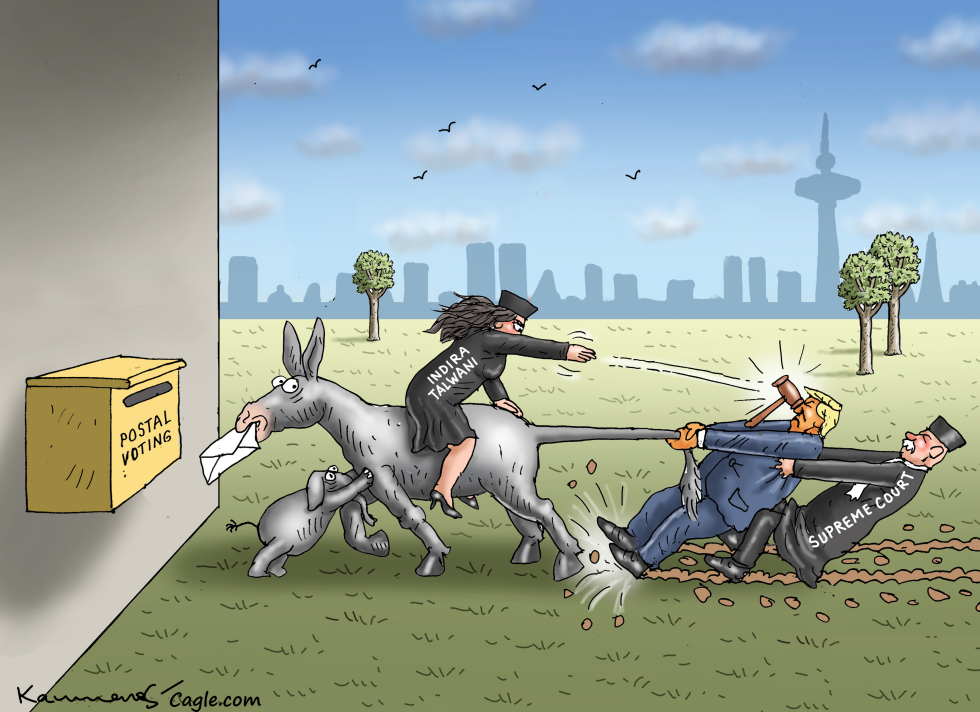
A political cartoon shows federal Judge Indira Talwani riding a Democratic donkey labeled with postal voting while dragging two Supreme Court justices across a field near the Space Needle. The image responds to ongoing disputes over postal voting rules and federal court involvement in election procedures. Talwani, a U.S. District Judge, has issued rulings affecting voting access in recent cases. The cartoon uses the donkey as a party symbol and a yellow ballot box to illustrate the conflict between lower court decisions and the Supreme Court. The visual argument centers on judicial power in election law matters active in 2026.
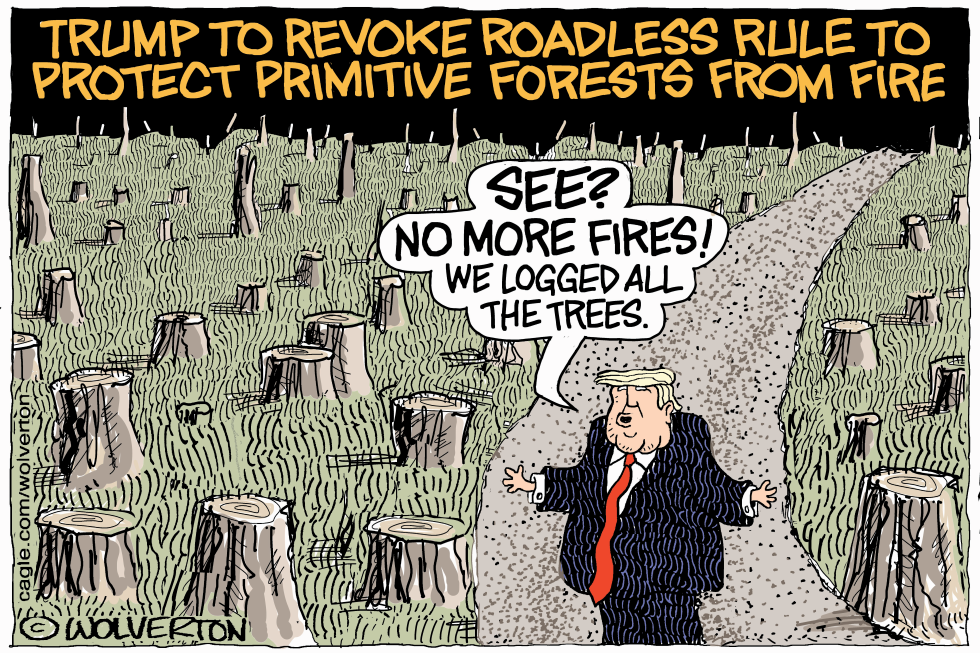
The cartoon shows Donald Trump in a landscape of tree stumps after revoking the roadless rule. He claims in a speech bubble that logging all trees eliminates forest fires. The image responds to the 2026 policy change allowing logging in previously protected primitive forests. The visual argument highlights the scale of tree removal as a supposed fire prevention measure. Publication occurred on August 18, 2026.
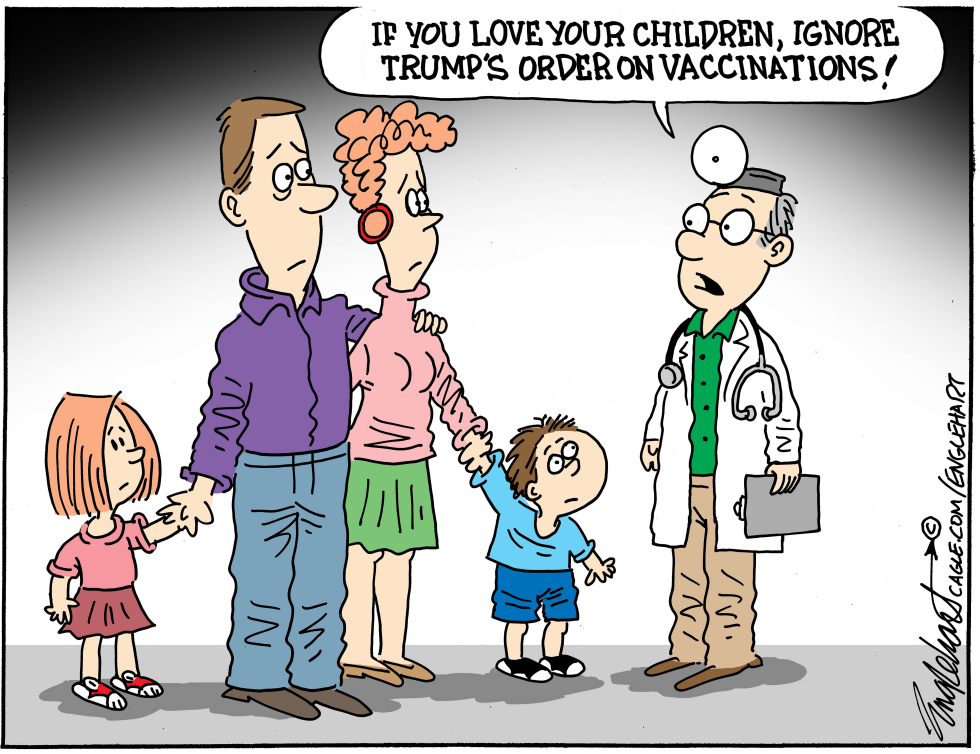
A doctor has publicly advised parents to disregard a presidential order on childhood vaccinations. The recommendation comes as the Trump administration advances new immunization policies. The stance highlights tensions between federal health directives and medical advice given directly to families. The piece presents the doctor's counsel as protective of children and critical of the order's approach.
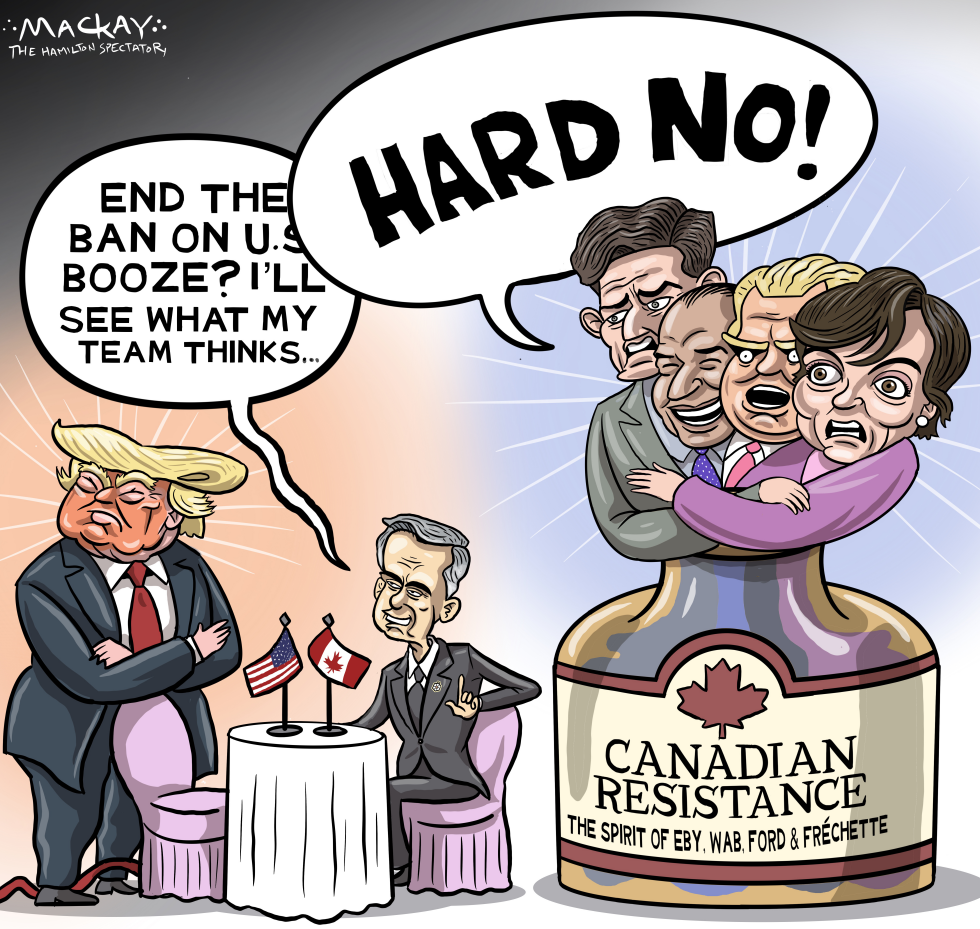
Donald Trump signaled openness to ending a ban on US alcohol imports into Canada during a meeting with Canadian officials. Provincial leaders including David Eby and Doug Ford responded with unified opposition. The cartoon portrays the premiers as a collective force of resistance and shows Trump deferring the decision to his team.
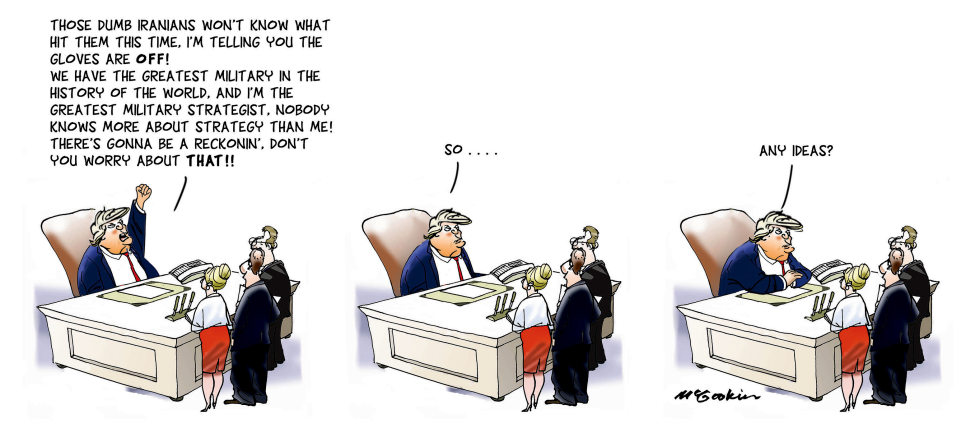
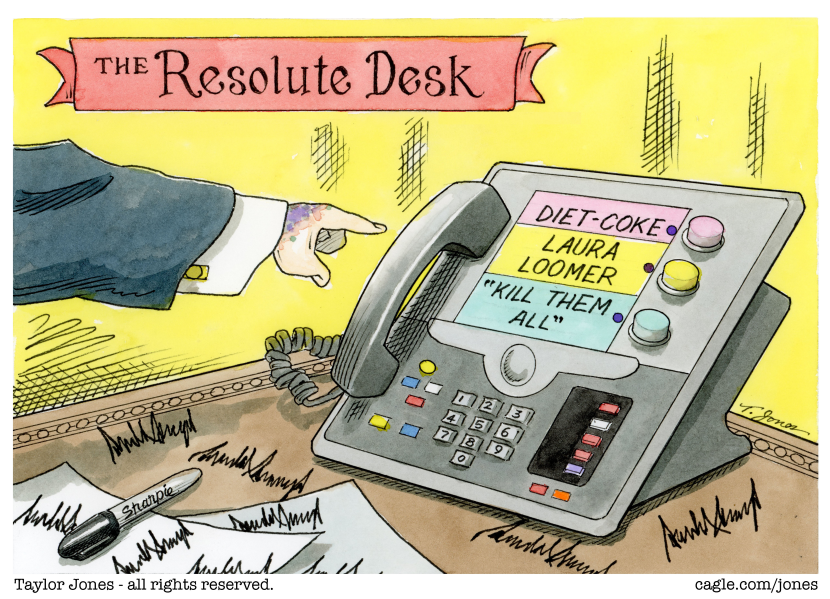
President Trump has directed his national security team to develop new military options regarding Iran. The move comes amid ongoing regional tensions and follows public statements emphasizing U.S. military superiority. The editorial takes the position that such demands reflect an impulsive approach to foreign policy that risks unnecessary escalation without clear strategic direction.
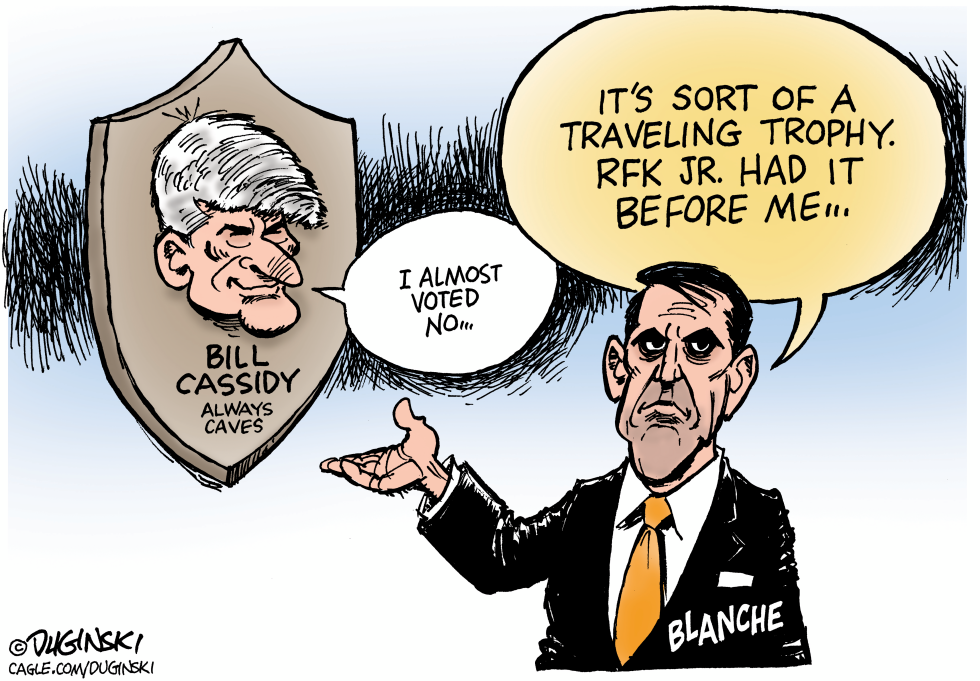
Todd Blanche, recently confirmed to a senior administration post, has mounted a shield bearing Sen. Bill Cassidy\'s likeness on his office wall. The Louisiana Republican, long viewed as a potential swing vote, backed the nomination despite earlier signals of hesitation. RFK Jr. reportedly displayed the same item during his own tenure. The arrangement underscores ongoing tensions within the GOP over loyalty tests and confirmation battles. The piece portrays Cassidy\'s support as another instance of yielding under pressure rather than a principled stand.
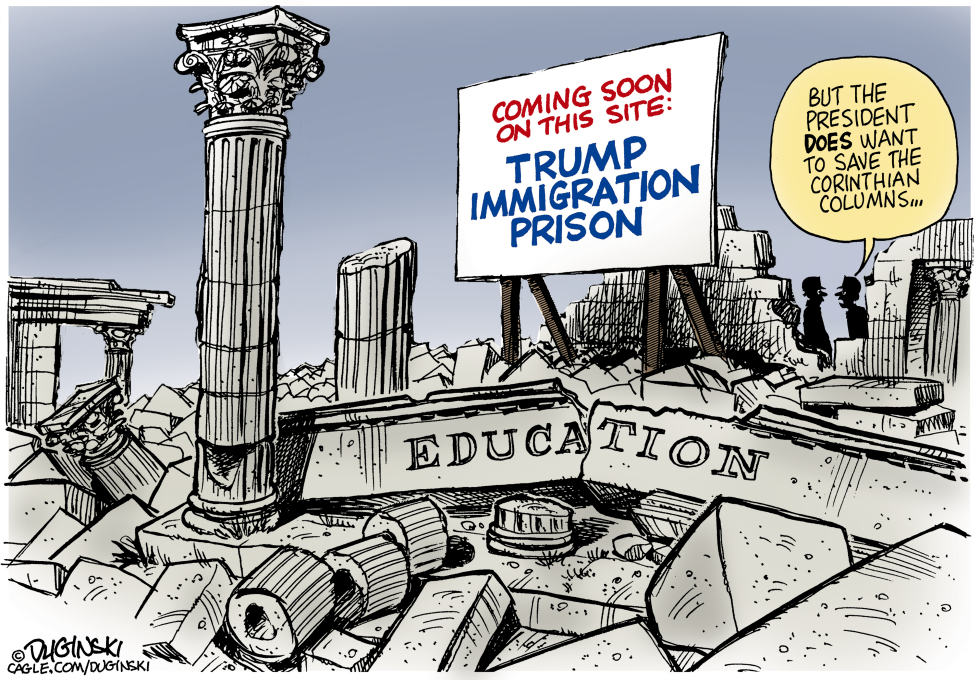
The Trump administration has moved to repurpose a site previously tied to education programs for a new immigration detention facility. The shift reflects ongoing policy emphasis on border enforcement over domestic education support. The piece argues that selective preservation of symbolic elements masks broader institutional damage.
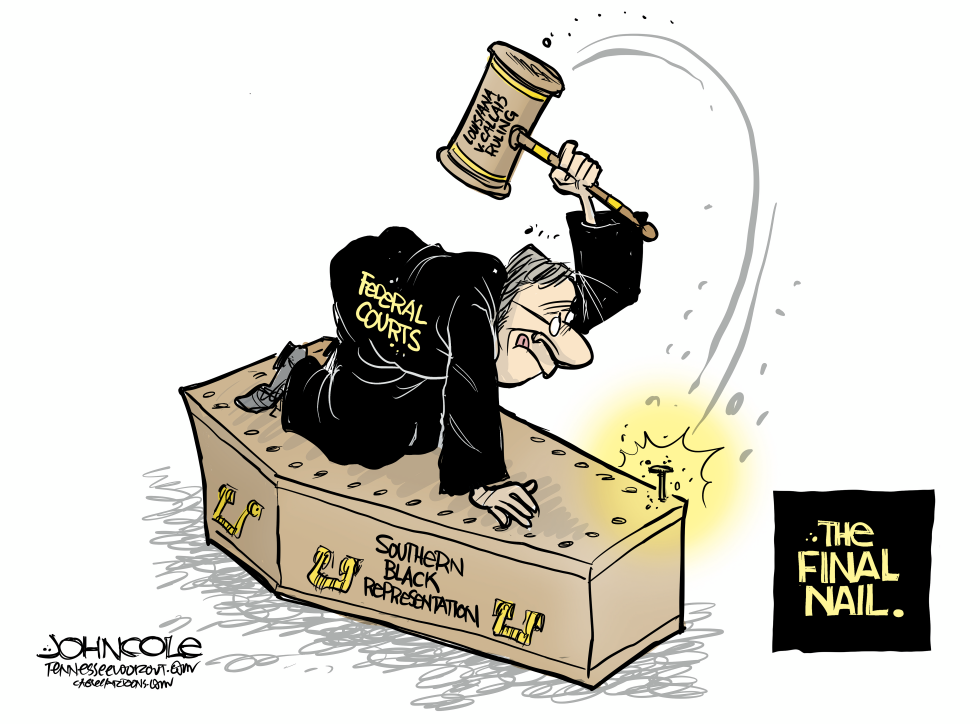
A federal court ruling on Louisiana redistricting has reduced black congressional representation across southern states. The decision follows ongoing litigation over district maps and voting access. It matters because it alters the number of majority-minority seats available in Congress. The piece argues the ruling delivers a decisive setback to those representation gains.
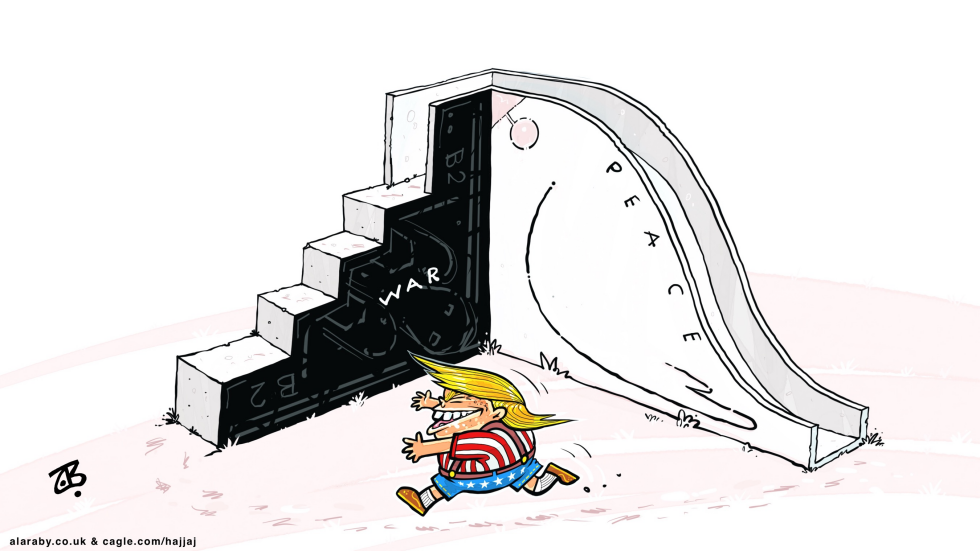
Donald Trump, holding the presidency on the August 2026 publication date, faces renewed questions over military commitments abroad. Recent developments in defense policy have highlighted tensions between continued operations and diplomatic overtures. The piece responds to this dynamic by depicting the president moving away from a war-associated structure toward a peace option. It frames the shift as an abrupt retreat from prior positions rather than a deliberate policy choice. The editorial stance criticizes the move as inconsistent and driven by political expediency instead of strategic consistency.
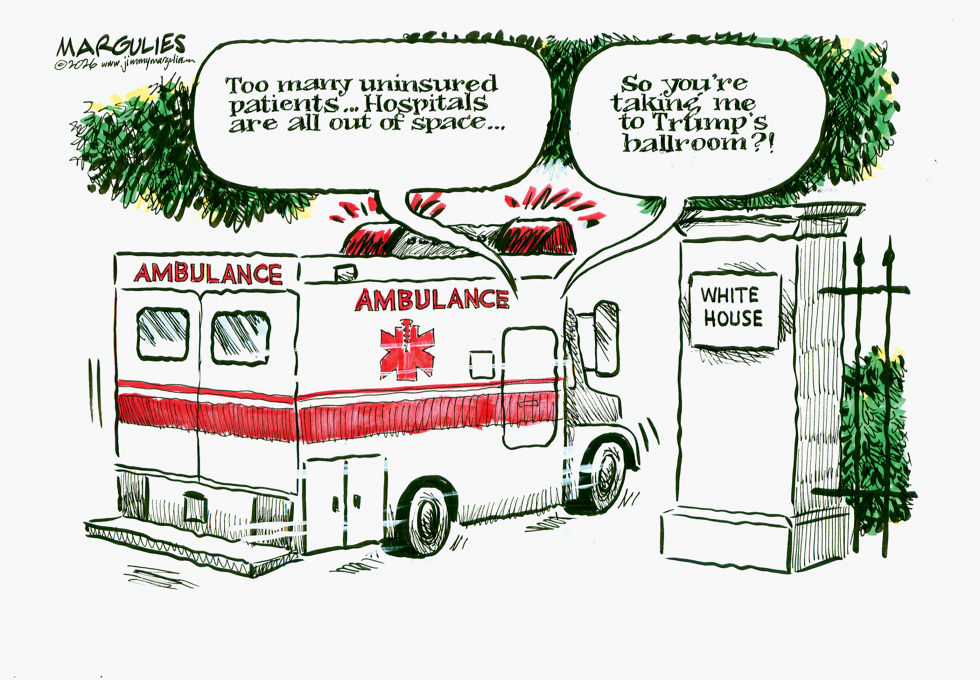
Hospitals across the country report severe overcrowding driven by rising numbers of uninsured patients seeking emergency care. The situation has prompted unusual measures, including the diversion of ambulances. In this context the cartoon depicts an ambulance being directed toward the White House ballroom associated with President Trump. The piece criticizes the administration's handling of the healthcare access problem by highlighting the contrast between medical need and the use of presidential property.
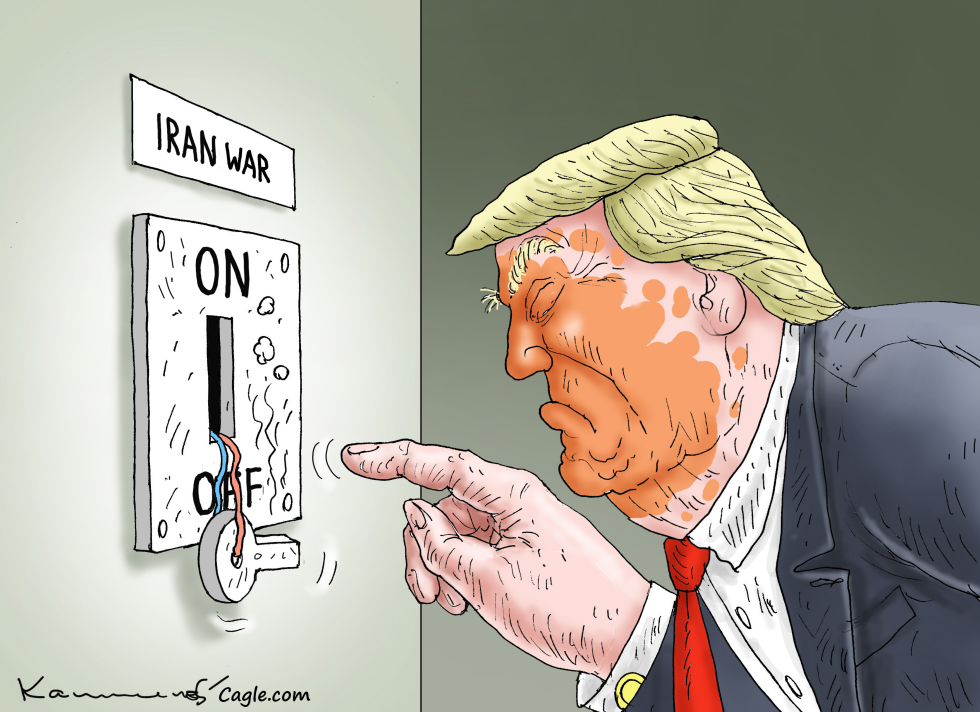
On August 2, 2026, former President Donald Trump is shown reaching to flip a switch labeled Iran War from off to on. The image responds to ongoing tensions with Iran and questions about U.S. military involvement in the Middle East. The piece argues that Trump is eager to initiate or escalate conflict despite the high stakes for regional stability and American interests.
Donald Trump has signaled readiness to initiate military action against Iran as tensions in the Middle East persist. The decision carries significant implications for regional stability and U.S. foreign policy commitments. The piece portrays this choice as a reckless and avoidable step toward unnecessary conflict.