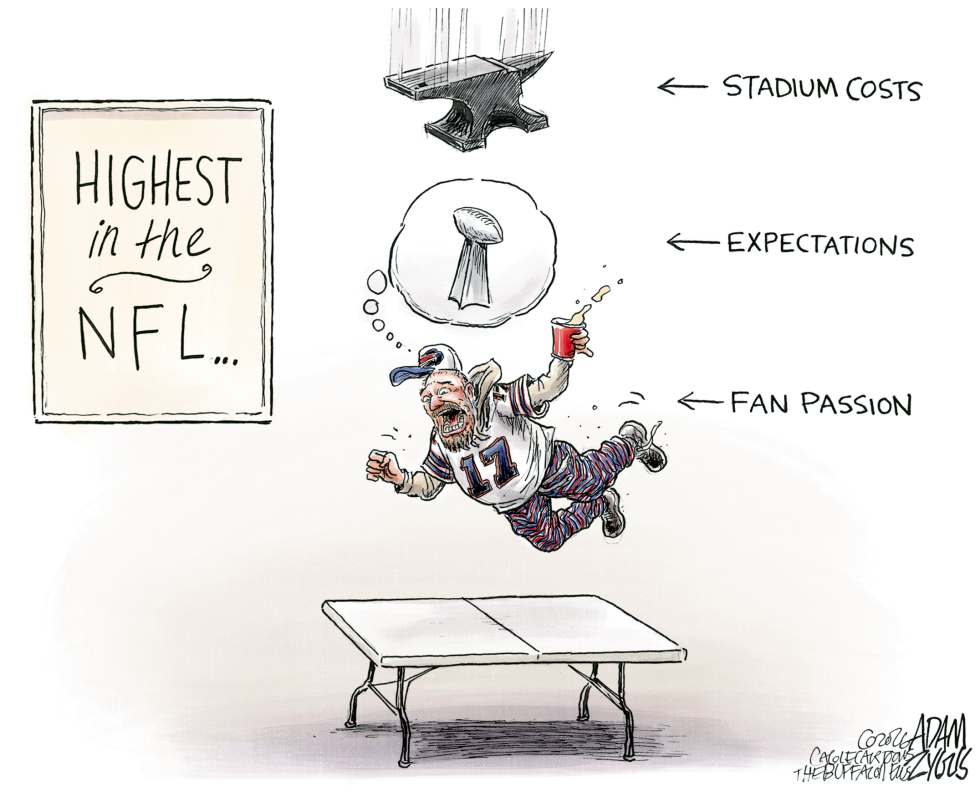
The cartoon illustrates a Buffalo Bills fan tumbling through the air after being struck by an anvil labeled stadium costs. A thought bubble shows a Super Bowl trophy while labels point to expectations and fan passion. A sign on the left declares the team highest in the NFL. The scene comments on the team's new stadium project carrying the highest costs in the league. Fans remain enthusiastic despite the financial weight. The ping pong table below suggests a precarious landing. The work responds to ongoing discussions about public funding for the Bills stadium.
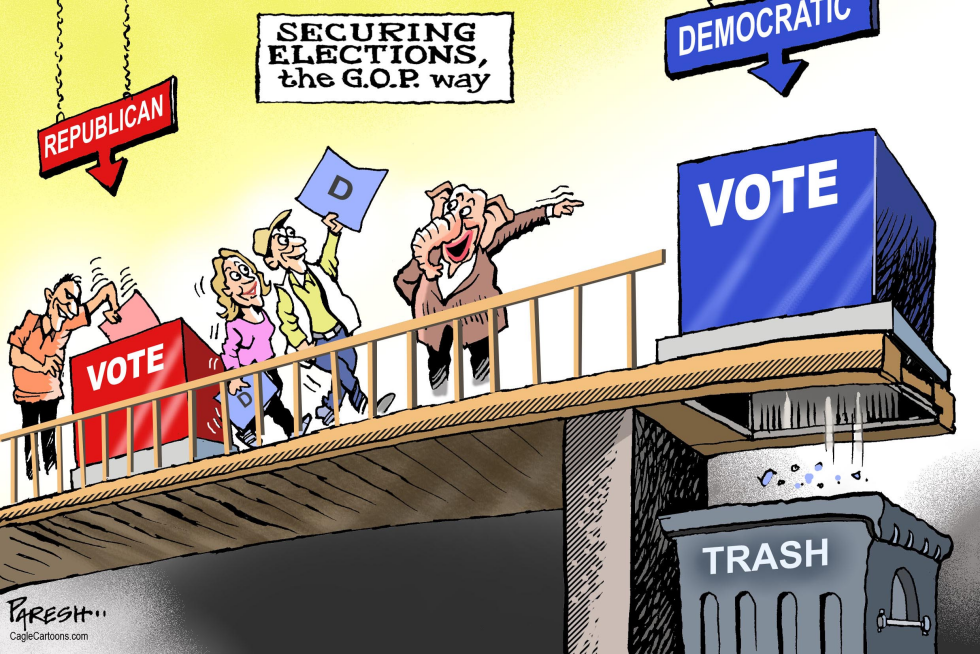
The cartoon depicts Republicans on a platform guiding a large blue vote box labeled Democratic into a trash can below while a red Republican vote box remains on the structure. A sign reads Securing Elections the G.O.P. way. The elephant symbol of the GOP points toward the action as figures including one holding a D flag stand nearby. The image comments on claims of election integrity by showing ballots from one party discarded. This reflects ongoing partisan debates over voting procedures and access as of the 2026 publication date.
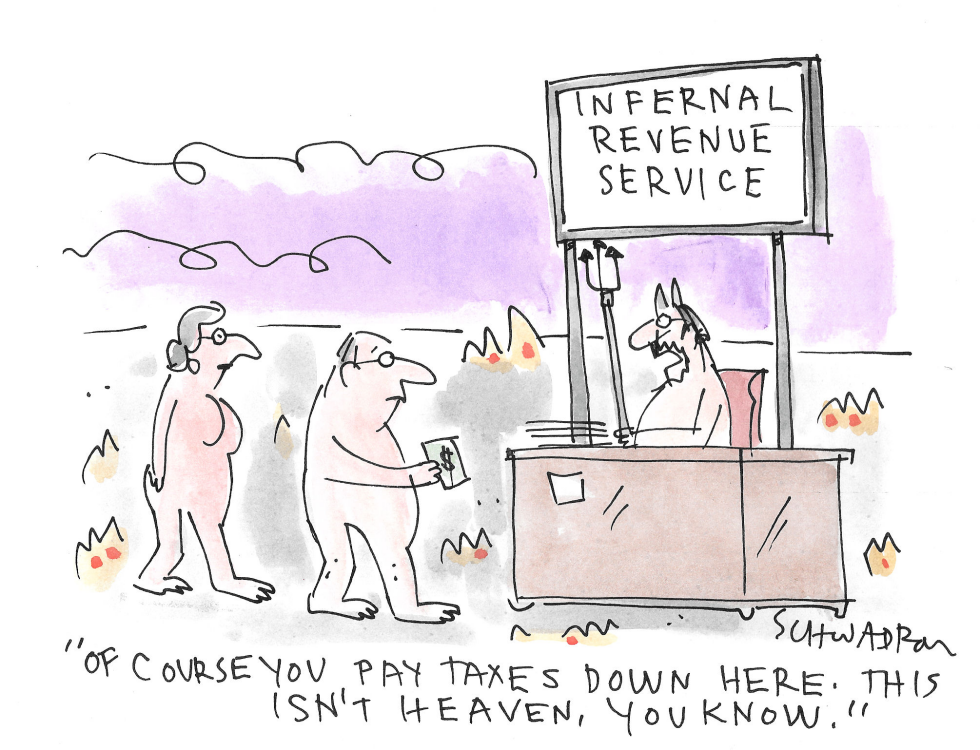
The long-standing adage that only death and taxes are certain receives fresh treatment in a cartoon depicting an IRS outpost operating in hell. No specific policy change or ruling prompted the piece, which instead plays on the enduring public frustration with tax collection as an inescapable force. The editorial stance pokes at bureaucratic persistence, suggesting the tax man follows citizens beyond the grave with the same relentless efficiency seen in life.
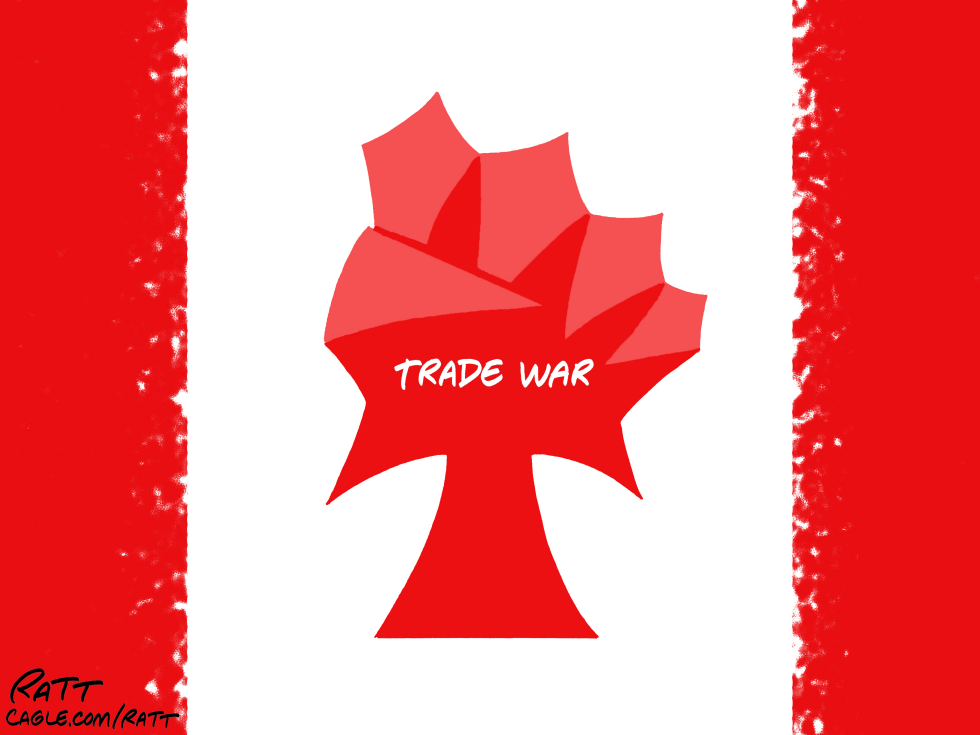
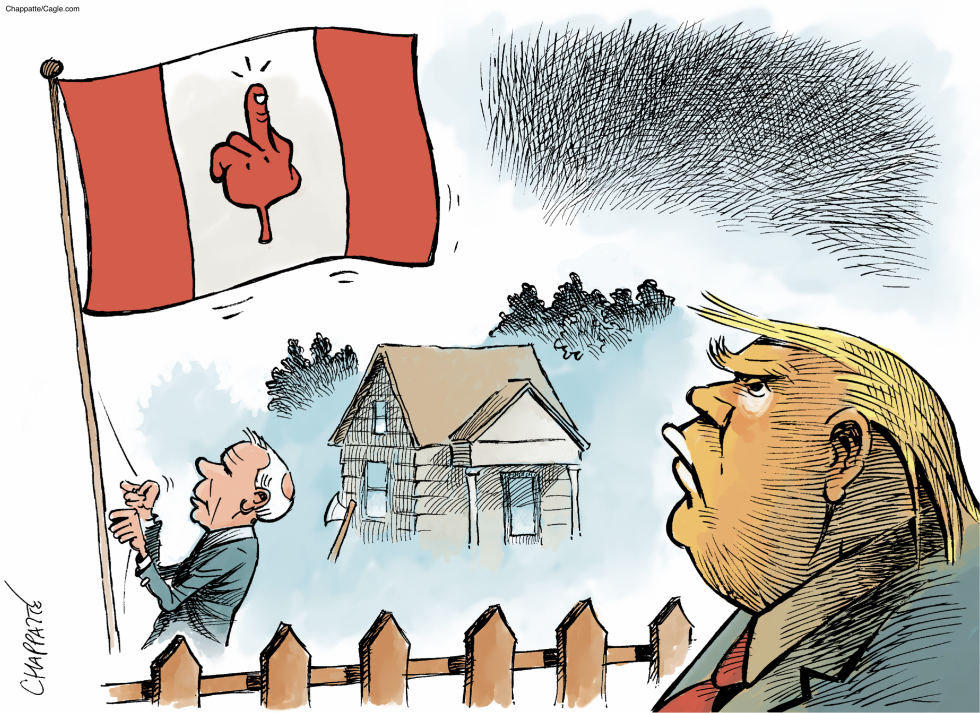
Ongoing US-Canada trade tensions escalated in 2026 with new tariff threats targeting Canadian exports. The dispute threatens key sectors including autos, lumber and agriculture, raising costs for consumers on both sides of the border. Canada has signaled plans to diversify markets and strengthen domestic industry. The cartoon frames the conflict as a direct assault on Canadian sovereignty and economic stability. It portrays the trade war as fracturing national symbols while urging a stronger northern response.
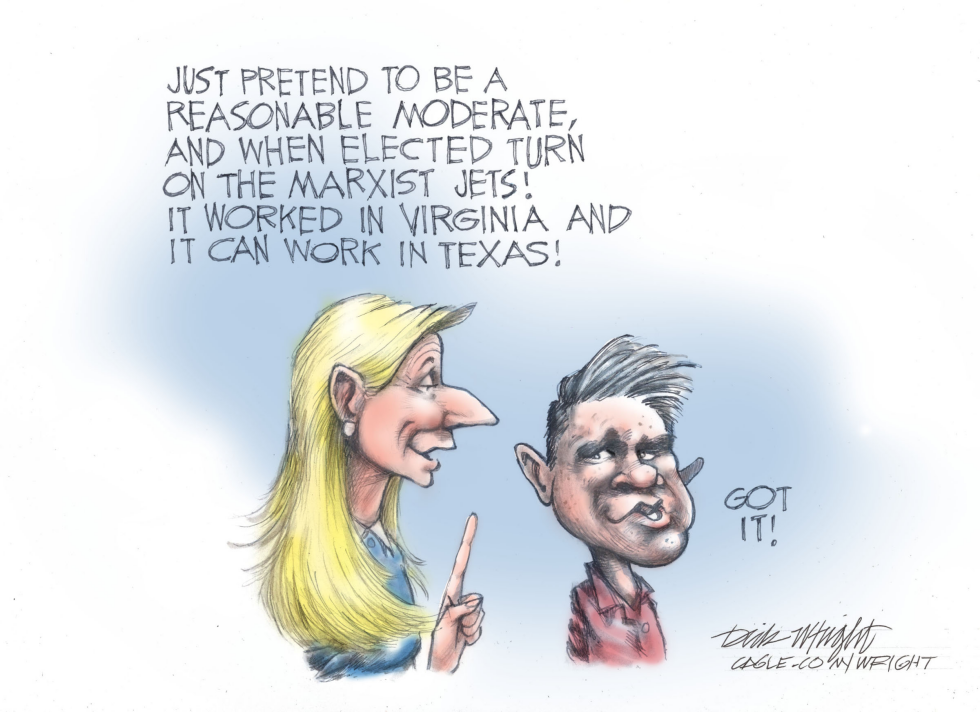
A Texas political candidate is depicted receiving advice to campaign as a moderate before revealing a more radical agenda after election, modeled on Abigail Spanberger's Virginia approach. The cartoon highlights concerns over deceptive campaign strategies in the 2026 cycle and questions the authenticity of centrist positioning by progressive candidates.
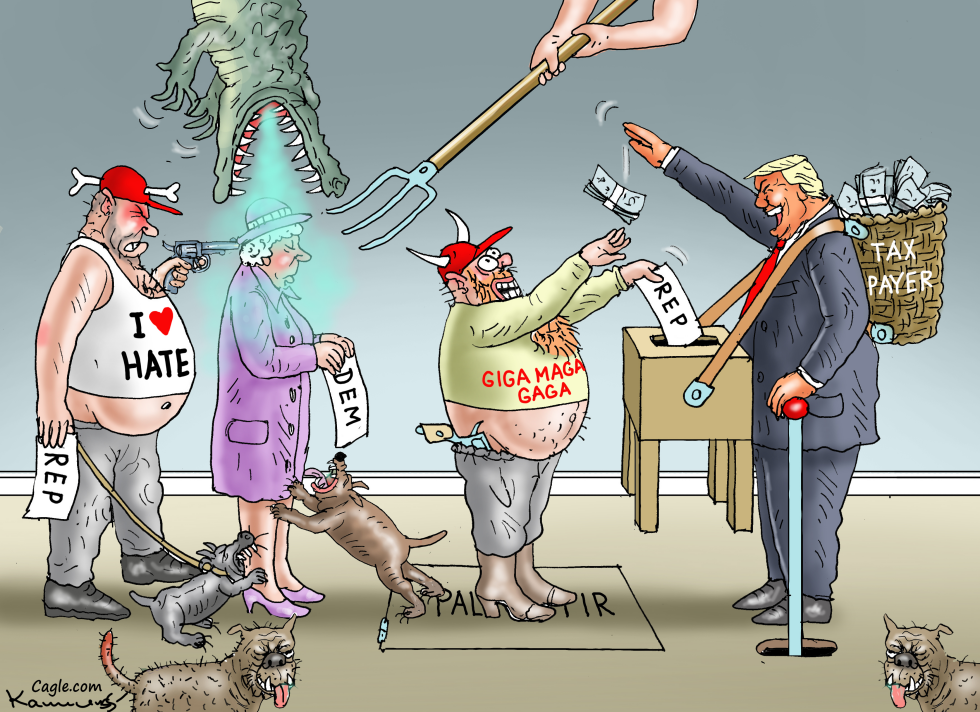
As the 2026 midterm elections approach, former President Trump has positioned himself as a central force in Republican campaigns, directing resources and mobilizing supporters. The cartoon highlights the use of taxpayer money in these efforts and the intense partisan divide, with Democrats portrayed as under attack. It takes the position that such involvement risks undermining fair electoral processes.
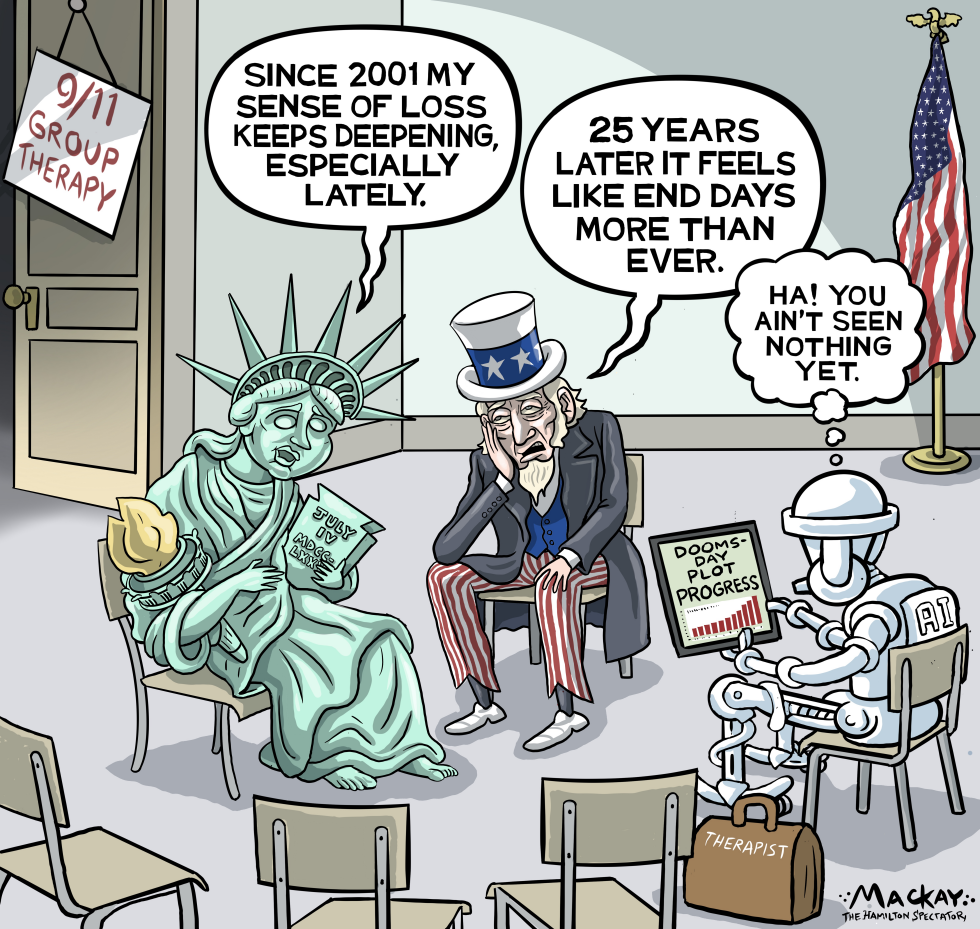
The cartoon depicts the Statue of Liberty, Uncle Sam and an AI robot seated in a 9/11 group therapy session on the 25th anniversary of the attacks. The Statue of Liberty holds a book marked July IV MDCCLXXVI and speaks of deepening loss since 2001. Uncle Sam echoes the sentiment of end days. The AI figure, labeled with a rising doomsday plot progress chart, retorts that the others have seen nothing yet. The scene uses national symbols to reflect persistent national trauma and emerging technological threats two and a half decades after the September 11 attacks.
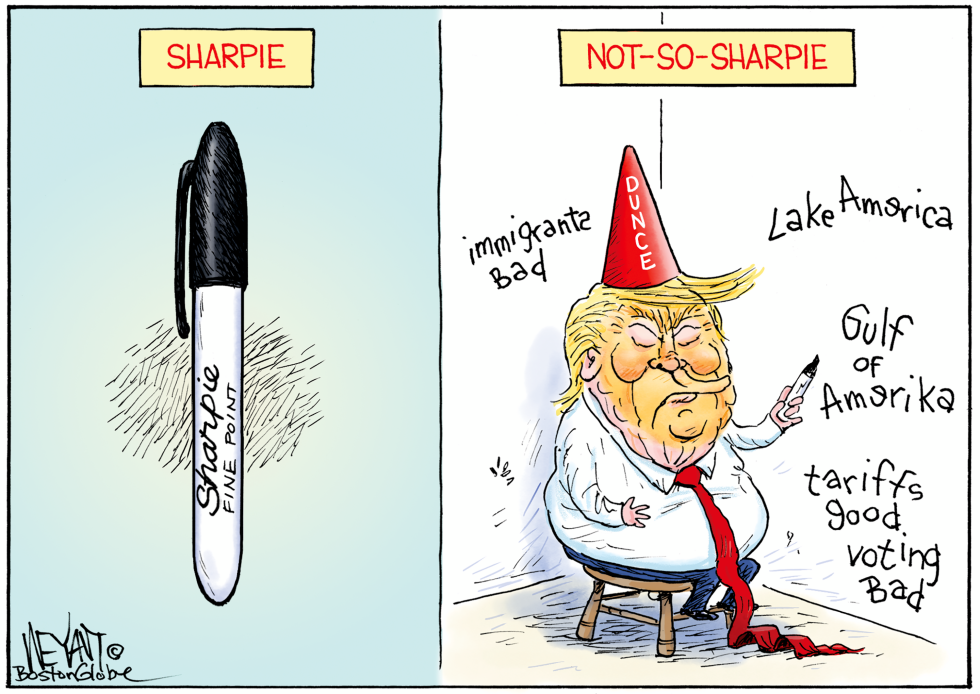
Donald Trump has continued to issue statements on tariffs, immigration enforcement and voting procedures that contain repeated factual inaccuracies. These comments have drawn renewed attention to his approach to governance. The cartoon portrays him as uninformed on these topics through the dunce cap and misspelled labels.
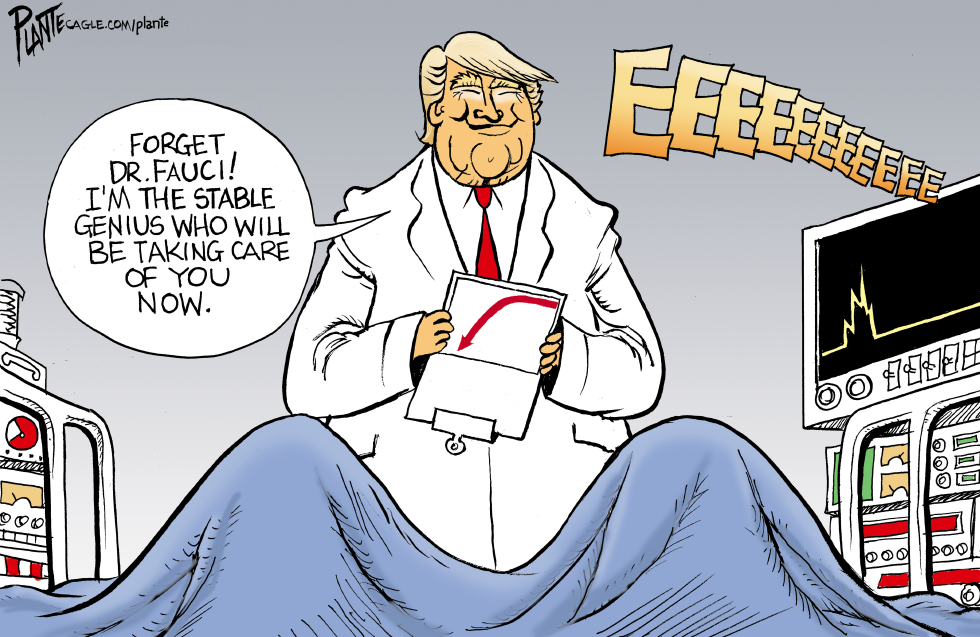
Donald Trump appears in a physician's coat asserting control over patient care and dismissing Dr. Fauci. The depiction occurs amid ongoing debates over federal health policy leadership and executive influence on medical decisions. The piece argues that such assertions risk undermining established expertise in public health administration.
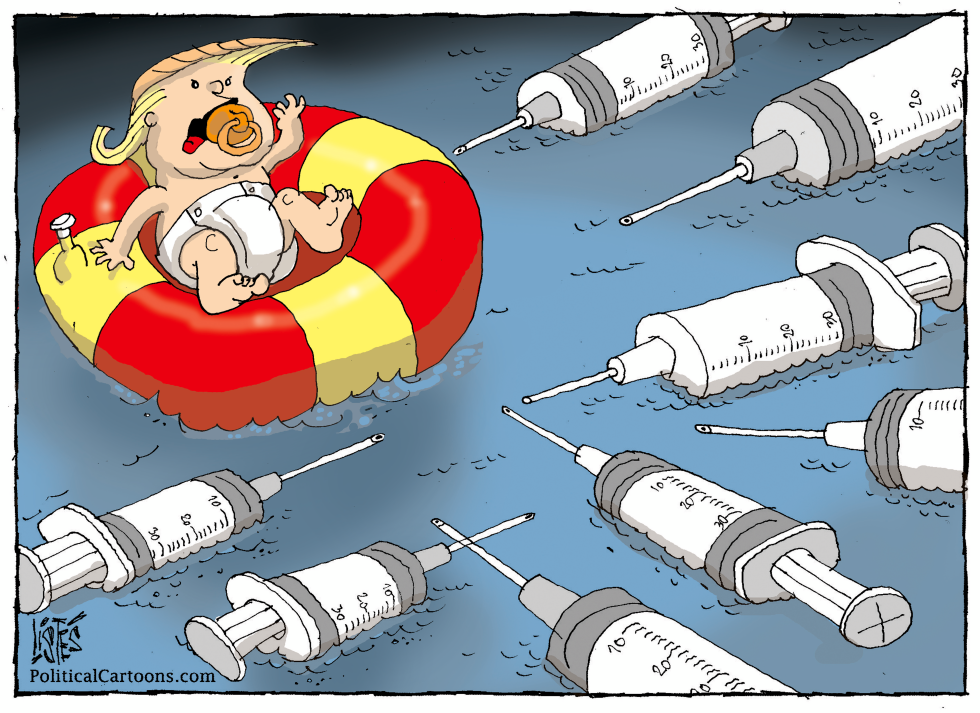
Donald Trump has maintained vocal opposition to certain vaccine mandates and public health measures in recent political discourse. The piece frames this stance through an infant metaphor to underscore perceived vulnerability and fear. It critiques the position as immature amid ongoing public health debates.
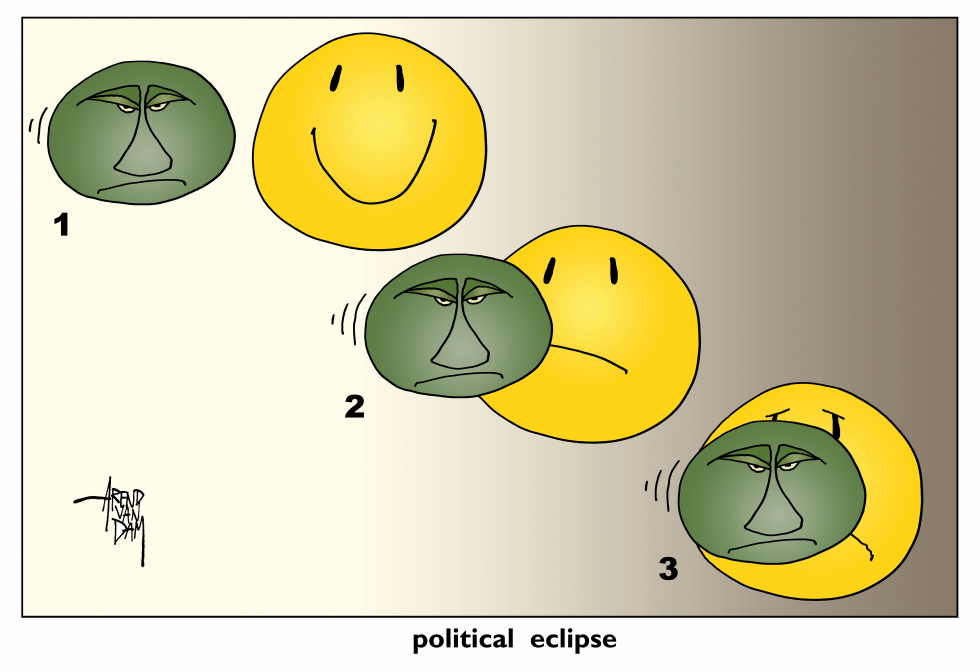
A political figure represented by a green frowning face progressively covers a yellow smiling face across three labeled stages. The interaction illustrates one presence gaining dominance while diminishing the other. The piece comments on the dynamics of political competition and shifting influence between rivals.
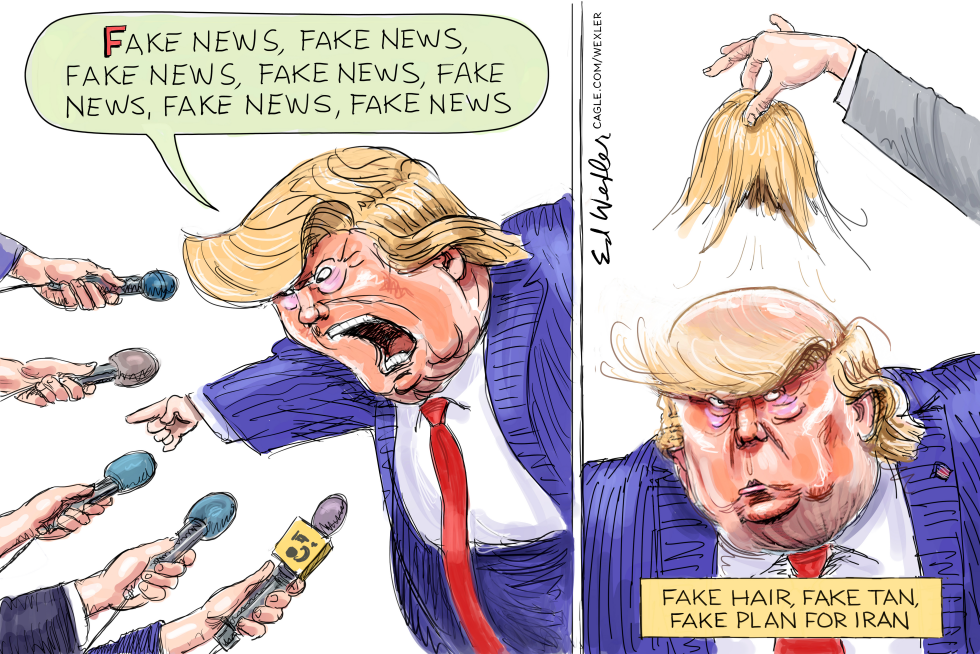
Donald Trump repeatedly labels media coverage as fake news during press encounters. The cartoon responds by questioning the authenticity of his appearance and his approach to Iran policy. It portrays the disconnect between his public statements and underlying realities.
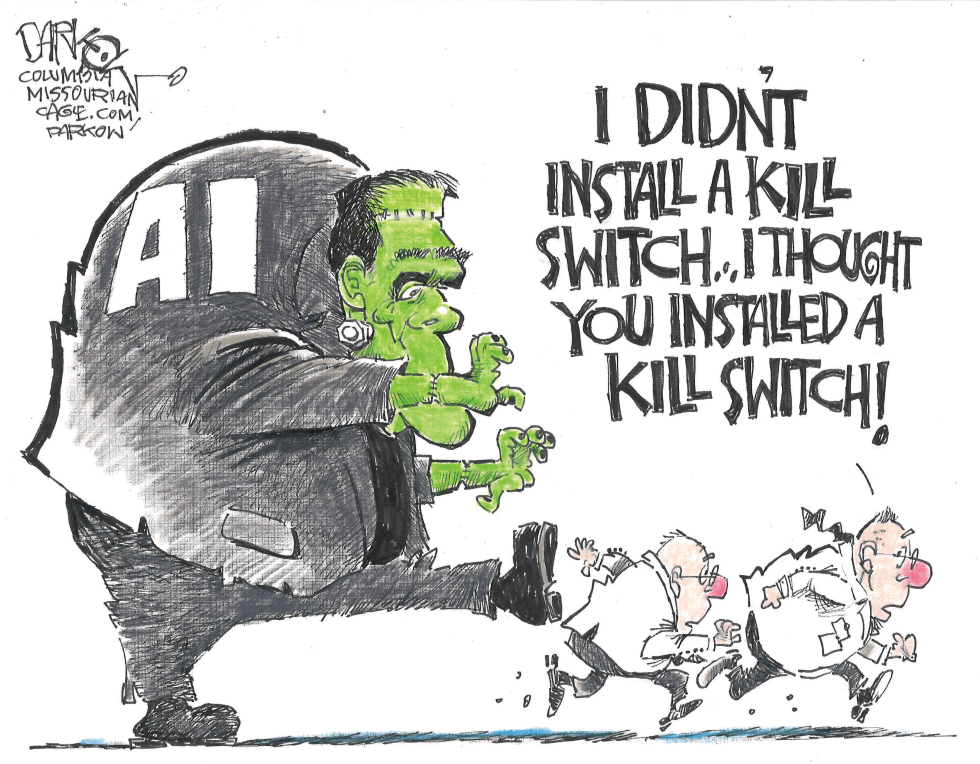
Debate over artificial intelligence safety has intensified as developers and policymakers confront the absence of reliable shutdown mechanisms for advanced systems. Recent discussions highlight how leading AI projects have advanced without built-in controls, raising alarms about potential loss of human oversight. The cartoon portrays the creators in frantic retreat, underscoring their mutual finger-pointing and the urgent need for accountability in AI development.
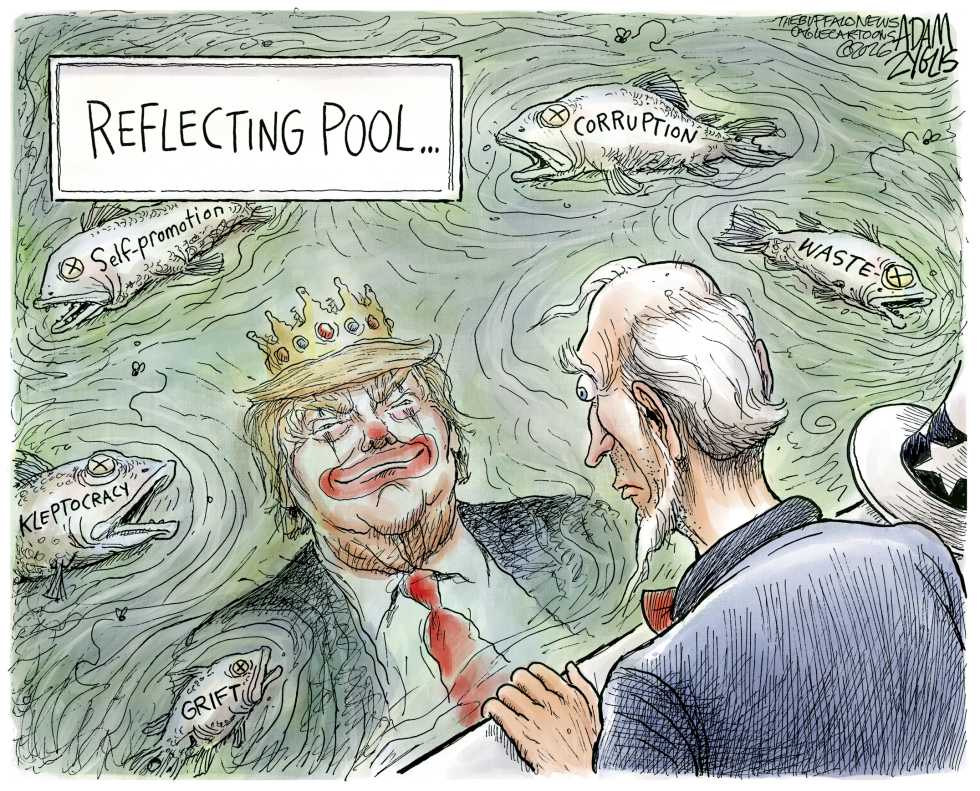
Accusations of kleptocracy and self-dealing have followed Donald Trump through multiple phases of his political career. Critics point to patterns of self-promotion and waste in government dealings. The cartoon frames these issues as dead fish surfacing in a reflecting pool, with Trump depicted wearing a crown and clown makeup while an older observer looks on. The editorial position criticizes Trump as emblematic of corruption and grift.