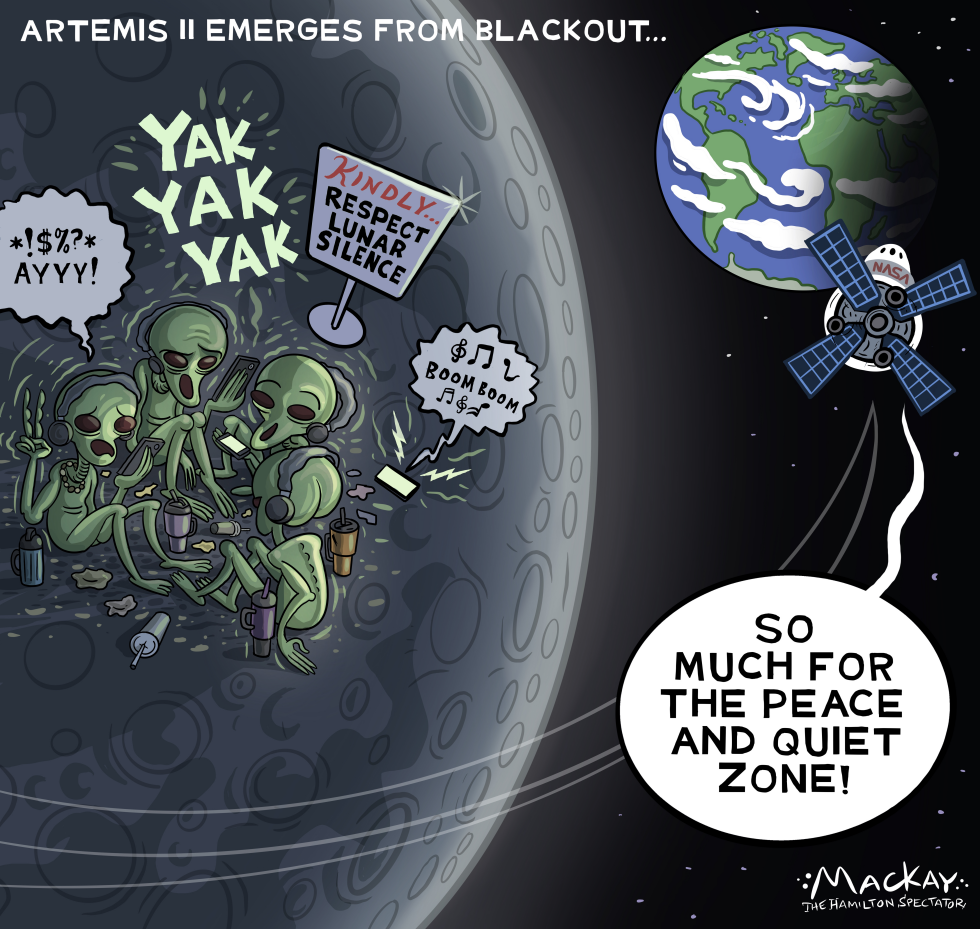
Graeme MacKay's cartoon shows a group of green aliens on the moon, clearly annoyed by the approaching NASA Artemis II spacecraft emerging from blackout. The aliens, depicted with headphones, phones, and drinks, make noisy exclamations like 'Yak Yak Yak' and music notes, while a sign pleads 'Kindly Respect Lunar Silence.' One alien laments, 'So much for the peace and quiet zone!' against the backdrop of Earth. This piece satirizes space exploration's impact on supposed lunar solitude, touching on tags like Artemis, moon, NASA, aliens, quiet zone, and communication. The far side setting emphasizes the interruption of silence by human astronauts.
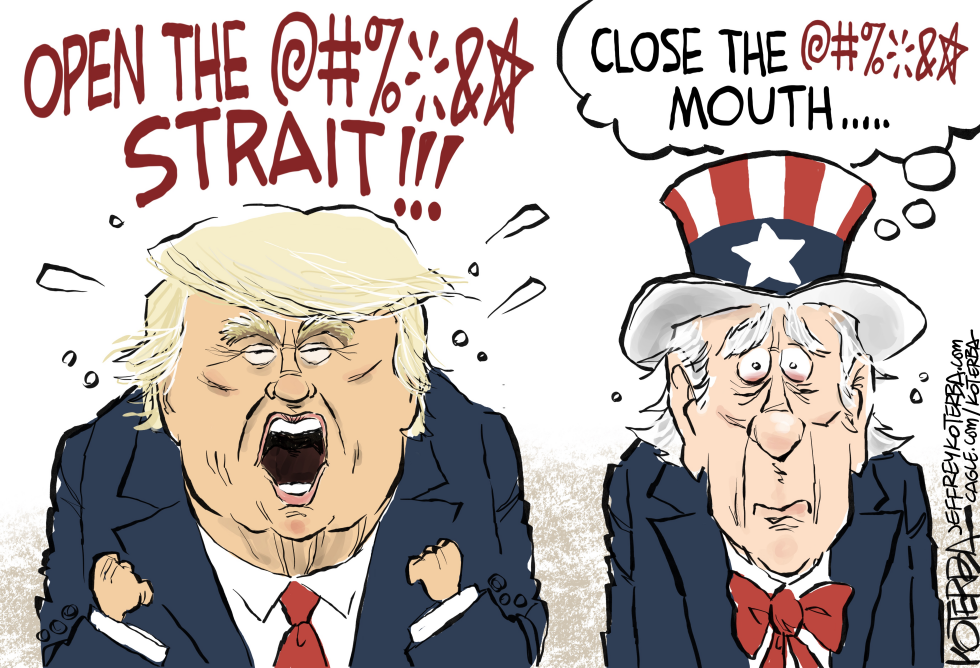
Donald Trump appears on the left side shouting for the Strait of Hormuz to open amid censored profanity. On the right Uncle Sam in stars and stripes hat replies via thought bubble to close the mouth. The April 2026 image contrasts the two figures in dark suits with contrasting expressions and gestures.
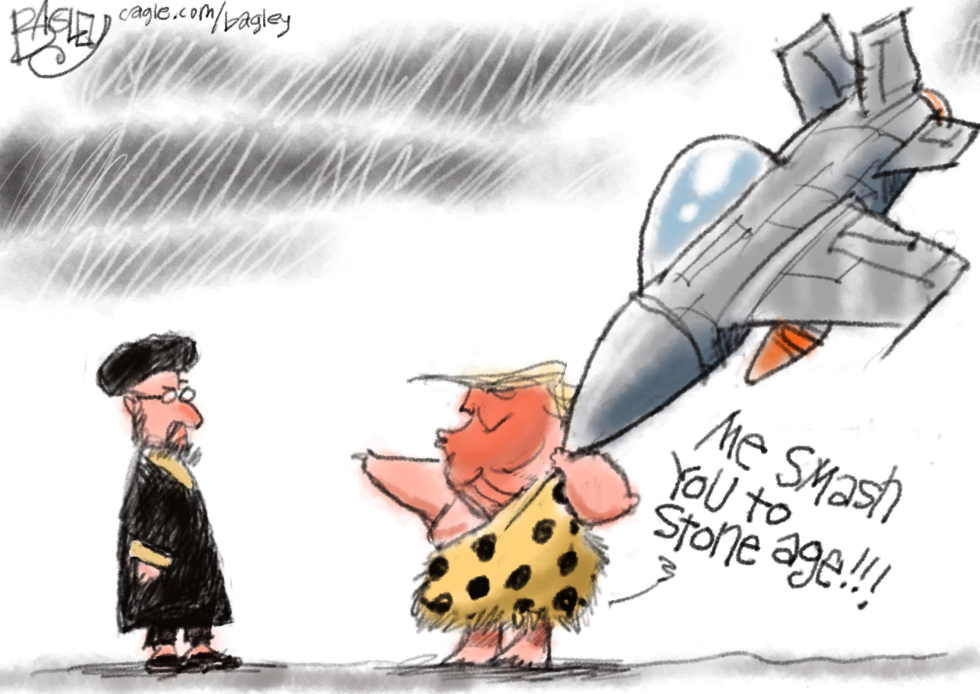
Pat Bagley's cartoon captures Trump as a caveman in a spotted tunic, gripping a fighter jet like a club, his face red with anger as he shouts 'Me Smash You to Stome age!!!' at a stern-faced man in black robes, beard, glasses, and hat under stormy skies. The scene underscores Trump threats, political satire, caveman caricature, fighter jet weapon, judge figure, and primitive aggression in a straightforward jab at regressive tactics. Editors see these kinds of drawings often, where exaggeration drives the point home without subtlety, making it shareable for those tracking US politics Trump style. The dry humor lies in the absurdity of modern weaponry in prehistoric hands, a classic cartoon trope that lands with insider familiarity.
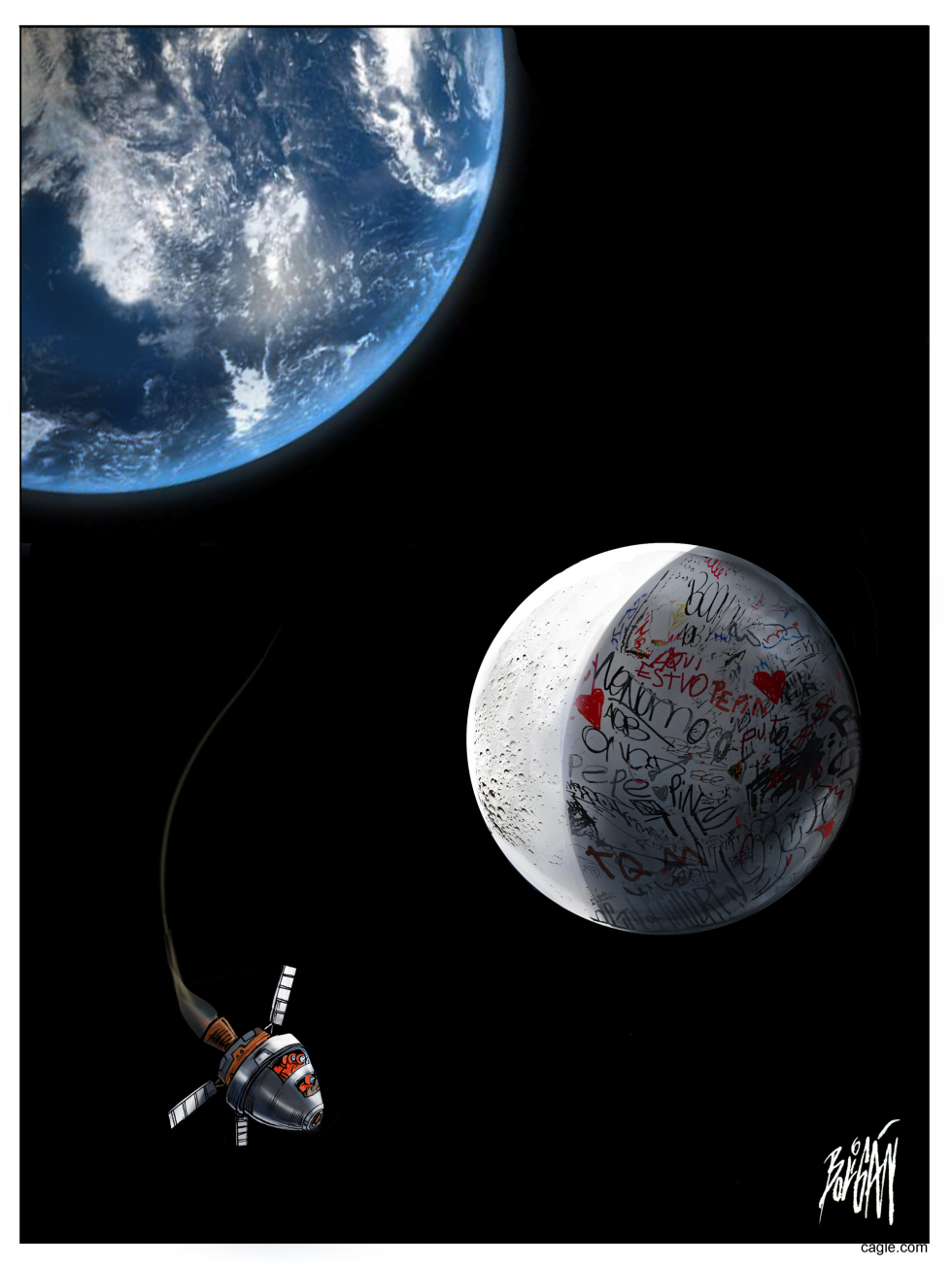
The image shows a spacecraft approaching the moon, whose near side displays extensive graffiti including words like bully and amor alongside hearts and scribbles. Earth is visible in the upper left against black space. The scene references ongoing lunar missions such as Artemis and Orion under NASA. The date of April 3 2026 places the work amid continued space exploration efforts. The visual highlights the contrast between pristine celestial bodies and terrestrial markings.
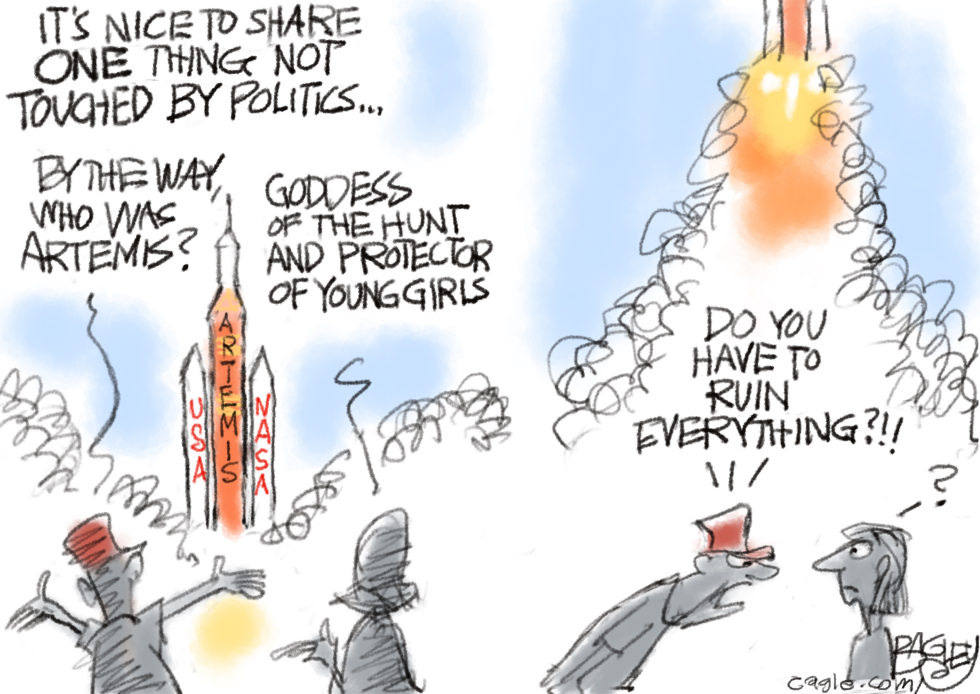
This political cartoon features a launching rocket labeled Artemis, SLS, NASA, and USA, with overlaid text praising one thing untouched by politics before asking about the goddess Artemis, described as goddess of the hunt and protector of young girls. A figure exclaims frustration at ruining everything, satirizing how even space missions get dragged into cultural debates. The irreverent sketch uses humorous figures with red hats to poke at over-politicization in science, blending mythology with modern rocketry in a witty critique. Tags like Artemis rocket launch political cartoon, NASA SLS Artemis mission satire, and politics invading science editorial cartoon underscore the cartoon's sharp insight into societal divisions spilling into apolitical realms like space exploration politicized cartoon.
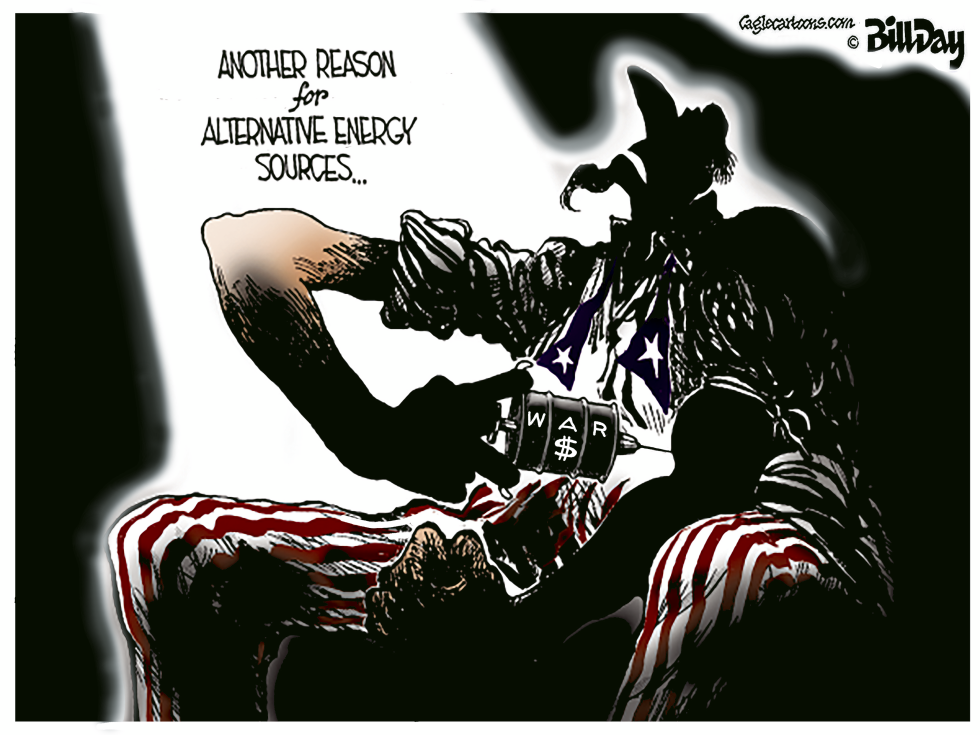
Bill Day's cartoon shows a figure in red-and-white stripes, resembling national colors, self-injecting a syringe marked 'WAR' and '$', with text pleading for alternative energy sources. The dark, shadowy style underscores the grim addiction to oil, tying into tags like war, oil prices, Gulf of Hormuz, global warming, climate change, and addiction. This visual metaphor pushes for wind energy and solar panels as escapes from the cycle of dependency that leads to conflict and environmental harm. The composition is stark, with the arm and syringe dominating, emphasizing the self-destructive habit amid calls for renewable shifts.
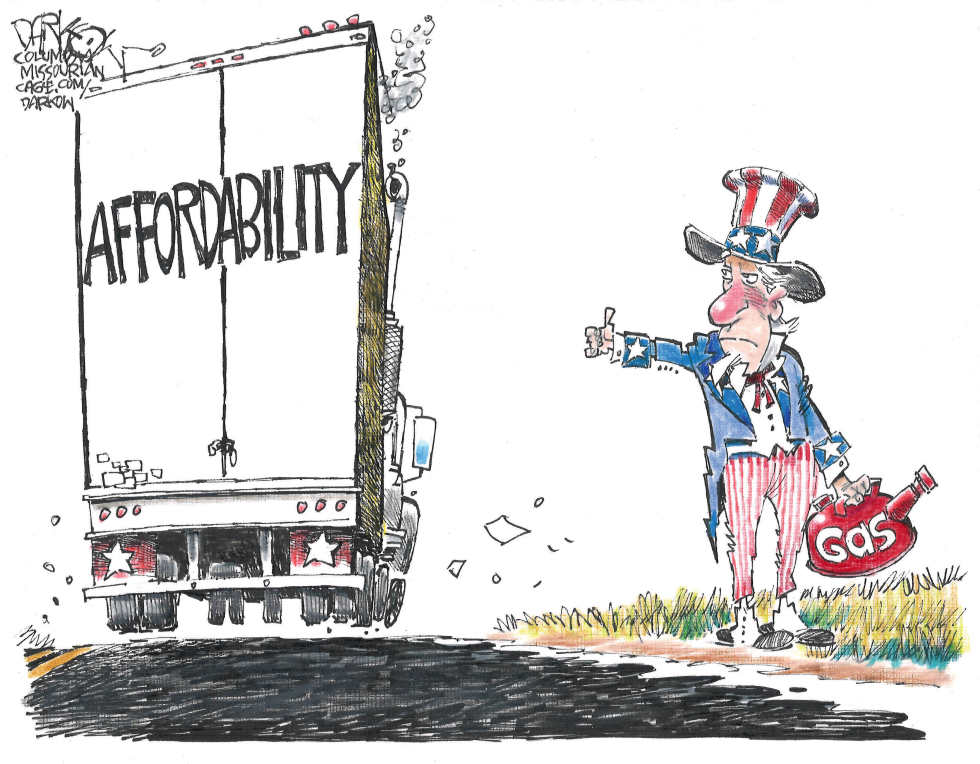
In this John Darkow cartoon, Uncle Sam stands on a roadside, thumb extended in a hitchhiking gesture, clutching a red gas can labeled 'Gas,' while a massive truck labeled 'AFFORDABILITY' barrels away, leaving exhaust and debris in its wake. The image captures the essence of the affordability crisis, with Uncle Sam personifying American struggles amid rising gas prices. Tags like affordability, gas prices, Iran war, Uncle Sam, and tariffs underscore the economic satire. The grassy roadside and spilled liquid add to the scene of abandonment. This visual commentary highlights how tariffs and potential conflicts like an Iran war could exacerbate fuel costs, leaving everyday affordability out of reach. The cartoon's composition emphasizes isolation, with Uncle Sam's frustrated expression plainly visible against the departing vehicle.
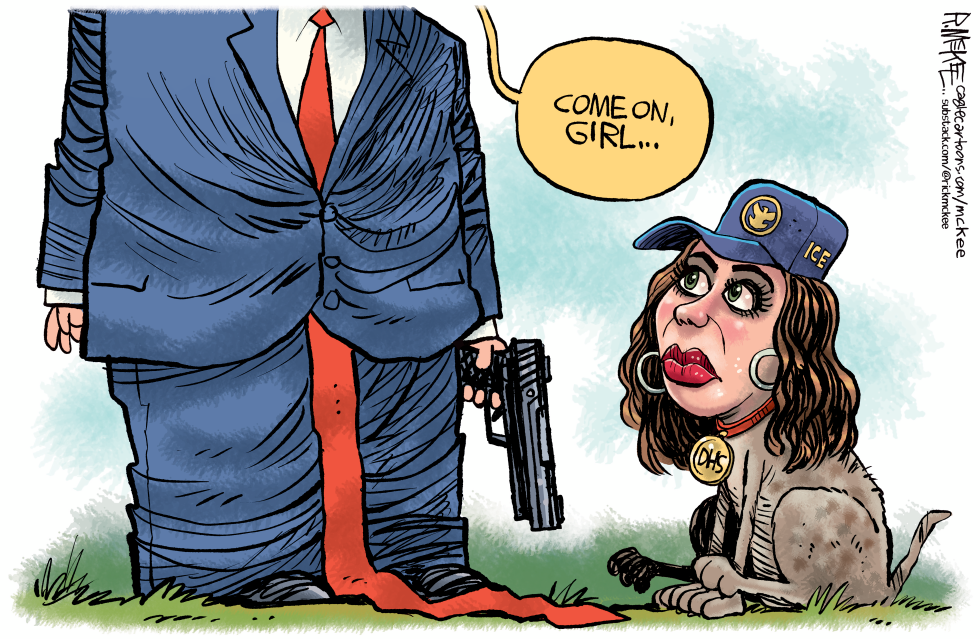
This political cartoon features Donald Trump coaxing a dog-like figure with Alexandria Ocasio-Cortez's face, donned in an ICE cap and DHS tag, gripping a gun on a leash— a sharp satire on immigration enforcement and border control. The image lampoons the Trump administration's hardline stance on deportation and US politics, using caricature to underscore the dehumanizing aspects of border patrol. With elements of political humor, it critiques how figures like AOC are portrayed in opposition, blending viral meme potential with editorial cartoon flair. The scene evokes questions about power dynamics in immigration policy, making it a timely piece for discussions on satire and governance.
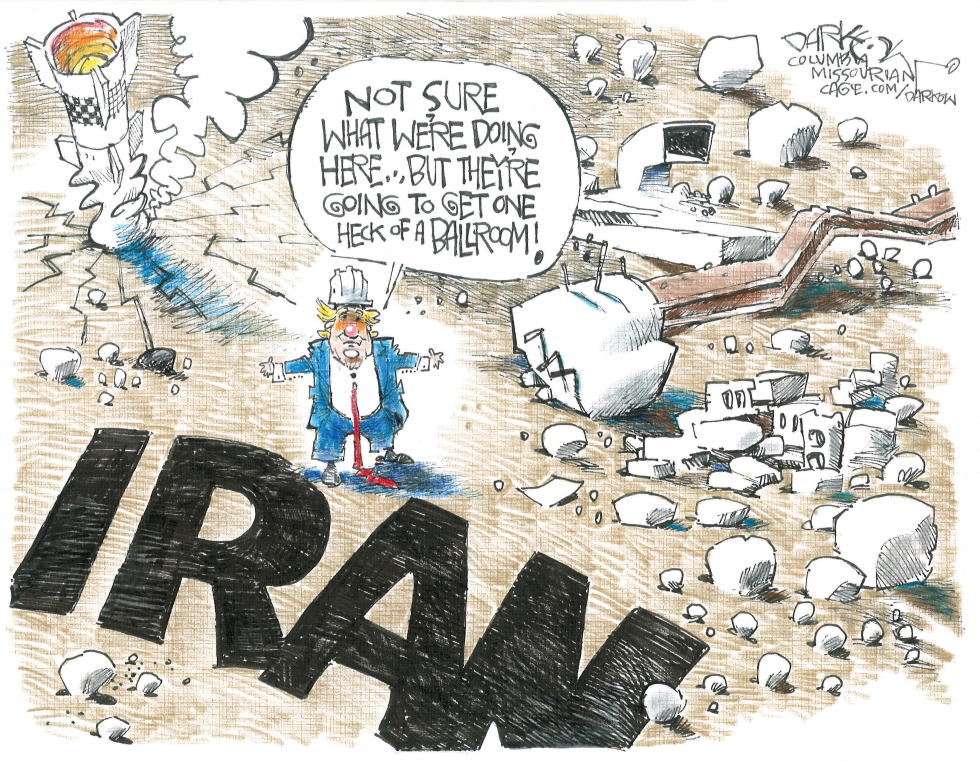
This biting political cartoon features a caricatured Donald Trump in a construction hard hat, overlooking a bombed-out landscape labeled 'IRAN,' with a missile launching in the background. His speech bubble confesses confusion over US actions but promises 'one heck of a ballroom,' a sly pun on Trump's real estate empire clashing with foreign policy blunders. Incorporating tags like political satire, Trump caricature, Iran nuclear program, US-Iran relations, geopolitical humor, and Trump hotel pun, the image mocks the haphazard withdrawal from the nuclear deal, suggesting it paves the way for Iran's nuclear ambitions while Trump envisions luxury redevelopment. The ruined buildings and debris emphasize the destructive fallout, blending humor with insightful critique on Middle East instability.
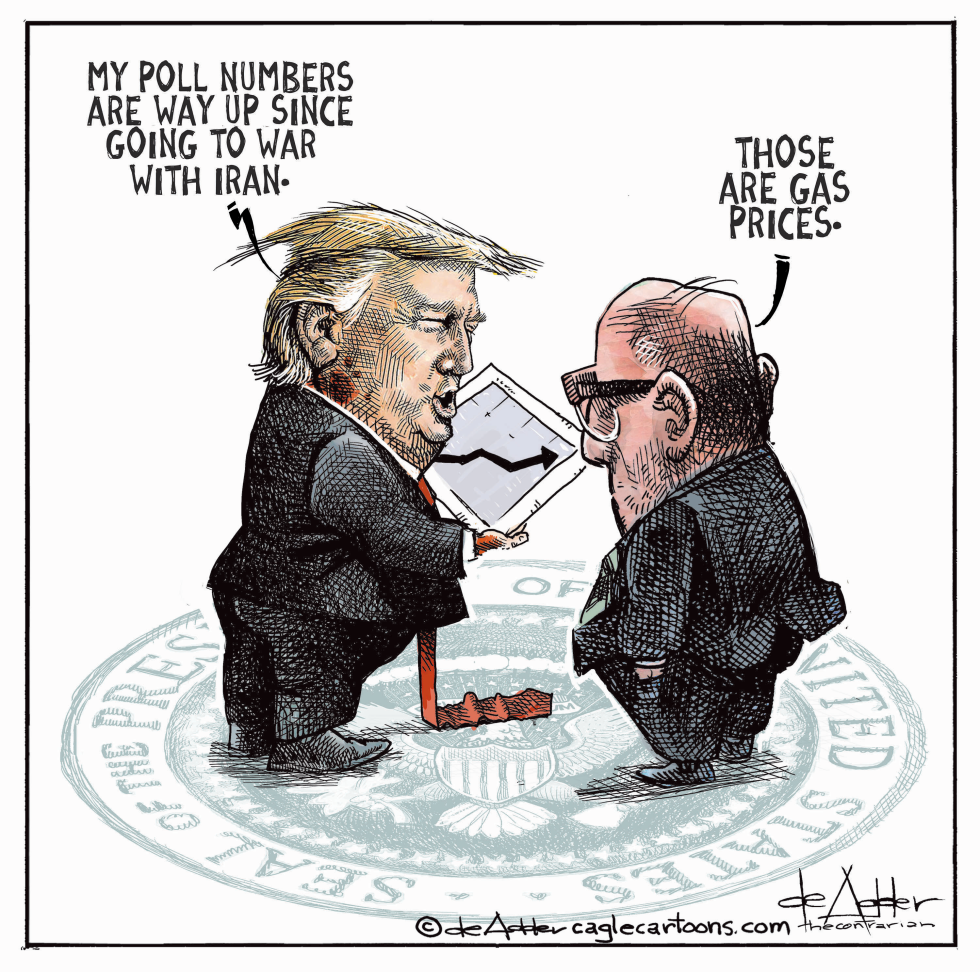
This sharp political cartoon by Michael de Adder captures Donald Trump triumphantly holding a chart of upward trends, claiming his poll numbers have skyrocketed since going to war with Iran. However, a bespectacled Dick Cheney corrects him, revealing those are actually gas prices soaring. The satire highlights the ironic consequences of Middle East conflict on the US economy, blending humor with commentary on presidential approval ratings tied to foreign policy blunders. Incorporating elements of US politics, oil prices, and war economy, the image stands on the presidential seal, emphasizing official folly. It's a witty jab at how leaders might misread economic fallout as personal gains, perfect for editorial discussions on satire and current events.
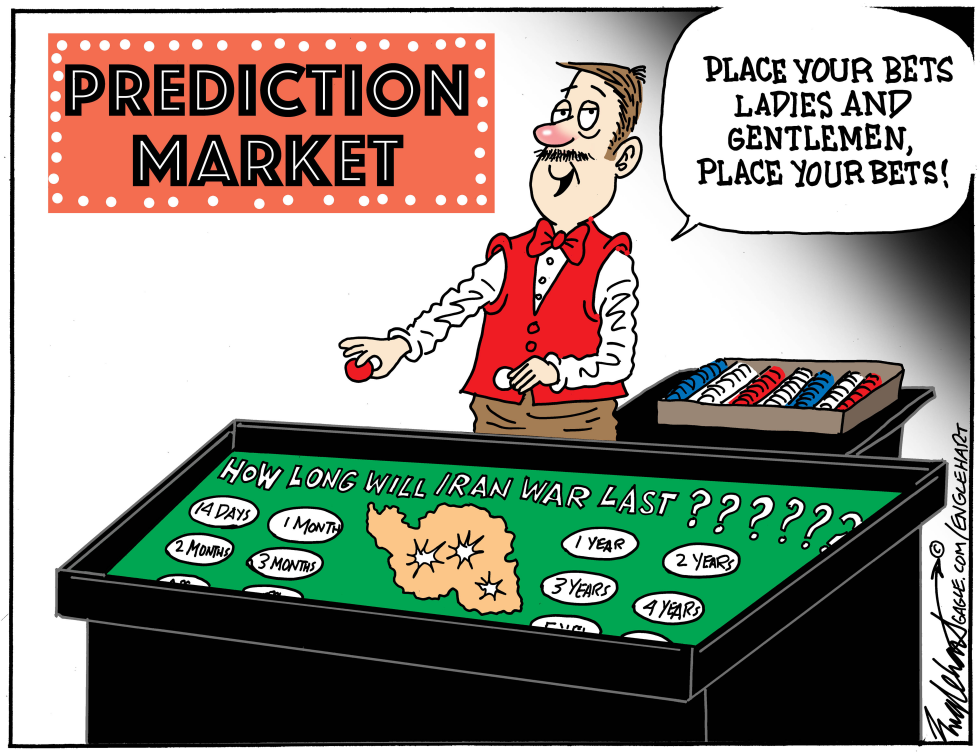
In a biting political cartoon, a smirking croupier oversees a prediction market table shaped like Iran, complete with explosion graphics, where punters can wager on war duration options ranging from 14 days to 5 years. This satirical take skewers the commodification of geopolitical betting, turning grave matters like Iran war into casino-style gambles. By blending elements of gambling on war with Middle East conflict, the artwork highlights the absurdity of prediction markets applied to real-world crises, offering humorous yet insightful commentary on how society speculates on political humor and potential catastrophes. The irreverent style underscores the folly of treating war length wager as just another market fluctuation.