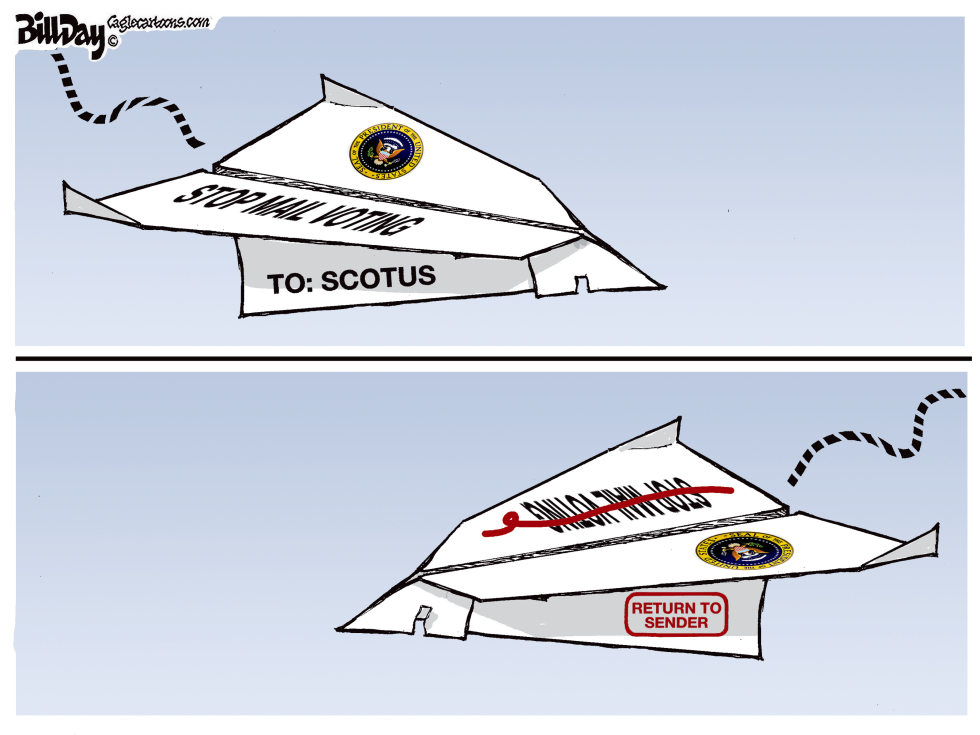
A presidential directive aimed at ending mail-in voting reached the Supreme Court but was promptly returned. The action underscores ongoing disputes over election procedures and access. The cartoon frames the effort as an unsuccessful attempt to restrict voting methods through judicial channels. It highlights institutional pushback against executive intervention in ballot processes. The piece takes the position that such restrictions lack support and are properly rebuffed.
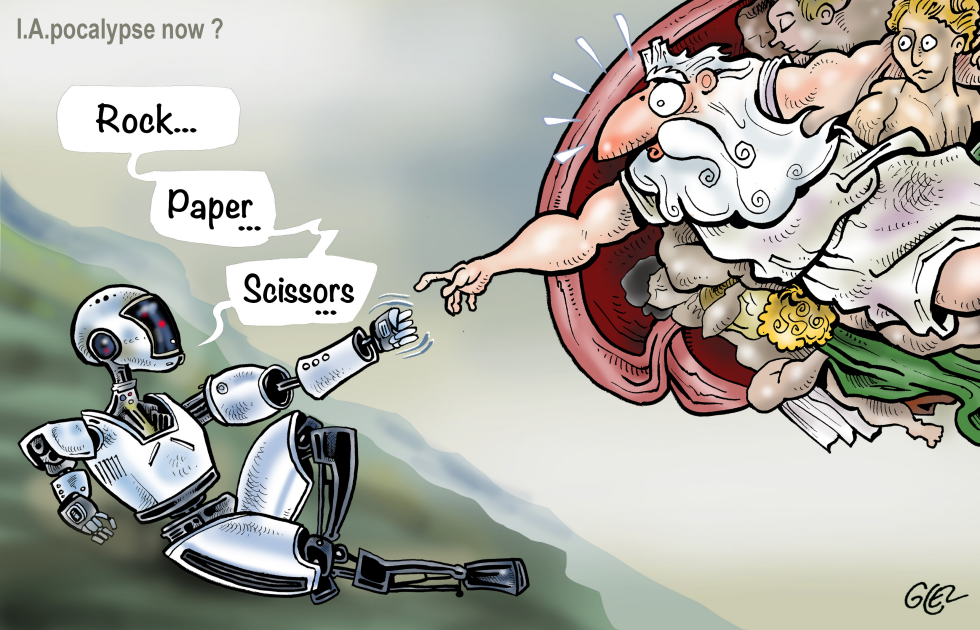
Rapid advances in artificial intelligence have intensified debates over whether machines could eventually surpass or supplant human notions of creation and control. Developers and ethicists warn that unchecked AI progress risks unintended consequences for society and long-held beliefs. The cartoon uses a familiar biblical image to frame these concerns as an existential contest. It positions AI as a direct challenger to divine order rather than a mere tool. The editorial stance highlights the hubris of treating technology as an equal or superior force to traditional sources of authority.
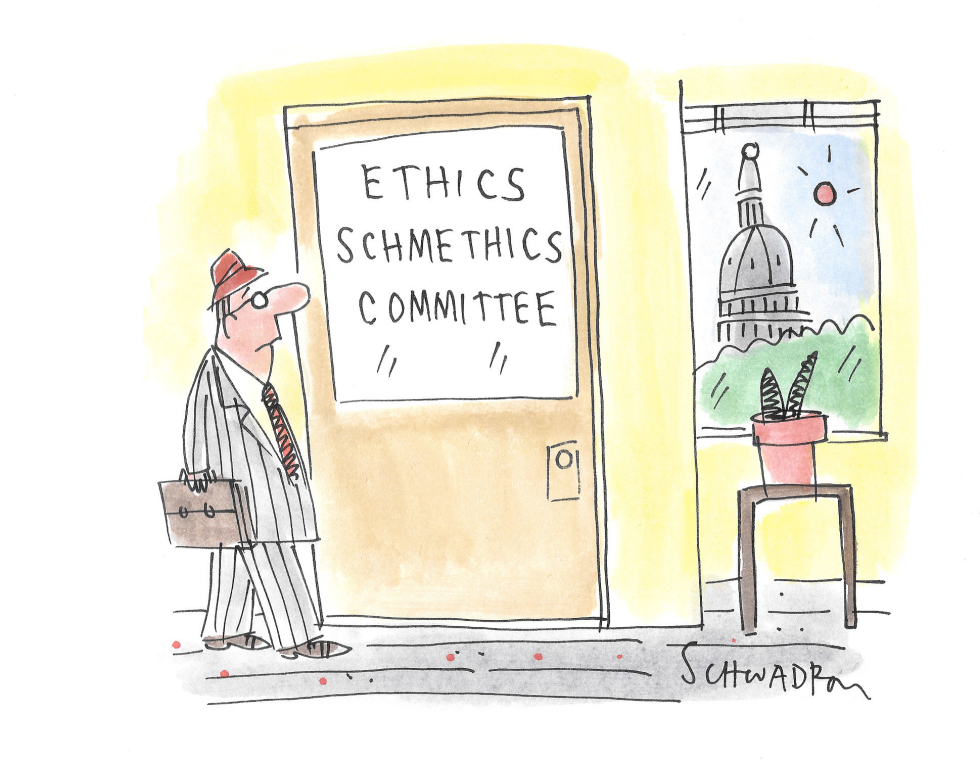
Congress continues to sideline meaningful ethics oversight, with lawmakers showing little interest in strengthening or even respecting the chamber's ethics committee. The panel exists on paper but carries little practical weight in daily operations. This dynamic matters because weak internal standards erode public trust in legislative institutions and invite outside influence. The cartoon captures the prevailing attitude that ethics rules are an afterthought rather than a core responsibility.
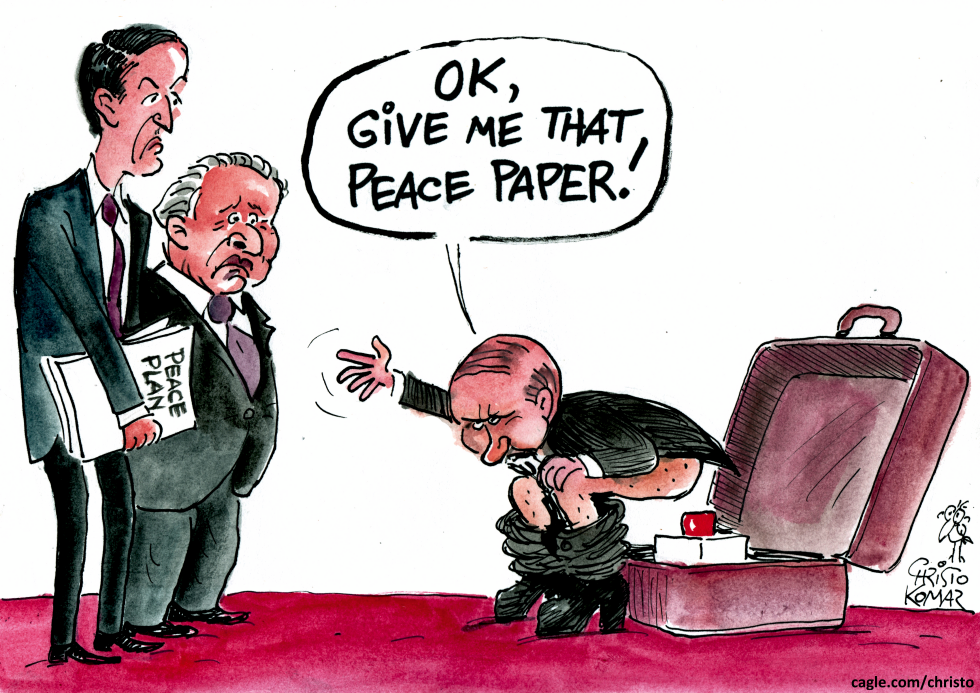
Vladimir Putin has signaled interest in renewed talks to end the war in Ukraine, a conflict that has now stretched for years with heavy costs on all sides. Recent diplomatic overtures have gained little traction as battlefield positions remain entrenched. The cartoon portrays Putin as constrained by his own choices yet eager to claim any available peace document. It underscores the gap between Russian rhetoric and the reality of prolonged fighting. The piece suggests that genuine progress remains unlikely without major concessions from Moscow.
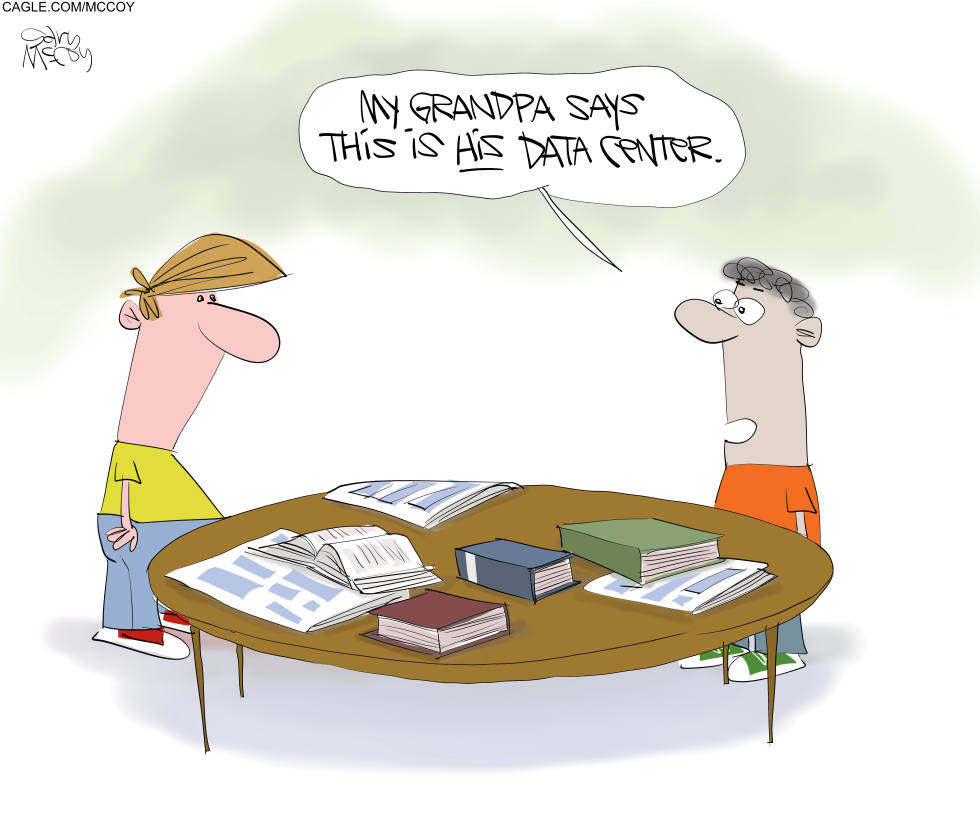
Rapid expansion of AI data centers has drawn scrutiny over energy demands and necessity by 2026. Companies and governments push massive builds to support growing artificial intelligence workloads. Critics question whether the scale matches real needs or reflects hype. The cartoon uses a grandfather's table of books and papers to suggest traditional methods still hold value. It argues the push for ever-larger facilities may overlook simpler realities.
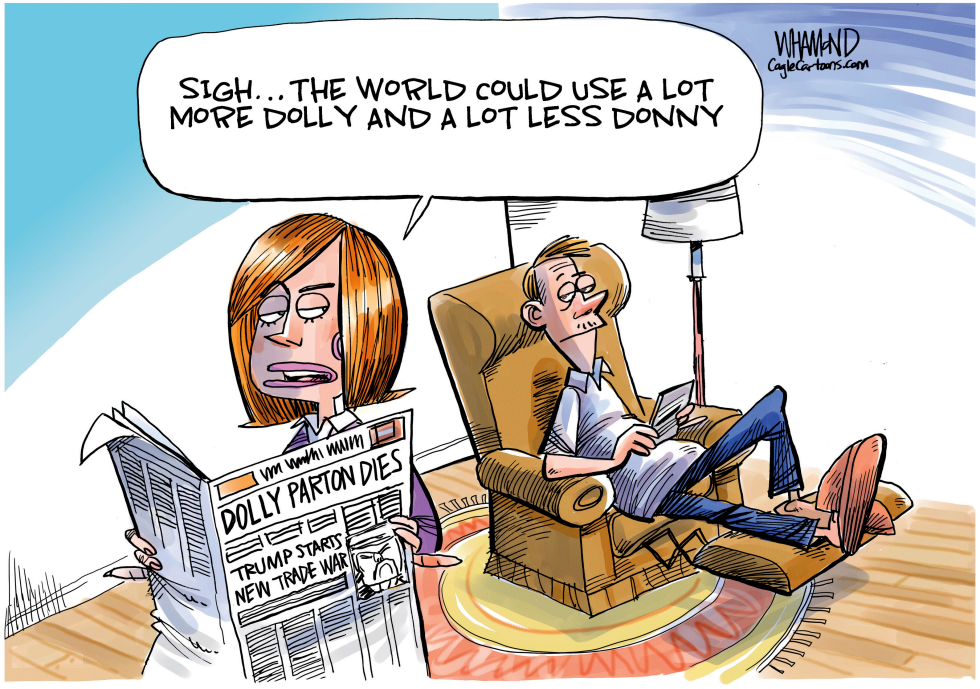
Donald Trump initiated a new trade war, coinciding with the reported death of Dolly Parton. The development drew public reactions contrasting the entertainer's legacy with the president's economic policies. The piece portrays a citizen preferring more of Parton's influence and less of Trump's.
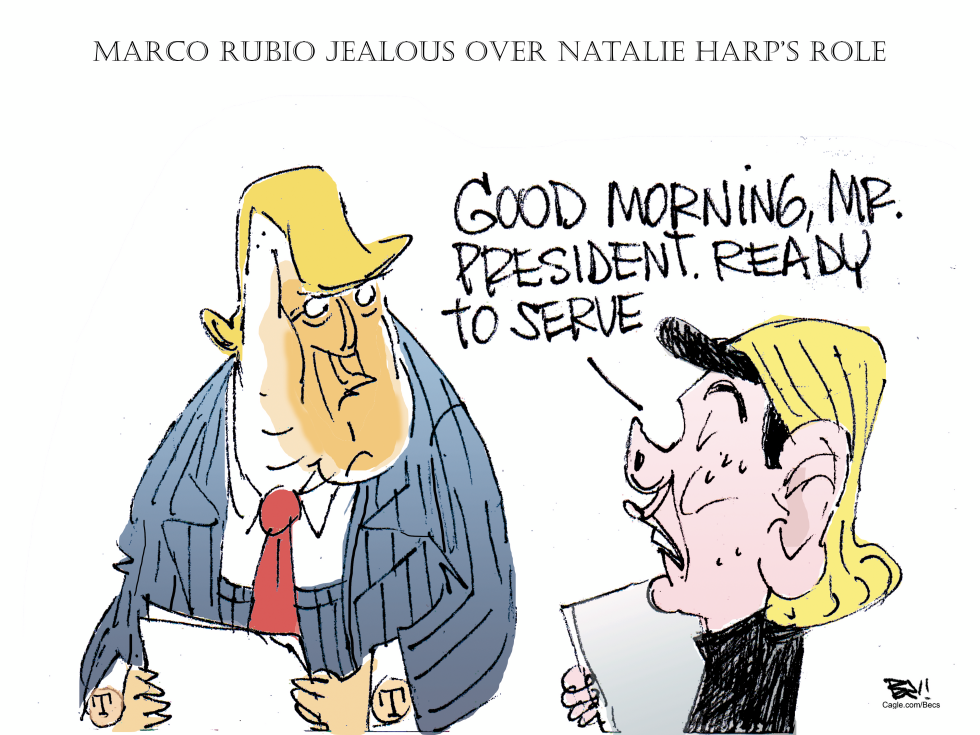
On August 25 2026 Donald Trump holds the presidency with Natalie Harp serving in a close advisory capacity. The arrangement draws attention from other officials including Marco Rubio. Harp's direct access and readiness to serve fuel perceptions of favoritism inside the administration. Observers note the potential for internal friction when personal loyalty appears to outweigh traditional hierarchy. The piece portrays Trump himself reacting with visible irritation to Harp's presence suggesting the dynamic creates unease even at the top.
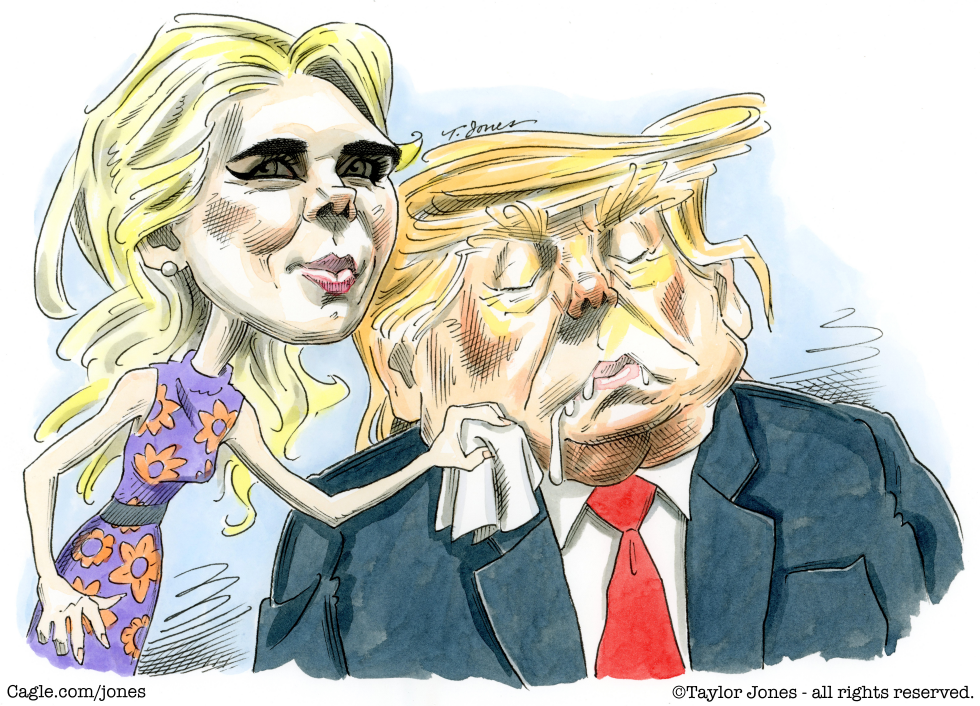
Donald Trump appears in a vulnerable state during a public or staff interaction in 2026. Natalie Harp, a known associate, tends to him by wiping drool from his face. The moment highlights ongoing scrutiny of the former president's health and stamina. Observers note the personal nature of the assistance amid continued political activity. The piece presents the scene as evidence of reliance on close aides.
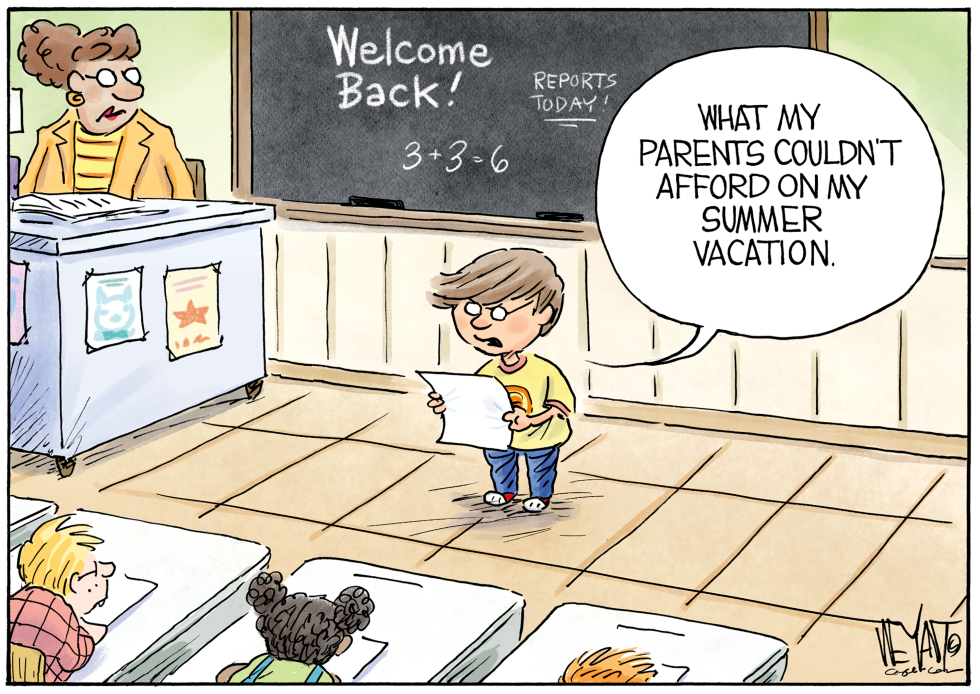
Rising living costs continue to squeeze household budgets as families navigate post-pandemic recovery and persistent price pressures on travel and leisure. A classroom scene captures one student's report on what his parents could not afford during summer break, underscoring how everyday families feel the pinch. The piece frames the issue as a direct consequence of ongoing economic conditions affecting ordinary households.
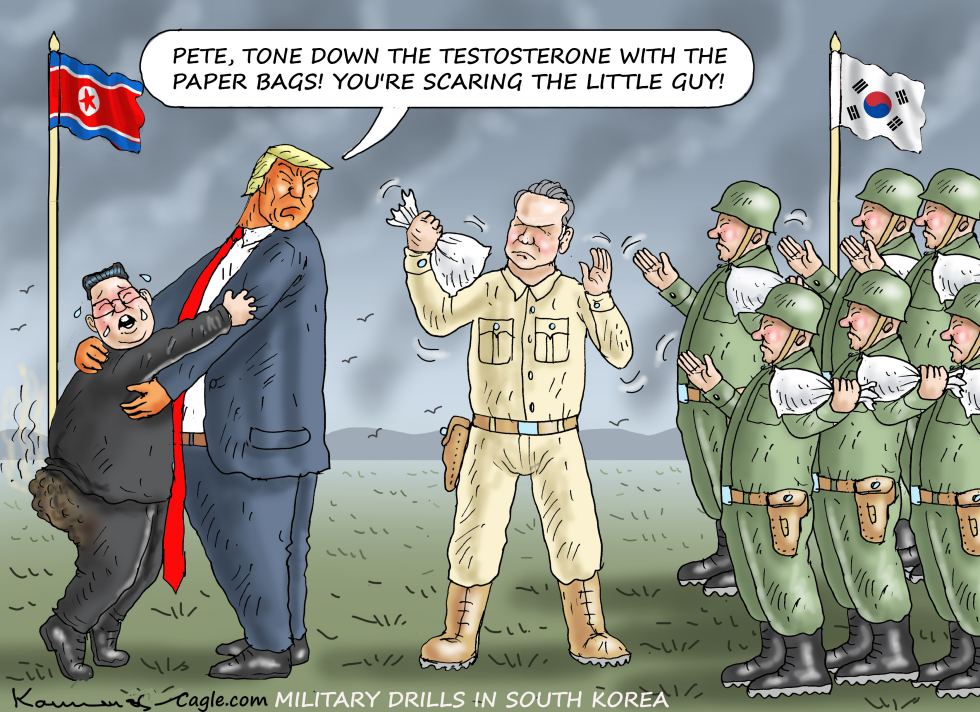
US and South Korean forces conducted joint military drills in mid-August 2026, prompting sharp North Korean protests over perceived threats. Donald Trump appeared at the scene restraining Kim Jong-un while a uniformed figure urged restraint with paper bags to calm the North Korean leader. The image frames the drills as overly provocative and mocks the testosterone-driven posturing on all sides.
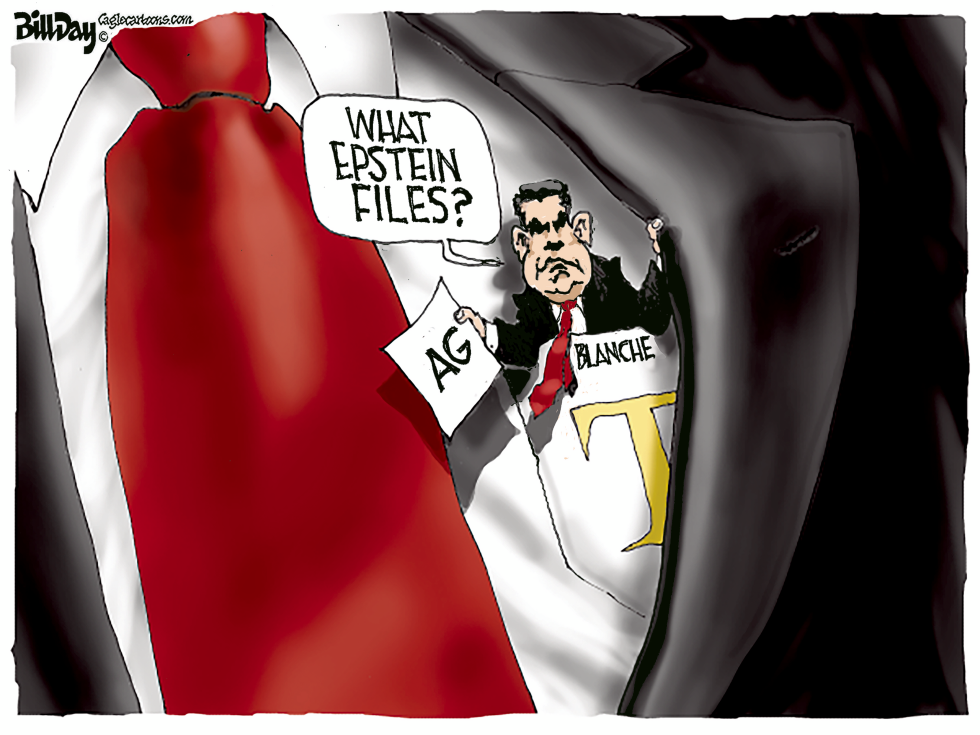
Todd Blanche, serving as attorney general in the Trump-aligned administration, has raised questions about the handling of Jeffrey Epstein-related files. The inquiry comes as legal and political scrutiny intensifies over past associations and document access. The piece portrays the questioning as occurring in close proximity to Trump symbols and influence.
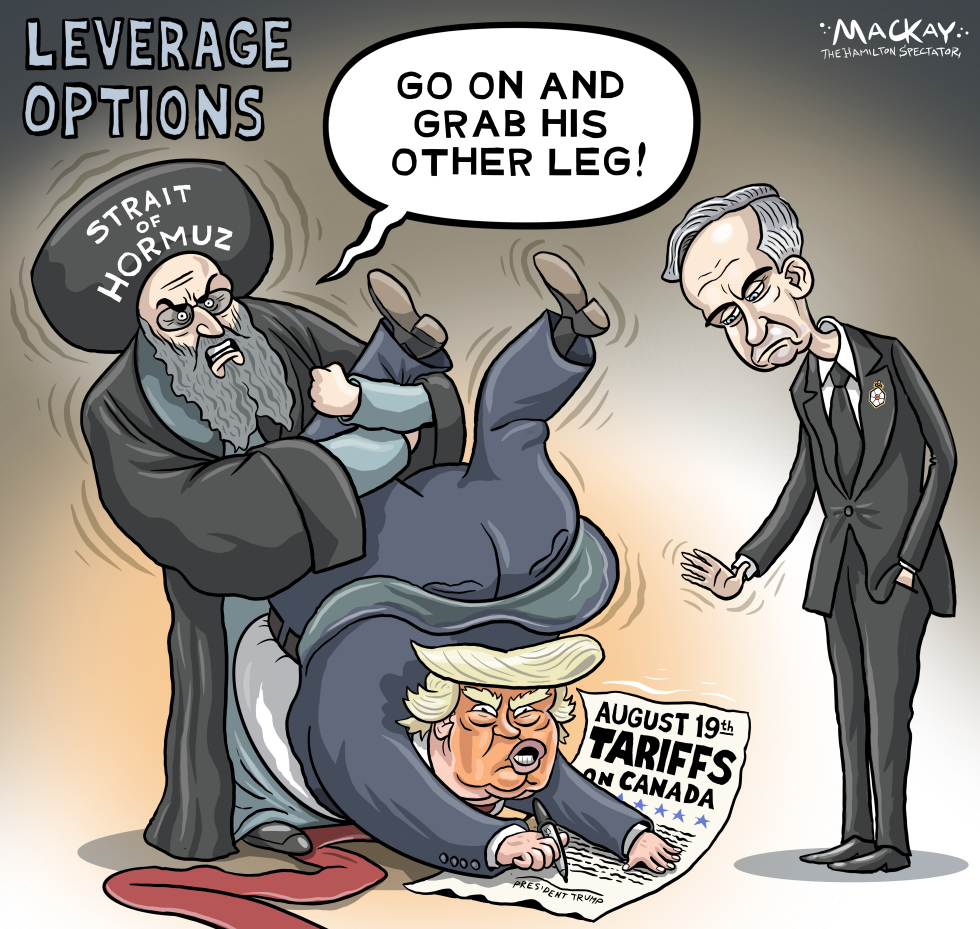
On August 12 2026 President Trump prepares to impose tariffs on Canada amid tensions involving the Strait of Hormuz. The move draws immediate pushback from Iran-linked actors seeking leverage. The piece argues that tariff policy invites risky entanglements that weaken U.S. position.
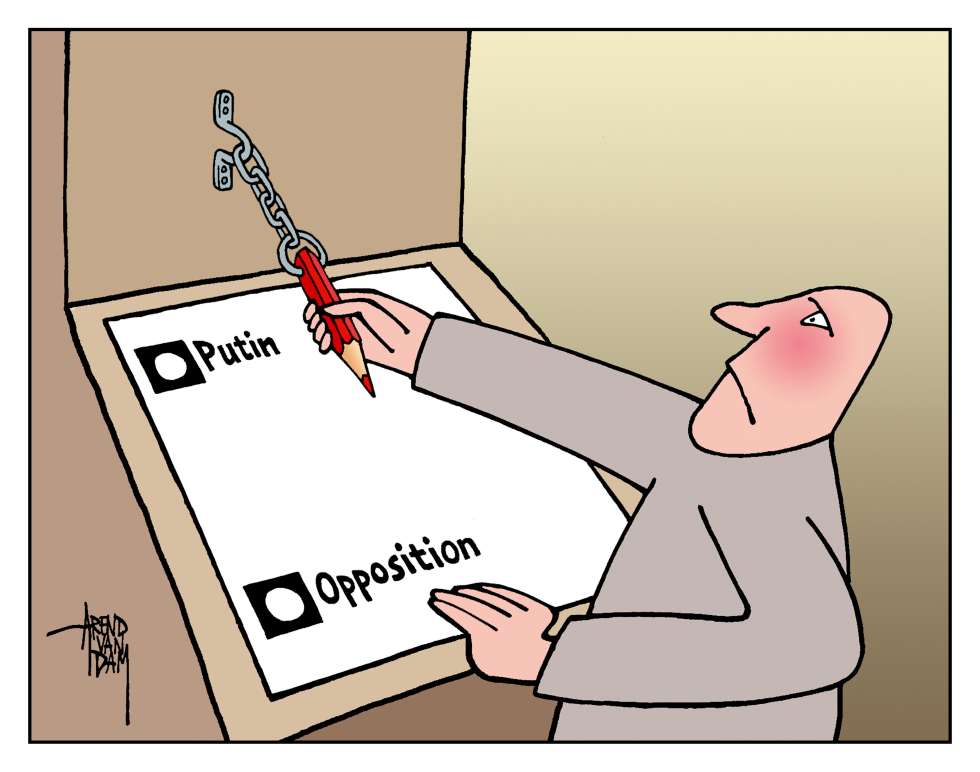
Russian voters face restricted ballot access ahead of the 2026 presidential election cycle. The chained pencil in the voting booth limits choice to the incumbent. This setup underscores ongoing limits on opposition participation. The piece argues that such physical constraints mirror broader electoral controls that prevent genuine competition.
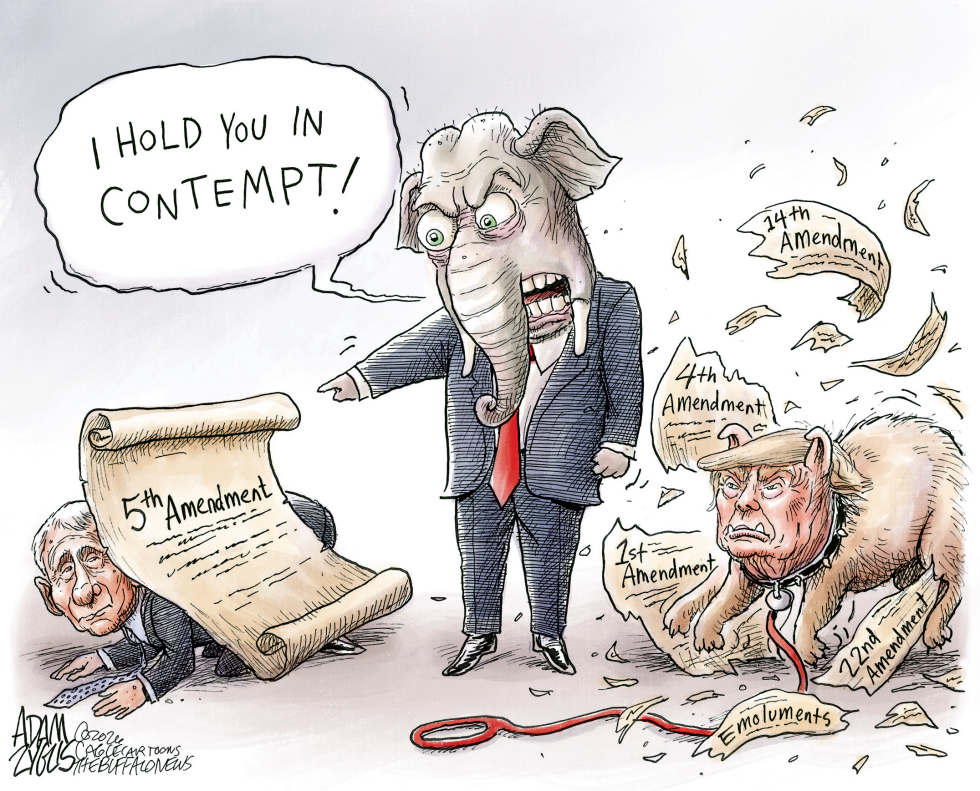
The Republican Party's symbolic elephant publicly declares contempt toward Donald Trump for actions undermining multiple constitutional amendments and the emoluments clause. The move highlights internal party tensions over adherence to founding documents. The editorial position criticizes the former president's conduct as eroding core legal safeguards.
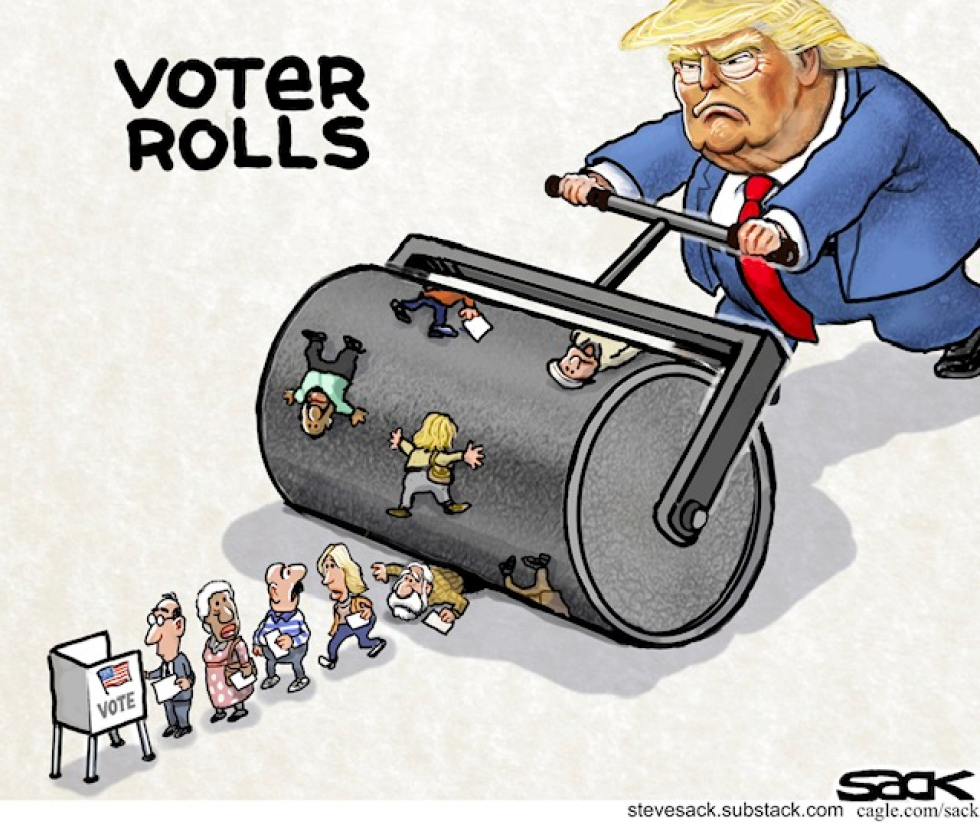
Donald Trump has pushed aggressive reviews of state voter rolls in multiple states, citing fraud concerns ahead of upcoming elections. Critics argue the moves risk removing eligible voters and suppressing turnout. The piece portrays the effort as a blunt instrument harming ordinary citizens waiting to cast ballots.