The cartoon shows the U.S. Capitol wrapped in yellow crime scene tape after GOP Congress passed the Big Beautiful Bill. Body outlines on the ground list consequences including millions losing health coverage, four trillion dollars in new debt, higher taxes on the poor, increased ICE deportations, lost food stamps and axed clean energy programs. All outcomes are attributed to aiding billionaires. The image uses the crime scene motif to highlight the bill's projected effects on vulnerable groups and federal spending priorities as of early July 2025.
The cartoon by John Cole depicts former President Donald Trump pulling a ribbon labeled Big Beautiful Bill that strikes a man wearing a Food Stamp cap and clutching a Food Mart bag. The large orange text SNAP! emphasizes the sudden impact. Published June 8 2025 the work responds to ongoing Republican efforts in Congress to reduce funding for the Supplemental Nutrition Assistance Program as part of broader tax and spending legislation. The visual metaphor illustrates critics' concerns that such cuts will increase hunger among low-income Americans while benefiting other priorities.
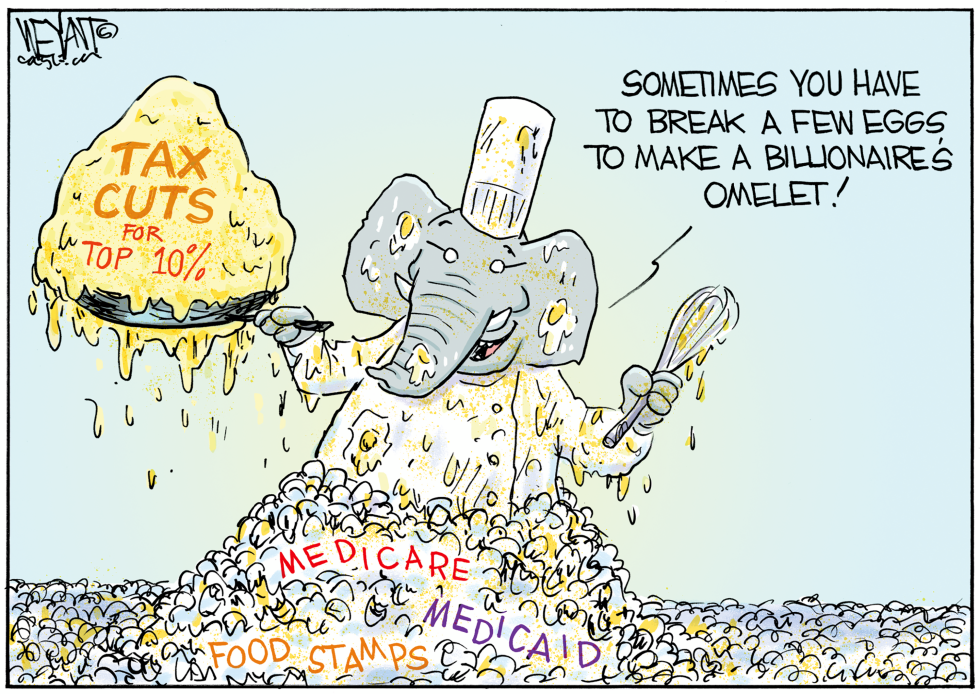
The cartoon by Christopher Weyant, published May 26, 2025, depicts a Republican elephant as a chef preparing a "billionaire's omelet." The elephant holds a pan labeled "TAX CUTS FOR TOP 10%" while standing on a pile of broken eggs marked Medicare, Medicaid and food stamps. The caption reads "SOMETIMES YOU HAVE TO BREAK A FEW EGGS TO MAKE A BILLIONAIRE'S OMELET!" The image comments on Republican proposals in Congress to reduce funding for social safety net programs in order to pay for tax reductions benefiting higher-income Americans. The visual metaphor draws on the classic phrase about breaking eggs to make an omelet, applying it to budget negotiations in the House of Representatives.
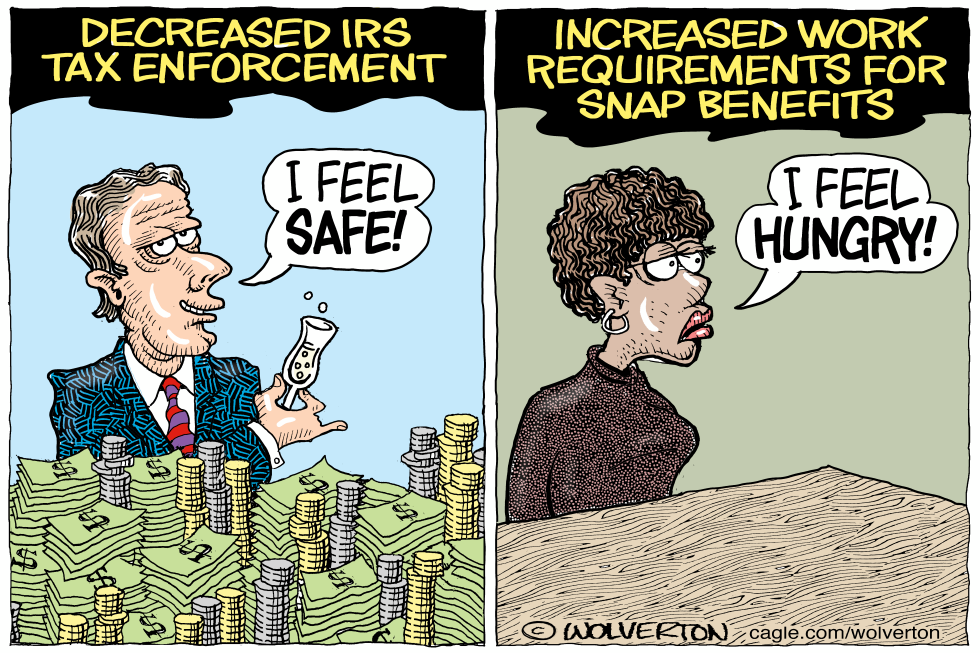
The two-panel cartoon by Monte Wolverton addresses the 2023 debt ceiling agreement. The left panel shows a suited man amid stacks of cash declaring safety after decreased IRS tax enforcement. The right panel depicts a woman stating hunger amid increased work requirements for SNAP benefits. The piece highlights how the budget compromise favored high-income taxpayers through lighter enforcement while imposing stricter conditions on low-income aid recipients. Wolverton uses contrasting expressions and settings to underscore the uneven impacts of the fiscal deal reached in early June 2023.
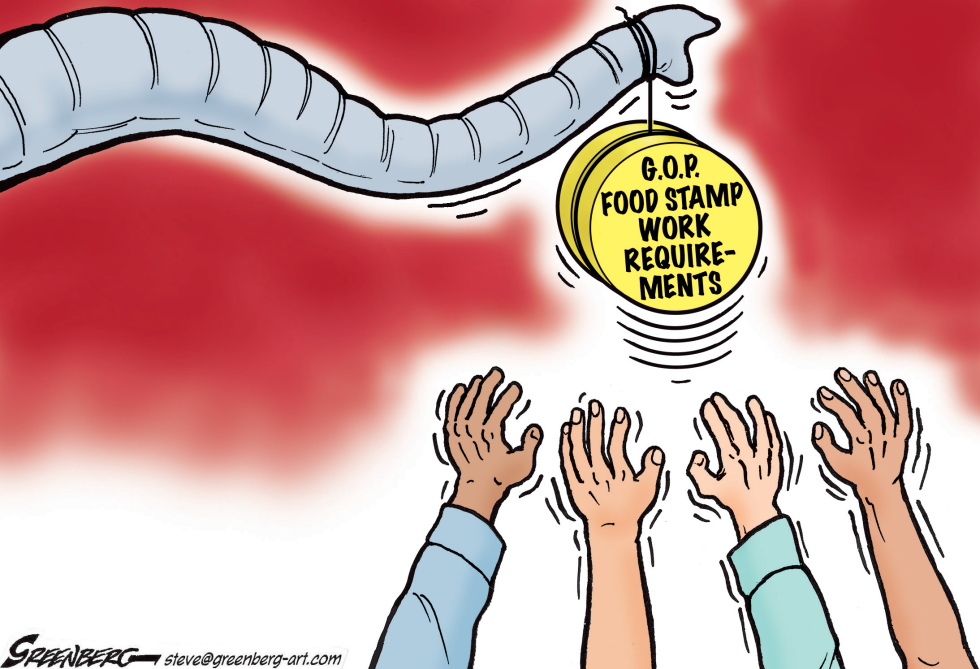
The cartoon illustrates Republicans using a yo-yo labeled G.O.P. Food Stamp Work Requirements to represent their approach to SNAP policy during 2023 debt ceiling negotiations. Multiple hands reach upward as the yo-yo moves up and down, symbolizing how the proposal is offered and withdrawn. The image responds to Republican efforts to tie work requirements to food stamp eligibility as part of broader spending limit talks with the Biden administration. In May 2023, House Republicans advanced debt ceiling legislation that included stricter SNAP rules, which Democrats opposed as harmful to recipients. The yo-yo device underscores the back-and-forth nature of the policy demands amid stalled talks.
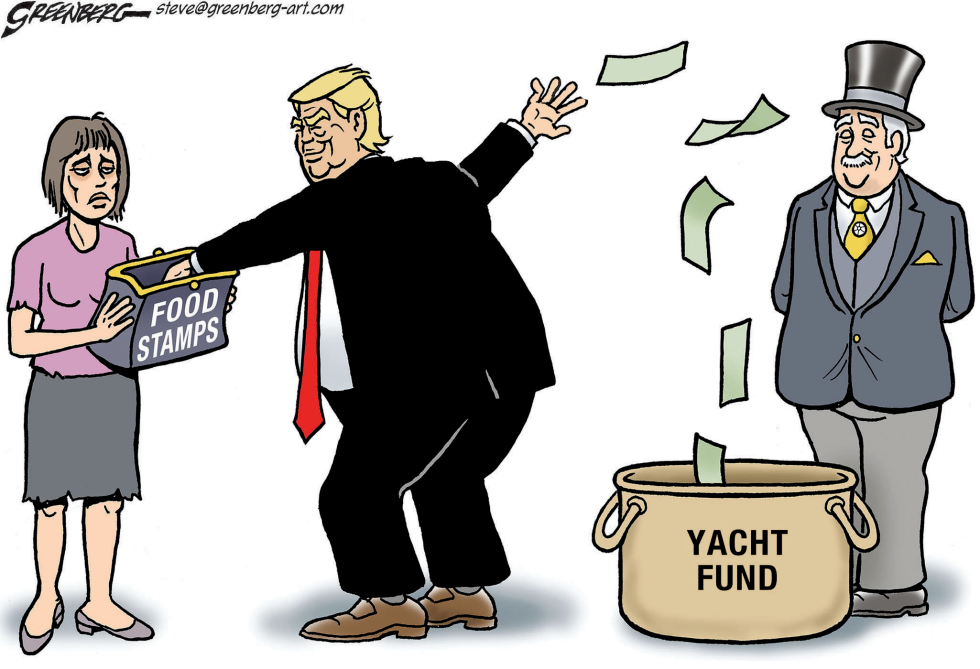
The cartoon shows President Donald Trump pulling a box labeled FOOD STAMPS from a sad woman in a pink shirt and gray skirt. He tosses cash into a barrel marked YACHT FUND held by a smiling man in a top hat and gray suit. The image criticizes the Trump administration's 2019 proposals to tighten SNAP eligibility rules, which critics said would cut benefits for hundreds of thousands of recipients while providing tax advantages that disproportionately aided higher-income households. The visual metaphor underscores ongoing debates over federal spending priorities and the balance between welfare programs and benefits for the wealthy.
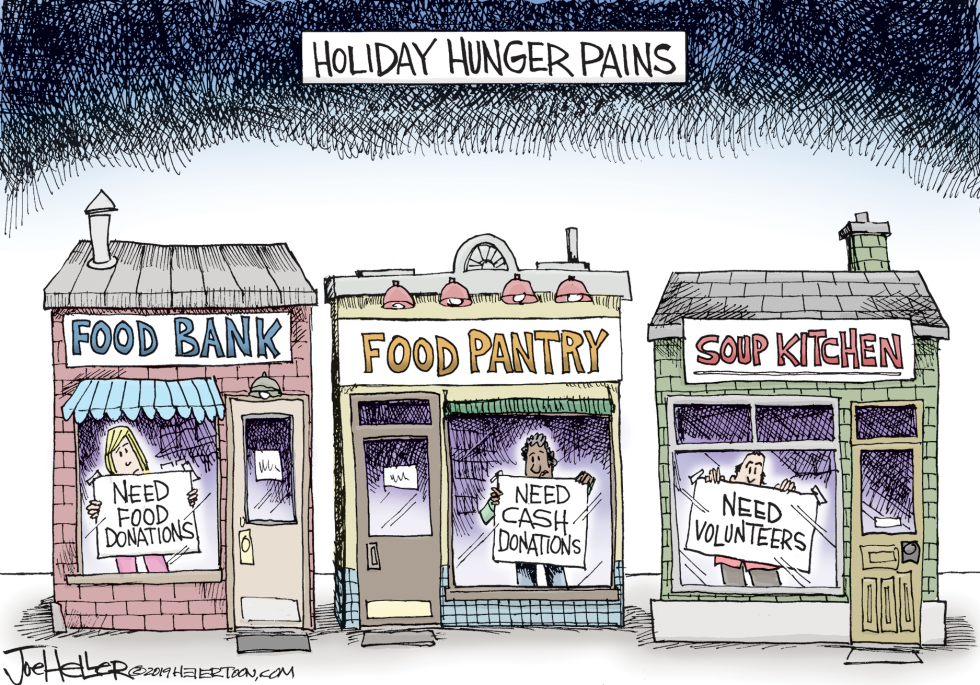
The cartoon depicts three adjacent aid facilities labeled Food Bank, Food Pantry and Soup Kitchen. Each displays a worker holding a sign requesting food donations, cash donations or volunteers. A banner above reads Holiday Hunger Pains. The drawing addresses recurring seasonal shortfalls in charitable support for hunger relief programs during the holiday period. Food banks and similar organizations typically see increased demand around Thanksgiving and Christmas while facing challenges in securing adequate supplies and staffing from the public.