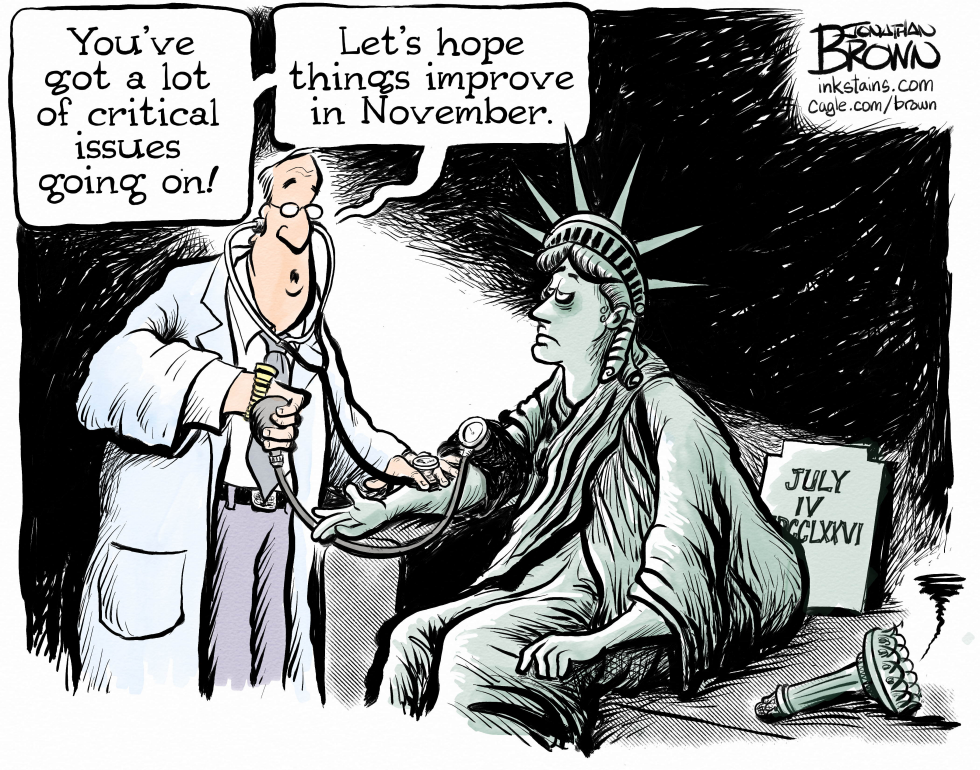
The cartoon depicts a doctor examining the Statue of Liberty's blood pressure and noting numerous critical issues. The Statue responds with hope that things will improve in November. A sign references July 4, 1776, and a broken torch rests on the ground. Published on September 15, 2026, the image uses the iconic figure to comment on the state of the nation ahead of upcoming elections. The visual metaphor highlights concerns about American institutions and public sentiment.
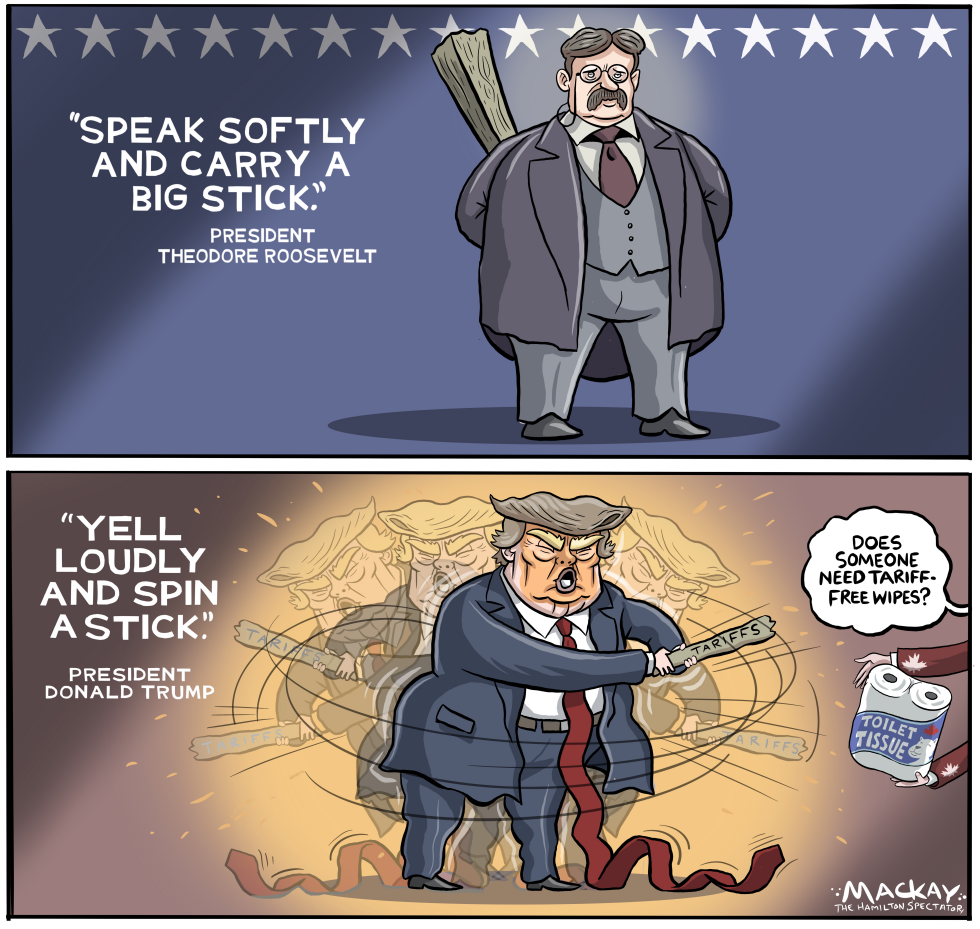
The cartoon by Graeme MacKay contrasts Theodore Roosevelt's famous speak softly and carry a big stick approach with Donald Trump's version of yelling loudly and spinning a stick covered in tariffs. In the lower panel Trump appears dizzy from the motion as a Canadian hand offers toilet tissue labeled tariff-free wipes. The image comments on recent US tariff actions and their impact on Canadian trade relations as of the September 2026 publication date.
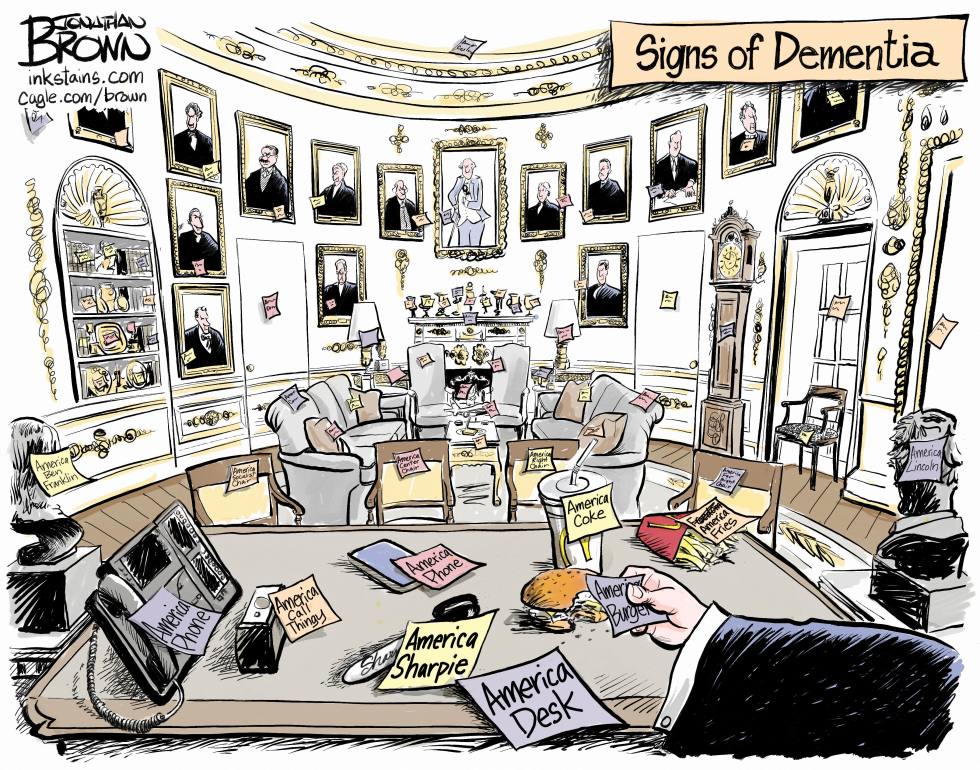
A new editorial cartoon depicts the Oval Office overrun with sticky notes labeling everyday items as America. The scene highlights signs of dementia through repeated branding on phones, desks, food and furniture. Published on September 9, 2026, the work comments on ongoing concerns about cognitive fitness in the presidency. The visual uses the familiar setting of the White House to underscore confusion and memory issues. Observers note the cartoon captures public debate over leadership capacity without naming specific individuals.
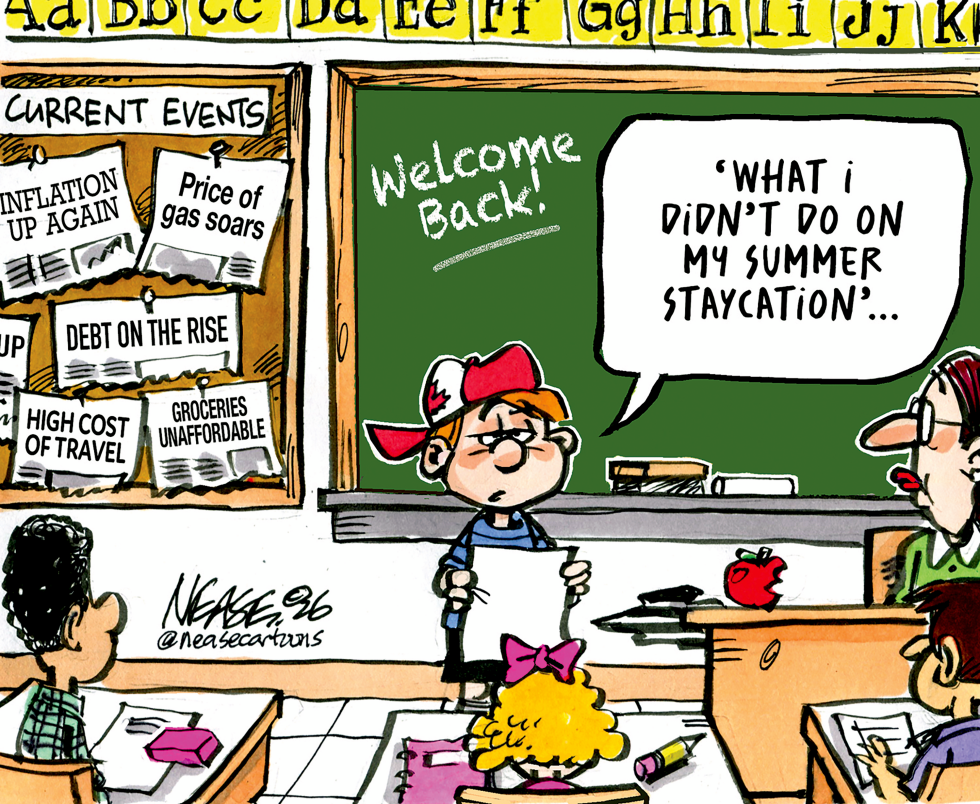
Rising inflation, gas prices, and household debt have made traditional summer vacations unaffordable for many families, leading to increased staycations as the new school year starts. The cartoon captures this cost-of-living squeeze through a classroom presentation on what students did not do over the break. It underscores how everyday expenses now dominate family decisions and limit leisure options.
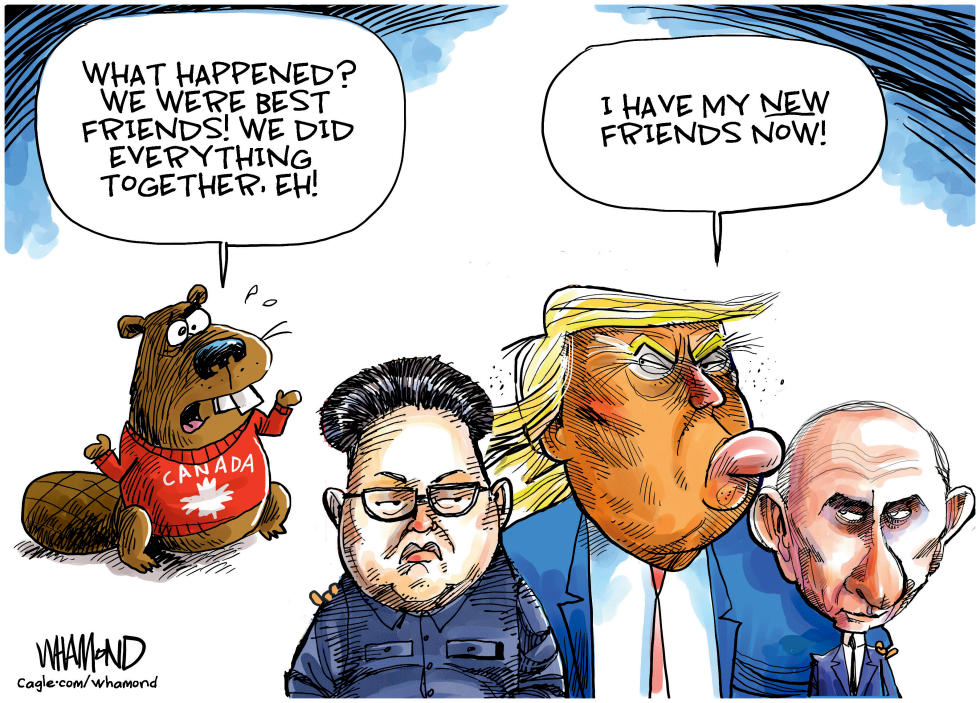
President Trump has redirected diplomatic priorities toward closer ties with Russian President Vladimir Putin and North Korean leader Kim Jong Un. Traditional partners such as Canada now face reduced engagement. The move reflects a broader realignment in U.S. foreign policy that favors authoritarian counterparts over longstanding democratic allies. Observers note the shift carries risks for trade, security cooperation, and international norms. The editorial position criticizes the pivot as shortsighted and damaging to established relationships.
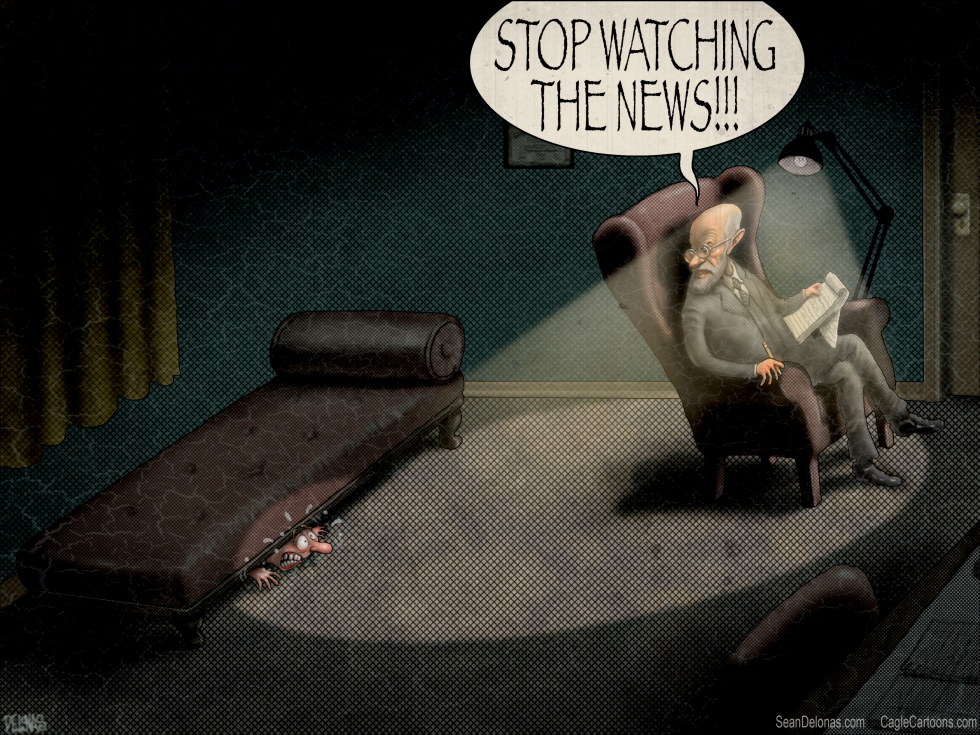
Mental health experts report growing numbers of patients seeking therapy for anxiety linked to nonstop news consumption. The trend reflects broader concerns over how constant coverage of crises affects public well-being. The editorial argues that disengaging from news can protect mental health without ignoring real issues.
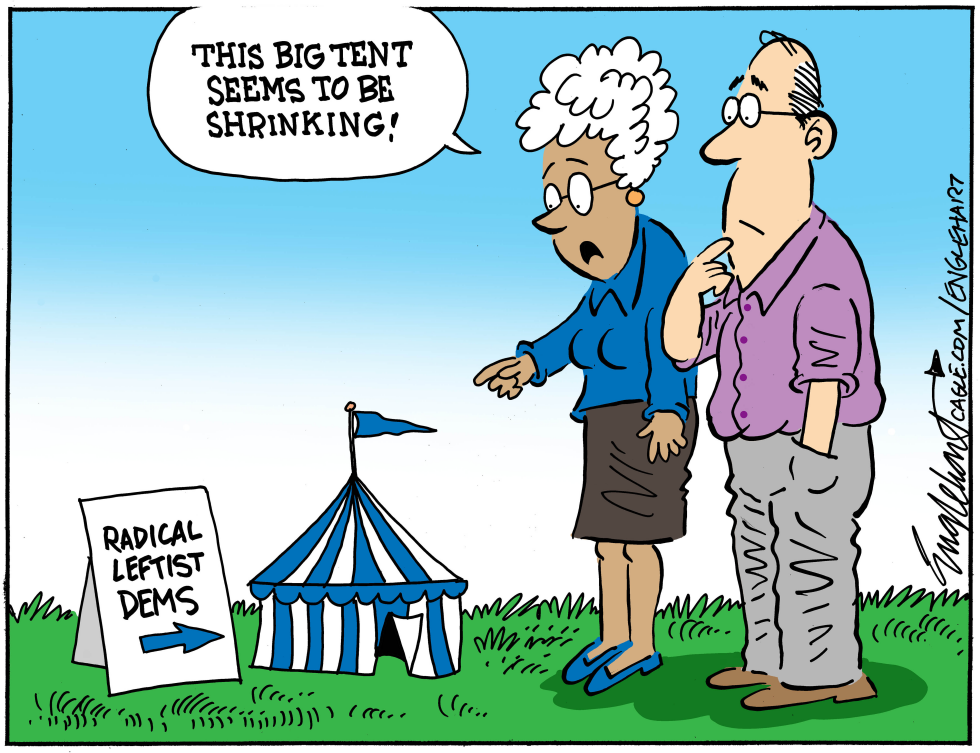
Democratic Party figures have grown concerned that the traditional big tent coalition is contracting as radical leftists consolidate control over the party's direction and messaging. The shift sidelines moderates and narrows the range of acceptable views within the organization. This dynamic raises questions about the party's ability to maintain broad electoral appeal in upcoming cycles. The editorial takes the position that the exclusionary turn is self-defeating and accelerates the party's isolation from mainstream voters.
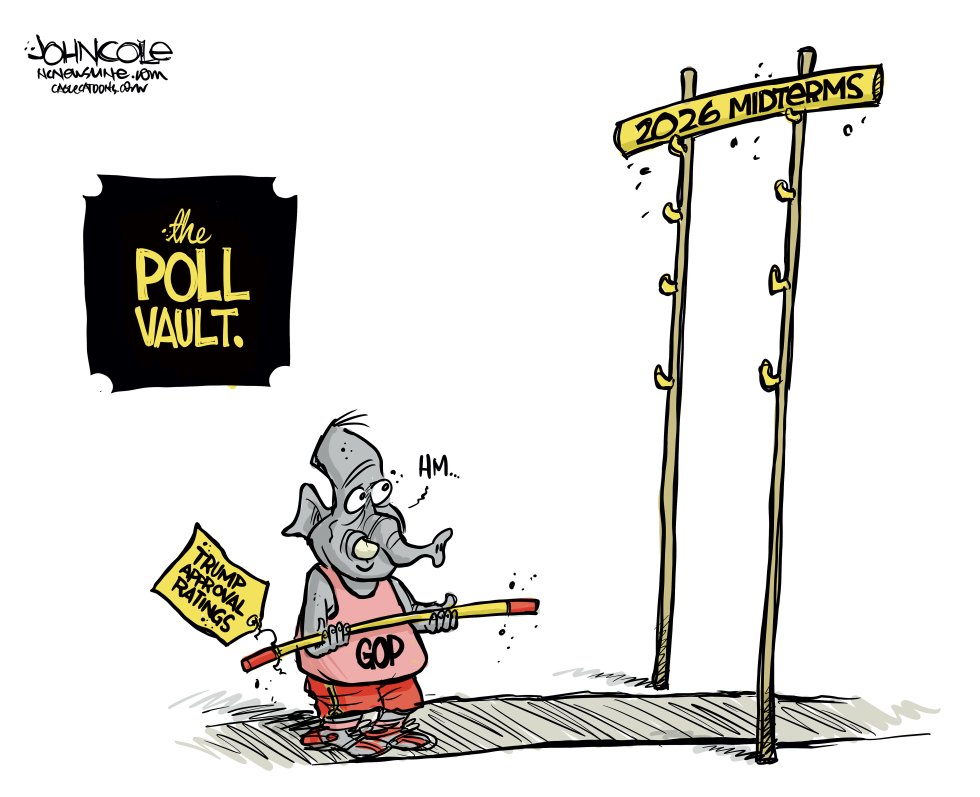
Republicans face the 2026 midterm elections with Donald Trump as a central figure whose approval ratings remain a key variable. Party strategists must decide how heavily to tie their candidates to the former president amid ongoing voter sentiment. The piece portrays the GOP as an athlete preparing to clear the midterm bar but questioning whether the available pole will suffice.
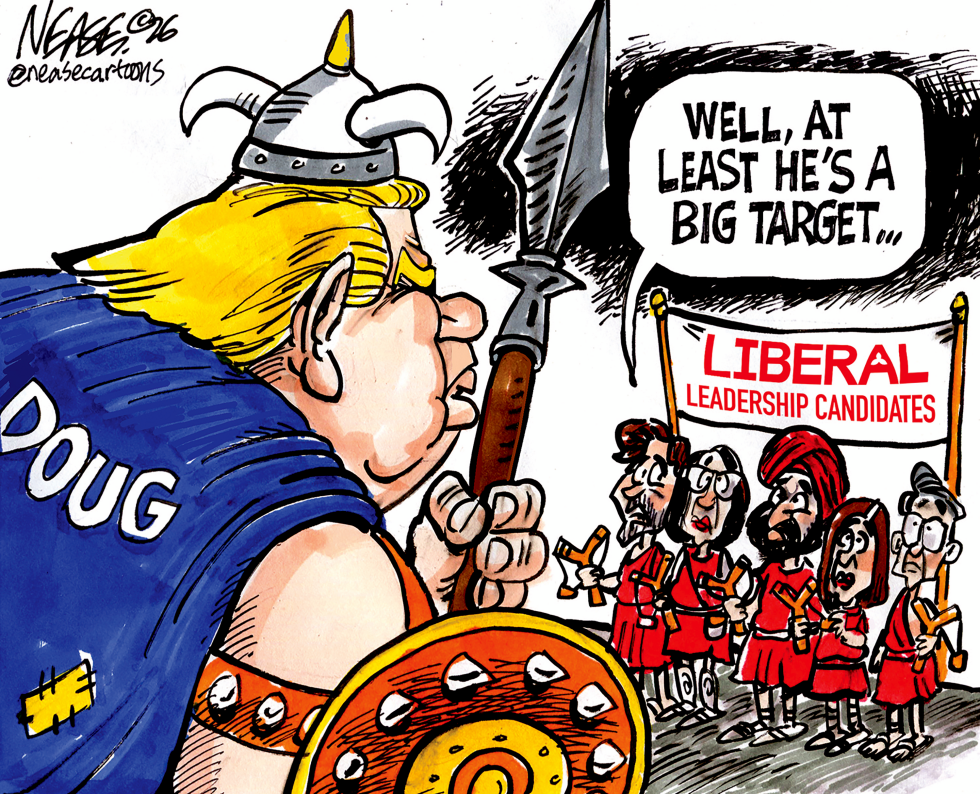
Liberal leadership candidates have identified a prominent opponent as their primary focus in an ongoing contest. The opponent, labeled Doug, appears as a large and visible figure in the political landscape. This dynamic highlights how one individual can dominate attention during a party’s internal selection process. The piece presents the situation as an opportunity for the candidates to rally around a clear adversary rather than internal divisions.
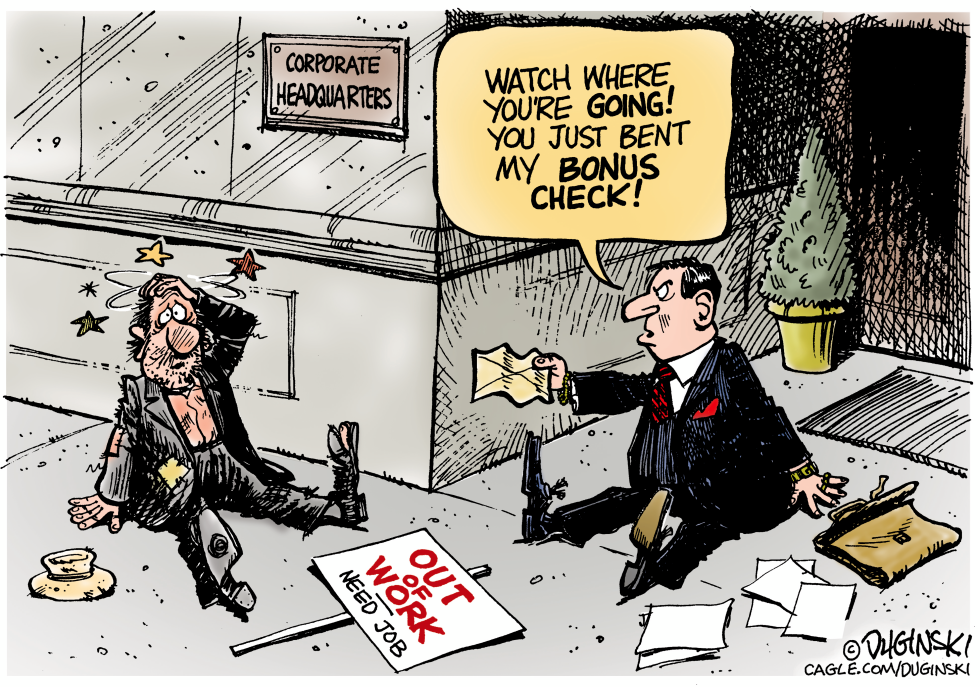
Corporate executives continue to receive large bonuses even as layoffs persist across sectors. The piece responds to ongoing debates over executive compensation packages during periods of workforce reduction. It takes the position that such bonuses appear disconnected from the realities facing displaced employees.
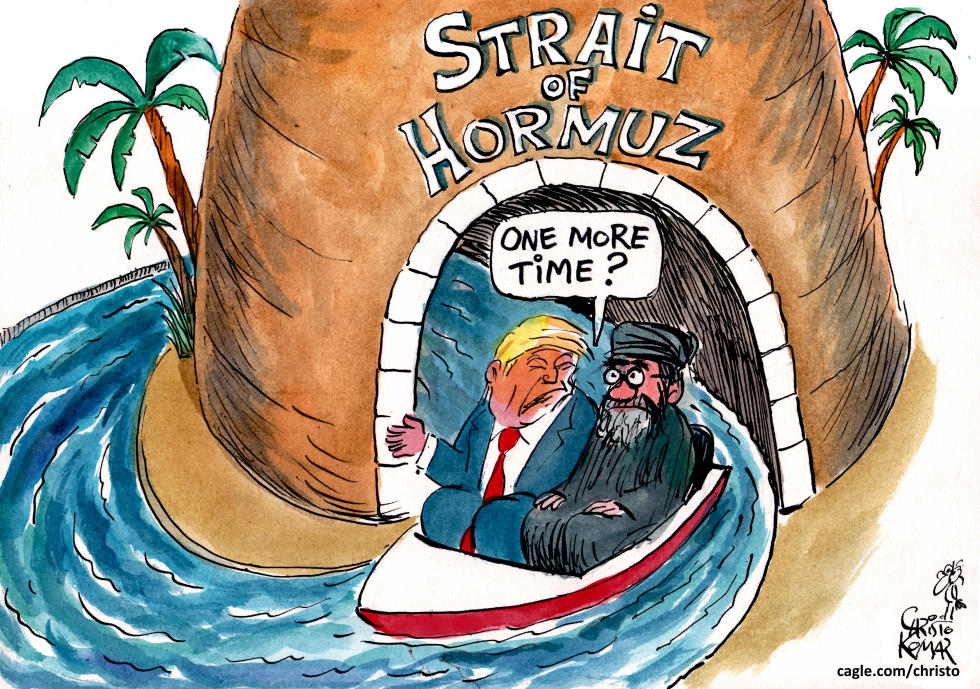
On August 5 2026 renewed friction over shipping lanes in the Strait of Hormuz draws attention as former President Donald Trump appears alongside Iran's Supreme Leader in a symbolic return to the chokepoint. The episode underscores ongoing US-Iran friction over energy exports and naval presence. The piece portrays the pair repeating a risky transit that highlights persistent strategic vulnerabilities in the Persian Gulf.
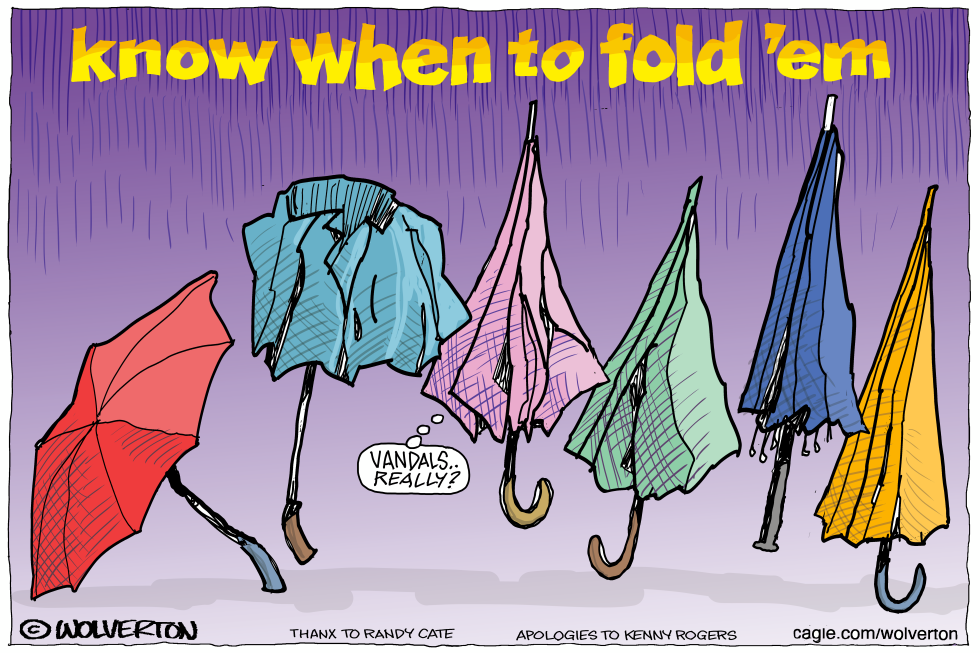
Political figures and institutions often confront moments requiring retreat or adjustment under external pressure. Recent developments show various actors weighing whether to persist or step back from contested positions. The piece argues that recognizing the right moment to fold preserves strength and avoids unnecessary damage in ongoing contests.
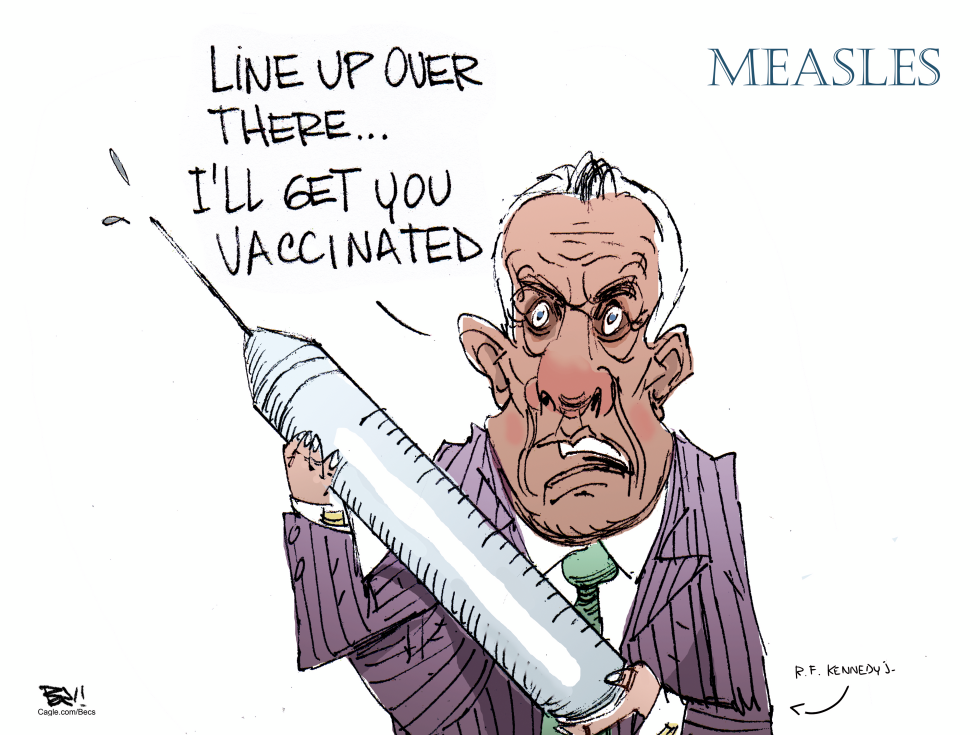
Robert F. Kennedy Jr., serving as a top health official in 2026, faces scrutiny over a sudden push for measles vaccinations. The move comes as cases rise and public skepticism lingers from prior stances. The editorial argues the policy reversal exposes inconsistent leadership on immunization.
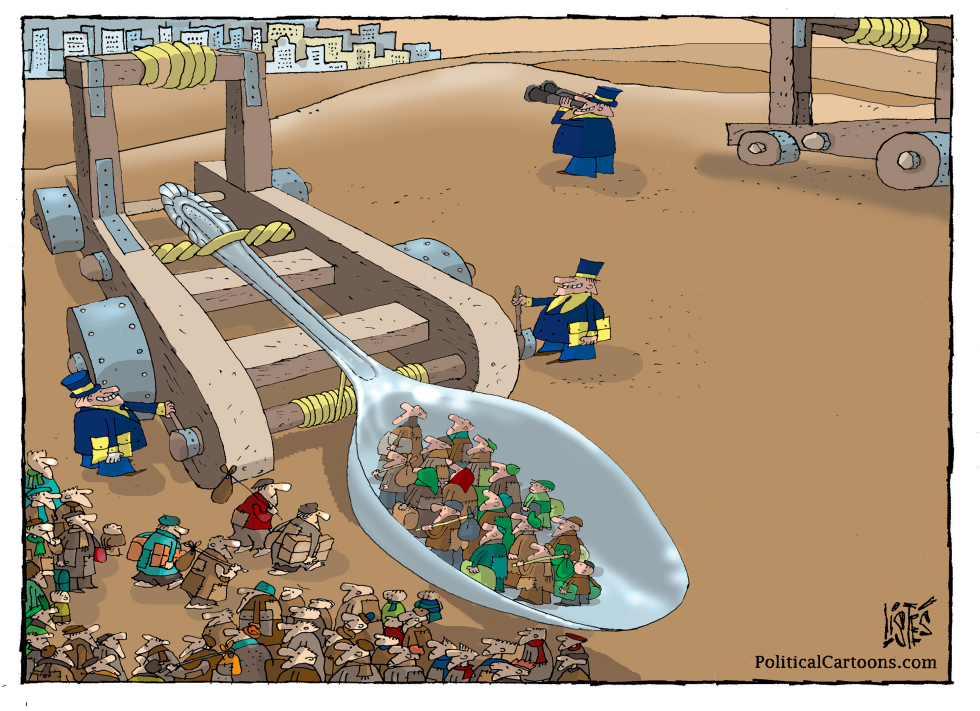
Border authorities continue to manage large inflows of refugees heading into major cities through various channels. The situation highlights ongoing debates over entry methods and urban capacity. Officials monitor the process closely as numbers rise. The piece argues that current approaches resemble mechanical ejection rather than orderly integration.
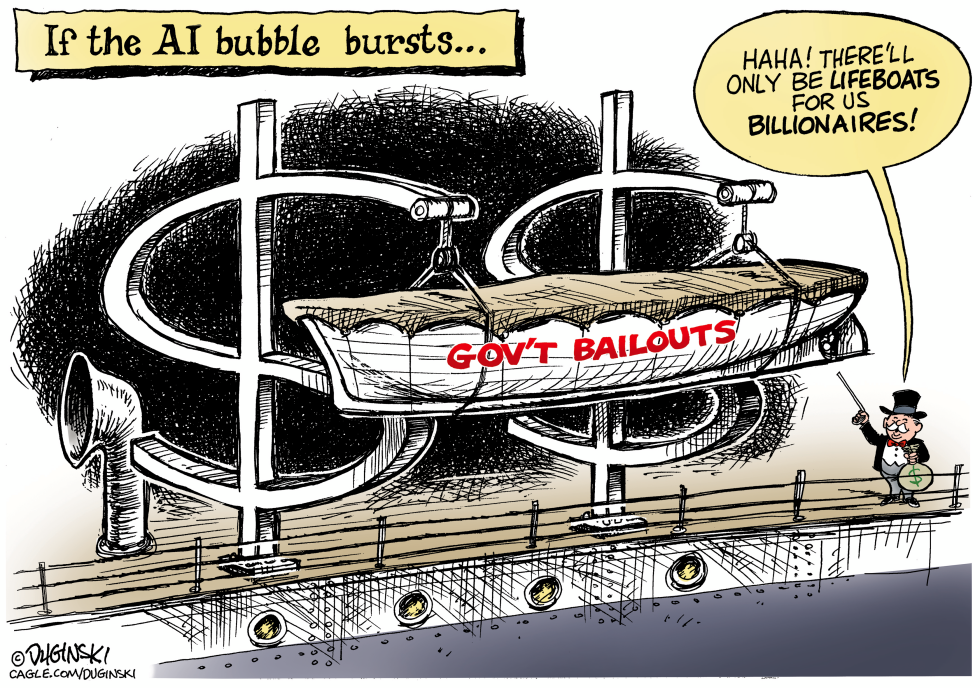
Speculation grows over potential government intervention if the artificial intelligence sector experiences a sharp downturn. Industry leaders and investors face questions about whether public funds would support failing companies. The editorial argues that any such support would primarily protect billionaires rather than address wider economic fallout from overvalued tech assets.