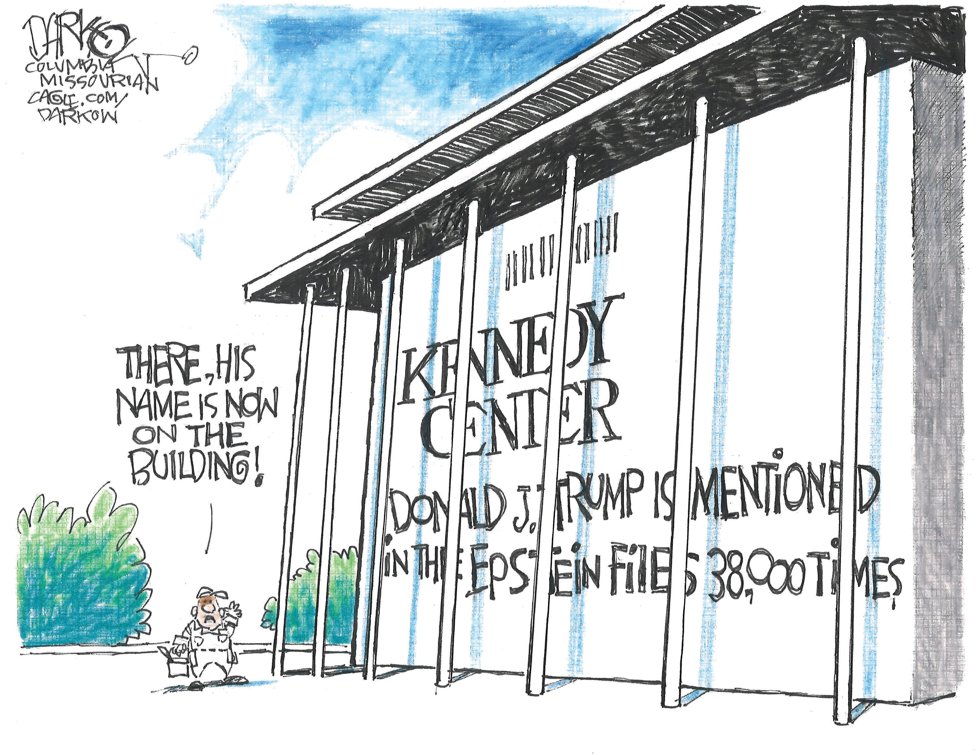
The Kennedy Center facade receives new lettering citing Donald J. Trump's 38,000 mentions in Epstein files. The addition follows a painter's declaration that the name now appears on the building. The piece frames the reference as the mechanism granting Trump association with the institution.
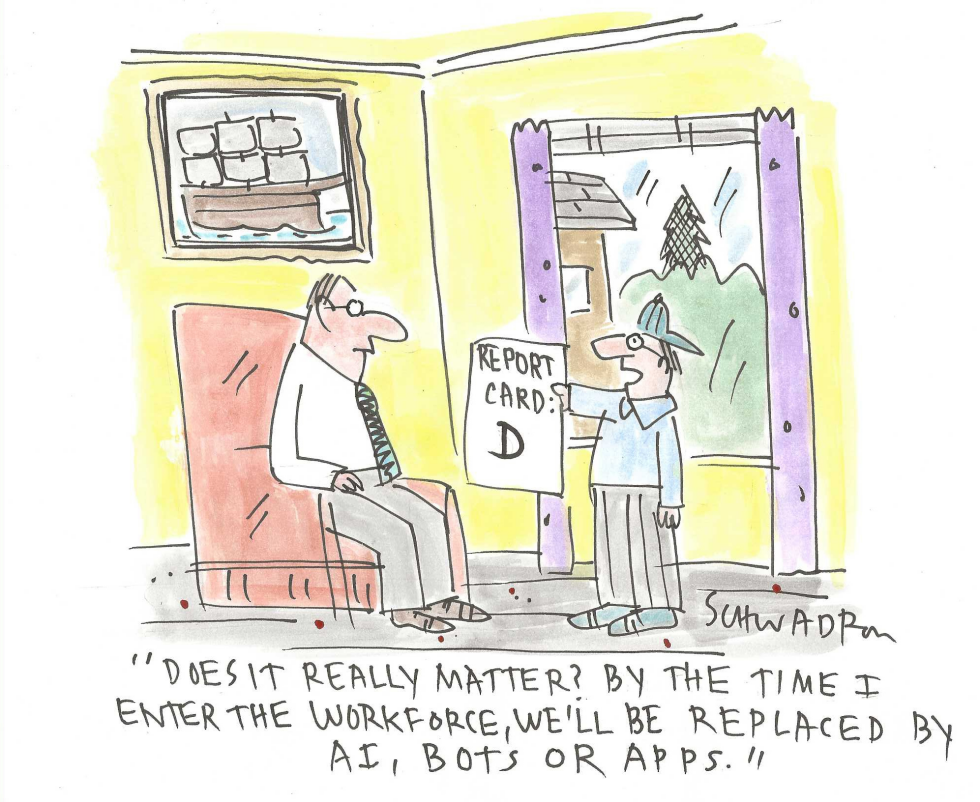
Rising student skepticism about academic effort stems from widespread predictions that AI and automation will eliminate many jobs before today's students graduate. The cartoon responds to this dynamic by showing a student using those forecasts to shrug off a poor grade. It highlights how fears of technological displacement may undermine motivation in schools. The piece suggests such excuses reflect a broader cultural shift where traditional education credentials appear less relevant. The editorial stance questions whether this mindset accelerates the very problems it cites.
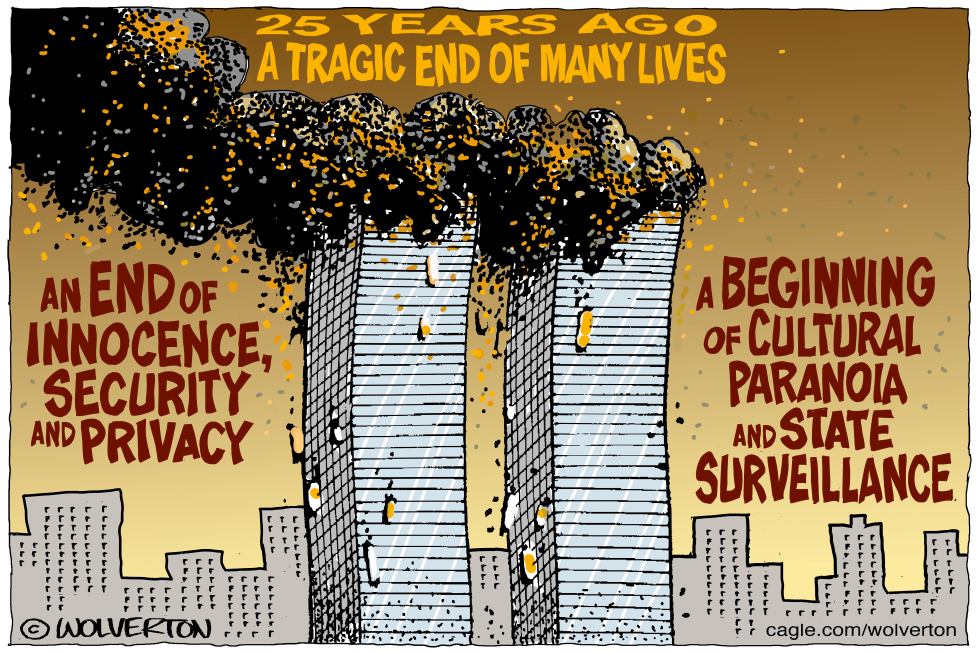
On the 25th anniversary of the September 11 attacks, the cartoon highlights the human tragedy while pointing to the subsequent expansion of state surveillance and erosion of privacy. The editorial position frames the attacks as both an end to national innocence and the start of heightened monitoring.
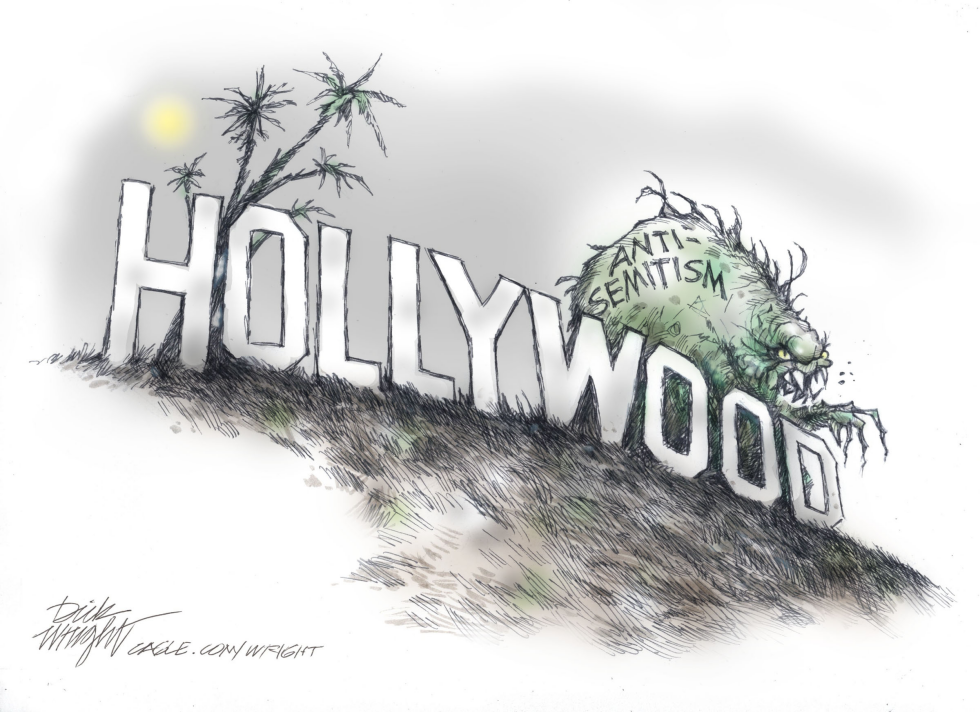
Antisemitism has surged in public discourse and institutions, including entertainment circles, prompting concern over its impact on creative communities and public discourse. The piece frames this hostility as a direct assault on Hollywood itself. It takes the position that such prejudice must be confronted as a destructive force undermining cultural institutions.
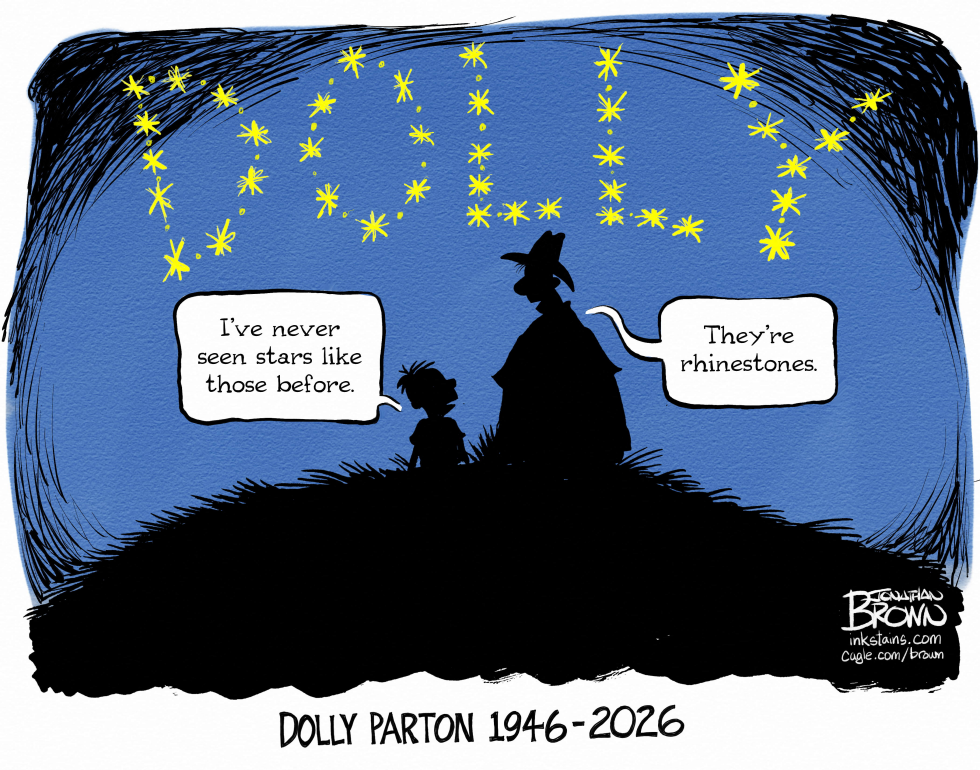
Dolly Parton passed away in 2026 at age 80. Fans and the public mourned the loss of the country music legend known for her rhinestone outfits and charitable work. The tribute highlights her enduring sparkle and cultural impact through a celestial memorial image. The piece positions her legacy as one of warmth, generosity, and unmistakable glamour that continues to shine.
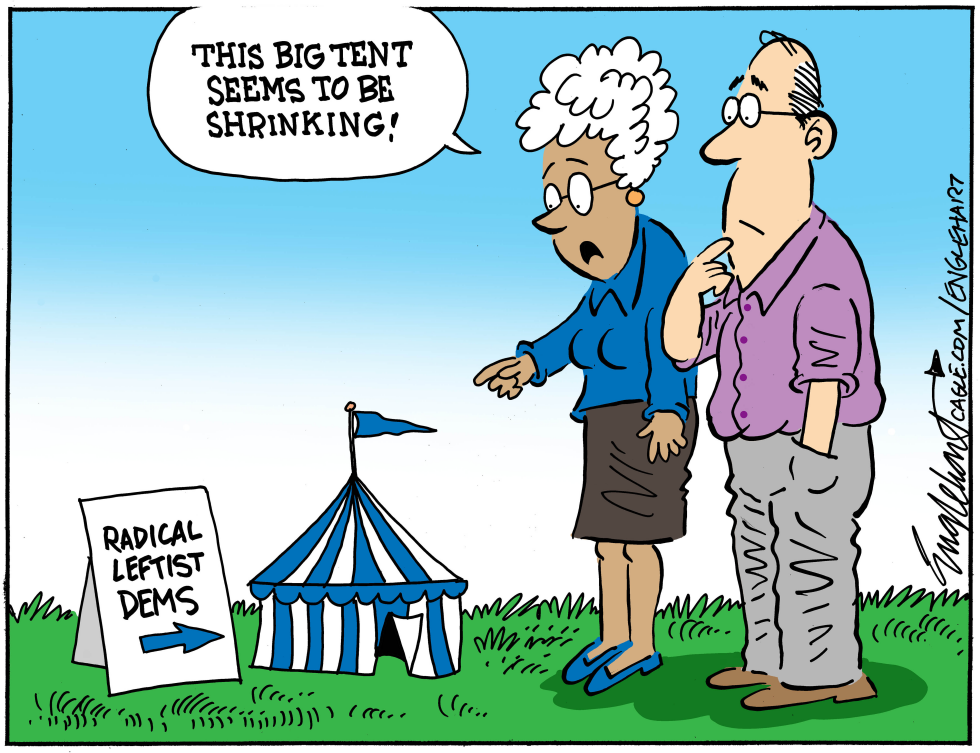
Democratic Party figures have grown concerned that the traditional big tent coalition is contracting as radical leftists consolidate control over the party's direction and messaging. The shift sidelines moderates and narrows the range of acceptable views within the organization. This dynamic raises questions about the party's ability to maintain broad electoral appeal in upcoming cycles. The editorial takes the position that the exclusionary turn is self-defeating and accelerates the party's isolation from mainstream voters.
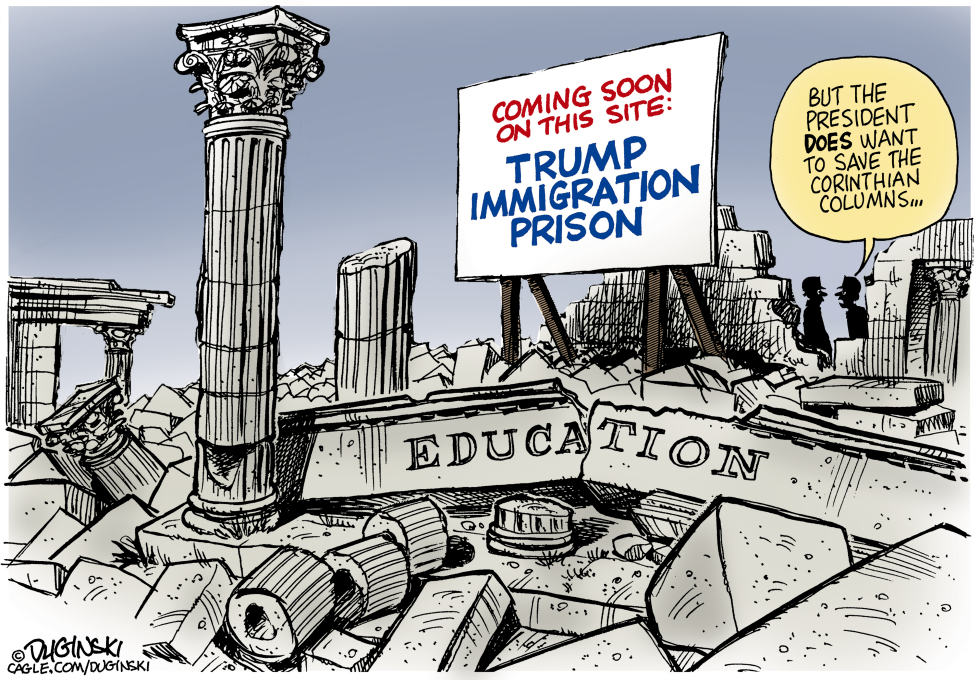
The Trump administration has moved to repurpose a site previously tied to education programs for a new immigration detention facility. The shift reflects ongoing policy emphasis on border enforcement over domestic education support. The piece argues that selective preservation of symbolic elements masks broader institutional damage.
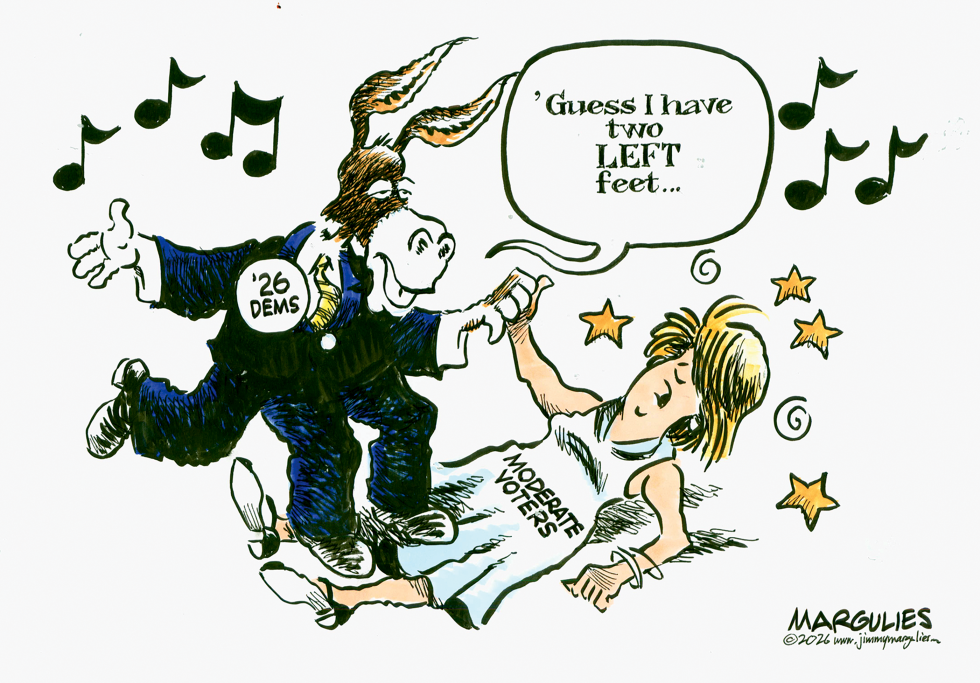
Democrats heading into the 2026 midterms face internal pressure to energize their base with progressive policies, yet this risks further distancing moderate voters essential for broader electoral success. The party has advanced left-leaning positions on issues like spending and social policy in recent cycles. Critics argue this approach prioritizes ideological purity over coalition building. The piece portrays the Democratic donkey as stepping on moderates while acknowledging its own missteps, highlighting the tension between base mobilization and centrist appeal.
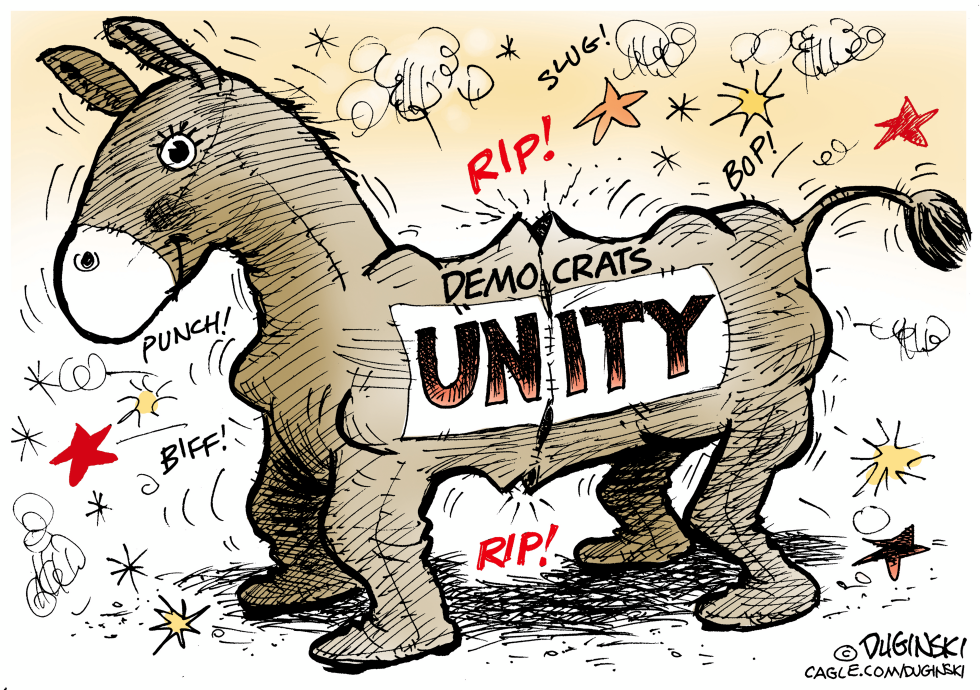
Democrats continue to display public divisions over strategy and messaging in the run-up to midterm and presidential contests. Party leaders struggle to project cohesion on issues ranging from economic policy to social priorities. The resulting perception of disarray weakens their ability to counter Republican narratives and mobilize voters. The cartoon highlights how these internal conflicts undermine the party's core message of unity.
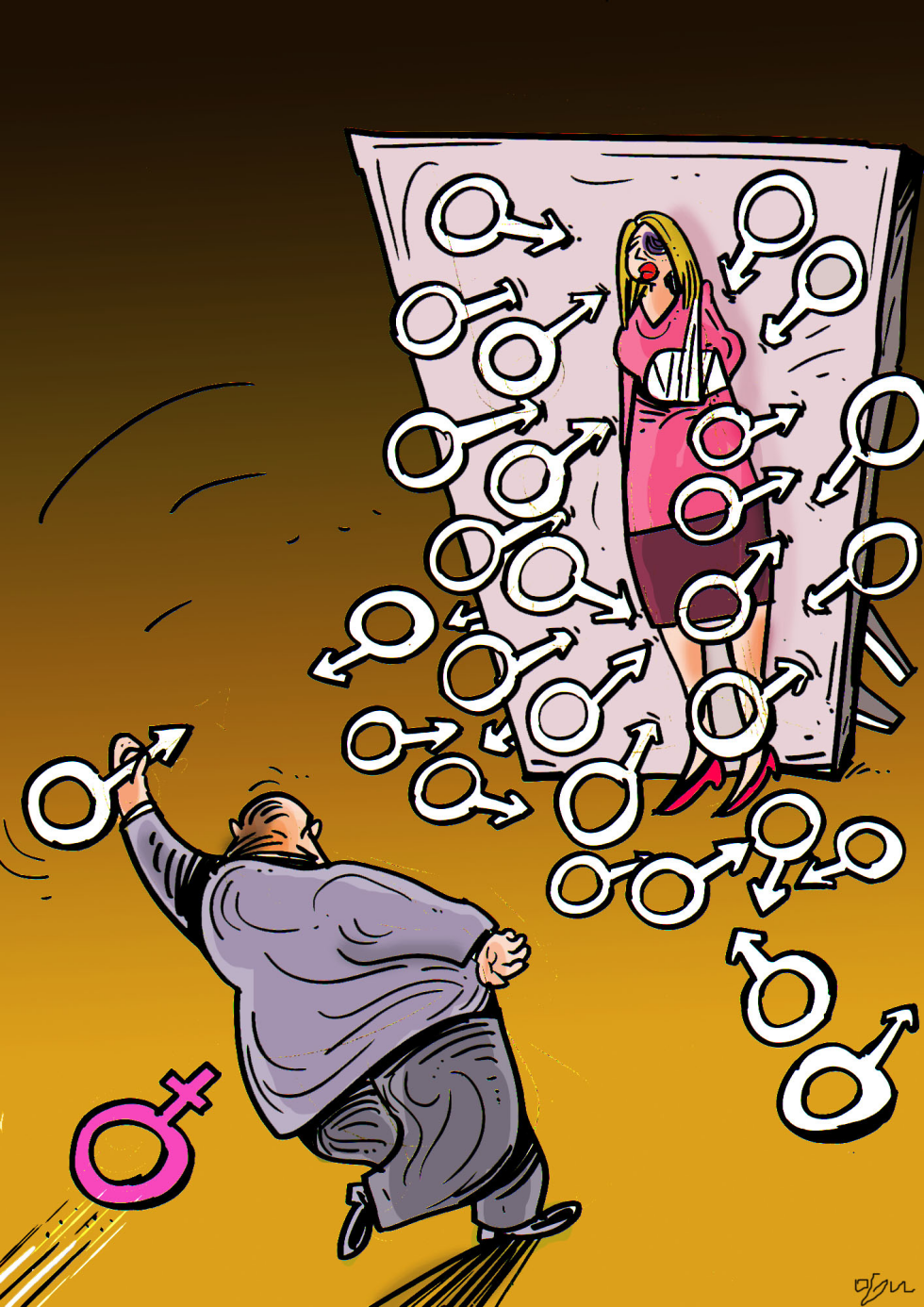
Violence against women remains a persistent social problem, with physical assaults and intimidation continuing in many communities. The piece responds to this ongoing dynamic by showing a male figure directing male symbols at an already injured woman, underscoring the editorial position that such aggression must be confronted directly.
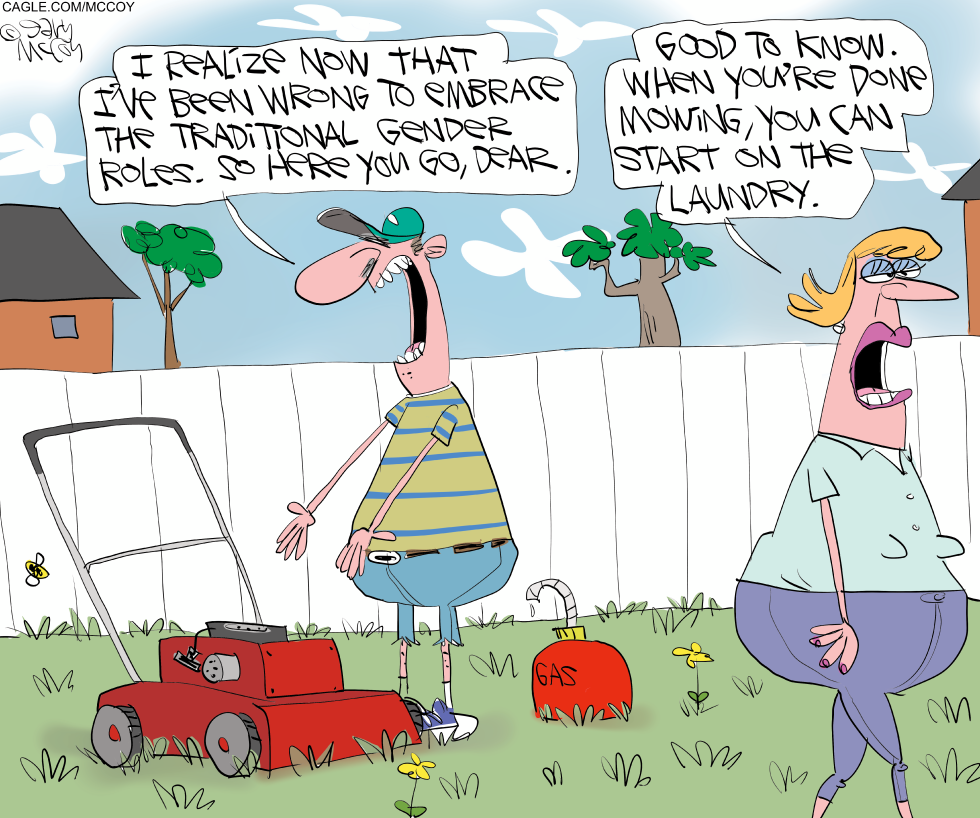
A man publicly rejects traditional gender roles and hands over the lawn mower in a suburban backyard. The woman responds by directing him to laundry afterward. The piece highlights ongoing cultural friction over household task divisions and expectations around gender.
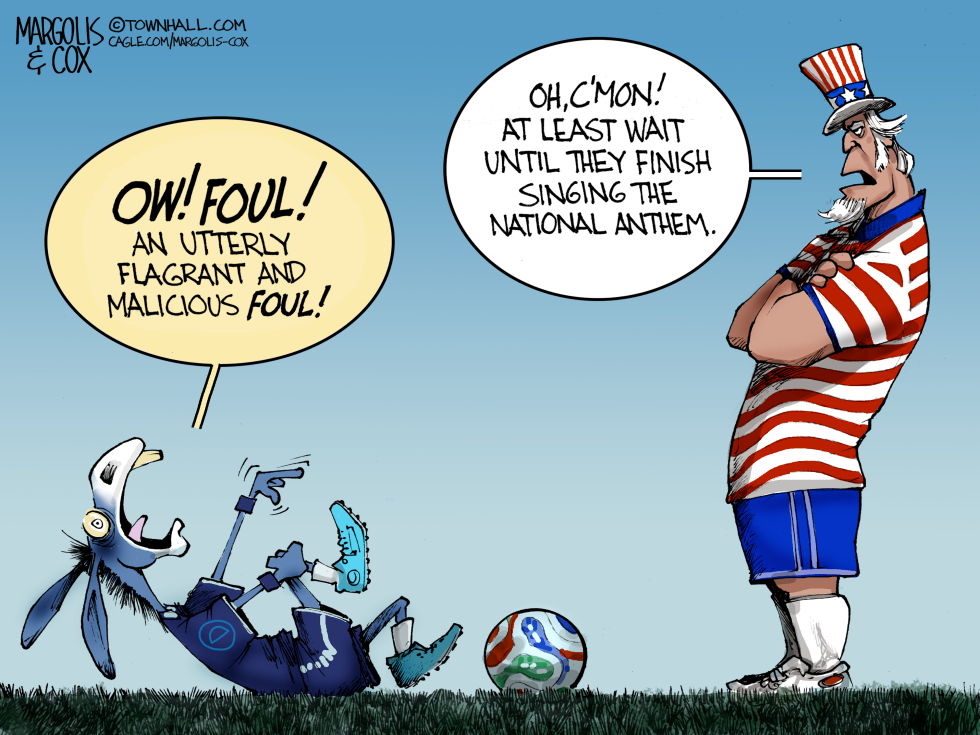
On July 8 2026 a political cartoon depicts a soccer field clash where a Democrat donkey player claims a malicious foul but Uncle Sam insists the national anthem must finish first before any ruling.
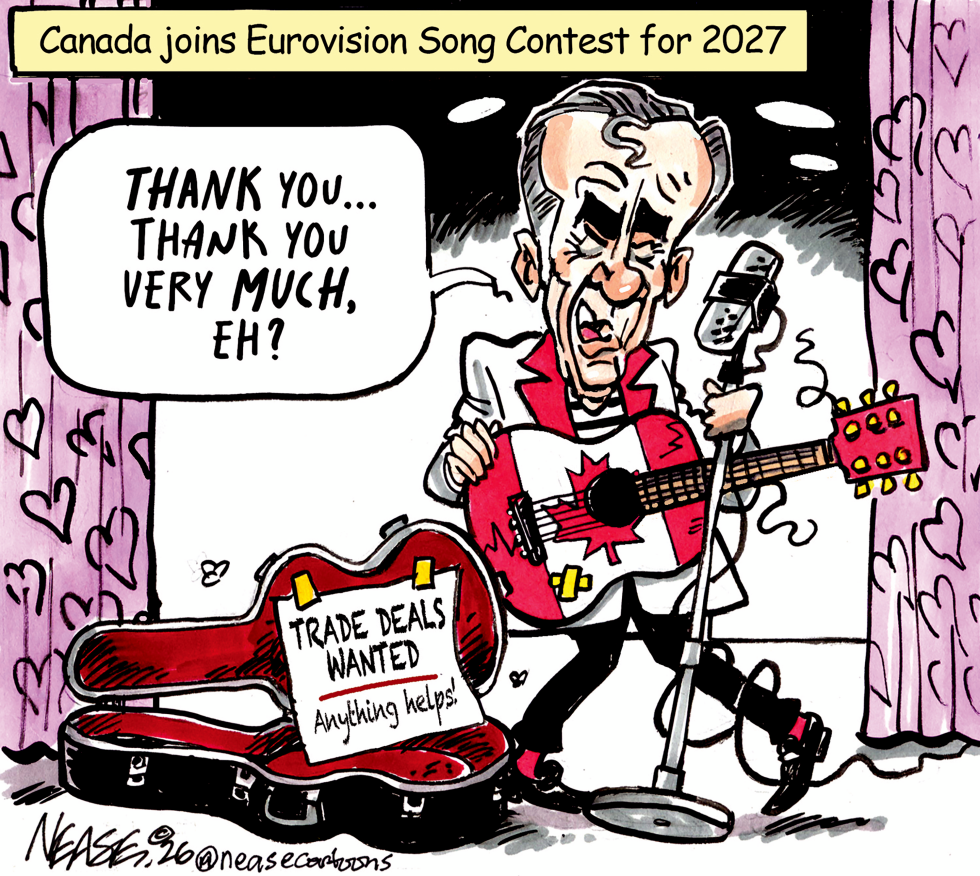
Prime Minister Justin Trudeau appears in an Elvis Presley costume on stage at the Eurovision Song Contest, holding a guitar painted with the Canadian flag. A speech bubble shows him saying thank you very much eh while an open guitar case on the floor bears a sign reading trade deals wanted anything helps. The top banner announces Canada joins Eurovision Song Contest for 2027. The cartoon by Steve Nease was published July 2 2026.
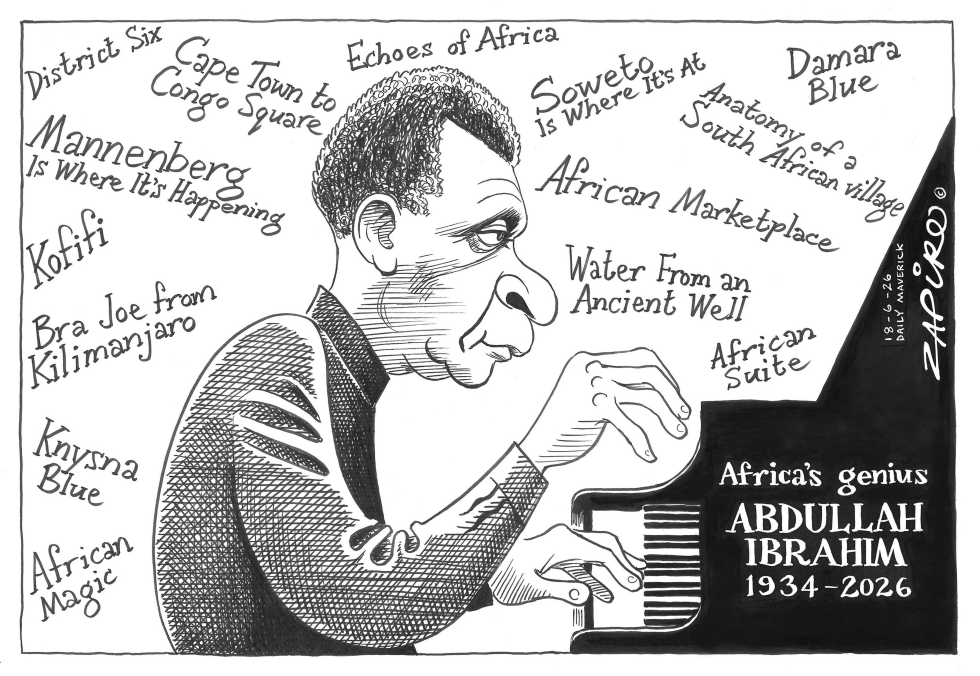
Zapiro created this tribute illustration of Abdullah Ibrahim following the South African jazz pianist's death in 2026. The drawing shows Ibrahim at the keyboard with titles of his well-known works arrayed around him, including Mannenberg, District Six, Soweto Is Where It's At, African Suite, and others drawn from his discography spanning decades of performances rooted in Cape Town and broader African musical traditions.
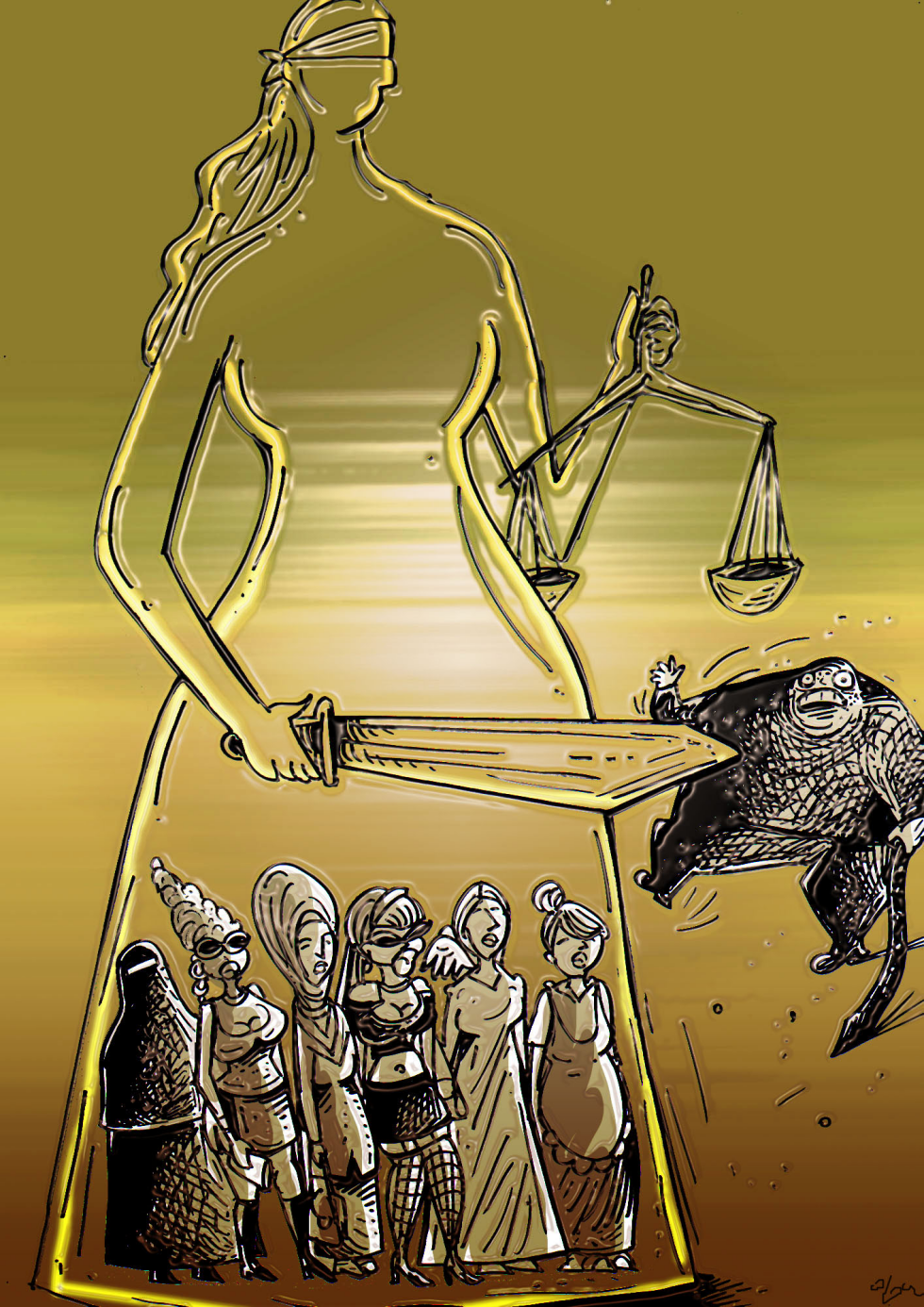
The justice system continues to face scrutiny over its ability to protect vulnerable populations amid ongoing debates about fairness and representation. Public attention remains on how courts and legal symbols address threats to safety and equality. The piece argues that justice must actively confront dangers while encompassing the diversity of those it serves.