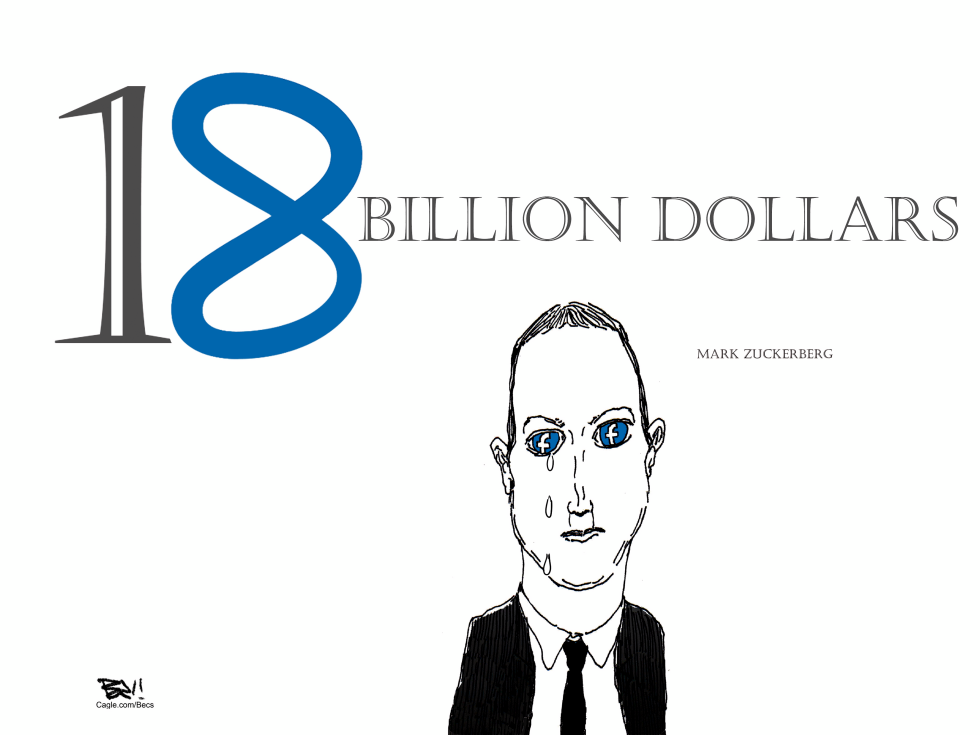
Meta Platforms reported a significant valuation drop that erased 18 billion dollars from Mark Zuckerberg's holdings. The loss reflects broader volatility in social media stocks and investor concerns over advertising revenue. Zuckerberg's public profile makes the personal financial impact a focal point for discussions on tech wealth. The piece portrays the event as a moment of visible distress for the executive. It underscores how quickly billionaire fortunes tied to public companies can shift with market sentiment.
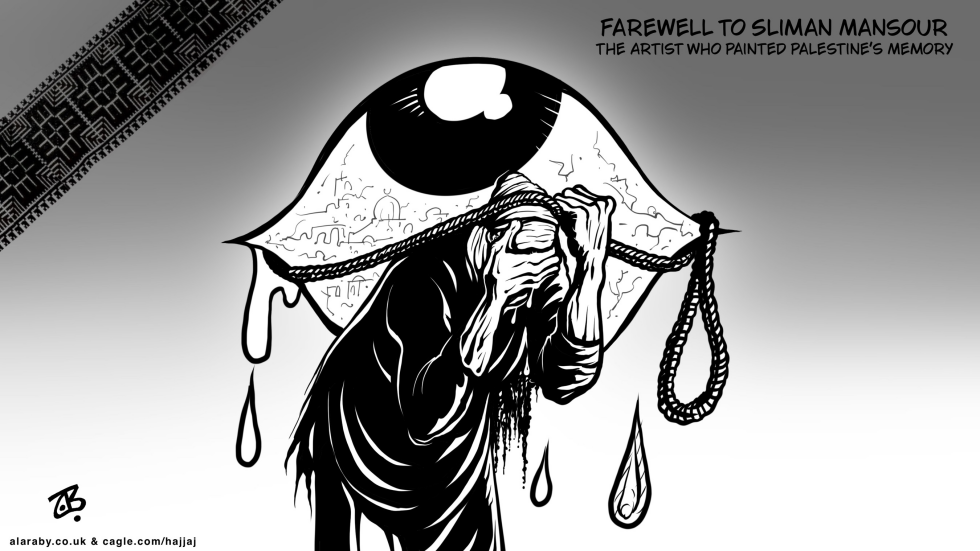
Sliman Mansour, the Palestinian artist known for works depicting national memory and identity, is remembered following his death. The tribute highlights his role in preserving cultural imagery amid ongoing regional tensions. The piece frames his legacy as a quiet act of resistance and remembrance.
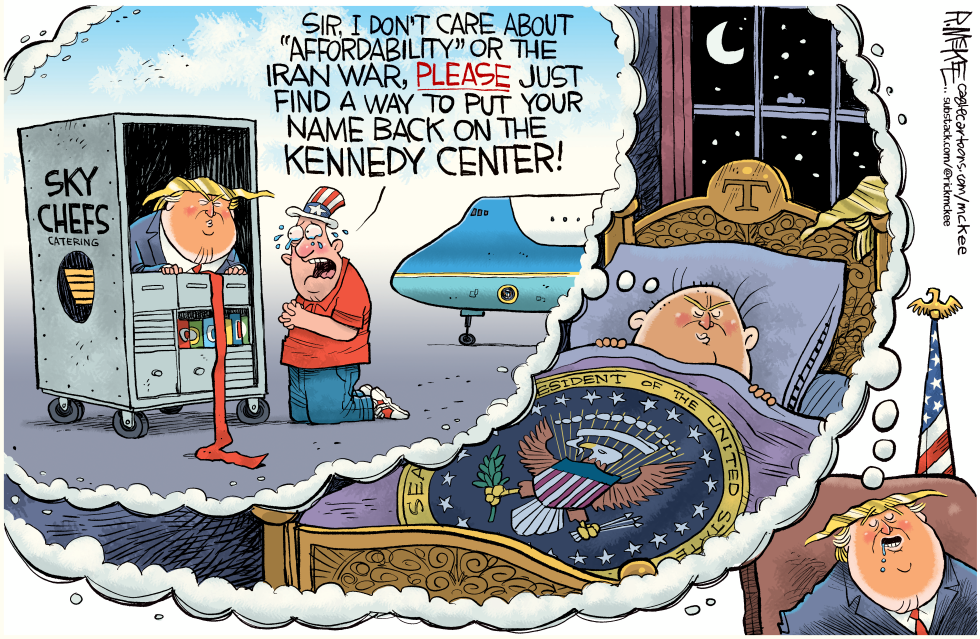
Donald Trump has repeatedly expressed interest in attaching his name to prominent public institutions. The Kennedy Center, a major arts venue in Washington, has drawn his attention as a potential target for rebranding. Critics argue such moves distract from pressing national issues including foreign conflicts and domestic spending. The cartoon depicts this fixation as a nighttime preoccupation that sidelines other responsibilities.
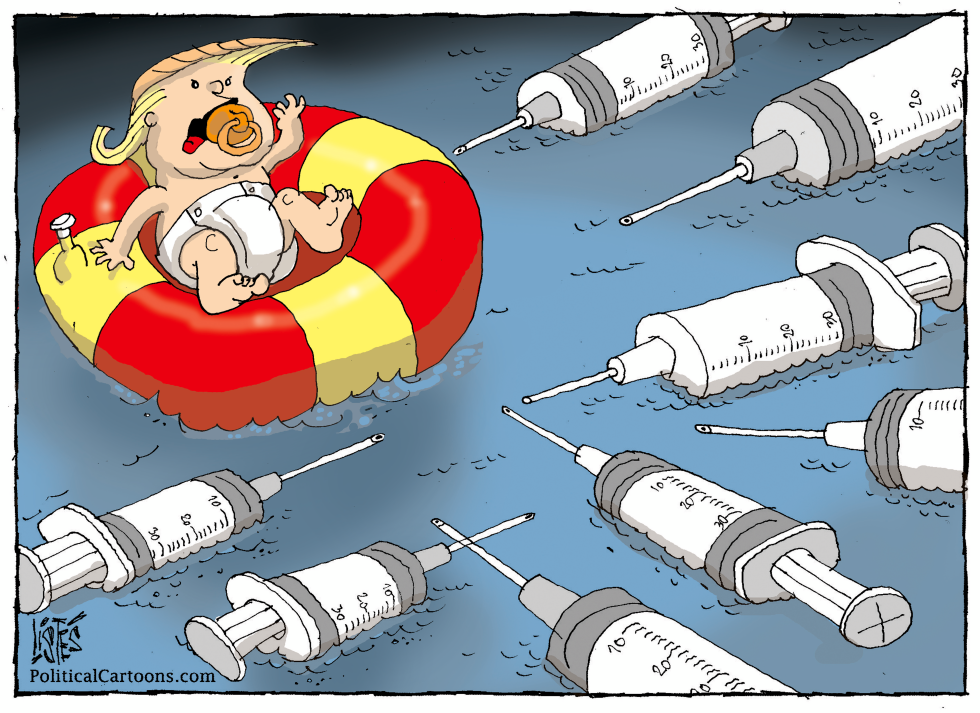
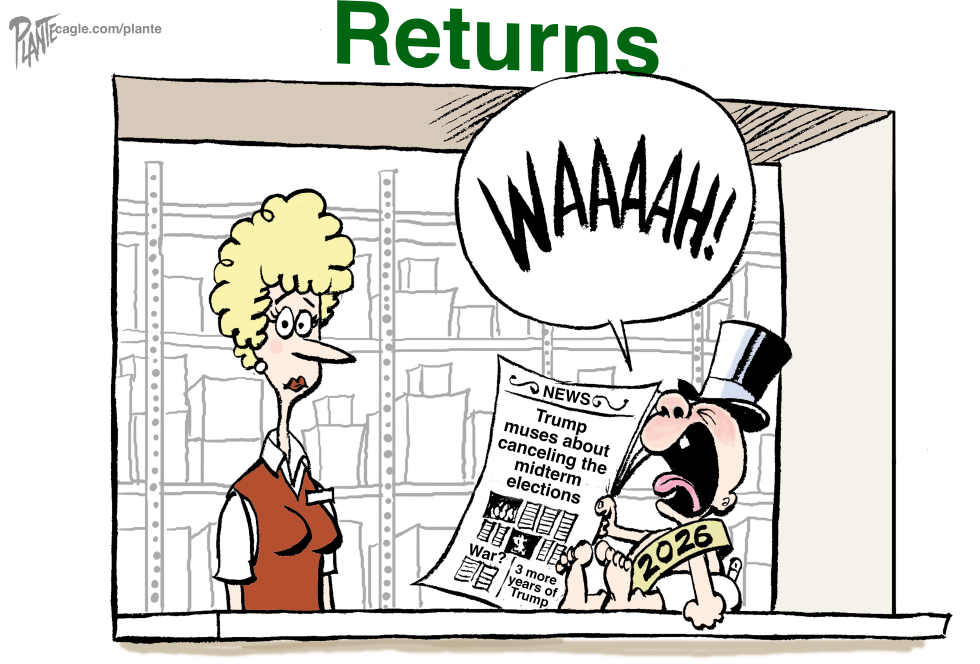
Donald Trump has maintained vocal opposition to certain vaccine mandates and public health measures in recent political discourse. The piece frames this stance through an infant metaphor to underscore perceived vulnerability and fear. It critiques the position as immature amid ongoing public health debates.
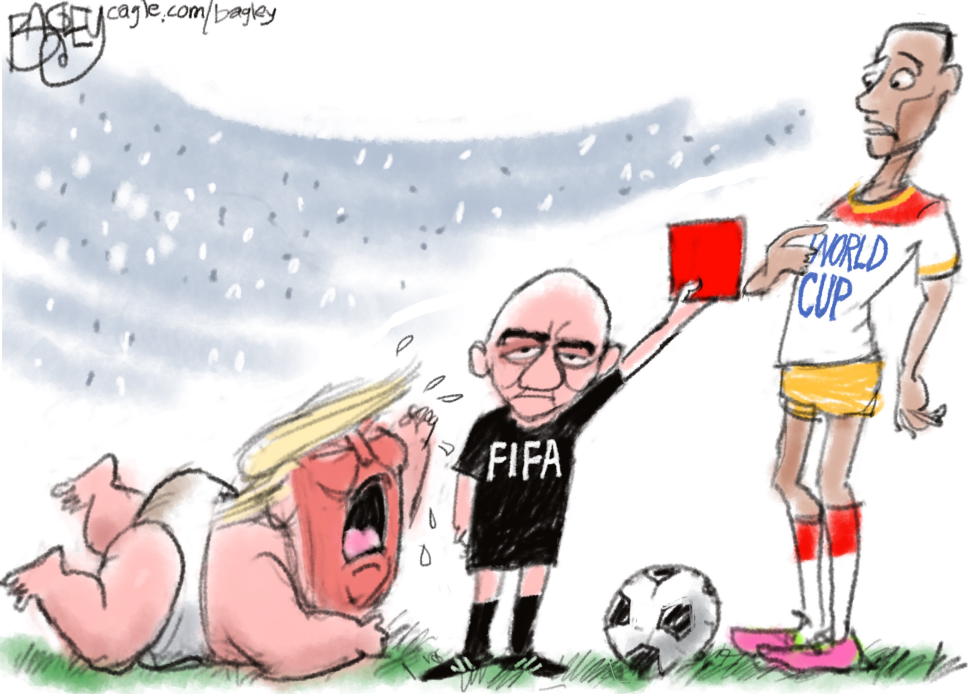
On July 6, 2026, a cartoon depicts a FIFA referee brandishing a red card at a diapered figure resembling Donald Trump sprawled on a soccer field. The oversized infant wails while a player wearing a World Cup jersey stands to the side. A soccer ball rests nearby on the grass. The scene references ongoing tensions around the 2026 World Cup hosting and political figures associated with the event.
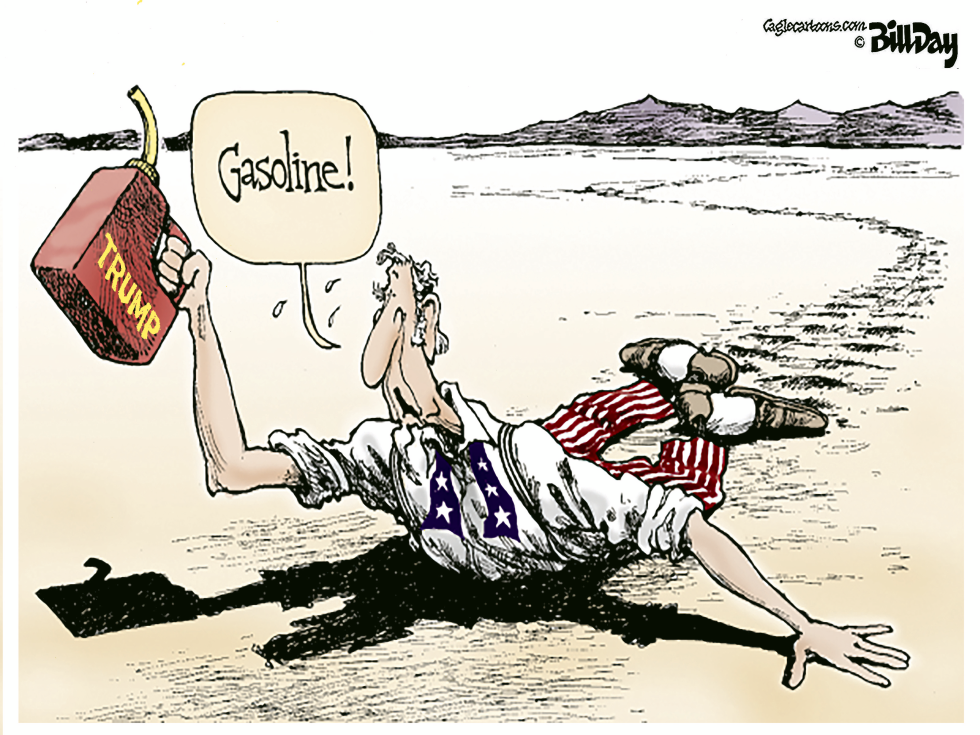
Bill Day's cartoon shows Uncle Sam in American flag attire, crawling through a sandy desert with distant mountains, his trail marking exhaustion. He grips a red gas can labeled Trump, spout dripping, and yells 'Gasoline!' in a speech bubble. The scene captures desperation for fuel, tying into political satire on energy policies. Tags like political cartoon Trump gasoline, Uncle Sam crawling desert Trump gas can, satirical cartoon high gas prices Trump, Bill Day political cartoon 2026, American flag outfit man needing gasoline, and desert survival political satire Trump underscore the visual punch.
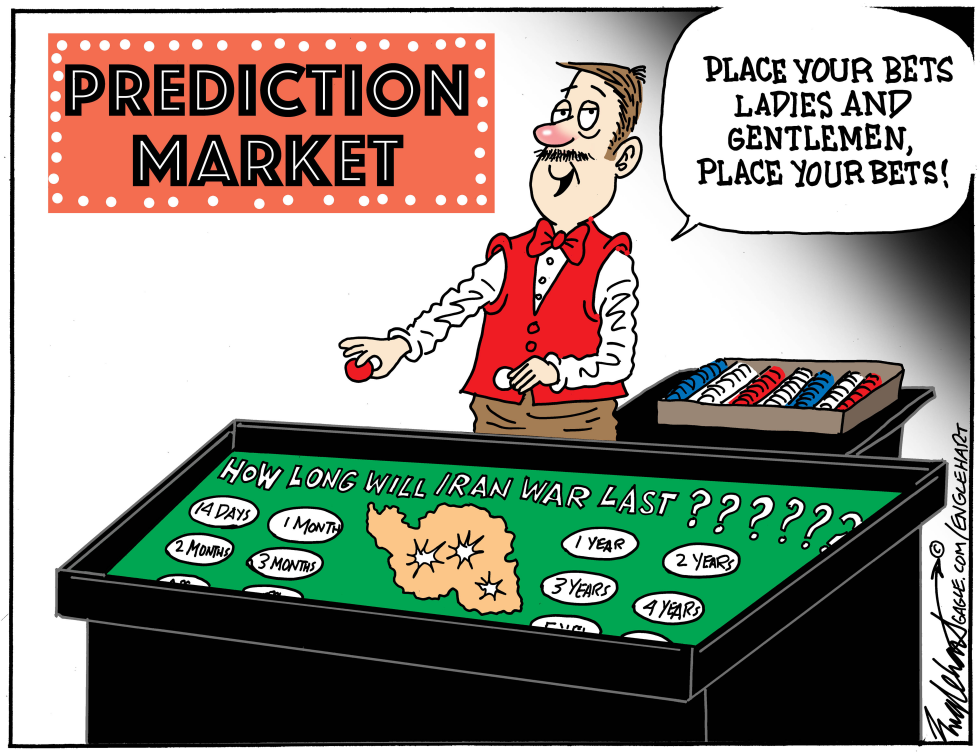
In a biting political cartoon, a smirking croupier oversees a prediction market table shaped like Iran, complete with explosion graphics, where punters can wager on war duration options ranging from 14 days to 5 years. This satirical take skewers the commodification of geopolitical betting, turning grave matters like Iran war into casino-style gambles. By blending elements of gambling on war with Middle East conflict, the artwork highlights the absurdity of prediction markets applied to real-world crises, offering humorous yet insightful commentary on how society speculates on political humor and potential catastrophes. The irreverent style underscores the folly of treating war length wager as just another market fluctuation.
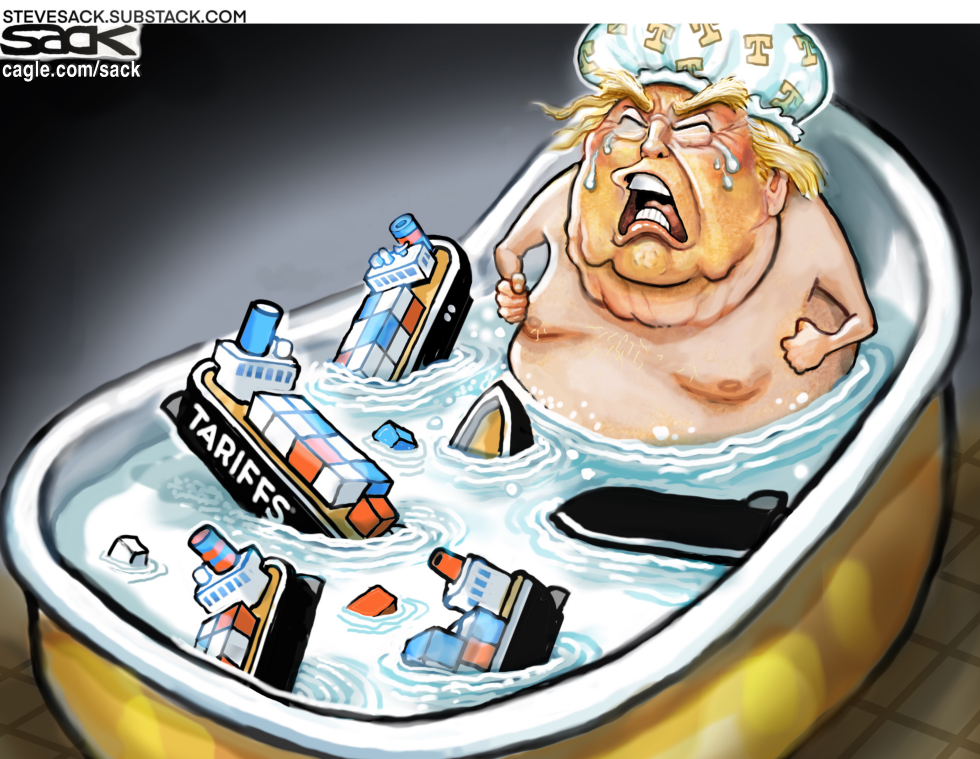
The cartoon depicts Donald Trump in a bathtub wearing a shower cap while toy ships marked tariffs sink amid ice-like obstacles. It responds to ongoing trade policy developments involving tariffs as of the February 2026 publication date.
This biting political cartoon by Daryl Cagle depicts Donald Trump in his signature suit, his red tie extending into a coil of red tape that binds a furious, bearded figure representing Iran, complete with an 'iRan' hat. The image satirizes US-Iran relations, highlighting how bureaucracy and sanctions create entanglements in foreign policy. Trump's calm demeanor contrasts with Iran's angry struggle, underscoring the Trump administration's approach to Middle East diplomacy. Through clever visual metaphor, it comments on the nuclear deal fallout and ongoing tensions, making it a sharp piece of political humor that's both insightful and irreverent.
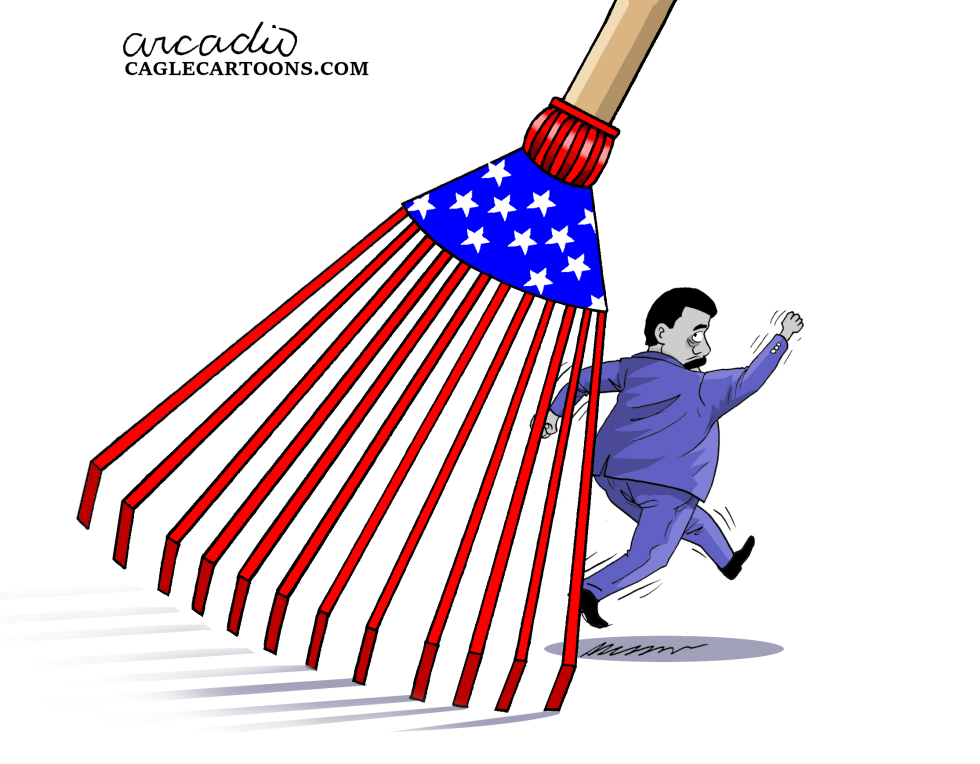
Arcadio Esquivel's cartoon shows a giant rake with the US flag's blue stars and red stripes bearing down on a portly man in a suit, running away with a cry of 'HELP!' The image ties into tags like Trump, Venezuela, Maduro, narcodictator, drugs, and cartels, illustrating America's aggressive stance against the Venezuelan leader accused of narco ties. Such visuals often highlight the ongoing tensions, with the US depicted as an unrelenting force sweeping in. Cartoons like this thrive on simple metaphors, here using a rake to suggest raking over or pursuing Maduro relentlessly. The dry humor lies in the absurdity of the oversized tool chasing a fleeing figure, a nod to real-world indictments and sanctions. Syndicated through Cagle Cartoons, it fits the mold of international commentary that's sharable and pointed.
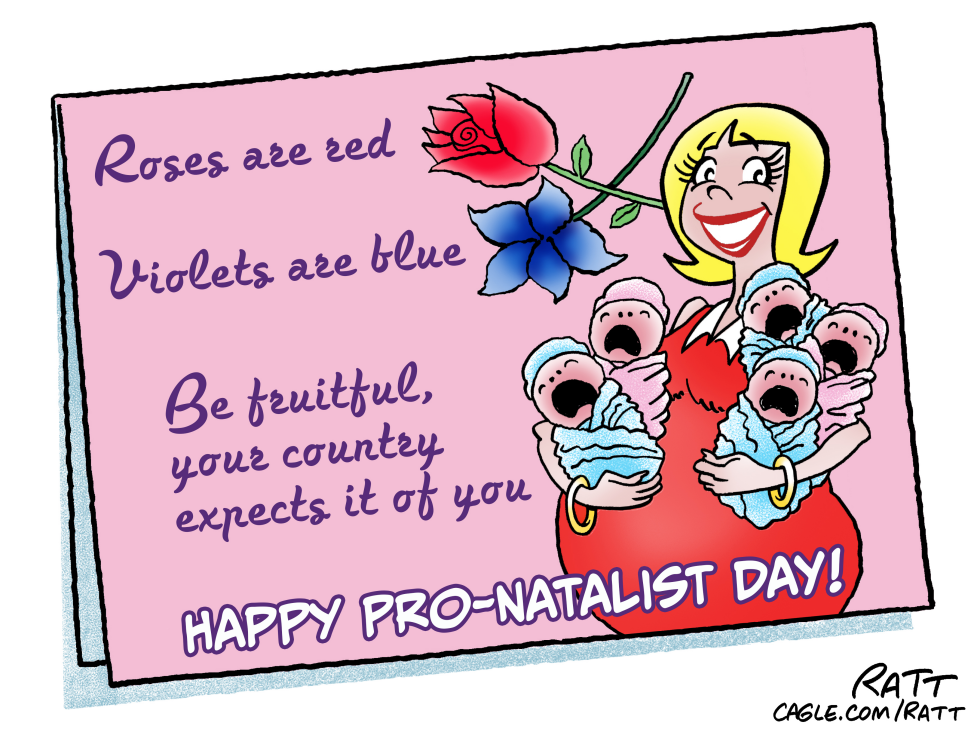
The image depicts a pink greeting card styled for Mother's Day but twisted into a pronatalist message. A blonde woman in a red dress smiles broadly while holding six crying babies wrapped in blue. Above her, a red rose and blue violet accompany the text 'Roses are red, Violets are blue, Be fruitful, your country expects it of you.' The bold footer reads 'HAPPY PRO-NATALIST DAY!' Signed by artist Ratt from Cagle.com. This setup uses tags like pronatalism, childbirth, pregnancy, family planning, tradwife, and Elon Musk to poke at demographic urgings without deeper inference. The composition keeps it light, with the woman's grin contrasting the babies' wails, all on a simple pink background.