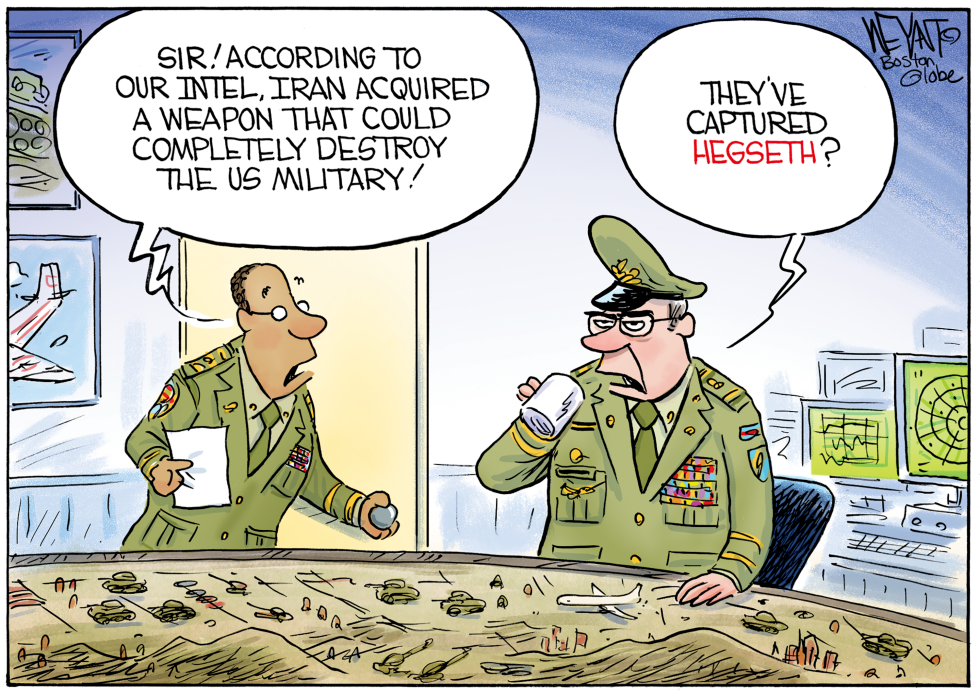
On September 16 2026 a cartoon depicted two US military officers reacting to intelligence about an Iranian weapon capable of destroying the American military. The senior officer immediately identifies Pete Hegseth as the captured asset in question. The piece responds to ongoing debate over Hegseth's fitness for senior defense leadership and questions whether his presence undermines readiness more than external adversaries.
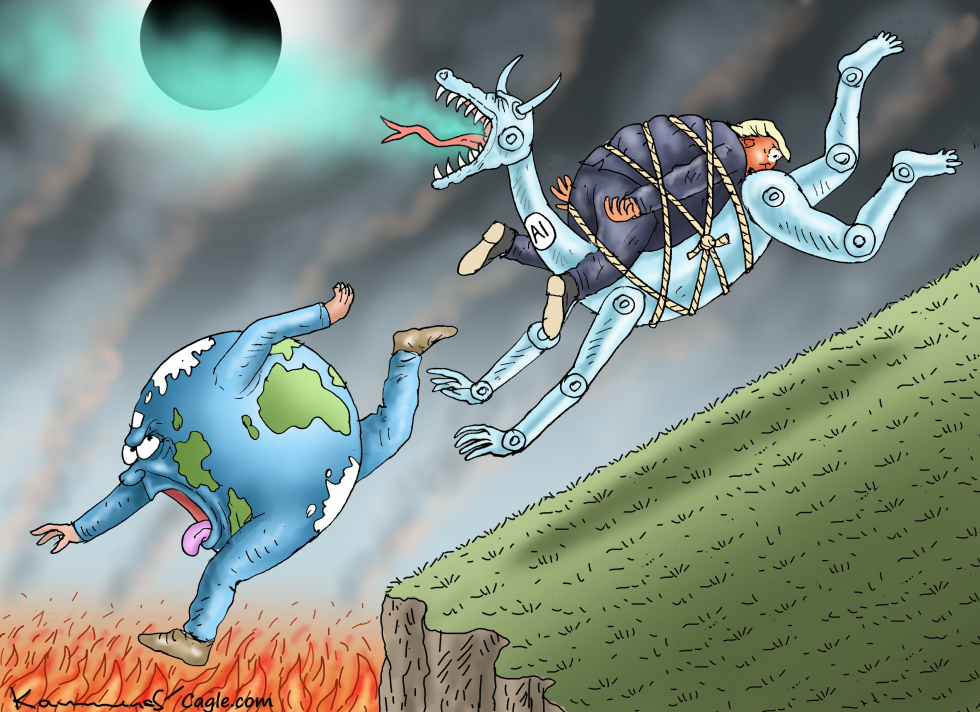
On September 16, 2026, the cartoon responds to growing public alarm over rapid AI development and its potential to disrupt or destroy human society. Donald Trump appears bound to an AI dragon, symbolizing political entanglement with the technology. The piece argues that such alliances accelerate humanity's peril rather than mitigate it, urging caution in policy and leadership choices around emerging tech.
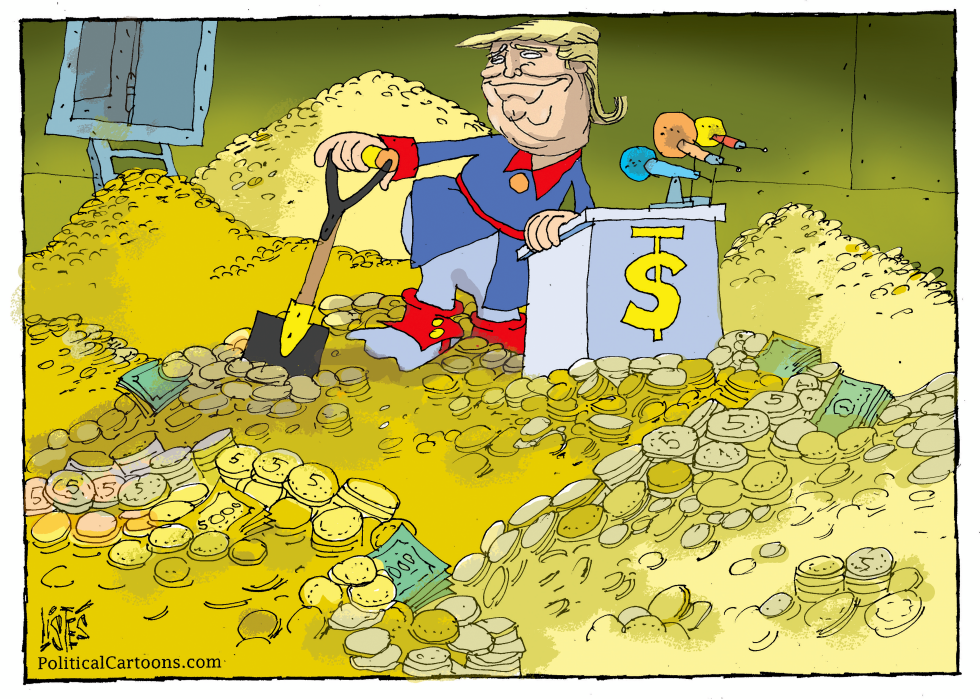
Donald Trump remains a central figure in debates over wealth and political power as of September 2026. The cartoon responds to ongoing scrutiny of how personal fortune intersects with public life and policy influence. It portrays the former president amid symbols of money to critique that dynamic. The editorial position frames Trump's association with wealth as a defining and problematic feature of his political presence.
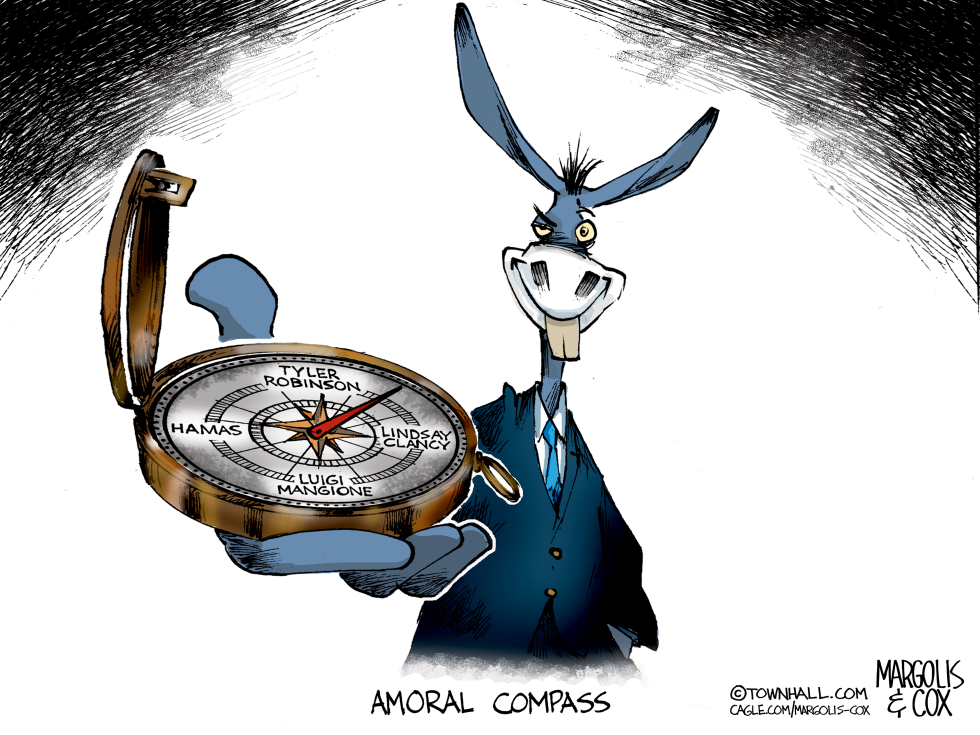
On September 11, 2026, a political cartoon by Margolis & Cox depicts the Democratic Party's moral framework as broken by associating it with figures such as Luigi Mangione, Lindsay Clancy, Tyler Robinson, and Hamas. The piece argues that progressive tolerance for these cases reveals a deeper ethical failure. It matters because public trust in political morality shapes elections and policy debates. The cartoon takes the position that the left has abandoned consistent principles in favor of selective outrage.
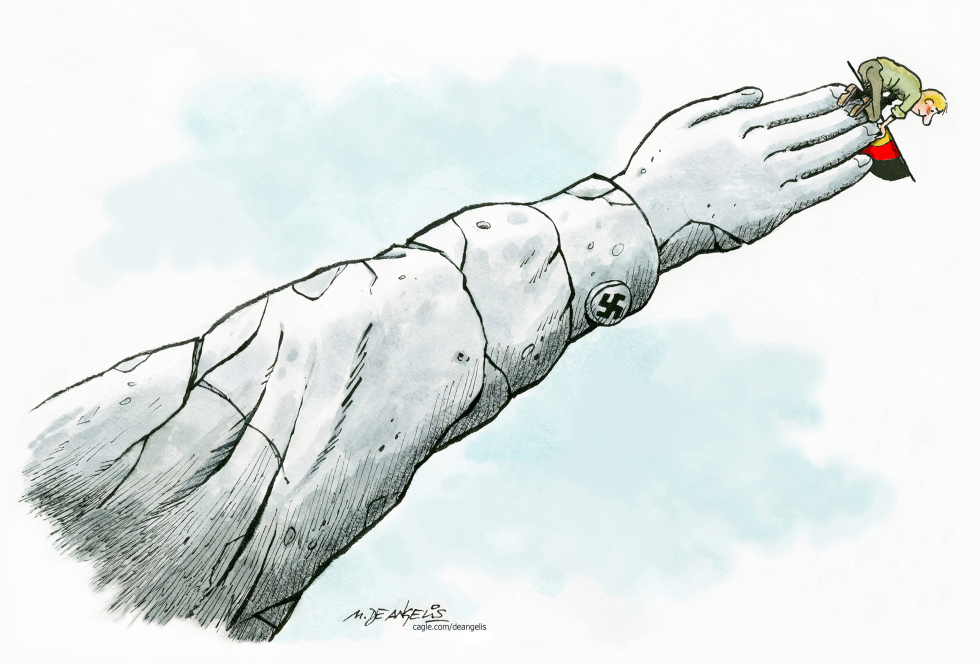
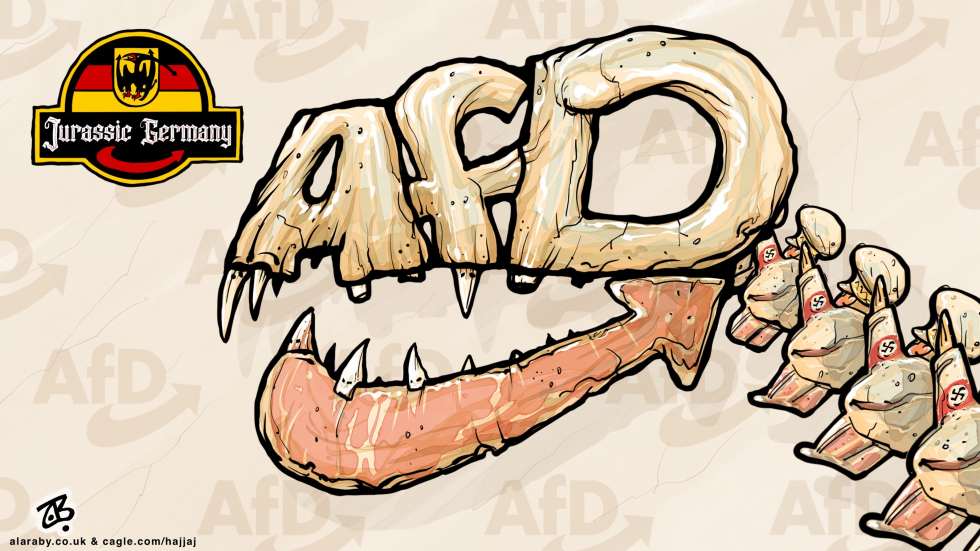
Concerns over far-right political gains in Germany have intensified in recent years, with parties embracing nationalist rhetoric drawing scrutiny for echoing historical extremist movements. The development matters because it tests the resilience of post-war democratic institutions in Europe's largest economy. The cartoon argues that such influences continue to exert a controlling grip on German political life despite decades of denazification efforts.
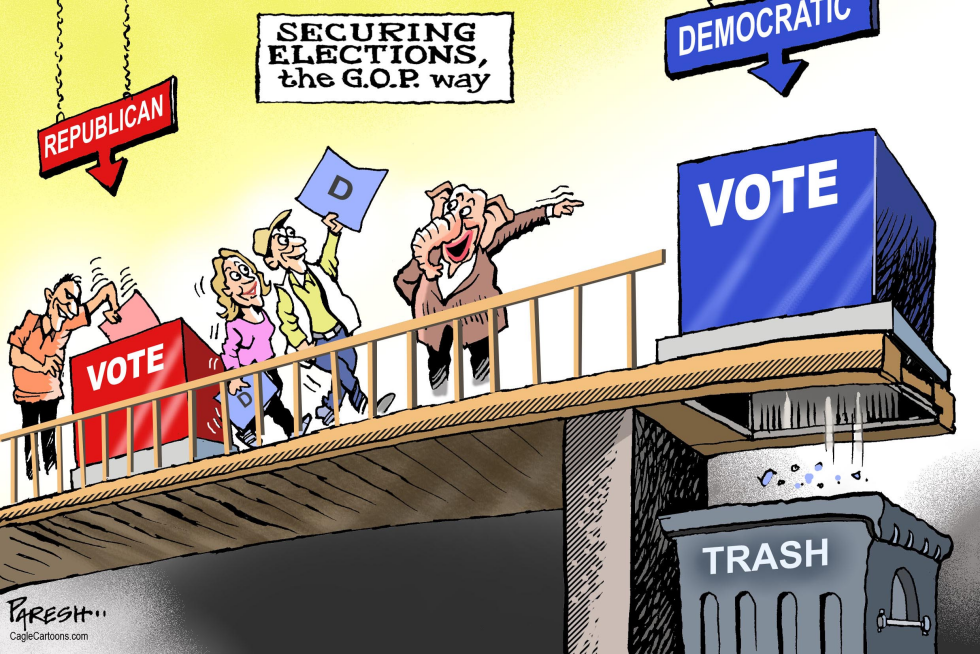
The cartoon depicts Republicans on a platform guiding a large blue vote box labeled Democratic into a trash can below while a red Republican vote box remains on the structure. A sign reads Securing Elections the G.O.P. way. The elephant symbol of the GOP points toward the action as figures including one holding a D flag stand nearby. The image comments on claims of election integrity by showing ballots from one party discarded. This reflects ongoing partisan debates over voting procedures and access as of the 2026 publication date.
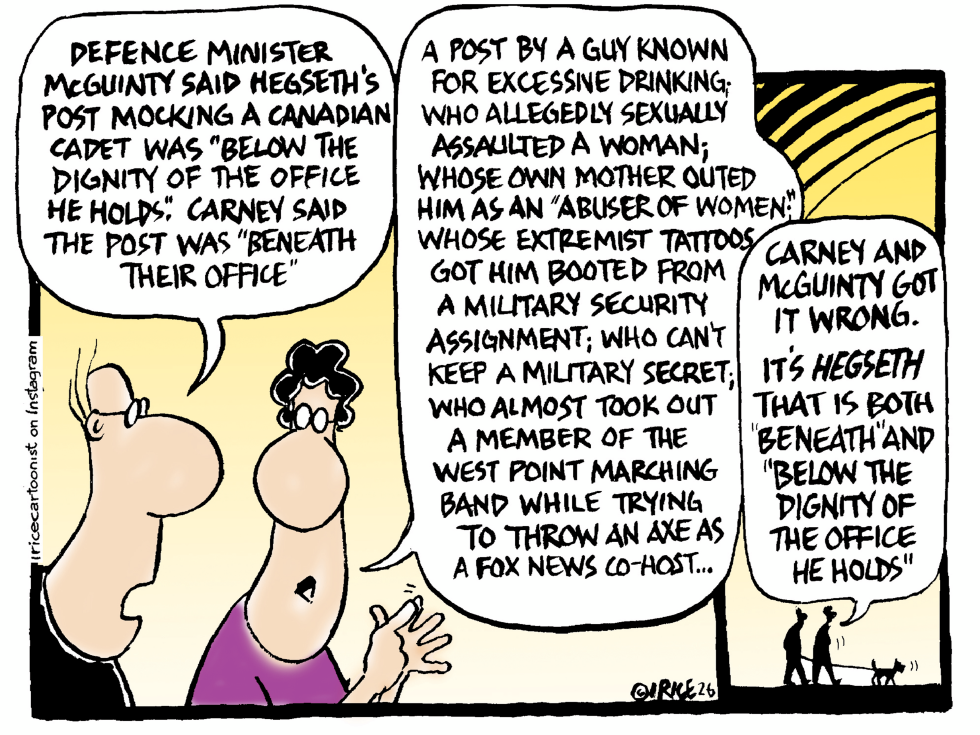
Canadian Defence Minister David McGuinty and Mark Carney publicly condemned a social media post by Pete Hegseth mocking a Canadian cadet, calling it beneath the dignity of the office. The remarks came amid Hegseth's nomination process for a senior U.S. defense position. The cartoon argues the ministers have the assessment backward, pointing instead to Hegseth's history of alleged misconduct, security clearance problems, and public incidents as the true disqualifiers. This reflects ongoing debate over nominee vetting standards and cross-border political commentary on U.S. appointments.
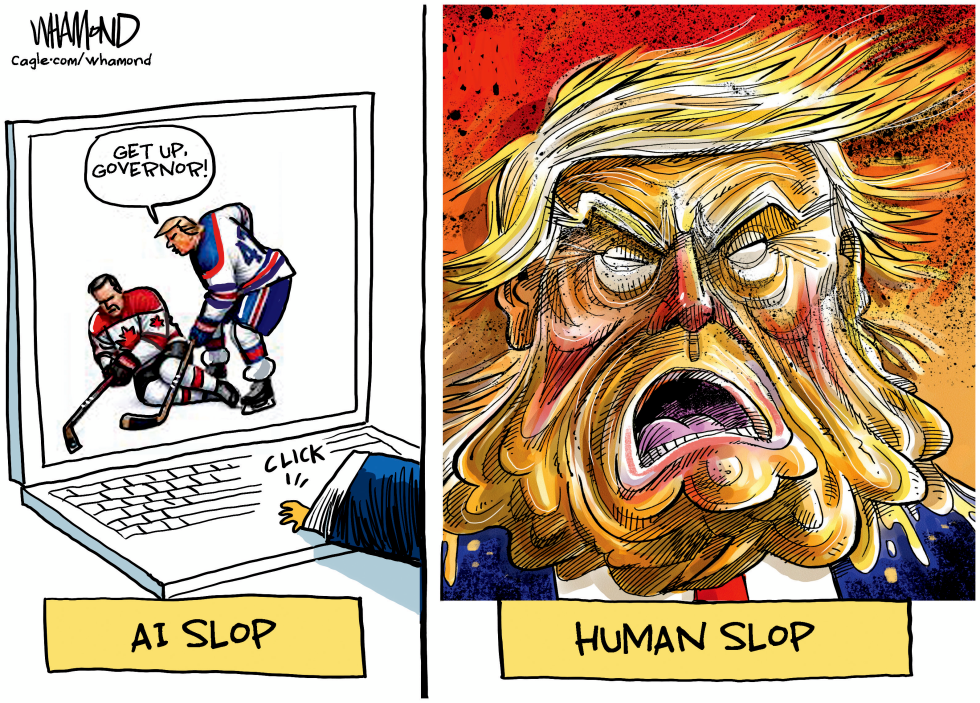
AI tools produce flawed political images while human artists create equally flawed ones. The piece highlights declining quality in both digital generation and traditional caricature of figures like Donald Trump. It argues neither approach delivers credible or effective visual commentary.
The Alternative for Germany party posted strong results in recent state and national contests, drawing renewed scrutiny over its tolerance for extremist elements. The outcome matters because AfD now holds significant parliamentary seats and influences policy debates on immigration and national identity. The cartoon argues that these gains risk normalizing symbols and rhetoric long associated with Germany's darkest chapter.
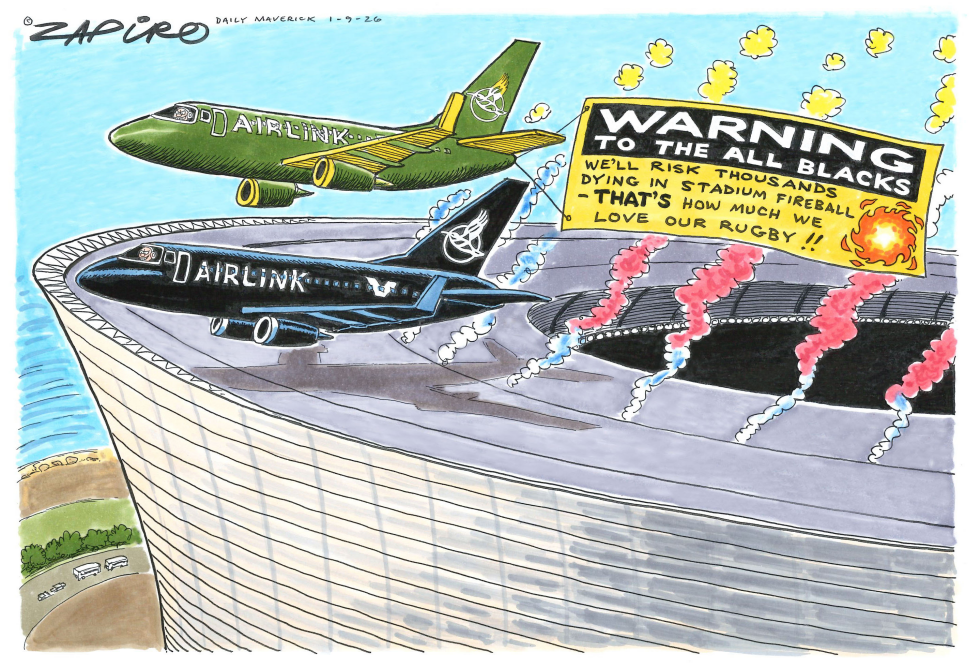
Airlink flights near a major rugby stadium have prompted direct warnings to the All Blacks team and fans about the danger of a stadium fireball. The incident underscores ongoing tensions between aviation safety protocols and large public events. The cartoon argues that intense rugby loyalty is leading supporters to accept unacceptable risks to life.
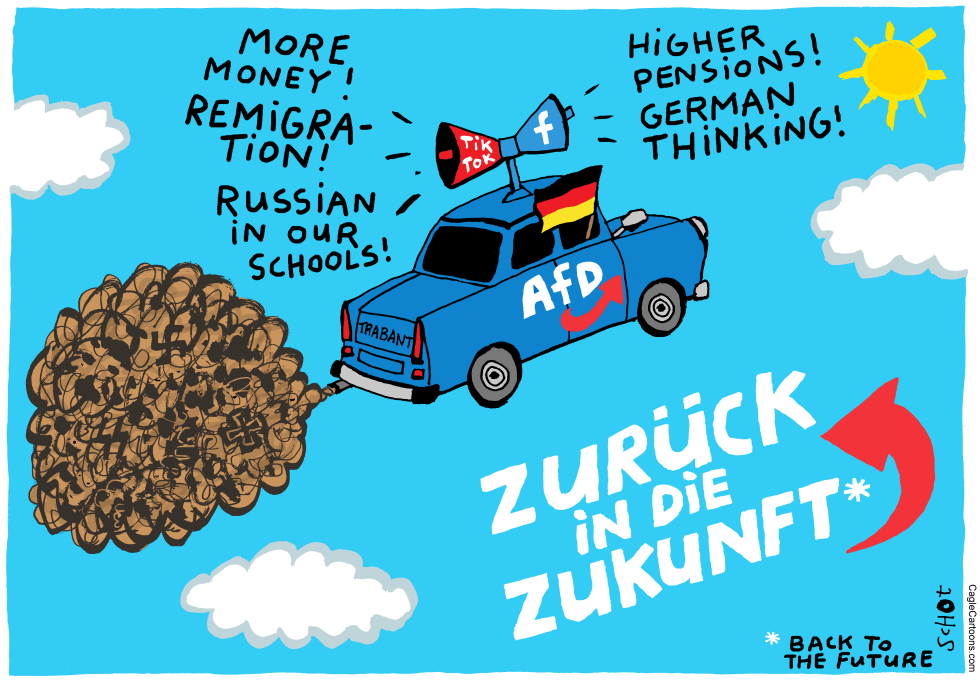
Germany's AfD secured major election gains in 2026 on pledges of remigration, higher pensions and anti-foreign rhetoric. The result raises alarms over the party's tolerance for extremist elements. The cartoon frames the victory as a dangerous retreat into past ideologies rather than genuine progress.
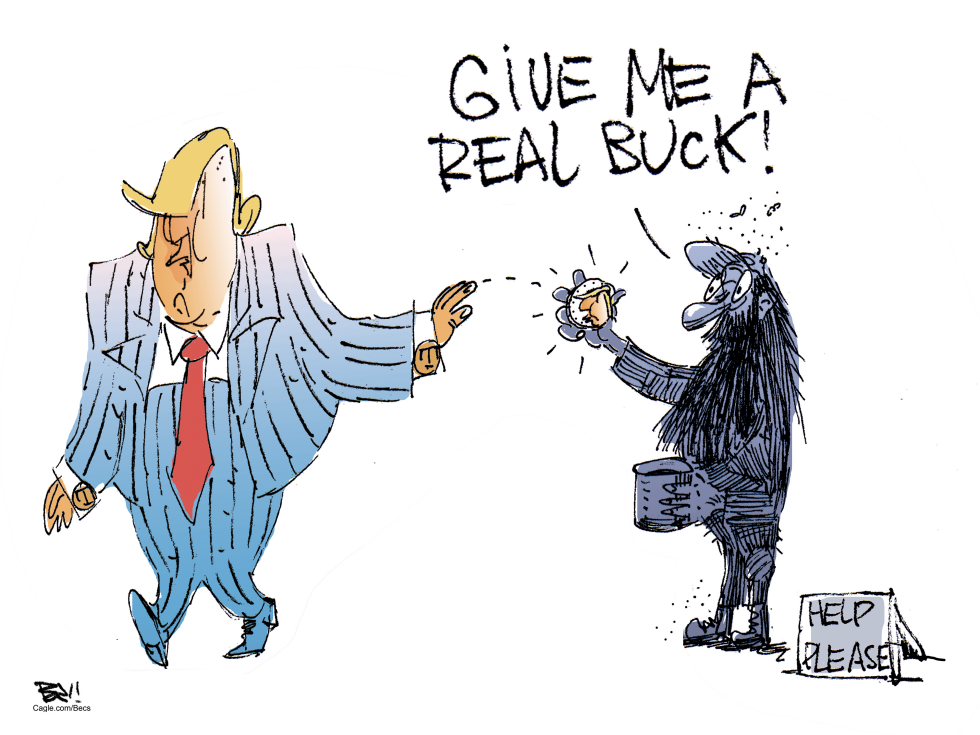
Donald Trump promotes a dollar bearing his image as a symbol of economic strength. The move draws immediate public pushback questioning its actual worth. Critics argue the branding fails to address underlying fiscal challenges. The cartoon frames the dollar as an unconvincing substitute that fails to satisfy basic needs for credible value.
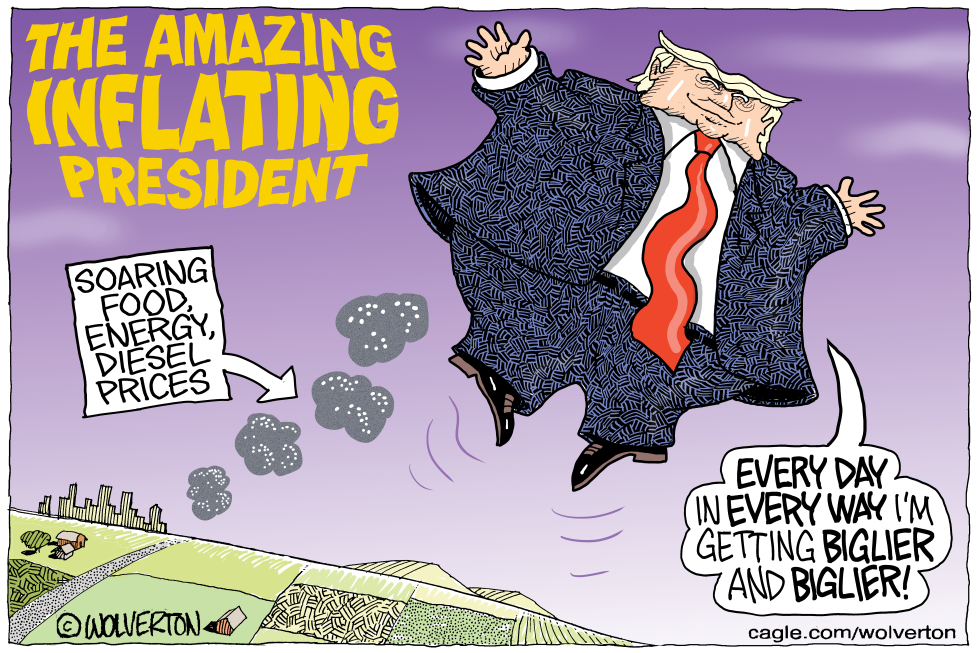
The cartoon depicts Donald Trump as an inflating balloon figure rising above a rural scene with a city skyline. A sign points to gray clouds labeled soaring food energy and diesel prices. Trump declares in a speech bubble that he is getting biglier every day. Published on September 4 2026 the work responds to ongoing concerns over inflation and household costs during the Trump presidency. The visual metaphor connects the president's public presence to the expansion of prices across key sectors.
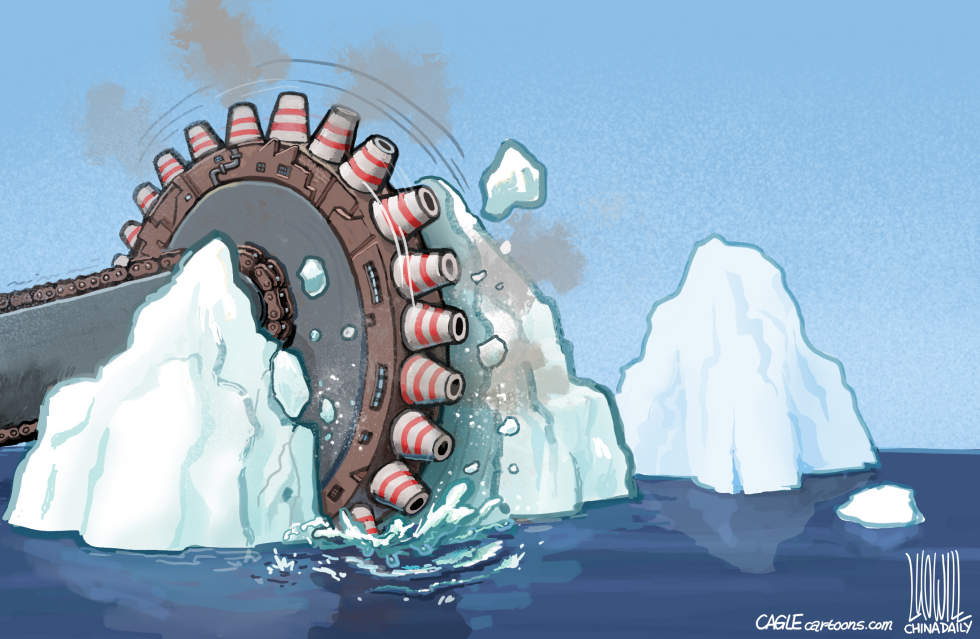
The cartoon depicts a large industrial drilling machine actively breaking through Arctic ice floes in open water. The machine features multiple red-and-white striped cylindrical components and emits dark exhaust. Icebergs float nearby under a clear sky. Published by China Daily, the image addresses ongoing concerns over resource extraction in polar regions and its contribution to ice loss.
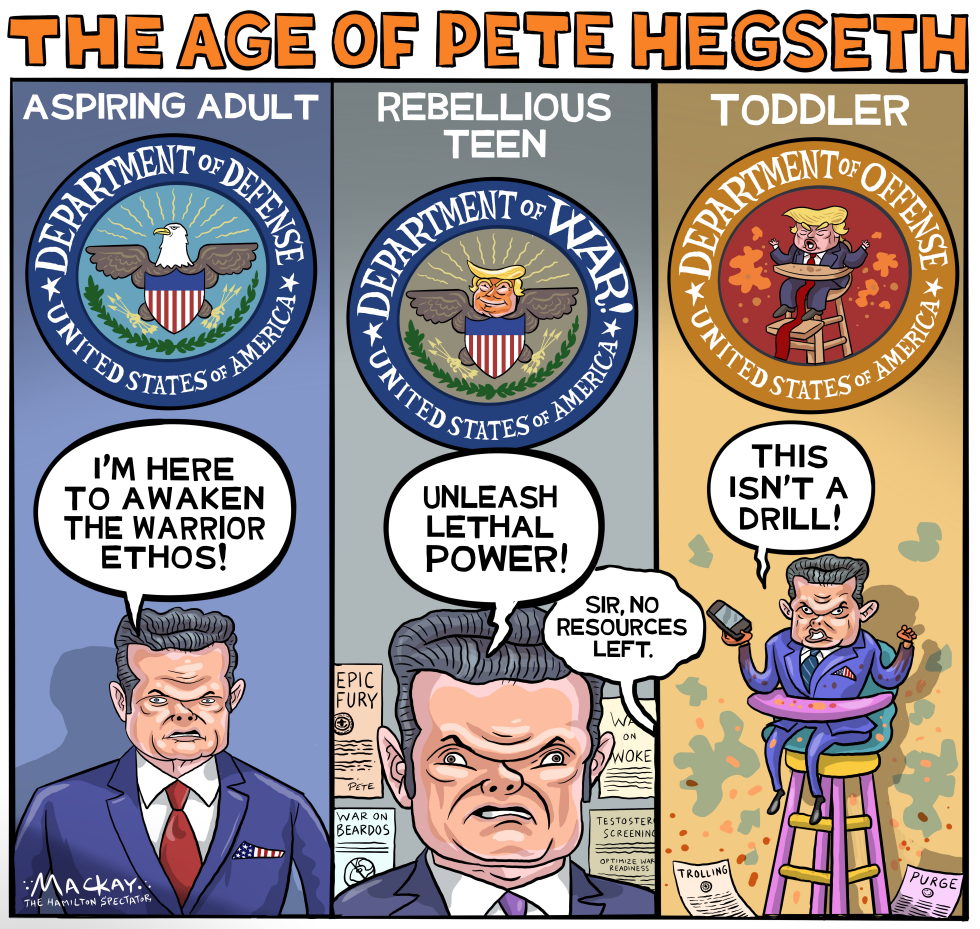
The cartoon by Graeme MacKay portrays Pete Hegseth's progression through three stages at the Pentagon under President Trump. In the first panel Hegseth pledges to awaken the warrior ethos at the Department of Defense. The middle panel shows him calling to unleash lethal power while an aide reports no resources remain. The final panel depicts a toddler Trump at the Department of Offense with Hegseth as a frantic aide amid papers about testosterone screening and purges. The work comments on the Trump administration's approach to military leadership and policy priorities as of September 2026.