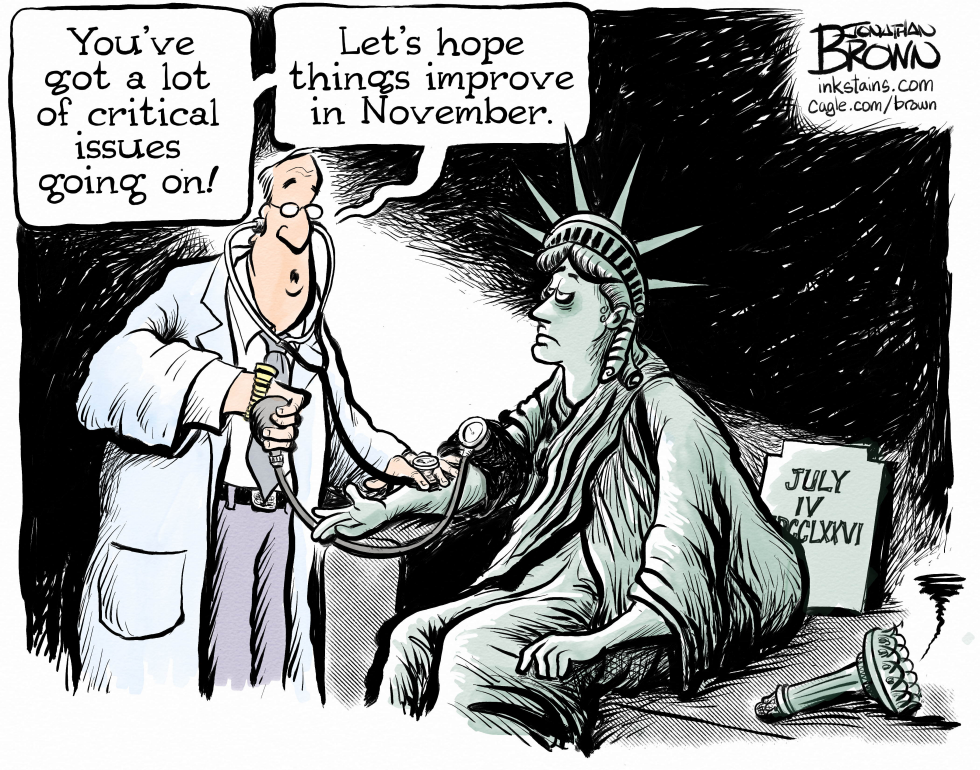
The cartoon depicts a doctor examining the Statue of Liberty's blood pressure and noting numerous critical issues. The Statue responds with hope that things will improve in November. A sign references July 4, 1776, and a broken torch rests on the ground. Published on September 15, 2026, the image uses the iconic figure to comment on the state of the nation ahead of upcoming elections. The visual metaphor highlights concerns about American institutions and public sentiment.
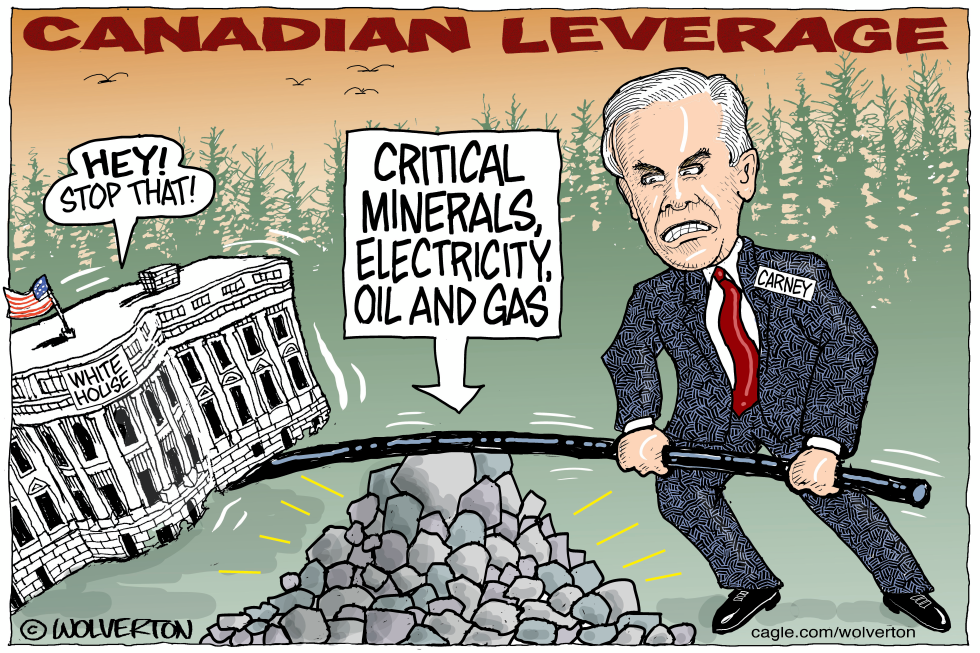
The cartoon depicts former Bank of Canada governor Mark Carney using a pipe labeled critical minerals, electricity, oil and gas as a lever to damage the White House. A speech bubble from the building protests the action. Published on September 12, 2026, the image comments on ongoing Canada-US tensions over resource exports and trade policy. Carney is shown in a suit with a determined expression, standing on rubble. The visual underscores Canada's potential to restrict supplies vital to the American economy. It reflects real-world discussions about critical minerals and energy interdependence between the two nations.
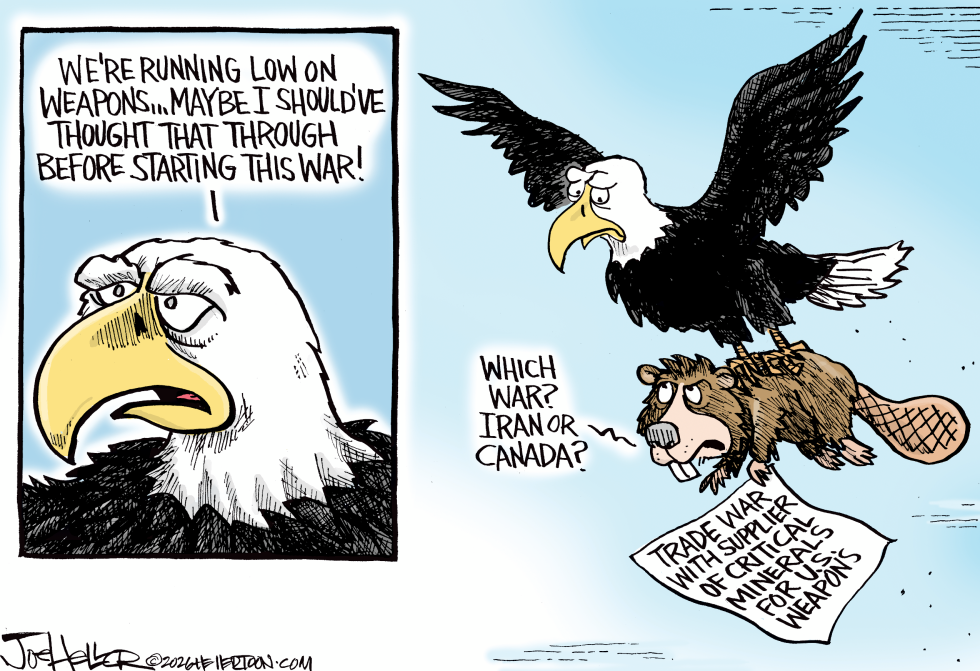
The United States faces potential weapons shortages linked to trade tensions with Canada, a key supplier of critical minerals, while also managing conflicts involving Iran. The situation highlights risks to military readiness from disrupted supply chains. The piece argues that initiating trade disputes with essential partners undermines defense capabilities at a critical time.
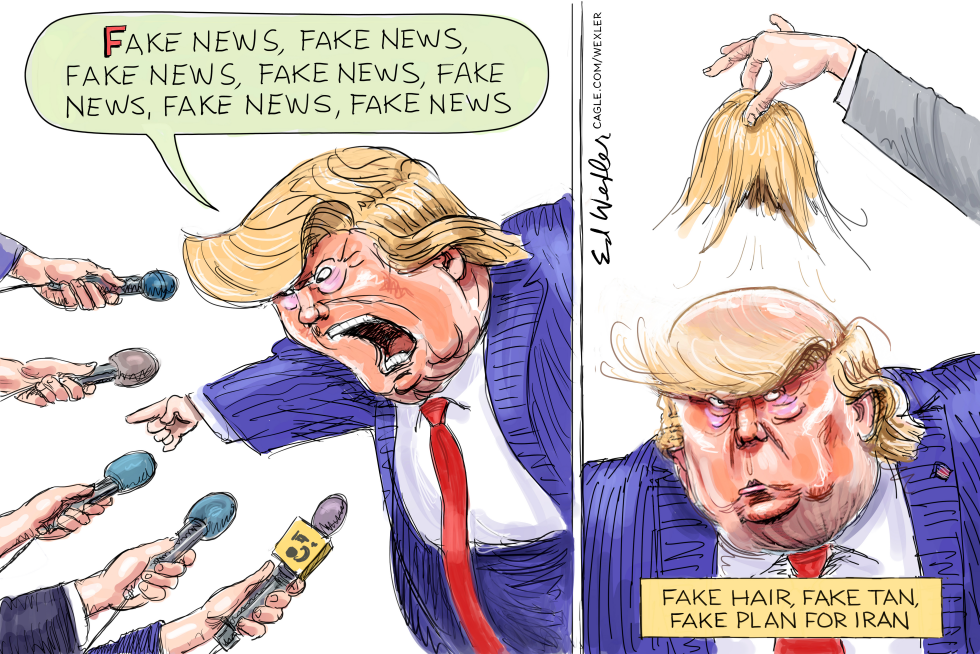
Donald Trump repeatedly labels media coverage as fake news during press encounters. The cartoon responds by questioning the authenticity of his appearance and his approach to Iran policy. It portrays the disconnect between his public statements and underlying realities.
Elon Musk's public commentary on cryptocurrency markets continues to drive price swings and investor attention in 2026. His recent statements coincide with renewed volatility in Bitcoin trading. The editorial takes a critical view of how such high-profile interventions amplify market instability rather than stabilize it.
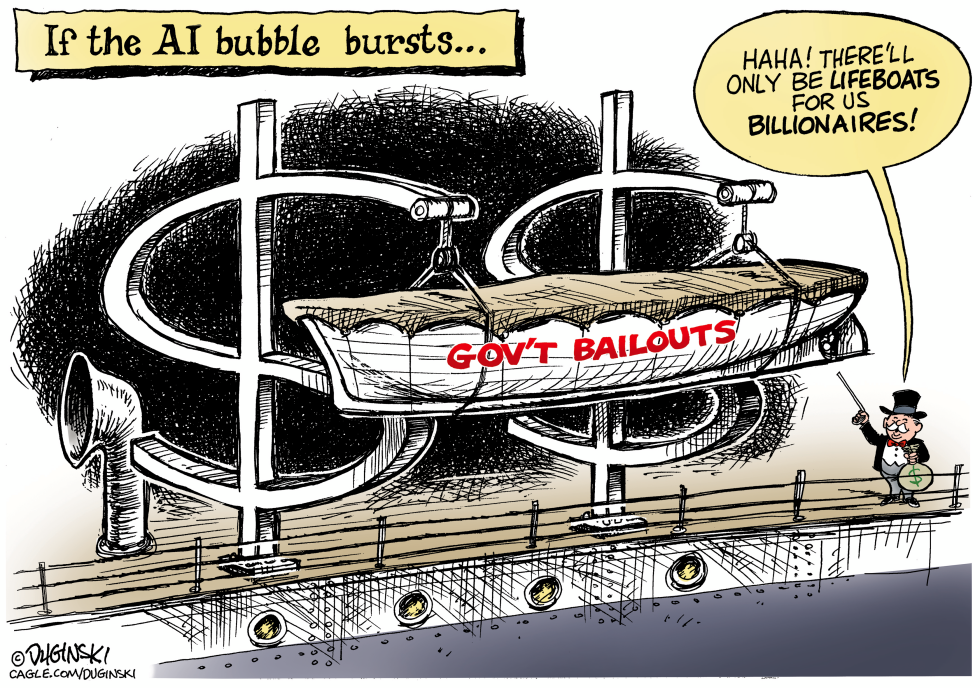
Speculation grows over potential government intervention if the artificial intelligence sector experiences a sharp downturn. Industry leaders and investors face questions about whether public funds would support failing companies. The editorial argues that any such support would primarily protect billionaires rather than address wider economic fallout from overvalued tech assets.
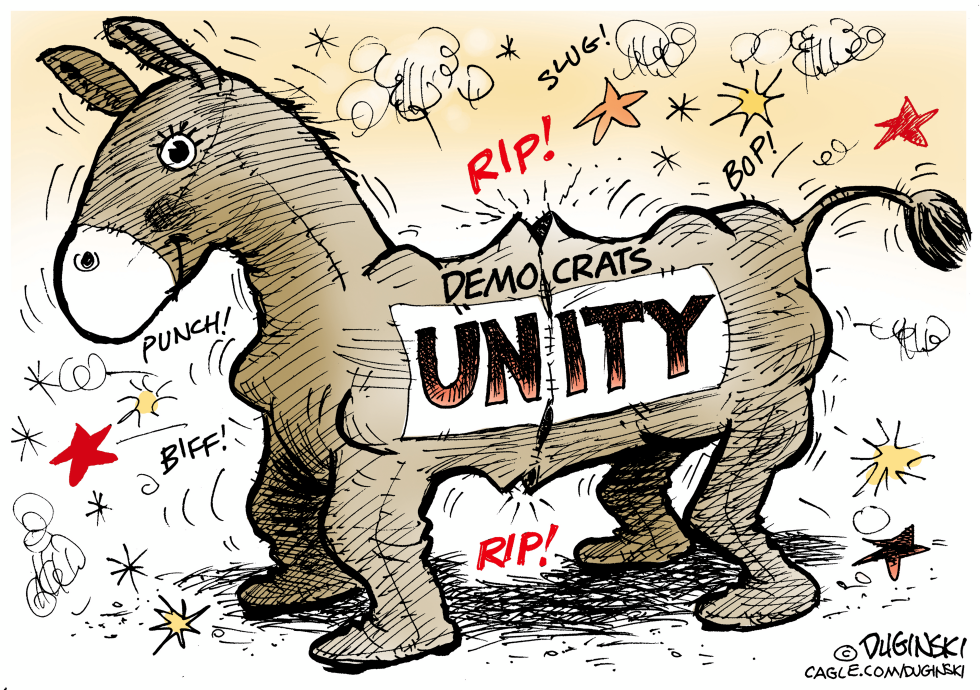
Democrats continue to display public divisions over strategy and messaging in the run-up to midterm and presidential contests. Party leaders struggle to project cohesion on issues ranging from economic policy to social priorities. The resulting perception of disarray weakens their ability to counter Republican narratives and mobilize voters. The cartoon highlights how these internal conflicts undermine the party's core message of unity.
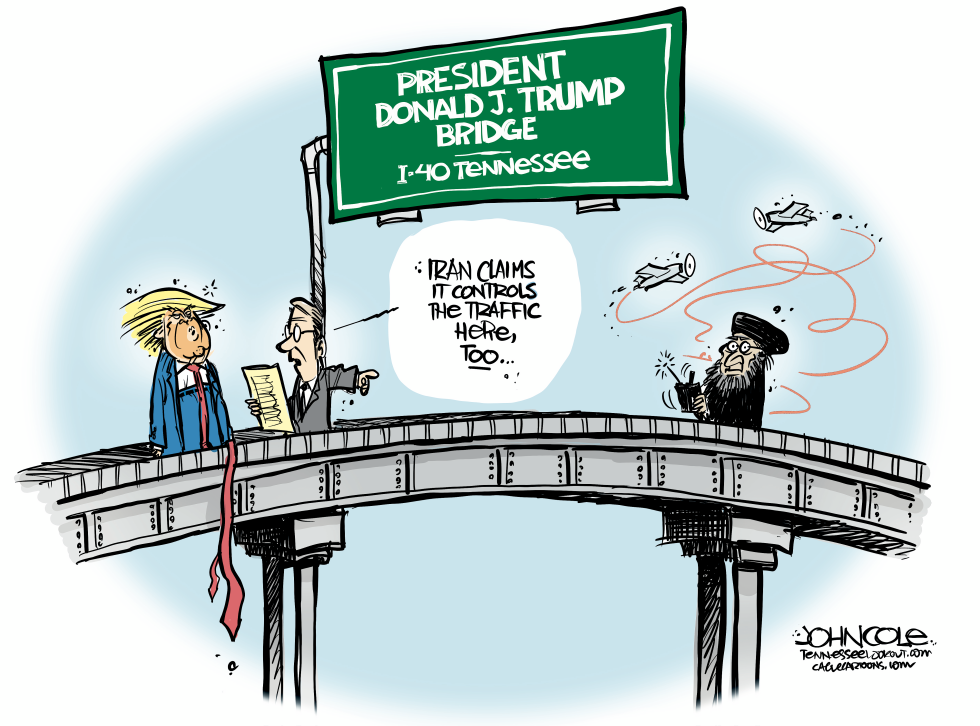
President Donald J. Trump attended the naming of the President Donald J. Trump Bridge on I-40 in Tennessee. The event drew attention when an Iranian figure appeared to claim control over traffic on the span. The development highlights ongoing tensions with Iran over shipping lanes and international routes. The cartoon frames the claim as an extension of Iran's broader pattern of asserting dominance over key passages. It positions the bridge naming as a domestic moment overshadowed by foreign threats.
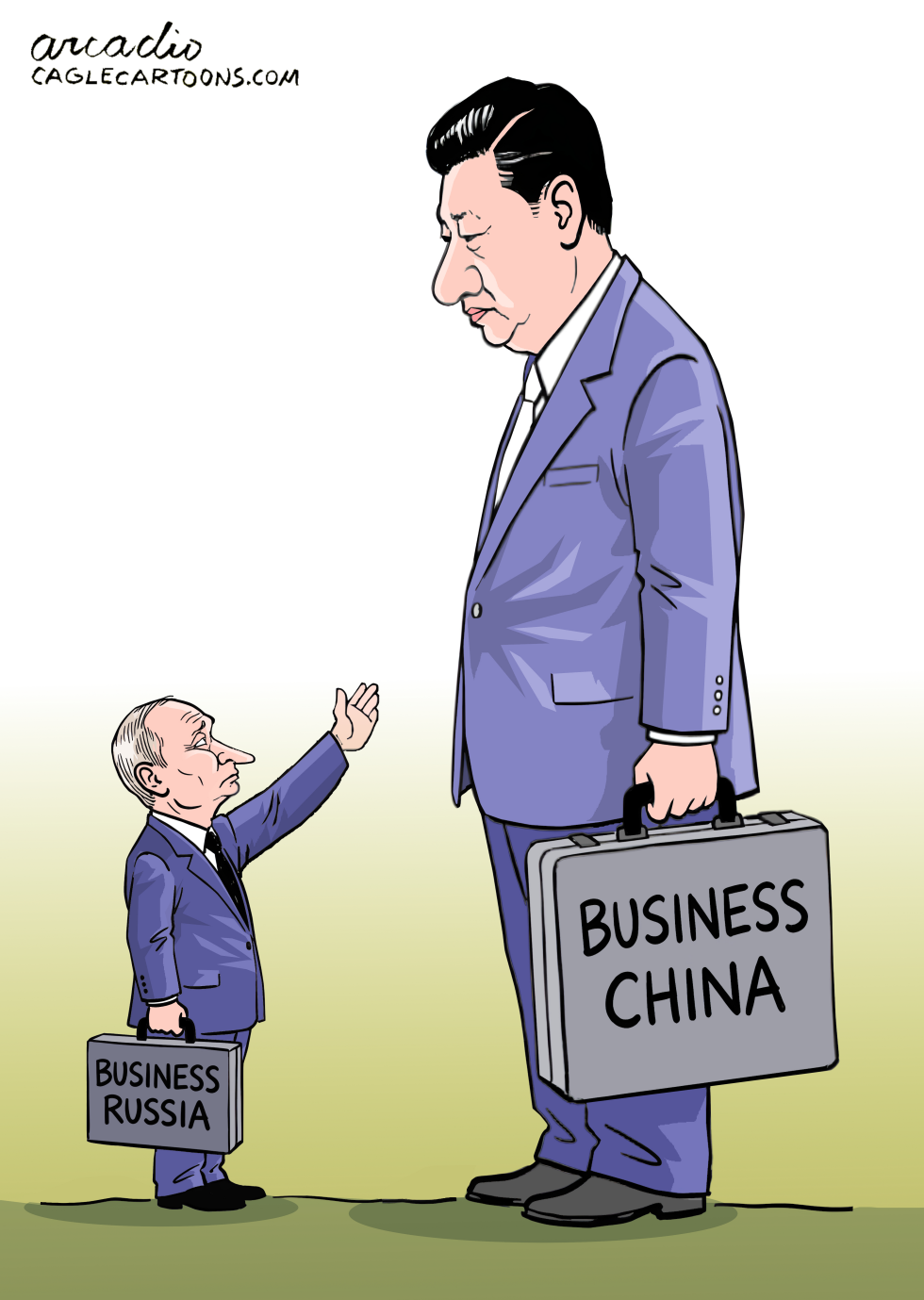
China and Russia continue deepening economic cooperation amid Western sanctions on Moscow. Xi Jinping's government provides critical markets and technology to Russia while extracting favorable terms. The cartoon underscores the unequal power dynamic in their partnership.
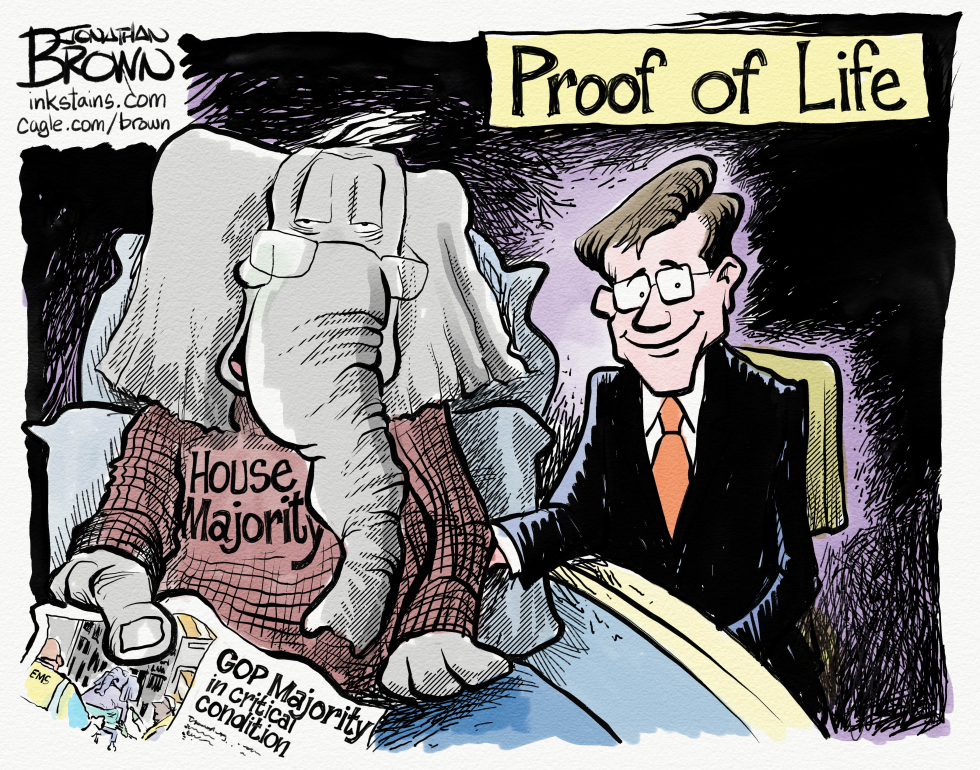
The cartoon shows the Republican-controlled House majority as an elephant patient in a hospital bed, hooked to an IV and covered by a blanket. A smiling man in a suit sits beside the bed holding the trunk. A newspaper on the bed reads that the GOP Majority is in critical condition. A banner overhead reads Proof of Life. The image comments on the narrow and precarious nature of the Republican House majority in mid-2026.
The image presents Lindsey Graham in an obituary format dated 2026. It lists his birth and death years alongside a quote labeling him a consistent supporter of military engagements. The composition places the figure on the right with text blocks on the left. Publication occurred on July 12 2026. The visual focuses on his senate role and foreign policy positions active in prior years.
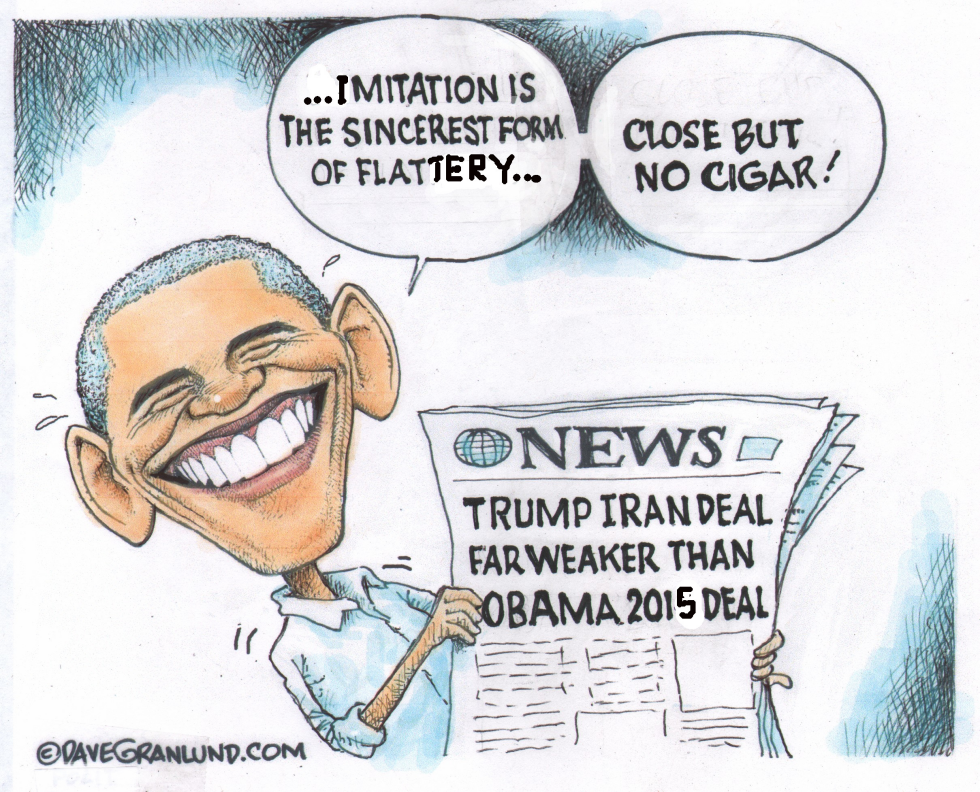
A political cartoon dated June 19, 2026, depicts former President Barack Obama laughing as he holds a newspaper. The front page headline reads that the Trump Iran deal is far weaker than the Obama 2015 deal. Speech bubbles show Obama saying imitation is the sincerest form of flattery while another voice replies close but no cigar. The image responds to ongoing comparisons of the two administrations approaches to Iran negotiations. It highlights perceived shortcomings in the later agreement through visual humor.
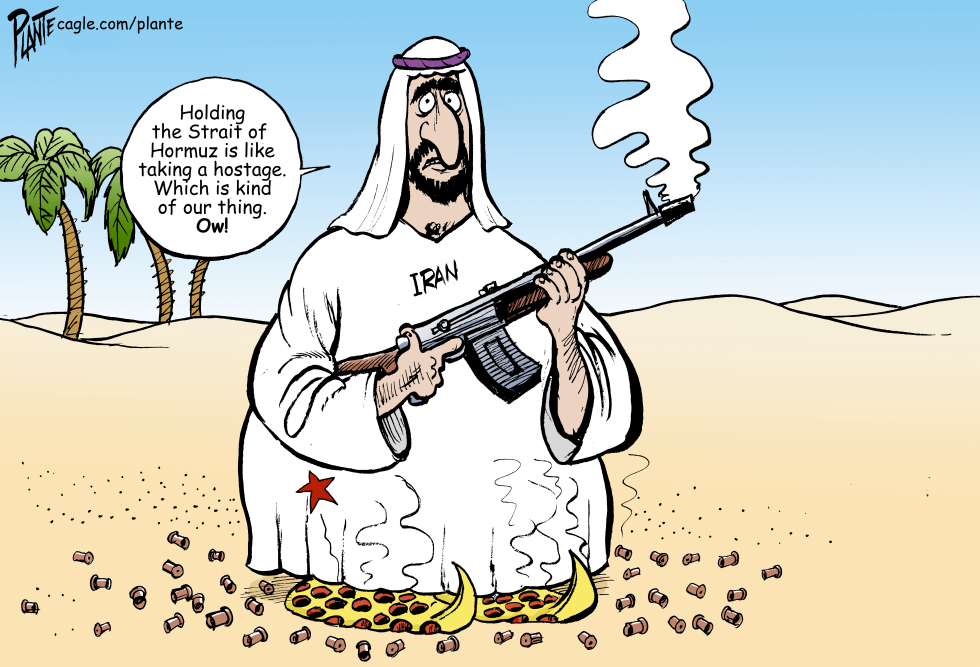
The cartoon shows a figure labeled Iran in desert robes holding a rifle and standing on a pizza slice marked with a crescent moon. A speech bubble has the figure saying holding the Strait of Hormuz is like taking a hostage which is kind of our thing. The scene is set against palm trees and sand dunes. It responds to ongoing concerns about Iran and shipping routes in the Persian Gulf as of late May 2026.
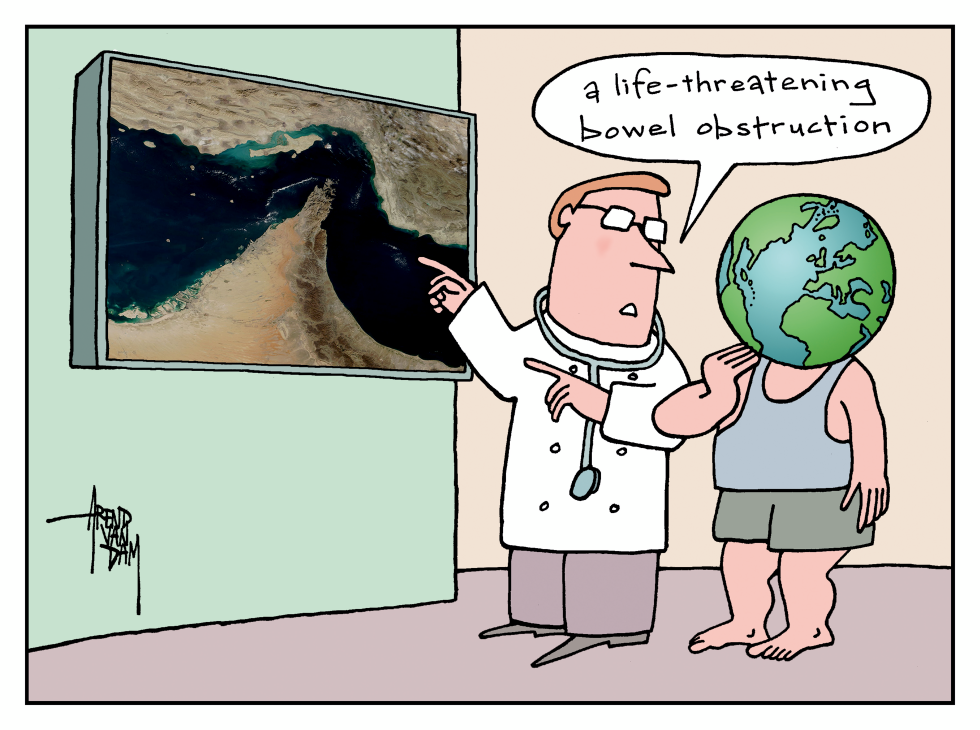
Arend van Dam\'s cartoon depicts a doctor diagnosing a child-like figure with a globe for a head, pointing to a screen showing the Strait of Hormuz as a life-threatening bowel obstruction. This visual metaphor ties into tags such as economy, world, oil, gas, obstruction, and war, illustrating how blockages in key trade routes threaten global stability. The barefoot patient in casual attire underscores vulnerability, while the doctor\'s serious demeanor adds dry humor to the geopolitical satire. Negotiations with ayatollahs and regime sanctions loom in the background, making the image a pointed commentary on how such conflicts create economic chokepoints. The overall composition blends medical analogy with international affairs for sharable impact.
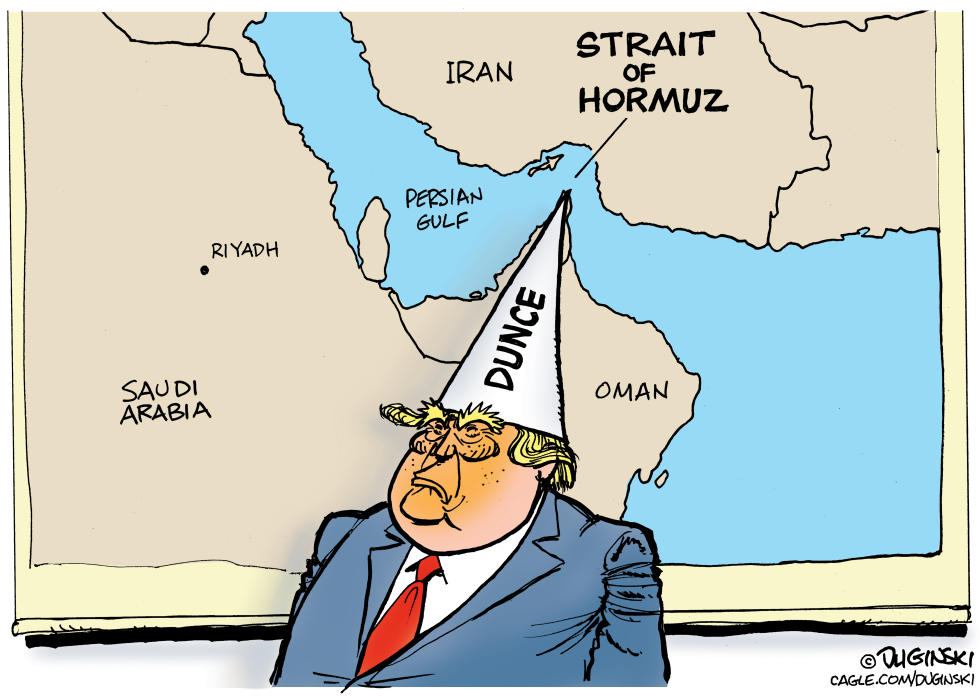
The cartoon depicts a simplified map of the Middle East, including labels for Iran, Saudi Arabia, Oman, Riyadh, and the Persian Gulf. The Strait of Hormuz is prominently marked, with a caricatured man in a suit and red tie wearing a dunce cap labeled \'DUNCE\' positioned over it. This setup uses the strait as a choke point for oil and energy, tying into themes of foreign policy, war, and ignorance. The image critiques handling of Middle East waterway issues, possibly linked to closure threats, tankers, and ceasefire efforts. Artist signature appears in the bottom right.