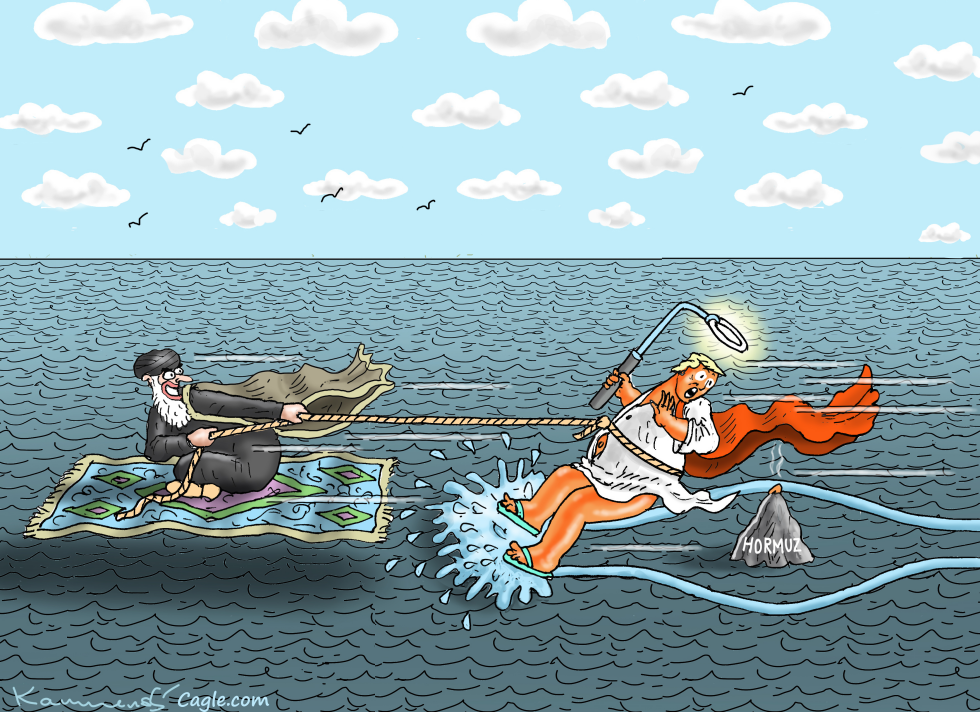
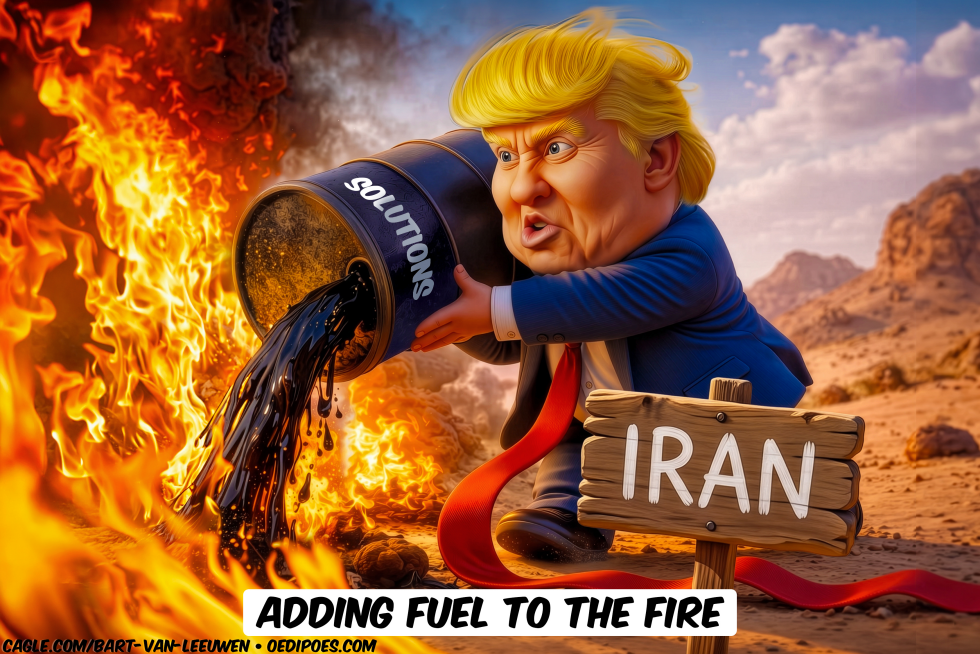
Tensions in the Strait of Hormuz have escalated with threats to shipping lanes critical for global oil supplies. Israeli and U.S. leaders face mounting losses from disruptions. The cartoon argues that involvement risks dragging both into deeper conflict without clear gains.
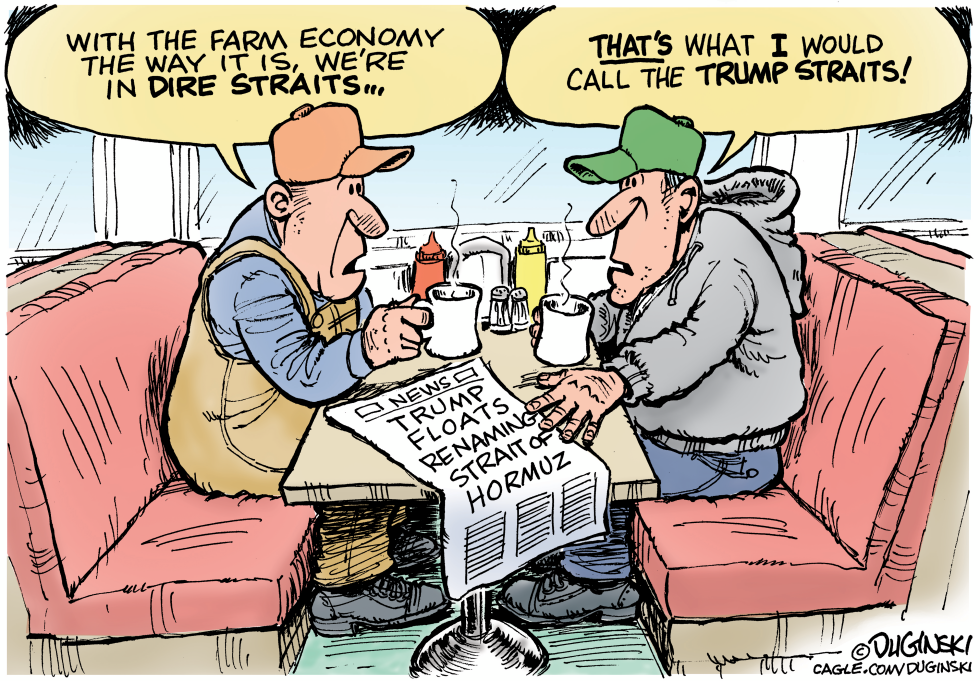
Donald Trump has floated the idea of renaming the Strait of Hormuz, a key Middle East shipping route, drawing attention to its potential effects on global trade and domestic sectors. The proposal arrives as agricultural producers face persistent economic challenges including high input costs and market volatility. The cartoon uses the pun on "dire straits" to connect the foreign policy suggestion to farm belt hardships, implying the rename distracts from or worsens real economic pressures on rural communities.
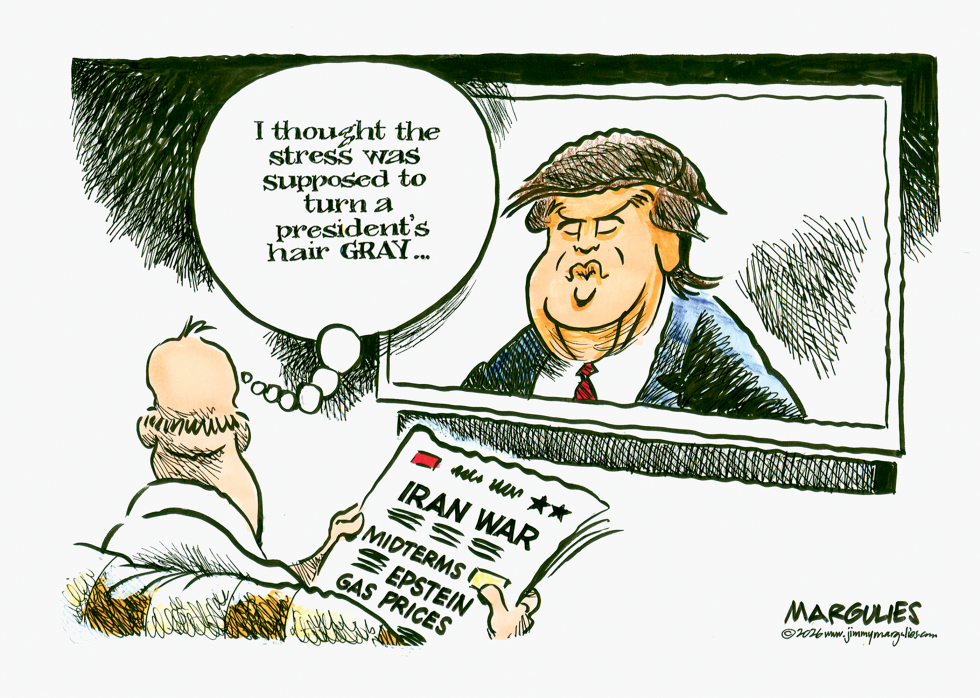
President Donald Trump confronts an Iran war, midterm election pressures, Epstein-related revelations and rising gas prices in September 2026. These overlapping challenges test the administration's capacity to manage foreign conflict and domestic economic strain simultaneously. The cartoon argues that the expected physical toll of such stress on the president has not materialized in the anticipated way.
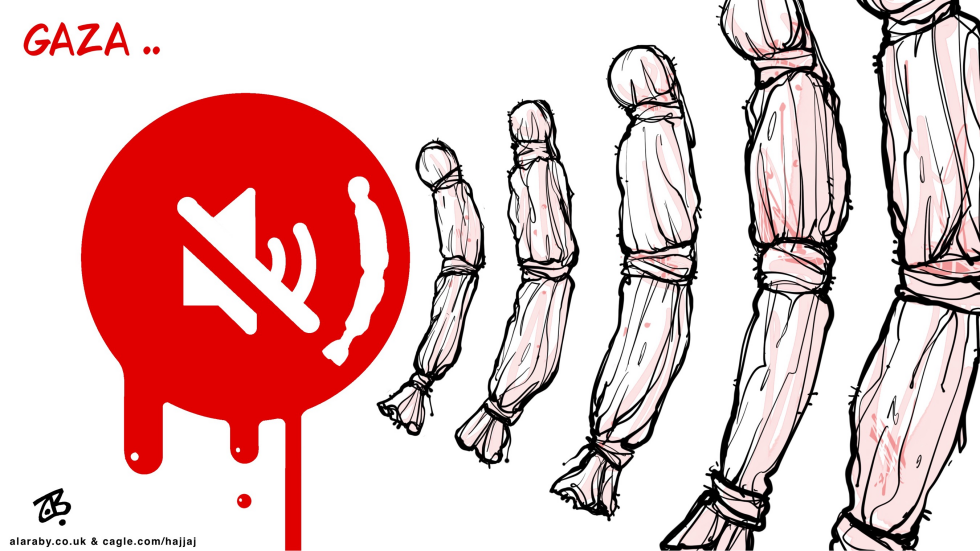
Ongoing conflict in Gaza continues to draw international attention to civilian casualties and restrictions on reporting. The piece responds to persistent calls for attention amid claims of media and global silence. It positions the mute symbol as a direct critique of inaction on reported suffering. The editorial stance emphasizes the need to break that silence and acknowledge the human cost in the region.
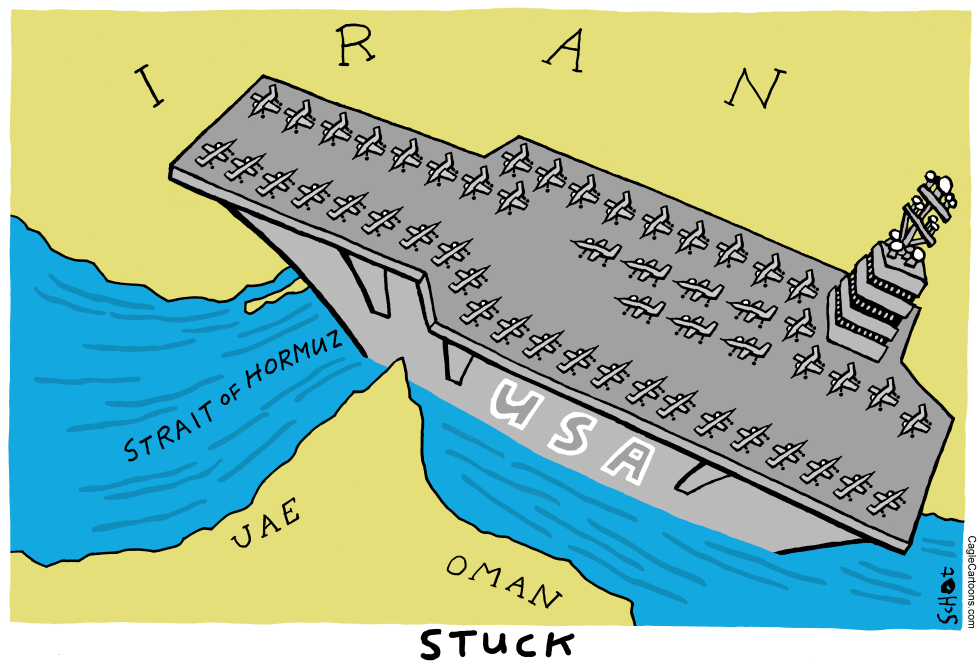
A political cartoon depicts a large US aircraft carrier marked USA jammed in the Strait of Hormuz between land labeled Iran, UAE and Oman. The vessel carries dozens of fighter jets on its deck. The word STUCK appears prominently below the scene. The image responds to persistent concerns over freedom of navigation in the vital oil shipping route. Iran has long threatened to close the strait during conflicts. The cartoon uses the visual of a grounded carrier to illustrate potential US military vulnerability in the narrow passage.
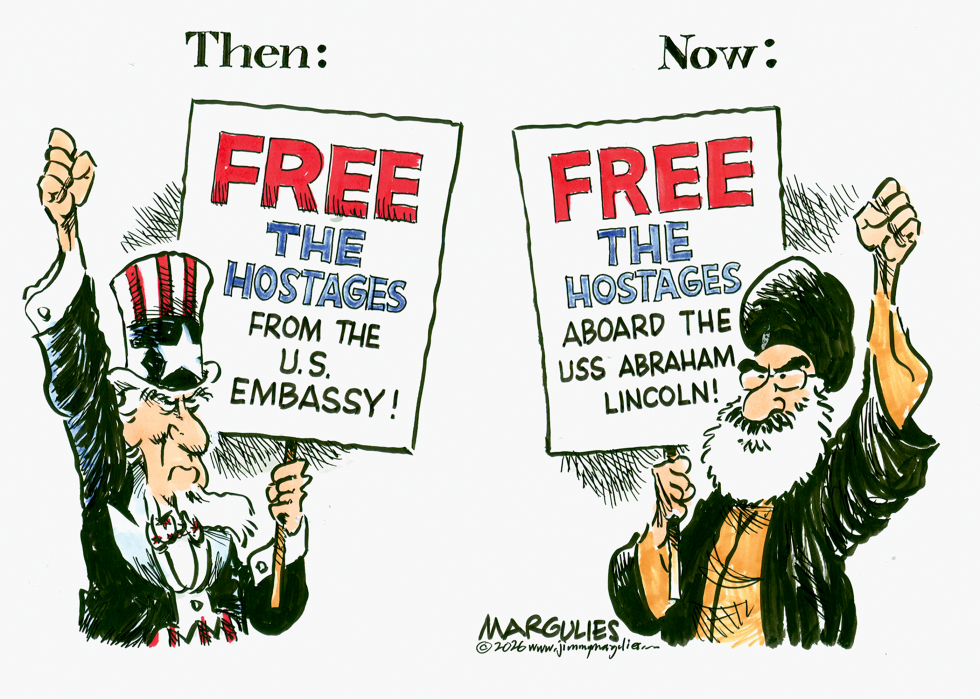
The 1979 Iran hostage crisis saw militants seize the US embassy in Tehran, holding 52 Americans for 444 days. In 2026, renewed tensions involve US naval assets like the USS Abraham Lincoln amid Middle East conflicts. The cartoon draws a parallel between past embassy demands and present calls involving the carrier, critiquing the recurring cycle of hostage rhetoric from Iranian leadership.
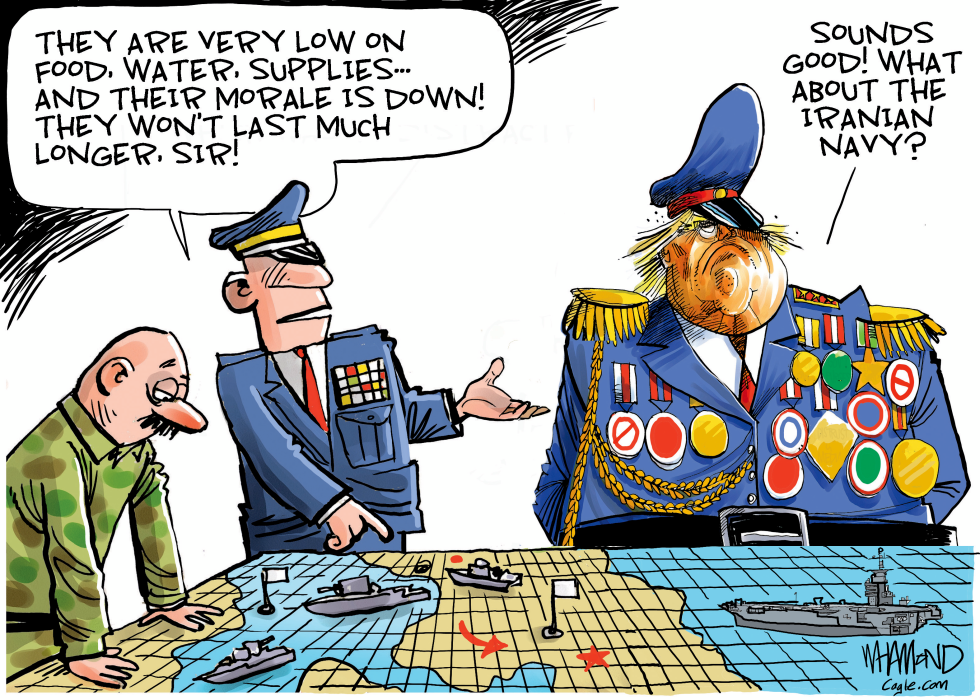
A U.S. Navy carrier faces reported shortages of food, water and supplies along with declining morale in mid-2026. Senior officers brief the president on the situation. The president responds by inquiring about the Iranian Navy instead. The piece portrays the administration as detached from operational readiness concerns in the region.
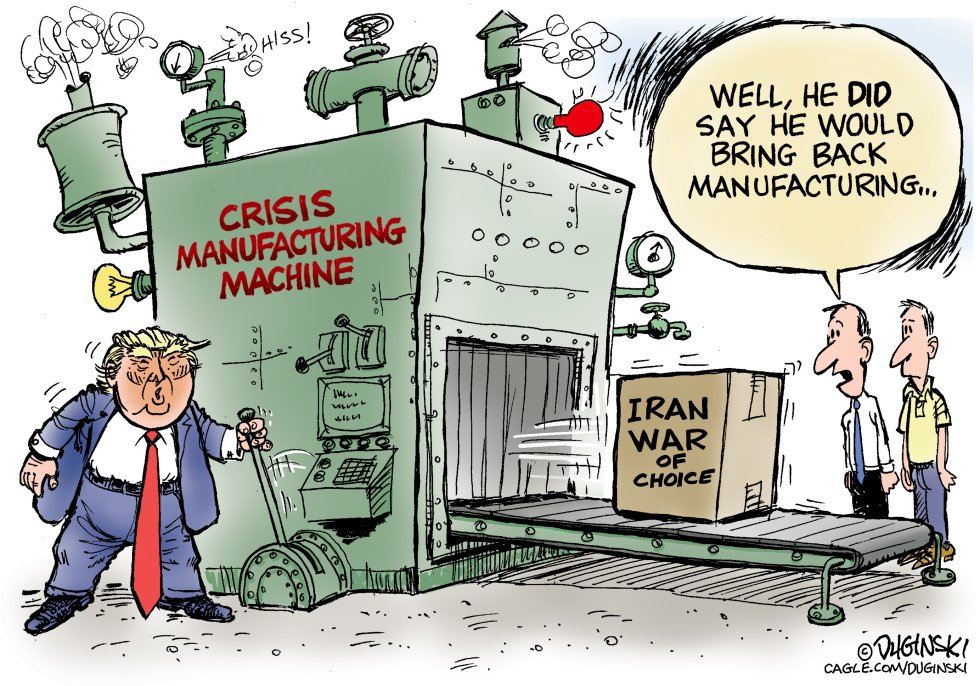
Donald Trump, holding the presidency in 2026, faces renewed scrutiny over foreign policy toward Iran. Recent statements revive campaign pledges to restore domestic manufacturing while tensions with Tehran escalate. The administration\\\'s approach draws criticism for prioritizing confrontation over diplomacy. Observers note the pattern of generating external crises rather than economic gains at home. The cartoon argues that Trump\\\'s actions fulfill a literal version of his manufacturing rhetoric by producing conflict instead of jobs.
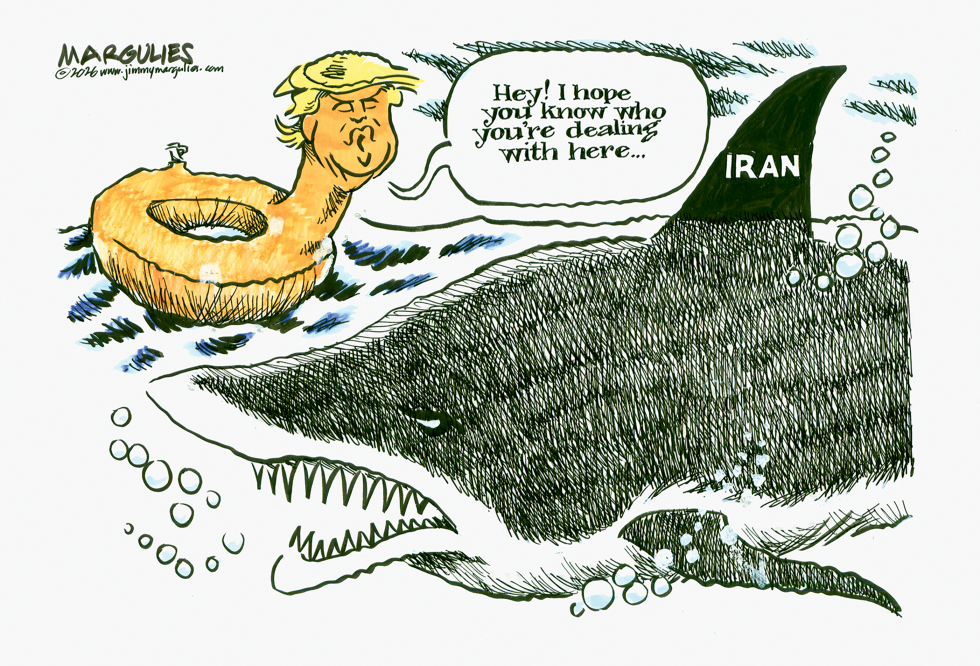
On July 10 2026 Jimmy Margulies depicts Donald Trump floating in an inflatable ring while confronting a large shark fin labeled Iran. The president issues a direct warning through a speech bubble asserting his identity and authority in the confrontation.
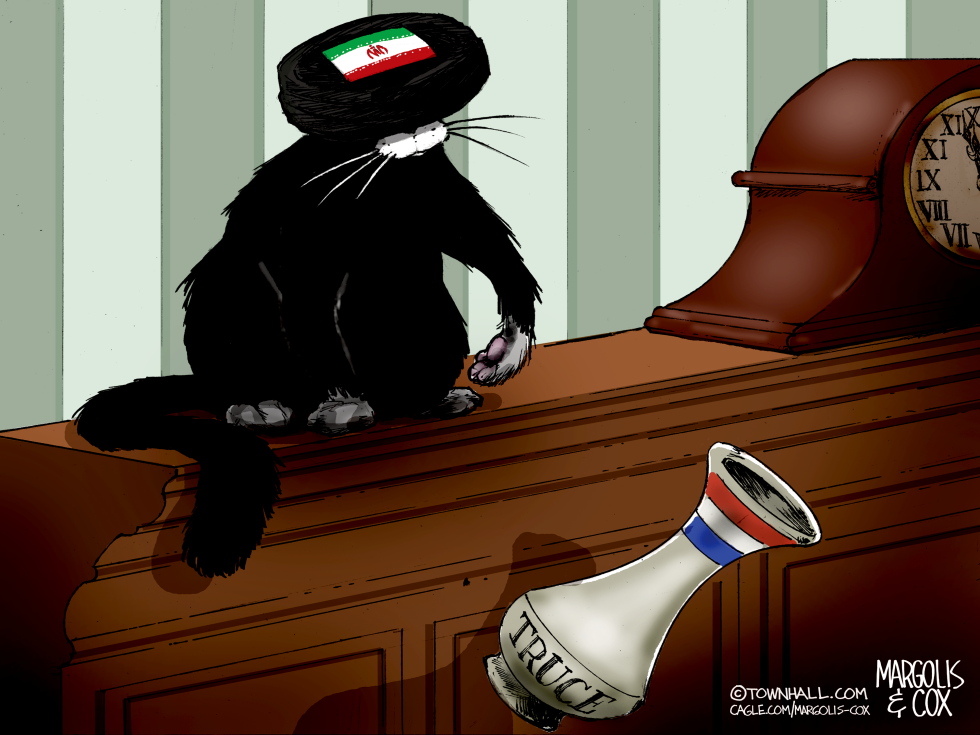
A black cat marked with the Iranian flag perches on a wooden desk and swats a vase labeled TRUCE to the floor. A mantel clock sits nearby as the fragile vessel tips over, capturing a moment of diplomatic disruption tied to recent Middle East developments around the July 2026 publication date.
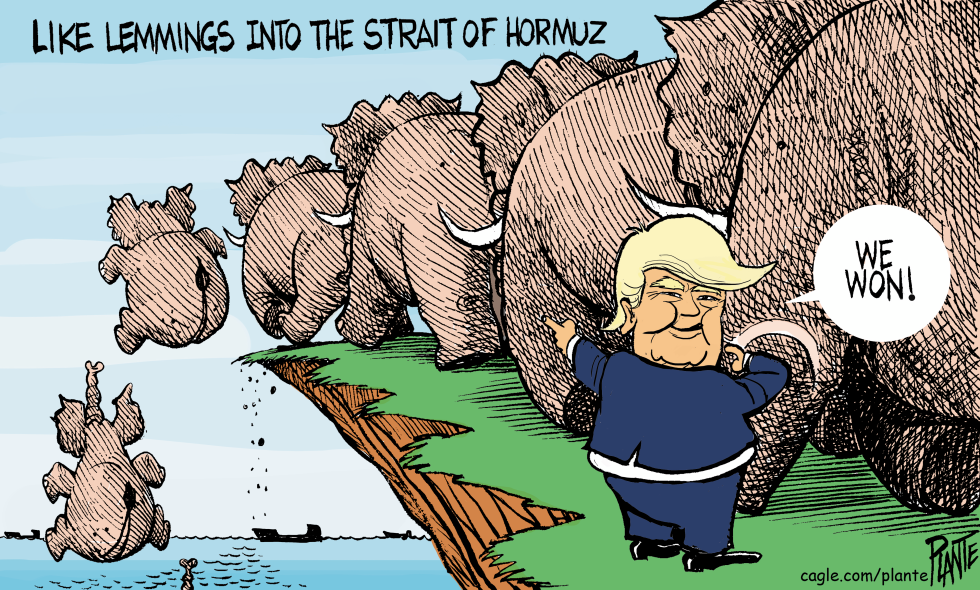
Donald Trump stands on a green cliff edge pointing toward a herd of tusked animals marching off the drop into the water below a ship. The animals fall one after another as Trump smiles with a speech bubble reading WE WON! The title references the Strait of Hormuz.
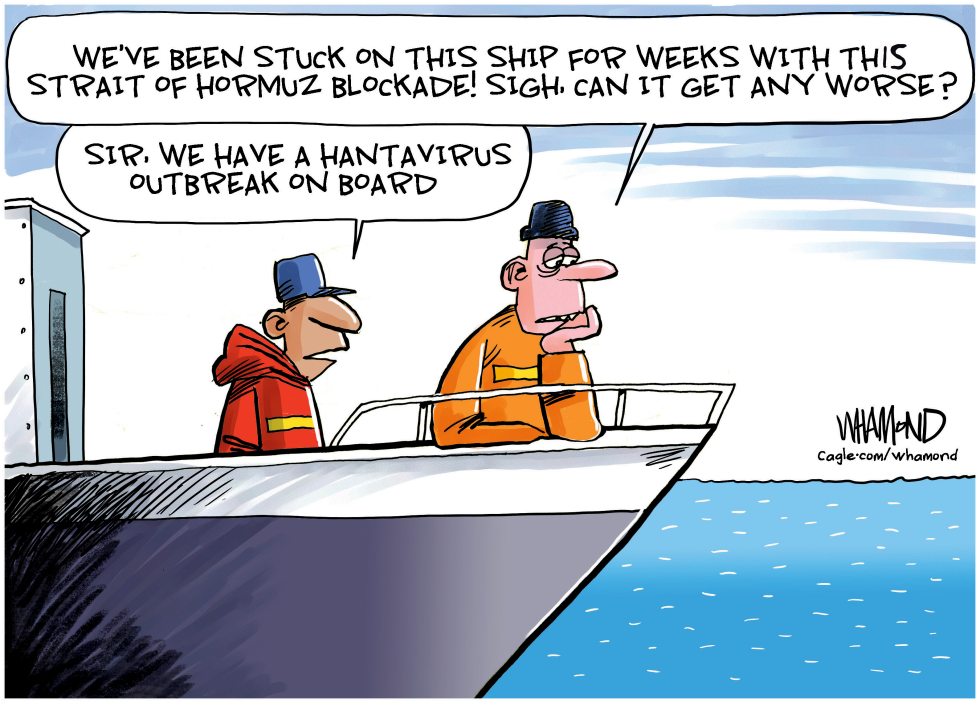
The cartoon depicts two sailors aboard a ship trapped in the Strait of Hormuz due to a naval blockade. One laments the weeks-long delay and wonders if conditions can worsen. The other reports a hantavirus outbreak on board. The image responds to ongoing tensions involving Iran and disruptions to global oil routes. As of the May 2026 publication date, the blockade has halted tanker traffic and strained energy markets. The added health crisis underscores the compounding risks for crews and supply chains. The visual ties geopolitical conflict directly to immediate human and economic consequences.