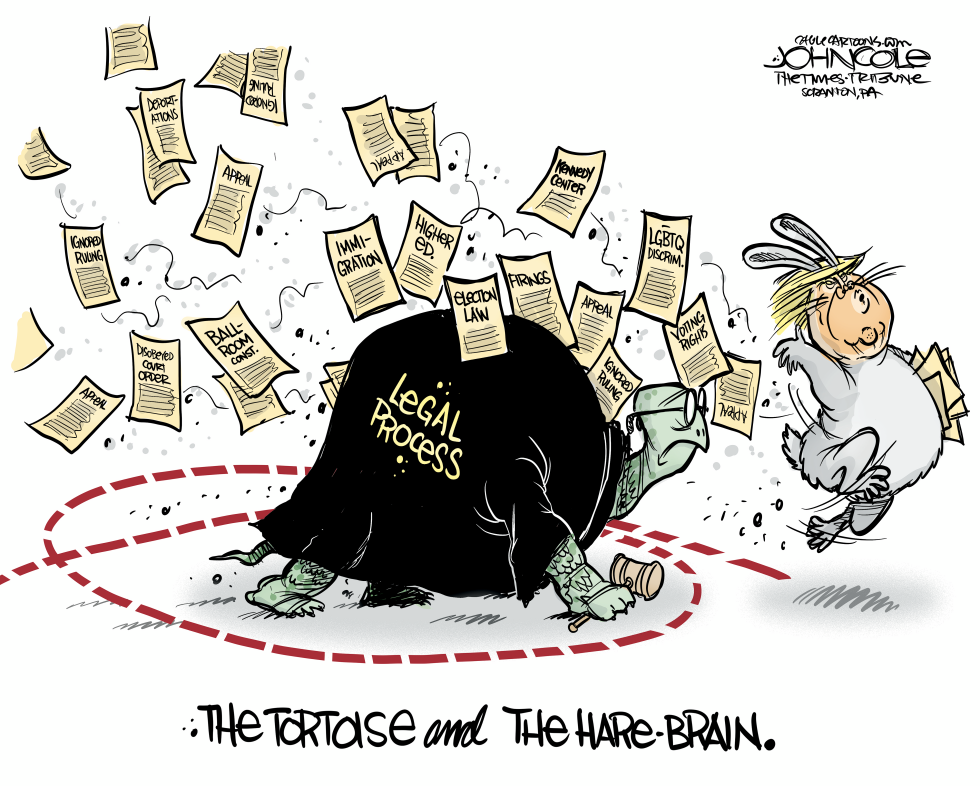
Multiple legal cases involving former President Trump continue through appeals on election law, voting rights, immigration rulings and related matters. The slow pace of the judicial system allows repeated filings and delays. The cartoon argues that this extended process effectively lets Trump run circles around accountability rather than face timely resolution on the merits.
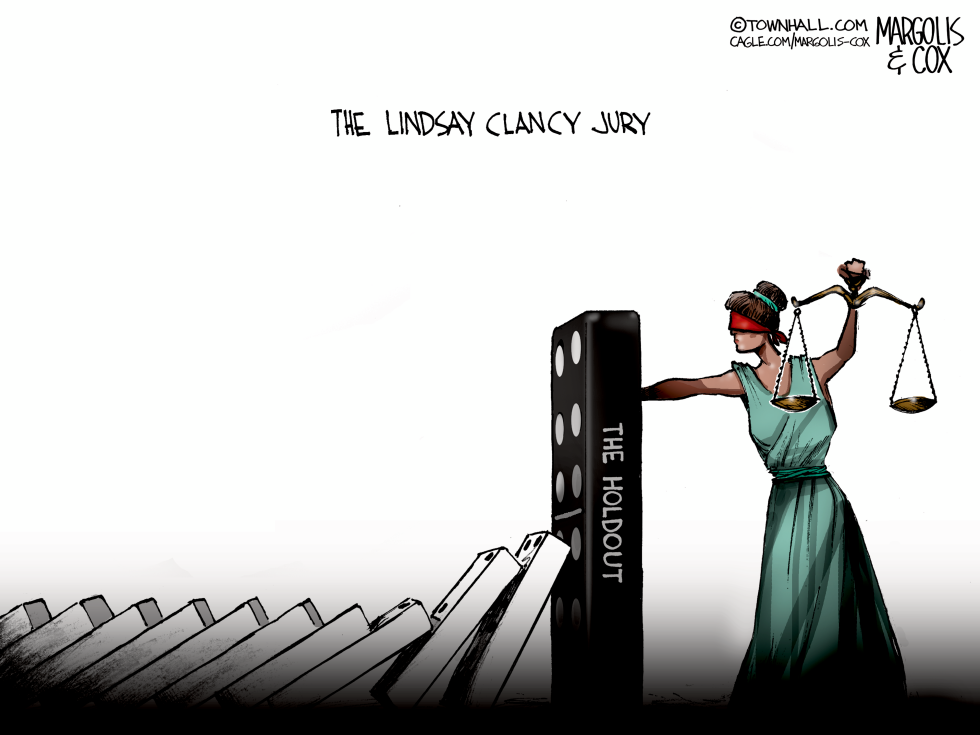
The Lindsay Clancy jury reached a critical impasse when one holdout juror refused to join the majority, threatening to derail deliberations in the closely watched case. The deadlock highlights how a single dissenting voice can halt proceedings and force mistrial risks or further negotiations. The cartoon frames this as a precarious domino chain where the holdout threatens broader collapse. It critiques the fragility of jury consensus in high-stakes criminal trials and questions whether the system adequately manages such standoffs.
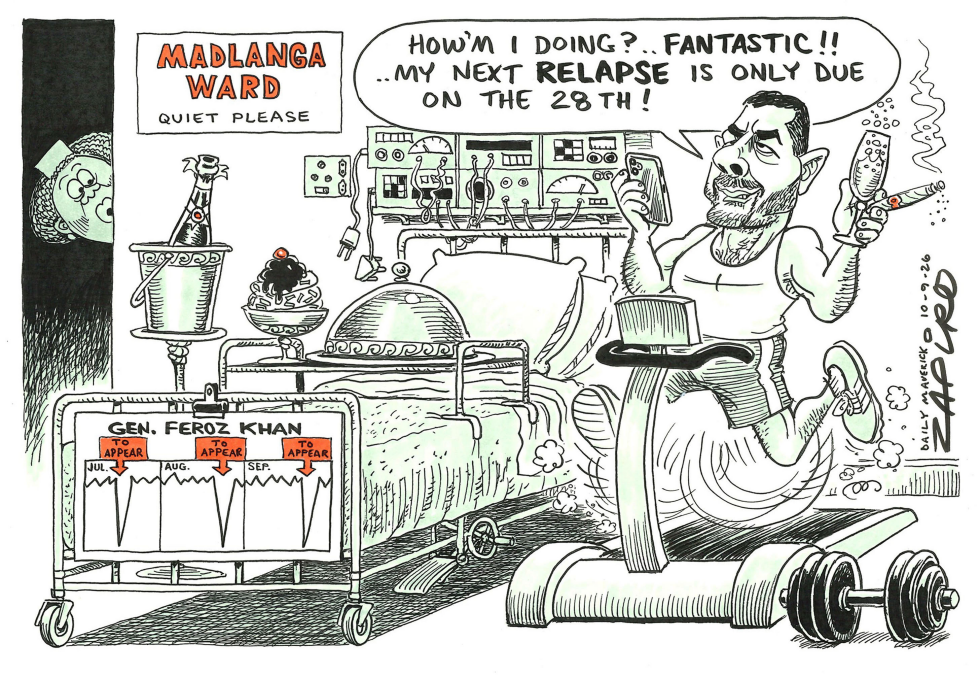
Maj-Gen Feroz Khan, suspended SAPS Crime Intelligence deputy head, was shot in an apparent assassination attempt in June 2026 days before scheduled Madlanga Commission testimony. His evidence was postponed multiple times citing recovery and medical certificates, with the next appearance set for 28 September. The cartoon mocks the pattern of delays as a convenient scheduling of relapse.
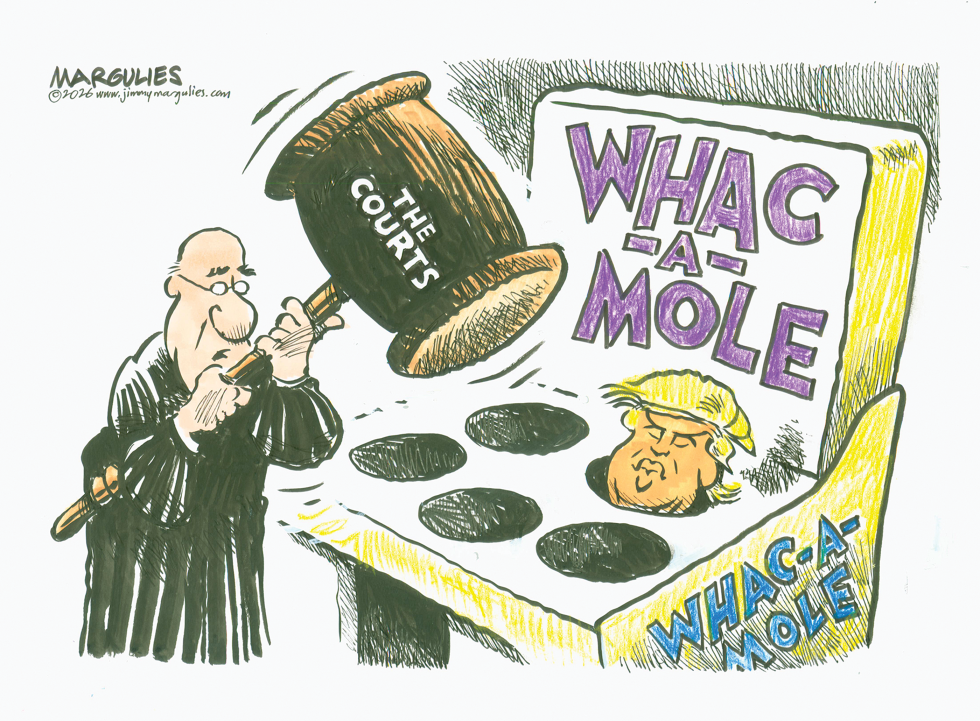
Courts have pursued multiple cases against Donald Trump in recent years, raising questions about timing and motivation ahead of elections. The editorial argues the legal actions resemble a repetitive game rather than measured justice.
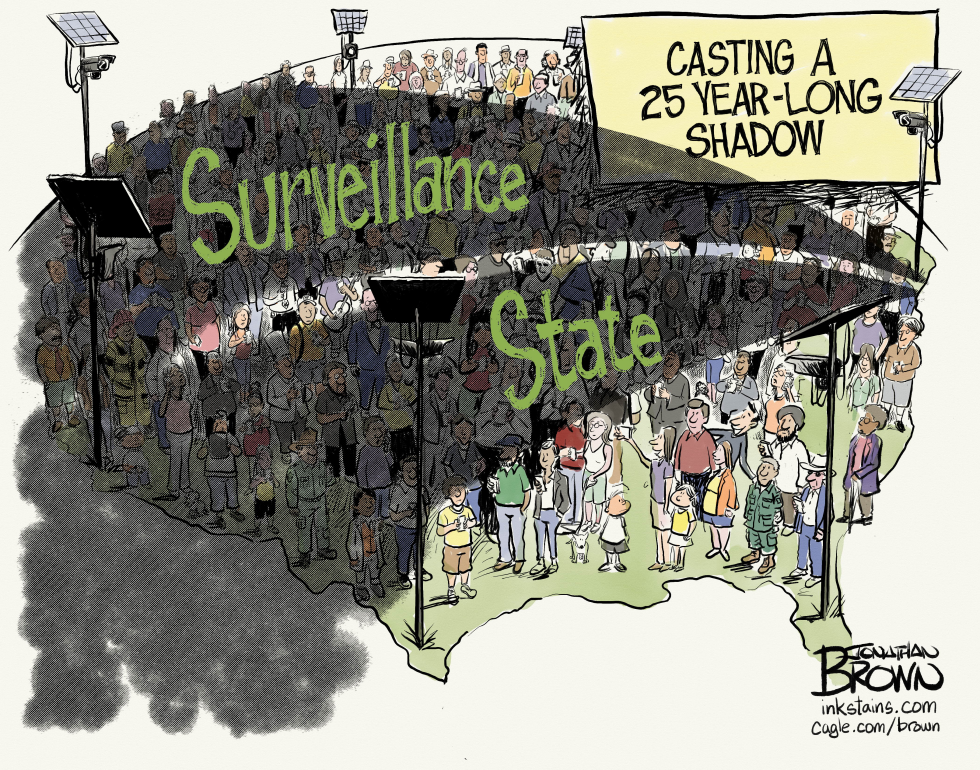
The cartoon depicts a dense crowd of Americans standing on a map of the United States, partially obscured by a large dark shadow cast by surveillance cameras mounted on poles. The words 'Surveillance State' appear prominently in green lettering across the scene, while a sign in the upper right reads 'CASTING A 25 YEAR-LONG SHADOW.' The image comments on the lasting effects of expanded government surveillance programs that began after the September 11 attacks, now spanning a quarter century. It illustrates how these measures continue to influence daily life and public spaces in 2026.
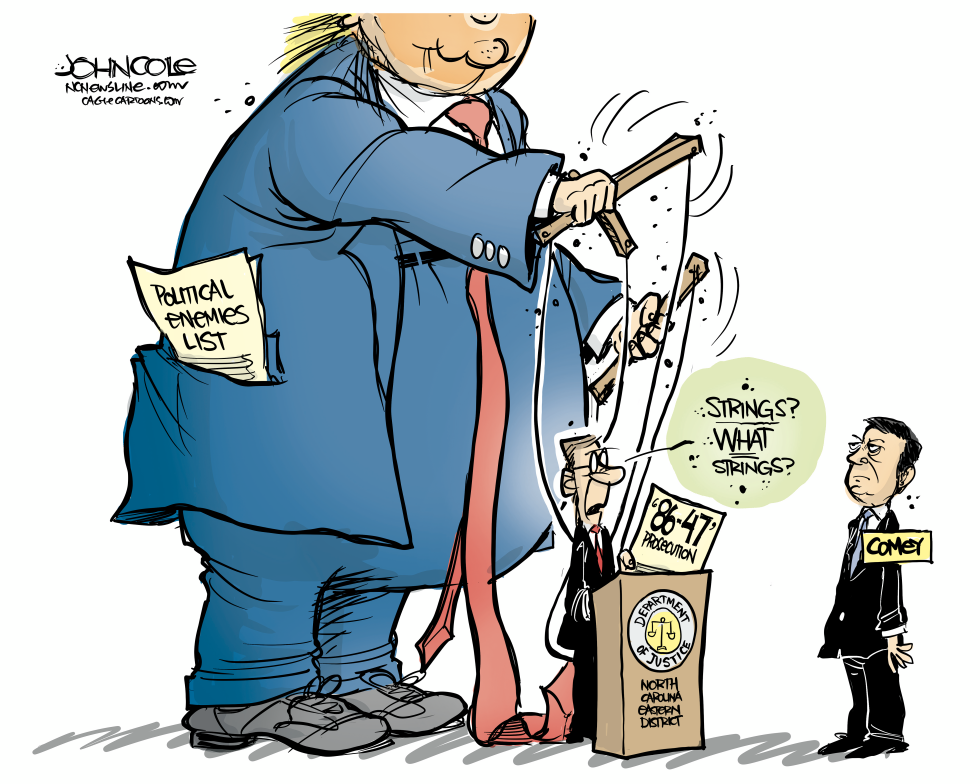
President Trump is shown directing a Department of Justice prosecution of former FBI Director James Comey in the North Carolina Eastern District. The image portrays the president as a puppeteer controlling the case through strings attached to a figure holding an 86-47 prosecution sign. The editorial position criticizes the use of federal prosecutorial power against political opponents.
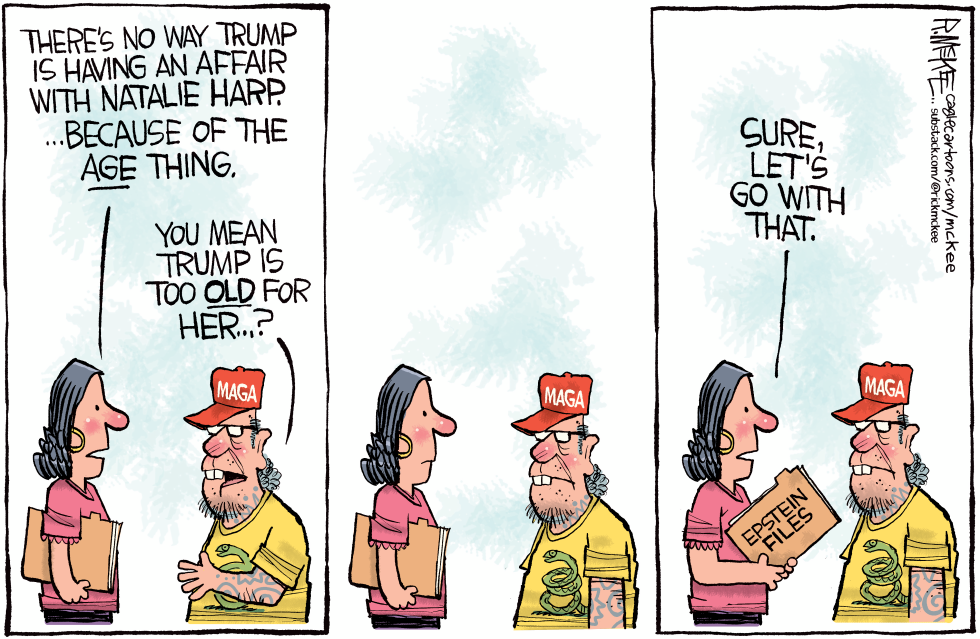
A MAGA supporter insists Donald Trump could not be involved with Natalie Harp due to an age difference. The woman responds by holding up Epstein files and agreeing to that explanation instead. The piece highlights ongoing scrutiny of Trump associates and past Epstein connections amid fresh allegations.
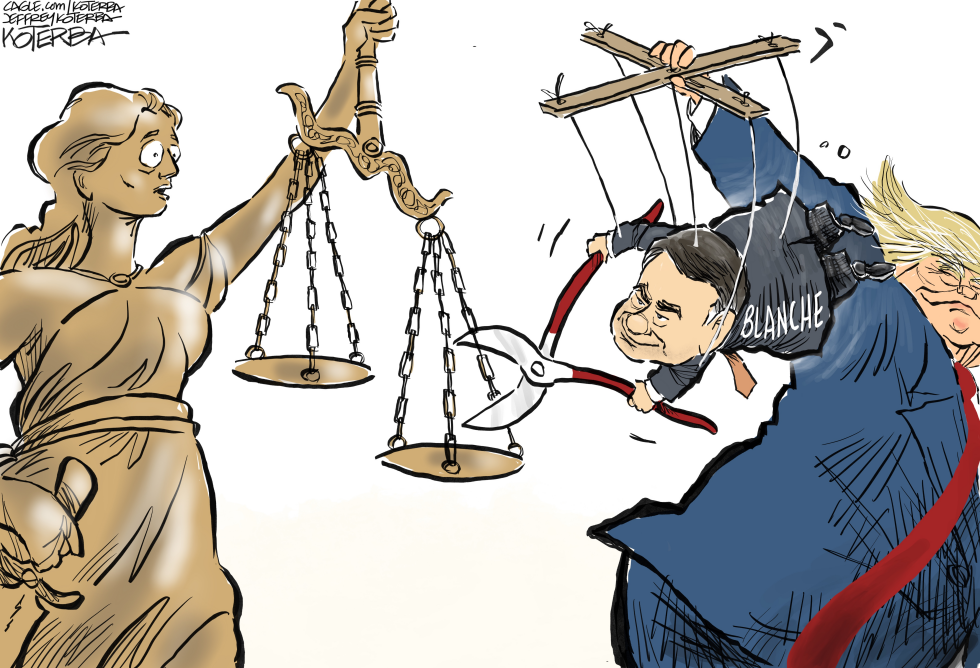
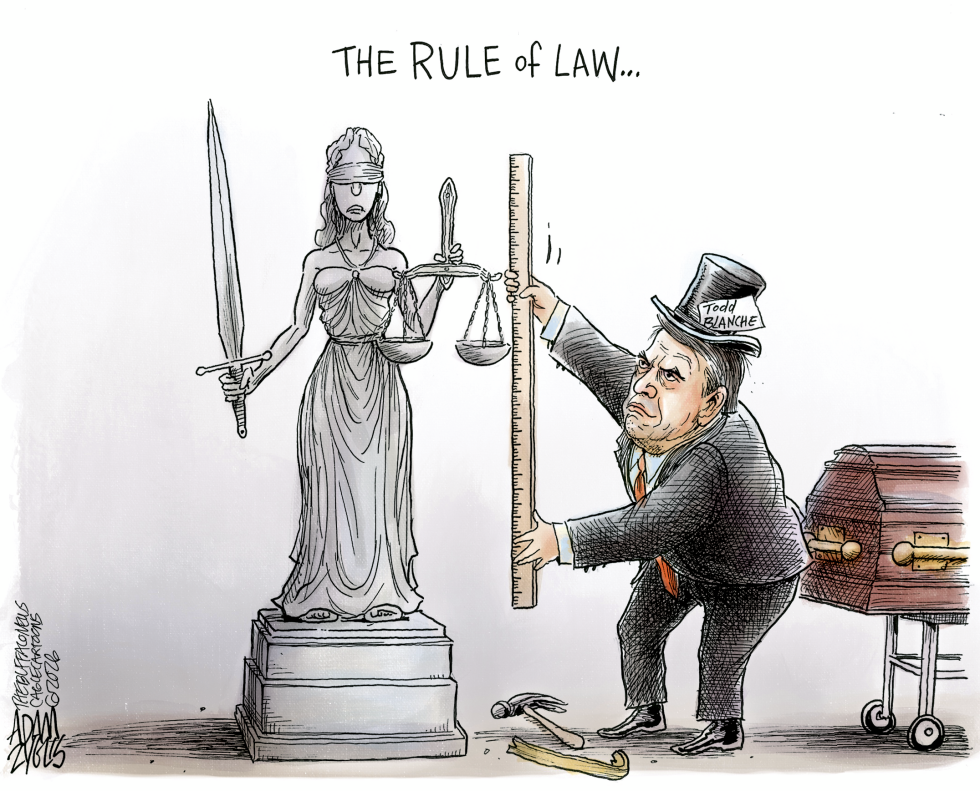
Donald Trump directs his attorney Todd Blanche to undermine judicial processes through direct influence. The move raises concerns over executive interference in legal proceedings. The piece portrays this as an assault on impartial justice.
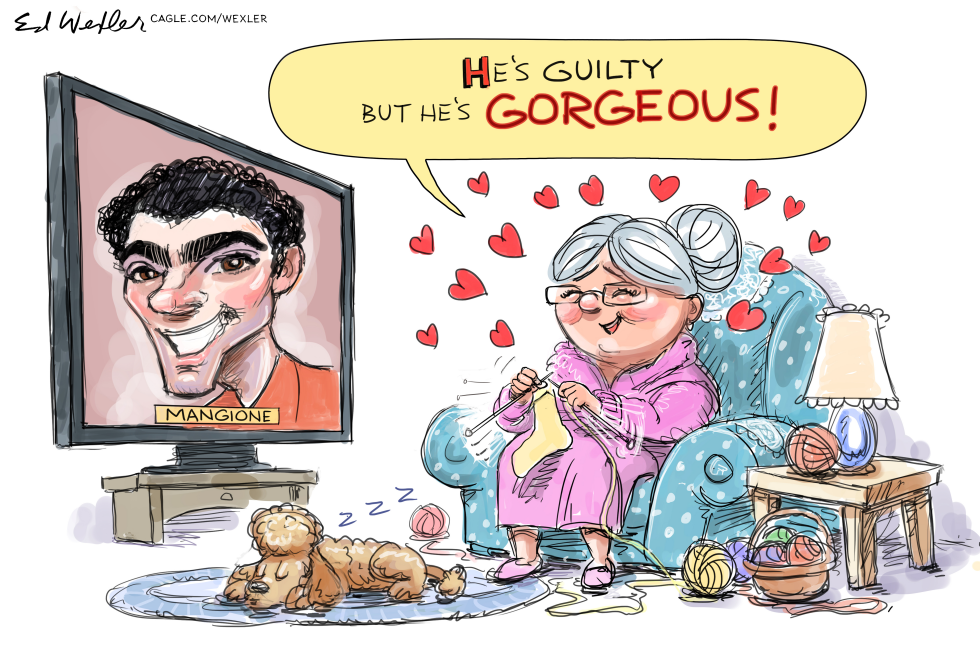
A guilty verdict was delivered in the Mangione case on or around August 2026. The decision drew widespread media coverage and public commentary. The editorial highlights how some viewers focused on the defendant's appearance rather than the legal outcome. It critiques the blending of serious justice matters with superficial attraction in popular reactions.
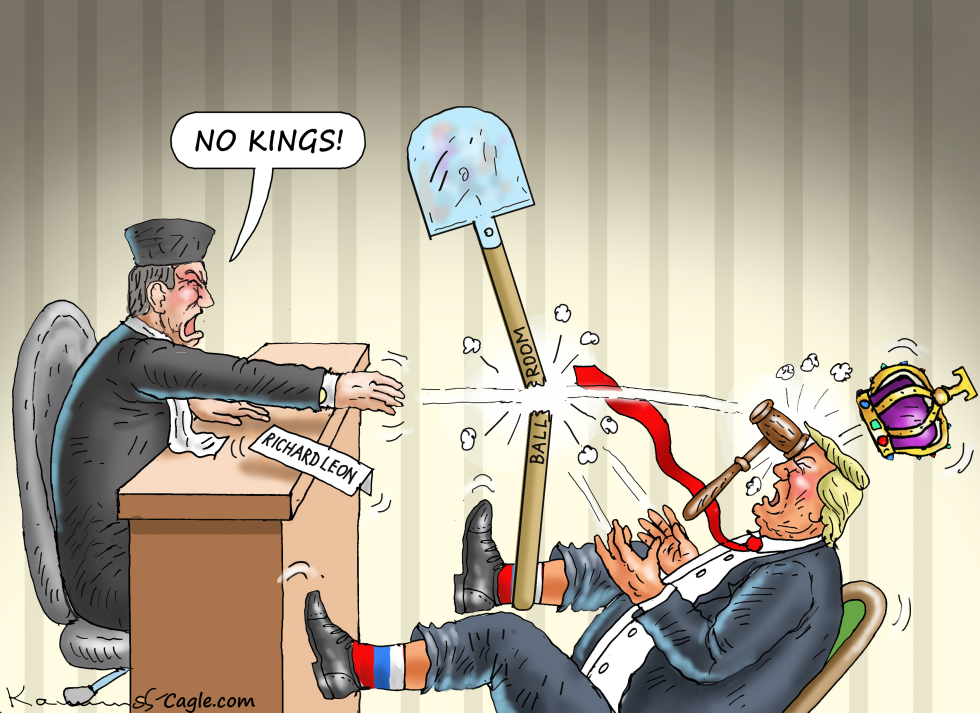
U.S. District Judge Richard Leon issued a ruling rejecting claims of unchecked executive authority. The decision underscores judicial limits on presidential power and draws immediate pushback from the White House. The cartoon portrays the ruling as a direct rebuke to any notion of royal prerogative.
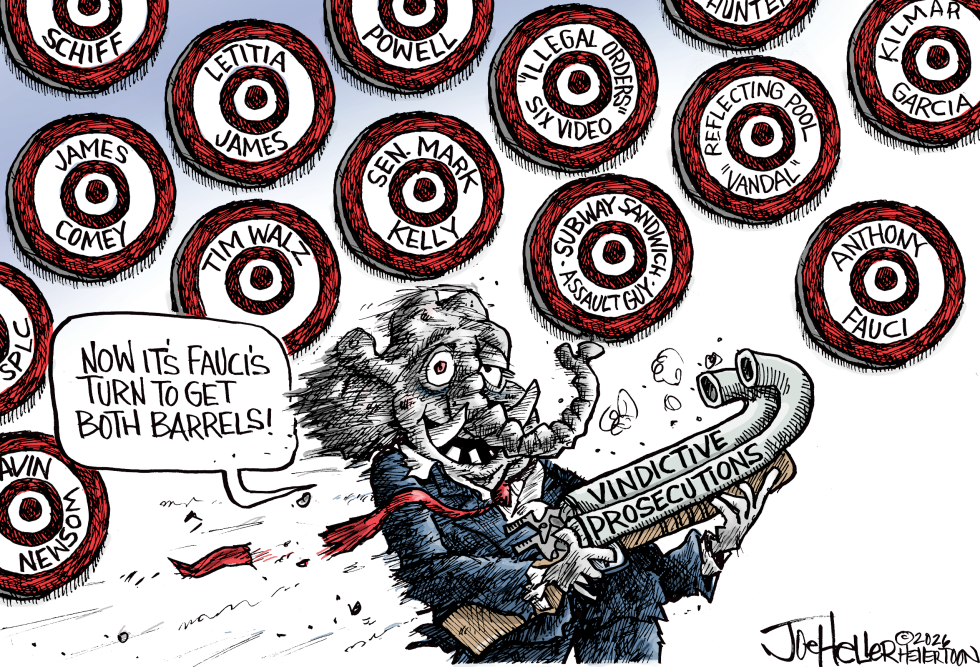
Donald Trump has signaled intent to pursue legal action against Anthony Fauci and other perceived opponents. The move extends a pattern of targeting figures from prior investigations and public disputes. The editorial portrays these actions as personal retribution rather than legitimate accountability.
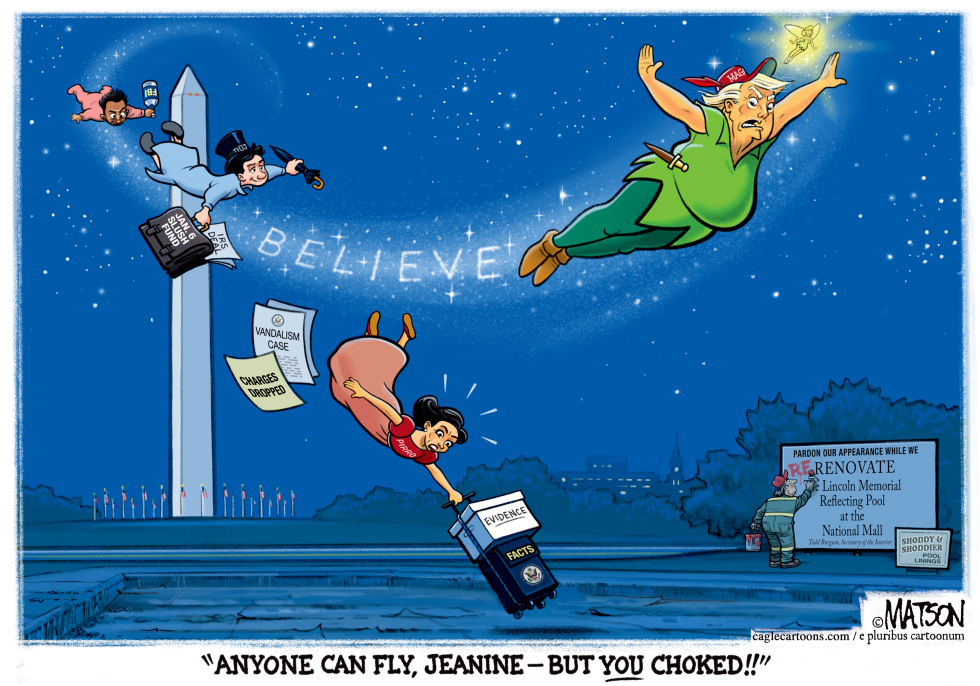
Donald Trump appears in a leadership role with legal cases being dismissed around him in early August 2026. Jeanine Pirro is shown losing grip on an evidence container labeled facts. The scene highlights ongoing questions about accountability and dropped charges in high-profile matters involving the administration.
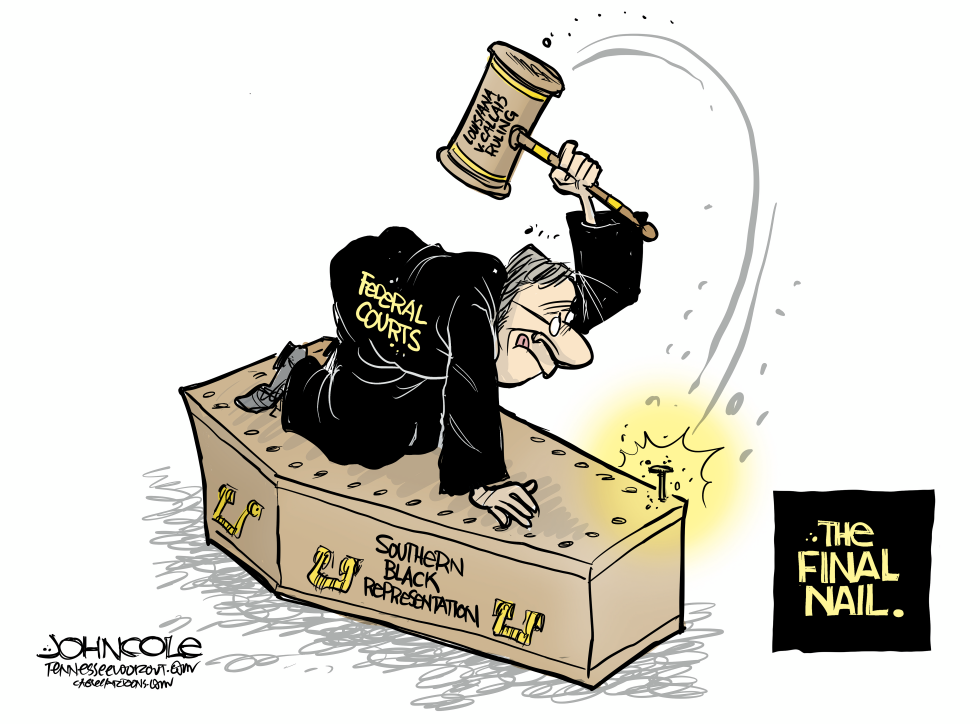
A federal court ruling on Louisiana redistricting has reduced black congressional representation across southern states. The decision follows ongoing litigation over district maps and voting access. It matters because it alters the number of majority-minority seats available in Congress. The piece argues the ruling delivers a decisive setback to those representation gains.
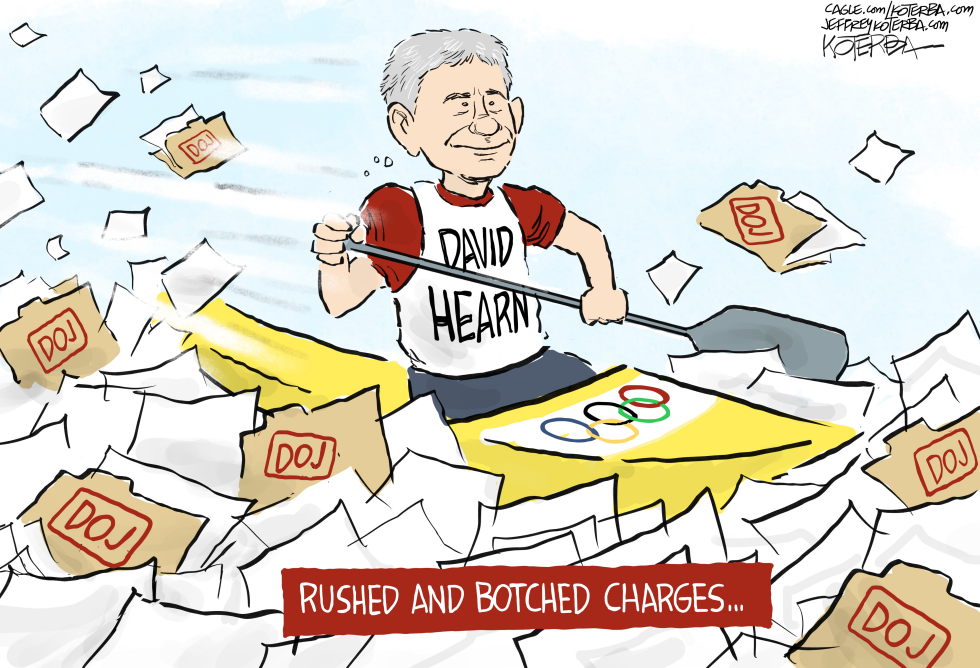
Federal prosecutors face scrutiny over handling of charges against Olympic kayaker David Hearn. The case highlights concerns about timing and preparation of evidence in high-profile sports matters. The editorial takes the position that the effort appears hasty and poorly executed.